

P0776 on 2014-2023 Jeep Cherokee: Pressure Control Solenoid 'E' Causes and Fixes
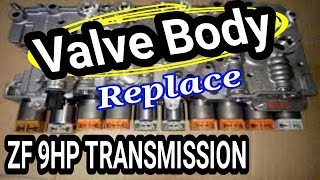
On a 2014-2023 Jeep Cherokee with the ZF 9-speed (948TE) transmission, code P0776 almost always points to an internal failure within the transmission's valve body. The solenoids are not serviced separately, so the most common and required fix is replacing the entire valve body assembly. In some cases, a full transmission replacement is necessary if debris has caused further damage. This is a known issue across many vehicles that use this transmission.
- P0776 on your Cherokee is a serious transmission code that should be addressed immediately to prevent further damage.
- The most likely cause is a failed valve body, not a simple, inexpensive solenoid.
- This is not a DIY-friendly repair. It requires specialized tools, software, and expertise in internal transmission work.
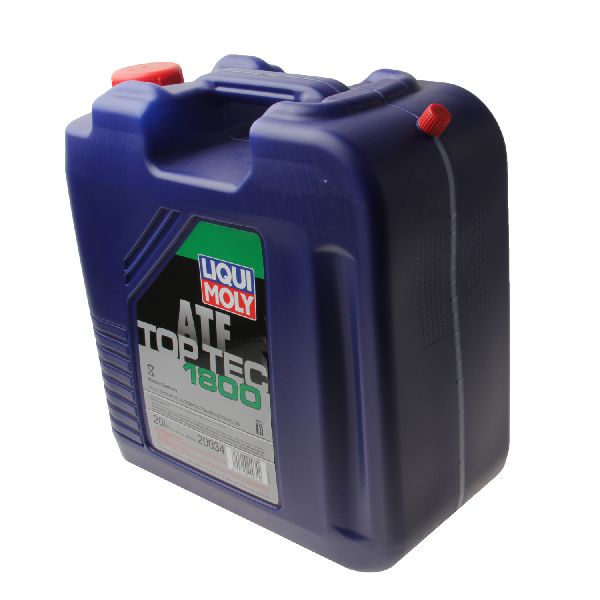
- Always ensure the shop uses the correct Mopar ZF 8&9 Speed ATF; using the wrong fluid can destroy the transmission.
- Before authorizing expensive repairs, ask the shop to check for any available TCM software updates, as they can sometimes resolve shifting issues.
What's Unique About the 2014-2023 Jeep Cherokee
The 2014-2023 Cherokee uses a ZF-designed 9-speed automatic transmission (model 948TE) that is notorious for complex shifting issues and control system faults. Unlike older transmissions where a single solenoid could be easily replaced, the solenoids in this unit are integrated into a complex valve body assembly. Therefore, a single solenoid fault code like P0776 often requires the replacement of the entire valve body, making the repair significantly more involved and expensive. Another internal failure point on these transmissions is a bolt holding a pressure valve that can loosen, causing widespread pressure loss and similar symptoms.
Generation note: This guide covers the entire 'KL' generation of the Jeep Cherokee, including the 2014-2018 pre-facelift and 2019-2023 facelift models. Both versions use the same ZF 948TE 9-speed automatic transmission, and the causes and fixes for code P0776 are identical across the entire year range. Early model years (2014-2016) were particularly prone to shifting complaints and received numerous software updates to address them.
Symptoms You May Notice
- Check Engine Light or Transmission Warning Light is illuminated
- Vehicle enters 'limp mode,' often getting stuck in a single gear (e.g., 3rd or 4th)
- Harsh, jerky, or delayed gear shifts, especially in lower gears
- Inability to shift into higher gears
- A feeling of the transmission slipping between gears
- Loss of reverse gear, particularly after a cold start
- Engine may stall when coming to a stop
- Vehicle may not move when put in gear
- Replacing only one solenoid. On this transmission, the solenoids are integral to the valve body and are not typically serviced individually. The entire valve body assembly is the service part.
- Assuming the transmission is completely failed. While possible, the P0776 code often points specifically to the valve body/control system, which can be replaced without needing a full transmission rebuild or replacement if caught early.
- Performing a transmission 'flush'. A high-pressure flush can dislodge debris and cause it to block other passages in the valve body. A simple drain-and-fill is the recommended procedure.
Most Likely Causes
- Faulty Transmission Valve Body 🔴 High Probability The ZF 9HP transmission in these Cherokees is known for valve body issues. The integrated solenoids can fail electronically or mechanically (sticking). Debris from normal wear can clog tiny passages or cause valves to stick. A specific failure noted in similar transmissions involves torn screens on the valve body's spacer plate, allowing debris to jam solenoids.
How to confirm: A technician will use a high-end scan tool to monitor solenoid command data versus actual hydraulic pressure readings. If the solenoid is commanded but pressure doesn't change, and electrical tests on the harness pass, the valve body is condemned.
Typical fix: Replacement of the entire transmission valve body assembly, followed by a fluid fill with Mopar ZF 8&9 Speed ATF and a transmission adaptive learning procedure using a capable scan tool.
Est. part cost: $800-$1500 - Low or Contaminated Transmission Fluid 🟡 Medium Probability This transmission is highly sensitive to the correct fluid level and condition. There is no traditional dipstick, making fluid level checks difficult. FCA marketed the transmission as 'sealed for life' in the US, leading many owners to neglect fluid changes, while European service schedules require changes every 60,000 miles. Old, degraded fluid can contribute to valve body failure.
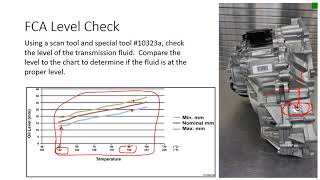
How to confirm: The vehicle must be lifted level, brought to a specific temperature (often checked with a scan tool), and a check plug on the transmission must be opened to verify the fluid level. The fluid color and smell are also inspected for contamination or a burnt odor.
Typical fix: Perform a transmission fluid level check and adjust as needed. If the fluid is dark, burnt, or contains debris, a drain-and-fill should be performed. Use only the specified Mopar ZF 8&9 Speed ATF or an exact equivalent. A full flush is not recommended.
Est. part cost: $150-$300 - Faulty Transmission Control Module (TCM) or Outdated Software ⚪ Low Probability Chrysler/Jeep has released numerous software updates for the 948TE transmission to improve shift quality and address false diagnostic codes, especially on 2014-2016 models. An internal TCM failure (which is part of the valve body assembly) is also possible, but a mechanical fault in the valve body is more common.
How to confirm: A dealership or properly equipped independent shop can check the current software calibration against the latest version available from Jeep using the wiTECH scan tool. A scan tool can also be used to check for communication errors with the TCM.
Typical fix: Update the TCM software to the latest version. If the module itself is faulty, the entire valve body assembly must be replaced and programmed to the vehicle.
Est. part cost: $500-$1000 (for programming or full valve body replacement)
Rare But Worth Checking
- Damaged Wiring Harness or Connectors: While not common, the wiring harness leading to the transmission can be damaged by road debris or improper service, causing an open or short in the solenoid's circuit. A recall for some 2014-2015 models was issued for improperly crimped connectors on the sensor cluster harness that could cause the transmission to unexpectedly shift to neutral. This should be ruled out before replacing expensive internal parts.
- Internal Mechanical Failure: A more severe internal problem, such as a failing transmission pump or a loose bolt on an internal pressure valve, can also lead to pressure control issues. If significant metal debris is found in the transmission fluid, a full rebuild or replacement is likely necessary.
Diagnosis Steps
- Verify the code with a quality OBD-II scanner that can read transmission codes.
- Check for any Technical Service Bulletins (TSBs) related to the transmission for your specific VIN. Pay close attention to software update bulletins.
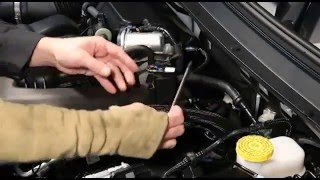
- Check the transmission fluid level and condition. This must be done at a specific temperature (e.g., 37°C to 45°C or 99°F to 113°F) with the vehicle level, using the fill plug as there is no dipstick. 🎬 Watch: How to check Jeep Cherokee transmission fluid.
- Inspect the main transmission wiring harness and connector for any visible damage, corrosion, or loose pins. Check for recalls related to the harness.
- Using an advanced scan tool (like wiTECH), command the Pressure Control Solenoid 'E' on and off while monitoring the circuit voltage and hydraulic pressure to see if it responds.
- If electrical tests are inconclusive, drop the transmission pan to inspect the fluid for metal debris and the valve body for any visible issues.
- If the fluid is clean and electrical signals are present, the failure is almost certainly internal to the valve body, requiring its replacement.
Parts You'll Likely Need
- Transmission Valve Body Assembly
(OEM #68376641AA (supercedes multiple previous numbers, verify with VIN))— This is the most frequent point of failure for code P0776 on this platform, as the solenoids and TCM are integrated into this unit.
Trusted brands: Mopar, ZF (Original Equipment Manufacturer)
OEM price range: $1000-$1500
Aftermarket price range: $800-$1200 - Mopar ZF 8&9 Speed ATF
(OEM #68218925AB (quart) or 68218925GA (gallon))— The correct fluid is required when replacing the valve body or performing a fluid service. Using the wrong fluid can cause severe damage. A drain and fill requires approximately 5 quarts.
Trusted brands: Mopar
OEM price range: $25-$35 per quart
Related Codes That Often Appear With This One
- P0777 — This code is for 'Pressure Control Solenoid E Stuck On,' which is the opposite fault for the same component, indicating it's not turning off as commanded.
- P1D9A — This is a manufacturer-specific code for 'Clutch E Apply/Release Stroke Performance,' which can be related to the hydraulic circuit controlled by the solenoid in question.
- U0402 — This code indicates 'Invalid Data Received From Transmission Control Module,' which can accompany a specific fault like P0776 if the TCM is malfunctioning or has detected a severe internal error.
Technical Service Bulletins (TSBs) & Recalls
- While no specific TSB for P0776 was found, numerous TSBs exist for the 2014-2016 model years to update the TCM software for various shift quality complaints. It is critical to ensure the latest software is installed before condemning hardware.
- A recall (NHTSA Campaign ID: 16V529000) was issued for some 2014-2015 Cherokees for a faulty sensor cluster harness connector that could cause a sudden shift to neutral.
Platform-Specific Known Issues
- The ZF 9HP (948TE) transmission has been the subject of numerous customer complaints, software updates, and even a class-action lawsuit for its performance in early models (2014-2015). Issues range from rough shifting to premature failure.
- A recall was issued for some 2014-2015 models for a wiring harness issue that could cause the transmission to shift to neutral unexpectedly.
- A common internal failure point is a bolt on a pressure valve inside the main shaft that can loosen or break, leading to a loss of oil pressure and shifting problems.
Mechanic-Grade Diagnostic Values
- Solenoid Coil Resistance — expected: 10.0 to 12.0 Ohms. Failure: A reading of infinite resistance (open circuit) or near-zero resistance (short circuit) indicates a failed solenoid coil.
- Transmission Fluid Temperature for Level Check — expected: 37°C to 45°C (99°F to 113°F). Failure: Checking the fluid level when the transmission is too cold or too hot will result in an inaccurate reading, leading to under-filling or over-filling.
Scan Tool Commands That Help
- wiTECH (Chrysler/Jeep Dealer Tool): Quick Learn Procedure — This procedure must be performed after replacing the valve body or transmission, or after clearing adaptation memory cells. It resets and relearns the clutch adaptive values to ensure proper shift quality with the new components.
- wiTECH (Chrysler/Jeep Dealer Tool): VB/Solenoid Learn — This is a more specific learn procedure required to match the TCM's electrical system with the new solenoids on a replaced valve body.
- Advanced Scan Tool (e.g., wiTECH): Solenoid Activation Test — This is a bidirectional test to manually command a specific solenoid (like 'E') on and off. The technician monitors system voltage and pressure data to see if the solenoid responds to the command, helping to isolate a faulty solenoid from a wiring or TCM issue.
Wiring & Ground Locations
- Main Transmission Harness Connector — The main electrical connector for the transmission, which contains the pins for all solenoids and sensors, is located on the top of the transmission case. It is a large, rectangular pass-through connector.. This is the primary access point for performing electrical tests, such as checking for voltage from the TCM and measuring the resistance of the Solenoid 'E' circuit without having to remove the transmission pan.
- TCM (Transmission Control Module) — The TCM is not a separate module; it is integrated directly into the valve body assembly inside the transmission oil pan.. This integration is why a P0776 code so often requires a full valve body replacement. A failure of the TCM's internal driver for Solenoid 'E' cannot be fixed separately.
Real Owner Repair Stories
- Jeep Cherokee Club Forum (2015 Jeep Cherokee Latitude 3.2L V6, ~90,000 miles) — Check engine light on, vehicle went into limp mode, stuck in 4th gear, harsh shifting. Code P0776 was present.
❌ Tried (didn't work) The owner first took the vehicle to a general mechanic who was unable to diagnose it beyond reading the code.
✅ What actually fixed it The vehicle was taken to a dealership, which diagnosed a failed valve body. The entire valve body assembly was replaced, which resolved the code and all shifting issues. The repair cost was approximately $2,400.
OEM Part Supersession History
Multiple, including 68249322AB, 68249322AC, etc.→68376641AA (current as of recent data, but always verify with VIN)— Revisions were made by ZF and Mopar to address reliability issues, improve shift quality, and correct faults in the integrated solenoids and TCM.
Heads up: Using an older part number, even if new-old-stock, is not recommended. The latest revision contains the most recent hardware and software improvements. Always ensure the replacement part is compatible with the vehicle's specific Park-by-Wire (PBW) or Park-by-Cable (PBC) system.
Model Year Variations Within This Range
- 2014-2016: These early model years were particularly susceptible to shifting problems and had numerous TSBs issued for TCM software updates. While the P0776 fault is still typically a hardware failure (valve body), ensuring the TCM and PCM have the latest software is a critical first diagnostic step on these earlier vehicles before condemning hardware.
- All: The transmission was available in Park-by-Wire (PBW) and Park-by-Cable (PBC) configurations depending on vehicle options. The valve bodies are different between these two systems and are not interchangeable.
Diagnostic Flowchart
Other Known Issues on This Vehicle
Issues unrelated to this code that are worth knowing about as an owner of this generation:
- Excessive Oil Consumption (2.4L Tigershark) 🔴 High — Common on 2014-2019 models. Can start as early as 4,000 miles. Caused by issues with piston rings failing to seal properly. (Ref: Subject of class-action lawsuit (Wood, et al. v. FCA US LLC) and Customer Satisfaction Notifications (W20, W80, W84) which may provide software updates or engine replacement.)
- Harsh/Erratic Shifting (ZF 948TE) 🟠 Medium — Very common on 2014-2016 models. Characterized by jerky 1-2 and 2-3 shifts, and hesitation. Often appears from new. (Ref: Numerous software updates were released to improve shift logic. A class-action settlement was reached for 2014-2015 models.)
- Power Transfer Unit (PTU) Failure 🟠 Medium — Can occur on 4WD models, causing a 'Service 4WD' light and loss of all-wheel drive. Often caused by oil leaking into the shift motor or debris on the position sensor. (Ref: Multiple TSBs and a recall on some models for PTU issues exist.)
- Front End Vibration / 'Death Wobble' 🔴 High — While more famous on solid-axle Jeeps, the KL Cherokee can experience severe front-end vibration after hitting a bump at highway speeds, often caused by worn control arm bushings, tie rods, or ball joints. (Ref: No specific recall, but it is a well-documented issue. Diagnosis involves inspecting all front suspension components for play.)
- Long Crank, No Start (3.2L V6) 🟡 Low — Some 3.2L models may experience an extended cranking time before the engine starts, without setting a trouble code. (Ref: Often caused by a failing camshaft position sensor. The replacement part is cited as Mopar #05149141AF.)
Used vs. New Parts: Buying Guide for This Vehicle
When a used part is the smart pick: For this specific repair (P0776), purchasing a used valve body from a junkyard is extremely high-risk and NOT recommended. The failure rate of this component is high, and there is no reliable way to test a used unit before installation. The significant labor cost to install it makes gambling on a used part a poor financial decision.
Donor-vehicle mileage cap: roughly under 40000 miles for the part to have meaningful remaining life.
What to inspect on the donor part:
- If forced to consider used, source from a vehicle with the lowest possible mileage.
- Obtain the VIN of the donor vehicle to verify its service history for any transmission-related repairs.
- Inspect the fluid from the donor transmission if possible; any sign of dark, burnt fluid or metal particles is a major red flag.
- Ensure the part number and Park-by-Wire/Park-by-Cable configuration exactly match the original part.
OEM-only on this vehicle (don't cheap out):
- Transmission Valve Body Assembly
- Transmission Control Module (TCM)
Aftermarket brands forum-validated for this vehicle:
- ZF (Original Equipment Manufacturer)
- Sonnax (Provides high-quality internal valve body repair kits and components for professional rebuilders, but not complete assemblies for DIY).
Brands owners have reported issues with on this vehicle:
- Unknown or unbranded valve bodies from online marketplaces. Many are simply cleaned-up used parts with a high failure rate.
Real Owner Stories
Aggregated from forums and TSBs cited above. Mileages and costs reflect what owners reported in those sources.
2015 Jeep Cherokee Latitude
Symptoms: Experienced code P0776, the vehicle entered limp mode, and there was a total loss of reverse gear.
What fixed it: The dealership diagnosed a failed valve body and required a full replacement of the assembly.
Cost: $3,000+
Source hint: https://www.jeepcherokeeclub.com/threads/p0776-code-on-2015-cherokee-latitude.247198/
2015 Jeep Cherokee 3.2L V6
Symptoms: The vehicle triggered a P0776 code and the owner was quoted for a valve body replacement.
What fixed it: Valve body replacement was identified as the typical culprit for this specific code on the 3.2L V6 platform.
Cost: $2,800-$2,800
Source hint: https://www.cherokeeforum.com/f87/2015-cherokee-transmission-p0776-code-256660/
2014-2015 Jeep Cherokee (ZF 948TE)
Symptoms: Widespread pressure loss and shifting problems caused by internal mechanical failure.
What fixed it: Repairing or securing a bolt on a pressure valve inside the main shaft that had loosened or broken.
Source hint: https://www.youtube.com/watch?v=s-g_Y_31UoY
Related OBD-II Codes
Frequently Asked Questions
My 2015 Cherokee shifted into neutral while driving; is this related to code P0776?
Can I check the transmission fluid level myself on my 2.4L Tigershark Cherokee?
Is there a software update for the 948TE transmission to fix shifting issues?
Why did my Jeep Cherokee enter 'limp mode' with this code?
Does the 'sealed for life' status mean I never need to change the fluid?
What is the typical fix if the solenoid isn't responding to commands?
Helpful Videos

Used OEM Parts in Stock


New Aftermarket Parts Available

The information in this article is provided for general reference and educational purposes only. Vehicle specifications, procedures, and part compatibility can vary by production date, trim level, and region. Always consult your vehicle's factory service manual and verify part numbers before purchasing or performing repairs. Safety-critical components such as airbags, seat belts, and braking systems should be installed by a qualified professional.
- Jeep Cherokee:
- 🎬 Helpful Videos
- 🛍️ Shop This Part
- What's Unique About the 2014-2023 Jeep Cherokee
- Symptoms You May Notice
- Most Likely Causes
- Rare But Worth Checking
- Diagnosis Steps
- Parts You'll Likely Need
- Related Codes That Often Appear With This One
- Technical Service Bulletins (TSBs) & Recalls
- Platform-Specific Known Issues
- Mechanic-Grade Diagnostic Values
- Scan Tool Commands That Help
- Wiring & Ground Locations
- Real Owner Repair Stories
- OEM Part Supersession History
- Model Year Variations Within This Range
- Diagnostic Flowchart
- Other Known Issues on This Vehicle
- Used vs. New Parts: Buying Guide for This Vehicle
- Real Owner Stories
- 2015 Jeep Cherokee Latitude
- 2015 Jeep Cherokee 3.2L V6
- 2014-2015 Jeep Cherokee (ZF 948TE)
- Related OBD-II Codes
- Frequently Asked Questions
- 🎟️ Get 5% Off