

OBD-II Code P1734: Comprehensive Diagnostic and Repair Guide
The Ultimate Resource to Understand, Diagnose, and Fix P1734 Incorrect Gear Ratio Faults
- P1734 is a manufacturer-specific code, meaning a 2014 Ford Focus requires a completely different diagnostic path (TCM failure) than a 2012 Porsche Panamera (PDK distance sensor).
- Stop driving immediately; continuing to drive with a P1734 code limits your speed to 30 mph in limp mode and escalates a $300 solenoid repair into a $4,000 transmission rebuild.
- Check your transmission fluid level and condition first, as degraded fluid causing a stuck shift solenoid is the root cause in over 40% of P1734 cases.
- Use a bi-directional OBD-II scanner to command individual shift solenoids; an audible 'click' confirms the wiring is intact, instantly narrowing down the fault.
- Do not authorize a full transmission replacement without first testing the Transmission Control Module (TCM) and shift solenoids, which resolve the issue in the majority of cases.
What Does P1734 Mean?

P1734 is a manufacturer-specific diagnostic trouble code (DTC) indicating a critical failure in the automatic transmission's ability to shift gears. The Transmission Control Module (TCM) commanded a specific gear, but sensor feedback shows a mismatch. The transmission is in the wrong gear, failed to engage entirely, or is slipping. This discrepancy between the commanded gear and the actual gear ratio triggers the code.
Technical definition: As a P1xxx code, P1734 lacks a universal definition and varies entirely by manufacturer. Generally, it signifies a discrepancy between the TCM's requested gear and the actual gear ratio calculated from the input and output speed sensors. For Nissan/Infiniti, it means '7GR Incorrect Ratio' (failure to engage 7th gear). For Honda, it indicates stuck shift solenoids B or C. For VW/Audi, it relates to a starter release sensor fault in the gear selector. For BMW, it means 'Pressure Control Solenoid B Electrical'. For Porsche, it indicates a failure of the PDK transmission's internal distance/shift rod sensor.
Can I Drive With P1734?
No — Do Not Drive. Do not drive. The transmission shifts erratically, fails to engage gears, gets stuck in limp mode, or unexpectedly drops into neutral while driving, creating a severe safety risk. In limp mode, speed is limited to 30 mph, making highway use dangerous. Continuing to drive guarantees catastrophic transmission damage.
Common Causes

- Failed shift solenoid or solenoid pack (Very Common) — Solenoids are electro-hydraulic valves directing fluid to engage gears. A solenoid stuck open, closed, or suffering an electrical fault prevents the transmission from executing the commanded shift.
- Low, dirty, or incorrect transmission fluid (Very Common) — Fluid is the hydraulic lifeblood enabling shifts. Low, degraded, or incorrect fluid fails to create the necessary pressure for solenoids to operate, causing shift errors, slippage, and overheating.
- Faulty Transmission Control Module (TCM) (Common) — The TCM is the transmission's brain. Internal circuit failures—notorious in Ford DPS6 transmissions—cause it to send incorrect signals or fail to process sensor data, directly triggering this code.
- Faulty gear position sensor (Transmission Range Sensor) (Common) — This sensor tells the TCM which gear is selected (P, R, N, D). A failing sensor sends inaccurate signals, confusing the TCM about the transmission's state and triggering incorrect ratio codes.
- Damaged wiring or connectors (Less Common) — Frayed wires or corroded connectors between the TCM, solenoids, and sensors interrupt signals. This communication breakdown prevents the transmission from operating as commanded.
- Weak battery or poor grounding (Uncommon) — Modern transmissions require precise voltage. A weak battery (under 12.4V), failing alternator, or corroded ground strap causes unpredictable TCM behavior, triggering false gear ratio faults.
- Loose or leaking intake air ducting (Nissan/Infiniti) (Uncommon) — On specific Nissan/Infiniti models, a severe engine intake air leak skews engine load calculations, tricking the TCM into setting gear ratio codes.
- Faulty Gearbox Actuator (Citroen/Peugeot) (Uncommon) — On EGS/BMP automated manuals, this code points to a gearbox actuator position sensor fault, typically a short-to-ground dropping signal voltage below 0.5V.
- Internal mechanical transmission failure (Rare) — Physical damage inside the transmission, such as a stuck valve, failing clutch pack, or broken gear. Metal shavings contaminate the system, requiring a full rebuild.
Symptoms

- Check Engine Light or Transmission Warning Light is on — The vehicle's computer illuminates a dashboard warning light to alert the driver of the fault.
- Harsh, erratic, or delayed shifting — The car slams into gear, hesitates before shifting, or RPMs spike wildly during a shift due to malfunctioning hydraulic control.
- Transmission is stuck in one gear (Limp Mode) — The TCM locks the transmission into a single gear (usually 2nd or 3rd) to prevent further damage, severely limiting vehicle speed.
- Car fails to engage gear or drops into neutral — The transmission fails to engage Drive or Reverse, or suddenly slips into a false neutral while driving at highway speeds.
- Flashing 'D' (Drive) light on dashboard (Honda) — On Honda and Acura vehicles, a blinking 'D' indicator light is the primary symptom accompanying transmission-specific fault codes like P1734.
- Car fails to start (VW/Audi) — A fault in the gear selector module prevents the starter from engaging because the vehicle cannot confirm it is safely in Park or Neutral.
Diagnostic Flowchart
Tap your situation to follow the diagnostic path that matches what you're seeing on this code.
Common Fixes & Costs
- Transmission Fluid and Filter Service — Parts: $60-$150, Labor: $150-$300, ~1.5 hr book time (DIY)
- Replace Shift Solenoid(s)
— Parts: $60-$150 (single), $300-$700 (pack), Labor: $200-$500, ~3 hr book time
(Intermediate)
: OEM - Replace Transmission Control Module (TCM)
— Parts: $400-$1300, Labor: $250-$600 (includes programming), ~2.5 hr book time
(Professional)
: OEM - Replace/Repair Shifter Assembly (VW/Audi)
— Parts: $250-$800, Labor: $300-$600, ~3.5 hr book time
(Intermediate)
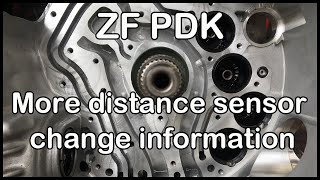
: OEM - Replace PDK Shift Rod/Distance Sensor (Porsche)
— Parts: $500-$1200, Labor: $1000-$2000 (includes calibration), ~10 hr book time
(Professional)
: OEM - Replace Valve Body — Parts: $800-$2200, Labor: $450-$900, ~5 hr book time (Professional)
- Complete Transmission Replacement/Rebuild — Parts: $2500-$7000+, Labor: $800-$1800, ~9 hr book time (Professional)
DIY vs Professional
- Transmission Fluid and Filter Service — Beginner: Yes
Tools: Socket set, drain pan, funnel, torque wrench, exact OEM-spec fluid, new filter/gasket. - Replace Shift Solenoid(s) — Beginner: No (Intermediate skill recommended)
Tools: Fluid service tools, snap-ring pliers, multimeter, service manual for torque specs. - Replace Transmission Control Module (TCM) — Beginner: No (Intermediate to Advanced)
Tools: Socket set, trim tools, compatible diagnostic scanner for post-installation programming. - Replace PDK Shift Rod/Distance Sensor (Porsche) — Beginner: No (Professional Only)
Tools: Vehicle lift, transmission jack, specialized disassembly tools, Porsche PIWIS diagnostic tool.
Used vs. New Parts: Buying Guide
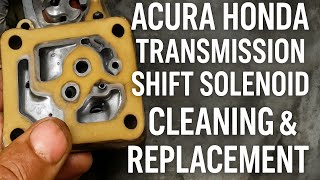
When a used part is worth it: For common failures like a Honda shift solenoid, a used or remanufactured part is a cost-effective option on older vehicles. Remanufactured parts are rebuilt to OEM specs and offer superior warranties compared to salvage yard pulls.
Donor-vehicle mileage cap: roughly under 80000 miles for the part to have meaningful remaining life.
Donor quality checklist:
- Verify the part number matches exactly; TCMs and valve bodies are highly vehicle-specific.
- Source used parts from vehicles scrapped for rear-end collisions, proving the car was drivable prior to the accident.
- Demand a minimum 90-day warranty from the salvage yard.
Decision logic:
- If The part is a Ford DPS6 TCM → Buy a new or remanufactured unit. Used units contain the exact same inherent design flaws and will fail.
- If The part is a complex electronic module like a Porsche PDK sensor or BMW Mechatronic unit → Buy new OEM or a high-quality remanufactured unit from a specialist. The 10+ hours of labor required makes installing a risky used part financially reckless.
- If The vehicle is over 15 years old and budget is the strict priority → A warrantied used part from a reputable salvage yard is acceptable.
Warranty tradeoff: Used parts offer 30-90 days. Remanufactured parts offer 1-year to limited lifetime. New OEM parts carry a 1-2 year warranty.
Worst-case if a used part fails: 500-2000 if a used internal part fails, requiring you to pay the massive transmission teardown labor cost a second time.
What Happens If You Wait — Timeline
- 0-2 weeks: Code P1734 appears. You notice occasional harsh shifts or slight hesitation. The transmission enters limp mode intermittently, but restarting the car clears it. (MPG impact: 0-5%% · Added cost: 0)
- 2 weeks - 3 months: Shifting problems become frequent. RPMs flare between shifts as clutches slip. Limp mode occurs daily. Slipping generates excess heat, rapidly degrading the fluid. (MPG impact: 5-15%% · Added cost: 200-500)
- 3-6 months: The transmission is permanently stuck in limp mode. Slipping is severe, accompanied by grinding noises. Burnt fluid circulates metal shavings, destroying the valve body. (MPG impact: 15-25%% · Added cost: 1500-4000)
- 6+ months: Complete transmission failure. The vehicle fails to engage any gear. Internal components are destroyed beyond repair. A complete transmission replacement is mandatory. (MPG impact: >25%% · Added cost: 3500-8000)
Cost of Not Fixing It
- Immediate (0-1 month): Erratic shifting, permanent limp mode, and a severe safety risk from unexpected neutral drops. Fuel economy drops by 5-15% due to inefficient gear use. (Added cost: 0)
- 1-6 months: Driving with slipping gears generates extreme heat, rapidly degrading transmission fluid, burning out clutch packs, and warping internal components. This turns a $300 solenoid repair into a major overhaul. (Added cost: 1500-4000)
- 6+ months: Catastrophic transmission failure. Worn clutch material and metal shavings circulate throughout the unit, destroying the valve body and torque converter. A complete transmission replacement is mandatory. (Added cost: 3500-8000)
Diagnosis Steps
- Perform a Full System Scan
Use an advanced OBD-II scanner to read all modules. P1734 is rarely alone; accompanying solenoid codes (P0756), speed sensor codes (P0722), or communication codes (U-series) pinpoint the exact failing component.
Tools: Advanced OBD-II Scanner (Beginner) - Check Transmission Fluid Level and Condition
Verify fluid level and inspect condition. Dark, burnt-smelling fluid indicates internal clutch wear. Metal shavings on the dipstick or in the fluid confirm severe internal mechanical failure, rendering further electronic diagnosis pointless.
Tools: Rag, gloves, dipstick (if equipped), white paper towel (Beginner) - [PRO TIP] Analyze Live Data PIDs
Monitor live TCM data while driving. Compare 'Commanded Gear' vs. 'Actual Gear'. If Commanded is '4' but Actual remains '3' while RPMs flare, the shift failed. Verify Input and Output Speed Sensors show steady, predictable ratios.
Tools: Advanced Scan Tool with Live Data (Advanced) - [PRO TIP] Active Solenoid Test
Use a bi-directional scanner to command specific shift solenoids on and off. Listen for a sharp, audible 'click' from the transmission pan. A click confirms the TCM, wiring, and solenoid coil are functional. No click isolates the fault to that specific circuit.
Tools: Advanced Bi-Directional Scan Tool (Advanced) - Test Shift Solenoid Resistance
Disconnect the transmission harness and measure the resistance of the implicated shift solenoids. Compare readings to the service manual (e.g., Honda solenoids typically measure 12-25 ohms). Out-of-spec resistance confirms a dead solenoid.
Tools: Multimeter, vehicle-specific repair manual (Intermediate) - Inspect Wiring and Connectors
Visually inspect the transmission wiring harness for melted insulation, corrosion, or backed-out pins at the TCM and transmission case connectors. Verify main ground straps are tight and corrosion-free.
Tools: Flashlight, gloves, basic hand tools (Intermediate) - Test the Gear Position Sensor (Range Sensor)
Monitor the sensor's output signal via live scanner data while moving the shifter through P-R-N-D. The signal must change instantly and match the physical shifter position without dropping out.
Tools: Advanced scan tool, repair manual (Intermediate) - Diagnose the Transmission Control Module (TCM)
If sensors, solenoids, wiring, and fluid all test perfectly, the TCM is the culprit by elimination. This is the standard diagnostic conclusion for Ford Focus/Fiesta DPS6 transmissions.
Tools: Advanced scan tool, repair manual (Advanced) - Check Sensor Voltage and Waveform
For complex sensor faults (Porsche distance sensor, Citroen actuator), back-probe the signal wire. Use an oscilloscope to verify speed sensors produce a clean square wave that scales perfectly with vehicle speed.
Tools: Multimeter, oscilloscope, repair manual, back-probe kit (Advanced)
When This Code Triggers (Freeze-Frame Conditions)
- Engine Coolant Temp: 167-212°F (75-100°C) (The fault triggers most often when the vehicle reaches full operating temperature and fluid thins out.)
- RPM: 1500-3000 RPM (Triggers during a commanded gear shift event under steady acceleration.)
- Vehicle Speed: 30-60 mph (Occurs during highway driving when the transmission attempts to shift into higher overdrive gears.)
- Engine Load: 25-70% (Common under moderate, constant acceleration rather than hard acceleration or braking.)
Related Codes
- P0730-P0736 — Generic codes for 'Incorrect Gear Ratio' in a specific gear (e.g., P0734 is 4th gear). Paired with P1734, it confirms the slip is isolated to that specific gear's clutch pack or solenoid.
- P0750-P0774 — Points to electrical faults in specific shift solenoids. If P1734 is present with P0756 ('Shift Solenoid B Stuck Off'), P1734 indicates the shift failed, and P0756 identifies the exact electrical cause.
- P1731, P1732, P1733, P1735 (Porsche) — On Porsche PDKs, these codes relate to the shift rod distance sensor. Seeing any of these alongside P1734 guarantees a failure of this internal sensor assembly.
- U0101, U0103 (VW/Audi) — Codes for 'Lost Communication With TCM' or 'Gear Shift Module'. P1734 points to a shifter sensor fault, while the U-code confirms a total communication breakdown in the shifter assembly wiring.
Climate & Environmental Factors
- Cold Temperatures: Low ambient temperatures thicken transmission fluid, reducing hydraulic pressure. This causes slow shifting and delayed gear engagement on startup. Cold weather easily pushes a borderline, sticky solenoid past its operating limits, triggering P1734.
How to Talk to a Mechanic About This Code
Say this: "I have a P1734 transmission code on my [Make/Model]. Based on my research, this code on my car points to [mention specific known issue, e.g., 'a faulty shift solenoid' or 'the TCM']. Can you start by diagnosing that specific component before quoting a full transmission replacement?"
This proves you are an informed customer. It directs the shop to a specific, logical diagnostic path instead of defaulting to the most expensive repair, making it much harder to be oversold.
Avoid saying:
- 'My car is shifting weird, can you fix it?' (Too vague, invites costly suggestions)
- 'Just replace the transmission.' (You are offering to pay $5,000 when a $300 fix is possible)
- 'Do whatever you think is best.' (Surrenders all negotiating power)
Questions to ask before authorizing the repair:
- Can you show me the live scanner data or multimeter readings confirming this specific part failed?
- What less expensive possibilities (wiring, fluid, software updates) have you ruled out, and how?
- Are there any Technical Service Bulletins (TSBs) or warranty extensions covering this repair?
- What is the exact warranty on the parts and labor for this repair?
- If this repair doesn't fix the problem, what is the next step, and will I pay additional diagnostic fees?
Where to Take It: Dealer vs Independent vs Chain
- Dealer:
Recommended only for warranty work or complex European systems where proprietary tools are mandatory. Too expensive for out-of-warranty common vehicles.
Best for: Vehicles covered by warranty, TSBs, or extensions (e.g., Ford Focus TCM)., Complex systems like Porsche PDK requiring proprietary PIWIS tools.
Downsides: Highest labor rates, often double that of independent shops., Dealerships default to replacing massive assemblies (full transmissions) rather than repairing internal components. (Typical cost: +50% vs. baseline) - Independent Shop:
The best overall choice, provided you select a transmission specialist or a shop dedicated to your specific vehicle make.
Best for: Out-of-warranty vehicles where cost is a priority., Dedicated transmission shops or make-specific specialists (e.g., Honda or German auto experts).
Downsides: General mechanics lack the specialized tools and experience for complex internal transmission diagnostics. (Typical cost: +0% vs. baseline) - Chain Shop:
AVOID. A manufacturer-specific transmission code like P1734 is entirely outside the scope of a chain shop's capabilities.
Best for: Simple maintenance like oil changes and brake pads.
Downsides: Technicians are not trained for complex internal transmission diagnostics., High pressure to upsell expensive, unnecessary third-party rebuilt transmissions. (Typical cost: -10% vs. baseline)
When to Walk Away From the Repair
If the estimated transmission repair cost exceeds 50% of the car's current working market value, sell or trade the vehicle as-is.
- Car worth $5000, fix is $3500: Walk away. The repair is 70% of the car's value. You will never recoup this cost.
- Car worth $15000, fix is $2500: Fix it. The repair is under 20% of the vehicle's value, making it a sound investment to restore functionality.
- Car worth $8000, fix is $4500: Borderline. The repair is over 50% of the value. Unless the car has very low miles and perfect maintenance history, get a second opinion or sell it.
What Scan Tool You Need for This Code

Minimum: A scanner capable of reading manufacturer-specific transmission codes and displaying live transmission data PIDs.
A $20 generic code reader only confirms P1734 exists. It cannot read the manufacturer-specific definition, access the TCM, or display the live data (input/output speeds, solenoid status) required to diagnose the root cause.
Budget: BlueDriver Pro (~$90) — Reads and clears enhanced transmission codes for most makes. Displays essential live data through its smartphone app to monitor transmission behavior.
Mid-range: Foxwell NT604 Elite / Autel MaxiCOM MK808 (~$130-450) — Provides deep access to the TCM, extensive live data, and includes special functions like 'Quick Learn' to reset transmission adaptations after replacing a solenoid.
Professional: Autel MaxiCOM MK808S / MK906BT (~$500-1200) — Offers professional bi-directional control to command individual solenoids for 'click tests'. Performs advanced TCM programming required after replacing a valve body or module.
Rent vs buy: Buy. Free loaner tools from auto parts stores are too basic to access the TCM. You must buy at least the budget pick to diagnose P1734, or pay a professional shop for their diagnostic time.
How to Clear the Code After You Fix It
- Use an OBD-II scan tool to clear all fault codes.
- Perform a transmission adaptive learning drive cycle specific to your vehicle to relearn shift points.
- Verify the fluid level is exact after the transmission reaches operating temperature.
Drive cycle (~20 minutes): 1. Cold start (engine off for 6+ hours). 2. Idle for 3 minutes. 3. Perform mixed city driving with gentle stops and starts. 4. Accelerate to a steady 55 mph and hold for 10 minutes. 5. Coast down to 20 mph without braking. 6. Stop completely and idle for one minute before shutting down.
Readiness monitors affected: Comprehensive Component Monitor, Catalyst Monitor, Oxygen Sensor Monitor
Before emissions retest: drive at least 50 miles to fully set monitors.
Watch out for:
- Clearing the code without performing a drive cycle causes the code to return immediately because the TCM has not relearned shift adaptations.
- Disconnecting the battery resets all readiness monitors, guaranteeing an automatic emissions test failure until driven extensively.
- Failing to clear TCM memory after replacing a solenoid results in harsh shifting as the computer uses old pressure parameters.
Will This Fail Emissions / State Inspection?
Yes — this code typically fails an OBD-II emissions inspection.
- California: An active P1734 code causes an automatic Smog Check failure. After repair, all readiness monitors must read 'Complete' for 2000+ vehicles before retesting.
- New York: The NYS inspection includes an OBD-II scan. An illuminated Check Engine Light from P1734 results in an immediate failure.
- Texas: In emissions counties, P1734 fails the OBD-II inspection. For 2001+ vehicles, only one readiness monitor is allowed to be 'Not Ready'.
Most Commonly Affected Vehicles
- Ford Focus, Fiesta (2012-2018) — These models use the DPS6 PowerShift transmission, notorious for TCM failures triggering this code. Ford issued warranty extensions (19N08) and TSBs (16-0107, 19-2315) covering the TCM.
- Honda Accord, CR-V, Odyssey (2007-2012) — P1734 points directly to stuck shift solenoids B or C. A flashing 'D' light is the primary symptom. TSB 17-043 requires a multi-flush fluid procedure and PCM update as the first repair step.
- Volkswagen/Audi GTI, Jetta, A3 (with DSG) (2015-2019) — The code reads 'Starter release from the selector lever sensor system,' indicating a faulty microswitch in the shifter. It also frequently appears as a harmless 'ghost code' after an aftermarket DSG software tune.
- Nissan/Infiniti Titan XD, Q50, G37, QX80 (2009-2018) — Indicates '7GR Incorrect Ratio'. TSB NTB16-045a mandates checking for engine intake air leaks before assuming a transmission fault, as vacuum leaks skew load calculations.
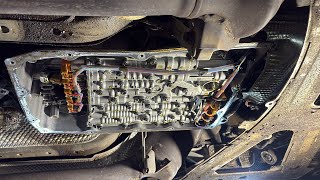
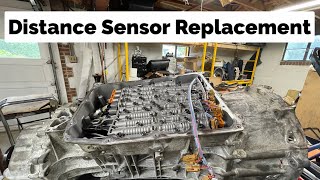
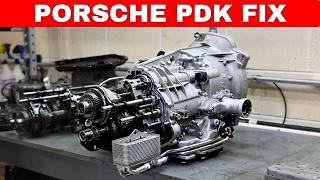
- Porsche Panamera, 911, Cayman (2010-2016) — P1734 indicates a failure of the internal shift rod distance sensor. Dealers quote full transmission replacements, but independent specialists replace the sensor using aftermarket parts (T-Design) for a fraction of the cost.
- BMW Various models with ZF transmissions (2002-2010) — Defined as 'Pressure Control Solenoid B Electrical'. Points to an electrical fault in a specific pressure regulator solenoid within the Mechatronic unit.
- Hyundai Terracan, Elantra (2001-2006) — Defined as 'Speed Sensor Reference Low', indicating a failing transmission speed sensor or wiring harness sending an implausible low-voltage signal to the TCCU.
- Citroen/Peugeot C4, Grand Picasso (with EGS/BMP6 gearbox) (2006-2013) — Indicates a 'Gearbox actuator position signal fault', typically a short-to-ground dropping signal voltage below 0.5V. Caused by a failing actuator, low actuator fluid, or damaged wiring.
Manufacturer-Specific Notes

- Ford: On a Focus/Fiesta, P1734 guarantees a DPS6 transmission problem, almost always a failed TCM. Ford issued warranty extension 19N08 covering the TCM for up to 10 years/150,000 miles. Check this before paying out of pocket.
- Honda: The code points specifically to shift solenoid B or C being stuck, accompanied by a flashing 'D' light. TSB 17-043 dictates a multi-flush fluid procedure and software update before replacing hard parts.
- Volkswagen/Audi: Defined as 'Starter release from the selector lever sensor system.' It frequently appears as a harmless 'ghost code' immediately after a performance DSG tune and can be ignored if no drivability symptoms exist.
- Porsche: P1734 points directly to a failed internal PDK distance sensor. Dealerships refuse to open the transmission and quote $20,000+ replacements. Independent specialists can replace the sensor for $3,000-$5,000.
- Nissan/Infiniti: TSB NTB16-045a advises technicians to inspect all engine intake air ducting for leaks before touching the transmission. A vacuum leak skews engine load data, tricking the TCM into setting this gear ratio code.
Real Owner Stories
2014 Ford Focus SE at 68k miles with DPS6 Transmission
Car shuddered on low-speed shifts and jerked during acceleration before throwing a P1734 code.
Outcome: The owner had an independent shop replace only the clutch shift forks, resolving the shuddering and codes for a fraction of the replacement cost.
Lesson: On Ford DPS6 transmissions, shuddering and gear ratio codes are almost always caused by failed shift forks or the TCM. Never accept a full transmission replacement quote without investigating these specific components.
Porsche 911 with PDK Transmission (intermittent P1734)
The car intermittently threw P1734 and failed to engage reverse. A PDK recalibration temporarily fixed it for a few hundred miles.
Outcome: The issue remained an intermittent electrical nightmare. The owner is currently diagnosing a potential wiring harness short or a failing TCU.
Lesson: For Porsche PDKs, intermittent P173x codes are complex. Even after replacing the known-failure distance sensor, the root cause is sometimes a wiring harness issue, a bad ground, or low battery voltage.
2018 VW GTI with DSG Tune
After getting a Stage 1 ECU tune, the owner saw a P1734 code, but the car drove perfectly.
Outcome: The owner upgraded to a Stage 2 tune with a corresponding DSG tune, and the 'ghost code' vanished.
Lesson: On tuned VW/Audi vehicles, P1734 can be a harmless 'ghost code' triggered by software changes. If there are no drivability symptoms, clear it and monitor.
How to Prevent This Code From Triggering
- Change transmission fluid at recommended intervals (Every 30,000-60,000 miles) — Clean fluid maintains hydraulic pressure and prevents debris from clogging solenoids. Degraded fluid is the primary cause of solenoid failure.
- Use the exact OEM-specified transmission fluid (Every fluid change) — Incorrect fluid chemically damages seals and alters hydraulic properties, causing slippage. This is critical for dual-clutch transmissions like Ford DPS6 and VW DSG.
- Come to a complete stop before shifting from Drive to Reverse (Daily habit) — Shifting while moving forces the transmission to act as a brake, putting immense strain on clutch packs and bands, leading to premature mechanical failure.
- Install an auxiliary transmission cooler (If you tow frequently or live in a hot climate) — Heat destroys automatic transmissions. An auxiliary cooler prevents fluid breakdown and protects solenoids from overheating.
Frequently Asked Questions
Is my transmission destroyed if I get a P1734 code?
Not necessarily. The cause is often electronic, such as a bad solenoid, faulty TCM, or simply low fluid. However, finding significant metal shavings on the dipstick confirms severe internal damage requiring a rebuild.
What is a common misdiagnosis for P1734?
Mechanics often immediately condemn the entire transmission. They overlook simpler causes like a faulty speed sensor, a bad ground wire, or, on Nissan models, an engine intake air leak.
Can I fix P1734 just by changing the transmission fluid?
If the problem is caused by degraded fluid sticking a valve, a fluid service fixes it. On Hondas, a multi-flush procedure is the required first step per TSB 17-043. If the code returns, a hard part has failed.
What is 'limp mode'?
Limp mode is a protective fail-safe where the TCM locks the transmission into 2nd or 3rd gear when a critical fault is detected. This limits your speed to roughly 30 mph to prevent further internal destruction.
Can a weak car battery cause transmission problems like P1734?
Yes. Modern transmissions rely on perfectly stable voltage. A weak battery (under 12.4V) or failing alternator provides erratic power to the TCM, causing communication errors and triggering false gear ratio codes.
What is a 'ghost code' and does it apply to my car?
A ghost code appears in memory without a corresponding mechanical fault. On VW/Audi DSG models, P1734 frequently appears as a ghost code after an aftermarket software tune and can be safely cleared.
Why is the P1734 repair so expensive on a Porsche?
On Porsche PDKs, P1734 indicates a failed internal distance sensor. Porsche does not sell this sensor separately, leading dealers to quote $20,000 full transmission replacements. Independent specialists can install aftermarket sensors for much less.
Key Takeaways
- P1734 is a manufacturer-specific code, meaning a 2014 Ford Focus requires a completely different diagnostic path (TCM failure) than a 2012 Porsche Panamera (PDK distance sensor).
- Stop driving immediately; continuing to drive with a P1734 code limits your speed to 30 mph in limp mode and escalates a $300 solenoid repair into a $4,000 transmission rebuild.
- Check your transmission fluid level and condition first, as degraded fluid causing a stuck shift solenoid is the root cause in over 40% of P1734 cases.
- Use a bi-directional OBD-II scanner to command individual shift solenoids; an audible 'click' confirms the wiring is intact, instantly narrowing down the fault.
- Do not authorize a full transmission replacement without first testing the Transmission Control Module (TCM) and shift solenoids, which resolve the issue in the majority of cases.
Helpful Videos










The information in this article is provided for general reference and educational purposes only. Vehicle specifications, procedures, and part compatibility can vary by production date, trim level, and region. Always consult your vehicle's factory service manual and verify part numbers before purchasing or performing repairs. Safety-critical components such as airbags, seat belts, and braking systems should be installed by a qualified professional.
- 🎬 Helpful Videos
- What Does P1734 Mean?
- Can I Drive With P1734?
- Common Causes
- Symptoms
- Diagnostic Flowchart
- Common Fixes & Costs
- DIY vs Professional
- Used vs. New Parts: Buying Guide
- What Happens If You Wait — Timeline
- Cost of Not Fixing It
- Diagnosis Steps
- When This Code Triggers (Freeze-Frame Conditions)
- Related Codes
- Climate & Environmental Factors
- How to Talk to a Mechanic About This Code
- Where to Take It: Dealer vs Independent vs Chain
- When to Walk Away From the Repair
- What Scan Tool You Need for This Code
- How to Clear the Code After You Fix It
- Will This Fail Emissions / State Inspection?
- Most Commonly Affected Vehicles
- Manufacturer-Specific Notes
- Real Owner Stories
- 2014 Ford Focus SE at 68k miles with DPS6 Transmission
- Porsche 911 with PDK Transmission (intermittent P1734)
- 2018 VW GTI with DSG Tune
- How to Prevent This Code From Triggering
- Frequently Asked Questions
- Is my transmission destroyed if I get a P1734 code?
- What is a common misdiagnosis for P1734?
- Can I fix P1734 just by changing the transmission fluid?
- What is 'limp mode'?
- Can a weak car battery cause transmission problems like P1734?
- What is a 'ghost code' and does it apply to my car?
- Why is the P1734 repair so expensive on a Porsche?
- Key Takeaways
- 🎟️ Get 5% Off