

Ultimate Guide to OBD-II Code P0700: Transmission Control System Malfunction
The Most Comprehensive Resource for Understanding, Diagnosing, and Fixing Code P0700
- P0700 is strictly an informational gateway code that commands the check engine light on, but does not identify the specific failing part.
- You must use an advanced OBD-II scanner to pull the secondary codes (like P0750 or P0868) hidden inside the Transmission Control Module (TCM) to diagnose the actual fault.
- Most P0700 triggers stem from accessible electrical issues—like a $50 speed sensor, a $200 solenoid pack, or a chafed wire—rather than a $4,000 transmission failure.
- Check the transmission fluid level and perform a battery load test first, as low fluid or voltage drops below 12.0V frequently trigger false transmission codes.
- Stop driving immediately; operating a vehicle in 'limp mode' with a P0700 code escalates a $300 solenoid repair into a $4,000 complete transmission replacement.
What Does P0700 Mean?

The P0700 code is a general, informational fault code indicating that the Transmission Control Module (TCM) has detected a malfunction within the automatic transmission system. Think of it as a 'master alert' or a 'gateway code'. Its sole purpose is to command the main Engine Control Module (ECM) to illuminate the check engine light (Malfunction Indicator Lamp or MIL). The P0700 code itself does not identify the specific problem; it signals that one or more specific, secondary fault codes are stored within the TCM.
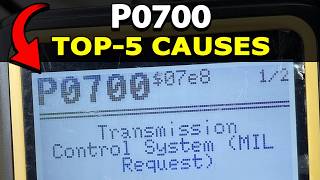
Technical definition: The official SAE/OBD-II definition for code P0700 is "Transmission Control System (MIL Request). 🎬 Watch: A quick overview of P0700 causes and fixes" This means the Transmission Control Module (TCM) has self-diagnosed a fault and sent a request over the vehicle's Controller Area Network (CAN) bus to the Engine Control Module (ECM) to turn on the Malfunction Indicator Lamp (MIL).
Can I Drive With P0700?
No — Do Not Drive. Driving is not recommended. While the vehicle seems to operate, doing so risks severe, irreversible transmission damage. A minor issue quickly escalates into a multi-thousand dollar repair. In a worst-case scenario, the underlying fault locks the transmission in a high gear on the highway, creating a significant safety hazard, or causes momentary wheel lock-ups. Continuing to drive turns a $300 solenoid fix into a $4,000+ transmission replacement.
Common Causes


- Low or dirty transmission fluid (Very Common) — Fluid that is low, burnt, or contaminated with debris cannot provide the necessary hydraulic pressure for shifting, leading to overheating and component wear. This is the simplest cause to check and fix.
- Faulty shift solenoids or solenoid pack (Common) — Shift solenoids are electronically controlled valves that direct fluid flow to change gears. They fail electrically (open/short) or mechanically (sticking due to varnish or debris), causing harsh, delayed, or incorrect shifting.
- Wiring or connector issues (Common) — Damaged, corroded, or loose wires and connectors in the harness between the TCM and transmission components are a frequent cause. Vibration, heat, and moisture lead to intermittent signals or complete communication loss.
- Faulty transmission sensors (e.g., speed, temperature, range) (Common) — The TCM relies on data from input/output speed sensors, fluid temperature sensors, and the range sensor (PRNDL input) to make correct shifting decisions. Incorrect or missing data from a failed sensor confuses the TCM and triggers a fault.
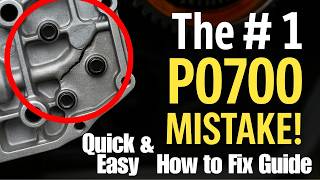
- Faulty Transmission Valve Body (Less Common) — The valve body is a complex hydraulic control center. Internal passages become clogged, or its integrated solenoids and pressure switches fail, leading to shifting problems and setting a P0700 code.
- Faulty Transmission Control Module (TCM) (Less Common) — The TCM fails due to internal circuit problems, software corruption, or damage from heat and vibration. A P0700 code with no other accompanying codes points to an internal TCM failure, especially if the scanner cannot communicate with the module.
- Low System Voltage (Weak Battery/Alternator) (Rare) — The TCM and its solenoids require a stable voltage (typically 12.0-14.5V) to function. A weak battery or a failing alternator causes voltage drops that lead to erratic electronic behavior and false trouble codes.
- Internal mechanical transmission failure (Rare) — In severe cases, worn-out clutches, damaged gears, or a failing torque converter cause the code. This is accompanied by significant metal debris in the transmission fluid and severe symptoms like grinding noises.
Symptoms
- Check Engine Light is on — This is the primary and often only initial symptom. The P0700 code's sole job is to request the check engine light be turned on. A separate transmission warning light also illuminates on some models.
- Harsh, erratic, or delayed shifting — The transmission bangs into gear, slips, or hesitates before shifting.
- Vehicle enters "Limp Mode" — To prevent further damage, the TCM locks the transmission in a single gear (often 2nd or 3rd), severely limiting speed and power.
- Decreased fuel economy — Inefficient shifting or being stuck in the wrong gear forces the engine to work harder, consuming more fuel.
- Stalling or poor engine performance — The engine stalls when coming to a stop, or runs poorly due to the incorrect load from the transmission.
- Inaccurate or erratic speedometer — If the fault is related to the output speed sensor, the speedometer behaves erratically or drops to zero while driving.
- Transmission-specific codes stored in TCM (scan-tool only — no driver-felt sign) — The P0700 code in the ECM is a request from the TCM. The actual cause is stored as one or more specific codes (e.g., P0751, P0715) in the TCM's memory.
Diagnostic Flowchart
Tap your situation to follow the diagnostic path that matches what you're seeing on this code.
Common Fixes & Costs
- Professional Diagnosis — Parts: $0, Labor: $100-$200, ~1.5 hr book time (Professional)
- Transmission Fluid and Filter Change — Parts: $50-$120, Labor: $120-$400, ~1 hr book time (DIY)
- Replace Transmission Shift Solenoid
— Parts: $25-$400, Labor: $200-$500, ~3 hr book time
(Intermediate)
: OEM - Replace Molded Leadframe (Ford 6R80)
— Parts: $200-$400, Labor: $400-$800, ~4.5 hr book time
(Advanced)
: OEM - Replace Transmission Speed Sensor — Parts: $30-$150, Labor: $100-$300, ~1.5 hr book time (DIY)
- Replace Transmission Control Module (TCM)
— Parts: $300-$1000+, Labor: $150-$300, ~2.5 hr book time
(Professional)
: OEM
Used vs. New Parts: Buying Guide
When a used part is worth it: For major components like a complete transmission assembly on an older, high-mileage vehicle where the cost of a new unit is prohibitive. Also for external, easily-swapped parts like a transmission control relay if sourced from a reliable, low-mileage donor.
Donor-vehicle mileage cap: roughly under 80000 miles for the part to have meaningful remaining life.
Donor quality checklist:
- Verify the donor vehicle's mileage and reason for being salvaged (accident damage is better than internal failure).
- For electronic parts like a TCM or solenoid pack, match part numbers exactly.
- Avoid parts from flood-damaged or rust-belt vehicles due to risk of corrosion and moisture intrusion.
Decision logic:
- If The part is a sensor, solenoid, or internal wiring harness → Buy new. The labor to access these parts is significant, and the risk of a used part failing shortly after installation is too high.
- If The part is a TCM for a vehicle > 10 years old and a new one is unavailable or extremely expensive → A used or remanufactured TCM is a viable option, but ensure it comes with a warranty and that you have a shop capable of programming it.
- If Vehicle is relatively new (<80k miles) and the budget allows → Always favor new OEM or high-quality aftermarket parts to ensure longevity and warranty coverage.
Warranty tradeoff: Used parts from a salvage yard typically offer a 30-90 day warranty on the part only, not the labor to install it. New aftermarket parts often carry a 1-3 year warranty, while OEM parts have a 12-month warranty.
Worst-case if a used part fails: $500-$1500 if a used internal part (solenoid, sensor) fails after installation, as you must pay for repeat labor and a new part.
What Happens If You Wait — Timeline
- 0-1 month: Check Engine Light illuminates with P0700. Vehicle shows no other symptoms, or enters 'limp mode' with limited gears. The underlying issue (e.g., faulty sensor, sticky solenoid) is present but has not yet caused significant secondary damage. (MPG impact: 0-10%% · Added cost: $0)
- 1-4 months: The initial fault (e.g., low pressure, slipping component) causes excessive heat. Transmission fluid breaks down and burns, losing its lubricating properties. You notice a decrease in fuel economy and occasional harsh shifts or shudders. (MPG impact: 5-15%% · Added cost: $50-$200 in wasted fuel. The original, simpler repair now requires a full fluid flush to remove burnt fluid.)
- 4-8 months: Burnt, contaminated fluid circulates through the transmission, causing abrasive wear. Fine metal particles and clutch material clog the filter and small passages in the valve body. Solenoids fail from contamination and heat. A simple sensor/solenoid fix is no longer sufficient. (MPG impact: 10-20%% · Added cost: $1,200-$2,500. The problem escalates from a $400 solenoid fix to requiring a valve body replacement and extensive cleaning, or a partial rebuild.)
- 8+ months: Catastrophic failure. Continuous operation with contaminated fluid and high heat destroys clutch packs, warps metal components, and damages planetary gears or the torque converter. The vehicle stops moving entirely. (MPG impact: 20%+% · Added cost: $4,000-$9,000+. The only option is a complete transmission rebuild or replacement. The initial, inexpensive fix was ignored into a repair that costs more than the vehicle is worth.)
Cost of Not Fixing It
- Short-Term (0-1 month): Decreased fuel economy (5-15%) and poor drivability (harsh shifting, hesitation). Vehicle is stuck in 'limp mode,' limiting speed and creating a safety hazard. (Added cost: Negligible, other than increased fuel costs.)
- Medium-Term (1-6 months): A minor issue like a faulty solenoid or sensor causes excessive clutch slippage and overheating. This contaminates the fluid with clutch material and metal shavings, leading to valve body damage. (Added cost: $1500-$3000 (A simple $300 solenoid fix escalates to requiring a valve body replacement or transmission rebuild).)
- Long-Term (6+ months): Catastrophic internal transmission failure. Continuous operation with low pressure, slipping clutches, or contaminated fluid destroys planetary gears, the torque converter, and other hard parts. The vehicle loses power suddenly or stops moving altogether. (Added cost: $4000-$9000+ (The only option becomes a complete transmission replacement or rebuild).)
Diagnosis Steps

- Retrieve All Trouble Codes from All Modules
Use an advanced OBD-II scanner capable of reading manufacturer-specific codes from the Transmission Control Module (TCM). A basic code reader only shows P0700 from the ECM. The specific codes stored in the TCM (e.g., P0750, P0715) are essential for diagnosis. Do not proceed without them.
Tools: Advanced OBD-II Scanner (Beginner) - Check Transmission Fluid Level and Condition
With the engine running and in Park (or as specified by the owner's manual), check the fluid. It must be bright red and at the correct level. Brown/black color or a burnt smell indicates overheating. Fine metallic 'glitter' points to serious internal wear.
Tools: Rag, Gloves (Beginner) - Inspect Wiring Harness and Connectors
Visually inspect the entire wiring harness running to the transmission and the TCM. Look for chafed wires, melted insulation near exhaust components, and corroded or loose connector pins. Pay close attention to ground straps.
Tools: Flashlight, Mirror (Intermediate) - Check for Technical Service Bulletins (TSBs)
Before extensive testing, search for TSBs related to P0700 for your specific vehicle year, make, and model. Manufacturers release bulletins for known software glitches or common component failures, saving hours of diagnostic time.
Tools: Online Access or ALLDATA/Mitchell1 Subscription (Intermediate) - Analyze Live Scan Tool Data
Using a capable scanner, monitor key transmission PIDs (Parameter IDs). Compare commanded versus actual values. Transmission Fluid Temperature (TFT) must be between 175-225°F (80-107°C) during normal operation. Input Speed Sensor (ISS) and Output Speed Sensor (OSS) must show rational, corresponding values when in gear. Commanded Gear must match the Actual Gear. Line Pressure Commanded vs. Actual must align closely. A significant discrepancy points to hydraulic issues.
Tools: Advanced OBD-II Scanner (Advanced) - Test Specific Components (Sensors/Solenoids)
Using the specific codes from Step 1, test the implicated component. For a shift solenoid, check its resistance with a multimeter. On/off solenoids are typically >10 ohms, while regulating/PWM solenoids are <10 ohms. For a magnetic speed sensor, check resistance (often 200-1,000 ohms) or AC voltage output while spinning the shaft. For a temperature sensor, check resistance against a temp/resistance chart.
Tools: Multimeter, Vehicle-specific service manual (Advanced) - Pro Tip: Perform a TCM Power and Ground Voltage Drop Test
A faulty ground is a common, often-overlooked cause. With the ignition on, set a multimeter to DC Volts. Place the positive lead on the battery's positive terminal and the negative lead on the TCM's main power pin. The reading must be less than 0.5V. Then, place the positive lead on the battery's negative terminal and the negative lead on the TCM's ground pin; the reading must be less than 0.2V. A higher reading indicates excessive resistance in the circuit.
Tools: Multimeter, Vehicle-specific wiring diagram (Advanced) - Check CAN Bus Integrity
If you suspect a communication issue between modules, perform a basic check on the CAN bus. With the battery disconnected, measure the resistance between the CAN High and CAN Low pins at the DLC (OBD-II port). A healthy network reads approximately 60 ohms. A reading of 120 ohms suggests one of the two terminating resistors is offline, while a reading near 0 ohms indicates a short in the wiring.
Tools: Multimeter, DLC Pinout Diagram (Professional) - Perform a Transmission Line Pressure Test
If a pressure-related code (like P0868) is present, a mechanical pressure test is necessary. Connect a 300+ PSI fluid pressure gauge to the transmission's line pressure test port. Compare readings at idle and at a specified RPM in different gears against the manufacturer's specifications. Low pressure confirms a hydraulic fault (pump, filter, leak) while pressure that doesn't respond to TCM commands points to a faulty pressure control solenoid.
Tools: Transmission Pressure Gauge Set, Service Manual (Professional) - Pro Tip: Analyze Sensor Waveforms with an Oscilloscope
For intermittent sensor issues (like a speed sensor that drops out when hot), a multimeter is not fast enough. Use an oscilloscope to graph the sensor's signal while driving. A good speed sensor produces a clean, consistent square or sine wave that increases in frequency with speed. Dropouts, noise, or a distorted pattern on the scope indicate a failing sensor or wiring issue.
Tools: Automotive Oscilloscope (Scope), Probes, Service Manual (Professional)
When This Code Triggers (Freeze-Frame Conditions)
- Transmission Fluid Temp: 170-220°F (Vehicle at normal operating temperature.)
- RPM: 1500-2500 (During gear shifts or steady cruise.)
- Engine Load: 30-60% (Moderate acceleration or climbing a slight grade.)
- Vehicle Speed: 35-55 mph (Highway driving, often when attempting to engage torque converter lockup.)
Related Codes
- P0715 - P0728 — These codes relate to input speed, output speed, and temperature sensor circuits. The P0700 alerts you that a specific sensor fault code is stored in the TCM.
- P0750 - P0774 — This range of codes relates to specific shift solenoid electrical faults. For example, P0751 points to a performance problem with Shift Solenoid 'A'. The P0700 is the master alert for this type of issue.
- P0740 - P0744 — These codes indicate a problem with the Torque Converter Clutch (TCC) circuit or solenoid. When the TCM detects a TCC slip or circuit fault, it triggers P0700.
- P0840 - P0849 / P0870 - P0879 — This family of codes relates to the Transmission Fluid Pressure (TFP) sensors/switches. A code like P0868 indicates that the transmission line pressure is lower than specified.
Climate & Environmental Factors
- Extreme Cold / Freezing Temperatures: Transmission fluid thickens (increases in viscosity), causing delayed or harsh shifts until the vehicle warms up. This triggers performance-related codes. In specific cases, like 2023-24 Honda Hybrids, engine vibrations from ice formation under an exhaust valve during a cold start falsely trigger a P0700 code, addressed by TSB 25-017.
- High Humidity & Road Salt: In coastal regions or areas that use road salt in winter, accelerated corrosion is a major factor. Salt and moisture damage wiring harnesses, connector pins (especially at the main transmission connector), and crucial ground points, leading to intermittent electrical faults and communication codes.
- High Altitude: At high altitudes, the air is less dense, causing a natural reduction in engine power (roughly 3% per 1,000 ft). This forces the transmission to shift more frequently and hold gears longer, which is misinterpreted as a transmission problem. While it doesn't directly cause P0700, the altered engine load and shift patterns expose underlying issues.
How to Talk to a Mechanic About This Code
Say this: "I have a check engine light on and my scanner shows a P0700 code. I'd like to schedule a diagnostic appointment to pull the specific codes from the Transmission Control Module (TCM) and get a clear picture of what's wrong."
This signals that you understand P0700 is a generic code and that the real problem lies in the TCM. It focuses the shop on the correct diagnostic path and prevents them from simply quoting a price for a 'P0700 fix' without proper investigation.
Avoid saying:
- 'My transmission is failing, how much for a new one?'
- 'The internet says it's probably a solenoid, can you just replace that?'
- 'My check engine light is on, can you just fix it?'
Questions to ask before authorizing the repair:
- What specific trouble code(s) did you find in the TCM?
- Based on that code, what is the diagnostic procedure you will follow?
- Will you provide a written estimate with a breakdown of parts and labor before any work begins?
- What is the warranty on this specific repair, covering both parts and labor?
- Can you show me the old parts after the repair is completed?
Where to Take It: Dealer vs Independent vs Chain
- Dealer:
Best for: Vehicles under warranty, Complex repairs requiring vehicle-specific software (e.g., TCM programming), Known issues covered by a Technical Service Bulletin (TSB) or special coverage program
Downsides: Typically the highest labor rates, Defaults to replacing larger assemblies (e.g., entire valve body) instead of smaller components (Typical cost: +50% vs. baseline) - Independent Shop:
Excellent fit, especially for a reputable, ATRA-certified transmission specialist. They have the expertise for in-depth diagnosis without the dealer's overhead.
Best for: Out-of-warranty vehicles where cost is a major factor, Common, well-documented repairs (e.g., solenoid replacement, sensor replacement), Building a long-term relationship with a trusted mechanic
Downsides: Quality and expertise vary widely; vet shops carefully, Lacks the latest, most expensive manufacturer-specific diagnostic tools for very new or complex models (Typical cost: +0% vs. baseline) - Chain Shop:
AVOID for diagnosis. P0700 requires specialized knowledge beyond the scope of most chain shops. They either misdiagnose the issue or refer you to a specialist after charging a diagnostic fee.
Best for: Basic fluid and filter changes if you provide the correct fluid
Downsides: Technicians lack the specialized training for complex transmission diagnostics, High pressure to upsell services; recommends a full replacement or rebuild when a minor fix is all that's needed (Typical cost: -10% vs. baseline)
When to Walk Away From the Repair
If the estimated repair cost exceeds 50% of the car's private-party value (check Kelley Blue Book or Edmunds), it's time to seriously consider selling or trading it in.
- Car worth $5000, fix is $800: Fix it. This is a relatively inexpensive repair that keeps a valuable asset on the road.
- Car worth $4000, fix is $2500: Borderline (62.5%). Get a second opinion. If the rest of the car is in excellent shape, it is worth it. If not, this is a prime candidate to sell 'as-is' or trade in.
- Car worth $3000, fix is $4500: Walk away. The repair costs far more than the car is worth. Do not sink this money into the vehicle.
What Scan Tool You Need for This Code
Minimum: A scanner that reads manufacturer-specific codes for the Transmission Control Module (TCM).
A standard $20 code reader only shows the P0700 from the Engine Control Module (ECM). It cannot access the TCM to retrieve the specific, actionable codes (like P0751, P0868, etc.) that are the actual cause. Without this, you are completely blind.
Budget: BlueDriver Pro Scan Tool (~$100) — Connects to a smartphone app and reads and clears enhanced codes, including transmission (TCM), ABS, and SRS codes for most major brands. It provides live data and repair reports, making it the minimum viable tool for a DIYer to properly diagnose P0700.
Mid-range: Foxwell NT510 Elite / Xtool D7 (~$150-400) — These are handheld or tablet-style scanners that offer full system access and include bidirectional controls. This allows you to read TCM codes and command specific solenoids or components to activate, confirming if a part works without removing it first. This is a significant step up for accurate diagnosis.
Professional: Autel MaxiCOM MK808 / TopDon Phoenix Nano (~$500-800) — Provides OEM-level diagnostics. These tools offer comprehensive bidirectional control, ECU coding, and access to advanced functions like transmission relearn procedures after a repair. For complex issues or serious automotive work, these tools are as close to dealer-level as you can get.
How to Clear the Code After You Fix It
- Use an OBD-II scan tool to clear codes from both the ECM and TCM.
- Disconnecting the battery for at least 15 minutes also clears codes, but is not the preferred method.
- Perform a complete drive cycle to allow readiness monitors to reset.
Drive cycle (~30 minutes): A general drive cycle includes a cold start, a few minutes of idling, a period of city driving with multiple stops, and at least 10-15 minutes of steady highway-speed driving to allow the torque converter to lock up and all monitors to run.
Readiness monitors affected: Comprehensive Component Monitor, Catalyst Monitor, Evaporative System Monitor
Before emissions retest: drive at least 100 miles to fully set monitors.
Watch out for:
- Simply clearing the code with a basic scanner does not clear the code from the TCM, causing it to return instantly.
- Not performing a full drive cycle leaves readiness monitors incomplete, causing an automatic failure at an emissions testing station.
- If the root cause of the fault is not repaired, the code reappears as soon as the faulty condition is detected again.
Will This Fail Emissions / State Inspection?
Yes — this code typically fails an OBD-II emissions inspection.
- California: An illuminated Check Engine Light is an automatic failure for a smog check. All OBD-II readiness monitors must be set to 'Ready' before the test can be completed.
- New York: The NYS vehicle inspection includes an OBD-II scan. A P0700 code and illuminated MIL result in an automatic emissions test failure.
- Texas: In counties requiring emissions testing, an active P0700 code with the Check Engine Light on is an automatic failure. After repairs, you may only have one or two 'Not Ready' monitors to pass, depending on the vehicle's age.
Most Commonly Affected Vehicles
- Chrysler/Dodge/Jeep Various (Grand Caravan, Wrangler, Ram 1500) (2007-2016) — Often related to a faulty solenoid pack or the external transmission control relay. On models with the 62TE transmission, a common failure is the solenoid pack, with updated OEM part number 68376696AA.
- Ford F-150, Focus, Explorer (2011-2018) — On F-150s and other models with the 6R80 transmission, a faulty transmission molded leadframe (OEM p/n AL3Z-7G276-D) is a very common cause, covered under extended warranty program 19N01 for 10 years/150,000 miles. On newer F-150s with the 10-speed transmission, P0700 is linked to valve body issues or software glitches.
- Chevrolet/GMC Silverado, Cruze, Equinox (2011-2022) — On 2020-2022 Silverado/Sierra trucks with the 10-speed transmission, P0700 is frequently paired with P0747 due to a known valve body defect covered by Special Coverage N242454441 for 15 years/150,000 miles. On 2011-2015 Cruze models, P0700 is often a sign of TCM failure.
- Honda Accord, CR-V Hybrid (2023-2024) — A known software glitch causes a false P0700 during cold starts in freezing temperatures. The official fix is a software update detailed in Honda TSB 25-017.
- Toyota Camry, RAV4 (2002-2015) — Commonly associated with aging shift solenoids or internal TCM failure on high-mileage vehicles, leading to harsh shifting, particularly the 2-3 shift.
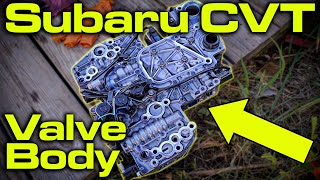
- Subaru Outback, Forester, Impreza with CVT (2010-2018) — Often appears with codes for the torque converter clutch solenoid or valve body issues. TSB 16-102-16R addresses diagnostic procedures for pressure sensor codes that trigger P0700. Subaru extended the CVT warranty on many of these models to 10 years/100,000 miles.
- Nissan Altima, Rogue, Sentra with CVT (2007-2018) — Frequently points to issues within the continuously variable transmission (CVT), such as a bad valve body, a failing step motor, or a faulty transmission range sensor.
- Hyundai/Kia Elantra, Sonata, Optima (2011-2016) — Often related to a faulty transmission fluid temperature sensor, which is integrated into the wiring harness inside the transmission. The updated part number is 46386-3B900. This issue is detailed in TSB 13-AT-012.
Manufacturer-Specific Notes
- Chrysler/Dodge/Jeep: On many models, P0700 is caused by a faulty solenoid pack or a failing transmission control relay. The vehicle gets stuck in one gear (limp mode). Intermittent power loss to the TCM from this relay is a common culprit.
- Ford: For 2011-2018 models like the F-150 and Explorer with the 6R80 transmission, look for a faulty molded leadframe (p/n AL3Z-7G276-D) inside the transmission. This contains speed sensors and wiring and was subject to Customer Satisfaction Program 19N01, extending warranty to 10 years/150,000 miles. On newer 10-speed transmissions, P0700 is caused by a software issue or valve body failure.
- General Motors (Chevrolet/GMC): For 2020-2022 trucks with the 10-speed transmission, P0700 is very frequently accompanied by P0747, indicating a known valve body defect. Check for coverage under Special Coverage N242454441 (15 years/150,000 miles) before paying for repairs. TSB #23-NA-102 also notes that the engine harness rubs against the alternator bracket, causing a short.
- Hyundai/Kia: On many 2011-2016 models, P0700 is triggered by codes P0711, P0712, or P0713, all pointing to a failed internal transmission fluid temperature sensor. The sensor is part of an updated wiring harness (p/n 46386-3B900) that must be installed by removing the valve body cover.
Real Owner Stories
2005 Dodge Grand Caravan at 100k miles with P0700 and limp mode.
Check engine light came on, and the transmission was stuck in 2nd gear (limp mode). A basic code scan showed P0700. The owner was concerned it was a major transmission failure.
Outcome: The owner replaced the transmission solenoid pack (an external, bolt-on part for this vehicle). After the replacement and a fluid top-off, the code cleared and did not return, restoring normal shifting. The total cost covered only the part and fluid, avoiding a multi-thousand dollar shop bill.
Lesson: On many Chrysler/Dodge vehicles, P0700 combined with limp-mode is frequently caused by a failed solenoid pack. Researching your specific vehicle's common P0700 causes points directly to the most likely and affordable fix.
2014 Subaru Forester at 185k miles with an intermittent P0700.
The check engine light illuminated with code P0700, but no other codes were present on a basic scanner. The car drove perfectly fine. The light sometimes cleared itself, then returned after the car was parked overnight.
Outcome: The intermittent P0700 was a sign of a failing replacement solenoid or a broader issue within the valve body not fixed by the initial spot repair. The owner ultimately replaced the entire valve body assembly to permanently resolve the issue.
Lesson: A P0700 with no other codes means your scanner isn't advanced enough to read the specific TCM fault. Furthermore, on complex components like a Subaru CVT valve body, replacing a single solenoid is often a temporary fix; the manufacturer-recommended repair requires replacing the entire assembly.
2004 Dodge Ram with P0700 only after hitting a large bump.
The check engine light only illuminated after driving over a specific, bumpy set of railroad tracks. The code was P0700. The light then went off by itself after a day or so of normal driving.
Outcome: Forum responses confirmed the diagnosis of a wiring issue. A wire in the main harness going to the transmission had rubbed through its insulation and momentarily shorted to ground when the vehicle was jostled, triggering the code.
Lesson: If a code is triggered by a specific physical event (hitting a bump, heavy rain), the cause is electrical. Before suspecting major components, carefully inspect the entire wiring harness for chafing, corrosion, or loose connectors.
How to Prevent This Code From Triggering
- Regular Fluid and Filter Changes (Every 30,000-60,000 miles (or per owner's manual)) — Clean fluid lubricates, cools, and provides hydraulic pressure. Degraded fluid loses its friction modifiers, causing overheating and accelerated wear on clutches and solenoids. A clogged filter restricts flow, leading to low line pressure and component starvation.
- Install an Auxiliary Transmission Cooler (One-time installation) — Heat is the primary cause of automatic transmission failure. An external cooler provides extra cooling capacity beyond the stock radiator cooler, keeping fluid temperatures stable (ideally 175-200°F). This is critical for vehicles that tow, live in hot climates, or drive in heavy stop-and-go traffic.
- Use the Correct Fluid Type (Every time fluid is added or changed) — Transmission fluids are not universal. Using the wrong fluid (e.g., Dexron in a Chrysler that requires ATF+4) causes improper shifting, seal damage, and eventual failure due to incorrect friction properties and additives.
- Reset Transmission Adaptive Learning (After a fluid change or major repair) — The TCM 'learns' shift timing based on component wear. After replacing fluid or parts, the old learned values cause harsh or erratic shifting. Resetting the adaptive tables forces the TCM to relearn with the new components, restoring smooth shifts.
- Use Your Parking Brake on Inclines (Daily habit) — When parking on a hill, relying only on the 'Park' gear puts all the vehicle's weight on a small metal pin in the transmission called the parking pawl. Using the parking brake first holds the vehicle in place, taking the stress off the pawl and internal transmission components.
Frequently Asked Questions
What's the absolute first thing I should do if I get a P0700 code?
Use an OBD-II scanner that reads manufacturer-specific transmission codes. P0700 only indicates a problem exists; secondary codes stored in the TCM reveal the actual fault.
My scanner only shows P0700 and no other codes. What does that mean?
This means your scanner is a basic model unable to communicate with the Transmission Control Module (TCM). If using an advanced scanner, it indicates an internal TCM failure or a complete loss of power/ground to the module.
Can I just clear the P0700 code and keep driving?
You can clear the code, but if a hardware or software issue exists, it returns immediately. Ignoring the problem leads to severe, expensive transmission damage.
Is it better to repair or replace a transmission with a P0700 code?
This depends entirely on the underlying cause. P0700 frequently stems from an inexpensive external sensor or solenoid, making a full replacement unnecessary. Accurate diagnosis of the secondary code determines if you need a $100 repair or a $4,000 replacement.
I replaced a solenoid based on a code, but P0700 came back. Now what?
This indicates the initial diagnosis was incomplete and the problem lies in the circuit, not the solenoid. Perform a voltage drop test on the power and ground wires for that solenoid's circuit back to the TCM. An open or high-resistance wire is the true culprit.
Can a bad battery cause a P0700 code?
Yes, the TCM requires a stable voltage to operate correctly. A weak battery or failing alternator causes voltage fluctuations that confuse the TCM, triggering false codes like P0700. Always verify battery and charging system health before replacing expensive modules.
How much will it cost to fix a P0700 code?
Costs depend entirely on the underlying problem revealed by the TCM scan. A professional diagnosis costs $100-$200, while a sensor or solenoid replacement runs $250-$700. A full transmission rebuild or replacement costs $3,000 to $9,000+.
Key Takeaways
- P0700 is strictly an informational gateway code that commands the check engine light on, but does not identify the specific failing part.
- You must use an advanced OBD-II scanner to pull the secondary codes (like P0750 or P0868) hidden inside the Transmission Control Module (TCM) to diagnose the actual fault.
- Most P0700 triggers stem from accessible electrical issues—like a $50 speed sensor, a $200 solenoid pack, or a chafed wire—rather than a $4,000 transmission failure.
- Check the transmission fluid level and perform a battery load test first, as low fluid or voltage drops below 12.0V frequently trigger false transmission codes.
- Stop driving immediately; operating a vehicle in 'limp mode' with a P0700 code escalates a $300 solenoid repair into a $4,000 complete transmission replacement.
Helpful Videos


The information in this article is provided for general reference and educational purposes only. Vehicle specifications, procedures, and part compatibility can vary by production date, trim level, and region. Always consult your vehicle's factory service manual and verify part numbers before purchasing or performing repairs. Safety-critical components such as airbags, seat belts, and braking systems should be installed by a qualified professional.
- 🎬 Helpful Videos
- What Does P0700 Mean?
- Can I Drive With P0700?
- Common Causes
- Symptoms
- Diagnostic Flowchart
- Common Fixes & Costs
- Used vs. New Parts: Buying Guide
- What Happens If You Wait — Timeline
- Cost of Not Fixing It
- Diagnosis Steps
- When This Code Triggers (Freeze-Frame Conditions)
- Related Codes
- Climate & Environmental Factors
- How to Talk to a Mechanic About This Code
- Where to Take It: Dealer vs Independent vs Chain
- When to Walk Away From the Repair
- What Scan Tool You Need for This Code
- How to Clear the Code After You Fix It
- Will This Fail Emissions / State Inspection?
- Most Commonly Affected Vehicles
- Manufacturer-Specific Notes
- Real Owner Stories
- 2005 Dodge Grand Caravan at 100k miles with P0700 and limp mode.
- 2014 Subaru Forester at 185k miles with an intermittent P0700.
- 2004 Dodge Ram with P0700 only after hitting a large bump.
- How to Prevent This Code From Triggering
- Frequently Asked Questions
- What's the absolute first thing I should do if I get a P0700 code?
- My scanner only shows P0700 and no other codes. What does that mean?
- Can I just clear the P0700 code and keep driving?
- Is it better to repair or replace a transmission with a P0700 code?
- I replaced a solenoid based on a code, but P0700 came back. Now what?
- Can a bad battery cause a P0700 code?
- How much will it cost to fix a P0700 code?
- Key Takeaways
- 🎟️ Get 5% Off