

P0705 on 2013-2026 Ford Transit: Transmission Range Sensor Failure Causes and Fixes
P0705 on a Ford Transit indicates a malfunction in the Transmission Range Sensor (TRS) circuit. This typically results in no-start conditions, an incorrect gear display, and the transmission entering 'limp mode'. For most Transits, the common fix is replacing the externally mounted TRS. However, on some 6R80-equipped models, the fault can be with the internal transmission lead frame assembly, a more complex and expensive repair.
- P0705 on a Ford Transit means the computer has lost track of the gear shifter's position.
- Symptoms are severe and include a no-start condition, limp mode, and erratic shifting. Do not drive the vehicle.
- The most likely cause is a failed Transmission Range Sensor (TRS) located on the outside of the transmission.
- Before replacing parts, inspect the sensor's wiring and connector for damage, as this is a common and cheaper fix.
- Diagnosis with a scan tool that can read live transmission data is the most effective way to confirm the sensor is faulty.
What's Unique About the 2013-2026 Ford Transit
The Ford Transit, especially in North America (2015-present), is a workhorse vehicle often subjected to harsh conditions. Its Transmission Range Sensor (TRS) is typically mounted externally on the transmission case, exposing it to road debris, moisture, and corrosion, which can lead to premature failure of the sensor or its wiring. While the sensor itself is a common point of failure across many Ford models, the Transit's high-use commercial application can accelerate this wear. A critical distinction for this platform is the potential for two different failure points depending on the transmission: the external TRS (common on both 6R80 and 10R80) and the internal molded lead frame assembly (a known issue on the 6R80), which also contains range sensor logic. Failure of the internal lead frame is a more involved repair requiring removal of the transmission pan and valve body.
Generation note: The specified range covers the first generation of the full-size Ford Transit in North America (2015-present), which had a major facelift for the 2020 model year. Pre-2020 models typically used a 6-speed automatic transmission (6R80), while 2020 and newer models often feature a 10-speed automatic (10R80). The Transmission Range Sensor's location and part number may differ between these transmissions. Crucially, the 6R80 is known for potential failures of the internal lead frame which contains the range sensor, while the 10R80 has a separate, externally mounted sensor. The 2013-2014 model years in this range primarily apply to the smaller Ford Transit Connect, which may have different sensor locations and procedures and was subject to a recall (21S24) for a shifter cable bushing that could cause similar symptoms.
Symptoms You May Notice
- Check Engine Light is on
- Vehicle will not start (crank)
- Engine only starts in Neutral, but not Park
- Incorrect gear selection displayed on the instrument cluster (e.g., shows 'P' when in 'D', or display is blank)
- Transmission is stuck in one gear ('limp mode')
- Harsh or delayed shifting
- Reverse lights do not turn on when in Reverse
- O/D (Overdrive) OFF light flashes
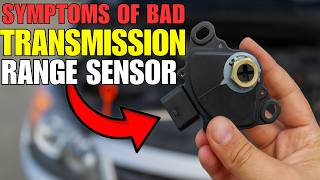
- "Transmission Fault" warning on the dash 🎬 Watch: 9 common symptoms of a bad range sensor.
- Radiator fans turning on high when the vehicle is placed in Park (as reported in NHTSA ODI #11673731)
- Replacing the transmission valve body when the issue is an external sensor or wiring.
- Replacing the PCM/TCM without confirming the sensor and circuit are functioning perfectly.
- Replacing the starter motor because of a no-crank symptom, without first checking for transmission-related codes.
- Confusing the symptoms with a failed shifter cable bushing, which is a separate recall-related issue (21S24) but can also cause a no-start or incorrect gear indication.
Most Likely Causes
- Faulty Transmission Range Sensor (TRS) 🔴 High Probability The sensor is often mounted externally on the transmission, making it vulnerable to water, road salt, and debris, which can cause internal corrosion and failure. This is the most common failure point.
How to confirm: Use a scan tool to monitor the TRS data PID. As you move the shifter through the gears (P, R, N, D), verify that the scan tool display matches the shifter position. If it's erratic, incorrect, or shows invalid voltage readings, the sensor is likely faulty.
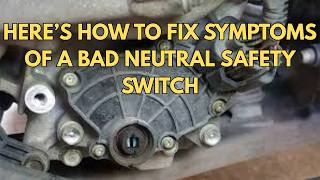
Typical fix: Replace the Transmission Range Sensor. This usually involves removing two bolts and an electrical connector from the sensor on the side of the transmission and ensuring the new sensor is properly aligned.
Est. part cost: $40-$150 - Faulty Molded Lead Frame (6R80 Transmission) 🟡 Medium Probability On 6R80-equipped models (typically pre-2020), the range sensor logic is integrated into the molded lead frame assembly inside the transmission. This part is a known weak point across many Ford platforms and can fail, causing P0705 and other transmission codes. NHTSA ODI #11488420 describes a scenario where a vehicle would not start and was diagnosed as a lead frame failure after retrieving codes P0705 and P0706.
How to confirm: This is difficult to confirm without ruling out other causes first. If the external wiring is good and the code persists, the lead frame is the next likely suspect. This diagnosis is often made by a professional after other tests fail. A scan may show codes P1702 or P1921 alongside P0705. 🎬 See how these specific codes cause a no-crank condition.
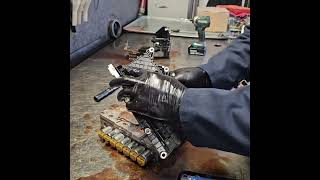
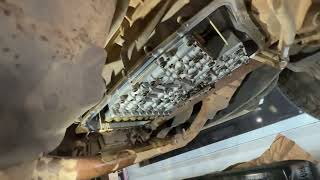
Typical fix: Replace the transmission lead frame assembly. This requires draining the transmission fluid, dropping the pan and valve body to access the part. It is often done by a transmission shop or dealer.
Est. part cost: $200-$400 for the part, but labor is significant. 🎬 Watch: Step-by-step DIY tutorial for replacing the 6R80 lead frame.
- Damaged Wiring or Connector 🟡 Medium Probability The wiring harness to the TRS is located underneath the vehicle and can be damaged by road debris, corrosion from the elements, or excessive heat from the exhaust. A loose or corroded connector pin is a common culprit.
How to confirm: Visually inspect the wiring harness and connector leading to the TRS for any signs of fraying, breaks, corrosion in the pins, or melting. Perform a continuity and voltage drop test on the circuit using a multimeter and wiring diagram.
Typical fix: Repair the damaged section of wiring or replace the connector pigtail.
Est. part cost: $20-$50 - Misadjusted Shift Linkage or TRS ⚪ Low Probability Vibrations and general wear can cause the shift cable or the sensor itself to become slightly misaligned over time. Additionally, a failed shifter cable bushing (subject to recall 21S24 on Transit Connects) can cause a mismatch between the shifter and the transmission lever.
How to confirm: Check that the gear selected at the shifter physically corresponds to the detent on the transmission's manual lever. Ensure the sensor is properly aligned according to the manufacturer's procedure when installed (usually aligned in Neutral).
Typical fix: Adjust the shift linkage cable or the rotational position of the Transmission Range Sensor. Replace the shifter cable bushing if it has failed.
Est. part cost: $0-$25
Rare But Worth Checking
- Contaminated or Low Transmission Fluid: While less common for a P0705, very dirty fluid can sometimes affect the operation of internal components, though this code usually points to an electrical issue.
- Faulty Powertrain Control Module (PCM) or Transmission Control Module (TCM): This is extremely rare and should only be considered after all other possibilities, including the sensor, lead frame, and the entire circuit, have been thoroughly tested and ruled out.
Diagnosis Steps
- Connect an OBD-II scanner and confirm the P0705 code is present. Check for any other related transmission codes (like P0707, P1702, P1921) and record the freeze frame data.
- Check the transmission fluid level and condition. Burnt or very dirty fluid can indicate larger internal problems.
- Visually inspect the Transmission Range Sensor, its electrical connector, and the wiring harness for obvious damage, corrosion, or loose connections.
- Using a capable scan tool, view the live data for the Transmission Range Sensor (often listed as TR, TRS, or PRNDL).
- Slowly move the gear shifter through all positions (P, R, N, D, etc.) and verify that the sensor's reading on the scan tool matches the shifter's position instantly and accurately.
- If the reading is incorrect, intermittent, or non-existent, the external sensor or internal lead frame (on 6R80) is the primary suspect.
- If the external sensor is suspected, test the circuit for proper voltage, ground, and continuity using a digital multimeter and the vehicle's wiring diagram.
- Check the adjustment of the shift linkage to ensure it is not loose or misaligned, causing a discrepancy between the shifter position and the sensor's position.
- If the external sensor and wiring are confirmed to be good on a 6R80 transmission, the next logical step is to diagnose the internal molded lead frame.
- If all sensors and circuits are confirmed to be good, the issue may be with the TCM or PCM, but this is rare.
Parts You'll Likely Need
- Transmission Range Sensor (External)
(OEM #CC3Z-7H557-B (replaces BC3Z-7H557-C, CC3Z-7H557-A))— This external sensor is the most frequent cause of failure for the P0705 code on many Transits due to its exposed location.
Trusted brands: Motorcraft, Standard Motor Products (SMP), Dorman
OEM price range: $70-$150
Aftermarket price range: $40-$100 - Transmission Molded Lead Frame Conductor Plate (Internal, 6R80)
(OEM #AL3Z-7G276-D (or AL3Z-7G276-B))— For pre-2020 Transits with the 6R80, this internal part which contains the range sensor is a very common failure point leading to P0705.
Trusted brands: Motorcraft
OEM price range: $200-$400
Aftermarket price range: $150-$250 - Transmission Range Sensor Connector — If the connector is corroded or the locking tab is broken, it will need to be replaced to ensure a solid connection to the new sensor.
Trusted brands: Motorcraft, Dorman
OEM price range: $30-$60
Aftermarket price range: $20-$40
Related Codes That Often Appear With This One
- P0707 — P0707 (Transmission Range Sensor Circuit Low Input) is a more specific version of the fault, indicating a low voltage condition in the same circuit.
- P1702 — This is a Ford-specific code indicating the TRS signal is invalid. It often appears with P0705 when the internal lead frame is the cause.
- P1921 — This Ford-specific code indicates the transmission range signal was not received or is invalid. It points directly to the TRS circuit and is often seen with P0705.
- P0708 — P0708 (Transmission Range Sensor Circuit High Input) is another specific fault in the same circuit, indicating a high voltage condition.
Technical Service Bulletins (TSBs) & Recalls
- While no TSB directly for P0705 on the Transit was found, related bulletins for other Fords highlight common issues. TSBs for F-150s with the 6R80 transmission often point to the lead frame as the cause for range sensor codes. For example, Customer Satisfaction Program 19N01 extended the warranty on the lead frame for certain F-150s due to similar issues.
- NHTSA ODI #11389831 mentions a related recall (12C23) for certain Ford F-150 models from 2011 through 2013 regarding the transmission range sensor, which can cause the vehicle to not want to back up.
Platform-Specific Known Issues
- A known point of confusion is the difference between the external TRS and the internal lead frame assembly. On 6R80-equipped Transits (pre-2020), P0705 is frequently caused by the internal lead frame, a more involved repair. Owners may replace the external sensor only to find the problem persists.
- Symptoms of P0705 can be identical to those of a failed shifter cable bushing, which was subject to Ford safety recall 21S24 for 2013-2021 Transit Connect models. This should be checked before proceeding with transmission repairs.
- Water intrusion into the external sensor's connector is a very common cause of failure, especially on high-mileage work vehicles. A thorough cleaning and application of dielectric grease during replacement is recommended.
Mechanic-Grade Diagnostic Values
- Transmission Range Sensor (TRS) Output Voltage — expected: Park: 0.2–0.4 V, Reverse: 1.8–2.2 V, Neutral: 0.8–1.2 V, Drive: 2.8–3.2 V.. Failure: Voltage readings that are outside the +/- 0.1V tolerance, are static when shifting, or fluctuate wildly indicate a faulty sensor.
- TRS Circuit Voltage Drop Test — expected: Less than 0.1 volts.. Failure: A voltage drop exceeding 0.1 volts indicates excessive resistance in the power or ground side of the circuit that needs to be located and repaired.
- TRS Circuit Resistance to Ground — expected: Values should not be infinite (open) or zero (shorted).. Failure: With the sensor disconnected, measuring infinite ohms between the signal wire and ground indicates an open circuit, while zero ohms indicates a short circuit.
Scan Tool Commands That Help
- Ford IDS (Integrated Diagnostic Software): Datalogger > PID Monitoring (TR, TR1, TR2, TR3, TR4, TR3V, TR_F) — Use this to observe the raw data from the four internal switches of the digital TRS. While moving the shifter, compare the PID states (On/Off or High/Low) to the chart in the service manual. Any deviation or flicker in the PID states while wiggling the harness can pinpoint an intermittent connection or failing sensor.
- High-End Scan Tool (e.g., Autel, Launch): Bidirectional Test > TCM > Read Sensor Input — This function commands the Transmission Control Module to actively report the gear position it is receiving from the sensor. It helps differentiate between a sensor sending a bad signal and a module that is not correctly interpreting a good signal.
Wiring & Ground Locations
- G203 — Located on the passenger side, under the plastic kick panel trim.. This is a primary instrument panel ground. A loose or corroded G203 can cause a wide range of electrical issues, including affecting the instrument cluster display of the gear position and communication with the PCM/TCM, potentially mimicking or contributing to a P0705 fault.
- Rear Ground Points (e.g., G35) — Located in the rear of the van, often behind the rear light cluster assemblies in the D-pillar area.. These grounds are critical for the proper function of the rear lights, including the reverse lights. Since a symptom of P0705 is non-functional reverse lights, verifying these grounds are clean and tight is a necessary step if the reverse lights are inoperative but the sensor tests good.
- B-Pillar D-Ring Ground — A common grounding point located at the B-Pillar, often used for aftermarket upfitting.. On work vans, this ground point is frequently used for accessories. If it becomes loose or corroded, or if aftermarket equipment introduces electrical noise, it can interfere with various vehicle systems. While not a direct cause, checking this major chassis ground is good practice for any electrical fault.
- C167 / C175T — This is the main electrical connector for the Transmission Range Sensor, located on the driver's side of the transmission case for externally mounted sensors.. This connector is the primary interface for all TRS signals. It is exposed to road spray and debris, making it a common point for corrosion, pin damage, or water intrusion that directly causes a P0705 code.
Documented NHTSA Reports
- An owner reported in NHTSA ODI #11673731 that they were unable to visually confirm the gear position on the dashboard, and a diagnostic scan revealed code P0705.
- According to NHTSA ODI #11671167, a vehicle experienced a failure where it required multiple attempts to restart, and a scanner retrieved DTC P0705 indicating a Transmission Range Sensor Circuit Malfunction.
- In NHTSA ODI #11547976, a dealer diagnosis confirmed code P0705 due to the transmission range sensor circuit malfunctioning, which affected other undisclosed functions on the vehicle.
Real Owner Repair Stories
- Reddit user in r/f150 (2011 Ford F-150 5.0 4WD (with 6R80 transmission, similar to pre-2020 Transit), 170,000 miles) — Difficulty shifting into reverse, threw a P0705 code immediately after having a recall software update performed.
❌ Tried (didn't work) The dealer who performed the update quoted $1800 to replace the valve body and lead frame.
✅ What actually fixed it The user contacted another dealer who confirmed the lead frame replacement was covered under Ford's extended warranty program (19N01) based on the VIN, despite being over the 150k mileage limit mentioned in the TSB. The second dealer also stated the valve body did not need to be replaced, significantly reducing the quoted cost if it hadn't been covered by warranty.
OEM Part Supersession History
AL3Z-7G276-A, AL3Z-7G276-B→AL3Z-7G276-D (Motorcraft P/N: AL3Z7G276D)— Design revision to improve the durability of the internal sensors and circuitry on the molded lead frame for the 6R80 transmission.
Heads up: This part is specific to the 6R80 transmission found in pre-2020 Transits. It is not compatible with the 10R80.N/A→Dorman 926-149— Aftermarket alternative for the OEM lead frame (AL3Z-7G276-D).
Heads up: While it is designed as a direct replacement, forum discussions show mixed results. Some users report success when the OEM part is unavailable, while the general consensus among professionals is to use the Motorcraft part whenever possible to avoid premature failure or compatibility issues.
Model Year Variations Within This Range
- 2013-2019: These models are typically equipped with the 6R80 transmission. For P0705, the internal molded lead frame is a very common cause, in addition to the external wiring. Ford issued Customer Satisfaction Program 19N01, extending the warranty on this part to 10 years/150,000 miles for some vehicles, though this program has largely expired.
- 2020-2026: These models are typically equipped with the 10-speed 10R80 transmission. On these, the Transmission Range Sensor is a separate, externally mounted component. The failure of an internal lead frame is not a cause for P0705 on this transmission, and diagnosis should focus on the external sensor, its wiring, and adjustment.
Diagnostic Flowchart
Used vs. New Parts: Buying Guide for This Vehicle
When a used part is the smart pick: For this repair, using used parts is generally not recommended. The external TRS is a low-cost wear item, and a used one has unknown exposure to elements. The internal 6R80 lead frame is a known failure point, so installing a used one is risky and involves significant labor. A used part only makes sense if it's a complete, low-mileage transmission assembly being swapped for other reasons.
Donor-vehicle mileage cap: roughly under 50000 miles for the part to have meaningful remaining life.
What to inspect on the donor part:
- For a complete transmission: verify the donor vehicle's VIN to check for service history and confirm mileage.
- Inspect fluid condition if possible; it should be bright red and not smell burnt.
- Check all electrical connectors for damage, corrosion, or bent pins.
- Ensure the manual shift lever on the transmission moves freely through its detents.
OEM-only on this vehicle (don't cheap out):
- Molded Lead Frame (6R80): The Motorcraft (Ford OEM) part is strongly recommended. Aftermarket versions, like those from Dorman, have mixed reviews and the labor involved is too significant to risk a premature failure.
Aftermarket brands forum-validated for this vehicle:
- For external sensors (10R80 or if replacing on 6R80): Standard Motor Products (SMP) and NTK are generally considered reliable alternatives to OEM.
Brands owners have reported issues with on this vehicle:
- Dorman (for lead frame): While some have success out of necessity when OEM parts are on backorder, many professionals and forum users advise against using Dorman lead frames due to reported higher failure rates compared to the OEM part.
Real Owner Stories
Aggregated from forums and TSBs cited above. Mileages and costs reflect what owners reported in those sources.
2011 Ford F-150 (6R80)
Symptoms: A blank shift indicator and a P0705 code.
What fixed it: The community immediately identified the internal lead frame as the cause, as there is no external neutral safety switch on that transmission.
Source hint: Ford Truck Enthusiasts - 2011 6r80 code po705
Ford F-150 (6R80)
Symptoms: Owner was getting a P0705 code.
What fixed it: The owner was quoted for a lead frame and valve body replacement, demonstrating the link between the code and internal component failure.
Source hint: Reddit r/f150 - 6R80 Lead Frame issues after recall update?
Ford Truck
Symptoms: Sudden loss of gears and a P0705 code.
What fixed it: A response advised to check the Digital Transmission Range (DTR) sensor connector for corrosion and to verify proper alignment.
Source hint: Ford Truck Enthusiasts - Transmission Troubles: P0705 ???
Ford F-150
Symptoms: P0705 code was present.
What fixed it: The owner reported that replacing the external sensor did not fix the problem, indicating the issue was likely with the wiring or another component.
Source hint: Ford F150 Forum - P0705 Transmission Range Sensor
Related OBD-II Codes
Frequently Asked Questions
I replaced the external range sensor on my pre-2020 Transit, but the P0705 code came back. What's the most likely cause?
Could the shifter cable recall (21S24) on my Transit Connect be related to a P0705 code?
My scan tool shows P1702 and P1921 along with P0705. What does that indicate on my Transit?
Is the Transmission Range Sensor (TRS) the same thing as the molded lead frame?
My Transit is a high-mileage work van. Are there any common environmental causes for P0705?
Is there a specific Ford TSB for code P0705 on the Transit?
Helpful Videos
We Have This Part in Stock



The information in this article is provided for general reference and educational purposes only. Vehicle specifications, procedures, and part compatibility can vary by production date, trim level, and region. Always consult your vehicle's factory service manual and verify part numbers before purchasing or performing repairs. Safety-critical components such as airbags, seat belts, and braking systems should be installed by a qualified professional.
- Ford Transit:
- 🎬 Helpful Videos
- 🛍️ Shop This Part
- What's Unique About the 2013-2026 Ford Transit
- Symptoms You May Notice
- Most Likely Causes
- Rare But Worth Checking
- Diagnosis Steps
- Parts You'll Likely Need
- Related Codes That Often Appear With This One
- Technical Service Bulletins (TSBs) & Recalls
- Platform-Specific Known Issues
- Mechanic-Grade Diagnostic Values
- Scan Tool Commands That Help
- Wiring & Ground Locations
- Documented NHTSA Reports
- Real Owner Repair Stories
- OEM Part Supersession History
- Model Year Variations Within This Range
- Diagnostic Flowchart
- Used vs. New Parts: Buying Guide for This Vehicle
- Real Owner Stories
- 2011 Ford F-150 (6R80)
- Ford F-150 (6R80)
- Ford Truck
- Ford F-150
- Related OBD-II Codes
- Frequently Asked Questions
- 🎟️ Get 5% Off