

OBD-II Code P1921: Transmission Range Signal
What P1921 means, why it triggers, and how to fix it
- P1921 poses an immediate safety risk by triggering sudden downshifts to 1st or 2nd gear at highway speeds, requiring you to stop driving immediately.
- On 2011-2018 Ford F-150s and Mustangs, a defective 6R80 molded lead frame causes 90% of P1921 codes, often covered by recalls 16S19 or 19S07.
- Verify your vehicle's specific P1921 definition, as it means 'Transmission Range Signal' on Fords but indicates an 'Outside Temp Sensor' failure on Volkswagens.
- Confirm a lead frame failure before opening the transmission by monitoring the TR_DC (Duty Cycle) PID on a scan tool for erratic drops while shifting.
- Never authorize a $4,000+ full transmission replacement for this code without first verifying if the $1,000 internal lead frame replacement will solve the issue.
What Does P1921 Mean?

P1921 is a manufacturer-specific code indicating the Powertrain Control Module (PCM) is receiving an illogical signal from the Transmission Range Sensor (TRS). This sensor tells the computer whether the vehicle is in Park, Reverse, Neutral, or Drive. When the signal fails, the computer cannot determine the driver's intent, prompting it to block engine cranking or command incorrect, dangerous gear shifts.
Technical definition: For Ford, Lincoln, and Mercury, P1921 is defined as 'Transmission Range Signal'. It indicates the PCM detects the duty cycle from the Transmission Range (TR) sensor is outside the expected parameters for current operating conditions. This points to a nonsensical signal rather than a simple open or short circuit.
Can I Drive With P1921?
No — Do Not Drive. Driving is highly dangerous. This code triggers sudden, unexpected downshifts to 1st or 2nd gear at highway speeds, locking up the rear wheels and causing a severe crash risk. It also prevents the engine from starting, leaving you stranded, and destroys internal transmission clutches if driven in limp mode.
Common Causes

- Faulty Transmission Molded Lead Frame (Very Common) — On 2011-2018 Ford vehicles with the 6R80 transmission, the TR sensor is integrated into the molded lead frame. Heat and vibration degrade the internal electrical connections, sending incorrect gear position signals to the PCM.
- Low or Faulty Battery (Common) — Modern vehicles require precise system voltage. A weak battery causes widespread communication errors between modules, generating false transmission codes like P1921 as a secondary symptom.
- Damaged Wiring or Corroded Connectors (Common) — The transmission wiring harness is exposed to extreme heat and road debris. Chafed wires or a corroded main transmission bulkhead connector interrupt the sensor signal.
- Defective External Transmission Range Sensor (Less Common) — On vehicles without an internal lead frame, the externally mounted neutral safety switch fails mechanically or electronically over time.
- Faulty Shifter Assembly or Misadjusted Linkage (Less Common) — A stretched shifter cable or misaligned linkage prevents the transmission's manual valve from physically reaching the correct gear, creating a conflict between the physical gear and the electronic sensor reading.
- Contaminated Transmission Fluid (Rare) — Metallic debris from internal transmission wear accumulates on the magnetic sensors of the lead frame, distorting the signals sent to the PCM.
- Faulty Instrument Cluster (CAN Bus Gateway) (Rare) — On specific European makes like Saab, the instrument cluster acts as a network gateway. A cluster fault disrupts the CAN bus, causing a loss of communication between the engine and transmission computers.
- Faulty Powertrain Control Module (PCM) (Very Rare) — A failed computer is the least likely cause. You must exhaustively rule out the lead frame, wiring, and battery before condemning a control module.
Symptoms

- Engine Will Not Crank or Start — The computer blocks the starter from engaging because it cannot verify the transmission is safely in Park or Neutral.
- Sudden, Unexpected Downshifts at Speed — The transmission abruptly downshifts to 1st or 2nd gear at highway speeds, causing the rear tires to skid and leading to a loss of vehicle control. 🎬 Watch: Why these sudden downshifts happen and how the recall works.
- Vehicle Enters 'Limp Mode' — The transmission locks into a single gear (usually 3rd or 5th) to protect itself, resulting in severe power loss and limited top speed.
- Check Engine Light or Wrench Light is On — The PCM detects the fault and illuminates the Check Engine light or the powertrain 'wrench' warning light.
- Gear Indicator (PRNDL) is Blank or Incorrect — The dashboard display showing the selected gear goes blank, shows the wrong gear, or illuminates all gear segments simultaneously.
- Harsh or Erratic Shifting — The transmission slams into gear or shifts at the wrong RPMs as the computer struggles to process invalid sensor data.
Diagnostic Flowchart

Tap your situation to follow the diagnostic path that matches what you're seeing on this code.
Common Fixes & Costs
- Replace Transmission Molded Lead Frame — Parts: $250-$450, Labor: $600-$1000, ~4 hr book time (Professional)
- PCM Software Update / Reprogramming — Parts: $0, Labor: $150-$250, ~1 hr book time (Professional)
- Replace External Transmission Range Sensor — Parts: $50-$150, Labor: $100-$300, ~1.5 hr book time (DIY)
- Repair Damaged Wiring or Connector — Parts: $20-$100, Labor: $150-$400, ~2 hr book time (Intermediate)
- Replace Transmission Fluid and Filter — Parts: $75-$175, Labor: $100-$250, ~1 hr book time (DIY)
Used vs. New Parts: Buying Guide
When a used part is worth it: Buying a used molded lead frame is highly discouraged. The part has a 100% failure rate over time, and used parts carry massive risk. Only consider it on a scrap-value vehicle.
Donor-vehicle mileage cap: roughly under 40000 miles for the part to have meaningful remaining life.
Donor quality checklist:
- Verify the exact part number revision; newer revisions are mandatory.
- Avoid 'refurbished' online parts without a warranty, as they are often just cleaned junk.
- Source from a vehicle scrapped for a rear-end collision, not powertrain issues.
Decision logic:
- If The part is a molded lead frame. → Always buy a new OEM or premium aftermarket part. The labor cost is too high to risk a used part.
- If Budget is the absolute primary concern and vehicle value is under $3,000. → A used part is a gamble; expect to pay for labor twice.
Warranty tradeoff: Used parts offer a 30-day warranty. New OEM parts offer 1-year to lifetime warranties, protecting your massive labor investment.
Worst-case if a used part fails: $800-$1500 if a used part fails, covering repeat labor and a new part.
What Happens If You Wait — Timeline
- Immediate: An intermittent fault occurs when the transmission is hot. The wrench light flashes, and the vehicle experiences a brief hesitation or harsh shift. Restarting temporarily clears the issue. (MPG impact: 0%% · Added cost: $0)
- 1-4 weeks: The Check Engine light stays on. The vehicle enters limp mode frequently, and the dangerous sudden downshift to 1st or 2nd gear occurs at highway speeds. (MPG impact: 20-50% (while in limp mode)% · Added cost: $100-$300 (Towing costs after a no-start event))
- 1-3 months: The no-start condition becomes permanent. Driving in limp mode with maximum line pressure causes premature wear on transmission clutches and bands. (MPG impact: N/A (vehicle is non-drivable)% · Added cost: $500-$1500 (Damage to clutch packs from continued driving))
- 3+ months: Catastrophic internal mechanical failure occurs. The initial electronic problem has destroyed the transmission internals, requiring a complete rebuild. (MPG impact: N/A% · Added cost: $3500-$7000 (Cost of a full transmission replacement))
Cost of Not Fixing It
- Immediate: Severe safety risk of sudden downshift causing loss of control, or being stranded by a no-start condition. (Added cost: Towing costs ($100-$300))
- 1-3 months: Continued driving in limp mode with high line pressure destroys transmission clutches and bands. (Added cost: $500-$1500)
- 3+ months: Catastrophic internal transmission failure requires a complete rebuild or replacement. (Added cost: $3500-$7000+)
Diagnosis Steps
- Scan for All Diagnostic Trouble Codes (DTCs)
Use an OBD-II scanner to read codes from all modules. P1921 is rarely alone; it is usually accompanied by P0705, P0706, P0707, or P1702. Document all codes and freeze frame data.
Tools: OBD-II Scanner (Beginner) - Check Battery Health and Connections
Verify the battery reads above 12.4 volts with the engine off. Clean and tighten the terminals. Low voltage is a primary cause of false electronic codes.
Tools: Multimeter, Battery Terminal Brush (Beginner) - PRO TIP: Monitor TR Sensor PIDs with a Scan Tool
Access live data on a professional scan tool. Monitor the Transmission Range duty cycle (TR_DC). Slowly move the shifter through all gears. The percentage must change to a specific, steady value for each position. Erratic readings confirm a failed sensor or lead frame.
Tools: Professional OBD-II Scan Tool (Advanced) - Inspect External Wiring Harness and Connectors
Visually trace the wiring harness from the engine bay to the transmission. Check the main electrical bulkhead connector at the transmission case for corrosion, moisture, or backed-out pins.
Tools: Flashlight, Inspection Mirror (Intermediate) - Inspect Shifter Linkage and Operation
Ensure the physical shifter cable is properly adjusted and not binding. Have an assistant move the shifter while you observe the manual lever on the transmission case to confirm full range of motion.
Tools: Basic Hand Tools (Intermediate) - Test TR Sensor Circuit Integrity
Disconnect the transmission harness connector. Check for continuity on the signal wire between the transmission connector and the PCM connector. Resistance over 2 ohms indicates a damaged wire.
Tools: Multimeter, Wiring Diagram (Advanced) - ADVANCED: Test Sensor Supply Voltage
Back-probe the sensor's main electrical connector with the ignition on. Verify the sensor receives the correct 5V or 12V reference voltage from the PCM. No voltage indicates a wiring or PCM fault.
Tools: Multimeter, Wiring Diagram, Back-probe Kit (Advanced) - ADVANCED: Perform Sensor Output Test
Back-probe the signal wire with the sensor connected and ignition on. The voltage must change to a specific, steady value for each gear. Readings outside manufacturer specs confirm a failed sensor.
Tools: Multimeter, Wiring Diagram, Assistant (Advanced) - PRO TIP: Perform Oscilloscope Signal Analysis
Back-probe the TR sensor signal wire at the PCM. The signal must be a clean square wave whose duty cycle changes with gear position. A distorted waveform definitively proves the lead frame has failed.
Tools: Oscilloscope, Wiring Diagram (Advanced) - Inspect the Internal Lead Frame
If external checks pass on a Ford 6R80, drain the fluid and remove the transmission pan and valve body. Inspect the lead frame for cracks or heavy metallic debris stuck to the magnetic sensors.
Tools: Socket Set, Drain Pan, Gasket Scraper, Torque Wrench (Professional)
When This Code Triggers (Freeze-Frame Conditions)
- Engine Coolant Temp: 180-210°F (Fully warmed up, as the lead frame failure is heat-induced.)
- RPM: 1500-2500 (Cruise or steady throttle, not necessarily during a shift.)
- Engine Load: 25-50% (Light to moderate load during steady driving.)
- Vehicle Speed: 40-70 mph (Highway speeds when the dangerous downshift symptom occurs.)
Related Codes
- P0705 — Indicates a general 'Transmission Range Sensor Circuit Malfunction'. P1921 is the specific result of the illogical signal that P0705 detects.
- P1702 — Indicates an intermittent failure in the TR sensor circuit. Seeing this with P1921 proves the lead frame is failing when hot.
- P0706 — Means the TR sensor signal is 'Out of Range'. The sensor is sending a signal, but it is invalid for any actual gear position.
- P0707 — Means 'Transmission Range Sensor Circuit Low Input'. This points directly to a short to ground in the wiring or inside the lead frame.
Climate & Environmental Factors
- High Operating Temperature: Repeated heat cycles degrade the internal plastic and electrical connections of the Ford 6R80 molded lead frame, causing the primary failure.
- Humidity and Road Salt: High humidity and winter road salt corrode external wiring connectors, interrupting the TR sensor signal and triggering the code.
- Cold Weather: Extreme cold causes borderline electrical components to contract and fail completely, making intermittent symptoms permanent.
How to Talk to a Mechanic About This Code
Say this: "I have a Ford F-150 with a P1921 code, a no-crank condition, and sudden downshifting. I suspect a molded lead frame failure. Please check my VIN for any open recalls or PCM software updates before performing a live-data diagnostic on the transmission range sensor."
This proves you understand the common Ford failure, focuses the technician on the lead frame, and prevents them from starting a broad, expensive diagnostic fishing expedition.
Avoid saying:
- 'My truck won't start and the transmission is acting weird.'
- 'My check engine light is on, can you just fix it?'
- 'A friend said I need a new transmission.'
Questions to ask before authorizing the repair:
- Did you check for recalls and confirm the PCM has the latest software?
- Did you confirm the fault with live data or an oscilloscope, or is this a guess?
- Does your estimate include replacing the bulkhead connector sleeve and 10 quarts of Mercon LV fluid?
- What is the warranty on the new lead frame part and your labor?
- Is the OEM part in stock, or will we need to use an aftermarket brand?
Where to Take It: Dealer vs Independent vs Chain
- Dealer:
Recommended first stop ONLY to check for free recall software updates. For out-of-pocket repairs, get a quote here but compare it with an independent specialist.
Best for: Vehicles covered by recalls (16S19/19S07) or warranty extensions., Performing mandatory PCM software updates., Complex cases requiring proprietary Ford diagnostic software.
Downsides: Highest labor rates, often double an independent shop., Will push for a $2,000 complete valve body replacement if the lead frame is backordered. (Typical cost: +75% vs. baseline) - Independent Shop:
Best fit for the actual repair. Find a trusted local transmission shop. They perform this exact repair frequently and provide the best value.
Best for: Out-of-warranty Ford trucks and SUVs., Shops specializing in transmission repair or Ford 6R80 issues., Cost-conscious owners seeking a fair price for a known repair.
Downsides: May lack the software to perform PCM updates., May struggle to source the backordered OEM lead frame. (Typical cost: +0% vs. baseline) - Chain Shop:
AVOID for diagnosis and repair. The risk of misdiagnosis and an expensive, incorrect repair is extremely high.
Best for: Battery testing and replacement., Reading initial codes for free.
Downsides: Technicians lack the skill for internal transmission work., High probability of misdiagnosing this as needing a complete transmission replacement. (Typical cost: -10% vs. baseline)
When to Walk Away From the Repair
If the estimated repair cost for the lead frame ($1,000-$1,200) exceeds 40% of your vehicle's private-party value, evaluate your options.
- Car worth $15000, fix is $1200: Fix it. The repair cost is a small fraction of the vehicle's value and restores full function.
- Car worth $5000, fix is $1500: Borderline. This is a significant investment. Assess the vehicle's overall health before proceeding.
- Car worth $2500, fix is $1500: Walk away. It is not economically sound to invest this much into a low-value vehicle.
What Scan Tool You Need for This Code
Minimum: A scanner that reads manufacturer-specific transmission codes and views live data PIDs for the Transmission Range Sensor.
A basic $20 code reader cannot see Ford-specific P1921 codes or display the live sensor data (TR_DC) required to confirm the sensor is failing.
Budget: FORScan with ELM327/OBDLink Adapter (~$50) — Provides dealer-level access to all Ford modules, views specific PIDs like TR_DC, and performs service functions. It is the absolute best tool for diagnosing a Ford lead frame issue.
Mid-range: BlueDriver Pro or Foxwell NT710 for Ford (~$120) — Reads and clears enhanced codes for transmission and ABS. Displays live data, though it may lack the deepest Ford-specific PIDs.
Professional: Autel MaxiCOM MK808S / XTOOL D7 (~$500-800) — Provides full bidirectional control, OEM-level diagnostics, and performs the transmission adaptive learn procedure after the lead frame is replaced.
How to Clear the Code After You Fix It
- Reconnect battery if disconnected for repair.
- Use an OBD-II scan tool to clear all DTCs from the PCM and TCM.
- Perform a complete transmission adaptive learning drive cycle as specified by the manufacturer.
Drive cycle (~30 minutes): Cold start the engine and idle for 3 minutes. Drive in stop-and-go traffic with light accelerations. Accelerate to 60 mph and maintain speed for 10 minutes. Allow the vehicle to cool down completely.
Readiness monitors affected: Comprehensive Component Monitor, Catalyst Monitor, Oxygen (O2) Sensor Monitor, Evaporative System (EVAP) Monitor
Before emissions retest: drive at least 100 miles to fully set monitors.
Watch out for:
- Clearing the code without fixing the hardware fault causes the code to return immediately.
- Skipping the adaptive learning procedure after a lead frame replacement results in harsh shift quality.
- Testing emissions before readiness monitors complete results in an automatic failure.
Will This Fail Emissions / State Inspection?
Yes — this code typically fails an OBD-II emissions inspection.
- California: An illuminated Check Engine light results in an automatic failure. You must drive up to 200 miles after repairs to set readiness monitors before retesting.
- New York: The NYS OBD-II inspection fails any vehicle with an active P1921 powertrain fault code.
- Texas: In the 17 emissions-testing counties, an active P1921 code results in an immediate inspection failure.
Most Commonly Affected Vehicles
- Ford F-150 (2011-2018) — Extremely common due to 6R80 molded lead frame failure. Addressed by recalls 12S28, 16S19, and 19S07.
- Ford Explorer (2011-2017) — Suffers from identical lead frame and TR sensor failures as the F-150.
- Ford Mustang (2011-2017) — Equipped with the 6R80 transmission and included in sudden downshifting recalls.
- Ford Ranger (T6) (2016-2017) — Prone to snapped or chafed wires in the transmission wiring loom, triggering P1921 directly.
- Ford Transit (2015-2019) — Uses the 6R80 transmission and experiences the exact same lead frame failures.
- Hyundai / Kia Elantra, Forte, Tucson, Niro (2015-2024) — On Dual-Clutch Transmissions (DCT), P1921 points to an electric clutch actuator failure, not a range sensor.
- Saab 9-5 (2003-2009) — P1921 means 'No bus data from ECM', indicating a CAN bus communication failure, not a sensor fault.
- Volkswagen Various (2006-2018) — P1921 is defined as 'Issue in outside temperature sensor', completely unrelated to the transmission.
- Mazda Various (2010-2020) — P1921 refers to the 'Rear Wheel Speed Sensor Circuit', requiring a completely different diagnostic path.
Manufacturer-Specific Notes
- Ford: The TR sensor is integrated into the 6R80 molded lead frame. Ford issued multiple recalls (16S19, 19S07) providing free PCM software updates to prevent dangerous downshifts.
- Saab: P1921 means 'No bus data from ECM'. Diagnosis must focus entirely on CAN bus wiring and module health, ignoring the transmission.
- Hyundai / Kia: In DCT vehicles, P1921 relates to the clutch actuator failing to reach its commanded position. Diagnosis focuses on the actuator motor.
- Volkswagen: P1921 is defined as an 'Outside temperature sensor' issue. Using a generic code reader leads to completely incorrect transmission diagnostics.
- Mazda: P1921 indicates an issue with the 'Rear Wheel Speed Sensor Circuit'. Always confirm the exact definition for your specific vehicle.
Real Owner Stories
2016 Ford F-150 with 63K miles - The Classic Lead Frame Failure
The owner experienced a wrench light, severe hesitation from a stop, and sudden downshifting. The truck eventually refused to restart. Codes P1702 and P1921 were active.
What they tried:
- Diagnosed the lead frame failure but faced a national part backorder at the local shop.
Outcome: Sourced an OEM lead frame independently. After replacing the lead frame, fluid, and filter, the truck shifted perfectly.
Lesson: This is the textbook 6R80 failure. The primary hurdle is often sourcing the backordered part, not the diagnosis itself.
2013 Ford F-150 with 98K miles - Misdiagnosis Avoided
The truck exhibited harsh highway downshifts and entered limp mode with multiple P07xx codes alongside P1921.
What they tried:
- Refused a shop's quote for a full Transmission Control Module (TCM) replacement.
- Took the original module to an electronics specialist who confirmed open circuits on the lead frame board.
Outcome: Purchased a refurbished lead frame online for $189. Installation cleared all codes and restored drivability.
Lesson: Never replace the entire TCM or transmission without verifying if the much cheaper lead frame is the sole point of failure.
2017 Ford F-150 - The Metal Contamination Gamble
The truck was stuck in high gears with codes P1921, P0706, and P0707. Dropping the pan revealed significant metallic debris, usually indicating catastrophic mechanical failure.
What they tried:
- The technician noted the range sensor magnets were completely coated in metal filings, blocking the signal.
- The owner insisted on replacing only the lead frame despite the debris.
Outcome: Replacing the lead frame and flushing the fluid resolved all codes and shifting issues. The metal contamination on the magnetic sensors caused the electronic failure.
Lesson: Even with frightening metal debris in the pan, cleaning or replacing the magnetic sensors can sometimes resolve the issue without a full rebuild.
2014 Chevy Cruze - A Repair Gone Wrong
The owner picked up the car after an ignition coil repair. It immediately entered limp mode, jerked out of park, and threw new transmission codes.
What they tried:
- Returned to the shop, where the mechanic admitted to skipping the post-repair test drive.
Outcome: The shop inadvertently swapped two identical wiring connectors during the coil repair, causing massive electronic confusion.
Lesson: If severe transmission symptoms appear immediately after an unrelated repair, the mechanic likely misrouted a wiring harness or swapped identical connectors.
How to Prevent This Code From Triggering
- Change transmission fluid and filter (Every 30,000 to 50,000 miles) — Ford's 150,000-mile interval is too long. Fresh Mercon LV fluid maintains cooling properties and removes metallic wear particles before they contaminate the lead frame's magnetic sensors.
- Upgrade the transmission thermal bypass valve (One-time upgrade) — Heat destroys the molded lead frame. Upgrading the stock 6R80 thermal bypass valve ensures constant fluid flow to the cooler, drastically reducing internal operating temperatures.
- Avoid aggressive driving habits (Daily habit) — Hard launches and frequent heavy throttle inputs generate excess heat, stressing the transmission's internal electronics and valve body.
- Inspect battery health and terminal connections (Every 6 months) — Maintaining strong system voltage prevents the PCM from generating false communication and transmission codes due to voltage drops.
Frequently Asked Questions
Why won't my truck start with a P1921 code?
Your vehicle's computer prevents the engine from starting as a safety precaution. The P1921 code means the computer cannot reliably determine if the transmission is in Park or Neutral. It disables the starter circuit to prevent the vehicle from lurching forward or backward.
Is fixing a P1921 code expensive?
It ranges from a free software update to a $1,200 repair. If the cause is a failed internal transmission lead frame on a Ford, expect to pay between $800 and $1,200 at an independent shop. Always check for open recalls first, as a dealer software update fixes many cases for free.
What is the Ford recall for P1921?
Ford issued several recalls (16V-248, 19S07) to address the sudden, unintended downshifts associated with this code. The official fix is a Powertrain Control Module (PCM) software update. This update prevents the transmission from shifting into a low gear if the sensor signal drops out.
My mechanic says I need a new transmission. Is that right?
This is a frequent and costly misdiagnosis. Many shops recommend a full $4,000 transmission replacement because the faulty lead frame is located inside the transmission pan. Replacing only the $300 lead frame is the standard repair and saves thousands of dollars.
Can I just clear the P1921 code?
No, clearing the code only extinguishes the warning light temporarily. P1921 triggers due to a persistent hardware or electrical fault. The code and the dangerous downshifting symptoms will return as soon as the computer runs its self-test.
What is a transmission molded lead frame?
A molded lead frame is a plastic-encased electrical component mounted to the valve body inside the transmission. It serves as the central connection point between the vehicle's computer and the internal transmission sensors and solenoids.
Could a bad battery cause a P1921 code?
Yes, a weak battery causes low system voltage, creating communication glitches between computer modules. This voltage drop triggers a variety of false error codes, including P1921. Always test and replace a failing battery before starting complex transmission diagnostics.
Key Takeaways
- P1921 poses an immediate safety risk by triggering sudden downshifts to 1st or 2nd gear at highway speeds, requiring you to stop driving immediately.
- On 2011-2018 Ford F-150s and Mustangs, a defective 6R80 molded lead frame causes 90% of P1921 codes, often covered by recalls 16S19 or 19S07.
- Verify your vehicle's specific P1921 definition, as it means 'Transmission Range Signal' on Fords but indicates an 'Outside Temp Sensor' failure on Volkswagens.
- Confirm a lead frame failure before opening the transmission by monitoring the TR_DC (Duty Cycle) PID on a scan tool for erratic drops while shifting.
- Never authorize a $4,000+ full transmission replacement for this code without first verifying if the $1,000 internal lead frame replacement will solve the issue.
Helpful Videos
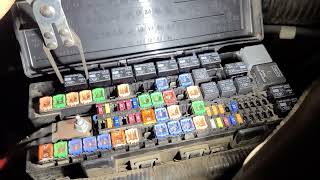
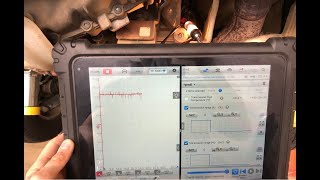
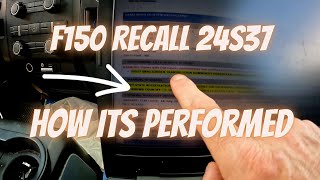
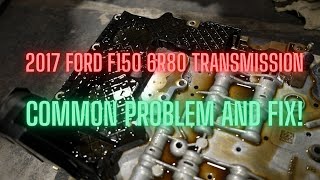

The information in this article is provided for general reference and educational purposes only. Vehicle specifications, procedures, and part compatibility can vary by production date, trim level, and region. Always consult your vehicle's factory service manual and verify part numbers before purchasing or performing repairs. Safety-critical components such as airbags, seat belts, and braking systems should be installed by a qualified professional.
- 🎬 Helpful Videos
- What Does P1921 Mean?
- Can I Drive With P1921?
- Common Causes
- Symptoms
- Diagnostic Flowchart
- Common Fixes & Costs
- Used vs. New Parts: Buying Guide
- What Happens If You Wait — Timeline
- Cost of Not Fixing It
- Diagnosis Steps
- When This Code Triggers (Freeze-Frame Conditions)
- Related Codes
- Climate & Environmental Factors
- How to Talk to a Mechanic About This Code
- Where to Take It: Dealer vs Independent vs Chain
- When to Walk Away From the Repair
- What Scan Tool You Need for This Code
- How to Clear the Code After You Fix It
- Will This Fail Emissions / State Inspection?
- Most Commonly Affected Vehicles
- Manufacturer-Specific Notes
- Real Owner Stories
- 2016 Ford F-150 with 63K miles - The Classic Lead Frame Failure
- 2013 Ford F-150 with 98K miles - Misdiagnosis Avoided
- 2017 Ford F-150 - The Metal Contamination Gamble
- 2014 Chevy Cruze - A Repair Gone Wrong
- How to Prevent This Code From Triggering
- Frequently Asked Questions
- Why won't my truck start with a P1921 code?
- Is fixing a P1921 code expensive?
- What is the Ford recall for P1921?
- My mechanic says I need a new transmission. Is that right?
- Can I just clear the P1921 code?
- What is a transmission molded lead frame?
- Could a bad battery cause a P1921 code?
- Key Takeaways
- 🎟️ Get 5% Off