

OBD-II Code P0706: Transmission Range Sensor Performance Problem
What P0706 means, why it triggers, and how to fix it
- Code P0706 triggers when the Transmission Range Sensor sends an illogical gear position signal—like reporting 'Park' while driving 40 mph—to the engine computer.
- Replacing a faulty $50-$250 external neutral safety switch fixes this code on most vehicles, but Audi and VW models often require a $1,500+ internal mechatronics repair.
- Expect severe drivability symptoms, including a complete failure to crank, harsh gear engagements, or the vehicle locking into a 3rd-gear 'limp mode'.
- Do not drive with an active P0706 code; the vehicle can start while in Drive or Reverse, creating a severe unintended acceleration hazard.
What Does P0706 Mean?

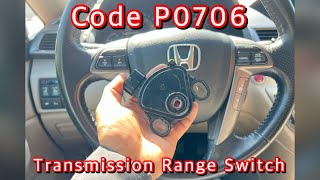
Your car's computer detects a problem with the Transmission Range Sensor (TRS). This sensor, also known as a neutral safety switch, tells the computer which gear you selected (Park, Reverse, Neutral, Drive). When the signal is irrational—for example, reporting the car is in Park while moving at 30 mph—the computer receives conflicting data. This causes immediate starting, shifting, and safety failures.
Technical definition: Transmission Range Sensor 'A' Circuit Range/Performance. The Powertrain Control Module (PCM) or Transmission Control Module (TCM) detects the sensor's signal is out of the expected range, erratic, or performing incorrectly. The PCM receives a voltage signal that is illogical, does not match any valid gear position, or conflicts with vehicle speed data.
Can I Drive With P0706?
No — Do Not Drive. Do not drive. The vehicle can start in gear, causing sudden unintended acceleration. It also shifts unpredictably, fails to start, or locks into a low-speed 'limp mode'. Address this immediately to prevent transmission damage and severe safety hazards.
Common Causes

- Faulty Transmission Range Sensor (Neutral Safety Switch) (Very Common) — This is the most frequent cause. The sensor wears out from heat, vibration, and age, causing it to send incorrect voltage signals or fail completely.
- Damaged Wiring or Corroded Connectors (Common) — Wires leading to the sensor get damaged, and electrical connector pins corrode from moisture and road salt. This interrupts or distorts the signal to the computer.
- Misaligned or Worn Shift Linkage (Common) — If the mechanical linkage stretches, wears out, or is adjusted incorrectly, the sensor won't align with the actual gear selector position. This frequently happens after transmission repairs.
- Internal Mechatronics Unit / Lead Frame Failure (Less Common) — On Audi, VW, and Ford vehicles, the range sensor is integrated into an internal transmission component like a mechatronics unit or lead frame. A failure of this internal circuit board triggers P0706 and requires specialized repair.
- Dirty or Low Transmission Fluid (Less Common) — Contaminated or low fluid restricts hydraulic passages within the transmission's valve body. This indirectly leads to erratic shifting and triggers a P0706 code.
- Low Battery Voltage or Weak Ground (Rare) — A weak battery or poor ground connection causes erratic electrical signals. The TCM interprets these voltage fluctuations as a sensor performance issue.
- Defective Transmission Valve Body (Rare) — A malfunctioning valve body causes shifting problems that the vehicle's computer misinterprets as a range sensor performance issue.
- Faulty Transmission Control Module (TCM) or Software Glitch (Rare) — The computer itself fails or experiences a software bug preventing it from correctly reading the sensor's signal. A dealer software update sometimes resolves this.
Symptoms

- Check Engine Light is On — The Malfunction Indicator Lamp (MIL) illuminates immediately on your dashboard.
- Vehicle Won't Start or Starts Intermittently — The engine refuses to crank because the computer doesn't recognize the transmission is in Park or Neutral. Jiggling the shifter sometimes forces a start.
- Erratic or Harsh Shifting — The transmission shifts unpredictably, slams into gear, or feels like it is slipping due to incorrect gear position data.
- Incorrect Gear Display — The dashboard gear indicator (PRNDL) does not match the actual selected gear, shows all positions lit up at once, or goes blank.
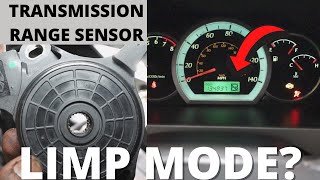
- Vehicle Enters 'Limp Mode' — The vehicle intentionally limits engine power and locks the transmission in a single gear (like 3rd) to prevent internal damage.
- Reverse Lights Not Working — The reverse lights fail to turn on because the sensor does not report the transmission is in Reverse.
- Cruise Control Deactivates — The cruise control system fails to engage or disengages unexpectedly as a safety precaution.
Diagnostic Flowchart
Tap your situation to follow the diagnostic path that matches what you're seeing on this code.
Common Fixes & Costs
- Replace Transmission Range Sensor (Neutral Safety Switch) — Parts: $40-$250, Labor: $100-$250, ~1.5 hr book time (Intermediate)
- Adjust Transmission Range Sensor or Shift Cable — Parts: $0, Labor: $50-$150, ~0.8 hr book time (Intermediate)
- Repair Damaged Wiring or Clean/Replace Connectors — Parts: $10-$50, Labor: $80-$200, ~1.5 hr book time (Intermediate)
- Flush and Replace Transmission Fluid — Parts: $50-$150, Labor: $100-$200, ~1.5 hr book time (DIY)
- Mechatronics Unit / Lead Frame Repair or Replacement — Parts: $900-$2000+, Labor: $300-$600, ~6.5 hr book time (Professional)
Used vs. New Parts: Buying Guide
When a used part is worth it: Buying a used Transmission Range Sensor is rarely recommended. The part is electronic and subject to wear and corrosion. It only makes sense if the part is from a verified low-mileage vehicle and the cost saving is over 70% compared to a new aftermarket part.
Donor-vehicle mileage cap: roughly under 40000 miles for the part to have meaningful remaining life.
Donor quality checklist:
- Verify the exact OEM part number matches; superseded parts have different internal electronics.
- Inspect the electrical connector pins for any signs of green or white corrosion.
- Avoid parts from flood-damaged or high-humidity-area vehicles.
Decision logic:
- If The part is an external sensor and a new aftermarket version costs less than $100 → Always buy new. The small savings are not worth the risk of premature failure and repeat labor costs.
- If The part is an expensive internal component like a lead frame or mechatronics unit → A professionally remanufactured unit with a warranty is a viable option over a high-cost new OEM part. Avoid used units with no warranty.
- If Your vehicle is old (>15 years) and your budget is extremely tight → A used part is a gamble, but serves as a last resort. Understand its lifespan is unknown.
Warranty tradeoff: Used parts typically have a 30-90 day warranty at best, often for the part only. New aftermarket parts offer a 1-year to limited lifetime warranty. New OEM parts carry a 12-month/12,000-mile warranty.
Worst-case if a used part fails: $200-$400 if a used external sensor fails, primarily due to repeated labor charges. For an internal component, this cost exceeds $1000.
What Happens If You Wait — Timeline
- 0-1 month: Intermittent Check Engine Light, occasional hesitation when shifting, or a rare no-start event that resolves by jiggling the shifter. (MPG impact: 0-2%% · Added cost: $0-$50 in wasted fuel and potential inconvenience.)
- 1-3 months: Check Engine Light stays on. No-start events become frequent. Vehicle enters 'limp mode' intermittently. Harsh shifting becomes noticeable. (MPG impact: 3-8%% · Added cost: $50-$200 in wasted fuel and high risk of being stranded, requiring a tow.)
- 3-6 months: Constant limp mode or inability to shift. Starting is a gamble. Incorrect gear signals cause accelerated wear on transmission clutches and solenoids. (MPG impact: 10-15%% · Added cost: $400-$1,200 for potential solenoid pack or valve body damage.)
- 6+ months: Catastrophic internal transmission damage occurs. Continued operation with severe shifting problems destroys clutch packs and hard parts. (MPG impact: 15-25%% · Added cost: $2,500-$5,000+ for a full transmission replacement.)
Cost of Not Fixing It
- 0-1 month: Inconsistent starting, poor fuel economy, and unpredictable shifting behavior. High risk of being stranded or creating a safety hazard. (Added cost: $50-$150 in wasted fuel and potential towing costs.)
- 1-6 months: Increased stress on transmission components due to harsh shifting and incorrect gear engagement. This causes premature wear on clutches, solenoids, and the valve body. (Added cost: $500-$1500 for replacing damaged solenoids or a valve body.)
- 6+ months: Catastrophic internal transmission damage. Continued operation with erratic shifting destroys clutch packs, gears, and the torque converter. (Added cost: $2,500-$5,000+ for a full transmission replacement.)
Diagnosis Steps

- Read Trouble Codes & Review Freeze Frame Data
Use an OBD-II scanner to confirm P0706 is present and check for related codes (e.g., P0700, P0705). Note the freeze-frame data to see the vehicle's exact state when the code triggered.
Tools: OBD-II Scanner (Beginner) - Monitor Live Data PID
Using an advanced scan tool, monitor the live data stream for the transmission range sensor PID. Slowly move the gear selector through each position (P, R, N, D, L). Verify the scanner displays the correct gear. Erratic displays confirm a bad sensor, linkage, or wiring.
Tools: Advanced OBD-II Scanner (Intermediate) - Test the Neutral Safety Switch Function
With the parking brake firmly set, try to start the engine in Reverse and Drive. The engine must not crank. If it does, the sensor or its adjustment is faulty, creating a severe safety hazard.
Tools: None (Beginner) - Visual Inspection
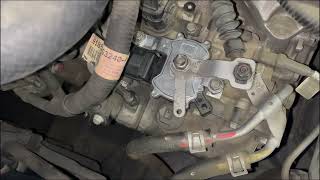
Inspect the transmission range sensor, its electrical connector, and the wiring harness. Look for obvious damage, green corrosion on the connector pins, or frayed wires.
Tools: Flashlight (Beginner) - Inspect the Shift Linkage and Adjustment
Check the mechanical linkage or cable from the shifter to the transmission for excessive play, damage, or improper adjustment. A loose linkage prevents the sensor from aligning with the correct gear.
Tools: Basic hand tools (Intermediate) - Check Transmission Fluid
Check the transmission fluid level and condition. Fluid must be at the correct level, pinkish-red, and not smell burnt. Low or dirty fluid causes shifting problems that indirectly trigger this code.
Tools: Rag, Dipstick (if equipped) (Beginner) - PRO TIP: Check Reference Voltage and Ground
Back-probe the sensor's connector. With the key on, engine off, check for the correct reference voltage from the TCM (typically 5V or 12V) and a good ground (near 0 Ohms). A missing voltage or bad ground points to a wiring or TCM issue, not the sensor.
Tools: Multimeter, Vehicle-specific repair manual (Advanced) - PRO TIP: Test Sensor Signal Voltage
With the multimeter connected to the signal wire, slowly move the shifter through each gear. The voltage must change smoothly and match the service manual specs (e.g., Park ≈ 0V, Reverse ≈ 5V). Jumps or dropouts confirm a faulty sensor.
Tools: Multimeter, Vehicle-specific repair manual (Advanced) - PRO TIP: Test Sensor Resistance (Bench Test)
Remove the sensor and test its internal contacts. Connect multimeter probes to the power and gear-specific pins. Manually move the selector through each gear. Resistance must show continuity (near 0 Ohms) for the selected gear and open loop for all others.
Tools: Multimeter, Vehicle-specific repair manual, Jumper wires (Advanced) - PRO TIP: Inspect Internal Components (Make-Specific)
For Audi/VW models with a Multitronic transmission, inspect the magnets on the internal gear positioner for micro-cracks or chips. This requires draining fluid and removing the transmission pan.
Tools: Mirror, Flashlight, Basic hand tools (Professional)
When This Code Triggers (Freeze-Frame Conditions)
- Vehicle Speed: 15-40 mph (The code sets when the vehicle is in motion, but the range sensor sends a signal conflicting with the vehicle's speed, such as reporting it is in Park.)
- Engine RPM: 1200-2500 RPM (Occurs during light acceleration or steady cruising when a conflict between actual speed and reported gear position is detected.)
- Gear Shifter Position: Any gear (Triggers when shifting between gears (e.g., from Park to Drive) or while driving in a single gear if the signal becomes erratic.)
- Ambient Temperature: Any, but more common in cold (Appears more frequently in cold weather, which shrinks internal contacts and degrades the electrical properties of the sensor.)
Related Codes
- P0705 — P0705 indicates a general circuit malfunction (e.g., no signal), while P0706 points to a performance problem where the signal is present but irrational. P0705 suggests a complete electrical failure, while P0706 suggests an incorrect signal.
- P0707 — Indicates the sensor circuit has low input (short to ground). A short to ground causing low input is often the specific reason P0706 is triggered.
- P0708 — Indicates the sensor circuit has high input (open circuit). An open circuit providing illogical high readings is a common root cause of a P0706 code.
- P0700 — This is a general transmission fault code. It means a more specific code, like P0706, is stored in the TCM. P0700 is the messenger; P0706 is the message.
Climate & Environmental Factors
- Cold Weather: The P0706 code occurs more frequently in cold temperatures. Cold causes internal sensor components to contract, leading to poor electrical contact. It also makes old wiring insulation brittle and prone to cracking.
- Humidity and Moisture: High humidity, driving through high water, or leaks introduce moisture into the sensor's electrical connector. This causes corrosion on the pins, disrupting the electrical signal.
How to Talk to a Mechanic About This Code
Say this: "I have a P0706 code on my [Make, Model, Year] and it's having trouble with [mention your key symptom, e.g., 'not starting' or 'harsh shifting']. I'd like to schedule a diagnostic. Based on my research, I'd like you to check the transmission range sensor, its wiring, and the shift linkage adjustment before considering more expensive parts."
This shows you are an informed consumer. It directs the mechanic to follow a logical diagnostic path (from cheapest/most likely to most expensive) and makes it harder for them to jump to a costly, unnecessary repair. Mentioning the specific make is key, as the likely cause on a Hyundai is very different from an Audi.
Avoid saying:
- 'My check engine light is on, can you just fix it?'
- 'I think I need a new transmission.'
- 'Just do whatever it takes.'
Questions to ask before authorizing the repair:
- What was the specific point of failure? Was it the sensor, the wiring, the linkage, or something internal?
- If you are replacing the sensor, will you be performing the required alignment procedure?
- Can you show me the old part?
- What is the warranty on the parts and labor for this specific repair?
Where to Take It: Dealer vs Independent vs Chain
- Dealer:
Recommended for complex, make-specific internal faults (especially German brands) or warranty work. Overkill for a common external sensor replacement on a Hyundai/Kia.
Best for: Vehicles under warranty., Audi, VW, or other European makes where the cause is likely an internal mechatronics/TCM issue requiring specialized tools and software., A new TCM software update is required.
Downsides: Highest labor rates., Prefers to replace an entire expensive assembly (like a mechatronics unit) rather than attempt a cheaper repair or use a remanufactured part. (Typical cost: +50% vs. baseline) - Independent Shop:
Best choice for most vehicles, especially common makes like Hyundai/Kia. Find a trusted local shop. If you have an Audi/VW, ask specifically if they have experience with mechatronics repairs.
Best for: Out-of-warranty vehicles like Hyundai, Kia, Honda, or domestic brands where P0706 is typically a straightforward external sensor, wiring, or linkage issue., Cost-effective diagnosis and repair for common problems.
Downsides: Quality varies greatly; ensure they have good reviews and ASE-certified technicians., Lacks the expensive, specialized tools for internal transmission work on European cars. (Typical cost: +0% vs. baseline) - Chain Shop:
AVOID for P0706 diagnosis. The risk of misdiagnosis is high. They might correctly replace an external sensor but are unlikely to properly diagnose wiring, linkage, or internal transmission faults.
Best for: Simple, unrelated maintenance like oil changes or tires.
Downsides: Technician skill varies dramatically., Lacks the in-depth diagnostic experience for complex electrical or transmission codes., High pressure to upsell leads to replacing parts unnecessarily. (Typical cost: -10% vs. baseline)
When to Walk Away From the Repair
If the estimated repair cost for the P0706 fault exceeds 40-50% of your car's private-party value, sell or trade it in.
- Car worth $4500, fix is $2500: Walk away. The repair cost is over 50% of the car's value. This is typical for an older Audi needing a mechatronics repair. It is not a sound financial decision.
- Car worth $8000, fix is $450: Fix it. This is a common cost for an external sensor replacement on a Hyundai or similar vehicle and is well below the threshold.
- Car worth $3000, fix is $1500: Borderline. This repair cost is right at the 50% mark. If the rest of the car is in excellent condition, it is worth it. If it has other problems, let it go.
What Scan Tool You Need for This Code
Minimum: An OBD-II scanner that reads transmission-specific codes and displays live data for the Transmission Range Sensor PID.
A basic $20 code reader only shows the P0706 code. It cannot show the live data stream from the sensor, which is essential for diagnosis. Without seeing if the sensor's reported gear matches the actual gear position, you are just guessing.
Budget: BlueDriver, FIXD Sensor with Premium Subscription (~$60-120) — These Bluetooth scanners connect to your smartphone and display the live data PID for the transmission range sensor, allowing you to see if the sensor reports the correct gear as you move the shifter.
Mid-range: Foxwell NT604 Elite, Launch CRP129X (~$150-300) — These handheld scanners offer dedicated transmission diagnostics. They read manufacturer-specific transmission codes and graph live data from the range sensor, making it easier to spot glitches or dropouts.
Professional: Autel MaxiCOM MK808 / MK808S (~$450-600) — Provides full bidirectional control. For a P0706 repair, this is critical for post-repair functions like performing a transmission 'quick learn' or resetting adaptive values after a major component replacement.
Rent vs buy: If this is a one-time fix, AutoZone's Loan-A-Tool program allows you to borrow a scanner for free with a refundable deposit. Buy at least a budget pick if you plan to do your own car repairs more than once a year.
How to Clear the Code After You Fix It
- Reconnect the negative battery terminal if it was disconnected.
- Use an OBD-II scan tool to erase the P0706 trouble code from the vehicle's computer memory.
- Perform a complete drive cycle to allow the vehicle's readiness monitors to reset.
Drive cycle (~20 minutes): Start the vehicle from a cold start and let it idle for 2-3 minutes. Drive in stop-and-go city traffic, including several full stops. Accelerate to highway speeds (around 55 mph) and maintain for 5-10 minutes. Decelerate and come to a stop. Park the vehicle and shut off the engine.
Readiness monitors affected: Comprehensive Component Monitor (CCM), Catalyst (CAT) monitor, Evaporative System (EVAP) monitor
Before emissions retest: drive at least 50 miles to fully set monitors.
Watch out for:
- Disconnecting the battery clears the code but resets all readiness monitors to 'Not Ready', guaranteeing an emissions test failure.
- The P0706 code returns immediately if the underlying mechanical or electrical fault is not repaired.
Will This Fail Emissions / State Inspection?
Yes — this code typically fails an OBD-II emissions inspection.
- California: An illuminated Check Engine Light from a P0706 code is an automatic failure of the smog inspection. After repair, a full drive cycle must be completed to set all readiness monitors before a re-test.
- New York: The NYS vehicle inspection includes an OBD-II scan. An active P0706 code causes the vehicle to fail the emissions portion of the inspection.
- Texas: In counties requiring emissions testing, a vehicle with an active P0706 code and illuminated MIL fails the OBD portion of the annual safety inspection.
Most Commonly Affected Vehicles

- Hyundai Elantra, Sonata, Accent, Tucson, Santa Fe (2011-2019) — Extremely common issue caused by a failed inhibitor switch. Often leads to a no-start or intermittent starting condition. The OEM replacement part is #42700-26700. Acknowledged by multiple TSBs.
- Audi A4, A5, A6, Q5 (2012-2017) — On models with S-Tronic or Multitronic (CVT) transmissions, P0706 points to an internal failure of the mechatronics unit circuit board or the F125 sensor. The repair is complex and expensive.
- Kia Soul, Optima, Sorento, Forte (2014-2020) — Shares platforms with Hyundai, so failure of the transmission range sensor (inhibitor switch) is a very common cause of no-start issues. Common part numbers include 42700-3B700 and 42700-26700.
- Honda Accord, CR-V (2013-2018) — Prone to premature failure of the transmission range sensor, causing a no-start condition or an 'open circuit' detected by the PCM.
- Ford Explorer, Focus, Fusion (2011-2019) — Issues range from corrosion in the sensor's electrical connector to internal failure of the 'lead frame' which houses the sensor inside the transmission.
- Toyota RAV4, Camry (2013-2019) — Sensor misalignment after transmission service is a known quirk, causing harsh shifting and preventing reverse lights from working.
- Chevrolet Traverse, Equinox (2015-2020) — Worn shift linkage cables or bushings are a frequent cause, preventing the sensor from correctly identifying the selected gear.
- Nissan Sentra, Altima, Murano (2013-2019) — Triggered by a software glitch in the Transmission Control Module (TCM) that requires a dealer update to fix. Also occurs from sensor failure on CVT models.
Manufacturer-Specific Notes
- Audi/Volkswagen: P0706 is infamous for indicating a failure inside the Multitronic or S-Tronic mechatronics unit, not an easily replaceable external sensor. The fault is often with the F125 sensor or its circuit board. Repair is costly and requires specialized knowledge.
- Hyundai/Kia: This code is a hallmark of a failed 'inhibitor switch.' It is one of the most common repairs for these vehicles, frequently causing a no-start condition. Hyundai issued TSB 17-AT-005 to address this exact issue.
- Nissan: On some models, a P0706 code is caused by a software issue in the TCM that requires a dealer-performed update, not a part replacement. Always check for available TSBs related to TCM software before replacing hardware.
- Honda: On vehicles like the Accord and CR-V, the sensor itself is a very common failure point, often leading to a no-start symptom or an 'open circuit' condition. The failure is typically the sensor itself rather than wiring or adjustment.
Real Owner Stories
2013 Hyundai Elantra at 163K miles - The Misdiagnosis
Car had an intermittent no-crank/no-start issue. Sometimes it had a weak crank, other times it wouldn't crank at all.
What they tried:
- Battery, alternator, and starter were tested and found to be fine.
- Owner replaced the Neutral Safety Switch (NSS), which resolved the no-start problem.
Outcome: Immediately after replacing the NSS, the Check Engine Light came on with code P0706. This indicated the new part was installed but not properly aligned.
Lesson: Do not assume a new part is faulty. For a Transmission Range Sensor, P0706 appearing right after replacement almost always points to an incorrect alignment, a critical installation step outlined in service bulletins.
2006 Audi A4 2.0T CVT at 115K miles - The Internal Failure
The 'PRNDS' indicator on the dashboard flashed for over a year, and the Check Engine Light with code P0706 came and went. The car had no major drivability issues but failed a smog test.
What they tried:
- One dealer suggested a throttle body issue, while another said it needed a new TCM.
- An independent shop suspected the valve body, while another suggested an external park/neutral switch.
Outcome: The owner had the internal Transmission Control Module (TCM) removed and rebuilt by a specialist for $350. This fixed the issue, cleared the code, and allowed the car to pass smog.
Lesson: On Audi/VW models, P0706 is a known indicator of an internal mechatronics/TCM failure, not a simple external sensor. Rebuilding the module is a cost-effective solution compared to a full dealership replacement.
2018 Chevrolet Traverse - The Easy Fix (That Isn't a Sensor)
Check Engine Light on with code P0706. The vehicle's shifting felt normal, but the code was active.
What they tried:
- Initial diagnosis pointed towards replacing the transmission range sensor itself.
Outcome: The actual cause was a worn shift linkage cable. The slack in the cable prevented the sensor from accurately detecting the correct gear position. Replacing the $50 shift linkage resolved the code.
Lesson: Always inspect the mechanical parts connected to the sensor before replacing the sensor itself. Checking the shift cable and bushings for excessive play saves you from buying an unnecessary electronic part.
How to Prevent This Code From Triggering
- Perform regular transmission fluid services (Every 30,000-60,000 miles, or as per owner's manual) — Clean, proper-level transmission fluid is essential for cooling and lubrication. Dirty fluid accelerates wear on all internal components, including the valve body and sensor contacts.
- Maintain a healthy battery and clean electrical connections (Check annually) — Modern transmissions rely on stable voltage. A weak battery or corroded grounds send erratic signals to the TCM, which are misinterpreted as a sensor fault.
- Apply dielectric grease to electrical connectors (During any related repair or inspection) — Applying dielectric grease to the transmission range sensor's connector pins creates a seal that prevents moisture and oxygen from causing corrosion.
- Inspect and lubricate shift linkage (During regular under-vehicle service) — The mechanical linkage between the shifter and the transmission binds or wears over time. Keeping bushings lubricated ensures smooth movement and prevents misalignment.
- Avoid driving through high water (As needed) — Submerging the transmission forces water past seals and into electrical connectors. This causes immediate short circuits or long-term corrosion.
Frequently Asked Questions
What is a transmission range sensor?
It is a critical safety switch that tells your car's computer if the gear selector is in Park, Reverse, Neutral, or Drive. It ensures the car only starts in Park or Neutral. It also helps the TCM control transmission shifting behavior and reverse lights.
What are the most common misdiagnoses for a P0706 code?
A common mistake is replacing the transmission range sensor when the actual problem is a misadjusted shift cable, corroded wiring, or a software issue. On Audis, mechanics often mistakenly replace the external shifter assembly when the fault is internal to the transmission's mechatronics unit.
Can a bad battery cause a P0706 code?
Yes. A weak battery causes low system voltage, sending erratic signals to the transmission control module. The module interprets these voltage drops as a sensor fault, triggering a P0706 code.
Can I fix P0706 myself?
Simple checks like inspecting fluid and wiring are easy DIY tasks. Replacing an external sensor requires intermediate skills and precise alignment to prevent safety issues. If the cause is an internal mechatronics issue, leave it to a professional.
How much does it cost to fix P0706?
A simple adjustment costs $50-$150, while replacing an external sensor professionally ranges from $150 to $500. A diagnostic fee of $100-$165 is standard. Internal mechatronics repairs on European vehicles cost between $1,200 and $2,500+.
Will the P0706 code clear itself?
The code clears after several driving cycles if the fault was a temporary glitch, but it returns immediately if the underlying problem remains. Do not wait for it to go away; diagnose and repair the issue immediately.
Is a P0706 code serious?
Yes, it is a severe safety hazard. It prevents your car from starting and causes unpredictable shifting. In worst-case scenarios, it allows the car to start in gear, leading to unintended acceleration.
Can bad transmission fluid cause a P0706 code?
Yes. Severely contaminated transmission fluid affects the operation of the internal valve body and hydraulic components. This leads to shifting problems that the car's computer interprets as a range sensor performance issue.
Key Takeaways
- Code P0706 triggers when the Transmission Range Sensor sends an illogical gear position signal—like reporting 'Park' while driving 40 mph—to the engine computer.
- Replacing a faulty $50-$250 external neutral safety switch fixes this code on most vehicles, but Audi and VW models often require a $1,500+ internal mechatronics repair.
- Expect severe drivability symptoms, including a complete failure to crank, harsh gear engagements, or the vehicle locking into a 3rd-gear 'limp mode'.
- Do not drive with an active P0706 code; the vehicle can start while in Drive or Reverse, creating a severe unintended acceleration hazard.
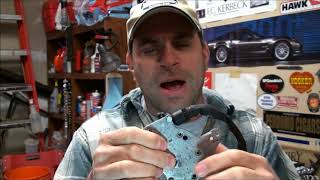
Helpful Videos

The information in this article is provided for general reference and educational purposes only. Vehicle specifications, procedures, and part compatibility can vary by production date, trim level, and region. Always consult your vehicle's factory service manual and verify part numbers before purchasing or performing repairs. Safety-critical components such as airbags, seat belts, and braking systems should be installed by a qualified professional.
- 🎬 Helpful Videos
- What Does P0706 Mean?
- Can I Drive With P0706?
- Common Causes
- Symptoms
- Diagnostic Flowchart
- Common Fixes & Costs
- Used vs. New Parts: Buying Guide
- What Happens If You Wait — Timeline
- Cost of Not Fixing It
- Diagnosis Steps
- When This Code Triggers (Freeze-Frame Conditions)
- Related Codes
- Climate & Environmental Factors
- How to Talk to a Mechanic About This Code
- Where to Take It: Dealer vs Independent vs Chain
- When to Walk Away From the Repair
- What Scan Tool You Need for This Code
- How to Clear the Code After You Fix It
- Will This Fail Emissions / State Inspection?
- Most Commonly Affected Vehicles
- Manufacturer-Specific Notes
- Real Owner Stories
- 2013 Hyundai Elantra at 163K miles - The Misdiagnosis
- 2006 Audi A4 2.0T CVT at 115K miles - The Internal Failure
- 2018 Chevrolet Traverse - The Easy Fix (That Isn't a Sensor)
- How to Prevent This Code From Triggering
- Frequently Asked Questions
- What is a transmission range sensor?
- What are the most common misdiagnoses for a P0706 code?
- Can a bad battery cause a P0706 code?
- Can I fix P0706 myself?
- How much does it cost to fix P0706?
- Will the P0706 code clear itself?
- Is a P0706 code serious?
- Can bad transmission fluid cause a P0706 code?
- Key Takeaways
- 🎟️ Get 5% Off