

P0017 on 2016-2019 Chevrolet Cruze 1.4L: Exhaust Cam Timing Causes and Fixes
On a 2016-2019 Cruze 1.4L, P0017 is most often caused by a faulty exhaust camshaft actuator solenoid (VVT solenoid) or low/dirty engine oil. A solenoid is about $40-$80 and is an easy DIY replacement. However, a more serious cause is a failed vacuum pump damaging the camshaft, which is a professional repair detailed in GM TSB 21-NA-268.
- Always check your engine oil level and condition first. Low or dirty oil is a simple fix that can cause this code.
- The most likely failed part is the exhaust VVT solenoid (actuator). A simple diagnostic test is to swap it with the intake solenoid and see if the code changes to P0016.
- Do not immediately replace the camshaft position sensor; it is rarely the cause of the problem.
- If you experience a hard brake pedal along with code P0017, be aware of TSB 21-NA-268, which points to a serious issue with the vacuum pump and camshaft that requires professional repair.
- If you hear a rattling noise from the engine, suspect a stretched timing chain and seek professional diagnosis immediately to avoid catastrophic engine failure.
What's Unique About the 2016-2019 Chevrolet Cruze

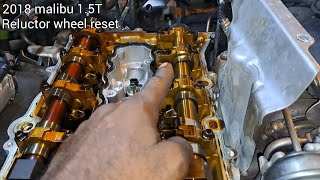
The 1.4L LE2 engine in the second-generation Cruze has a unique potential failure point related to this code. It uses a mechanical vacuum pump driven by the exhaust camshaft to assist the power brakes. This pump is known to fail, and when it seizes, it can damage the end of the camshaft where it connects. This damage can shift the position of the reluctor wheel that the camshaft sensor reads, directly causing a P0017 code, as documented in GM Technical Service Bulletin (TSB) 21-NA-268. This failure is often preceded by a hard brake pedal and may be accompanied by codes like P0014, P0365, and P0366.
🎬 Watch: How a hard brake pedal relates to these codes.Symptoms You May Notice
- Check Engine Light illuminated
- Rough idle or stalling
- Reduced engine power and poor acceleration
- Decreased fuel economy
- Rattling noise from the engine, especially on startup
- Engine cranks but does not start, or has a long crank time
- Hard brake pedal or loss of braking assist
- Replacing the camshaft position sensor when the actual fault is with the camshaft position actuator solenoid (VVT solenoid). Swapping the intake and exhaust solenoids is a key diagnostic step to avoid this.
- Replacing timing components without first inspecting the exhaust camshaft reluctor wheel and vacuum pump, especially if a hard brake pedal was a symptom. The root cause could be the pump failure described in TSB 21-NA-268.
Most Likely Causes

- Faulty Exhaust Camshaft Position Actuator Solenoid (VVT Solenoid) 🔴 High Probability These solenoids operate in hot engine oil and are prone to failure from clogging with sludge or electrical faults. It's the most common failure point in the VVT system.
How to confirm: Swap the exhaust solenoid with the identical intake solenoid. Clear the codes and drive the vehicle. If the code changes to P0016 (Intake Camshaft Position Correlation), the solenoid is bad. The solenoids are located on top of the valve cover, each held by a single bolt.
Typical fix: Replace the exhaust VVT solenoid. It is held in by a single 10mm bolt. 🎬 See this walkthrough on how to replace the VVT solenoid.
Est. part cost: $40-$80 - Low or Dirty Engine Oil 🟡 Medium Probability The VVT system is hydraulic and highly sensitive to oil level, pressure, and cleanliness. The 1.4L LE2 can have oil consumption issues from PCV system failures, making low oil levels more likely.
How to confirm: Check the engine oil level on the dipstick and inspect its condition. If the level is low or the oil is dark, gritty, or overdue for a change, this could be the cause.
Typical fix: Perform an oil and filter change using the correct specification oil (dexos1 Full Synthetic 5W-30). Top off the oil if low and see if the code returns.
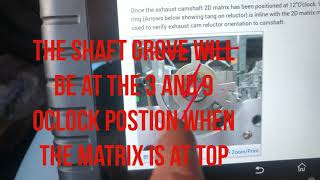
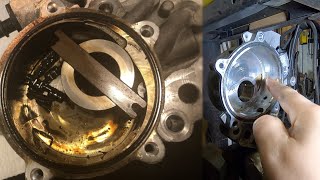
Est. part cost: $40-$70 - Failed Camshaft-Driven Vacuum Pump and Damaged Camshaft ⚪ Low Probability As detailed in GM TSB 21-NA-268, the mechanical vacuum pump driven by the exhaust camshaft is a known failure point. When it seizes, it can break the drive lugs on the camshaft and/or spin the camshaft reluctor wheel out of position, causing code P0017.
How to confirm: This is a complex diagnosis. It may be preceded by a hard brake pedal or other brake booster codes (like P0556). A technician would need to remove the cam cover to inspect the camshaft reluctor orientation and the vacuum pump drive lugs for damage as outlined in the TSB. There are multiple owner accounts on forums detailing this exact failure scenario.
Typical fix: Requires replacement of the exhaust camshaft and the mechanical vacuum pump. Any broken pieces of the old pump must be located and removed from the cylinder head.
Est. part cost: $300-$600+ - Stretched Timing Chain or Failed Tensioner ⚪ Low Probability While not as common as on older GM engines, timing chain stretch can occur over time, especially with poor oil change history. A stretched chain will cause a correlation error between the cams and crank.
How to confirm: A persistent rattling noise from the timing cover side of the engine is a strong indicator. The presence of both P0017 (exhaust) and P0016 (intake) codes simultaneously makes a timing chain issue very likely. Confirmation requires removing the timing cover for visual inspection.
Typical fix: Replace the timing chain, guides, and tensioner. This is a labor-intensive job.
Est. part cost: $150-$400
Rare But Worth Checking
- Faulty Exhaust Camshaft Position Sensor: The sensor itself can fail, but it's far more common for the solenoid (actuator) to be the problem. The sensor's job is to report the position, so it usually correctly identifies a problem caused by something else.
- Damaged Camshaft Phaser: The mechanical gear (phaser) on the end of the camshaft can fail internally, but this is much less common than the solenoid that controls it.
- Missing or Damaged Oil Sleeve: According to TSB Bulletin #PIP4543D, a concern with codes P0016 or P0017 can occur after a repair involving the camshaft actuators if the unique black plastic oil sleeve between the end of the camshaft and the actuator is missing or damaged.
Diagnosis Steps
- Check Engine Oil: Verify the oil level is full and the oil is clean. If low or dirty, perform an oil and filter change with 5W-30 dexos1 synthetic oil, clear the code, and re-test.
- Scan for Other Codes: Check for other codes (like P0016, P0014, P0556) that can provide clues to the root cause. A P0556 code strongly points towards the vacuum pump.
- Swap VVT Solenoids: Label, then swap the intake and exhaust VVT solenoids. They are identical and located on top of the engine. Clear codes and drive. If P0017 disappears and P0016 appears, the solenoid you moved to the intake position is faulty.
- Inspect Solenoid and Wiring: If the swap is inconclusive, remove the exhaust solenoid and inspect its screens for debris. Check the wiring harness and connector for damage or corrosion.
- Listen for Noise: Listen for any rattling from the timing chain area of the engine (passenger side). A consistent rattle points towards a timing chain/tensioner issue.
- Professional Diagnosis (TSB 21-NA-268): If the above steps do not resolve the issue, especially if a hard brake pedal was a symptom, the problem is likely the camshaft/vacuum pump issue. This requires professional diagnosis involving removing the cam cover to inspect the vacuum pump drive lugs and the alignment of the exhaust camshaft reluctor wheel. 🎬 Watch: How a broken vacuum pump ruins your engine timing.
Parts You'll Likely Need
- Exhaust Camshaft Position Actuator Solenoid
(OEM #12679100 (supersedes 12655421, 12646784, 12628348))— This is the most frequent cause of P0017. It's an electro-hydraulic valve that gets clogged or fails electrically, disrupting control of the exhaust cam timing.
Trusted brands: ACDelco, Dorman
OEM price range: $50-$80
Aftermarket price range: $30-$60 - Engine Vacuum Pump (Mechanical)
(OEM #12687783)— A known failure point on the 1.4L LE2 engine. When it fails, it can damage the exhaust camshaft, directly causing P0017 as per TSB 21-NA-268.
Trusted brands: ACDelco
OEM price range: $150-$250
Aftermarket price range: $80-$150 - Exhaust Camshaft
(OEM #55598943)— Required if the original camshaft's reluctor wheel has spun or the vacuum pump drive lugs are broken due to a seized vacuum pump. This is part of the TSB 21-NA-268 repair.
Trusted brands: GM Genuine
OEM price range: $200-$350
Related Codes That Often Appear With This One
- P0016 — Intake Camshaft Position Correlation. If both P0016 and P0017 are present, it strongly indicates a base timing issue, like a stretched timing chain, affecting both camshafts.
- P0014 — Exhaust Camshaft Position Timing Over-Advanced. This code is also related to the exhaust cam and can be caused by the same failing components. It is specifically listed alongside P0017 in TSB 21-NA-268 related to the vacuum pump/camshaft failure.
- P0556 — Brake Booster Pressure Sensor Circuit Range/Performance. This code can appear if the camshaft-driven vacuum pump fails, as it directly impacts the brake booster's vacuum supply. A failed pump can then cause P0017 by damaging the camshaft.
- P0365 / P0366 — Camshaft Position Sensor 'B' Circuit (Bank 1). These codes point to an electrical issue with the exhaust cam sensor circuit and are also listed as potential companion codes in TSB 21-NA-268.
Technical Service Bulletins (TSBs) & Recalls

- 21-NA-268: Information on Crank No Start or Extended Crank, Malfunction Indicator Lamp (MIL) Illuminated - DTC P0014, P0017, P0365 and/or P0366 Set.
- 18-NA-160: Information on Rough Running Engine with MIL Illuminated, DTC P0300 Set and Low Compression.
- 20-NA-047: Information on Check Engine Light On with DTC P1101 Set and/or Oil Leaks.
- TSB Bulletin #PIP4543D: Provides information regarding DTC P0011, P0014, P0016, or P0017 in the engine control module after a repair involving the camshaft actuators, specifically noting a unique black plastic oil sleeve between the end of the camshaft and the actuator.
- TSB Bulletin #PIP4543C: A preliminary communication for technicians regarding P0011, P0014, P0016, or P0017 codes following repairs to the camshaft actuators.
Platform-Specific Known Issues
- Owner Experience with Vacuum Pump Failure: A user on Reddit with a 2018 Chevy Spark (same engine family) experienced a P0017 code after the vacuum pump broke. After replacing the
Mechanic-Grade Diagnostic Values
- Camshaft Position Actuator Solenoid Resistance — expected: 6 to 12 Ohms. Failure: A reading of open (infinite) or short (zero ohms) indicates a failed solenoid coil.
- Camshaft Position Actuator Solenoid Connector Voltage (Key On, Engine Off) — expected: 12V (Battery Voltage). Failure: No voltage points to a blown fuse or a break in the power supply wire.
- Scan Tool Camshaft Position Variance — expected: Desired vs. Actual camshaft position angles should closely match.. Failure: A significant and persistent deviation between the desired and actual angles indicates a mechanical timing or VVT system fault. Chevrolet may set the code when timing is off by 8 degrees.
Scan Tool Commands That Help
- GDS2 (GM Dealer Tool): Camshaft Position Actuator Solenoid Valve Test — This bidirectional control commands the VVT solenoid on and off to verify its mechanical operation and the circuit's integrity. A lack of response (no click, no change in engine idle) points to a bad solenoid or wiring issue.
- GDS2 (GM Dealer Tool): Camshaft Position Variance Data — Use this to monitor the desired vs. actual camshaft position angles in the live data stream. It's the primary data used by the ECM to detect a correlation fault. If the values do not match after commanding a change, it points to a stuck phaser or oil pressure problem.
Wiring & Ground Locations
- ECM Connector X1, Pin 20 — At the Engine Control Module (ECM).. This is the 'Camshaft Position Sensor Low Reference' circuit. A poor connection or damaged wire at this pin can cause a faulty signal from the exhaust camshaft sensor.
- Exhaust Camshaft Position Sensor Connector — On top of the valve cover, connected to the rearmost sensor (exhaust side).. This is the direct connection to the sensor. The wiring harness can become brittle from heat, and the connector lock can break. The pins are: Pin 1 (BK/GY) is ground, Pin 2 (GN/GY) is the 5-volt reference, and Pin 3 (VT/BK) is the signal wire.
Real Owner Repair Stories
- YouTube channel 'Parts shooter' (Chevrolet vehicle with 1.4L/1.5L engine family) — Check Engine Light with codes P0014 and P0017.
❌ Tried (didn't work) The video focuses on the direct diagnosis of the vacuum pump.
✅ What actually fixed it The mechanical vacuum pump, driven by the exhaust camshaft, had seized and broken. This threw the exhaust camshaft timing off. Replacing the vacuum pump and verifying the camshaft was not damaged resolved the codes. - YouTube channel 'Saiges Garage' (2016 Chevrolet Cruze Premier RS 1.4L Turbo) — 'Service Brake Assist' message, extremely stiff and hard-to-press brake pedal.
✅ What actually fixed it Diagnosis showed no suction from the vacuum pump hose. The mechanical vacuum pump was replaced. The old pump was found to be completely clogged with hard, rock-like carbon deposits, which caused its failure.
OEM Part Supersession History
12628348, 12646784, 12655421→12679100— Standard part evolution for improved reliability and manufacturing processes. The parts are generally interchangeable for the specified applications.
Model Year Variations Within This Range
- 2016-2019: While the engine is the LE2 for this entire range, very early 2016-2017 models had some reports of cracked pistons, an issue that is less common in 2018-2019 models. This is not directly related to P0017 but speaks to ongoing revisions in the engine's early life.
Diagnostic Flowchart
Other Known Issues on This Vehicle
Issues unrelated to this code that are worth knowing about as an owner of this generation:
- Cracked Pistons (#1 or #4) 🔴 High — Common on 2016-2018 models, can occur under 60k miles. Presents as a P0300 misfire. (Ref: TSB 18-NA-160 / PIP5490E)
- Plugged PCV Orifice in Cam Cover 🟠 Medium — A frequent cause for code P1101, leading to high crankcase pressure and oil leaks from main seals. (Ref: TSB 20-NA-047)
- Water Pump and/or Housing Leaks 🟠 Medium — Cool coolant leaks from the water pump or associated hoses are a common engine-related problem.
- Turbocharger Failure 🔴 High — Failures can occur due to oiling issues or wear, leading to costly replacement.
Used vs. New Parts: Buying Guide for This Vehicle
When a used part is the smart pick: For this specific repair, using used parts is generally not recommended. The primary failure items are either inexpensive electronic components (VVT solenoid) or critical wear-and-tear mechanical parts (camshaft, vacuum pump, timing chain) where a used part carries significant risk and unknown history.
Donor-vehicle mileage cap: roughly under 40000 miles for the part to have meaningful remaining life.
What to inspect on the donor part:
- For a camshaft or vacuum pump, verify the donor vehicle had low mileage and no signs of a front-end collision or engine fire.
- Ask for maintenance records if possible, specifically oil change history.
- Visually inspect the camshaft lobes and reluctor ring for any scoring, damage, or signs of sludge.
- Manually spin the vacuum pump to ensure it moves freely and is not seized.
OEM-only on this vehicle (don't cheap out):
- Exhaust Camshaft
- Timing Chain Kit
- Camshaft Phaser
Aftermarket brands forum-validated for this vehicle:
- ACDelco (GM Genuine)
- Delphi
Brands owners have reported issues with on this vehicle:
- Unnamed, no-brand 'white box' VVT solenoids and sensors from online marketplaces are frequently cited as failing quickly or being dead-on-arrival.
Real Owner Stories
Aggregated from forums and TSBs cited above. Mileages and costs reflect what owners reported in those sources.
2018 Chevrolet Spark 1.4L LV7
Symptoms: The vehicle experienced a P0017 code specifically after the mechanical vacuum pump broke, which is a known issue in this engine family.
What fixed it: Replacement of the vacuum pump and addressing the damage it caused to the camshaft reluctor wheel.
Source hint: Reddit r/AskMechanics thread titled '2018 Chevy Spark P0017 exhaust camshaft'
Related OBD-II Codes
Frequently Asked Questions
Does TSB 21-NA-268 apply to my 2016-2019 Chevrolet Cruze with the 1.4L LE2 engine?
Can I test if the P0017 code is just a bad VVT solenoid without buying new parts?
Why does my Cruze have a hard brake pedal along with the P0017 engine code?
Is there a specific oil I should use to prevent VVT issues like P0017 in my Cruze?
Could a P1101 code or PCV issue be related to my P0017 code?
If I have both P0016 and P0017, does that change the diagnosis?
Helpful Videos
Used OEM Parts in Stock


New Aftermarket Parts Available


The information in this article is provided for general reference and educational purposes only. Vehicle specifications, procedures, and part compatibility can vary by production date, trim level, and region. Always consult your vehicle's factory service manual and verify part numbers before purchasing or performing repairs. Safety-critical components such as airbags, seat belts, and braking systems should be installed by a qualified professional.
- Chevrolet Cruze:
- 🎬 Helpful Videos
- 🛍️ Shop This Part
- What's Unique About the 2016-2019 Chevrolet Cruze
- Symptoms You May Notice
- Most Likely Causes
- Rare But Worth Checking
- Diagnosis Steps
- Parts You'll Likely Need
- Related Codes That Often Appear With This One
- Technical Service Bulletins (TSBs) & Recalls
- Platform-Specific Known Issues
- Mechanic-Grade Diagnostic Values
- Scan Tool Commands That Help
- Wiring & Ground Locations
- Real Owner Repair Stories
- OEM Part Supersession History
- Model Year Variations Within This Range
- Diagnostic Flowchart
- Other Known Issues on This Vehicle
- Used vs. New Parts: Buying Guide for This Vehicle
- Real Owner Stories
- 2018 Chevrolet Spark 1.4L LV7
- Related OBD-II Codes
- Frequently Asked Questions
- 🎟️ Get 5% Off