

OBD-II Code P0016: Crankshaft-Camshaft Correlation
The Ultimate Guide to P0016: What it means, why it triggers, and how to fix it for good
- Code P0016 indicates a critical synchronization failure between the crankshaft and Bank 1 intake camshaft, requiring immediate diagnostic attention.
- Stop driving immediately; continuing to operate an interference engine with a stretched timing chain causes catastrophic piston-to-valve collisions costing upwards of $4,000.
- Check your oil level and viscosity first, as low or dirty oil starves the hydraulic VVT system and triggers 30% of these correlation codes.
- Expect a $1,500 to $4,000 repair bill for a stretched timing chain or failed tensioner, which is the root cause in over 60% of high-mileage cases.
- Do not blindly replace the $50 camshaft sensor; it rarely fixes P0016 because the code flags a mechanical timing mismatch, not a dead sensor.
What Does P0016 Mean?

The Engine Control Unit (ECU) detects that the crankshaft and the Bank 1 intake camshaft are physically out of sync. These rotating assemblies must remain perfectly synchronized to open and close engine valves at the exact right millisecond. When they fall out of alignment, the engine loses power, burns excess fuel, and risks internal destruction.
Technical definition: Crankshaft Position - Camshaft Position Correlation (Bank 1 Sensor A). The Engine Control Module (ECM) detects the rotational angle of the Bank 1 intake camshaft does not match the expected angle of the crankshaft. Bank 1 contains cylinder #1, and 'Sensor A' designates the intake camshaft.
Can I Drive With P0016?
No — Do Not Drive. Do not drive. This code indicates a severe timing misalignment. If the timing chain breaks or jumps on an interference engine, the pistons will collide with the valves. This causes catastrophic, irreparable engine failure costing upwards of $4,000.
Common Causes

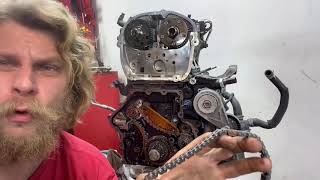
- Stretched timing chain or skipped belt (Very Common) — Timing chains stretch over thousands of miles, creating a physical misalignment between the crank and cam. This is the primary root cause of P0016.
- Failed timing chain tensioner or guides (Very Common) — Hydraulic tensioners lose pressure and fail, leaving the chain loose. Plastic guides become brittle and shatter, sending debris into the oil pan.
- Low, dirty, or incorrect engine oil (Common) — The Variable Valve Timing (VVT) system requires precise hydraulic pressure. Low or sludgy oil starves the tensioner and cam phasers, forcing the engine out of time.
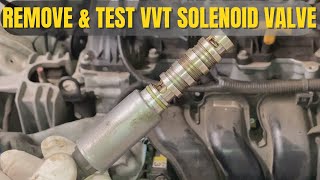
- Faulty VVT solenoid (Oil Control Valve) (Common) — The Oil Control Valve directs fluid to the cam phaser. Sludge clogs its internal screens, or its electrical coil fails, preventing camshaft adjustments. 🎬 Watch: How to remove and inspect your VVT solenoid valve.
- Failed Cam Phaser (VVT Actuator) (Less Common) — The mechanical gear rotating the camshaft gets stuck or leaks internal oil pressure, ignoring ECU timing commands.
- Faulty Camshaft or Crankshaft Position Sensor (Less Common) — A failing sensor sends erratic voltage signals to the ECU. This is frequently misdiagnosed as the primary cause.
- Clogged VVT Oil Passages (Rare) — Sludge or broken timing guide debris blocks the microscopic oil galleries feeding the cam phasers.
- Damaged Reluctor Ring (Rare) — The toothed wheel read by the sensors slips or shears its alignment key, sending a false out-of-time signal despite perfect mechanical timing.
- Damaged Wiring or Connectors (Rare) — Corroded grounds or melted sensor wires cause signal drop-outs, tricking the ECM into setting a correlation code.
- Faulty Powertrain Control Module (PCM) (Very Rare) — The engine computer suffers an internal short or software glitch. Only consider this after verifying perfect mechanical timing with an oscilloscope.
Symptoms
- Check Engine Light is on — First and often only warning sign.
- Engine rattling noise on cold start — A loose timing chain slaps against the engine cover until oil pressure builds.
- Rough idle and poor performance — Engine shakes at idle; acceleration feels sluggish and hesitant.
- Engine stalls or hard start — Incorrect timing prevents optimal compression, causing stalling at stoplights.
- Increased fuel consumption — The engine burns excess fuel to compensate for lost mechanical efficiency.
- Limp Mode — The ECU artificially limits RPM and power 🎬 Watch: A complete breakdown of P0016 symptoms and common fixes. to prevent catastrophic valve damage.
Diagnostic Flowchart

Tap your situation to follow the diagnostic path that matches what you're seeing on this code.
Common Fixes & Costs
- Timing Chain, Tensioner, and Guide Replacement
— Parts: $400-$800, Labor: $1200-$3200, ~8.0-20.0 hr book time
(Professional)
GM 2.4L Ecotec: OEM 12680750 (Alt: Cloyes 9-4201S)
VW/Audi 2.0T TSI: OEM 06K109158BE (Chain), 06K109467K (Tensioner) (Alt: INA 553036210)
Ford 3.5L EcoBoost: OEM AT4Z-6268-C (Alt: Cloyes 9-0738S) - VVT Solenoid (Oil Control Valve) Replacement
— Parts: $50-$270, Labor: $75-$170, ~0.5-1.5 hr book time
(DIY)
GM 2.4L Ecotec: OEM 12655420 (Alt: Denso DVT001)
Ford 3.5L EcoBoost: OEM BL3Z-6M280-B (Alt: Dorman 917-211) - Cam Phaser Replacement
— Parts: $200-$500, Labor: $800-$3000, ~7.0-18.0 hr book time
(Professional)
Ford 5.4L Triton: OEM 3R2Z-6A257-DA (Alt: Dorman 917-250) - Camshaft or Crankshaft Position Sensor Replacement
— Parts: $20-$150, Labor: $80-$250, ~0.5-2.0 hr book time
(DIY)
GM 2.4L Ecotec (Cam): OEM 12674702 (Alt: Denso 196-2005) - Wiring Harness or Connector Repair — Parts: $10-$100, Labor: $150-$500, ~1.0-4.0 hr book time (Intermediate)
DIY vs Professional
- VVT Solenoid Replacement — Beginner: Yes
Tools: Socket set, torque wrench. - Cam/Crank Sensor Replacement — Beginner: Yes
Tools: Socket set. - Wiring Harness Repair — Beginner: No
Tools: Multimeter, wire strippers, soldering iron, heat shrink. - Timing Chain Replacement — Beginner: No
Tools: Engine hoist, cam holding plates, crank pin, torque wrenches.
Used vs. New Parts: Buying Guide
When a used part is worth it: Never use used internal engine timing components. The $1,200+ labor cost makes installing a used chain or tensioner a massive financial risk.
Donor-vehicle mileage cap: roughly under 10000 miles for the part to have meaningful remaining life.
Donor quality checklist:
- Only consider used sensors or VVT solenoids from verified low-mileage, rear-end collision donor vehicles.
- Never install a used timing chain, tensioner, guide, or cam phaser.
- Match part numbers exactly; manufacturers frequently supersede timing components to fix original design flaws.
Decision logic:
- If The part is a timing chain, tensioner, guide, or cam phaser. → Buy new OEM or premium aftermarket. Do not use used parts.
- If The part is a sensor or VVT solenoid and the budget is extremely tight. → A used OEM part is acceptable, but a new aftermarket part carries less risk.
Warranty tradeoff: Used parts carry a 30-day warranty covering only the part. New OEM parts offer 1-year warranties. Neither covers the $1,200+ labor if the part fails.
Worst-case if a used part fails: $4000-$10000+ if a used timing chain snaps and destroys the engine.
What Happens If You Wait — Timeline

- 0-2 weeks: Check Engine Light illuminates with P0016. Minor rough idle on cold starts. (MPG impact: 0-5%% · Added cost: $0)
- 2 weeks - 2 months: Engine develops a noticeable rough idle, hesitation during acceleration, and stalls at low speeds. Cold-start rattling noise becomes prominent. (MPG impact: 5-15%% · Added cost: $50-$150 in wasted fuel.)
- 2-4 months: Loose chain damages plastic guides, sending debris into the oil pan. Engine enters 'limp mode'. Unburnt fuel begins melting the catalytic converter. (MPG impact: 15-25%% · Added cost: $1200-$2800 (catalytic converter replacement).)
- Sudden failure at any time: Catastrophic failure. The timing chain breaks or jumps multiple teeth. Pistons collide with valves, destroying the cylinder head. (MPG impact: 100% (vehicle is inoperable)% · Added cost: $4000-$10000+ (engine replacement).)
Cost of Not Fixing It
- Immediate (0-1 month): Noticeable 5-15% drop in fuel economy, rough idle, and stalling. The vehicle automatically fails emissions testing. (Added cost: $50-$150 in wasted fuel.)
- Short Term (1-6 months): Incorrect timing dumps unburnt fuel into the exhaust, overheating and melting the catalytic converter internals. (Added cost: $1200-$2800 for catalytic converter replacement.)
- Long Term (6+ months): The loose timing chain skips teeth or snaps. Pistons collide with valves, destroying the cylinder head and requiring a complete engine replacement. (Added cost: $4000-$10000+ for engine replacement.)
Diagnosis Steps

- Check Engine Oil Level and Condition
Pull the dipstick. Ensure the oil is full, clean, and the correct viscosity. Low or sludgy oil is the leading cause of hydraulic VVT failure.
Tools: ['Shop Towel'] (Beginner) - Scan for Codes and Check TSBs
Pull all OBD-II codes. Look for P0017 or P0018, which confirm a systemic timing issue. Search manufacturer Technical Service Bulletins (TSBs) for known software or tensioner flaws.
Tools: ['OBD-II Scan Tool'] (Beginner) - Test the VVT Solenoid (Oil Control Valve)
Remove the Bank 1 intake VVT solenoid. Inspect the screens for metal shavings or sludge. Apply 12V power to verify the internal plunger snaps open and closed crisply.
Tools: ['Socket Set', '12V Power Source'] (Intermediate) - Analyze Live Scan Tool Data
Monitor the 'Camshaft Angle Error' PID at idle. A value consistently greater than 5 degrees confirms a stretched chain. Rev the engine and compare 'Desired' vs 'Actual' cam position; a mismatch indicates a stuck phaser or bad solenoid.
Tools: ['Advanced OBD-II Scan Tool'] (Advanced) - Inspect Sensor Wiring and Connectors
Visually inspect the harnesses for the cam and crank sensors. Look for oil intrusion in the connectors, melted insulation, or frayed wires.
Tools: ['Flashlight'] (Beginner) - Test Camshaft and Crankshaft Sensors
Use a multimeter to verify the sensors receive a 5V reference and a solid ground. Backprobe the signal wire while cranking to ensure voltage fluctuates.
Tools: ['Digital Multimeter', 'Backprobe Pins'] (Intermediate) - Analyze Cam/Crank Waveforms
Connect a lab scope to the cam and crank signal wires. Compare the live waveform against a known-good factory pattern. This definitively proves if the engine has jumped a tooth without removing the timing cover.
Tools: ['Automotive Oscilloscope'] (Professional) - Inspect Mechanical Timing Components
Remove the valve cover and timing front cover. Measure tensioner extension to calculate chain stretch. Inspect plastic guides for cracks and verify factory timing marks align perfectly.
Tools: ['Hand Tools', 'Valve Cover Gasket', 'Jack and Jack Stands'] (Professional) - Perform In-Cylinder Pressure Test
Thread a pressure transducer into the spark plug hole. Analyze the pressure waveform on an oscilloscope to pinpoint the exact degree valves open and close relative to piston Top Dead Center.
Tools: ['Pressure Transducer Kit', 'Automotive Oscilloscope'] (Professional)
When This Code Triggers (Freeze-Frame Conditions)
- Engine Coolant Temp: 180-200°F (Triggers when the engine reaches full operating temperature and closed-loop fueling.)
- RPM: 1500-2500 (Triggers during steady-state cruise or light acceleration, rarely at idle.)
- Engine Load: 30-60% (Detected under moderate load when the VVT system actively adjusts timing.)
- Vehicle Speed: 35-55 mph (Occurs during constant highway driving where the ECU reliably compares sensor signals.)
Related Codes
- P0017 — Exhaust camshaft correlation fault on Bank 1. Seeing P0016 and P0017 together guarantees a base timing issue, like a jumped chain, rather than a single bad sensor.
- P0018 / P0019 — Correlation faults for Bank 2. Codes on both banks point to a shared failure: the primary timing chain, crankshaft sensor, or a systemic oil pressure drop.
- P0340 — Camshaft sensor circuit failure. P0340 means the electrical signal is completely dead; P0016 means the signal works but the mechanical timing is wrong.
- P052A — Cold start timing over-advanced. Shares identical root causes with P0016, specifically pointing to a VVT phaser stuck due to thick, cold oil.
Climate & Environmental Factors
- Cold Weather: Sub-zero temperatures thicken engine oil, delaying hydraulic pressure to the timing chain tensioner on startup. This 'dry start' accelerates chain wear and triggers cold-start P0016 codes.
- High Heat: Extreme ambient heat breaks down low-quality oil, thinning its viscosity and reducing the hydraulic pressure required to operate the VVT phasers.
- Altitude: Lower air density at high altitudes exacerbates the sluggish acceleration caused by retarded engine timing, making symptoms highly noticeable.
How to Talk to a Mechanic About This Code
Say this: "I have a P0016 code. I've verified the oil level is full and clean. Can you check for TSBs, test the VVT solenoid, and analyze the live cam/crank sensor data before quoting a timing chain replacement?"
Signals you are an informed customer. It forces the technician to follow a logical diagnostic path, ruling out cheap hydraulic/electrical issues before upselling a $2,000 mechanical teardown.
Avoid saying:
- 'Just fix whatever's wrong'
- 'My check engine light is on, can you look at it?'
- 'I think I need a new camshaft sensor.'
Questions to ask before authorizing the repair:
- How did you confirm the mechanical timing is off? Did you measure the tensioner extension or use an oscilloscope?
- If replacing a sensor, did you test the original part's resistance to confirm it failed?
- Does your timing chain quote include replacing the tensioner, guides, and phasers? What is the warranty?
Where to Take It: Dealer vs Independent vs Chain
- Dealer:
Best for: Vehicles under powertrain warranty., Vehicles with a known TSB requiring a proprietary software flash (e.g., Subaru)., Complex German engines requiring specialized timing locking tools.
Downsides: Labor rates are 50-100% higher than independent shops., Service advisors frequently recommend complete assembly replacements instead of component repair. (Typical cost: +50% vs. baseline) - Independent Shop:
Best overall choice for out-of-warranty P0016 repairs. A reputable independent shop performs timing chain replacements for thousands less than a dealer.
Best for: Out-of-warranty vehicles requiring a major mechanical repair like a timing chain., Cost-sensitive owners seeking dealer-level quality.
Downsides: Expertise varies; you must verify ASE certifications and experience with internal engine work., May lack proprietary software to reset VVT learned values on newer models. (Typical cost: +0% vs. baseline) - Chain Shop:
AVOID. The risk of misdiagnosis or a botched timing job is too high.
Best for: Simple oil changes to rule out low oil pressure.
Downsides: Technicians lack the training and specialized tools for internal engine timing diagnostics., High pressure to upsell unnecessary flushes and sensors. (Typical cost: -10% vs. baseline)
When to Walk Away From the Repair
If the estimated repair cost exceeds 40-50% of the car's private-party value, sell the car as-is.
- Car worth $4000, fix is $2200: Walk away. The repair is 55% of the car's value.
- Car worth $12000, fix is $1800: Fix it. The repair is only 15% of the vehicle's value.
- Car worth $7500, fix is $3500: Borderline. At 46% of the car's value, get a second opinion on the repair cost before proceeding.
What Scan Tool You Need for This Code
Minimum: A scan tool that graphs live data PIDs, specifically 'Desired vs. Actual' camshaft position.
A $20 code reader only displays 'P0016'. To diagnose it, you must see if the VVT system is attempting to adjust the cam angle, which requires live data.
Budget: BlueDriver Pro or Motopower MP69033 (~$30-100) — Graphs live data to show if the actual camshaft position tracks the ECU's desired position, distinguishing a hydraulic issue from a sensor failure.
Mid-range: Autel MaxiCheck Series or TOPDON ArtiDiag Pro (~$150-400) — Adds bidirectional control. Allows you to manually command the VVT solenoid to activate, instantly confirming if the solenoid is stuck or working.
Professional: Autel MaxiCOM MK808 or Launch X431 CRP919XBT (~$450-800) — Provides full bidirectional control and special functions, including the ability to reset VVT learned values after a timing chain replacement.
Rent vs buy: Buy. You need a tool with live data to diagnose the initial problem and to verify the fix is working after the repair.
How to Clear the Code After You Fix It
- Reconnect the battery if disconnected during repair.
- Use an OBD-II scan tool to clear the P0016 fault code from the ECM.
- Perform a complete drive cycle to run onboard diagnostics and confirm the fix.
Drive cycle (~30 minutes): Start with a cold engine (off for 8+ hours). Idle for 3 minutes with A/C and defroster on. Drive 15 minutes at a steady 55 mph. Drive 20 minutes in stop-and-go city traffic. Allow the vehicle to cool completely.
Readiness monitors affected: Catalyst Monitor, Evaporative System Monitor, Oxygen Sensor Monitor
Before emissions retest: drive at least 100 miles to fully set monitors.
Watch out for:
- Disconnecting the battery clears the code but resets readiness monitors to 'Not Ready', guaranteeing an emissions test failure.
- P0016 returns immediately if the underlying mechanical timing or hydraulic oil pressure issue remains unfixed.
Will This Fail Emissions / State Inspection?
Yes — this code typically fails an OBD-II emissions inspection.
- California: An active P0016 is an automatic failure. All OBD readiness monitors must read 'Ready'. Expect to drive 100+ miles post-repair to reset the system.
- New York: NYS DMV OBD-II scans automatically fail vehicles with P0016. The mechanical fault must be repaired and the code cleared.
- Texas: In emissions-testing counties, an illuminated Check Engine Light is an automatic failure. You are allowed exactly one 'Not Ready' monitor to pass post-repair.
Most Commonly Affected Vehicles
- General Motors (Chevrolet, GMC, Buick) Various with 2.4L Ecotec engine (2010-2017) — Excessive oil consumption starves the hydraulic tensioner, guaranteeing a stretched timing chain and shattered plastic guides.
- Volkswagen/Audi Various with 2.0L TSI/TFSI engine (2008-2015) — The factory timing chain tensioner contains a fatal design flaw. It must be replaced with the updated revision (P/N: 06K109467K) to prevent catastrophic engine failure.
- Ford F-150, Expedition with 3.5L EcoBoost & 5.4L Triton (2004-2018) — P0016 pairs with a loud cold-start rattle, indicating failed cam phasers and a stretched primary chain. TSB 16-0027 addresses this specific wear issue.
- Hyundai/Kia Various with 2.0L and 2.4L GDI engines (2011-2019) — Sludge buildup from missed oil changes clogs the Oil Control Valve (OCV) filter screen, starving the VVT system.
- Nissan Altima with 2.5L engine (2007-2018) — High prevalence of stretched timing chains triggering correlation codes around the 100,000-mile mark.
- BMW 3-Series, 5-Series, X3, X5 with N52/N54/N55 engines (2006-2013) — Dirty VANOS (VVT) solenoids are the primary culprit. Removing and cleaning the solenoids is the mandatory first diagnostic step.
- Honda Accord, CR-V, Pilot with K-series or J-series engines (2008-2017) — Low oil pressure causes the VTC actuator (cam phaser) to stick, requiring replacement of the actuator and often the stretched chain.
- Subaru Outback, Forester, Crosstrek, Legacy (2012-2024) — On 2018-2024 models, hyper-sensitive ECM software falsely triggers P0016. TSB #09-120-24R resolves this with a software flash.
Manufacturer-Specific Notes
- General Motors: On 2010-2017 2.4L Ecotecs, excessive oil consumption starves the tensioner, guaranteeing a stretched timing chain. Always replace the VVT solenoids during the chain job, as shattered plastic guides clog their screens.
- Ford: On 2011-2018 3.5L EcoBoosts, P0016 pairs with a loud cold-start rattle, indicating failed cam phasers and a stretched primary chain. TSB 16-0027 addresses this specific wear issue.
- Subaru: On 2018-2024 models, hyper-sensitive ECM software falsely triggers P0016. TSB #09-120-24R resolves this with a software flash, saving thousands in unnecessary mechanical teardowns.
- Volkswagen/Audi: On 2008-2015 2.0T engines, the factory timing chain tensioner contains a fatal design flaw. It must be replaced with the updated revision (P/N: 06K109467K) to prevent catastrophic engine failure.
- Toyota: On 2.5L 2AR-FE engines, using cheap aftermarket oil filters restricts hydraulic flow to the VVT system, triggering P0016. Always use OEM Toyota filters.
Real Owner Stories
2012 Chevy Equinox 2.4L with P0016
Check engine light appeared. Owner tried replacing VVT solenoids and camshaft position sensors based on internet advice.
What they tried:
- Replaced VVT solenoids - code returned.
- Replaced camshaft position sensors - code returned.
Outcome: A mechanic diagnosed significant timing chain slack. A complete timing chain kit replacement ($1,800) permanently fixed the issue. The root cause was the engine's known excessive oil consumption starving the hydraulic tensioner.
Lesson: On engines notorious for timing chain issues (like the GM 2.4L), don't waste money on sensors. Check for chain slack and address the core mechanical problem first.
2012 VW Golf GTI (2.0T TSI) with intermittent P0016
Car with 90,000 miles developed an intermittent P0016 code, severe low-end power loss, and occasional no-start conditions.
What they tried:
- Replaced cam position sensor - no change.
- Cleared code, which stayed off for a day before returning.
Outcome: The intermittent nature pointed to a failing timing chain tensioner losing hydraulic pressure. The final fix was a new, updated-design tensioner (P/N: 06K109467K) and timing chain, costing $2,200.
Lesson: An intermittent P0016 is a major warning of impending mechanical failure. On VW/Audi 2.0T engines, assume the timing chain tensioner is the cause until proven otherwise.
2009 VW Scirocco 1.4TSI with P0016 after oil change
Owner performed an oil change but accidentally used oil with a thinner viscosity. P0016 appeared after 300 miles.
What they tried:
- Drove the car another 300 miles.
- Changed the oil to the correct manufacturer-specified viscosity.
Outcome: The code returned even after using the correct oil. Running with low oil pressure from the incorrect viscosity accelerated wear on the timing chain, leading to a permanent mechanical stretch requiring a $1,500 chain replacement.
Lesson: Using the wrong oil viscosity directly causes P0016 by providing insufficient hydraulic pressure for the tensioner. If the code appears after an oil service, mechanical damage may have already occurred.
How to Prevent This Code From Triggering
- Perform regular oil changes with manufacturer-specified oil viscosity and an OEM filter. (Every 5,000 miles.) — The VVT system and timing chain tensioner are hydraulic. Clean, correct-viscosity oil prevents sludge buildup in VVT solenoids and ensures the tensioner maintains proper pressure to prevent chain slack.
- Check engine oil level on the dipstick. (Monthly.) — Low oil level starves the hydraulic tensioner of pressure, rapidly accelerating timing chain wear and triggering P0016.
- Use API SP or ILSAC GF-6 rated synthetic oil in Turbocharged Direct Injection (T-GDI) engines. (Every oil change.) — Modern oils combat soot-induced timing chain wear. Soot particles accelerate wear on chain pins and bushings, causing stretch.
- Avoid aggressive driving habits like frequent high-RPM acceleration. (Daily habit.) — Hard acceleration puts massive shock loads on the timing chain and tensioner, accelerating mechanical stretch.
- Proactively replace known failure-prone timing chain tensioners (e.g., VW/Audi 2.0T). (At 70,000-100,000 miles.) — Replacing a flawed tensioner with an updated revision prevents catastrophic engine failure that costs thousands more to repair.
Frequently Asked Questions
Can low oil cause a P0016 code?
Yes. The variable valve timing (VVT) system relies on hydraulic oil pressure to function. Low, dirty, or incorrect viscosity oil starves the system, causing the camshaft to fall out of sync with the crankshaft. Always check your dipstick first.
Will an oil change fix P0016?
Rarely, but it is possible if the code was just triggered by sludge temporarily clogging the VVT solenoid. If the code returns after a fresh oil change and clearing the ECU, you have a permanent mechanical failure requiring component replacement.
What are the most common mistakes when diagnosing P0016?
The biggest mistake is immediately replacing the camshaft and crankshaft sensors without testing them. Technicians also frequently ignore manufacturer Technical Service Bulletins (TSBs) or fail to check basic oil pressure, leading to hundreds of dollars in wasted parts.
The code came back after I replaced the sensor. What now?
This confirms the sensor was reading accurately and the engine is genuinely out of time. You must now diagnose the mechanical and hydraulic systems, starting with the VVT solenoids and ending with a physical inspection of the timing chain.
Why did the P0016 code return after a timing chain replacement?
The engine was likely mistimed by a single tooth during reassembly, a common error even among professionals. Alternatively, the shop failed to replace a faulty VVT phaser, or the engine's computer requires a specialized relearn procedure to clear old timing data.
What happens if I ignore P0016?
The timing chain will eventually skip multiple teeth or snap completely. On modern interference engines, this causes the pistons to smash into the open valves, destroying the cylinder head. This turns a $1,500 timing chain job into a $5,000+ complete engine replacement.
Will a P0016 code fail an emissions test?
Yes. An active P0016 triggers the Check Engine Light, resulting in an automatic OBD-II emissions failure in all 50 states. The incorrect engine timing also drastically increases tailpipe pollutants.
Can a bad ground cause P0016?
Yes. A corroded engine ground creates voltage drops that distort the signals from the camshaft and crankshaft sensors. The engine computer misinterprets this electrical noise as a physical timing misalignment, triggering a false P0016.
Key Takeaways
- Code P0016 indicates a critical synchronization failure between the crankshaft and Bank 1 intake camshaft, requiring immediate diagnostic attention.
- Stop driving immediately; continuing to operate an interference engine with a stretched timing chain causes catastrophic piston-to-valve collisions costing upwards of $4,000.
- Check your oil level and viscosity first, as low or dirty oil starves the hydraulic VVT system and triggers 30% of these correlation codes.
- Expect a $1,500 to $4,000 repair bill for a stretched timing chain or failed tensioner, which is the root cause in over 60% of high-mileage cases.
- Do not blindly replace the $50 camshaft sensor; it rarely fixes P0016 because the code flags a mechanical timing mismatch, not a dead sensor.
Helpful Videos


The information in this article is provided for general reference and educational purposes only. Vehicle specifications, procedures, and part compatibility can vary by production date, trim level, and region. Always consult your vehicle's factory service manual and verify part numbers before purchasing or performing repairs. Safety-critical components such as airbags, seat belts, and braking systems should be installed by a qualified professional.
- 🎬 Helpful Videos
- What Does P0016 Mean?
- Can I Drive With P0016?
- Common Causes
- Symptoms
- Diagnostic Flowchart
- Common Fixes & Costs
- DIY vs Professional
- Used vs. New Parts: Buying Guide
- What Happens If You Wait — Timeline
- Cost of Not Fixing It
- Diagnosis Steps
- When This Code Triggers (Freeze-Frame Conditions)
- Related Codes
- Climate & Environmental Factors
- How to Talk to a Mechanic About This Code
- Where to Take It: Dealer vs Independent vs Chain
- When to Walk Away From the Repair
- What Scan Tool You Need for This Code
- How to Clear the Code After You Fix It
- Will This Fail Emissions / State Inspection?
- Most Commonly Affected Vehicles
- Manufacturer-Specific Notes
- Real Owner Stories
- 2012 Chevy Equinox 2.4L with P0016
- 2012 VW Golf GTI (2.0T TSI) with intermittent P0016
- 2009 VW Scirocco 1.4TSI with P0016 after oil change
- How to Prevent This Code From Triggering
- Frequently Asked Questions
- Can low oil cause a P0016 code?
- Will an oil change fix P0016?
- What are the most common mistakes when diagnosing P0016?
- The code came back after I replaced the sensor. What now?
- Why did the P0016 code return after a timing chain replacement?
- What happens if I ignore P0016?
- Will a P0016 code fail an emissions test?
- Can a bad ground cause P0016?
- Key Takeaways
- 🎟️ Get 5% Off