

OBD-II Code P0556: Brake Booster Pressure Sensor Circuit Range/Performance
The Ultimate Guide to Diagnosing and Fixing P0556
- Do not drive with a P0556 code; the resulting loss of power brake assist requires up to 4 times more physical foot pressure to stop the vehicle.
- Inspect the vacuum hoses and the $20 one-way check valve first, as physical vacuum leaks cause over 60% of P0556 codes.
- If you drive a 2016-2020 Chevy 1.4L turbo, a hard brake pedal combined with engine stalling almost guarantees a failed camshaft-driven vacuum pump requiring a $400+ repair.
- Listen closely to the brake pedal area; a distinct hissing noise confirms a torn booster diaphragm or leaking sensor grommet, ruling out an electrical sensor failure.
What Does P0556 Mean?

Your car's Powertrain Control Module (PCM) detected an illogical signal from the brake booster pressure sensor. This sensor measures vacuum pressure inside the brake booster, which provides the power assist making your brake pedal easy to press. When the PCM sees a pressure reading that doesn't match expected driving conditions, it triggers P0556, indicating compromised power brakes.
Technical definition: The SAE/OBD-II definition is "Brake Booster Pressure Sensor Circuit Range/Performance". The PCM sets this code when the brake booster pressure sensor's voltage signal is implausible or fails to correlate with vehicle speed or brake pedal application. The PCM expects a specific voltage change as vacuum builds and depletes, typically between 0.5V (high vacuum) and 4.5V (low vacuum). If the signal is stuck, erratic, or unresponsive to braking, the PCM flags a performance fault.
Can I Drive With P0556?
No — Do Not Drive. Do not drive. P0556 indicates a power brake system failure, resulting in a hard brake pedal that requires significantly more physical force to stop the car. This increases stopping distance unexpectedly, creating a major safety hazard. Continuing to drive with a large vacuum leak also causes a lean running condition, damaging the catalytic converter over time—a repair costing over $1,500.
Common Causes

- Cracked, disconnected, or leaking vacuum hoses (Very Common) — Rubber and plastic hoses supplying vacuum to the brake booster become brittle, crack, or disconnect, causing a physical vacuum leak.
- Failing mechanical/electric vacuum pump (Common On Certain Vehicles) — Modern turbocharged engines use an auxiliary vacuum pump. These fail mechanically or electrically, often due to oil starvation, causing a complete loss of vacuum.
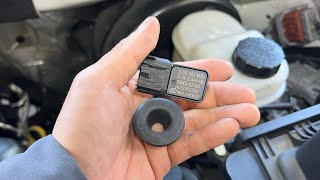
- Faulty Brake Booster Pressure Sensor (Common) — The sensor fails electronically, becomes contaminated with oil, or suffers internal damage, sending incorrect, noisy, or zero voltage readings.
- Damaged wiring or corroded electrical connector (Common) — Sensor wires chafe, break, or short. Connector pins suffer moisture and corrosion, causing poor or intermittent electrical connections.
- Failing Power Brake Booster (Less Common) — The brake booster develops an internal leak from a ruptured diaphragm, or the integrated one-way check valve fails.
- Sudden Hard Braking Event (Rare) — A single panic-stop generates a pressure reading so far outside the normal range that the PCM flags a fault, even without permanent damage.
- Faulty Powertrain Control Module (PCM) (Very Rare) — The PCM suffers a faulty internal circuit for processing the sensor's signal. Consider this only after ruling out all physical and electrical possibilities.
Symptoms

- Hard brake pedal and increased stopping distance — The brake pedal feels stiff and requires significantly more physical effort to press. The car takes longer to stop, creating a major safety hazard.
- Hissing noise from brake pedal area — A hissing sound when pressing or releasing the brake pedal indicates a vacuum leak in the booster diaphragm or seals.
- Illuminated warning lights — The Check Engine Light (MIL) and a specific red or yellow 'BRAKE' warning light illuminate on the dashboard.
- Rough or unstable engine idle (also visible on scanner) — A significant vacuum leak allows unmetered air into the engine's intake, disrupting the air-fuel mixture and causing the engine to idle poorly, hesitate, or stall.
Diagnostic Flowchart

Tap your situation to follow the diagnostic path that matches what you're seeing on this code.
Common Fixes & Costs
- Replace a cracked or leaking vacuum hose/line — Parts: $20-$150, Labor: $75-$150, ~0.8 hr book time (DIY)
- Replace the Brake Booster Pressure Sensor
— Parts: $70-$250, Labor: $50-$150, ~1.2 hr book time
(Intermediate)
: OEM ACDelco 20876799, GM 23434447 (Alt: Standard Motor Products BST158 ($44), Autopart Premium APPS0341 ($28))
: OEM VW 03C906051F, VW 5Q0612041AH (assembly) (Alt: Bosch 0261230234 ($26), Vemo V10-72-1500)
: OEM Motorcraft FL3Z-2C444-B, Ford 9M6Z-2L524-A (Alt: Autopart Premium APPS0356) - Replace the Brake Booster Vacuum Pump
— Parts: $150-$500, Labor: $150-$300, ~2.5 hr book time
(Professional)
: OEM GM 25204337 (Alt: Dorman, Standard Motor Products)
: OEM Motorcraft BRPV-23 / BRPV-30
: OEM Check with dealer by VIN (Alt: Pierburg, Hella) - Repair Wiring or Clean/Replace Connector — Parts: $5-$30, Labor: $100-$250, ~2 hr book time (Intermediate)
- Replace the Power Brake Booster — Parts: $250-$700, Labor: $200-$400, ~3 hr book time (Professional)
DIY vs Professional
- Replace a cracked or leaking vacuum hose/line — Beginner: True
Tools: Pliers, hose cutters, flashlight. - Replace the Brake Booster Pressure Sensor — Beginner: False
Tools: Socket set, ratchet, multimeter, trim removal tools. - Repair Wiring or Clean/Replace Connector — Beginner: False
Tools: Multimeter, wire strippers, crimpers, soldering iron, heat shrink tubing, electrical contact cleaner. - Replace the Brake Booster Vacuum Pump — Beginner: False
Tools: Socket set, wrenches, torque wrench, gasket scraper. - Replace the Power Brake Booster — Beginner: False
Tools: Extensive socket/wrench set, torque wrench, line wrenches, brake bleeding equipment.
Used vs. New Parts: Buying Guide
When a used part is worth it: For electronic parts like a brake booster pressure sensor or vacuum pump, buying used is a high-risk choice best reserved for older, high-mileage vehicles where budget is the absolute priority.
Donor-vehicle mileage cap: roughly under 60000 miles for the part to have meaningful remaining life.
Donor quality checklist:
- Verify the donor vehicle's mileage and ensure it's low.
- Match the OEM part number exactly; do not rely on visual similarity.
- Avoid parts from vehicles scrapped due to flood, fire, or major front-end collisions.
Decision logic:
- If The part is a simple vacuum hose or check valve → Buy new; the cost savings for used is negligible and not worth the risk.
- If The part is an electronic sensor or vacuum pump and the vehicle is less than 10 years old → Strongly favor a new OEM or high-quality aftermarket part for reliability and warranty.
- If The vehicle is over 15 years old and the budget is extremely tight → A used sensor or pump from a low-mileage, accident-free donor is a possible, but risky, option.
Warranty tradeoff: Used parts from salvage yards typically offer a 30-90 day warranty covering the part only. New aftermarket parts usually carry a 1-year to limited lifetime warranty. New OEM parts offer a 1-2 year warranty.
Worst-case if a used part fails: $300-$600. If a used sensor or pump fails after installation, you pay for repeat labor costs plus another replacement part.
What Happens If You Wait — Timeline
- 0-2 weeks: Code P0556 is set, MIL is on. A hard brake pedal is immediately noticeable, creating a significant safety risk. (MPG impact: 0%% · Added cost: $0)
- 2 weeks - 3 months: If caused by a vacuum leak, the engine runs lean, causing the PCM to inject more fuel. This leads to a subtle drop in fuel economy and rough idle. (MPG impact: 3-8%% · Added cost: $50-$150 in wasted fuel)
- 3-8 months: Sustained lean condition and PCM overcompensation causes exhaust gas temperatures to rise, overheating and damaging the catalytic converter. (MPG impact: 8-15%% · Added cost: $1200-$2800)
- 8+ months: On specific engines (e.g., GM 1.4L), an oil-starved vacuum pump seizes completely, potentially damaging the camshaft and leading to a no-start condition. (MPG impact: N/A (vehicle may not run)% · Added cost: $1500-$4000+)
Cost of Not Fixing It
- Immediate: Significantly increased stopping distance and hard brake pedal, posing a major safety risk. (Added cost: Potential for collision-related costs.)
- 1-6 months: A persistent vacuum leak causes a lean engine condition, forcing the PCM to over-richen the fuel mixture, overheating and destroying the catalytic converter. (Added cost: $1200-$2800)
- 6+ months: On certain GM vehicles, a failing vacuum pump seizes and causes further damage to the camshaft and other engine components. (Added cost: $1500-$4000+)
Diagnosis Steps
- Read Codes and Live Data
Use an OBD-II scanner to confirm P0556. Monitor the 'Brake Booster Pressure' PID. At idle, it should read deep vacuum (18-22 inHg). If stuck or slow, proceed to physical tests.
Tools: OBD-II Scanner (Beginner) - Visual Inspection and Wiggle Test
Inspect all vacuum hoses to the brake booster and vacuum pump for cracks or loose fittings. With the engine running, wiggle the sensor wiring harness; if engine RPM changes or scanner voltage jumps, repair the wiring.
Tools: Flashlight, OBD-II Scanner (Beginner) - Test System with a Vacuum Gauge
Connect a vacuum gauge to the brake booster supply hose. A healthy system produces a steady 18-22 inHg at idle. Low or fluctuating readings confirm a vacuum leak or weak vacuum pump.
Tools: Vacuum Gauge, T-adapter (Intermediate) - Test the Brake Booster Check Valve
Remove the one-way check valve from the booster hose. Blow through it from both ends. Air must only pass in one direction (towards the engine). If air passes both ways, replace the valve.
Tools: Pliers (Intermediate) - Test Sensor Voltage
Backprobe the sensor connector. Key on, engine off: find 5V reference, ground, and ~4.5V signal. Engine running at idle: signal drops to 0.5V-1.0V. If voltage is stuck or dead, replace the sensor.
Tools: Digital Multimeter, Backprobe Kit (Intermediate) - Smoke Test for Hidden Leaks
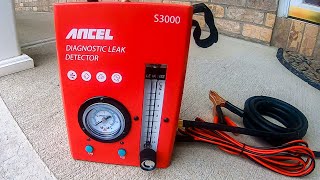
If a vacuum leak is confirmed but invisible, pump high-pressure smoke into the booster and vacuum lines. Smoke escapes from cracks or bad seals, revealing the exact leak source.
Tools: Automotive Smoke Machine (Professional) - Analyze Digital Sensors (Advanced)
On 2019+ vehicles using digital SENT protocol sensors, standard voltage tests fail. Use an oscilloscope to view the signal pattern and identify malformed digital packets indicating sensor failure.
Tools: Automotive Oscilloscope (Professional)
When This Code Triggers (Freeze-Frame Conditions)
- Engine Coolant Temp: 180-200°F (Fully warmed up, as many self-tests only run at operating temperature.)
- RPM: 1500-2500 RPM (Steady-state cruise followed by a braking event where the sensor's reading did not match the expected change.)
- Engine Load: 30-60% (Light to moderate load during city or highway driving just before or during brake application.)
- Vehicle Speed: 35-55 mph (The fault is often logged at cruising speeds when the brakes are applied and the PCM detects an implausible signal.)
Related Codes
- P0557 — Indicates 'Brake Booster Pressure Sensor Circuit Low Input'. This is a specific electrical fault code, set when the sensor's voltage is below the expected range (e.g., short to ground).
- P0558 — Indicates 'Brake Booster Pressure Sensor Circuit High Input'. Set when the voltage is above the normal range (e.g., short to power), pointing to a specific electrical fault.
- P0171 — This code for 'System Too Lean (Bank 1)' often appears alongside P0556. The brake booster vacuum leak allows unmetered air into the engine, causing a lean air-fuel mixture.
- C0021 — An ABS code for 'Brake Booster Performance'. If seen with P0556, it confirms a mechanical issue with the vacuum supply or the booster itself, rather than just a sensor circuit problem.
Climate & Environmental Factors
- Cold Weather: Low temperatures cause plastic and rubber vacuum hoses to become brittle, making them susceptible to cracking and creating vacuum leaks.
- High Heat: Prolonged exposure to high under-hood temperatures accelerates the degradation of rubber vacuum hoses, causing them to soften, swell, or crack.
- High Altitude: Lower ambient atmospheric pressure means the engine produces less vacuum, making the effects of a small, pre-existing vacuum leak more noticeable.
- Humidity/Moisture: High humidity or water intrusion leads to corrosion on the electrical connector pins for the brake booster pressure sensor, causing a poor connection.
How to Talk to a Mechanic About This Code
Say this: "I have an OBD-II code P0556 and I'm experiencing a hard brake pedal. I've already done a visual inspection of the vacuum hoses. I'd like to schedule a diagnostic to test the brake booster pressure sensor, its circuit, and confirm the vacuum supply with a gauge."
This signals you are an informed customer. It directs them to the most likely causes and requests specific, verifiable tests, preventing unnecessary, expensive repairs like replacing the entire brake booster without proper diagnosis.
Avoid saying:
- 'Just fix whatever's wrong'
- 'My check engine light is on, can you look at it?'
- 'Whatever you recommend'
Questions to ask before authorizing the repair:
- How did you confirm the diagnosis? Did you test the sensor voltage and check the vacuum supply with a gauge?
- If you are recommending a new brake booster or vacuum pump, how did you definitively rule out a simpler issue like a leak or a bad sensor?
- Will you be using an OEM or a high-quality aftermarket part?
- What is the warranty on the recommended parts and labor for this repair?
Where to Take It: Dealer vs Independent vs Chain
- Dealer:
A strong choice for complex cases or warranty work, but likely the most expensive option for a common out-of-warranty repair.
Best for: Vehicles under warranty, Newer vehicles with complex digital sensors (e.g., 2018+ Volkswagen/Audi), Diagnosing manufacturer-specific TSBs or recalls
Downsides: Typically the highest labor rates, May recommend replacing an entire assembly when a smaller component has failed (Typical cost: +50% vs. baseline) - Independent Shop:
Best overall fit. A reputable independent shop offers the best balance of expertise and value for diagnosing and fixing most P0556 issues.
Best for: Out-of-warranty vehicles where cost is a factor, Most P0556 scenarios, as it's a common code related to fundamental systems
Downsides: Quality and diagnostic capabilities vary widely. Vet the shop by checking for ASE certifications and online reviews., May lack the specific tools for software updates on certain brands (like VW). (Typical cost: +0% vs. baseline) - Chain Shop:
Use with caution. Acceptable if you have already diagnosed a simple, specific part failure. AVOID for initial diagnosis of a P0556 code.
Best for: Simple, clear-cut repairs like replacing an easily accessible sensor or hose.
Downsides: Technician skill can be inconsistent., High pressure to upsell can lead to misdiagnosis., Often lack advanced diagnostic tools like smoke machines or oscilloscopes. (Typical cost: -10% vs. baseline)
When to Walk Away From the Repair
If the total estimated repair cost exceeds 40-50% of your car's private-party value, seriously consider selling or trading it in instead of repairing it.
- Car worth $4000, fix is $700: Fix it. At 17.5% of the car's value, this repair is a reasonable investment to keep a functional vehicle on the road.
- Car worth $3000, fix is $1100: Borderline. At 37% of the car's value, get a second opinion. If the rest of the car is in great shape, it might be worth it. If not, consider selling.
- Car worth $2000, fix is $1200: Walk away. The repair cost is 60% of the car's value. It is not financially sensible to proceed.
What Scan Tool You Need for This Code
Minimum: A scanner that can read and graph live data PIDs, specifically the 'Brake Booster Pressure' sensor data.
A basic $20 code reader only tells you the P0556 code exists. It cannot show live sensor voltage or pressure readings, which is essential to determine if the sensor is faulty or if there's a real vacuum supply problem.
Budget: BlueDriver Pro or Autel AP200 (~$60-120) — These Bluetooth dongles connect to a smartphone app and allow you to read freeze frame data and graph the live brake booster pressure sensor data to see if it responds to engine vacuum and brake application.
Mid-range: Foxwell NT510 Elite or Innova 5610 (~$150-350) — Provides all functions of the budget picks but adds deeper manufacturer-specific diagnostics and bi-directional controls to test related components.
Professional: Autel MaxiCOM MK808S (~$450-600) — Offers full bidirectional control to test actuators, OE-level diagnostics for all modules, and advanced data logging. It can be paired with an oscilloscope for diagnosing modern digital sensors.
Rent vs buy: For a one-time diagnosis, many auto parts stores offer a free tool loaner program. If you plan to perform your own maintenance regularly, buying a budget or midrange scanner is a worthwhile investment.
How to Clear the Code After You Fix It
- Use an OBD-II scan tool to clear the P0556 code.
- Perform a complete OBD-II drive cycle to allow readiness monitors to run.
- Check for pending codes after the drive cycle to confirm the fix.
Drive cycle (~30 minutes): After an 8-hour cold soak, start the engine and idle for 2-3 minutes. Drive a mix of city and highway speeds, including holding a steady 55 mph for at least 5 minutes. Allow the vehicle to cool down completely.
Readiness monitors affected: Catalyst monitor, O2 sensor monitor, Evaporative System monitor
Before emissions retest: drive at least 100 miles to fully set monitors.
Watch out for:
- Simply clearing the code with a scanner does not fix the underlying mechanical or electrical problem.
- Taking the vehicle for an emissions test immediately after clearing the code results in a 'Not Ready' failure.
- Disconnecting the battery to clear the code resets all readiness monitors and other vehicle memory modules.
Will This Fail Emissions / State Inspection?
Yes — this code typically fails an OBD-II emissions inspection.
- California: An illuminated Check Engine Light from a P0556 code is an automatic failure of the smog check. All OBD readiness monitors must be set to 'Ready' to pass.
- New York: A vehicle automatically fails the emissions portion of the NYS inspection if the Check Engine Light is on.
- Texas: In counties requiring an emissions test, an active P0556 code with the Check Engine Light on is an automatic failure.
Most Commonly Affected Vehicles
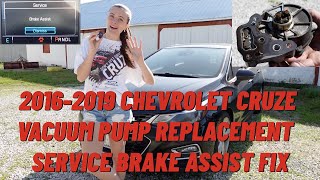
- Chevrolet Cruze, Malibu, Spark, Trax, Encore (2016-2020) — Models with 1.4L and 1.5L turbo engines are highly prone to vacuum pump failure. The pump, driven by the camshaft, seizes from oil starvation, destroying itself and causing a hard pedal, stalling, and P0556.
- Volkswagen Jetta, Golf, Passat (2016-2019) — For 2016-2017 1.4T models, check for TSB 01-18-09 (TPI 2045383), a software update fixing false P0556 codes. On 2019+ models, the sensor is a digital 'smart' sensor requiring scope diagnosis.
- Ford F-150, Fusion, Escape (2015-2020) — On many F-150s, the check valve is integrated into the main vacuum line assembly, which must be replaced as a unit. Leaks at the booster grommet are also common.
- Jeep Grand Cherokee, Wrangler (2012-2018) — These vehicles experience P0556 due to failing brake boosters (internal diaphragm leaks) or cracked vacuum lines leading to a hard brake pedal.
- Chrysler/Dodge/Ram Ram 1500, Charger, 300 (2010-2022) — The cause is frequently the brake booster pressure sensor itself or a vacuum leak from hardened plastic lines. On some Ram trucks, the sensor is located on the booster near the master cylinder.
- Honda Accord, Civic (2010-2021) — P0556 is often caused by a corroded electrical connector at the sensor. Cleaning the connector with electrical contact cleaner and applying dielectric grease is the first step.
- Nissan Altima, Rogue, Sentra (2013-2020) — P0556 typically points to a failing pressure sensor or vacuum leaks in the booster supply lines. A faulty ABS actuator sometimes causes related brake pressure issues.
- Hyundai/Kia Sonata, Optima, Sorento (2011-2019) — Common causes include a faulty brake booster pressure sensor and leaks in the vacuum system. Using non-OEM sensors sometimes causes the code to return.
Manufacturer-Specific Notes
- General Motors (Chevrolet/Buick): On 1.4L/1.5L turbo engines, the camshaft-driven vacuum pump is a critical failure point. Oil starvation causes it to seize, often damaging the camshaft. A hard pedal combined with a rough run condition almost always points to this pump.
- Volkswagen/Audi: Always check for software updates first, especially on 2016-2017 1.4T engines (TSB 01-18-09). Newer models use digital SENT protocol sensors that require an oscilloscope for accurate diagnosis.
- Ford: On many F-150s, the vacuum check valve is integrated into the main vacuum hose assembly. If the inexpensive valve fails, the entire hose assembly must be replaced.
- Chrysler/Dodge/Jeep/Ram: On vehicles with hydraulic brake boosters (Hydroboost) running off the power steering pump, P0556 is triggered by low power steering fluid or a failing power steering pump, not a vacuum loss.
Real Owner Stories
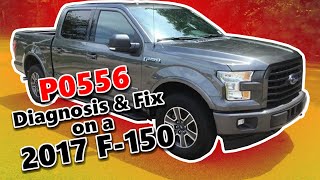
2017 Ford F-150 with hissing noise
Owner heard a hissing noise from the engine bay, and the Check Engine Light was on with code P0556. The brake pedal felt soft and sank slowly.
What they tried:
- A visual inspection revealed the sound was coming from the brake booster pressure sensor.
- The rubber grommet sealing the sensor to the brake booster was ripped.
Outcome: Replaced the inexpensive rubber grommet and the sensor. The hissing stopped, the brake pedal felt solid again, and the code cleared.
Lesson: A loud hissing noise almost always points to a physical vacuum leak. Check simple, cheap parts like hoses and grommets before assuming a major component failed.
2019 VW Jetta 1.4L with persistent code
Check Engine Light for P0556 came on. A local mechanic diagnosed a bad brake booster vacuum pump.
What they tried:
- Mechanic replaced the vacuum pump with an aftermarket part, but the light returned.
- They replaced the pressure sensor, but the light still returned.
- Owner took the car to a VW dealership for a second opinion.
Outcome: The dealership found the aftermarket vacuum pump failed and damaged the control module. Both required replacement with genuine VW parts.
Lesson: On modern European models, using non-OEM electronic parts causes compatibility issues or damages other components. Stick to OEM parts for critical systems.
2019 VW Jetta after a panic stop
The Check Engine Light for P0556 appeared for the first time a few days after a single, very hard panic-braking event. No other symptoms were present.
What they tried:
- Owner used an OBD-II scanner to read and clear the code.
Outcome: The owner cleared the code and monitored the situation. The sudden pressure change during the panic stop generated a sensor reading outside the expected range, flagging a fault without actual damage.
Lesson: If P0556 appears immediately following a panic stop without other symptoms, it is likely a one-time fluke. Clear the code and monitor before starting repairs.
2014 Chevy Cruze with hard pedal and stalling
Owner experienced a hard brake pedal, a P0556 code, and the engine was stalling. The dealership quoted over $700 for a repair.
What they tried:
- The diagnosis pointed to an internal failure of the brake vacuum pump.
Outcome: The repair required replacing the camshaft-driven vacuum pump. The high cost was due to both the part ($335+) and labor ($335+).
Lesson: On GM vehicles with 1.4L/1.5L turbo engines, a hard pedal plus engine stalling is a classic sign of vacuum pump failure requiring a costly replacement.
How to Prevent This Code From Triggering
- Perform regular oil changes with high-quality oil. (Per manufacturer's schedule (e.g., 5,000-7,500 miles).) — On engines with an oil-lubricated vacuum pump, clean oil is essential. Old, contaminated oil leads to premature pump seizure and failure.
- Periodically inspect vacuum hoses. (Every oil change, or at least annually.) — Under-hood heat causes rubber and plastic hoses to become brittle. A visual check catches potential failures before causing a hard pedal.
- Apply dielectric grease to the sensor connector. (Once, or whenever the connector is disconnected.) — Dielectric grease blocks moisture and oxygen from reaching the metal pins, preventing corrosion that causes faulty signals.
- Practice smooth braking habits. (Daily driving habit.) — Avoiding frequent, aggressive braking reduces stress and wear on the entire brake system, including the brake booster diaphragm and seals.
Frequently Asked Questions
What does the brake booster pressure sensor actually do?
It converts the vacuum level inside the brake booster into a voltage signal for the PCM. This allows the computer to verify the power brake system has enough vacuum to provide brake assist.
Why is my brake pedal suddenly so hard to push?
A hard pedal means the brake booster lost its vacuum supply. You no longer have power assist, forcing you to push against the entire hydraulic brake system with only your foot strength. This requires 3-4 times the normal effort.
Can I fix code P0556 myself?
Yes, if the problem is a simple disconnected or cracked vacuum hose. However, diagnosing faulty sensors with a multimeter or replacing a brake booster requires advanced tools and experience. Stop DIY and go to a shop if you cannot find an obvious physical leak.
Will a bad brake booster sensor affect how my engine runs?
Yes, if the root cause is a physical vacuum leak. The leak allows unmetered air into the engine, causing a rough idle, hesitation, or stalling. It often triggers a separate 'System Too Lean' (P0171) code.
How much does it cost to fix P0556?
A simple vacuum hose fix costs $95 to $300. Replacing the sensor or vacuum pump typically ranges from $120 to $800 depending on the vehicle. Replacing the entire brake booster costs $450 to $1,100 at a repair shop.
My mechanic replaced parts, but the P0556 code is still on. What now?
The issue is likely a hidden vacuum leak requiring a smoke test, or damaged wiring. On some Volkswagens, it requires a specific dealership software update. In rare cases, the replacement aftermarket part is faulty or incompatible.
What's the difference between a vacuum leak and a bad sensor?
A vacuum leak is a physical hole preventing vacuum buildup, tested with a mechanical vacuum gauge. A bad sensor is an electronic failure reporting incorrect vacuum levels even when physical vacuum is perfect, tested with a multimeter.
What is a brake booster vacuum pump and why do I have one?
Modern turbocharged engines don't create enough natural intake vacuum to power the brakes. An auxiliary mechanical or electric vacuum pump ensures consistent vacuum is always available. When these pumps fail, you lose brake assist and trigger P0556.
Key Takeaways
- Do not drive with a P0556 code; the resulting loss of power brake assist requires up to 4 times more physical foot pressure to stop the vehicle.
- Inspect the vacuum hoses and the $20 one-way check valve first, as physical vacuum leaks cause over 60% of P0556 codes.
- If you drive a 2016-2020 Chevy 1.4L turbo, a hard brake pedal combined with engine stalling almost guarantees a failed camshaft-driven vacuum pump requiring a $400+ repair.
- Listen closely to the brake pedal area; a distinct hissing noise confirms a torn booster diaphragm or leaking sensor grommet, ruling out an electrical sensor failure.
Helpful Videos

The information in this article is provided for general reference and educational purposes only. Vehicle specifications, procedures, and part compatibility can vary by production date, trim level, and region. Always consult your vehicle's factory service manual and verify part numbers before purchasing or performing repairs. Safety-critical components such as airbags, seat belts, and braking systems should be installed by a qualified professional.
- 🎬 Helpful Videos
- What Does P0556 Mean?
- Can I Drive With P0556?
- Common Causes
- Symptoms
- Diagnostic Flowchart
- Common Fixes & Costs
- DIY vs Professional
- Used vs. New Parts: Buying Guide
- What Happens If You Wait — Timeline
- Cost of Not Fixing It
- Diagnosis Steps
- When This Code Triggers (Freeze-Frame Conditions)
- Related Codes
- Climate & Environmental Factors
- How to Talk to a Mechanic About This Code
- Where to Take It: Dealer vs Independent vs Chain
- When to Walk Away From the Repair
- What Scan Tool You Need for This Code
- How to Clear the Code After You Fix It
- Will This Fail Emissions / State Inspection?
- Most Commonly Affected Vehicles
- Manufacturer-Specific Notes
- Real Owner Stories
- 2017 Ford F-150 with hissing noise
- 2019 VW Jetta 1.4L with persistent code
- 2019 VW Jetta after a panic stop
- 2014 Chevy Cruze with hard pedal and stalling
- How to Prevent This Code From Triggering
- Frequently Asked Questions
- What does the brake booster pressure sensor actually do?
- Why is my brake pedal suddenly so hard to push?
- Can I fix code P0556 myself?
- Will a bad brake booster sensor affect how my engine runs?
- How much does it cost to fix P0556?
- My mechanic replaced parts, but the P0556 code is still on. What now?
- What's the difference between a vacuum leak and a bad sensor?
- What is a brake booster vacuum pump and why do I have one?
- Key Takeaways
- 🎟️ Get 5% Off