

OBD-II Code P1101: Intake Air Flow System Performance
What P1101 means, why it triggers, and how to fix it
- P1101 indicates a mismatch between expected and actual airflow, most commonly caused by unmetered air entering the engine through a vacuum leak.
- On 2011-2019 GM 1.4L turbo engines (Cruze, Sonic, Encore), a ruptured PCV valve cover diaphragm or missing intake manifold check valve causes 80% of P1101 codes.
- Start diagnosis with a $10 can of MAF sensor cleaner and a visual inspection of the air filter housing before spending $200+ on replacement sensors.
- Driving with an active P1101 code drops fuel economy by up to 15% and risks destroying the catalytic converter, turning a minor fix into a $2,000+ repair within 6 months.
What Does P1101 Mean?

The P1101 code means the Powertrain Control Module (PCM) detects a discrepancy in the air intake system. The airflow measured by the Mass Airflow (MAF) sensor contradicts the expected values calculated from the throttle position and MAP sensors. This mismatch disrupts the air-to-fuel ratio, causing poor engine performance.
Technical definition: The SAE/ISO definition for P1101 is "MAF Sensor Out of Self Test Range." During the Key-On Engine-Running (KOER) self-test, the MAF sensor signal falls outside the expected 0.46V to 2.44V range. GM defines it as "Intake Air Flow System Performance," indicating the measured airflow deviates significantly from the PCM's calculated airflow model.
Can I Drive With P1101?
Yes, But With Caution. You can drive with a P1101 code, but limit trips to short distances at low speeds. Your car will experience reduced power, rough idling, and poor gas mileage. Ignoring it fouls spark plugs and damages the catalytic converter, leading to repairs costing between $900 and $2,500.
Common Causes

- Failed PCV System Component (Very Common) — On GM 1.4L and 1.5L engines, a ruptured valve cover diaphragm or missing intake manifold check valve creates massive internal vacuum leaks, triggering P1101.
- Dirty or Contaminated Mass Airflow (MAF) Sensor (Very Common) — Oil, dirt, and debris coat the sensor's hot wire, skewing airflow readings. Over-oiled aftermarket air filters frequently cause this contamination.
- Vacuum or Charge Air Leaks (Very Common) — Unmetered air entering after the MAF sensor creates a discrepancy. Culprits include cracked hoses, loose clamps, bad intake gaskets, or leaking turbo charge pipes.
- Dirty or Improperly Installed Air Filter (Common) — A clogged filter restricts airflow, while an unsealed housing creates turbulence across the MAF sensor. Both scenarios trigger inaccurate readings.
- Dirty Throttle Body (Common) — Carbon buildup around the throttle plate disrupts airflow at idle, forcing the computer to detect an airflow anomaly.
- Faulty or Damaged MAF Sensor (Less Common) — The electronic components inside the MAF sensor fail over time, requiring complete replacement rather than just cleaning. 🎬 See these two simple DIY methods to fix code P1101.
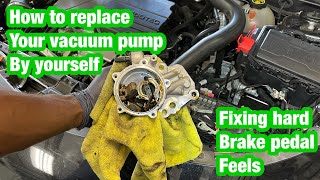
- Failing Engine Vacuum Pump (Less Common) — On GM 1.5L Turbos, catastrophic vacuum pump failure creates a massive crankcase vacuum leak. A hard brake pedal confirms this specific failure.
- Wiring or Connector Issues (Rare) — Corrosion, loose pins, or rodent damage to the MAF sensor harness interrupts the 5V reference or signal voltage to the PCM.
- Exhaust Restrictions (Rare) — A clogged catalytic converter restricts exhaust flow, limiting intake draw and causing lower-than-expected MAF readings.
Symptoms

- Check Engine Light is On — The PCM illuminates the MIL immediately upon failing the KOER self-test.
- Rough or Unstable Idle — The engine shakes, idles erratically, or stalls at stoplights due to the skewed air-fuel ratio.
- Reduced Engine Power and Sluggish Acceleration — The vehicle hesitates and accelerates slowly. The PCM often triggers "limp mode" to protect the engine.
- Poor Fuel Economy — An incorrect air-fuel mixture forces the engine to burn excess fuel to compensate for unmetered air.
- Hard Brake Pedal — On vehicles like the Chevy Malibu 1.5L, a P1101 code accompanied by a hard brake pedal confirms a failed engine vacuum pump.
- Black Smoke from Exhaust — A severely contaminated MAF sensor forces a rich fuel condition, producing visible black smoke from the tailpipe.
Diagnostic Flowchart

Tap your situation to follow the diagnostic path that matches what you're seeing on this code.
Common Fixes & Costs
- Replace PCV Valve/Valve Cover
— Parts: $50-$150, Labor: $100-$250, ~1.8 hr book time
(Intermediate)
Chevrolet Cruze/Sonic (1.4L): OEM
Chevrolet Cruze/Sonic (1.4L): OEM - Clean Mass Airflow (MAF) Sensor — Parts: $10-$20, Labor: $0-$50, ~0.3 hr book time (DIY)
- Replace Engine Air Filter
— Parts: $15-$40, Labor: $0-$30, ~0.2 hr book time
(DIY)
Chevrolet Cruze/Sonic/Malibu: OEM - Clean Throttle Body — Parts: $10-$20, Labor: $80-$150, ~1.0 hr book time (Intermediate)
- Repair Vacuum Leak (Hose, Gasket) — Parts: $10-$50, Labor: $100-$300, ~1.5 hr book time (Intermediate)
- Replace Mass Airflow (MAF) Sensor
— Parts: $70-$250, Labor: $50-$120, ~0.4 hr book time
(DIY)
Chevrolet Cruze (Gen 1, 1.4L): OEM
Chevrolet Malibu (1.5L): OEM - Replace Intake Manifold
— Parts: $150-$350, Labor: $250-$500, ~2.5 hr book time
(Professional)
Chevrolet Cruze/Sonic (1.4L): OEM
DIY vs Professional
- Clean Mass Airflow (MAF) Sensor — Beginner:
Tools: MAF Sensor Cleaner spray, screwdriver. - Replace Engine Air Filter — Beginner:
Tools: Screwdriver. - Replace Mass Airflow (MAF) Sensor — Beginner:
Tools: Screwdriver. - Clean Throttle Body — Beginner:
Tools: Throttle Body Cleaner spray, rags, screwdriver. - Replace PCV Valve/Valve Cover (GM 1.4L) — Beginner:
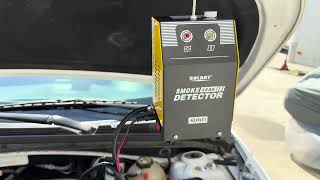
Tools: Ratchet set, torque wrench, pliers. - Repair Vacuum Leak (Smoke Test) — Beginner:
Tools: Automotive smoke machine. - Replace Intake Manifold — Beginner:
Tools: Extensive tool set, torque wrench.
Used vs. New Parts: Buying Guide
When a used part is worth it: Never buy a used MAF sensor. A used GM 1.4L valve cover is risky but acceptable if on a strict budget.
Donor-vehicle mileage cap: roughly under 60000 miles for the part to have meaningful remaining life.
Donor quality checklist:
- For a valve cover, ensure the PCV diaphragm is completely intact.
- Avoid parts from high-mileage salvage vehicles.
Decision logic:
- If The part is a MAF sensor → Buy new OEM or top-tier aftermarket (Bosch). Used sensors fail too frequently.
- If The part is a GM 1.4L valve cover → Buy a new aftermarket aluminum cover for long-term reliability over a used plastic OEM cover.
- If The part is an intake manifold → A used manifold from a low-mileage vehicle is a great value. Replace all gaskets before installation.
Warranty tradeoff: Salvage yards offer 30-day warranties. New aftermarket parts offer 1-year to lifetime warranties.
Worst-case if a used part fails: $200-$500 in repeated labor if the used part fails.
What Happens If You Wait — Timeline
- 0-1 month: Check Engine Light illuminates. You experience a slight drop in fuel economy and a rougher idle when cold. (MPG impact: 0-5%% · Added cost: $0-$25 in wasted fuel.)
- 1-3 months: Engine performance degrades. Hesitation during acceleration occurs, and the rough idle persists when warm. (MPG impact: 5-15%% · Added cost: $50-$150 in wasted fuel and fouled spark plugs.)
- 3-6 months: The incorrect air-fuel mixture stresses the catalytic converter. On GM 1.4L engines, high crankcase vacuum damages front and rear main engine seals. (MPG impact: 10-20%% · Added cost: $250-$800 for seal damage and early catalytic converter stress.)
- 6+ months: Sustained improper air-fuel ratios melt the catalytic converter substrate. Severe PCV issues cause major oil leaks from blown main seals. (MPG impact: 15-25%% · Added cost: $1200-$3000+ for catalytic converter and engine main seal replacement.)
Cost of Not Fixing It
- 0-1 Month: Drop in fuel economy (up to 15%), rough idle, and failed smog tests. (Added cost: $20-$60 in wasted fuel per month.)
- 1-6 Months: Persistent rich/lean conditions overheat the catalytic converter and foul spark plugs. (Added cost: $1200-$2800 for catalytic converter replacement.)
- 6+ Months: Severe PCV failure on GM turbo models blows out the rear main engine seal. (Added cost: $2500+ for major engine seal replacements.)
Diagnosis Steps

- Check for Other Trouble Codes
Scan for additional codes. P0171 (System Too Lean), P0106 (MAP Sensor Performance), or P0299 (Turbo Underboost) pinpoint the root cause faster than diagnosing P1101 alone.
Tools: OBD-II Scanner (Beginner) - Inspect the Air Intake System and Filter
Visually inspect the intake path from the airbox to the throttle body. Look for loose clamps or cracked hoses. Ensure the air filter is clean and seated perfectly to prevent air turbulence.
Tools: Flashlight, Screwdriver (Beginner) - Inspect the PCV System (Crucial for GM)
Listen for hissing near the valve cover. With the engine running, try to remove the oil filler cap. Extreme suction indicates a ruptured PCV diaphragm. On GM 1.4L engines, shine a light into the intake manifold PCV port to verify the orange check valve is present.
Tools: Flashlight, Pliers (Intermediate) - Clean the Mass Airflow (MAF) Sensor
Remove the MAF sensor and spray the hot wire with dedicated MAF cleaner. Never use brake cleaner. Let it dry completely before reinstalling.
Tools: Screwdriver/Torx driver, MAF Sensor Cleaner (Beginner) - Clean the Throttle Body
Remove the intake tube from the throttle body. Use throttle body cleaner and a rag to wipe away carbon buildup from the throttle plate and bore.
Tools: Screwdriver/Ratchet, Throttle Body Cleaner, Rag (Intermediate) - Check for Vacuum Leaks with a Smoke Test
Force low-pressure smoke into the intake system. Smoke escaping from hoses, gaskets, or seals pinpoints hidden vacuum leaks.
Tools: Automotive Smoke Machine (Intermediate) - Analyze Live Sensor Data and Fuel Trims
View live data at idle. A healthy MAF reads ~1 gram per second (g/s) per liter of engine displacement. If Short-Term (STFT) and Long-Term (LTFT) fuel trims exceed +10% at idle but normalize at 2500 RPM, you have a vacuum leak. Erratic trims at all RPMs indicate a bad MAF sensor.
Tools: Advanced OBD-II Scanner (Advanced) - Test the MAF Sensor Circuit Voltage
Back-probe the MAF sensor connector with the engine running. The signal wire should read 0.5V-1.5V at idle and rise smoothly to 4.5V at wide-open throttle. A stuck or erratic voltage confirms a dead sensor or wiring fault.
Tools: Multimeter, Back-probe pins (Advanced)
When This Code Triggers (Freeze-Frame Conditions)
- Engine Coolant Temp: 180-210°F (82-99°C) (The engine has reached full operating temperature.)
- RPM: 1500-3000 RPM (The code sets during steady-state cruise or light acceleration, not at wide-open throttle.)
- Engine Load: 20-60% (The PCM runs the self-test under moderate load conditions where airflow is predictable.)
- Vehicle Speed: 35-65 mph (56-105 kph) (The fault is detected during city or highway cruise conditions.)
Related Codes
- P0171 — System Too Lean. A vacuum leak allows unmetered air in, causing the MAF to report low airflow (P1101) and the O2 sensor to detect a lean condition (P0171).
- P0106 — MAP Sensor Performance. The PCM cross-checks MAF and MAP readings. If P1101 and P0106 appear together on a GM 1.4L, it confirms a PCV system failure.
- P0299 — Turbo Underboost. Appearing with P1101, this confirms a massive air leak in the pressurized intake tract after the turbo (e.g., cracked charge pipe).
- P0300 — Random Misfire. The incorrect air-fuel mixture caused by P1101 leads to poor combustion. Resolving P1101 clears the misfire.
Climate & Environmental Factors
- Cold Climates: Freezing temperatures turn plastic vacuum lines and PCV hoses brittle, causing them to crack and create the vacuum leaks that trigger P1101.
- High Altitude: Less dense air lowers the mass of air entering the engine. This exacerbates borderline MAF sensor issues, pushing them outside the PCM's acceptable range.
How to Talk to a Mechanic About This Code
Say this: "I have a P1101 code. I've checked the air filter. Please check fuel trims and perform a smoke test to rule out vacuum leaks before recommending a MAF sensor. If it's a GM vehicle, specifically inspect the PCV valve cover and intake manifold check valve."
This proves you understand P1101 is usually a vacuum leak or PCV issue, not a bad MAF sensor. It forces the technician to perform a real diagnosis rather than firing the parts cannon.
Avoid saying:
- 'Just fix whatever's wrong'
- 'My check engine light is on, can you look at it?'
- 'Replace the MAF sensor'
Questions to ask before authorizing the repair:
- What were the short-term and long-term fuel trim readings at idle versus 2500 RPM?
- Did you perform a smoke test, and did you find any leaks?
- If recommending a MAF sensor, what specific voltage test proved it failed?
- For a GM vehicle, what is the exact condition of the intake manifold check valve?
Where to Take It: Dealer vs Independent vs Chain
- Dealer:
Use only if you suspect your GM vehicle has active warranty coverage for the PCV system.
Best for: Vehicles under powertrain warranty., GM vehicles potentially covered by Special Coverage policies for PCV issues.
Downsides: Highest labor rate., Will replace entire assemblies rather than individual components. (Typical cost: +50% vs. baseline) - Independent Shop:
Best fit. An independent shop has the smoke machine and scanner needed to find the root cause without dealer markup.
Best for: Out-of-warranty vehicles., Diagnosing vacuum leaks via smoke testing.
Downsides: May miss specific manufacturer TSBs if not specialized. (Typical cost: +0% vs. baseline) - Chain Shop:
Avoid for P1101. They are highly likely to misdiagnose this as a bad MAF sensor.
Best for: Simple air filter replacements.
Downsides: High pressure to upsell MAF sensors., Rarely perform smoke tests or in-depth PCV inspections. (Typical cost: -10% vs. baseline)
When to Walk Away From the Repair
If the estimated repair cost exceeds 40% of your car's private-party value, consider selling.
- Car worth $4000, fix is $800: Fix it. This repair cost is reasonable for the vehicle's value.
- Car worth $12000, fix is $950: Fix it — well below threshold.
- Car worth $3000, fix is $1300: Walk away. The repair approaches half the car's value. Sell 'as-is'.
What Scan Tool You Need for This Code
Minimum: A scanner that graphs LIVE DATA, specifically MAF (g/s), Short-Term Fuel Trim (STFT), and Long-Term Fuel Trim (LTFT).
A $20 code reader cannot show live fuel trims. Without fuel trims, you cannot distinguish a vacuum leak from a faulty MAF sensor.
Budget: BlueDriver Pro or Ancel BD310 (~$100) — Pairs with your phone to graph live fuel trims, allowing you to instantly spot the classic signs of a vacuum leak.
Mid-range: Innova 5610 or Foxwell NT301 (~$150) — Provides robust live data graphing in a standalone handheld unit.
Professional: Autel MaxiCOM MK808 (~$500-1200) — Offers full bidirectional control and OEM-level diagnostics. Overkill for a single P1101 diagnosis.
Rent vs buy: AutoZone's free scanners read the code but lack live data graphing. Buy a budget Bluetooth scanner to properly diagnose P1101.
How to Clear the Code After You Fix It
- Clear the P1101 code with an OBD-II scanner.
- Idle the engine for 3 minutes to begin PCM relearning.
- Perform a complete drive cycle.
Drive cycle (~20 minutes): Cold start and idle for 3 minutes. Drive in stop-and-go traffic for 10 minutes. Drive at a steady 60 mph for 10 minutes. Allow the vehicle to cool completely.
Readiness monitors affected: Catalyst (CAT) monitor, Oxygen (O2) Sensor monitor, Evaporative System (EVAP) monitor
Before emissions retest: drive at least 50 miles to fully set monitors.
Watch out for:
- Clearing the code without a drive cycle fails emissions tests.
- Disconnecting the battery erases all memory, requiring a much longer drive cycle to reset monitors.
Will This Fail Emissions / State Inspection?
Yes — this code typically fails an OBD-II emissions inspection.
- California: An active P1101 code causes an automatic smog check failure. All monitors must be 'Ready'.
- New York: An illuminated Check Engine Light from P1101 results in an immediate NYS emissions failure.
- Texas: In emissions-testing counties, P1101 fails the OBD portion of the annual inspection.
Most Commonly Affected Vehicles
- Chevrolet Cruze (2011-2019) — Extremely common on 1.4L turbo models due to a failed PCV check valve in the intake manifold or a ruptured valve cover diaphragm.
- Chevrolet Sonic (2012-2020) — Shares the 1.4L turbo engine with the Cruze and suffers identical PCV system failures.
- Chevrolet Malibu (2013-2022) — Triggered by dirty throttle bodies, intake leaks, or PCV issues on 1.5L and 2.0L turbos. 1.5L models also suffer from vacuum pump failures.
- Buick Encore (2013-2022) — Uses the 1.4L turbo engine, making it prone to the exact same PCV and intake system issues as the Cruze.
- Volkswagen/Audi (VAG) Various Models (Golf, Jetta, A4) (2007-2023) — Indicates MAF sensor performance is out of range, pointing to a bad sensor, vacuum leak, or PCV valve failure.
- Ford Various EcoBoost Models (Focus, Escape, F-150) (2011-2023) — Triggered by MAF sensor contamination from oil vapors or intake manifold gasket leaks.
- BMW Various Models (2007-2023) — Points to MAF sensor plausibility issues caused by vacuum leaks from a cracked valve cover or crankcase ventilation (CCV) problems.
- Subaru Various Models (1990-2023) — IMPORTANT: On Subarus, P1101 is NOT an airflow code. It indicates a 'Neutral Switch Circuit' fault or ABS module error.
- Volvo S60, V70, XC60, XC90 (2005-2015) — Caused by a dirty MAF sensor, vacuum leaks, or turbo control system issues.
Manufacturer-Specific Notes
- General Motors (Chevrolet, Buick, GMC): P1101 is frequently caused by a failed PCV system. A clogged intake manifold orifice or torn valve cover diaphragm causes unmetered airflow. GM has issued Special Coverage programs (e.g., N182206640) extending warranties on these parts.
- Ford: Defined strictly as 'MAF Sensor Out Of Self Test Range.' Often related to MAF contamination from oil vapors or EcoBoost intake manifold gasket leaks.
- Volkswagen/Audi (VAG): Points directly to a faulty MAF sensor, a significant vacuum leak, or a failed pressure regulating valve (PCV).
- Subaru: P1101 is NOT an airflow code. It refers to a fault in the 'Neutral Switch Circuit' or ABS module communication. Diagnosis does not involve the intake system.
Real Owner Stories
2014 Chevy Cruze 1.4L at 85,000 miles
Check Engine Light illuminated with code P1101. The engine idled roughly and hesitated from a stop.
What they tried:
- Cleaned the MAF sensor twice.
- Replaced the engine air filter.
- Sprayed carb cleaner around the engine bay to check for vacuum leaks.
Outcome: The owner noticed a loud whistling noise from the engine. Research pointed to a ruptured PCV valve diaphragm. Replacing the valve cover assembly resolved the rough idle and cleared the P1101 code permanently.
Lesson: On GM 1.4L turbo engines, P1101 is almost always the PCV system, not the MAF sensor. Listen for hissing noises and check for strong suction at the oil filler cap before replacing sensors.
2017 Chevy Malibu 1.5L with intermittent P1101
The P1101 code appeared after 5-hour highway drives, but the car ran perfectly. The dealership failed to solve it twice.
What they tried:
- Dealership replaced the MAF sensor.
- Dealership replaced the intercooler seal.
Outcome: The code returned. An independent mechanic cleaned the throttle body, removing heavy carbon buildup. This $100 fix permanently resolved the intermittent P1101 code.
Lesson: If a P1101 code is intermittent and the MAF sensor is new, a dirty throttle body is the primary suspect. It disrupts idle airflow just enough to fail the PCM's self-test.
2016 Chevy Cruze 1.8L with P1101
Customer reported the Check Engine Light was on and the engine ran poorly.
What they tried:
- Technician checked for intake leaks and crankcase pressure issues.
- Scan tool showed highly negative fuel trims, indicating the MAF sensor read artificially high.
- Disconnecting the MAF sensor normalized fuel trims.
Outcome: The technician found a cheap aftermarket air filter that did not seal the airbox. This allowed turbulent air to cross the MAF sensor. Installing an OEM-spec filter fixed the fuel trims and cleared the code.
Lesson: An improperly installed or poor-quality air filter disrupts airflow and triggers P1101. Always verify the airbox seal before attempting complex diagnostics.
How to Prevent This Code From Triggering
- Clean the MAF sensor (Every 30,000 miles or at every air filter change.) — Removes dirt and oil vapors that coat the sensor element, preventing inaccurate readings before they trigger a code.
- Use high-quality, OEM-spec engine air filters (Every 15,000 to 30,000 miles.) — Ensures proper fit and filtration, preventing dirt bypass and airflow turbulence that skew MAF readings.
- Inspect PCV system components (Every 50,000 miles.) — Catches sludge buildup or diaphragm wear early, preventing the pressure imbalances that force oil onto the MAF sensor or create vacuum leaks.
Frequently Asked Questions
Can I just clear the P1101 code and keep driving?
You can clear the code, but it will return within the same drive cycle if the root cause remains. Diagnosing the issue immediately prevents poor performance and long-term catalytic converter damage.
How much does it cost to fix a P1101 code?
Costs range from $10 for a DIY MAF sensor cleaning to $400+ for replacing a GM valve cover or intake manifold at a shop. A professional diagnostic fee typically adds $100 to $150.
I cleaned my MAF sensor and replaced the air filter, but the code came back. What's next?
Clean the throttle body and inspect the PCV system for ruptured diaphragms. If the code persists, perform a smoke test to locate hidden vacuum leaks.
What is a common misdiagnosis for P1101?
Technicians frequently replace the MAF sensor without checking for vacuum leaks or PCV system failures. On Chevy Cruze and Malibu models, a torn PCV diaphragm is the actual culprit 80% of the time.
My brake pedal feels hard and I have a P1101 code. Are these related?
Yes. On GM 1.5L engines, a failing vacuum pump creates a massive internal vacuum leak (triggering P1101) and eliminates power brake assist. This is a critical safety issue requiring immediate repair.
Can a bad gas cap cause a P1101 code?
No. A loose gas cap triggers EVAP codes like P0455. P1101 strictly relates to the engine's air intake and metering system.
Can a bad oxygen sensor cause a P1101 code?
No. A vacuum leak triggering P1101 alters the air-fuel ratio, which the oxygen sensor detects to trigger a secondary P0171 lean code. The O2 sensor reports the problem but does not cause it.
I just replaced my battery and now I have a P1101 code. Why?
Disconnecting the battery erases the PCM's learned fuel trim adaptations. Upon restart, a pre-existing borderline intake issue fails the initial self-test, triggering the code.
Key Takeaways
- P1101 indicates a mismatch between expected and actual airflow, most commonly caused by unmetered air entering the engine through a vacuum leak.
- On 2011-2019 GM 1.4L turbo engines (Cruze, Sonic, Encore), a ruptured PCV valve cover diaphragm or missing intake manifold check valve causes 80% of P1101 codes.
- Start diagnosis with a $10 can of MAF sensor cleaner and a visual inspection of the air filter housing before spending $200+ on replacement sensors.
- Driving with an active P1101 code drops fuel economy by up to 15% and risks destroying the catalytic converter, turning a minor fix into a $2,000+ repair within 6 months.
Helpful Videos

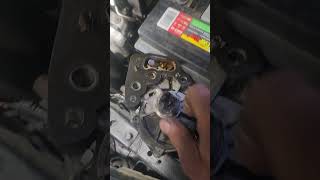
![How to Fix P1101 Engine Code in 3 Minutes [2 DIY Methods / Only $7.47]](https://img.youtube.com/vi/AWGlibhplBc/mqdefault.jpg)

The information in this article is provided for general reference and educational purposes only. Vehicle specifications, procedures, and part compatibility can vary by production date, trim level, and region. Always consult your vehicle's factory service manual and verify part numbers before purchasing or performing repairs. Safety-critical components such as airbags, seat belts, and braking systems should be installed by a qualified professional.
- 🎬 Helpful Videos
- What Does P1101 Mean?
- Can I Drive With P1101?
- Common Causes
- Symptoms
- Diagnostic Flowchart
- Common Fixes & Costs
- DIY vs Professional
- Used vs. New Parts: Buying Guide
- What Happens If You Wait — Timeline
- Cost of Not Fixing It
- Diagnosis Steps
- When This Code Triggers (Freeze-Frame Conditions)
- Related Codes
- Climate & Environmental Factors
- How to Talk to a Mechanic About This Code
- Where to Take It: Dealer vs Independent vs Chain
- When to Walk Away From the Repair
- What Scan Tool You Need for This Code
- How to Clear the Code After You Fix It
- Will This Fail Emissions / State Inspection?
- Most Commonly Affected Vehicles
- Manufacturer-Specific Notes
- Real Owner Stories
- 2014 Chevy Cruze 1.4L at 85,000 miles
- 2017 Chevy Malibu 1.5L with intermittent P1101
- 2016 Chevy Cruze 1.8L with P1101
- How to Prevent This Code From Triggering
- Frequently Asked Questions
- Can I just clear the P1101 code and keep driving?
- How much does it cost to fix a P1101 code?
- I cleaned my MAF sensor and replaced the air filter, but the code came back. What's next?
- What is a common misdiagnosis for P1101?
- My brake pedal feels hard and I have a P1101 code. Are these related?
- Can a bad gas cap cause a P1101 code?
- Can a bad oxygen sensor cause a P1101 code?
- I just replaced my battery and now I have a P1101 code. Why?
- Key Takeaways
- 🎟️ Get 5% Off