

OBD-II Code P0011: Intake Camshaft Position Timing - Over-Advanced
What P0011 means, why it triggers, and how to fix it
- Check your engine oil first; over 50% of P0011 codes are triggered by low fluid levels, severe sludge, or using the wrong oil viscosity.
- Replacing the Bank 1 intake VVT solenoid resolves the issue in most cases after an oil change, costing between $110 and $455 for parts and labor.
- Stop driving if the vehicle stalls or idles roughly; ignoring P0011 for more than a few weeks dumps unburned fuel into the exhaust, risking a $1,500 catalytic converter failure.
- Listen for a cold-start rattle lasting 2-3 seconds; this specific noise paired with P0011 indicates failing cam phasers or a stretched timing chain requiring a $1,000+ professional repair.
What Does P0011 Mean?

The Engine Control Module (ECM) detected the 'Bank 1' intake camshaft is positioned further ahead (more advanced) than commanded. This throws off the intake valve timing, hurting performance, fuel efficiency, and emissions. The Variable Valve Timing (VVT) system is failing to match the actual camshaft position to the ECM's target.
Technical definition: The official SAE/OBD-II definition is: 'A' Camshaft Position - Timing Over-Advanced or System Performance (Bank 1). This indicates the ECM detected the bank 1 intake camshaft is more advanced than commanded. 'Camshaft A' refers to the intake camshaft, and 'Bank 1' is the side of the engine containing cylinder #1.
Can I Drive With P0011?
Yes, But With Caution. You can drive for short trips, but immediate attention is required. Ignoring P0011 causes reduced power, stalling, and severe engine damage. Prolonged driving with incorrect timing dumps unburned fuel into the exhaust, destroying the catalytic converter (an $800–$2,500 repair). In interference engines, timing chain failure causes catastrophic valve-to-piston contact.
Common Causes

- Low, Dirty, or Incorrect Viscosity Engine Oil (Very Common) — The hydraulic VVT system uses pressurized oil to change camshaft timing. Low, dirty, or incorrect viscosity oil prevents proper pressure, sticking the camshaft in an over-advanced position.
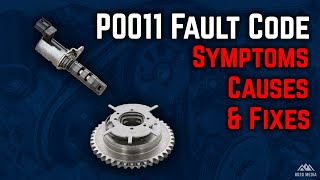
- Faulty Camshaft Oil Control Valve (VVT Solenoid) (Very Common) — This electronic solenoid directs oil flow to the camshaft phaser. It clogs with sludge, sticks open, or fails electrically, sending constant or incorrect oil pressure that over-advances the camshaft.
- Clogged Oil Passages or Screens (Common) — Engine sludge from infrequent oil changes clogs the fine mesh screens in the VVT solenoids or the small oil passages leading to the cam phasers, restricting oil flow and trapping the phaser.
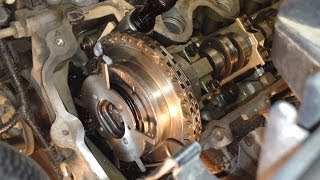
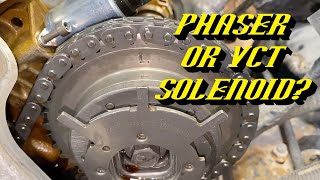
- Failing Camshaft Phaser (VVT Actuator) (Common) — The mechanical gear on the end of the camshaft fails internally, breaks its locking pin, or jams with sludge, preventing it from returning to the base position even with a working solenoid.
- Stretched Timing Chain or Worn Components (Less Common) — A stretched timing chain or worn guides create slack, changing the base mechanical timing relationship between the crankshaft and camshaft and triggering an over-advanced reading.
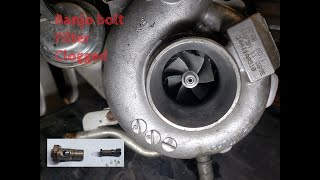
- Clogged Banjo Bolt Filters (Subaru specific) (Less Common) — On many Subaru engines, the banjo bolts for the AVCS (VVT) oil lines contain small filter screens that clog with debris, starving the system of oil pressure.
- Incorrect Timing After a Recent Repair (Rare) — If the timing belt or chain was recently replaced, it was likely installed incorrectly (jumped a tooth), throwing off base mechanical timing and immediately triggering codes.
- Faulty Camshaft Position Sensor (Rare) — The sensor sends incorrect or erratic signals, tricking the computer into thinking the timing is advanced. This is far less common than hydraulic or mechanical failures.
- PCM Software Issue or Failure (Rare) — Specific vehicle models have overly sensitive original PCM software requiring an update. Actual PCM hardware failure is extremely rare.
Symptoms

- Check Engine Light is On — The ECM illuminates the check engine light immediately upon detecting the timing fault. 🎬 Watch: Don't replace parts until you see this diagnostic tip.
- Rough or Unstable Idle — The engine shakes, surges, or fluctuates in RPM when stopped or at low speeds.
- Reduced Engine Power and Acceleration — The vehicle feels sluggish, hesitates, or stumbles during acceleration due to unoptimized valve timing.
- Engine Stalling — Incorrect timing causes the engine to shut off unexpectedly at low speeds or when coming to a stop.
- Poor Fuel Economy — Inefficient combustion forces more frequent trips to the gas pump.
- Rattling or Ticking Noises from Engine — A distinct cold-start rattle indicates a loose timing chain or failing camshaft phasers.
- Difficulty Starting Engine — The engine cranks longer than usual before starting because the camshaft is out of position for ignition.
Diagnostic Flowchart
Tap your situation to follow the diagnostic path that matches what you're seeing on this code.
Common Fixes & Costs
- Engine Oil and Filter Change — Parts: $40-$90, Labor: $50-$100, ~0.5 hr book time (DIY)
- Replace Camshaft Oil Control Valve (VVT Solenoid)
— Parts: $30-$180, Labor: $80-$275, ~1.2 hr book time
(DIY)
: OEM
: OEM
: OEM - Replace Camshaft Position Sensor
— Parts: $20-$150, Labor: $70-$250, ~1 hr book time
(Intermediate)
: OEM - Replace Camshaft Phaser
— Parts: $100-$600, Labor: $600-$1500, ~9.2 hr book time
(Professional)
: OEM - Replace Timing Chain and Related Components
— Parts: $200-$700, Labor: $1000-$3000, ~11.5 hr book time
(Professional)
: OEM
Used vs. New Parts: Buying Guide
When a used part is worth it: Buying a used VVT solenoid is never recommended. The part is inexpensive new, and internal wear is invisible. The labor to replace it twice outweighs any savings.
Donor-vehicle mileage cap: roughly under 30000 miles for the part to have meaningful remaining life.
Donor quality checklist:
- If forced to buy used, source from a low-mileage vehicle totaled in a rear-end collision.
- Verify the exact OEM part number matches; superseded parts have critical internal updates.
- Avoid parts from engines known for sludge issues.
Decision logic:
- If The new OEM or reputable aftermarket part costs less than $150. → Always buy new. The warranty and peace of mind are worth the premium.
- If The vehicle is very old (>200k miles) and you are performing the labor yourself. → A used part from a salvage yard is a temporary, budget-conscious gamble.
- If The part is electronic and hydraulic with fine tolerances (like a VVT solenoid). → Favor new to avoid internal sludge, wear, or electrical failure.
Warranty tradeoff: Used parts carry a 30-day warranty that excludes labor. New aftermarket parts offer 1-year to lifetime warranties. New OEM parts offer 1-2 year warranties.
Worst-case if a used part fails: $200-$400 if a used solenoid fails shortly after installation, requiring repeat labor and a new part.
What Happens If You Wait — Timeline
- 0-2 weeks: Check Engine Light illuminates. You experience a slightly rough idle or minor hesitation when accelerating. The code is intermittent. (MPG impact: 0-5%% · Added cost: $0)
- 2 weeks - 3 months: Fuel economy drops noticeably. The engine is harder to start cold. Stalling at low speeds becomes frequent, and the engine runs consistently rough. (MPG impact: 5-15%% · Added cost: $50-$200 in wasted fuel.)
- 3-6 months: Over-advanced timing sends unburnt fuel into the exhaust, overheating and melting the internal substrate of the catalytic converter. (MPG impact: 15-25%% · Added cost: $1,200-$2,800 for a new catalytic converter.)
- 6+ months: Continuous strain from incorrect oil pressure causes the timing chain to stretch or break. In an interference engine, pistons hit valves, destroying the engine. (MPG impact: 25%+% · Added cost: $4,000-$8,000+ for an engine replacement.)
Cost of Not Fixing It
- 0-1 Month: Noticeable drop in fuel economy, rough idle, and hesitation. Annoying but not yet destructive. (Added cost: $50-$150 in wasted fuel.)
- 1-6 Months: Increased risk of stalling in traffic. Unburnt fuel enters the exhaust, overheating and destroying the catalytic converter. (Added cost: $1,200-$2,800 for catalytic converter replacement.)
- 6+ Months: Catastrophic failure. Continuous strain stretches or breaks the timing chain, causing pistons to collide with valves and destroying the engine. (Added cost: $4,000-$8,000+ for an engine replacement.)
Diagnosis Steps

- Check Engine Oil Level and Condition
Pull the dipstick and verify the oil level is between 'Full' and 'Add'. If the oil is black, thick, or sludgy, change it immediately. Low, dirty, or incorrect viscosity oil is the primary cause of P0011.
Tools: Rag or paper towel (Beginner) - Scan for Other Codes and Freeze Frame Data
Use an OBD-II scanner to confirm P0011 and check for related codes (P0021, P0014, P0010). Record the freeze frame data to see the exact engine RPM, load, and temperature when the code triggered.
Tools: OBD-II Scanner (Beginner) - Inspect VVT Solenoid Wiring
Locate the Bank 1 VVT solenoid (oil control valve) on top of the engine. Visually inspect the electrical connector and wiring for damage, oil contamination, or loose pins.
Tools: Flashlight (Beginner) - Test VVT Solenoid Resistance and Function
Disconnect the solenoid and measure resistance across its two pins with a multimeter; a healthy solenoid reads 5.0–15.0 Ohms. A reading of 0 (short) or O.L. (open) means it failed. Alternatively, swap identical intake and exhaust solenoids, clear codes, and drive. If the code changes to P0014, the solenoid is definitively bad.
Tools: Basic socket set, Multimeter (Intermediate) - Analyze Live Data with a Scan Tool
Use an advanced scan tool to graph 'Commanded Camshaft Position' vs. 'Actual Camshaft Position' for Bank 1. At idle, both should be near 0 degrees. If 'Actual' is stuck high (e.g., 15-20 degrees) and ignores the 'Commanded' value, the phaser is stuck or oil flow is blocked.
Tools: Advanced OBD-II Scan Tool with Live Data (Advanced) - Command the Solenoid (Bi-directional Test)
With the engine idling, use a bi-directional scan tool to command the VVT solenoid to 10-20%. The engine must run rough or stall, proving the phaser moves. No change means the solenoid or phaser is dead.
Tools: Bi-directional Scan Tool (Advanced) - Test the Camshaft Position Sensor
Monitor the camshaft position sensor reading via live data. The signal must be steady and change smoothly with RPM. An erratic signal indicates a bad sensor. Verify with an oscilloscope for a clean square wave.
Tools: Advanced OBD-II Scan Tool, Oscilloscope (Intermediate) - Check for Technical Service Bulletins (TSBs)
Search manufacturer TSBs for your specific VIN. Many vehicles have known PCM software updates, specific cleaning procedures, or redesigned parts to permanently fix P0011.
Tools: Online access or dealer inquiry (Intermediate) - Inspect Timing Chain and Phasers
If all electrical and hydraulic tests pass, the failure is mechanical. Remove the valve cover to inspect for timing chain slack, broken guides, or internal phaser damage. This requires professional timing tools.
Tools: Advanced mechanical tools, vehicle-specific timing tools (Advanced)
When This Code Triggers (Freeze-Frame Conditions)
- Engine Coolant Temp: 180-200°F (The engine has reached normal operating temperature.)
- Engine RPM: 1500-2500 RPM (The code sets during steady-state cruising or light acceleration, not typically at idle.)
- Engine Load: 30-60% (The fault is detected when the VVT system actively adjusts timing under moderate load.)
- Vehicle Speed: 35-55 mph (Corresponds with steady highway or arterial road speeds where the ECM commands camshaft adjustments.)
Related Codes
- P0010 — P0010 ('A' Camshaft Position Actuator Circuit) points to an electrical problem. If paired with P0011, the VVT solenoid failed electrically or the wiring is broken.
- P0012 — The opposite of P0011, meaning the camshaft is 'over-retarded'. Seeing both intermittently points to a highly erratic VVT solenoid or a failing phaser.
- P0021 — The exact same 'over-advanced' code for Bank 2. Seeing both P0011 and P0021 strongly suggests a global oil problem (low level, severe sludge) affecting the whole engine.
- P0014 — The over-advanced code for the exhaust camshaft. If you swap identical intake and exhaust solenoids and P0011 changes to P0014, the solenoid is definitively faulty.
Climate & Environmental Factors
- Cold Weather: Cold temperatures increase oil viscosity. Thick oil flows too slowly on startup to operate the VVT system, triggering P0011 until the engine warms up.
- High Altitude: Lower air density at altitude makes existing performance issues like rough idle or lack of power more noticeable, but does not cause the code.
- Humidity: Humidity has no impact on the hydraulic or mechanical systems that trigger P0011.
How to Talk to a Mechanic About This Code
Say this: "I have a P0011 code. I've verified the oil level and condition are good. I'd like you to test the Bank 1 intake VVT solenoid and check the live data for commanded versus actual camshaft position."
This proves you are an informed customer. It directs the shop to the most likely culprits (oil and VVT solenoid) and requests data-driven diagnostics, preventing unnecessary tests.
Avoid saying:
- 'My check engine light is on, can you just fix it?' (Invites a wide-ranging, expensive diagnostic process).
- 'My car is running rough, I think it's the spark plugs.' (Don't guess; describe the code and ask for a diagnosis).
- 'Just do whatever it takes.' (Gives the shop a blank check. Always ask for an estimate first).
Questions to ask before authorizing the repair:
- What specific failure did you find? Was the solenoid stuck, clogged, or electrically dead?
- If you recommend a timing chain or phaser, can you show me the evidence of stretch or failure?
- Did you check for Technical Service Bulletins (TSBs) related to this code?
- What is the warranty on this repair for both parts and labor?
Where to Take It: Dealer vs Independent vs Chain
- Dealer:
Recommended only if the vehicle is under warranty or has a known, complex manufacturer-specific issue.
Best for: Vehicles under powertrain warranty., Known manufacturer-specific issues covered by a TSB or recall (e.g., Ford cam phasers)., Complex PCM software updates.
Downsides: Highest labor rates., Inclined to replace entire assemblies rather than individual components. (Typical cost: +40% vs. baseline) - Independent Shop:
Best overall fit. An experienced independent technician has fixed this common code many times and offers a cost-effective repair plan.
Best for: Most out-of-warranty P0011 repairs, from solenoid swaps to timing chain jobs., High-mileage vehicles requiring cost-effective solutions., Building a long-term relationship with a trusted mechanic.
Downsides: Quality varies; vet shops based on reviews and ASE certifications., May lack immediate access to the latest manufacturer TSBs. (Typical cost: +0% vs. baseline) - Chain Shop:
Acceptable for an oil change. AVOID for actual diagnosis of a persistent P0011 code, as they frequently misdiagnose or replace parts unnecessarily.
Best for: A simple oil and filter change if you suspect the wrong viscosity was used.
Downsides: Technician skill varies dramatically., High pressure to upsell unnecessary flushes or additives., Lack advanced diagnostic tools for complex timing issues. (Typical cost: -10% vs. baseline)
What Scan Tool You Need for This Code
Minimum: An OBD-II scanner that reads codes, clears codes, and displays live data PIDs (Parameter IDs).
A basic code reader only confirms P0011 exists. Proper diagnosis requires viewing the live relationship between 'Commanded' and 'Actual' camshaft position.
Budget: Ancel BD310 or similar Bluetooth dongle (~$60) — Connects to a smartphone to read/clear codes and graph basic live data streams, including camshaft position. Sufficient for initial diagnosis.
Mid-range: XTOOL D7 or Foxwell NT710 (~$350) — Offers full live data graphing and bi-directional control. Allows you to actively command the VVT solenoid on and off to test mechanical function directly.
Professional: Autel MaxiCOM MK808 or Topdon Phoenix series (~$500-1200) — Provides full bi-directional control, advanced graphing, and access to manufacturer-specific codes and built-in test procedures.
Rent vs buy: Auto parts stores lend basic code readers for free to confirm the code. If you plan to DIY the repair, buying a midrange scanner with live data is highly recommended.
How to Clear the Code After You Fix It
- Use an OBD-II scan tool to clear the P0011 code.
- Perform a complete drive cycle to allow the vehicle's readiness monitors to run.
Drive cycle (~30 minutes): A generic drive cycle includes a cold start (sitting for 8+ hours), 2-3 minutes of idling, 10-15 minutes of mixed city driving, followed by 5-10 minutes of steady highway driving (55 mph), and a cool down.
Readiness monitors affected: Catalyst Monitor, Oxygen (O2) Sensor Monitor, EGR System Monitor
Before emissions retest: drive at least 100 miles to fully set monitors.
Watch out for:
- Disconnecting the battery clears the code but resets all readiness monitors to 'not ready', guaranteeing an emissions test failure.
- The code returns quickly if the underlying mechanical or hydraulic fault was not repaired.
- Not driving long enough at steady highway speeds prevents monitors from setting.
Will This Fail Emissions / State Inspection?
Yes — this code typically fails an OBD-II emissions inspection.
- California: An active P0011 code is an automatic failure. All OBD-II readiness monitors must be set to 'Ready' to pass. A specific drive cycle must be completed after repair.
- New York: The NYS inspection includes an OBD-II scan. The presence of a Check Engine Light for P0011 results in an immediate test failure.
- Texas: In the 17 counties requiring emissions testing, an illuminated Check Engine Light for P0011 causes an automatic OBD failure.
Most Commonly Affected Vehicles
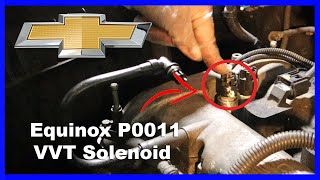
- Chevrolet / GM Cruze, Equinox, Malibu, Terrain (2010-2017) — GM 2.4L Ecotec engines have a massive VVT solenoid failure rate. The intake (P/N 12679099) and exhaust (P/N 12679100) solenoids are easily accessible on top of the engine.
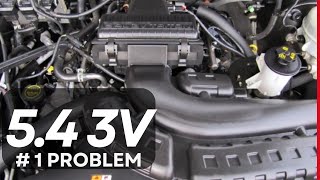
- Ford F-150, Escape, Mustang (2004-2021) — Ford's 5.4L 3V, 5.0L Coyote, and 3.5L EcoBoost engines are notorious for P0011, often accompanied by a cold-start rattle indicating expensive cam phaser failure. Multiple TSBs exist.
- Nissan / Infiniti Altima, Murano, Maxima, G35 (2002-2018) — VQ and QR series engines experience this code due to oil control valve issues or timing chain guide wear. Replacing the VVT solenoid (P/N 23796-3JV3A) is a common fix.
- Hyundai / Kia Sonata, Optima, Santa Fe (2011-2019) — Theta II 2.4L GDI and 2.0L Turbo engines suffer from oil sludge and oil control valve (OCV) failure. Many are subject to lifetime warranty extensions for catastrophic bearing wear.
- Subaru Impreza, WRX, Forester, Outback (2008-2017) — Subaru's AVCS triggers P0011 due to clogged filter screens inside the banjo bolts supplying oil to the system. Removing these filters is a common preventative measure.
- Toyota Camry, Corolla, RAV4 (2007-2024) — Toyota's VVT-i system triggers P0011 due to sludge buildup from infrequent oil changes. Cleaning the solenoid and its filter screen often resolves the issue on the 2.5L 2AR-FE.
- Honda Accord, Civic, CR-V (2003-2023) — P0011 is caused by a faulty VTEC oil pressure switch or VTC spool valve assembly. The system is highly sensitive to oil level. On K-series engines, the VTC strainer clogs easily.
- Volkswagen / Audi GTI, Golf, A4, Q5 (2008-2018) — On 2.0T EA888 engines, P0011 is caused by a failed camshaft adjuster magnet (N205). If accompanied by rattling, it indicates a failing timing chain tensioner.
Manufacturer-Specific Notes

- Ford: On 3.5L EcoBoost and 5.0L engines, a cold start rattle lasting a few seconds is a classic sign of failing cam phasers. Ford issued multiple TSBs (e.g., 21-2119) requiring updated phasers and PCM reflashes.
- General Motors (Chevrolet/GMC): VVT solenoids on 2.4L Ecotec engines are high-failure items. They are identical for intake and exhaust, making a diagnostic swap between them the go-to first step.
- Subaru: The oil supply line to the AVCS solenoid has a small filter screen inside the banjo bolt that clogs with debris, restricting oil flow. Technicians recommend removing these filters preventatively.
- Volkswagen / Audi: On EA888 engines, unplug the camshaft adjuster magnet (N205) while the engine idles roughly. If the idle smooths out, the magnet is bad and requires replacement.
- Hyundai / Kia: Theta II GDI engines (2011-2019) have major recalls for catastrophic bearing failure. The underlying oil flow issues manifest as VVT codes. Check your VIN for warranty coverage before paying for repairs.
Real Owner Stories
2016 Chevy Cruze at 59K miles - The Simple Fix
Check engine light with code P0011 appeared three days after a routine oil change. The car hesitated on acceleration.
What they tried:
- Replaced the intake VVT solenoid, but the code returned.
- Ordered an exhaust VVT solenoid, assuming it would also fail.
Outcome: A forum user pointed out the shop likely used the wrong oil viscosity. An immediate oil change with the manufacturer-specified 5W-30 oil permanently resolved the issue without further part replacements.
Lesson: If P0011 appears immediately after an oil change, verify the shop used the correct oil viscosity before replacing any parts.
2012 Infiniti G37xS - The Misdiagnosis
Car went into limp mode at 2500 RPM with a P0011 code. The owner noted only one quart of black sludge drained during an oil change.
What they tried:
- Performed an oil and filter change.
- Replaced both VVT solenoids.
Outcome: Neither fix worked. Severe oil neglect caused sludge to permanently clog the internal oil galleries and blow the rear timing cover gasket, starving the VVT system of pressure and requiring a major engine teardown.
Lesson: Severe oil neglect causes irreversible damage beyond just the VVT solenoids. If an oil change and new solenoids fail, suspect a major internal blockage.
2010 Subaru Forester XT - The Unusual Root Cause
Vehicle threw a P0011 code due to oil starvation, a known issue for this specific engine.
What they tried:
- Diagnosed a clogged banjo bolt filter in front of the oil control valve.
- Discovered a second banjo bolt filter on the turbo oil feed line was also clogged.
Outcome: The clogged filters starved the turbo of oil, destroying it. The fix required replacing the turbo and permanently removing the problematic banjo bolt filters to prevent repeat failure.
Lesson: Always search for make/model-specific problems. On Subarus, P0011 is a symptom of a known weak point (banjo bolt filters) that destroys turbos if ignored.
2004 Nissan 350Z - The Mechanical Timing Fault
After a water pump replacement, the car developed a rough idle and threw codes P0011 and P0300 (Random Misfire).
What they tried:
- Initially suspected spark plugs or coil packs due to the misfire code.
- Reviewed the recent repair history.
Outcome: A mechanic discovered the timing chain jumped one tooth on bank 1 during the water pump installation. Re-timing the engine (an 8-hour job) resolved all codes.
Lesson: If P0011 appears with misfire codes immediately after a major engine repair, the shop incorrectly set the mechanical timing.
How to Prevent This Code From Triggering
- Perform regular oil changes with high-quality synthetic oil. (Every 5,000 to 7,500 miles.) — The hydraulic VVT system relies entirely on clean oil. Synthetic oils resist thermal breakdown and prevent the sludge that clogs solenoid screens and oil passages.
- Use the exact oil viscosity specified in your owner's manual. (Every oil change.) — VVT systems are calibrated for specific oil thickness. Incorrect viscosity prevents hydraulic actuators from moving camshafts at the correct speed, triggering timing codes.
- Periodically clean or replace VVT solenoids. (Every 60,000-80,000 miles.) — VVT solenoids clog with debris over time. Cleaning the mesh screens or replacing them preventatively averts future codes and performance drops.
- Avoid frequent short trips and excessive idling. (Daily driving habit.) — Short trips prevent engine oil from reaching operating temperature, trapping moisture and fuel contaminants that accelerate sludge formation.
Frequently Asked Questions
Can I just clear the P0011 code and keep driving?
No. The ECM will detect the fault again within a few drive cycles and the light will return. Clearing the code does not solve the underlying issue causing poor performance and potential engine damage.
Will a P0011 code cause my car to fail an emissions test?
Yes. An active Check Engine Light is an automatic failure for emissions tests in most regions. The incorrect valve timing also directly increases harmful emissions, causing a tailpipe test failure.
I just changed my oil and the P0011 code appeared. What happened?
This usually happens for two reasons. First, the shop used the wrong oil viscosity, preventing proper flow in the sensitive VVT system. Second, fresh oil detergents dislodged existing sludge, clogging a VVT solenoid screen.
What does 'Bank 1' and 'Camshaft A' mean?
'Bank 1' is the side of the engine containing cylinder #1. On an inline engine, there is only one bank. 'Camshaft A' refers to the intake camshaft controlling the air-fuel mixture valves.
The code came back after I replaced the VVT solenoid. What now?
If a new solenoid didn't fix it, sludge or debris is likely clogging the oil passages leading to the cam phaser. Other possibilities include a mechanically stuck cam phaser, a stretched timing chain, or a wiring issue. You need advanced live data diagnostics to pinpoint the mechanical fault.
What's the most common misdiagnosis for P0011?
A common mistake is immediately replacing the camshaft position sensor because the code description mentions 'camshaft position'. The sensor is usually accurately reporting a timing problem caused by hydraulic or mechanical failures. Always diagnose the oil and VVT solenoid first.
What happens if I don't fix a P0011 code?
Ignoring P0011 causes poor performance, decreased fuel economy, and stalling in traffic. Over time, unburnt fuel destroys the catalytic converter. In interference engines, a failing timing chain eventually snaps, destroying the engine completely.
Key Takeaways
- Check your engine oil first; over 50% of P0011 codes are triggered by low fluid levels, severe sludge, or using the wrong oil viscosity.
- Replacing the Bank 1 intake VVT solenoid resolves the issue in most cases after an oil change, costing between $110 and $455 for parts and labor.
- Stop driving if the vehicle stalls or idles roughly; ignoring P0011 for more than a few weeks dumps unburned fuel into the exhaust, risking a $1,500 catalytic converter failure.
- Listen for a cold-start rattle lasting 2-3 seconds; this specific noise paired with P0011 indicates failing cam phasers or a stretched timing chain requiring a $1,000+ professional repair.
Helpful Videos

The information in this article is provided for general reference and educational purposes only. Vehicle specifications, procedures, and part compatibility can vary by production date, trim level, and region. Always consult your vehicle's factory service manual and verify part numbers before purchasing or performing repairs. Safety-critical components such as airbags, seat belts, and braking systems should be installed by a qualified professional.
- 🎬 Helpful Videos
- What Does P0011 Mean?
- Can I Drive With P0011?
- Common Causes
- Symptoms
- Diagnostic Flowchart
- Common Fixes & Costs
- Used vs. New Parts: Buying Guide
- What Happens If You Wait — Timeline
- Cost of Not Fixing It
- Diagnosis Steps
- When This Code Triggers (Freeze-Frame Conditions)
- Related Codes
- Climate & Environmental Factors
- How to Talk to a Mechanic About This Code
- Where to Take It: Dealer vs Independent vs Chain
- What Scan Tool You Need for This Code
- How to Clear the Code After You Fix It
- Will This Fail Emissions / State Inspection?
- Most Commonly Affected Vehicles
- Manufacturer-Specific Notes
- Real Owner Stories
- 2016 Chevy Cruze at 59K miles - The Simple Fix
- 2012 Infiniti G37xS - The Misdiagnosis
- 2010 Subaru Forester XT - The Unusual Root Cause
- 2004 Nissan 350Z - The Mechanical Timing Fault
- How to Prevent This Code From Triggering
- Frequently Asked Questions
- Can I just clear the P0011 code and keep driving?
- Will a P0011 code cause my car to fail an emissions test?
- I just changed my oil and the P0011 code appeared. What happened?
- What does 'Bank 1' and 'Camshaft A' mean?
- The code came back after I replaced the VVT solenoid. What now?
- What's the most common misdiagnosis for P0011?
- What happens if I don't fix a P0011 code?
- Key Takeaways
- 🎟️ Get 5% Off