

P0010 on 2020-2024 Ford Escape 2.5L Hybrid: Intake Camshaft Actuator Circuit Causes and Fixes
P0010 on your Ford Escape Hybrid points to an electrical fault with the intake camshaft position actuator solenoid. On this specific engine, the solenoid is under the valve cover, making replacement a more involved job. The most common fix is replacing the solenoid and the valve cover gasket. Before diving in, check your oil level and condition, as low or dirty oil is a foundational issue for the VCT system.
- P0010 indicates an electrical fault with the intake VCT solenoid, not a mechanical timing issue.
- The most important factor for this repair is that the solenoid is located under the valve cover, making the job more complex than on other vehicles.
- Always check the simple things first: ensure your engine oil is clean and at the proper level.
- When replacing the solenoid, you MUST also replace the valve cover gasket to prevent future oil leaks.
- If external wiring checks out, the solenoid itself is the most probable cause of failure.
What's Unique About the 2020-2024 Ford Escape
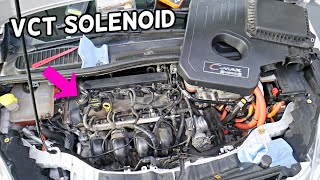
The most significant issue for this code on the 2020-2024 Escape 2.5L Hybrid is the location of the VCT solenoids. Unlike many other engines where they are externally mounted and easy to access, on this specific hybrid engine the solenoids are located underneath the valve cover. This design choice turns a potentially simple, 15-minute solenoid replacement into a more complex and labor-intensive job that requires removing the entire valve cover.
🎬 Watch: Step-by-step valve cover removal and gasket replacement guideSymptoms You May Notice
- Check Engine Light is on
- Rough or unstable idle
- Reduced engine power and acceleration
- Decreased fuel economy
- Engine may be difficult to start
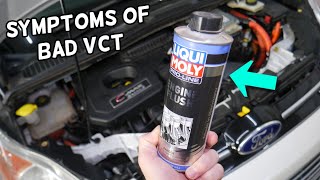
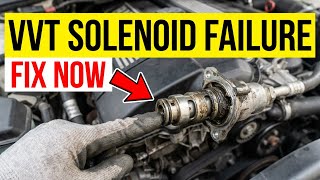
- Engine rattling or knocking noises 🎬 Watch: How a bad VVT solenoid causes these symptoms
- Replacing the camshaft position *sensor*. P0010 is for the actuator *solenoid circuit*, not the position sensor. While they are part of the same system, they are different components with distinct functions.
Most Likely Causes
- Faulty Intake VCT Solenoid 🔴 High Probability The P0010 code specifically points to a circuit failure. This is most often an internal short or open in the solenoid's coil windings rather than a mechanical sticking issue (which would set codes like P0011 or P0012). The part itself is used across many Ford engines and is a known failure item.
How to confirm: Because the solenoid is under the valve cover, direct testing is difficult. The most common diagnostic method is to first test the external wiring. If the wiring from the PCM to the valve cover connector is good (checking for proper voltage, ground, and no breaks), the solenoid itself is the presumed faulty component.
Typical fix: Replace the intake VCT solenoid. This requires removing the valve cover, replacing the solenoid, and installing a new valve cover gasket to prevent leaks.
Est. part cost: $35-$70 - Wiring Harness or Connector Issue 🟡 Medium Probability Vibrations and heat in the engine bay can cause wires to fray or connector pins to become loose or corroded over time. The fault could be in the external harness leading to the valve cover or the internal harness underneath it.
How to confirm: Visually inspect the engine wiring harness for any signs of damage, especially where it connects to the valve cover. Use a multimeter to check for continuity and proper voltage on the wires leading to the VCT solenoid connector. Check for corrosion inside the connector itself.
Typical fix: Repair the damaged section of wire or clean/replace the faulty connector. If the internal harness is damaged, it must be replaced during the valve cover service.
Est. part cost: $5-$50 for external repair, more for internal harness replacement. - Low, Dirty, or Incorrect Viscosity Engine Oil ⚪ Low Probability While dirty oil is a primary cause of VCT *performance* codes (e.g., P0011, for a sticking solenoid), it is less likely to cause a pure *circuit* code like P0010. However, severely degraded or low oil can put stress on the entire system and is a critical foundational check for any VCT-related fault.
How to confirm: Check the engine oil level and condition using the dipstick. If the oil is low, excessively dark, or past its service interval, it needs to be changed.
Typical fix: Perform an engine oil and filter change using the manufacturer-specified oil (typically a SAE 0W-20 full synthetic for this engine).
Est. part cost: $40-$80
Rare But Worth Checking
- Faulty Powertrain Control Module (PCM): This is extremely rare. The PCM's internal driver for the VCT circuit can fail, but this should only be considered after all other possibilities, including the solenoid and the entire wiring path, have been exhaustively tested and ruled out.
- Damaged Engine Wiring Harness from Chafing: Ford has issued TSBs for other 2.5L engines (e.g., TSB 16-0163 for the Transit Connect) where the engine wiring harness can chafe against brackets or other components, causing shorts that trigger a host of codes, including P0010. While not specific to this Escape, it highlights a potential failure mode to inspect for.
Diagnosis Steps
- Check Engine Oil: Verify the engine oil level is correct and the oil is clean and of the proper viscosity (SAE 0W-20 Full Synthetic). If it's low or dirty, an oil change is the first and cheapest step.
- Scan for Other Codes: Check for other related codes like P0011, P0012, or wiring-related DTCs. The combination of codes can provide valuable diagnostic clues.
- Inspect External Wiring: Carefully inspect the wiring harness leading to the engine's top end for any visible damage, fraying, chafing, or loose connections at the main valve cover pass-through connector.
- Test the Circuit: Using a multimeter and a wiring diagram, check for voltage and ground at the VCT solenoid connector. Check for continuity on the wires between the PCM and the connector to rule out a wire break.
- Remove Valve Cover: If the external wiring is confirmed to be good, the next step is to remove the valve cover to gain access to the solenoids.
- Replace Solenoid and Gasket: Once the valve cover is off, replace the intake VCT solenoid (the 'A' solenoid). It is critical to also install a new valve cover gasket during reassembly to prevent oil leaks.
- Clear Codes and Test Drive: After reassembly, clear the trouble codes with a scan tool and perform a thorough test drive to ensure the code does not return.
Parts You'll Likely Need
- Engine Variable Camshaft Timing (VCT) Solenoid
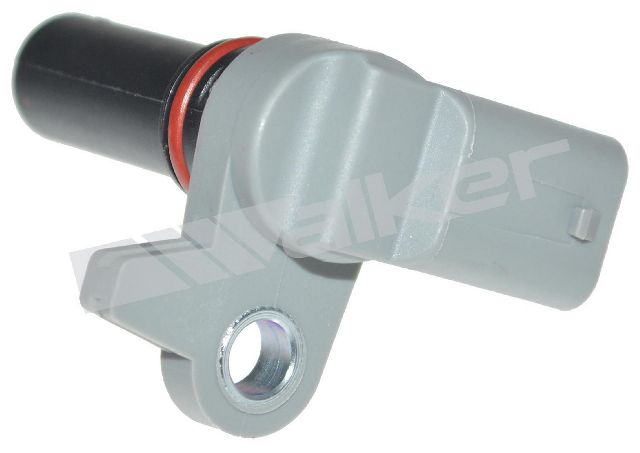
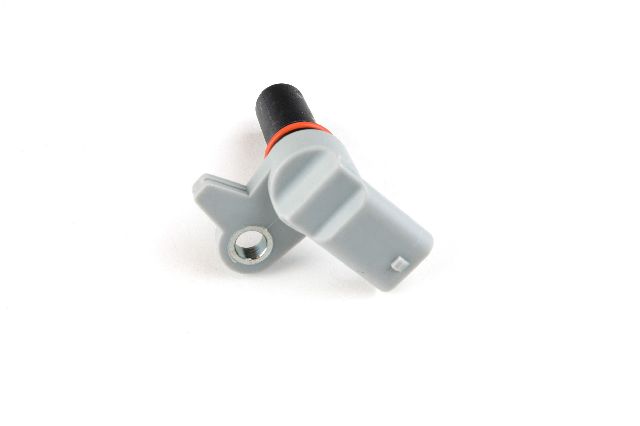
(OEM #CJ5Z-6M280-A (or superseded CJ5Z-6M280-D))— This is the component that has most likely failed internally, causing the electrical circuit fault detected by the PCM.
Trusted brands: Motorcraft, Dorman
OEM price range: $35-$50
Aftermarket price range: $20-$40 - Valve Cover Gasket
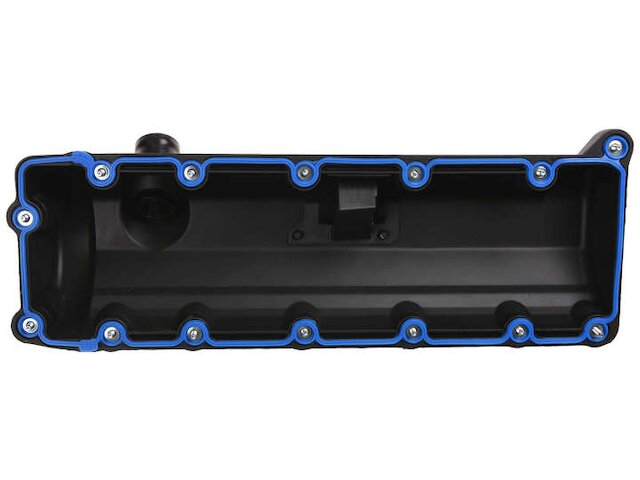
(OEM #LX6Z-6584-A)— This is a required, one-time-use gasket that must be replaced anytime the valve cover is removed to prevent oil leaks.
Trusted brands: Motorcraft, Fel-Pro
OEM price range: $20-$30
Aftermarket price range: $15-$25
Related Codes That Often Appear With This One
- P0011 — If the solenoid is failing electrically (P0010), it might also cause performance issues like sticking, which can trigger the 'Timing Over-Advanced' code. Seeing them together strongly suggests the solenoid is the root cause.
- P0012 — Similar to P0011, an erratically failing solenoid can cause the camshaft timing to be over-retarded. The presence of P0010 with P0012 again points directly at the solenoid or its circuit.
Technical Service Bulletins (TSBs) & Recalls
- TSB 16-0163: While for a different vehicle (Transit Connect 2.5L), this TSB is notable as it lists P0010 as a possible code resulting from a chafed engine wiring harness, providing a potential diagnostic path if the solenoid and direct wiring test good. The bulletin notes that vehicles with the 2.5L engine may exhibit an illuminated MIL with various drivability issues and multiple DTCs.
Platform-Specific Known Issues
- A major recall (22S47 / 23S27) was issued for potential engine failure and fire risk on 2020-2023 2.5L Hybrid models due to manufacturing defects. While not directly related to P0010, it highlights known powertrain vulnerabilities and underscores the importance of addressing any engine-related fault codes promptly.
Mechanic-Grade Diagnostic Values
- Intake VCT Solenoid (CJ5Z-6M280-A) Internal Resistance — expected: 6.9 to 7.9 Ohms at 68°F (20°C).. Failure: A reading significantly outside this range, an open circuit (infinite ohms), or a short circuit (near zero ohms) indicates a faulty solenoid coil.
- VCT Solenoid Connector Voltage (Key On, Engine Off) — expected: Approximately 12V (Battery Voltage) on the power supply wire (VPWR).. Failure: No voltage or very low voltage points to a problem in the power supply circuit, like a fuse or wire break, not the solenoid itself.
- Scan Tool PID: VCT_INT_ERR (Intake Cam Error) — expected: Should hover around 0 degrees at idle and during steady-state driving.. Failure: While P0010 is a circuit code, watching this PID can reveal if the circuit fault is causing timing control problems. Consistently high error values when the solenoid is commanded suggest a problem.
Scan Tool Commands That Help
- Ford IDS (Integrated Diagnostic System) or equivalent professional scan tool: Output Test Mode (OTM) / VCT Solenoid Bidirectional Control — This command allows the technician to manually activate the VCT solenoid with the key on, engine off. By connecting a test light or multimeter to the control circuit, you can confirm if the PCM is capable of commanding the circuit and if the wiring is intact from the PCM to the solenoid connector.
- Ford IDS (Integrated Diagnostic System): Monitor PID: VCT_INT_DC (Intake VCT Duty Cycle) — When diagnosing, you can monitor the duty cycle the PCM is commanding to the solenoid. For a P0010 circuit code, you may see the duty cycle at 0% or 100% constantly, indicating the PCM has detected a fault and shut the driver off.
Wiring & Ground Locations
- PCM Connector C175E, Pin 5 — The Powertrain Control Module (PCM) is located in the engine compartment. C175E is one of the main connectors to the PCM.. Pin 5 on connector C175E is the specific control circuit for the Bank 1 Intake VCT solenoid (VCT1). Testing for continuity between this pin and the corresponding pin at the valve cover connector is the definitive test for the control wire.
- Solenoid Power Supply (VPWR) — This is the 12V power feed to the VCT solenoid.. This circuit provides power to the solenoid. It is typically supplied by the PCM Power Relay via a fuse in the Battery Junction Box. A loss of this voltage will cause a P0010 and prevent the solenoid from activating.
OEM Part Supersession History
CJ5Z-6M280-A→CJ5Z-6M280-D— Likely a minor internal revision for improved durability or change in manufacturing. This is a common practice for high-volume electronic components.
Diagnostic Flowchart
Other Known Issues on This Vehicle
Issues unrelated to this code that are worth knowing about as an owner of this generation:
- Engine Failure Leading to Fire Risk 🔴 High — Affects a significant number of 2020-2023 models, leading to major recalls. Failures can occur at various mileages. (Ref: Recalls 22S47 & 23S27 (NHTSA #23V380000). The issue involves potential block or oil pan breach, which can release oil/fuel vapor onto hot components.)
- Premature 12V Battery Failure / Parasitic Drain 🟠 Medium — Widely reported by owners on forums, often occurring within the first 1-3 years or 15,000-35,000 miles. Symptoms include 'deep sleep' mode notifications and complete failure to start. (Ref: TSB 24-2288 addresses intermittent 12V battery drain. Many owners opt to replace the small factory battery with a larger Group 48 AGM battery as a more permanent solution.)
- eCVT / Transmission Faults 🟠 Medium — Less common than battery issues, but reports exist of jerky operation, sudden halts, or complete failure, sometimes at low mileage. (Ref: Some software-related recalls (e.g., 23E09, 23E07) have been issued for the powertrain control module which can affect transmission behavior.)
- High Voltage Battery (HVB) Failure (PHEV Models) 🔴 High — Specific to Plug-in Hybrid models, this issue can cause a loss of motive power. It is serious enough to have prompted a recall. (Ref: Recall 25SC4 addresses a manufacturing defect in high-voltage battery cells that can lead to an internal short circuit.)
Used vs. New Parts: Buying Guide for This Vehicle
When a used part is the smart pick: For this repair, using used parts is generally not recommended. The primary failure components are electronic (solenoid) and rubber (gasket), which degrade with time and heat cycles, making their remaining lifespan unpredictable.
Donor-vehicle mileage cap: roughly under 40000 miles for the part to have meaningful remaining life.
What to inspect on the donor part:
- For the VCT solenoid, there are no reliable visual cues. It is an electronic part whose internal windings are the failure point.
- If considering a used wiring harness, check for any signs of brittleness, cracked insulation, or corrosion on the connector pins.
OEM-only on this vehicle (don't cheap out):
- Valve Cover Gasket: This is a critical sealing component that is designed for one-time use. Never reuse a valve cover gasket or use a used one, as it will almost certainly lead to oil leaks.
- Engine Variable Camshaft Timing (VCT) Solenoid: While aftermarket options exist, the OEM Motorcraft part is recommended for best compatibility and longevity, especially given the labor required to access it.
Aftermarket brands forum-validated for this vehicle:
- Fel-Pro (for gaskets)
Brands owners have reported issues with on this vehicle:
- Unknown, no-name brand solenoids from online marketplaces. The quality control is often poor, and a premature failure would require repeating the entire labor-intensive job.
Real Owner Stories
Aggregated from forums and TSBs cited above. Mileages and costs reflect what owners reported in those sources.
2022 Ford Maverick Hybrid 2.5L
Symptoms: The owner received a check engine alert from the FordPass app, leading to a discussion about the safety of driving with the light on and common powertrain control issues.
What fixed it: The discussion points to common powertrain control failures shared with the Escape platform, often requiring solenoid or wiring inspection.
Source hint: MaverickTruckClub.com - 'Hit by the Maverick Curse!'
2023 Ford Escape Hybrid — ~25000 miles
Symptoms: Frequent battery failure and 'deep sleep' mode notifications; the owner noted various electrical gremlins and warning messages.
What fixed it: Many owners replace the small factory battery with a larger Group 48 AGM battery to resolve unstable system voltage.
Source hint: Reddit r/fordescape - '2023 Ford Escape Hybrid Frequent Battery Failure'
Ford Fusion Owner Report
Symptoms: An owner reported receiving a message to pull over immediately while on the highway. The vehicle stored codes P0010, P0201, P0202, P0203, and P0204 (NHTSA ODI #10405277).
What fixed it: The dealer initially checked the electrical connections and reassembled the components, though the owner noted the issue recurred.
Related OBD-II Codes
Frequently Asked Questions
Does the major engine fire recall (22S47 / 23S27) cause the P0010 code on my 2020-2023 Ford Escape Hybrid?
Can I use the FordPass app to diagnose a P0010 code on my Maverick or Escape Hybrid?
Is there a TSB for wiring issues that might cause P0010 on my 2.5L engine?
Could my Escape's frequent 12V battery drain issues be causing this code?
What specific oil should I use to prevent VCT system issues in my 2.5L Hybrid?
Why is the P0010 repair more involved than just a simple plug-in part?
Helpful Videos
Used OEM Parts in Stock


New Aftermarket Parts Available


The information in this article is provided for general reference and educational purposes only. Vehicle specifications, procedures, and part compatibility can vary by production date, trim level, and region. Always consult your vehicle's factory service manual and verify part numbers before purchasing or performing repairs. Safety-critical components such as airbags, seat belts, and braking systems should be installed by a qualified professional.
- Ford Escape:
- 🎬 Helpful Videos
- 🛍️ Shop This Part
- What's Unique About the 2020-2024 Ford Escape
- Symptoms You May Notice
- Most Likely Causes
- Rare But Worth Checking
- Diagnosis Steps
- Parts You'll Likely Need
- Related Codes That Often Appear With This One
- Technical Service Bulletins (TSBs) & Recalls
- Platform-Specific Known Issues
- Mechanic-Grade Diagnostic Values
- Scan Tool Commands That Help
- Wiring & Ground Locations
- OEM Part Supersession History
- Diagnostic Flowchart
- Other Known Issues on This Vehicle
- Used vs. New Parts: Buying Guide for This Vehicle
- Real Owner Stories
- 2022 Ford Maverick Hybrid 2.5L
- 2023 Ford Escape Hybrid — ~25000 miles
- Ford Fusion Owner Report
- Related OBD-II Codes
- Frequently Asked Questions
- 🎟️ Get 5% Off