

U0001 on 2014-2023 Jeep Cherokee: CAN C Bus Communication Failure Causes and Fixes
On a 2014-2023 Jeep Cherokee, code U0001 indicates a critical failure of the high-speed CAN C communication bus. This often leads to severe drivability issues like stalling, not shifting, and a dashboard full of warning lights. The most common causes are wiring harness damage, a failing control module (like the TCM or ABS), or a weak battery. Diagnosis is complex and professional service is strongly recommended as it requires specialized tools.
- U0001 is a critical network failure code on your Jeep Cherokee that should be addressed immediately.
- Do not drive the vehicle, as it may stall, fail to shift, or behave unpredictably.
- Before suspecting expensive modules, have your battery and charging system professionally tested and visually inspect the main wiring harnesses for obvious damage.
- Diagnosis is complex and almost always requires professional service with specialized diagnostic equipment.
- Check with a Jeep dealer for any open software update recalls (like U63) for your vehicle's VIN, as this can sometimes be the fix.
What's Unique About the 2014-2023 Jeep Cherokee
The Jeep Cherokee (KL generation) integrates numerous electronic modules that are highly dependent on the CAN bus network for proper function. Early models of this generation were known for transmission-related electronic issues, and a communication failure can mimic these problems. The ZF 9-speed transmission in particular is heavily reliant on software, and many TSBs, like 21-019-17 REV. A, were issued to fix communication-related DTCs via software updates. Furthermore, software plays a critical role; FCA issued safety recall U63 for 2014-2018 models to reprogram the PCM software. The recall addressed a defect where a loss of CAN C communication while cruise control was active could cause the vehicle to maintain speed or accelerate unexpectedly. This highlights the platform's sensitivity to both physical wiring faults and software integrity. On the KL platform, the Body Control Module (BCM) acts as the Central Gateway (CGW) between the high and low-speed CAN networks.
Symptoms You May Notice
- Check Engine Light is on
- Multiple warning lights on the dashboard (Airbag, ABS, Stability Control, Service Parking Brake)
- Vehicle lags or has poor acceleration
- Transmission will not shift or gets stuck in one gear
- "4WD temporary unavailable" message
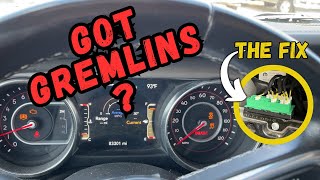
- "Service Electronic Throttle Control" me 🎬 Watch: Star connector failure causing multiple dashboard lightsssage
- Engine may stall or fail to start
- Loss of power steering
- Loss of communication with multiple modules on a scan tool
- Replacing the Transmission Control Module (TCM) without confirming it is the source of the network failure. The U0001 code points to a network-wide problem, not necessarily a single module.
- Replacing the battery without checking for a parasitic drain from a faulty module or a wiring short that caused the battery to fail in the first place.
Most Likely Causes
- Damaged or Corroded Wiring Harness 🔴 High Probability Wiring harnesses can be susceptible to chafing against other components, especially around the engine and transmission. A TSB for a similar platform (JLR) noted that a missing cable tie could cause the transmission harness to chafe on the driveshaft, leading to a U0001 code. Poor connections or physical damage can break the circuit or introduce resistance, causing signal loss.
How to confirm: Perform a thorough visual inspection of the main wiring harnesses, particularly the twisted pair of CAN C wires (often Yellow/White and Yellow/Brown or similar combinations). Check between the PCM, TCM, and ABS module for any signs of rubbing, melting, or corrosion on wires and connectors.
Typical fix: Repair the damaged section of the wiring harness and protect it from future damage. This may involve soldering, heat shrinking, and re-routing the harness. Ensure all connectors are clean and secure.
Est. part cost: $10-$50 for repair materials - Weak or Failing Battery / Poor Ground Connection 🟡 Medium Probability Modern vehicles are extremely sensitive to voltage. A weak battery, corroded terminals, or a poor ground connection can introduce electrical noise and voltage drops that disrupt CAN bus communications. The CAN bus system relies on a stable voltage to function properly. Sometimes, a U0001 code can appear intermittently after a battery has died and been replaced. Many KL Cherokees also use a dual-battery system for Engine Stop-Start (ESS), and a failure of the smaller auxiliary battery is a known cause of various communication codes.
How to confirm: Test the battery voltage with a multimeter; it should be above 12.4V with the engine off. Clean the battery terminals and check the main engine and chassis ground straps for tightness and corrosion. A load test is the best way to confirm battery health. Key ground points to inspect on the KL platform include G905A (left side of engine compartment) and G906A (lower right front of engine compartment).
Typical fix: Clean or tighten battery terminals and ground connections. If the battery fails a load test, it must be replaced. If equipped, test and replace the auxiliary battery if it is faulty.
Est. part cost: $0-$250 - Failing Control Module (e.g., TCM, PCM, ABS) 🟡 Medium Probability Any module on the CAN C bus can fail internally and start flooding the network with corrupted data (known as 'babbling'), bringing down the entire network. Given the known transmission-related electronic issues on early KL Cherokees, the TCM is a potential suspect. A forum user reported 28 communication codes, with U0001 pointing towards a bad TCM. 🎬 Watch: Causes and fixes for code U0001
How to confirm: This requires an advanced diagnostic process. A technician will use a scan tool to see which modules are offline, then disconnect modules one by one while monitoring the network to see when communication is restored. The module whose disconnection restores communication is the likely culprit. This can also be done by wiggling harnesses to see if the fault appears or disappears.
Typical fix: Replace the identified faulty module. The new module will likely require programming by a dealer or qualified shop to work with the vehicle's VIN.
Est. part cost: $400-$1500+
Rare But Worth Checking
- Faulty CAN Bus Terminating Resistor: The CAN bus requires a 120-ohm resistor at each end of the network to function. If a module containing a resistor fails, it can take down the network. Diagnosis involves measuring the resistance between CAN high (Pin 6) and CAN low (Pin 14) pins at the OBD-II port with the battery disconnected. A healthy network should read approximately 60 ohms. A reading of 120 ohms suggests an open circuit or a faulty terminating module. A reading near 0 ohms indicates a short between the CAN lines.
- Software/Firmware Corruption: Incorrect or corrupted software in a key module like the PCM or TCM can cause communication faults. Recall U63 for the 2014-2018 Cherokee involved reprogramming the PCM to fix a safety issue related to CAN bus communication loss. Numerous TSBs, such as 21-019-17 REV. A and 21-008-17, also call for TCM software updates to resolve communication DTCs.
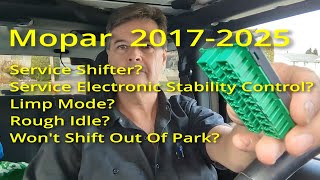
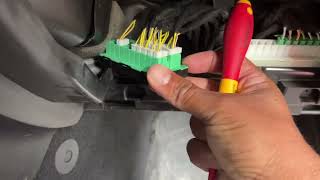
- Faulty Star Connector: The CAN bus wires meet at central hubs called 'Star Connectors'. On the KL Cherokee, a primary star connector is located behind the glove box. Corrosion, heat damage, or poor pin fitment within this connector can disrupt the entire network, causing intermittent and widespread communication failures. Wiggling the wires at the star connector while the fault is active can sometimes temporarily restore function, pointing to the connector as the culprit. 🎬 See how to fix CAN bus star connector issues
Diagnosis Steps
- Check Battery Health: Ensure the battery is fully charged (12.4V+ engine off) and that terminals are clean and tight. A weak or unstable power supply is a common cause of network codes. If equipped with ESS, have the auxiliary battery tested as well.
- Perform a Full Vehicle Scan: Use a high-level scan tool (like wiTECH) to retrieve all DTCs from all modules. Note which modules are not communicating ('red' in the wiTECH topology view).
- Visually Inspect Wiring: Thoroughly inspect the main engine wiring harness, focusing on areas where it might rub against the engine, transmission, or chassis. Pay close attention to the twisted pair of CAN C wires going to the TCM and ABS module.
- Check CAN Bus Resistance: With the battery disconnected, measure the resistance between Pin 6 (CAN-H) and Pin 14 (CAN-L) on the OBD-II port. A healthy network should read approximately 60 ohms. A reading of 120 ohms suggests an open circuit or a faulty terminating module. A reading near 0 ohms indicates a short between the CAN lines.
- Isolate the Faulty Component (Advanced): If resistance is correct but the fault persists, begin disconnecting modules from the CAN C bus one at a time (starting with easily accessible ones like the ABS module), re-checking for communication restoration after each one is disconnected. The Star Connector behind the glove box is a central point for this process.
- Check for TSBs and Recalls: Check with a dealer for any open recalls (like U63) or TSBs (like 21-019-17 REV. A or 21-008-17) related to software updates or wiring issues for your specific VIN.
Parts You'll Likely Need
- Wiring Harness Repair Supplies — If the cause is a chafed or corroded wire, repairing the harness is the most common and cost-effective solution.
Trusted brands: 3M, Dorman
OEM price range: $10-$50
Aftermarket price range: $10-$50 - Transmission Control Module (TCM)
(OEM #68225514AB, 5150822AE)— If the TCM has failed internally and is disrupting the network, it will need to be replaced. This is a potential cause on KL Cherokees, especially early models. Note that replacement modules require programming.
Trusted brands: Mopar (OEM), Dorman (Remanufactured)
OEM price range: $450-$700
Aftermarket price range: $250-$400 - Star Connector
(OEM #68321746AA (20-way), 68230877AA (13-way))— The central CAN bus hub behind the glove box can fail due to heat or poor connections, causing network-wide issues. It's a relatively inexpensive part to replace as a diagnostic step.
Trusted brands: Mopar (OEM)
OEM price range: $40-$60
Related Codes That Often Appear With This One
- U1412 — Implausible Vehicle Speed Signal Received. The TCM or ABS module can't get a reliable speed signal because the CAN bus is down. This code is specifically mentioned in TSB #21-019-17 REV. A and TSB #21-008-17.
- U0401 — Implausible Data Received From ECM/PCM. Other modules set this code when they can't communicate with the engine computer due to the U0001 fault. This is also mentioned in TSBs for software updates.
- P0887 — TCM Power Control Circuit High. This can be set alongside U0001 if the communication failure is related to the TCM's power or internal circuits, as noted in TSB #21-019-17 REV. A.
- U1504, U1110, U1120 — These are additional communication codes often seen with U0001, indicating a widespread network failure as reported by an owner in NHTSA ODI #11155145.
- U0002 — High Speed CAN Communication Bus Performance. This code often appears with U0001 and can point to issues with the TIPM or transmission valve body on Jeeps.
Technical Service Bulletins (TSBs) & Recalls
- Bulletin #21-019-17 REV. A: Mentions U0001- Can C Bus as a possible DTC that can be stored in the PCM memory on 2015 KL vehicles.
Platform-Specific Known Issues
- ZF 9-Speed Transmission Software Glitches: Early KL Cherokees (2014-2016) were particularly known for issues with the ZF 9-speed automatic transmission, including rough shifts, hesitation, and dropping into neutral. Many of these problems were software-related and could trigger communication codes like U0001. FCA released numerous TSBs (e.g., 21-019-17 REV. A) to reflash the TCM, which often resolved these DTCs.
- Safety Recall U63 / NHTSA 18V-332: This critical safety recall for 2014-2018 models addressed a software flaw where a CAN-C bus failure during cruise control operation could cause the vehicle to maintain speed or accelerate. The fix was a PCM software update, highlighting the network's direct link to vehicle control and safety.
Mechanic-Grade Diagnostic Values
- CAN Bus Network Resistance — expected: ~60 Ohms (typically 59-61 Ohms). Failure: A reading of ~120 Ohms indicates an open circuit or one of the two terminating resistors is offline. A reading near 0 Ohms indicates a short between the CAN High and CAN Low wires.
- CAN Bus Voltage (active) — expected: CAN High (Pin 6) should be ~2.5-3.5V. CAN Low (Pin 14) should be ~1.5-2.5V. The two voltages should mirror each other and total approximately 5V.. Failure: Voltage stuck high (e.g., 5V or 12V) or low (0V) on either line indicates a short to power or ground. No voltage indicates an open circuit.
- Module Ground Resistance — expected: ≤ 0.1 Ω. Failure: Higher resistance indicates a poor ground connection, which can cause communication faults.
Scan Tool Commands That Help
- wiTECH 2.0: Network Topology View — This is the first step in diagnosis. It provides a visual map of all control modules on the vehicle's networks. Modules that are not communicating will be shown in red, immediately narrowing down the problem area.
- wiTECH 2.0: Loss of Communication Test — This function continuously 'pings' all modules on the network. It's used to find intermittent faults by allowing the technician to wiggle wiring harnesses, tap on modules, or manipulate connectors while watching for any module to drop offline in real-time.
- wiTECH 2.0: ECU Flash / Reprogramming — Used to apply software updates as specified by Technical Service Bulletins (TSBs) like 21-008-17. This is often required to fix software glitches that can cause false communication codes. The tool will show if an 'Essential Flash' or 'Symptom-based Flash' is available.
Wiring & Ground Locations
- CAN C Star Connector — Behind the glove box on the passenger side. The glove box must be lowered or removed for access.. This is a central hub where many CAN C bus circuits connect. A poor connection, corrosion, or internal failure in this connector can take down the entire network, causing a U0001 code and multiple system failures.
- G905A — Left side of the engine compartment.. This is a major ground distribution point. A loose or corroded connection here can disrupt the ground reference for multiple modules, leading to communication errors.
- G906A — Lower right front of the engine compartment.. Another critical ground point in the engine bay. Ensuring this is clean and tight is a key step when diagnosing any network communication code.
- CAN C Wires at OBD-II Port — Pin 6 (CAN High) and Pin 14 (CAN Low) at the Data Link Connector (DLC) under the driver's side dashboard.. This is the primary and most accessible point for testing the overall health of the CAN C bus network resistance.
- CAN C Wire Colors — Throughout the vehicle harnesses.. The CAN C bus wires are a twisted pair. While colors can vary, common combinations for Chrysler/Jeep include White/Orange and White, or Yellow/Dark Blue and Yellow. Identifying this twisted pair is crucial for visual inspection and targeted testing.
Real Owner Repair Stories
- NHTSA ODI #11365842 (2017 Jeep Cherokee) — Check engine light came on with code U0001 for CAN C Bus. Vehicle was lagging and did not respond the same when pushing the accelerator.
❌ Tried (didn't work) Not specified.
✅ What actually fixed it The complaint does not state the final fix, but it documents a clear real-world instance of the code with drivability symptoms. - YouTube video by Gator Overland on a Jeep JL/JT (similar architecture) (Jeep Wrangler JL/JT) — Intermittent electrical issues, dashboard lights up with multiple warnings (traction control, ABS, 4WD deactivated, speedometer fails), then returns to normal.
❌ Tried (didn't work) Initial diagnosis was inconclusive.
✅ What actually fixed it Replacing the CAN-C Star Connector (Part #68321746AA) located behind the glove box. The owner noted that wiggling the wires connected to the old star connector would temporarily fix the problem, confirming it as the point of failure.
OEM Part Supersession History
5150822AD→5150822AE— Part revision by manufacturer, likely for reliability or internal component updates.
Heads up: Applies to 2014-2015 models with specific engine/transmission combinations. Always verify fitment with VIN.Unknown→68225514AB— Updated part for later model years.
Heads up: Fits 2015-2020 models. Using the wrong year's TCM can cause programming and operational issues.
Model Year Variations Within This Range
- 2014-2016: Early model year KL Cherokees were more prone to transmission software-related issues that could set communication codes, including U0001. Multiple TSBs (e.g., 21-008-17 for 2016 models) were released to update TCM software to improve shift quality and resolve DTCs.
- 2019-2023 (Post-Facelift): While the core architecture is the same, post-facelift models may have different module part numbers and software revisions. The location of the Star Connector behind the glove box is consistent with later models.
Diagnostic Flowchart
Other Known Issues on This Vehicle
Issues unrelated to this code that are worth knowing about as an owner of this generation:
- ZF 9-Speed Transmission Drivability Problems 🔴 High — Very common, especially on 2014-2016 models. Issues include rough shifting, hesitation, sudden shifts to neutral, and premature failure. (Ref: Multiple TSBs (e.g., 21-019-17 REV. A) and recalls were issued for software updates and component replacements.)
- Excessive Oil Consumption (2.4L Tigershark Engine) 🔴 High — Widespread issue affecting the 2.4L engine, often consuming over a quart of oil in under 2,000 miles. Can lead to low oil pressure and engine damage. (Ref: TSB 09-003-23 and warranty extension XB1 were issued, potentially leading to a free engine replacement if an oil consumption test is failed.)
- Electronic Parking Brake Malfunction 🔴 High — Commonly reported failure where the EPB may engage while driving or refuse to release. NHTSA opened an investigation (PE22-010) for 2014-2020 models. (Ref: NHTSA investigation PE22-010. Cause is often attributed to water intrusion into the EPB module or a faulty switch, often due to spilled liquids from the cupholder.)
- Power Liftgate Module Fire Risk 🔴 High — Affects models with a power liftgate. Water can leak into the liftgate control module, causing a short circuit and potential fire, even with the ignition off. (Ref: Multiple recalls issued (e.g., NHTSA 15V-393, 22V-406) to address the issue.)
- Rocker Arm/Camshaft Failure (3.2L Pentastar V6) 🟠 Medium — Some 3.2L V6 engines can develop a ticking noise that progresses to rocker arm bearing failure, which can damage the camshaft and send metal through the engine.
Used vs. New Parts: Buying Guide for This Vehicle
When a used part is the smart pick: Used parts are a good option for non-electronic, non-wear items. For a U0001 repair, this would primarily include wiring harness pigtails or connectors from a junkyard vehicle. A complete used wiring harness can also be an option if the damage to the original is extensive, provided the donor is from the exact same model/trim and has no signs of corrosion or damage.
Donor-vehicle mileage cap: roughly under 80000 miles for the part to have meaningful remaining life.
What to inspect on the donor part:
- For wiring: Check for uncut wires, intact connector locks, and no signs of green corrosion on pins.
- For modules: Inspect for any signs of water intrusion, case damage, or burnt/corroded pins.
- Verify the donor vehicle did not have flood or fire damage.
OEM-only on this vehicle (don't cheap out):
- Transmission Control Module (TCM)
- Powertrain Control Module (PCM)
- Body Control Module (BCM)
Aftermarket brands forum-validated for this vehicle:
- Dorman (for remanufactured TCMs, but OEM is often preferred for programming compatibility)
Brands owners have reported issues with on this vehicle:
- Unknown/no-name electronic modules from online marketplaces. These often have programming or compatibility issues that can make the problem worse.
Real Owner Stories
Aggregated from forums and TSBs cited above. Mileages and costs reflect what owners reported in those sources.
2016 Jeep Cherokee
Symptoms: Thermostat and throttle control messages, followed by a loss of communication with the TCM and 28 total codes, including U0001. The vehicle would intermittently refuse to shift.
What fixed it: The issue was identified as a bad TCM (Transmission Control Module).
Source hint: https://www.jeepcherokeeforum.com/threads/error-codes.252068/
2018 Jeep Cherokee
Symptoms: U0001 code followed by a cascade of errors for the start/stop system, airbags, transmission, and parking brake.
What fixed it: The context suggests checking for a weak battery or auxiliary battery failure, though the specific final repair for this user was not detailed beyond the diagnostic path.
Source hint: https://www.reddit.com/r/AskMechanics/comments/156f70m/help/
2017 Jeep Cherokee
Symptoms: Multiple warnings (airbags, parking brake, ABS, check engine) and codes U0001, U0002-88, and U0420-00; occurred as the car shifted into neutral and lost power steering.
What fixed it: The context identifies this as a CAN bus communication failure, often requiring module isolation or software updates.
Source hint: https://www.reddit.com/r/Jeep/comments/w26x6t/jeep_cherokee_2017_electrical_issue/
Related OBD-II Codes
Frequently Asked Questions
Does TSB 21-019-17 REV. A apply to my 2015 Jeep Cherokee regarding the U0001 code?
Is there a recall for my 2014-2018 Cherokee that involves CAN bus communication failures?
Can a bad auxiliary battery cause a U0001 code on my Jeep Cherokee?
Where should I check for wiring damage if I have a U0001 code on my Cherokee?
Why is my 2016 Cherokee stuck in gear and showing a 'Service Electronic Throttle Control' message?
Helpful Videos
Used OEM Parts in Stock


New Aftermarket Parts Available

The information in this article is provided for general reference and educational purposes only. Vehicle specifications, procedures, and part compatibility can vary by production date, trim level, and region. Always consult your vehicle's factory service manual and verify part numbers before purchasing or performing repairs. Safety-critical components such as airbags, seat belts, and braking systems should be installed by a qualified professional.
- Jeep Cherokee:
- 🎬 Helpful Videos
- 🛍️ Shop This Part
- What's Unique About the 2014-2023 Jeep Cherokee
- Symptoms You May Notice
- Most Likely Causes
- Rare But Worth Checking
- Diagnosis Steps
- Parts You'll Likely Need
- Related Codes That Often Appear With This One
- Technical Service Bulletins (TSBs) & Recalls
- Platform-Specific Known Issues
- Mechanic-Grade Diagnostic Values
- Scan Tool Commands That Help
- Wiring & Ground Locations
- Real Owner Repair Stories
- OEM Part Supersession History
- Model Year Variations Within This Range
- Diagnostic Flowchart
- Other Known Issues on This Vehicle
- Used vs. New Parts: Buying Guide for This Vehicle
- Real Owner Stories
- 2016 Jeep Cherokee
- 2018 Jeep Cherokee
- 2017 Jeep Cherokee
- Related OBD-II Codes
- Frequently Asked Questions
- 🎟️ Get 5% Off