

P0730 on 2010-2018 Volvo S60: Incorrect Gear Ratio Causes and Fixes
On a 2010-2018 Volvo S60, code P0730 almost always points to an issue with the Aisin TF-80SC automatic transmission, most commonly caused by old, degraded fluid or a failing valve body. A fluid exchange using the correct JWS 3324/AW-1 spec fluid is the first step, but a valve body replacement is a common, more expensive repair for persistent issues.
- P0730 on a 2010-2018 S60 means the transmission is slipping.
- Do not ignore this code; it can lead to catastrophic transmission failure.
- The first and most important step is to check the transmission fluid. A simple fluid change might fix the issue if caught early.
- If a fluid change doesn't work, the valve body is the next most likely culprit.
- This is not a beginner-friendly DIY repair; professional diagnosis is strongly recommended.
What's Unique About the 2010-2018 Volvo S60
The 2010-2018 Volvo S60 primarily uses the Aisin-Warner TF-80SC 6-speed automatic transmission, also known as the AF40. While generally reliable, these units are known to be sensitive to fluid condition. Volvo marketed the fluid as 'lifetime,' which often leads to owners neglecting fluid changes. Consequently, degraded fluid is a very common trigger for P0730, which can then lead to the second most common failure on this platform: the valve body, which gets clogged or worn from contaminated fluid.
Generation note: The 2010-2018 model years cover the second generation of the Volvo S60 (P3 platform). Most vehicles in this range with an automatic transmission are equipped with the 6-speed Aisin TF-80SC, making the diagnosis and common failures consistent across these years. Later models (2011+) use a second-generation version of this transmission (TF-80SC Gen 2), which requires a different fluid specification (AW-1).
Symptoms You May Notice
- Check Engine Light or 'Transmission Service Required' message on the dashboard.
- Harsh, jerky, or delayed gear shifts, especially when cold or in stop-and-go traffic.
- Noticeable flares or bumps during shifts, particularly the 5-4 downshift when coasting.
- Transmission slipping (engine revs high without a corresponding increase in speed).
- Vehicle enters 'limp mode,' often stuck in 3rd gear.
- Noticeable decrease in fuel economy.
- Difficulty accelerating from a stop or a bang/jerk when engaging Drive from Neutral.
- Replacing the input or output speed sensors immediately. While these sensors report the problem, they are not usually the cause of the slip itself. The slip is typically mechanical or hydraulic.
- Assuming the entire transmission is bad without first checking fluid and the valve body. Many shops will quote a full replacement when a fluid change or valve body could solve the problem for much less.
- Mistaking a failing PNP (Park/Neutral Position) switch for an internal fault. While a bad PNP switch can cause starting issues and a flashing arrow on the dash, it's less likely to be the primary cause of a P0730 code on its own.
Most Likely Causes
- Low, Burnt, or Degraded Transmission Fluid 🔴 High Probability Volvo's 'lifetime' fluid recommendation often results in fluid not being changed for over 100,000 miles. Over time, the fluid breaks down, loses its hydraulic properties, and can no longer properly operate the transmission's internal components, leading to slipping and overheating.
How to confirm: Check the transmission fluid level and condition. On the S60, this requires a specific procedure as there is no traditional dipstick; it involves a standpipe in the drain plug. The fluid should be reddish/brown and clear, not dark black or smelling burnt. A low fluid level indicates a leak that must be found and fixed.
Typical fix: Perform a series of drain-and-fills or a complete fluid exchange using the correct fluid type. For 2011+ models, this is typically JWS 3324 / AW-1 spec fluid. A simple drain and fill only replaces about 3-4 liters of the total 7-liter capacity.
Est. part cost: $100-$250 for fluid - Faulty Transmission Valve Body 🔴 High Probability The TF-80SC transmission's valve body is a well-documented failure point, especially on higher-mileage vehicles or those with a history of poor fluid maintenance. Debris from normal wear and degraded fluid clogs the small channels and wears out the linear solenoids within the assembly.
How to confirm: This is typically diagnosed after a fluid change fails to resolve the shifting issues. A technician may use a professional scan tool to monitor solenoid commands and hydraulic pressures. Often, it's a process of elimination after fluid and software are ruled out.
Typical fix: Replace the entire valve body assembly. This is a complex job that also requires replacing the fluid and often requires a transmission adaptation procedure with a tool like VIDA afterwards. Some specialists offer remanufactured units.
Est. part cost: $700-$1300 for the part - Failed Shift Solenoid(s) 🟡 Medium Probability Solenoids are integrated into the valve body and can fail individually due to electrical issues or becoming clogged with debris from old fluid. However, due to the significant labor to access them, replacing the entire valve body is often more cost-effective.
How to confirm: A diagnostic scan tool can sometimes identify codes specific to a particular solenoid (e.g., P0741 for TCC solenoid). A technician can also perform resistance tests on the solenoids once the valve body is removed. The expected resistance is 5-7 ohms.
Typical fix: Replace the specific faulty solenoid. Aftermarket solenoid repair kits, like those from TransGo, are available and address common wear points in the valve body. However, many shops recommend replacing the complete valve body assembly.
Est. part cost: $50-$150 per solenoid, or $400-$800 for a kit or remanufactured assembly - Internal Mechanical Failure ⚪ Low Probability While less common than hydraulic or electronic issues, worn clutch packs (especially the C2 4-5-6 clutch), seals, or other internal components can cause slipping that triggers P0730. This is usually the result of prolonged driving with bad fluid or a faulty valve body.
How to confirm: This is the diagnosis when all other possibilities (fluid, electronics, valve body) have been ruled out. A significant amount of metal shavings or clutch material in the transmission fluid pan is a strong indicator of internal failure.
Typical fix: The transmission must be removed from the vehicle and either rebuilt or replaced entirely with a new or used unit.
Est. part cost: $2500-$5000+ for a rebuilt or new transmission
Rare But Worth Checking
- Faulty Transmission Control Module (TCM): While rare, the TCM itself can fail or have software glitches. Before replacing it, ensure a Volvo dealer has checked for any available software updates (like those mentioned in TSB TJ-32169), as this can sometimes resolve shifting issues. A TCM adaptation reset is also recommended after a fluid change or valve body replacement. 🎬 See how to perform the Volvo transmission adaptation process
Diagnosis Steps
- Check the transmission fluid level and condition. This is the most important first step. Note that this vehicle does not have a dipstick and requires a specific level-check procedure at a specific temperature (50-60°C).
- Use an OBD-II scanner to check for any other transmission-related codes. Codes for specific solenoids or gear ratios (P0731-P0736) can provide valuable clues.
- If the fluid is old or dirty, perform a complete fluid exchange with the manufacturer-specified fluid (JWS 3324 / AW-1 for 2011+ models). Clear the codes and perform a TCM adaptation reset if possible.
- Test drive the vehicle to see if the problem returns. Pay attention to specific shifts that feel harsh or slip.
- If the problem persists, inspect the wiring harness and connectors to the transmission for any visible damage or corrosion.
- Consult a Volvo dealership or a specialized independent shop to check for any available TCM software updates, per Volvo Technical Journals.
- If no software updates are available and the problem remains, the next logical step is to suspect a faulty valve body or shift solenoid(s).
- If a new valve body does not fix the issue, the problem is likely internal mechanical wear (e.g., clutch packs), requiring a transmission rebuild or replacement.
Parts You'll Likely Need
- Automatic Transmission Fluid
(OEM #31256775 (for JWS 3324 / AW-1 spec))— The most common cause is old, degraded fluid. A fluid change is the first and most crucial step in diagnosis and repair. Using the correct OEM-spec fluid is critical for this transmission.
Trusted brands: Genuine Volvo, Aisin (OEM), Idemitsu
OEM price range: $25-$35 per liter
Aftermarket price range: $15-$25 per liter - Transmission Valve Body
(OEM #31259456 (example, verify by VIN))— This is a very common failure point on the Aisin TF-80SC transmission that leads to incorrect gear ratio codes and harsh shifting.
Trusted brands: Genuine Volvo, Aisin (OEM), Sonnax (rebuild kits), TransGo (rebuild kits)
OEM price range: $1000-$1500
Aftermarket price range: $700-$1300 for remanufactured
Related Codes That Often Appear With This One
- P0731-P0736 — These codes indicate an incorrect ratio in a specific gear (e.g., P0731 for 1st gear). They often appear with the general P0730 code and can help narrow down when the slip is occurring.
- P0700 — This is a general Transmission Control System Malfunction code. It's an informational code that simply means the TCM has stored a fault, which in this case would be P0730.
- P0895 — This code for 'Shift Time Too Short' can be associated with harsh shifting issues in the TF-80SC, sometimes addressed by a TCM software update or adaptation procedure as noted in Volvo Technical Journal TJ-32169.
Technical Service Bulletins (TSBs) & Recalls
- Volvo Technical Journal TJ-25994 / TJ-32169: Addresses harsh 5th to 4th gear downshifts and rough engagement from a standstill. The fix involves updated TCM software and potentially new internal seals. It outlines a specific adaptation procedure.
Platform-Specific Known Issues
- The 'sealed for life' transmission fluid recommendation by Volvo is a primary contributor to TF-80SC transmission problems. Owners who adhere to a regular 50,000-60,000 mile drain-and-fill schedule report much better longevity.
- A TCM software update and adaptation reset using Volvo's VIDA tool is often required to resolve shifting issues, especially after replacing fluid or the valve body.
Mechanic-Grade Diagnostic Values
- Shift Solenoid Resistance — expected: 5-7 ohms. Failure: A reading outside this range, or a reading that is not 'open' when testing from a pin to the solenoid body, indicates a faulty solenoid.
Scan Tool Commands That Help
- Volvo VIDA: Control module adaptation / Reset adaptation — This is mandatory after replacing the transmission fluid, valve body, or the entire transmission. The TCM must relearn shift pressures and timing with the new components/fluid. Failure to adapt can cause continued harsh shifting even after the repair.
- Volvo VIDA: Advanced > Check and adjust hard and jerking shifts for N-D and 5-4 — This is a specific diagnostic script detailed in Volvo Technical Journal TJ-32169 to address harsh shifting. It requires a complex drive cycle, adapting the transmission in specific temperature ranges (e.g., 40-65°C, 66-73°C, etc.) until a set number of 'good shifts' are registered.
Wiring & Ground Locations
- TCM (Transmission Control Module) — On the TF-80SC, the TCM is typically bolted directly to the top of the transmission valve body cover, inside the transmission case itself. Access requires removing the side cover of the transmission.. Its location exposes it to heat and vibration. While the module itself is fairly reliable, the internal connections to the solenoids can be a point of failure. A full valve body replacement typically includes a new TCM.
- 31/1 and 31/2 — Main engine bay ground points located on the left and right MacPherson strut towers.. Poor engine-to-chassis grounds can cause a host of electronic issues, including erratic sensor readings and communication problems between the ECM and TCM, potentially triggering false codes. Ensuring these are clean and tight is a crucial basic step.
- 31/4 — Main engine block ground point.. This is the primary ground for the engine and its associated sensors. A faulty ground here can affect the signals the TCM receives from engine sensors, impacting shift decisions.
Real Owner Repair Stories
- Volvo Owners Club Forum user 'feraskhouj' (2012 Volvo S60 T4) — 1. 'Kicking' from gears when slowing down and then re-accelerating. 2. A 'gears friction' sound that comes and goes, with corresponding RPM fluctuation. 3. Speed slips when accelerating steadily.
❌ Tried (didn't work) The mechanic replaced a sensor on the used transmission, which did nothing to solve the remaining issues.
✅ What actually fixed it Replacing the entire transmission with a second-hand (used) unit solved the harsh 'kicking' (Symptom 1). However, the friction sound, RPM fluctuation, and slipping (Symptoms 2 & 3) remained even after the swap, indicating the used transmission was not a perfect fix or another underlying issue was present. - RepairPal User Reports (2006-2016 Volvo S60 (aggregate data)) — Harsh shifting, especially when the transmission is warm, accompanied by slight slippage.
❌ Tried (didn't work) Software updates sometimes provide a temporary fix but often do not resolve the root cause.
✅ What actually fixed it For persistent issues that are not solved by software updates, the common confirmed fixes are a valve body replacement or, in severe cases, a complete transmission rebuild. The average mileage for this issue to be reported is 101,600 miles.
When the Usual Fixes Don't Work
- While a valve body replacement is the most common fix after a fluid change fails, it is not a silver bullet. In a documented case for a 2012 S60 T4, a complete transmission replacement with a used unit was required to solve severe harsh shifting. However, even this expensive repair did not solve all of the owner's reported symptoms, as slipping and RPM fluctuations persisted. This underscores that underlying issues or even defects in the replacement (used) transmission can complicate the repair, and a valve body replacement may not be the final step.
OEM Part Supersession History
30751946 or 31342781→31312609— To address harsh 5-4 downshifts and jerky engagement from a standstill.
Heads up: According to Volvo Technical Journal TJ-25721, if a vehicle in this specific chassis range exhibits these symptoms, the original TCM must be replaced with P/N 31312609 AND new software must be downloaded. Simply updating software on the old TCM is not sufficient.30713214→31259456— Standard part revision for the Gen 1 TF-80SC valve body.
Heads up: This valve body is for the 'Generation 1' TF-80SC transmission. It is physically different and not interchangeable with the 'Generation 2' valve body used in later models (approx. 2011+). Verify the correct part by VIN.
Model Year Variations Within This Range
- 2010-2011 (approx.): These early P3 platform S60s used the 'Generation 1' TF-80SC transmission, which specifies JWS-3309 (Toyota T-IV equivalent) fluid.
- 2011-2018 (approx.): These models use the 'Generation 2' TF-80SC transmission. They require the newer, lower-viscosity JWS-3324 (Aisin AW-1 / Toyota WS equivalent) fluid. Using the older 3309 fluid in a Gen 2 transmission can cause shifting problems.
- 2012 (specific chassis range): A specific TCM software update (and in some cases, a hardware replacement to P/N 31312609) was issued to address harsh 5-4 downshifts and harsh engagement at a standstill, as per Volvo Technical Journal TJ-25721.
Diagnostic Flowchart
Other Known Issues on This Vehicle
Issues unrelated to this code that are worth knowing about as an owner of this generation:
- Excessive Oil Consumption (2.0L Drive-E & some 5-cyl) 🔴 High — Common on 2012-2016 models, often appearing after 50,000-80,000 miles due to clogged piston oil control rings. (Ref: Volvo had an extended warranty program (TJ 31233) for piston/ring replacement, which has now expired for most vehicles.)
- PCV / Oil Trap Failure (T6 & 5-cyl Engines) 🟠 Medium — The diaphragm in the PCV system frequently tears between 60,000-100,000 miles, causing a loud whistle, high crankcase vacuum, and potential oil seal leaks.
- Failing Auxiliary Battery 🟡 Low — The small auxiliary battery that powers the start/stop system often fails after 4-6 years, causing a 'Start/Stop Service Required' message and disabling the feature.
- Worn Suspension Bushings 🟠 Medium — Front control arm bushings and rear trailing arm bushings tend to wear out around 80,000-120,000 miles, leading to clunking noises, poor alignment, and uneven tire wear.
Used vs. New Parts: Buying Guide for This Vehicle
When a used part is the smart pick: A complete used transmission from a low-mileage, verified-running donor car can be a cost-effective alternative to a full rebuild, but it carries significant risk. As one owner story shows, a used transmission may not be free of defects. A used valve body is generally not recommended due to the high failure rate; a professionally remanufactured unit is a much safer bet.
Donor-vehicle mileage cap: roughly under 80000 miles for the part to have meaningful remaining life.
What to inspect on the donor part:
- Verify the donor vehicle's mileage and VIN to confirm compatibility (Gen 1 vs Gen 2).
- Ask for service history if available, specifically looking for transmission fluid changes.
- When possible, inspect the fluid from the donor transmission. If it is black, burnt, or full of metal particles, reject the part.
- Check the warranty period. Most junkyards offer a 30-90 day warranty which typically only covers the part, not the extensive labor to install it.
OEM-only on this vehicle (don't cheap out):
- Transmission Fluid: Do not compromise here. Use fluid that explicitly meets the correct specification for your transmission generation (JWS-3309 for Gen 1, JWS-3324/AW-1 for Gen 2).
- Seals and Gaskets: Always use new, high-quality seals for any transmission work to prevent leaks.
Aftermarket brands forum-validated for this vehicle:
- Aisin: As the Original Equipment Manufacturer, Aisin-branded fluid and hard parts (like valve bodies) are equivalent to Genuine Volvo parts.
- Sonnax: Well-regarded for their valve body rebuild kits and upgraded components that address known factory weak points.
- TransGo: Offers popular shift kits and solenoid repair components for technicians comfortable with rebuilding the valve body itself.
Brands owners have reported issues with on this vehicle:
- Generic 'universal' or 'multi-vehicle' transmission fluids that do not explicitly list the JWS 3309 or JWS 3324 (AW-1) specification. The TF-80SC is highly sensitive to fluid friction properties.
Real Owner Stories
Aggregated from forums and TSBs cited above. Mileages and costs reflect what owners reported in those sources.
2011+ Volvo S60 — ~115000 miles
Symptoms: Harsh shifting and P0730 code. Owner attempted a fluid flush with mixed results.
What fixed it: Replacement of the valve body assembly followed by a transmission adaptation procedure.
Source hint: SwedeSpeed & MatthewsVolvoSite forum threads regarding TF-80SC shifting problems
2010-2018 Volvo S60 — ~100000 miles
Symptoms: Harsh 5th to 4th gear downshifts and rough engagement from a standstill.
What fixed it: Updated TCM software and new internal seals as per Technical Journal instructions.
Source hint: Volvo Technical Journal TJ-25994 / TJ-32169
2010-2018 Volvo S60
Symptoms: Harsh shifting issues; owner performed a DIY repair to avoid high dealership costs.
What fixed it: Swapping the valve body assembly.
Source hint: volvoforums.com - 'TF-80SC Valve body swap'
Related OBD-II Codes
Frequently Asked Questions
My 2012 S60 is jerking during the 5-4 downshift; is there a specific Volvo bulletin for this?
What type of transmission fluid should I use for my 2011+ Volvo S60 to avoid P0730?
How do I check the transmission fluid level on my S60 since there is no dipstick?
Is it true that Volvo transmission fluid never needs to be changed?
If I replace the valve body on my S60, do I need special tools for the software?
What is the expected electrical resistance for the shift solenoids in the TF-80SC?
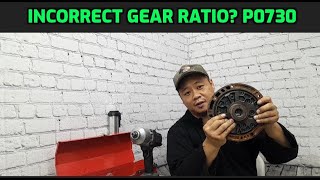
Helpful Videos




Used OEM Parts in Stock


New Aftermarket Parts Available

The information in this article is provided for general reference and educational purposes only. Vehicle specifications, procedures, and part compatibility can vary by production date, trim level, and region. Always consult your vehicle's factory service manual and verify part numbers before purchasing or performing repairs. Safety-critical components such as airbags, seat belts, and braking systems should be installed by a qualified professional.
- Volvo S60:
- 🎬 Helpful Videos
- 🛍️ Shop This Part
- What's Unique About the 2010-2018 Volvo S60
- Symptoms You May Notice
- Most Likely Causes
- Rare But Worth Checking
- Diagnosis Steps
- Parts You'll Likely Need
- Related Codes That Often Appear With This One
- Technical Service Bulletins (TSBs) & Recalls
- Platform-Specific Known Issues
- Mechanic-Grade Diagnostic Values
- Scan Tool Commands That Help
- Wiring & Ground Locations
- Real Owner Repair Stories
- When the Usual Fixes Don't Work
- OEM Part Supersession History
- Model Year Variations Within This Range
- Diagnostic Flowchart
- Other Known Issues on This Vehicle
- Used vs. New Parts: Buying Guide for This Vehicle
- Real Owner Stories
- 2011+ Volvo S60 — ~115000 miles
- 2010-2018 Volvo S60 — ~100000 miles
- 2010-2018 Volvo S60
- Related OBD-II Codes
- Frequently Asked Questions
- 🎟️ Get 5% Off