

OBD-II Code P0733: Gear 3 Incorrect Ratio
What P0733 means, why it triggers, and how to fix it
- P0733 indicates active slipping in third gear, requiring immediate repair to prevent a $3,000+ transmission replacement.
- Stop driving immediately; slipping generates extreme heat that destroys clutch packs and valve bodies within miles.
- Check the transmission fluid first; a $150 fluid and filter change fixes the issue if caught before internal mechanical damage occurs.
- Ford 10R80 and Ram 8HP transmissions have known factory defects causing P0733, requiring specific updated parts like the Ford CDF drum (TSB 24-2254).
What Does P0733 Mean?

Code P0733 means the transmission control module (TCM) detected the transmission is slipping in third gear. The computer constantly compares engine speed to transmission output speed to verify the gear ratio. When the vehicle is in third gear, the actual ratio detected by the sensors does not match the manufacturer's expected ratio, triggering the check engine light.
Technical definition: The SAE/OBD-II definition is "Gear 3 Incorrect Ratio." The Powertrain Control Module (PCM) or TCM detects a significant discrepancy between the calculated and actual gear ratio in third gear. The computer monitors the Input Speed Sensor (ISS) and Output Speed Sensor (OSS). If the expected ratio is 1.5:1, but the TCM measures 1.8:1, the input shaft is spinning faster than expected for the output speed, confirming a slip.
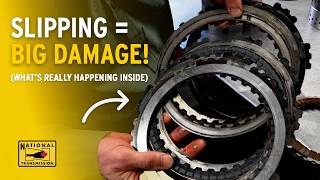
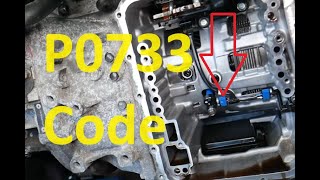
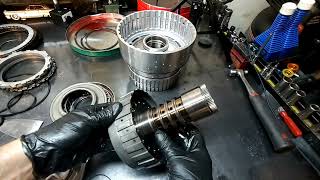
🎬 Watch: A breakdown of P0733 causes and potential fixes.Can I Drive With P0733?
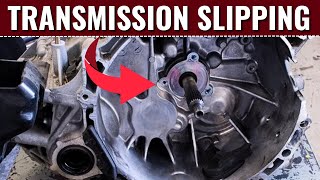
No — Do Not Drive. Do not drive. P0733 indicates active transmission slipping, which generates extreme heat. Continuing to drive turns a targeted $300 repair into a catastrophic failure requiring a $4,000+ full transmission replacement. The transmission will shift erratically, enter 'limp mode' with limited speed, or fail to engage gears entirely, posing a severe safety risk in traffic. Metal debris from slipping components contaminates the entire system, destroying the valve body and torque converter.
Common Causes

- Low Fluid or Clogged Filter (Very Common) — Low fluid causes a total loss of the hydraulic pressure required to fully engage clutches. Dirty, burnt fluid loses its hydraulic properties, and a filter clogged with old clutch material starves the transmission of fluid pressure, directly causing slippage.
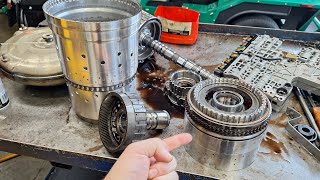
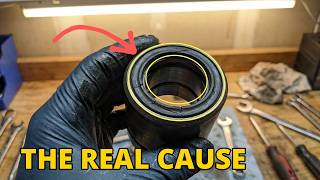
- Internal Mechanical Transmission Failure (Common) — Worn or damaged internal parts like the third gear clutch pack, seals, bands, or planetary gear set fail to hold the gear under load. On specific vehicles, like the Ford 10R80, a failed CDF clutch cylinder sleeve causes a massive internal hydraulic leak. 🎬 See how the Ford 10R80 CDF drum failure happens internally.
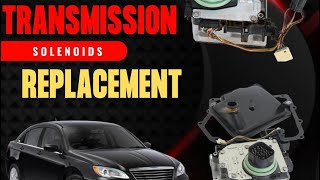
- Faulty Shift Solenoid(s) (Common) — Shift solenoids are electronically controlled valves directing fluid to engage gears. The solenoid responsible for third gear gets stuck, clogs with debris, or fails electrically, preventing the gear from engaging. 🎬 Watch: How to swap a solenoid pack to fix P0733.
- Faulty Transmission Valve Body (Less Common) — The valve body is the hydraulic control center. It develops cracks, sticking valves, or clogs, leading to incorrect fluid pressure specifically in the 3rd gear circuit.
- Damaged Wiring Harness or Connectors (Less Common) — A corroded main transmission connector, fluid wicking into modules, or chafed wires cause intermittent signals from speed sensors or poor communication with solenoids.
- Faulty Transmission Speed Sensors (Rare) — A failing Input Speed Sensor (ISS) or Output Speed Sensor (OSS) sends incorrect data. The computer assumes a slip is occurring when the gear is actually holding fine. This usually sets a dedicated sensor code (e.g., P0717).
- Transmission Control Module (TCM) Fault (Rare) — The computer itself fails or experiences software glitches, misinterpreting sensor data or commanding shifts incorrectly. A software re-flash from the dealer sometimes resolves calibration errors.
Symptoms

- Transmission Slipping or RPM Flare — Engine RPMs flare up sharply when shifting into third gear, but the vehicle does not accelerate. It feels like the transmission momentarily drops into neutral.
- Vehicle Enters 'Limp Mode' — To prevent catastrophic damage, the transmission locks into a single gear (usually 2nd or 3rd), severely limiting vehicle speed to under 40 mph.
- Failure to Shift into Third Gear — The transmission refuses to shift into third gear entirely, hanging in second gear or attempting a harsh jump directly to fourth.
- Harsh, Jerky, or Banging Shifts — The shift into or out of third gear feels abrupt, delayed, or produces a loud clunking noise as the transmission struggles to engage.
- Check Engine Light is On — The computer illuminates the Malfunction Indicator Lamp (MIL) immediately upon detecting the ratio discrepancy.
- Burning Smell — A distinct acrid smell, similar to burnt toast, indicates overheating transmission fluid and incinerated clutch material.
Diagnostic Flowchart
Tap your situation to follow the diagnostic path that matches what you're seeing on this code.
Common Fixes & Costs
- Transmission Fluid and Filter Change — Parts: $50-$160, Labor: $100-$200, ~1.5 hr book time (DIY)
- Replace Shift Solenoid(s) — Parts: $40-$120, Labor: $200-$480, ~3.0 hr book time (Intermediate)
- Rebuild or Replace Transmission — Parts: $1500-$3500, Labor: $1500-$3500, ~12.0 hr book time (Professional)
- Replace Transmission Valve Body — Parts: $800-$1500, Labor: $400-$700, ~4.5 hr book time (Professional)
- Replace Transmission Control Module (TCM) — Parts: $800-$1200, Labor: $200-$450, ~2.5 hr book time (Professional)
DIY vs Professional
- Transmission Fluid and Filter Change — Beginner:
Tools: Socket set, torque wrench, drain pan, fluid pump/funnel, rags. - Replace Shift Solenoid(s) — Beginner:
Tools: Fluid change tools, multimeter, inch-pound torque wrench, snap-ring pliers. - Replace Transmission Valve Body — Beginner:
Tools: Advanced toolset, pristine clean work area, service manual, diagnostic scan tool. - Replace Transmission Control Module (TCM) — Beginner:
Tools: Basic hand tools, professional scan tool for programming. - Rebuild or Replace Transmission — Beginner:
Tools: Transmission jack, engine hoist, complete professional toolset, specialized transmission tools.
Used vs. New Parts: Buying Guide
When a used part is worth it: A used transmission assembly is viable when the vehicle's value is low (older than 15 years) and the goal is to keep it running for 1-2 years on a tight budget.
Donor-vehicle mileage cap: roughly under 100000 miles for the part to have meaningful remaining life.
Donor quality checklist:
- Verify the donor vehicle was scrapped for a non-powertrain reason (e.g., collision).
- Obtain the VIN of the donor vehicle to check its service history.
- Favor sellers who offer a 90-day or longer warranty.
Decision logic:
- If The vehicle is less than 10 years old or has high resale value → Favor a new or remanufactured part. The higher cost is justified by a longer warranty and preserved vehicle value.
- If The vehicle is over 15 years old and you plan to sell it within 2 years → A used transmission from a low-mileage donor is an acceptable risk to make the vehicle operational for sale.
- If The specific failure is a known design flaw (e.g., Ford 10R80 CDF drum) → Only buy a NEW or REMANUFACTURED part updated to correct the original flaw. A used part has the same defect.
Warranty tradeoff: Used parts come with a 30-90 day functional warranty covering the part only. Remanufactured components offer 1-3 year warranties, often including labor coverage.
Worst-case if a used part fails: $1500-$2500. This represents the cost of repeat labor to remove the failed used part and install another one.
What Happens If You Wait — Timeline
- 0-1 month: Intermittent P0733 code during cold starts or under load. Slight hesitation or a single harsh shift into 3rd gear. The Check Engine Light turns on and off. (MPG impact: 0-5%% · Added cost: $0-$50 in wasted fuel.)
- 1-3 months: Slipping becomes consistent. Engine RPMs flare noticeably during the 2-3 shift. The transmission fluid darkens and develops a burnt smell as it overheats. (MPG impact: 5-10%% · Added cost: $200-$400. The fluid is cooked and requires replacement. The slipping clutch pack is significantly worn.)
- 3-6 months: The 3rd gear clutch pack is severely damaged. The vehicle enters limp mode frequently. Fine metallic debris circulates in the fluid, clogging the filter and scoring the valve body. (MPG impact: 10-15%% · Added cost: $1,000-$2,500. The repair escalates beyond a single component. The valve body is damaged, and a rebuild is certain.)
- 6+ months: Catastrophic failure. The 3rd gear clutch pack disintegrates, sending large metal chunks through the transmission, destroying planetary gears and the torque converter. The vehicle is stranded. (MPG impact: 15-25%+% · Added cost: $4,000-$7,000+. The original transmission is unsalvageable. A full replacement with a remanufactured unit is required.)
Cost of Not Fixing It
- 0-1 month: Continued slipping generates excessive heat, rapidly degrading transmission fluid and causing a noticeable drop in fuel economy. The driver experiences increasingly frequent and harsh shifting. (Added cost: $100-$300 for a transmission cooler flush if the fluid is cooked.)
- 1-6 months: Catastrophic damage becomes highly likely. The slipping 3rd gear clutch pack fails completely. Metal debris contaminates the entire system, destroying the valve body and torque converter. (Added cost: $1,500-$3,000. The repair escalates from a solenoid replacement to requiring a new valve body and torque converter.)
- 6+ months: The transmission suffers a complete failure, leaving the vehicle stranded. A full replacement with a remanufactured unit is required. (Added cost: $3,500-$7,000+. This represents the full cost of a remanufactured transmission replacement, plus towing fees.)
Diagnosis Steps

- Check Transmission Fluid Level and Condition
With the vehicle on level ground and following the manufacturer's procedure, check the transmission dipstick. The fluid must be at the 'Full' mark and bright red. Low, dark brown, or burnt-smelling fluid confirms a hydraulic or overheating issue.
Tools: Rag/towel, Safety glasses (Beginner) - Scan for Codes and Review Freeze Frame Data
Use an OBD-II scanner to read all codes. Look for accompanying gear ratio errors (P0731-P0734) or solenoid codes (P0750-P0799). Analyze the freeze-frame data to identify the exact vehicle speed, RPM, and temperature when the fault occurred.
Tools: OBD-II Scanner (Beginner) - Test Drive and Monitor Live Sensor Data
Using an advanced scan tool, monitor the Input Speed Sensor (ISS), Output Speed Sensor (OSS), and 'Transmission Slip Speed'. In a healthy transmission, slip speed is near 0 RPM. A value greater than 50-100 RPM in 3rd gear under load confirms a mechanical slip.
Tools: Advanced OBD-II Scanner (Advanced) - Drop the Pan and Inspect for Debris
Remove the transmission pan and inspect the fluid and magnet. Fine grey dust is normal. Large metal shavings, chunks, or excessive black clutch material confirm a severe internal mechanical failure, requiring a full rebuild.
Tools: Socket Set, Drain Pan, Gasket Scraper (Advanced) - Perform a Transmission Pressure Test
Connect a pressure gauge to the transmission test ports. Low pressure in the third gear circuit points to an internal leak, a failing pump, or a cracked valve body. Compare readings to the service manual specifications.
Tools: Transmission Pressure Gauge Kit, Service Manual (Advanced) - Test Shift Solenoids with a Multimeter
Test the resistance of the 3rd gear shift solenoid. A reading of 0 Ohms indicates a short, and an infinite reading (OL) indicates an open circuit. Compare the exact Ohm reading to the manufacturer's specifications.
Tools: Multimeter, Socket Set, Service Manual (Advanced) - Inspect Wiring and Connectors
Visually inspect the wiring harness going to the transmission. Look for melted wires, corrosion, or loose connections at the main connector. Check for fluid wicking up the harness into the TCM.
Tools: Flashlight, Multimeter (Intermediate) - Analyze Speed Sensor Waveforms
Use an oscilloscope to graph the voltage patterns from the ISS and OSS. Look for dropouts, noise, or erratic patterns that trick the TCM into calculating a false slip.
Tools: Digital Oscilloscope, Back-probe Pins (Professional)
When This Code Triggers (Freeze-Frame Conditions)
- Engine Coolant Temp: 170-210°F (The fault usually occurs when the transmission fluid is at full operating temperature.)
- Engine RPM: 1800-2800 RPM (During or just after the 2-3 shift, under light to moderate acceleration.)
- Vehicle Speed: 25-45 mph (The typical speed range where a 2-3 shift occurs in city or suburban driving.)
- Engine Load: 20-50% (Steady throttle or gentle acceleration, not typically during heavy load or wide-open throttle.)
Related Codes
- P0730 — A general 'Incorrect Gear Ratio' code. P0733 is specific to 3rd gear. Seeing P0730 with P0733 confirms a massive system-wide slip within the transmission.
- P0731, P0732, P0734, P0735 — Incorrect ratio codes for other gears. Seeing P0733 with these suggests a systemic issue like low fluid, a clogged filter, or a failing pump, rather than a single bad solenoid.
- P0756, P0761 (Shift Solenoid B/C Codes) — These point to an electrical fault in the circuit for the solenoid controlling the 2-3 shift. If present with P0733, the solenoid or its wiring is the culprit.
- P0894 — Means 'Transmission Component Slipping'. Its presence reinforces that the computer is actively detecting a severe mechanical slip event due to clutch wear.
Climate & Environmental Factors
- Cold Weather: Cold temperatures thicken transmission fluid, reducing its ability to flow and build pressure. Seals and gaskets harden and shrink, causing internal pressure drops. This triggers a P0733 code on cold starts that disappears once the vehicle reaches operating temperature (175°F).
- High Humidity: High humidity accelerates corrosion on electrical connectors and the main transmission harness, leading to intermittent electrical faults and poor sensor readings misdiagnosed as internal mechanical failures.
- High Altitude: High altitude reduces engine power output, causing the transmission to shift more frequently or hold gears longer. This places extreme stress on components, exacerbating existing wear and triggering slips under load.
How to Talk to a Mechanic About This Code
Say this: "I have a P0733 code indicating a slip in 3rd gear. I'd like to book a diagnostic. Can you please start by checking the fluid level and condition, scanning for any related TSBs, and checking for other codes before recommending major work?"
This signals you want a logical, step-by-step diagnosis. It steers the mechanic away from immediately quoting a costly transmission rebuild and towards ruling out simpler, cheaper causes first.
Avoid saying:
- 'Just fix whatever's wrong'
- 'My check engine light is on, can you look at it?'
- 'The transmission is acting funny'
- 'Whatever you recommend'
Questions to ask before authorizing the repair:
- What were the results of the transmission pressure test for the 3rd gear circuit?
- Did you find any metal shavings or clutch material in the transmission pan?
- If you are recommending a rebuild or replacement, what specific internal part failed to cause this?
- Is this a known issue for my vehicle, and did you find any Technical Service Bulletins (TSBs) related to it?
Where to Take It: Dealer vs Independent vs Chain
- Dealer:
Recommended for in-warranty vehicles or specific TSB-related repairs where dealer-specific tools are necessary.
Best for: Vehicles under powertrain warranty, Newer vehicles (less than 5 years old) with known, complex issues covered by TSBs, Repairs requiring proprietary software for programming new modules
Downsides: Highest labor rates, Defaults to full component replacement instead of a targeted repair or rebuild (Typical cost: +50% vs. baseline) - Chain Shop:
AVOID. The risk of an incorrect diagnosis, an unnecessary upsell, or a botched repair is too high for a complex code like P0733.
Best for: Emergency code scan if no other option is available.
Downsides: Technician skill varies dramatically. High pressure to sell flushes that won't fix an internal slip., Not equipped for the level of diagnosis P0733 requires. (Typical cost: -10% vs. baseline)
When to Walk Away From the Repair
If the transmission repair exceeds 50% of the car's private-party market value, sell or trade in the vehicle.
- Car worth $4000, fix is $3500: Walk away. The repair cost is nearly the entire value of the car. Sell as a 'mechanic special' or scrap it.
- Car worth $15000, fix is $4500: Fix it. The repair cost is 30% of the vehicle's value. A new transmission provides years of life if the rest of the car is in good shape.
- Car worth $8000, fix is $5000: Borderline. The repair is over 60% of the car's value. Get a second opinion and assess the vehicle's overall condition before proceeding.
What Scan Tool You Need for This Code

Minimum: A scanner that reads manufacturer-specific transmission codes and displays LIVE DATA for transmission PIDs.
A basic $20 code reader only shows 'P0733'. It cannot show the live data needed to confirm the slip, such as Input/Output Speed Sensor RPMs and transmission fluid temperature.
Budget: BlueDriver Pro (~$99) — Reads and clears transmission codes. Displays live data for many vehicles, allowing you to graph the input and output speed sensors to visually confirm the slip.
Mid-range: Foxwell NT510 Elite / NT809BT (~$180) — Provides deeper access to OEM-specific transmission data, including live sensor readings, fluid temperature, and special functions like clutch adaptation or solenoid tests.
Professional: Autel MaxiCOM MK808 / Launch CRP919E (~$450-650) — Offers full bidirectional control, allowing you to command individual shift solenoids to activate for testing. Performs advanced transmission relearn procedures.
Rent vs buy: Buy. The free 'code reading' service at auto parts stores uses basic readers that cannot show the live data needed for P0733.
How to Clear the Code After You Fix It
- Use an OBD-II scan tool to clear the diagnostic trouble code.
- Perform a transmission adaptive pressure relearn procedure if a major component like the valve body or TCM was replaced.
- Perform a complete drive cycle to allow readiness monitors to reset.
Drive cycle (~20 minutes): Start the vehicle and let it idle for 2-3 minutes. Drive in stop-and-go traffic, allowing the transmission to shift through all gears up and down. Drive for at least 5 minutes at a steady speed over 40 mph. Allow the vehicle to cool completely before repeating.
Readiness monitors affected: Comprehensive Component Monitor (CCM), Catalyst Monitor
Before emissions retest: drive at least 50 miles to fully set monitors.
Watch out for:
- Disconnecting the battery clears the code but erases adaptive learning data, causing harsh shifting.
- The code returns quickly if the underlying mechanical or hydraulic fault is not repaired.
- Failing to reset readiness monitors results in an automatic emissions test failure.
Will This Fail Emissions / State Inspection?
Yes — this code typically fails an OBD-II emissions inspection.
- California: A vehicle automatically fails the smog check if the Check Engine Light is on. All OBD-II readiness monitors must be in a 'Ready' state.
- New York: The NYS DMV inspection includes an OBD-II scan. An illuminated Check Engine Light from a P0733 code is an automatic failure.
- Texas: In counties requiring emissions testing, an active P0733 code causes an automatic failure. Drive 50-100 miles after repair for readiness monitors to reset.
Most Commonly Affected Vehicles
- Ford F-150, Mustang, Explorer, Ranger (2017-2023) — Vehicles with the 10R80 transmission have a widely known issue with a failing CDF clutch assembly. A bushing moves out of place, causing a major hydraulic leak (TSB 24-2254). The fix requires an updated CDF drum assembly.
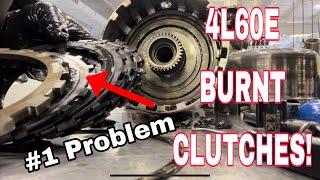
- Chevrolet / GMC Silverado 1500, Sierra 1500, Tahoe (2006-2013) — Models with the 4L60-E/4L65-E transmission are notorious for failure of the 3-4 clutch pack, a very common cause for P0733 requiring a rebuild.
- Ford Explorer, Mustang (2002-2010) — Vehicles with the 5R55S/W/N transmission suffer from worn servo bores in the transmission case. This causes pressure loss to the bands. Repair kits use O-rings on the servo pins to seal the worn bore.
- Honda Odyssey, Accord, Pilot (2000-2007) — 5-speed automatic transmissions are prone to premature wear of the third gear clutch pack. Debris clogs the 3rd gear pressure switch screen, which must be cleaned during a fluid change.
- Ram 1500 (2014-2021) — On models with the 8-speed (8HP70/8HP75) transmission, P0733 is intermittent on cold starts. It points to an internal issue with the 'D' clutch assembly (TSB #21-009-25).
- Dodge/Chrysler Grand Caravan, Town & Country (2007-2019) — Models with the 62TE transmission experience issues with the solenoid pack and a faulty underdrive clutch assembly. Multiple gear ratio codes appear together.
- Hyundai/Kia Elantra, Sorento, Optima (2011-2016) — 6-speed automatics exhibit P0733 due to faulty shift solenoids, a sticking control valve, or internal wiring harness issues.
- Nissan Altima, Maxima, Murano (2003-2015) — CVTs exhibit P0733 indicating slipping of the push belt, a faulty step motor, or catastrophic internal CVT failure.
- BMW Various models with ZF 6HP transmissions (2006-2015) — Known for fluid leaks from the mechatronic sleeve connector and a brittle plastic pan. Low fluid causes pressure issues, triggering P0733.
Manufacturer-Specific Notes
- Ford: On 2017-2023 vehicles with the 10R80 transmission, P0733 is a hallmark sign of a failed CDF clutch drum. Per TSB 24-2254, a bushing moves and causes a hydraulic leak. The transmission must be removed and the CDF drum assembly replaced.
- General Motors (GM): On 4L60-E equipped trucks, P0733 is a classic symptom of a failed 3-4 clutch pack. This specific mechanical failure is a very high-probability cause and requires a rebuild.
- Honda: On older 5-speed models, P0733 indicates a worn 3rd gear clutch pack. Before condemning the transmission, clean the screens for the 3rd gear pressure switch and linear solenoids, as they clog with debris.
- Ram: TSB 21-009-25 provides a specific repair kit (Part No. 68527968AA) for P0733 caused by 'D' clutch failure on 8-speed transmissions, which is more cost-effective than a full replacement.
Real Owner Stories
2018 Ford F-150 with 10R80 at 47K miles
Transmission slipped every morning during winter. Eventually, the check engine light illuminated with code P0733. The truck became undrivable, accelerating on its own during downshifts.
Outcome: An independent shop quoted the replacement for $7,632. The case highlights the known TSB 22-2428 for this specific factory defect.
Lesson: On a Ford 10R80, P0733 guarantees a CDF drum failure. Do not waste money on fluid changes. Reference the TSBs with the dealer or get a quote from an independent shop aware of this specific flaw.
2017 Ram 1500 with 8-Speed at 100K+ miles
The truck had a rough 2-3 shift on the first drive of the day. The issue worsened over months until the check engine light triggered P0733.
Outcome: TSBs for the Ram 8HP70 point to an internal issue with the 'D' clutch assembly, known to cause intermittent P0733 codes on cold starts.
Lesson: A recurring harsh shift when cold is an early warning sign of an internal transmission problem. On Ram 8-speeds, this requires a specific repair kit rather than a full replacement.
2010 Mazda 3 with U0101 and P0733
The car showed a U0101 (Lost Communication with TCM) code, locked into a single gear, and the fluid was black.
Outcome: The owner suffered an internal mechanical failure. The initial communication code was a symptom of the larger transmission failure causing electrical noise.
Lesson: Do not assume a communication code means a bad module. Replacing expensive electronic parts without checking fluid condition and mechanical integrity is a costly misdiagnosis.
How to Prevent This Code From Triggering
- Perform regular transmission fluid and filter changes (Every 30,000 to 60,000 miles.) — Clean fluid maintains hydraulic pressure, lubricates effectively, and removes heat. Old fluid loses its cooling ability and friction characteristics, leading to wear and overheating.
- Use the exact-spec Automatic Transmission Fluid (ATF) (Every time fluid is added or changed.) — Modern transmissions are extremely sensitive to fluid type. Using 'universal' ATF leads to improper clutch engagement, foaming, and pressure loss, directly causing slipping.
- Install an auxiliary transmission cooler (One-time installation for vehicles that tow or operate in hot climates.) — Heat is the primary cause of transmission failure. An auxiliary cooler lowers operating temperatures by 20-25°F, drastically extending the life of fluid and internal seals.
- Allow the vehicle to warm up briefly before hard driving (Daily habit, especially in cold weather.) — Cold transmission fluid is thick and does not flow efficiently. Waiting 60 seconds allows the fluid to circulate, preventing strain and pressure drops.
- Come to a complete stop before shifting from Drive to Reverse (Daily habit.) — Shifting while moving forces the transmission's internal components to act as a brake, causing extreme stress and premature wear that leads to slipping.
Frequently Asked Questions
Can low transmission fluid really cause code P0733?
Yes. Low fluid causes a drop in hydraulic pressure, preventing clutch packs from engaging fully. This creates the slip that triggers the code.
What is the most common misdiagnosis for P0733?
The most costly misdiagnosis is replacing the entire transmission without checking the fluid, solenoids, or wiring first. Technicians must rule out electronic faults and low fluid before condemning the mechanical internals.
Will a transmission flush fix a P0733 code?
No, a high-pressure flush is a gamble and often worsens the problem. If the transmission has internal wear, flushing dislodges debris that was plugging leaks, accelerating the slipping. A simple drain-and-fill with a new filter is the only safe fluid service.
I got a P0733 code right after a fluid change. What happened?
The fluid level is likely incorrect, or the wrong ATF type was used, causing foaming and pressure loss. Alternatively, the old fluid was masking a worn clutch, and the new detergent fluid washed away the friction material.
How much does it cost to fix P0733?
Costs range from $150 for a fluid service to $600 for shift solenoids. Valve body replacements exceed $1,200. Full transmission rebuilds or replacements cost between $3,000 and $7,000 depending on the vehicle.
Will the P0733 code clear itself?
The code clears temporarily if the slip was an intermittent cold-start issue, but the underlying mechanical fault remains. Ignoring the code guarantees the light will return and the damage will worsen.
My truck shifts hard on cold starts then throws P0733, what does that mean?
This indicates fluid pressure is slow to build when cold, or internal seals have shrunk and are leaking pressure. It is a common early warning sign of a failing clutch assembly, particularly on Ram 1500 8-speed transmissions.
Key Takeaways
- P0733 indicates active slipping in third gear, requiring immediate repair to prevent a $3,000+ transmission replacement.
- Stop driving immediately; slipping generates extreme heat that destroys clutch packs and valve bodies within miles.
- Check the transmission fluid first; a $150 fluid and filter change fixes the issue if caught before internal mechanical damage occurs.
- Ford 10R80 and Ram 8HP transmissions have known factory defects causing P0733, requiring specific updated parts like the Ford CDF drum (TSB 24-2254).
Helpful Videos

The information in this article is provided for general reference and educational purposes only. Vehicle specifications, procedures, and part compatibility can vary by production date, trim level, and region. Always consult your vehicle's factory service manual and verify part numbers before purchasing or performing repairs. Safety-critical components such as airbags, seat belts, and braking systems should be installed by a qualified professional.
- 🎬 Helpful Videos
- What Does P0733 Mean?
- Can I Drive With P0733?
- Common Causes
- Symptoms
- Diagnostic Flowchart
- Common Fixes & Costs
- DIY vs Professional
- Used vs. New Parts: Buying Guide
- What Happens If You Wait — Timeline
- Cost of Not Fixing It
- Diagnosis Steps
- When This Code Triggers (Freeze-Frame Conditions)
- Related Codes
- Climate & Environmental Factors
- How to Talk to a Mechanic About This Code
- Where to Take It: Dealer vs Independent vs Chain
- When to Walk Away From the Repair
- What Scan Tool You Need for This Code
- How to Clear the Code After You Fix It
- Will This Fail Emissions / State Inspection?
- Most Commonly Affected Vehicles
- Manufacturer-Specific Notes
- Real Owner Stories
- 2018 Ford F-150 with 10R80 at 47K miles
- 2017 Ram 1500 with 8-Speed at 100K+ miles
- 2010 Mazda 3 with U0101 and P0733
- How to Prevent This Code From Triggering
- Frequently Asked Questions
- Can low transmission fluid really cause code P0733?
- What is the most common misdiagnosis for P0733?
- Will a transmission flush fix a P0733 code?
- I got a P0733 code right after a fluid change. What happened?
- How much does it cost to fix P0733?
- Will the P0733 code clear itself?
- My truck shifts hard on cold starts then throws P0733, what does that mean?
- Key Takeaways
- 🎟️ Get 5% Off