

OBD-II Code P0736: Reverse Incorrect Gear Ratio
The Ultimate Guide to Diagnosing and Fixing P0736
- P0736 indicates the transmission cannot hold reverse gear; stop driving immediately to prevent a $3,500+ rebuild.
- Check the transmission fluid level and color first, as low or burnt fluid causes the majority of hydraulic pressure failures.
- For 2017+ Ford F-150s and GM trucks, check for Technical Service Bulletins (TSBs) before replacing parts, as a $150 TCM software update often fixes the code.
- Use a scanner with live data to compare Input and Output Speed Sensor RPMs; a zero reading on the output sensor confirms internal slippage.
What Does P0736 Mean?

P0736 means the Powertrain Control Module (PCM) detected a significant problem with the reverse gear. It constantly compares engine speed to the transmission's output speed to verify the correct gear ratio. When the numbers mismatch in reverse, it triggers this code, indicating the transmission is slipping, failing to engage, or cannot maintain hydraulic pressure.
Technical definition: The SAE/OBD-II definition for P0736 is "Reverse Incorrect Ratio." It sets when the Transmission Control Module (TCM) detects a mismatch between the expected and actual gear ratio when reverse is commanded. The TCM uses Input Speed Sensor (ISS) and Output Speed Sensor (OSS) data; a discrepancy signals a hydraulic, mechanical, or electrical fault.
Can I Drive With P0736?
No — Do Not Drive. Do not drive with P0736. You likely have no reverse gear, creating a severe safety risk in parking lots and tight spaces. Continuing to drive in forward gears circulates contaminated fluid and metal debris from the initial failure, turning a $300 solenoid repair into a $4,000+ catastrophic transmission failure. Tow the vehicle directly to a repair shop.
Common Causes

- Low or Degraded Transmission Fluid (Very Common) — Insufficient, contaminated, or thermally degraded fluid lowers hydraulic pressure. This prevents the reverse clutch pack from engaging firmly, causing immediate slippage.
- Faulty Reverse Shift Solenoid (Common) — Shift solenoids direct fluid to engage gears. The reverse solenoid can fail electrically, get stuck, or clog with debris, blocking the fluid flow required for gear engagement.
- Corrupted TCM Software (Common) — The TCM software often contains glitches causing it to misinterpret sensor data or use incorrect shift parameters. Manufacturers frequently release Technical Service Bulletins (TSBs) with software updates to fix this.
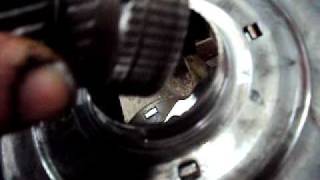
- Internal Mechanical Failure (Common) — Worn reverse clutch packs, a cracked clutch drum, a broken reaction sun shell (GM 4L60-E) 🎬 Watch: See how a stripped sun shell causes reverse failure., or a fractured 3-5-R wave plate (GM 6L80) physically prevent the transmission from holding the reverse gear ratio.
- Clogged Transmission Filter or Passages (Common) — Fluid contaminated with clutch material clogs the internal filter or narrow valve body passages, starving the reverse clutch pack of necessary hydraulic pressure.
- Faulty Transmission Speed Sensors (Less Common) — The TCM relies on the ISS and OSS to calculate the gear ratio. An inaccurate or dead sensor forces the TCM to detect a ratio error even if the transmission is mechanically sound.
- Faulty Valve Body (Less Common) — The valve body can develop cracks, sticking valves, or worn bores, causing internal pressure leaks that specifically disable the reverse gear circuit.
- Faulty Park/Neutral Position Switch (Rare) — A misaligned or faulty transmission range switch sends an incorrect gear selection signal, tricking the TCM into registering a ratio error.
Symptoms

- Check Engine Light Illuminated — The Malfunction Indicator Lamp (MIL) turns on immediately after the TCM detects the ratio mismatch.
- Cannot Engage Reverse or Delayed Engagement — The vehicle refuses to shift into reverse, or delays for several seconds before slamming into gear with a harsh lurch.
- Transmission Slips or Revs in Reverse — Engine RPMs flare up when pressing the accelerator in reverse, but the vehicle barely moves, feeling as if it is in neutral.
- Harsh Clunking or Grinding Noises — A loud clunk, bang, or grinding noise occurs when shifting into reverse as damaged internal components struggle to engage.
- Limp Mode Activation — The TCM locks the transmission in a single forward gear (usually 2nd or 3rd) and disables reverse entirely to prevent further internal damage.
Diagnostic Flowchart
Tap your situation to follow the diagnostic path that matches what you're seeing on this code.
Common Fixes & Costs
- Transmission Fluid and Filter Service
— Parts: $50-$150, Labor: $100-$250, ~1.5 hr book time
(DIY)
Ford F-150 (10R80): OEM HL3Z-7A098-A / FT202 (Alt: BD Diesel 1064047, ATP B-491)
Chevy Silverado (4L60-E/6L80): OEM ACDelco 24236933 (6L80 Kit) (Alt: Wix 58847, Fram FT1223A) - Reprogram Transmission Control Module (TCM) — Parts: $0, Labor: $120-$200, ~1 hr book time (Professional)
- Replace Reverse Shift Solenoid
— Parts: $40-$200, Labor: $200-$500, ~3 hr book time
(Intermediate)
Chevy Silverado (4L80-E): OEM ACDelco 24230298 (Alt: Bosch 24230298, Rostra 52-0543)
Dodge Grand Caravan (62TE): OEM Mopar 68376696AA (Solenoid Block) (Alt: Dorman 609-040) - Replace Transmission Speed Sensor(s)
— Parts: $30-$100, Labor: $75-$200, ~1 hr book time
(Intermediate)
Ford F-150 (10R80): OEM JL3Z-7H183-A (Alt: Standard Motor Products VSS553)
Chevy Silverado (6L80): OEM ACDelco 24276628 (Alt: Denso 503-0103) - Rebuild or Replace Transmission
— Parts: $1500-$4500, Labor: $800-$1800, ~9 hr book time
(Professional)
Chevy Silverado (4L60-E): OEM N/A (Alt: Sonnax 'The Beast' Sun Shell (77749-02K))
Used vs. New Parts: Buying Guide
When a used part is worth it: For major components like a full transmission on a vehicle over 150k miles where a new unit exceeds the car's value.
Donor-vehicle mileage cap: roughly under 80000 miles for the part to have meaningful remaining life.
Donor quality checklist:
- Verify the donor vehicle was not scrapped for transmission issues.
- Match part numbers exactly.
- Avoid used electronic parts like solenoid packs; heat cycles degrade them.
Decision logic:
- If The part is a single solenoid or external sensor → Always buy new to avoid paying labor twice for premature failure.
- If The part is a complete transmission for a vehicle under 100k miles → Buy a remanufactured unit for longevity and warranty coverage.
- If The part is a valve body or mechatronics unit → Buy remanufactured. Used units are high risk due to internal wear.
Warranty tradeoff: Salvage yards offer 30-90 day part-only warranties. Remanufactured transmissions offer up to 3 years/100,000 miles with limited labor coverage.
Worst-case if a used part fails: $800-$1800 in repeated labor if a used transmission fails after installation.
What Happens If You Wait — Timeline
- 0-1 month: Initial fault. A slight delay or harsh shift into reverse sets P0736. Slipping begins, causing minor glazing on the reverse clutch pack. (MPG impact: 0-1%% · Added cost: $0)
- 1-3 months: Slipping increases. The reverse clutch pack burns, releasing friction material into the fluid. A burnt smell becomes noticeable. (MPG impact: 1-3%% · Added cost: $200 - $500 (Debris circulation requires extensive flushing beyond a simple fluid change))
- 3-6 months: Contaminated fluid clogs the filter, starving the pump. Debris lodges in the valve body, causing erratic shifting in forward gears. Reverse fails entirely. (MPG impact: 3-8%% · Added cost: $1,000 - $2,500 (Valve body damage and secondary clutch pack slippage))
- 6+ months: Catastrophic failure. Widespread slipping overheats the transmission, destroying multiple clutch packs and hard parts. The vehicle stops moving. (MPG impact: 10-20%+% · Added cost: $3,500 - $8,000+ (Requires complete rebuild or replacement))
Cost of Not Fixing It
- Immediate (0-1 Month): Loss of reverse gear creates a safety hazard. Slipping generates excessive heat and introduces metal debris into the fluid. (Added cost: $0 - $250 (Tow fee))
- Short Term (1-3 Months): Contaminated fluid clogs the valve body and solenoids, causing harsh shifting in forward gears and turning a localized issue into a system-wide problem. (Added cost: $500 - $1,500 (Valve body replacement))
- Long Term (3+ Months): Catastrophic failure. Widespread debris and heat destroy clutch packs and the torque converter, requiring complete replacement. (Added cost: $3,500 - $8,000+ (Full transmission rebuild))
Diagnosis Steps

- Check Transmission Fluid Level and Condition
With the engine running and transmission warm, check the fluid. It must be at the 'FULL' mark and bright red/pink. Low, dark brown, or burnt-smelling fluid indicates degradation and internal wear.
Tools: Rag, gloves (Beginner) - Scan for Codes and Review Freeze Frame Data
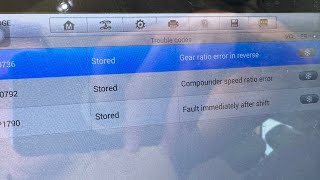
Use an OBD-II scanner to confirm P0736 and check for related codes (P0715, P0730-P0735). Review freeze frame data to identify vehicle speed, RPM, and temperature when the code set.
Tools: OBD-II Scanner (Beginner) - Check for Technical Service Bulletins (TSBs)
Search for manufacturer TSBs for your specific VIN. Ford and GM have well-documented software and mechanical issues causing P0736, and a TSB provides the exact factory fix.
Tools: Internet access, vehicle VIN (Intermediate) - Review Live Sensor Data
Monitor live data for the Input Speed Sensor (ISS) and Output Speed Sensor (OSS). When engaging reverse, ISS RPM should rise with the engine, and OSS should show a stable, proportional RPM. A zero or erratic OSS reading confirms internal slip or sensor failure.
Tools: Advanced OBD-II Scanner with Live Data (Intermediate) - Perform a Solenoid Activation Test
Using a bidirectional scanner, command the reverse solenoid 'On' and 'Off' (engine off, key on). Listen for a distinct 'click' from the transmission pan. No click indicates a mechanically stuck or electrically dead solenoid.
Tools: Bidirectional OBD-II Scanner (Advanced) - Inspect External Wiring and Connectors
Visually inspect the wiring harness connecting to the transmission, speed sensors, and TCM. Look for chafing, melted wires, or corroded pins near hot exhaust components.
Tools: Flashlight (Intermediate) - Test Shift Solenoid Resistance
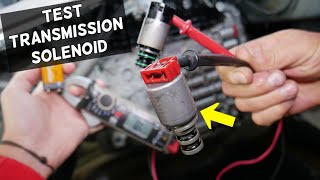
Disconnect the transmission harness and use a multimeter to measure resistance across the reverse solenoid pins. Compare to factory specs (e.g., 20-22 ohms for GM 4L80-E). An open circuit (OL) confirms failure.
Tools: Digital multimeter, service manual pinout (Advanced) - Test Speed Sensor Voltage and Resistance
Disconnect the speed sensor. Check for 5-12V reference voltage on the power wire (key on). Measure resistance across the sensor terminals and compare to factory specs (typically 200-1,000 Ohms).
Tools: Digital multimeter, service manual (Advanced) - Perform a Transmission Pressure Test
Connect a pressure gauge to the reverse test port on the transmission case. Compare idle and load pressures to specifications. Low pressure confirms an internal leak, bad solenoid, or failing clutch pack.
Tools: Transmission pressure gauge set, service manual (Advanced)
When This Code Triggers (Freeze-Frame Conditions)
- Gear Commanded: Reverse (Driver shifted into Reverse.)
- Engine RPM: 800-2000 RPM (Driver is pressing the accelerator to initiate movement.)
- Output Shaft Speed (OSS): 0 or Erratic (The transmission output shaft is not rotating as expected, confirming slippage.)
- Vehicle Speed: 0-5 MPH (Vehicle is stationary or barely moving despite engine RPM increase.)
- Transmission Fluid Temperature: Any (Fault occurs when cold or at normal operating temperature (170-200°F).)
Related Codes
- P0700 — A generic informational code set by the ECM indicating the TCM stored a fault. It always accompanies P0736. P0700 is the messenger; P0736 is the actual problem.
- P0730 — A general 'Incorrect Gear Ratio' code. If present with P0736, it signals a widespread hydraulic failure like extremely low fluid or a clogged filter affecting all gears.
- P0732, P0734 — Indicate incorrect ratios for 2nd and 4th gears. On a GM 4L60-E, these codes alongside P0736 definitively prove a broken reaction sun shell.
- P0715 — Indicates a malfunction in the Input Speed Sensor circuit. A faulty input sensor forces the TCM to miscalculate the ratio, triggering a false P0736.
Climate & Environmental Factors
- Cold Weather: Cold temperatures thicken transmission fluid, lowering hydraulic pressure and delaying gear engagement. Contracting seals expose small hydraulic leaks, causing harsh reverse engagement on cold starts.
- Hot Weather: High ambient temperatures and heavy loads overheat fluid, causing it to thin and lose viscosity. This exposes existing wear in clutch packs, leading to slippage that does not occur when cool.
How to Talk to a Mechanic About This Code
Say this: "I have a P0736 code indicating a reverse ratio error. Please start by checking the fluid condition and checking my VIN for applicable TSBs before recommending internal work. I want to rule out software or fluid issues first."
This directs the shop to perform logical, low-cost checks first, preventing a premature jump to a rebuild diagnosis and showing you are an informed consumer.
Avoid saying:
- 'My car won't go into reverse.'
- 'Just fix whatever's wrong with the transmission.'
- 'The check engine light is on, can you give me a quote over the phone?'
Questions to ask before authorizing the repair:
- What were the specific failure points found during the diagnostic?
- What were the line pressure test results for the reverse circuit?
- Did you check live data from the speed sensors to confirm the slip?
- Will you provide a written, itemized estimate with a worst-case scenario price?
- What is the warranty on the proposed parts and labor?
Where to Take It: Dealer vs Independent vs Chain
- Dealer:
Recommended if under warranty or for newer models known for software-related P0736 issues.
Best for: Vehicles under powertrain warranty., Newer vehicles with known TSBs for software updates (e.g., Ford 10R80)., Complex European brands requiring proprietary diagnostic systems.
Downsides: Highest labor rates., Often prefer replacing entire assemblies rather than repairing individual components. (Typical cost: +40% vs. baseline) - Independent Shop:
Best fit for most out-of-warranty vehicles, provided it is a reputable transmission specialist.
Best for: Out-of-warranty vehicles where cost is a major factor., Diagnosing common mechanical failures (e.g., GM sun shell)., Getting a second opinion.
Downsides: Must find a shop that specializes in transmissions, not a general mechanic., May lack the latest manufacturer software for flashing updates. (Typical cost: +0% vs. baseline) - Chain Shop:
Use with extreme caution. Acceptable for a preliminary scan, but get a second opinion before authorizing major work.
Best for: Getting a free initial scan or basic fluid service.
Downsides: High-pressure sales tactics often push for full rebuilds., Technician skill varies dramatically., Often outsource rebuilds, leading to warranty issues. (Typical cost: -10% vs. baseline)
When to Walk Away From the Repair
If the estimated repair cost exceeds 50% of the car's current private-party value, seriously consider selling the vehicle as-is.
- Car worth $4000, fix is $2500: Walk away. The repair cost is over 60% of the car's value.
- Car worth $15000, fix is $2000: Fix it. The repair cost is well below the 50% threshold.
- Car worth $3000, fix is $3500: Walk away. The repair cost exceeds the vehicle's value.
What Scan Tool You Need for This Code

Minimum: An OBD-II scanner that reads manufacturer-specific transmission codes and displays LIVE DATA for Input and Output Speed Sensors.
A basic $20 reader only shows the code. It cannot display the live sensor data essential to determine if the problem is a sensor, wiring, or actual mechanical slip.
Budget: BlueDriver Pro Scan Tool (~$100) — Connects to a smartphone, reads transmission codes, and graphs live data from speed sensors to visualize slippage.
Mid-range: Foxwell NT510 Elite (~$180) — Provides OE-level diagnostics, live transmission data, and bidirectional control to perform solenoid activation tests.
Professional: Autel MaxiCOM MK808S (~$450) — Offers full bidirectional control to command shift solenoids and performs advanced transmission 'Quick Learn' resets required after repair.
Rent vs buy: Auto parts stores loan free scanners, but they lack live data and bidirectional features. Buying a mid-range scanner is a worthwhile investment to avoid diagnostic guesswork.
How to Clear the Code After You Fix It
- Perform the required repair (e.g., fluid change, solenoid replacement).
- Use an OBD-II scan tool to clear P0736 and related codes.
- Perform a complete drive cycle to reset readiness monitors.
Drive cycle (~30 minutes): Start cold. Idle for 3 minutes. Drive in mixed city traffic for 15 minutes. Accelerate to 55-60 mph on a highway and maintain steady speed for 10 minutes. Coast to a stop.
Readiness monitors affected: Catalyst Monitor, Evaporative System Monitor, Oxygen Sensor Monitor, EGR System Monitor
Before emissions retest: drive at least 100 miles to fully set monitors.
Watch out for:
- Clearing the code without fixing the underlying slip causes immediate return.
- Disconnecting the battery resets all monitors, guaranteeing an emissions failure until a drive cycle completes.
Will This Fail Emissions / State Inspection?
Yes — this code typically fails an OBD-II emissions inspection.
- California: An illuminated Check Engine Light is an automatic failure. Clearing the code sets monitors to 'Not Ready', also causing failure.
- New York: The presence of a Check Engine Light for P0736 results in an automatic emissions inspection failure.
- Texas: An active P0736 code fails the OBD-II portion of the state inspection in required counties.
Most Commonly Affected Vehicles
- Ford F-150, Expedition, Mustang (2017-2023) — Extremely common on the 10R80 transmission. Often fixed by a PCM update (TSB 24-2046) or requires replacing the CDF clutch cylinder sleeve.
- Chevrolet / GMC Silverado, Sierra, Tahoe (2001-2013) — On 4L60-E transmissions, P0736 guarantees a broken reaction sun shell. On 6L80 transmissions, it indicates a failed 3-5-R wave plate.
- Volkswagen / Audi Jetta, Passat, A4 (DSG) (2012-2018) — Associated with failure of the complex mechatronics unit (integrated valve body and TCM) in the Direct-Shift Gearbox.
- Dodge / Chrysler / Ram Grand Caravan, Ram 1500 (2008-2016) — Prone to solenoid pack failures and torque converter issues triggering this code on 62TE transmissions.
- Honda Accord, Odyssey, Pilot (2003-2013) — Often traced to a clogged screen on the linear shift solenoid assembly or internal clutch pack wear.
Manufacturer-Specific Notes
- Ford: For 10R80 transmissions (2017+), diagnosis must start with TSB 24-2046 for a software update. If software fails, the mechanical cause is usually axial movement of the CDF clutch cylinder sleeve, requiring partial overhaul.
- Chevrolet/GM: On 6L80 transmissions, P0736 is a classic symptom of a broken 3-5-R wave plate that disintegrates and clogs the TEHCM. For older 4L60-E units, it means a broken reaction sun shell.
- Volkswagen/Audi: On DSG transmissions, this code rarely points to a simple fix. It almost always requires replacing the expensive mechatronics unit.
Real Owner Stories
2018 Ford F-150 with 10R80 Transmission
Owner experienced a harsh shift into reverse, triggering the Check Engine Light and P0736. Forward gears functioned normally.
What they tried:
- Verified transmission fluid was full and clean.
- Took the truck to a dealership for diagnosis.
Outcome: The dealership performed a software update per Ford TSB 24-2046. The update resolved the harsh shifting permanently under the powertrain warranty.
Lesson: For modern Ford 10R80 transmissions, a software update is the required first step. Always check TSBs before assuming mechanical failure.
2005 Chevrolet Silverado with 4L60-E Transmission at 137K miles
Owner heard a loud 'BOOM' while accelerating, followed by grinding noises. The truck lost reverse, 2nd, and 4th gears.
What they tried:
- Limped the vehicle home.
- Checked fluid, noting a dark brown color and burnt smell.
Outcome: Diagnosed with a broken reaction sun shell, a notorious 4L60-E failure. The owner replaced the transmission with a warranted salvage unit for $1,500.
Lesson: On GM 4L60-E transmissions, sudden loss of reverse accompanied by a loud noise guarantees a broken sun shell requiring a rebuild or replacement.
2018 Honda Odyssey at 8 years of ownership
Owner ignored minor low-speed shifting hesitation for years. Eventually, the van failed to shift from Reverse to Drive, throwing P0736.
What they tried:
- Restarted the van to temporarily clear the issue.
- Dealer diagnostics revealed P0736 and an impossible 65,516 RPM reading from the countershaft speed sensor.
Outcome: The erratic sensor data and code confirmed complete internal transmission failure. The unit was replaced under an extended warranty.
Lesson: Never ignore persistent shifting abnormalities. Erratic speed sensor readings often indicate catastrophic internal failure, not just a bad sensor.
How to Prevent This Code From Triggering
- Perform regular transmission fluid and filter changes. (Every 30,000 to 60,000 miles.) — Clean fluid maintains hydraulic pressure for clutch engagement and removes contaminants that clog solenoids and valve body passages.
- Use exact manufacturer-specified transmission fluid. (Every fluid service.) — Modern transmissions require specific friction characteristics. Wrong fluid causes clutch slippage, overheating, and premature wear.
- Install an auxiliary transmission cooler. (Once, if towing or in hot climates.) — Heat destroys transmissions. An external cooler stabilizes fluid temperatures, preventing viscosity breakdown and protecting clutches.
- Address transmission-related software updates (TSBs). (During routine service visits.) — Software updates improve shift logic and correct programming errors that trigger false codes or cause unnecessary wear.
Frequently Asked Questions
What is the most common cause of P0736?
The most common and easily fixable cause is low or contaminated transmission fluid. This reduces the hydraulic pressure needed to engage and hold the reverse gear properly, causing slippage.
Can I fix P0736 myself?
A DIYer can handle basic checks like inspecting fluid levels and replacing external speed sensors. However, replacing solenoids, valve bodies, or internal components requires specialized tools and deep knowledge. Take the vehicle to a transmission specialist if internal mechanical failure is suspected.
Is it safe to drive with code P0736?
No, it is not safe. You lack a reliable reverse gear, which is dangerous for maneuvering. Continuing to drive causes minor issues to escalate into catastrophic, expensive transmission failure.
Will changing the transmission fluid fix a P0736 code?
If the code stems from low, dirty, or burnt fluid, a fluid and filter change fixes the issue. Because it is a low-cost, high-impact first step, it is the recommended starting point after scanning codes.
How much does it cost to fix P0736?
Costs range from $150 for a fluid change to $200 for a TCM reprogram. Solenoid replacements cost between $240 and $700. A full transmission rebuild or replacement for a modern vehicle costs $3,500 to $7,000+.
My scanner shows P0700 and P0736. Do I have two problems?
No, you have one primary problem. P0700 is a generic code set by the engine computer to indicate the transmission computer stored a fault. P0736 is the specific fault code identifying the actual reverse gear issue.
Does P0736 always mean I need a new transmission?
Not at all. The code triggers for many less severe issues, such as low fluid, a bad sensor, a faulty solenoid, or a software glitch. Proper diagnosis avoids the unnecessary expense of replacing a transmission.
Can a bad battery or electrical issue cause P0736?
Yes. Automatic transmissions rely on precise electrical signals and stable voltage to operate solenoids. A failing battery or poor ground connection causes low voltage, leading to erratic TCM behavior and triggering ratio codes like P0736.
Key Takeaways
- P0736 indicates the transmission cannot hold reverse gear; stop driving immediately to prevent a $3,500+ rebuild.
- Check the transmission fluid level and color first, as low or burnt fluid causes the majority of hydraulic pressure failures.
- For 2017+ Ford F-150s and GM trucks, check for Technical Service Bulletins (TSBs) before replacing parts, as a $150 TCM software update often fixes the code.
- Use a scanner with live data to compare Input and Output Speed Sensor RPMs; a zero reading on the output sensor confirms internal slippage.
Helpful Videos

The information in this article is provided for general reference and educational purposes only. Vehicle specifications, procedures, and part compatibility can vary by production date, trim level, and region. Always consult your vehicle's factory service manual and verify part numbers before purchasing or performing repairs. Safety-critical components such as airbags, seat belts, and braking systems should be installed by a qualified professional.
- 🎬 Helpful Videos
- What Does P0736 Mean?
- Can I Drive With P0736?
- Common Causes
- Symptoms
- Diagnostic Flowchart
- Common Fixes & Costs
- Used vs. New Parts: Buying Guide
- What Happens If You Wait — Timeline
- Cost of Not Fixing It
- Diagnosis Steps
- When This Code Triggers (Freeze-Frame Conditions)
- Related Codes
- Climate & Environmental Factors
- How to Talk to a Mechanic About This Code
- Where to Take It: Dealer vs Independent vs Chain
- When to Walk Away From the Repair
- What Scan Tool You Need for This Code
- How to Clear the Code After You Fix It
- Will This Fail Emissions / State Inspection?
- Most Commonly Affected Vehicles
- Manufacturer-Specific Notes
- Real Owner Stories
- 2018 Ford F-150 with 10R80 Transmission
- 2005 Chevrolet Silverado with 4L60-E Transmission at 137K miles
- 2018 Honda Odyssey at 8 years of ownership
- How to Prevent This Code From Triggering
- Frequently Asked Questions
- What is the most common cause of P0736?
- Can I fix P0736 myself?
- Is it safe to drive with code P0736?
- Will changing the transmission fluid fix a P0736 code?
- How much does it cost to fix P0736?
- My scanner shows P0700 and P0736. Do I have two problems?
- Does P0736 always mean I need a new transmission?
- Can a bad battery or electrical issue cause P0736?
- Key Takeaways
- 🎟️ Get 5% Off