

P0705 on 2017-2022 Honda CR-V: Transmission Range Sensor Circuit Malfunction Causes and Fixes
P0705 on a 2017-2022 Honda CR-V most often means the transmission range sensor (neutral safety switch) has failed or its wiring is damaged. This part tells the car's computer what gear you're in. Expect to pay $150-$350 for a shop to replace the sensor.
- P0705 on your CR-V indicates an electrical problem with the system that tells the car what gear it's in.
- The most likely cause is a failed Transmission Range Sensor, followed by damaged wiring.
- Symptoms are serious and can leave you stranded; do not continue to drive with this code.
- Diagnosis involves checking live data with a scanner and using a multimeter to test the circuit and sensor.
- While DIY is possible for those with electrical diagnostic skills, professional service is recommended due to the safety-critical nature of the transmission.
What's Unique About the 2017-2022 Honda CR-V

For the 2017-2022 CR-V, which uses a Continuously Variable Transmission (CVT), the transmission range sensor is critical for proper operation. Unlike some older vehicles where it was just a simple neutral safety switch, on this CR-V it provides precise position data to the control modules that govern the CVT's behavior. The sensor is typically mounted on the outside of the transmission case, making it susceptible to corrosion and damage from road debris and moisture over time. This external placement, while making replacement easier, exposes its wiring and connectors to the elements.
Symptoms You May Notice

- Check Engine Light is on
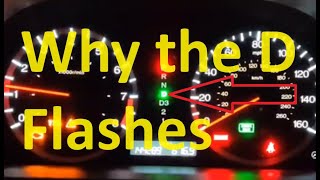
- Flashing 'D' (Drive) indicator on the dashboard, which signals a transmission-related fault. 🎬 Watch: Why your 'D' light is flashing and how to fix it.
- Vehicle will not start
- Vehicle only starts in Neutral, but not Park (or vice-versa)
- Inability to shift the gear selector out of Park
- Harsh, erratic, or delayed shifting
- Incorrect gear position shown on the instrument cluster (e.g., display is blank)
- Reverse lights do not turn on when in Reverse
- Replacing the transmission valve body when the issue is a simple external sensor or wiring fault.
- Assuming the entire transmission has failed without performing electrical diagnostics first.
- Replacing the sensor without first checking for a simpler wiring or connector issue.
Most Likely Causes

- Faulty Transmission Range Sensor 🔴 High Probability The sensor is mounted externally on the transmission, exposing it to heat, moisture, and road grime, which can lead to internal failure or corrosion over time.
How to confirm: Using a scan tool with live data, verify that the gear position reported by the sensor does not match the actual gear selector position. You can also test the sensor's internal resistance with a multimeter while shifting it manually; the resistance should change for each gear position. If continuity is present regardless of gear, the sensor is faulty.
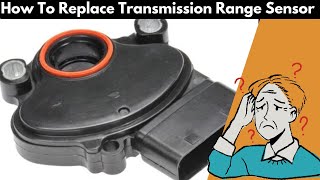
Typical fix: Replace the transmission range sensor. This involves accessing the sensor on the transmission case, disconnecting the wiring and shift linkage, unbolting the old sensor, and installing the new one. The new sensor must be correctly aligned. 🎬 See this step-by-step guide to replacing the range switch.
Est. part cost: $40-$180 - Damaged Wiring or Corroded Connector 🟡 Medium Probability The wiring harness leading to the sensor is located under the vehicle and is susceptible to damage from road debris, heat from the exhaust, and moisture causing corrosion in the connector pins.
How to confirm: Visually inspect the entire wiring harness from the sensor to the PCM for any breaks, chafing, or burnt sections. Disconnect the connector and check for green or white corrosion on the pins. Use a multimeter to check for continuity on each wire between the sensor connector and the PCM connector.
Typical fix: Repair the broken or shorted section of wire. If the connector is corroded, it may need to be cleaned with an electrical contact cleaner or replaced entirely. In some forum cases, simply cleaning and reseating the connector has resolved the issue.
Est. part cost: $5-$50 - Misadjusted Shift Linkage or Sensor ⚪ Low Probability This is most likely to occur after a recent repair, such as a transmission replacement or if the sensor itself was replaced incorrectly.
How to confirm: Check that the mechanical shift linkage is secure and not bent or damaged. Ensure the range sensor is properly aligned according to the service manual's procedure; many have specific alignment marks for the neutral position.
Typical fix: Adjust the shift linkage cable or loosen and re-align the transmission range sensor to its correct position.
Est. part cost: $0
Rare But Worth Checking
- Faulty Powertrain Control Module (PCM): This is the least likely cause. The PCM should only be considered after the sensor, wiring, and alignment have all been thoroughly tested and confirmed to be good. This is a last resort after all other possibilities are exhausted.
Diagnosis Steps

- Connect an OBD-II scanner to confirm P0705 is the active code and check for any other transmission-related codes.
- Use the scanner's live data feature to observe the 'Transmission Range' parameter. Shift the lever through P, R, N, D, and S/L and see if the data on the scanner matches the shifter's position. If it's stuck on one gear, shows an invalid reading, or doesn't change, the problem is confirmed.
- Turn the vehicle off. Locate the transmission range sensor on the transmission case. It will have a wiring connector and be connected to the shift linkage.
- Visually inspect the sensor's connector for corrosion, pushed-out pins, or moisture. Inspect the visible wiring for any signs of damage, melting, or chafing.
- If the visual inspection is inconclusive, disconnect the sensor. Use a multimeter to test for voltage and ground at the connector harness to ensure the PCM is providing power.
- Test the sensor itself. Check for continuity or resistance between the sensor's pins while having an assistant move the gear selector. The readings should change for each gear position. If they don't, or if continuity is constant, the sensor is faulty.
- If the sensor and its direct connector test good, the fault lies in the wiring between the sensor and the PCM, or, rarely, the PCM itself.
Parts You'll Likely Need

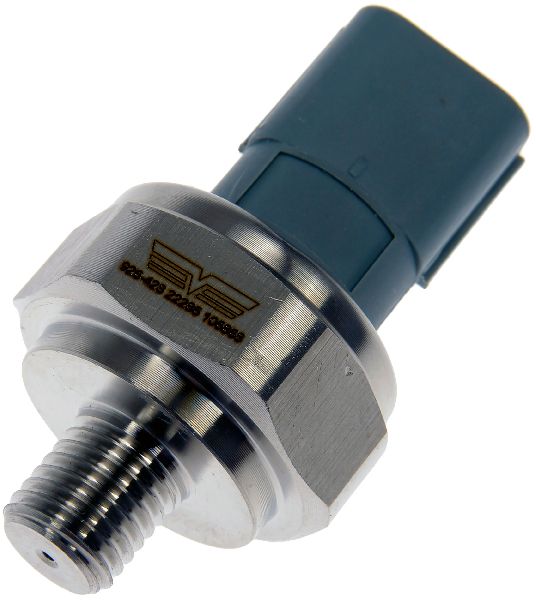
- Transmission Range Sensor
(OEM #28900-R9L-004)— This sensor is the most common failure point for the P0705 code due to its location and function. It is also referred to as a Neutral Safety Switch or Position Sensor Assembly.
Trusted brands: Honda (Genuine OEM), NTK, Duralast
OEM price range: $120-$180
Aftermarket price range: $40-$90
Related Codes That Often Appear With This One
- P0706 — P0706 indicates a 'Transmission Range Sensor Circuit Range/Performance' issue, which is a more specific type of electrical fault that can occur alongside the general malfunction code P0705.
Platform-Specific Known Issues
- Increased Failure Rate in Cold Weather: Some owners report that the symptoms of P0705, such as a flashing 'D' light and failure to engage a gear, are more likely to occur during cold starts or in winter weather. This may suggest that temperature changes exacerbate failing internal contacts or marginal wiring connections.
Mechanic-Grade Diagnostic Values
- Transmission Range Sensor Continuity Test — expected: With the sensor connector disconnected, there should be continuity between specific pairs of pins ONLY when the corresponding gear is selected. For example, on a similar Honda, continuity should exist between terminals 5 and 6 only when the lever is in Reverse (R).. Failure: Continuity exists in the wrong gear position, in multiple positions simultaneously, or not at all in the correct position. This indicates an internal failure of the sensor.
- Sensor Supply Voltage at Connector — expected: 5 to 12 volts DC with the key in the 'ON' position, engine off.. Failure: No voltage or significantly low voltage indicates a problem with the wiring from the PCM or a faulty PCM power supply, not the sensor itself.
Scan Tool Commands That Help
- Honda Diagnostic System (HDS): Live Data Monitoring (AT Switch Signals) — This is the first step in professional diagnosis. The HDS can display the ON/OFF status of each individual gear position signal (e.g., ATP, ATR, ATN, ATD) from the sensor. A technician compares this live data to a reference table while moving the shifter to see if the PCM is receiving the correct combination of signals for each gear. A mismatch conf 🎬 Watch: A professional diagnostic walkthrough for the P0705 code.irms a fault in the sensor or circuit.
- Jumper Wire & HDS: Circuit Grounding Test — If the HDS shows an incorrect 'ON' signal, this test isolates the wiring from the sensor. After disconnecting the sensor's 10-pin connector, a technician uses a jumper wire to ground the pin corresponding to the faulty signal. If the HDS display changes as expected, the sensor is faulty. If the incorrect signal persists, it indicates a short to power in the wiring harness between the connector and the PCM.
Wiring & Ground Locations
- Transmission Range Switch 10P Connector — On the transmission range sensor itself, which is mounted externally on the side of the CVT case.. This 10-pin connector is the primary access point for all electrical testing of the sensor and its circuit. Technicians disconnect it to test the sensor's internal continuity and to test the harness side for power, ground, and shorts.
- Body Ground — Any clean, unpainted metal point on the vehicle's chassis or engine block.. During diagnosis, technicians check for continuity between the ground wire at the sensor connector and a known-good body ground to verify the integrity of the ground circuit. They also check other signal wires for a short-to-ground, which would cause a constant 'ON' signal for a specific gear.
Diagnostic Flowchart
Used vs. New Parts: Buying Guide for This Vehicle
When a used part is the smart pick: For this specific repair, using a used transmission range sensor from a salvage yard is not recommended. The part is a common failure item exposed to significant heat and environmental contamination. The labor cost to access and replace the sensor often exceeds the cost of the part itself, making it financially risky to install a component with an unknown history and limited remaining lifespan.
Donor-vehicle mileage cap: roughly under 40000 miles for the part to have meaningful remaining life.
What to inspect on the donor part:
- If a used part must be considered, source it from a vehicle with the lowest possible mileage.
- Inspect the connector pins for any signs of corrosion (green or white powder) or damage.
- Ensure the plastic housing is not cracked or showing signs of heat damage.
- Verify the part number (28900-R9L-004) matches exactly.
OEM-only on this vehicle (don't cheap out):
- Transmission Range Sensor
Aftermarket brands forum-validated for this vehicle:
- NTK
Brands owners have reported issues with on this vehicle:
- Unnamed, low-cost online marketplace brands. Forum wisdom for older Hondas suggests that some cheap aftermarket sensors can cause new, different shifting problems, necessitating a second repair with a quality part.
Real Owner Stories
Aggregated from forums and TSBs cited above. Mileages and costs reflect what owners reported in those sources.
Honda Civic
Symptoms: A P0705 code and a blinking 'D' light that occurred primarily when the car was cold.
What fixed it: After replacing the sensor did not fix the issue, the recommended fix was to thoroughly check the wiring connections at the PCM and clean the sensor's electrical connector.
Source hint: Honda-Tech: P0705/blinking d light despite changing transmission range switch
2nd Gen Honda CR-V
Symptoms: Blinking 'D' light and new shifting problems (surging) after an initial repair.
What fixed it: The owner's initial issue was fixed by replacing a transmission pressure switch. However, they learned a key lesson when a cheap aftermarket sensor used for the repair caused new problems, which were only resolved by installing a genuine OEM part.
Source hint: Reddit r/crv: 2nd Gen CRV Blinking D light - The Problem, the fix, and lesson learned
Honda Pilot
Symptoms: An owner reported that within a week of driving, the check engine light came on with codes P0700, P0705, and P0740 present, all relating to the automatic transmission.
What fixed it: A transmission shop confirmed the relation of these codes to the transmission system (NHTSA ODI #11174984).
Honda Accord
Symptoms: A report describes the transmission failing due to codes P0705 and P0706, with a dealership estimate of $4800 for replacement.
What fixed it: This case highlights the potential for high repair costs if the issue is diagnosed as a complete transmission failure rather than a sensor fault (NHTSA ODI #10544028).
Documented NHTSA Reports
NHTSA ODI #11174984 describes a vehicle where the check engine light displayed codes P0700, P0705, and P0740 shortly after purchase, all in relation to the automatic transmission. Additionally, NHTSA ODI #10544028 notes a case where the transmission was reported as failing specifically due to codes P0705 and P0706.
Related OBD-II Codes
Frequently Asked Questions
Why does my CR-V seem to get the P0705 code and a flashing 'D' light more often in the winter?
My 2018 CR-V won't start and is showing code P0705. Are these two issues related?
I replaced the transmission range sensor on my CR-V, but the P0705 code came back. What should I check next?
Is it okay to use a cheaper aftermarket transmission range sensor to fix my CR-V?
Can I fix the P0705 code on my CR-V just by cleaning a connector?
My CR-V's reverse lights stopped working when the check engine light came on for P0705. Is this a symptom?
I have a 2018 Honda Civic with a P0705 code. Is this CR-V article relevant to my car?
Helpful Videos


Used OEM Parts in Stock


New Aftermarket Parts Available



The information in this article is provided for general reference and educational purposes only. Vehicle specifications, procedures, and part compatibility can vary by production date, trim level, and region. Always consult your vehicle's factory service manual and verify part numbers before purchasing or performing repairs. Safety-critical components such as airbags, seat belts, and braking systems should be installed by a qualified professional.
- Honda CR-V:
- 🎬 Helpful Videos
- 🛍️ Shop This Part
- What's Unique About the 2017-2022 Honda CR-V
- Symptoms You May Notice
- Most Likely Causes
- Rare But Worth Checking
- Diagnosis Steps
- Parts You'll Likely Need
- Related Codes That Often Appear With This One
- Platform-Specific Known Issues
- Mechanic-Grade Diagnostic Values
- Scan Tool Commands That Help
- Wiring & Ground Locations
- Diagnostic Flowchart
- Used vs. New Parts: Buying Guide for This Vehicle
- Real Owner Stories
- Honda Civic
- 2nd Gen Honda CR-V
- Honda Pilot
- Honda Accord
- Documented NHTSA Reports
- Related OBD-II Codes
- Frequently Asked Questions
- 🎟️ Get 5% Off