

OBD-II Code P0847: Transmission Fluid Pressure Sensor 'B' Circuit Low
What P0847 means, why it triggers, and how to fix it for good
- Code P0847 triggers when transmission fluid pressure sensor 'B' sends a voltage signal below 0.5V, indicating an electrical short, a dead sensor, or low hydraulic pressure.
- Check your transmission fluid first, but the most frequent fix is replacing a failed pressure switch—always use an OEM part to prevent the code from returning.
- Expect severe drivability issues like harsh shifting, a flashing 'D' light on Honda/Acura models, and the transmission locking into 3rd gear (limp mode).
- Stop driving immediately; operating in limp mode forces the transmission to slip, turning a $200 sensor replacement into a $3,500 complete transmission rebuild.
What Does P0847 Mean?

Code P0847 means your Powertrain Control Module (PCM) or Transmission Control Module (TCM) detected a critical fault. It is receiving a voltage signal from the 'B' transmission fluid pressure sensor below the manufacturer's specified range (typically under 0.5V). This sensor converts the transmission's hydraulic pressure into an electrical signal. The TCM requires this exact data to command smooth gear shifts and control the torque converter clutch.
Technical definition: The official SAE/OBD-II definition for P0847 is "Transmission Fluid Pressure Sensor/Switch 'B' Circuit Low." This means the PCM or TCM registered a voltage from transmission fluid pressure sensor 'B' below the expected threshold (typically under 0.5 volts). This points directly to a short to ground in the signal circuit, an internally shorted sensor, or an open power/ground circuit.
Can I Drive With P0847?

No — Do Not Drive. Do not drive with code P0847. Your transmission enters a protective "limp mode," locking into a single gear (often 3rd), causing poor acceleration and high engine RPMs. Continuing to drive forces the transmission to operate with incorrect hydraulic pressures, causing rapid internal wear on clutches and the valve body. This quickly turns a $200 sensor issue into a $3,500 complete transmission rebuild.
Common Causes

- Faulty Transmission Fluid Pressure Sensor/Switch 'B' (Very Common) — This is the most frequent cause. The sensor fails internally due to electrical burnout or mechanical wear, sending a permanently low voltage signal. On many Honda and Acura models, this is a known failure point caused by moisture intrusion.
- Low or Dirty Transmission Fluid (Common) — Low transmission fluid starves the pump, preventing it from generating enough hydraulic pressure for the sensor to read. Old, burnt fluid creates sludge that clogs the sensor's port, causing a false low reading.
- Damaged Wiring or Corroded Connectors (Common) — Wiring harnesses fray or melt against the exhaust, shorting the signal wire to the transmission case. Connectors also fill with moisture, creating corrosion that drops the voltage signal before it reaches the computer.
- Use of Cheap Aftermarket Sensors (Common) — Installing a low-quality aftermarket sensor guarantees the P0847 code returns within months. These sensors lack proper factory calibration. Always use an OEM (Original Equipment Manufacturer) sensor for this specific repair. 🎬 Watch: Step-by-step guide to replacing your transmission fluid pressure switch.
- Poor Electrical Grounds (Uncommon) — A loose or corroded ground wire for the transmission or PCM drops voltage across the entire circuit. This triggers a P0847 code even if the sensor and its dedicated wiring function perfectly.
- Internal Transmission Mechanical Failure (Rare) — A genuine loss of hydraulic pressure from a failing pump, a defective pressure control solenoid, or a cracked valve body triggers this code. This worst-case scenario is accompanied by severe symptoms like total loss of forward gears.
- Faulty Transmission Control Module (TCM) (Rare) — The computer reading the sensor's signal occasionally fails. Rule out the sensor, wiring, fluid, and grounds completely before replacing the TCM. A faulty TCM usually sets multiple unrelated trouble codes simultaneously.
Symptoms

- Transmission Stuck in One Gear (Limp Mode) — The computer forces the transmission into a single gear (usually 2nd or 3rd) to prevent internal damage. This causes sluggish acceleration from a stop and screaming high RPMs on the highway.
- Harsh Shifting and Transmission Slipping — The transmission slams violently into gear, hesitates before shifting, or allows the engine to free-rev between gears. Incorrect hydraulic pressure fails to hold the internal clutch packs firmly.
- Failure to Shift Into Specific Gears — Because the 'B' sensor monitors pressure for specific clutch packs (e.g., 3rd or 4th gear), the transmission refuses to shift into or out of those specific gears entirely.
- Decreased Fuel Economy — Operating in limp mode or slipping between gears forces the engine to work significantly harder, dropping fuel efficiency by 15% or more.
- Check Engine Light and Flashing 'D' Light (also visible on scanner) — The Check Engine Light illuminates immediately. On Honda and Acura vehicles, the 'D' (Drive) indicator light flashes continuously, acting as a transmission-specific warning indicator.
Diagnostic Flowchart
Tap your situation to follow the diagnostic path that matches what you're seeing on this code.
Common Fixes & Costs
- Replace Transmission Fluid Pressure Sensor/Switch — Parts: $40-$120 (OEM highly recommended), Labor: $150-$300, ~1.5 hr book time (Intermediate)
- Perform Transmission Fluid and Filter Change — Parts: $40-$100, Labor: $100-$200, ~1.5 hr book time (DIY)
- Repair Damaged Wiring Harness or Connector — Parts: $20-$50 (Replacement pigtail), Labor: $150-$300, ~2 hr book time (Intermediate)
- Clean and Tighten Electrical Grounds — Parts: $5-$20, Labor: $75-$150, ~1 hr book time (DIY)
- Replace Transmission Control Module (TCM) — Parts: $300-$800, Labor: $150-$300 (Includes programming), ~2 hr book time (Professional)
Used vs. New Parts: Buying Guide
When a used part is worth it: Never buy a used transmission pressure sensor. The labor to install it costs more than the part, and used electronic sensors have an extremely high failure rate.
Donor quality checklist:
- Verify the exact OEM part number matches; superseded numbers are common.
- Inspect the connector pins for any signs of green corrosion.
Decision logic:
- If The part is an electronic transmission sensor. → Always buy a brand new OEM part. Do not buy aftermarket, and do not buy used.
- If The wiring harness connector is melted or corroded. → Buying a used wiring pigtail from a salvage yard is acceptable and cost-effective.
Warranty tradeoff: Used parts carry a 30-day warranty. New OEM parts carry a 1-year warranty and guarantee the code won't return next week.
Worst-case if a used part fails: $300 in wasted labor charges when the used sensor fails three days after installation.
What Happens If You Wait — Timeline
- 0-1 month: Code P0847 sets. The transmission intermittently enters limp mode, locking in 3rd gear. Shifting feels unusually harsh. (MPG impact: 10%% · Added cost: $50 in wasted fuel.)
- 1-3 months: Limp mode becomes permanent. Incorrect hydraulic pressure causes clutch packs to slip, generating extreme heat and shedding friction material into the fluid. (MPG impact: 20%% · Added cost: $1,000 (Valve body replacement required due to clutch debris contamination).)
- 3-6 months: Sustained slipping destroys the clutch packs entirely. The transmission fluid turns black and smells like burnt toast. The vehicle loses all forward gears. (MPG impact: N/A% · Added cost: $3,500 (Complete transmission rebuild required).)
Cost of Not Fixing It
- Immediate (0-1 month): Vehicle enters limp mode, locking into 3rd gear. Acceleration is dangerously slow, and fuel economy drops by 15%. (Added cost: $50 in wasted fuel.)
- Short-Term (1-3 months): Incorrect hydraulic pressure causes clutch packs to slip during shifts. Friction material burns off, contaminating the fluid and overheating the transmission. (Added cost: $800 - $1,500 for a replacement valve body destroyed by clutch debris.)
- Long-Term (3+ months): Catastrophic internal transmission failure. The burnt clutches fuse together or shatter, leaving the vehicle completely undrivable. (Added cost: $3,000 - $5,000+ for a complete transmission rebuild or replacement.)
Diagnosis Steps
- Check Transmission Fluid Level and Condition
Check the transmission fluid with the engine warm and running in Park (consult your manual). The fluid must reach the 'full' mark and appear bright red/pink. Brown, black, or burnt-smelling fluid requires immediate replacement.
Tools: Rag or paper towel (Beginner) - Scan Codes and View Live Data
Connect an OBD-II scanner and pull up live data for 'Transmission Fluid Pressure Sensor B'. A healthy sensor fluctuates between 0.5V and 4.5V while driving. A reading permanently stuck below 0.5V confirms the 'Circuit Low' fault.
Tools: OBD-II Scanner (with live data) (Beginner) - Inspect the Wiring Harness and Connector
Visually trace the wiring from the sensor 'B'. Look for melted insulation, pinched wires, or exposed copper touching metal. Unplug the connector and inspect the pins for green corrosion or transmission fluid leaks.
Tools: Flashlight (Intermediate) - The Quick Unplug Test
Disconnect the sensor's electrical connector and rescan the vehicle. If the P0847 'Circuit Low' code changes to a P0848 'Circuit High' code, the wiring and TCM work perfectly. The sensor itself is dead and requires replacement.
Tools: OBD-II Scanner (Intermediate) - Test the Connector for Power and Ground
Turn the key to 'ON' (engine off). Use a multimeter to probe the unplugged connector. You must find a 5-volt reference signal from the TCM and a solid ground (less than 0.1 volts). Missing voltage indicates a broken wire or bad TCM.
Tools: Multimeter (Intermediate) - Test Sensor Internal Resistance
Set your multimeter to Ohms (Ω). Measure the resistance between the signal pin and the ground pin directly on the unplugged sensor. Compare this to the factory service manual. A reading of zero ohms means the sensor is internally shorted.
Tools: Multimeter, Service Manual (Advanced) - Perform the Jumper Wire Test
With the scanner viewing live data, use a fused jumper wire to connect the connector's signal terminal to the 5-volt reference terminal. The scanner voltage must jump to 5V. This definitively proves the wiring harness is intact.
Tools: OBD-II Scanner (with live data), Fused Jumper Wire (Advanced) - Perform a Mechanical Pressure Test
If all electrical tests pass, the transmission lacks actual hydraulic pressure. Connect a manual hydraulic gauge to the transmission's 'B' circuit test port. Compare the PSI readings at specific RPMs against the factory charts to diagnose a failing pump.
Tools: Hydraulic pressure gauge set, Service manual (Professional)
When This Code Triggers (Freeze-Frame Conditions)
- Engine Coolant Temp: 180-210°F (The code sets after the vehicle reaches full operating temperature and the fluid thins out.)
- RPM: 1500-2500 RPM (Occurs during steady throttle when a shift to a higher gear (3rd, 4th, 5th) is commanded.)
- Vehicle Speed: 35-65 mph (Triggers during steady-state highway or suburban driving when overdrive gears engage.)
- Gear Commanded: 3rd, 4th, or 5th (The TCM commands a shift utilizing the specific clutch pack monitored by sensor 'B'.)
Related Codes
- P0845 — Transmission Fluid Pressure Sensor 'A' Circuit. Indicates a failure in the primary pressure sensor circuit. Diagnosis follows the exact same steps, just on a different sensor.
- P0846 — Circuit Range/Performance. The sensor voltage fluctuates wildly instead of staying stuck low. Indicates an intermittent wiring short or a sensor failing mechanically.
- P0848 — Circuit High. The exact opposite of P0847. The voltage is stuck at 5V, indicating a completely severed wire or an unplugged sensor.
- P0700 — Transmission Control System Malfunction. A generic code that turns on the Check Engine Light to tell you the TCM has a specific code stored. Always diagnose the P0847 and ignore the P0700.
Climate & Environmental Factors
- Extreme Cold: Sub-zero temperatures thicken transmission fluid, delaying shifts and dropping hydraulic pressure enough to trigger P0847 until the vehicle reaches operating temperature. Cold also shrinks rubber seals, causing internal pressure leaks.
- High Humidity and Road Salt: Moisture and salt penetrate weathered electrical connectors, breeding green corrosion on the pins. This corrosion acts as a resistor, dropping the 5V sensor signal down to 0.2V and triggering the code.
How to Talk to a Mechanic About This Code
Say this: "I have a P0847 code for the Transmission Fluid Pressure Sensor B Circuit Low. Please check the fluid condition, then test the sensor's wiring harness for a 5V reference and ground before quoting a part replacement."
This proves you understand the diagnostic process. It forces the mechanic to test the $20 wiring harness before upselling you a $3,500 transmission rebuild.
Avoid saying:
- My transmission is slipping, just fix it.
- I think I need a new transmission.
- Just replace whatever sensor the code says.
Questions to ask before authorizing the repair:
- Did you test the sensor's electrical connector for the 5V reference signal?
- Are you installing an OEM sensor or an aftermarket brand?
- If the sensor is internal, does this quote include a new pan gasket and fresh fluid?
- Can you show me the damaged wiring or the failed sensor when I pick up the car?
Where to Take It: Dealer vs Independent vs Chain
- Dealer:
Use only if under warranty or if a specific software update is required to fix the code.
Best for: Vehicles under powertrain warranty., Complex TCM software updates required by Technical Service Bulletins (TSBs).
Downsides: Highest labor rates ($150-$250/hr)., Dealers often refuse to replace internal sensors, quoting entire valve body replacements instead. (Typical cost: +40% vs. baseline) - Independent Shop:
The best choice for external sensor replacements. Ensure they agree to use OEM parts.
Best for: Out-of-warranty vehicles., External sensor replacements (like on Hondas and Acuras).
Downsides: May lack the advanced scan tools required to read live transmission pressure data. (Typical cost: +0% vs. baseline) - Chain Shop:
AVOID for diagnosis. Only use for a fluid service if you have already ruled out electrical faults.
Best for: Simple fluid drain-and-fills.
Downsides: Technicians lack diagnostic training. High risk of being aggressively upsold to a $3,500 transmission rebuild. (Typical cost: -10% vs. baseline)
When to Walk Away From the Repair
If the repair estimate exceeds 40% of the vehicle's Kelley Blue Book private-party value, sell the vehicle as-is.
- Car worth $5000, fix is $250: Fix it. Replacing an external sensor on a Honda is cheap and restores the vehicle to perfect health.
- Car worth $3000, fix is $1200: Borderline. Paying $1,200 to drop the pan and replace an internal solenoid pack on an old Dodge Caravan is risky. Get a second opinion.
- Car worth $4000, fix is $3500: Walk away. The shop diagnosed a destroyed valve body and burnt clutches. The rebuild costs as much as the car.
What Scan Tool You Need for This Code
Minimum: A scanner capable of reading manufacturer-specific transmission codes and displaying live data PIDs.
A $20 code reader only shows 'P0847'. It cannot display the live voltage from the pressure sensor. You must see if the voltage is stuck below 0.5V to prove the sensor is dead before buying parts.
Budget: BlueDriver Pro Scan Tool (~$100) — Connects to your smartphone via Bluetooth. Reads transmission codes and displays live voltage data for the pressure sensor circuit, allowing you to confirm the fault instantly.
Mid-range: Foxwell NT510 Elite (~$150) — Provides OE-level diagnostics for specific makes. Reads live data and performs TCM resets, which are often required after replacing transmission components.
Professional: Autel MaxiCOM MK808S (~$400) — Offers full bidirectional control. You can use the scanner to manually command the transmission solenoids to fire, definitively isolating a bad sensor from a bad TCM.
Rent vs buy: Auto parts stores loan basic code readers for free, but they cannot read live transmission data. Buy the BlueDriver to properly diagnose this code at home.
How to Clear the Code After You Fix It
- Use an OBD-II scan tool to clear the P0847 code from the TCM.
- Perform a test drive that includes a full warm-up cycle and varied highway speeds.
- Re-scan the vehicle to confirm the code remains clear.
Drive cycle (~30 minutes): Cold start the engine and idle for 3 minutes. Drive in stop-and-go city traffic for 15 minutes, ensuring the transmission shifts through all gears. Drive at a steady 60 mph for 10 minutes. Park and let the vehicle cool down completely.
Readiness monitors affected: Comprehensive Component Monitor
Before emissions retest: drive at least 50 miles to fully set monitors.
Watch out for:
- Disconnecting the battery does not clear codes from modern Transmission Control Modules.
- The code returns immediately upon shifting into 3rd gear if you used a cheap aftermarket sensor.
- Failing to drive at highway speeds prevents the TCM from testing the 'B' circuit, leaving monitors 'Not Ready'.
Will This Fail Emissions / State Inspection?
Yes — this code typically fails an OBD-II emissions inspection.
- California: An illuminated Check Engine Light results in an automatic smog check failure. You must complete a full drive cycle after repair to set the Comprehensive Component Monitor to 'Ready'.
- New York: NYS inspections fail any vehicle with an active P0847 code commanding the Malfunction Indicator Lamp (MIL) on.
- Texas: In emissions-testing counties, the vehicle fails immediately if the TCM reports P0847 during the OBD-II plug-in test.
Most Commonly Affected Vehicles
- Honda Civic, Accord, Fit, CR-V, Pilot, Ridgeline (2006-2016) — Extremely common. Presents with a flashing 'D' light. The 3rd clutch pressure switch (OEM Part #28600-RPC-013) fails due to moisture intrusion. It mounts externally, making it an easy DIY fix.
- Nissan Altima, Sentra, Maxima, Rogue (2007-2015) — Often indicates a failing CVT valve body rather than a simple sensor. TSB NTB12-052 requires reprogramming the TCM to address false pressure codes.
- Dodge/Chrysler/Jeep Grand Caravan, Charger, Wrangler (62TE / 42RLE Transmissions) (2003-2014) — The sensor integrates into a large solenoid pack (OEM Part 5078708AC) bolted to the valve body inside the transmission pan. Repair costs are double due to the labor required to drop the pan.
- Acura TL, MDX, RDX (2004-2012) — Shares the exact same external pressure switch failure rate as Honda. A flashing 'D' light is the primary symptom. Do not use aftermarket sensors.
- Chevrolet Cruze, Silverado, Equinox, Malibu (2011-2019) — GM TSB PIP5697E notes that a faulty Body Control Module (BCM) falsely triggers this transmission code during engine start-up. Diagnose the BCM before replacing transmission parts.
- Ford Focus, Fusion, Escape (2012-2018) — Commonly caused by a chafed wiring harness rubbing against the transmission case, rather than a failed sensor. Inspect wiring thoroughly first.
- Hyundai Elantra, Sonata, Santa Fe (2011-2017) — Triggers aggressive limp mode, locking the vehicle in 3rd gear. Often resolved by replacing the internal fluid temperature/pressure harness.
- Subaru Outback, Forester, Impreza, Crosstrek (2010-2018) — On Lineartronic CVTs, this code points to a failing valve body solenoid. Subaru does not sell the sensor separately; the entire valve body requires replacement.
Manufacturer-Specific Notes
- Honda/Acura: A flashing 'D' (Drive) light guarantees a transmission code is stored. Honda updated the 3rd clutch pressure switch (Part #28600-RPC-013) to fix a factory design flaw. Aftermarket sensors fail within 5,000 miles.
- Nissan: On Jatco CVTs, P0847 rarely means a simple sensor swap. It usually indicates the flow control valve inside the CVT pump is worn out, requiring a valve body or full transmission replacement.
- Dodge/Chrysler/Jeep: You cannot buy the pressure sensor alone for the 62TE transmission. You must buy the entire $200 solenoid pack assembly and drop the transmission pan to install it.
- Chevrolet/GM: Electrical noise from a failing alternator or a glitchy Body Control Module (BCM) sets false P0847 codes on Chevy Cruzes. Always test battery and alternator voltage before touching the transmission.
Real Owner Stories
2010 Honda CR-V with flashing 'D' light
The 'D' indicator light started flashing, and a scan revealed code P0847. The vehicle drove normally, but the flashing light persisted.
What they tried:
- Confirmed the code with a basic OBD-II scanner.
- Purchased a new OEM 3rd clutch pressure switch for $65.
- Removed the splash shield, unbolted the old sensor, and torqued the new one to 14 ft-lbs.
- Performed a drain-and-fill with Honda DW-1 transmission fluid.
Outcome: The flashing 'D' light disappeared immediately and did not return. Total cost was $110 for the OEM sensor and fluid.
Lesson: On Hondas, a flashing 'D' light with P0847 is almost always a failed 3rd clutch pressure switch. It is a cheap, external DIY fix. Do not let a shop upsell you to a transmission rebuild.
2012 Dodge Grand Caravan, 170k miles
Check engine light illuminated with harsh shifting and no overdrive. Code P0847 was present.
What they tried:
- Performed a transmission fluid and filter change. The problem persisted.
- Paid a shop $600 to drop the pan and replace the internal solenoid pack.
Outcome: The code returned the next day. The actual problem was a corroded wire in the harness leading to the transmission, not the sensor itself.
Lesson: When a sensor lives inside the transmission pan, you must test the external wiring harness with a multimeter before paying for internal labor. Guessing gets expensive quickly.
How to Prevent This Code From Triggering
- Perform a drain-and-fill on transmission fluid (Every 30,000 to 60,000 miles.) — Clean fluid maintains correct hydraulic pressure. Old fluid creates sludge that clogs the microscopic ports on pressure sensors, causing false low readings.
- Use only OEM-specified transmission fluid (Every fluid change.) — Transmissions require specific fluid friction properties (e.g., Honda DW-1). Generic "universal" fluids alter hydraulic pressures and trigger sensor codes.
- Proactively replace pressure switches on Hondas/Acuras (Every 80,000 miles.) — Honda pressure switches are a known wear item. Replacing them proactively for $60 prevents the vehicle from unexpectedly entering limp mode on the highway.
Frequently Asked Questions
What is the most common misdiagnosis for P0847?
The most common mistake is immediately replacing the pressure sensor without performing basic checks. Always check the transmission fluid level and inspect the wiring before condemning the sensor. Avoid cheap aftermarket sensors, which frequently fail and cause the code to return.
Why is my 'D' (Drive) light flashing along with the Check Engine Light?
On Honda and Acura vehicles, a flashing 'D' light acts as a transmission-specific check engine light. It signals the Transmission Control Module (TCM) detected a critical fault. When you see this, a transmission code like P0847 is definitely stored.
Will changing the transmission fluid fix a P0847 code?
It only fixes the code if low or severely contaminated fluid caused the pressure drop. If the sensor or wiring failed, new fluid will not fix the electrical problem. However, checking the fluid is an essential, free first diagnostic step.
What does 'transmission pressure sensor B' actually do?
It monitors hydraulic fluid pressure in a specific transmission circuit, usually for engaging the 3rd or 4th gear clutch packs. The computer uses this data to confirm its shift commands execute correctly.
Can a bad battery or alternator cause code P0847?
Yes. A failing battery or alternator causes low system voltage throughout the vehicle. This forces the TCM to receive a voltage from the pressure sensor below the 0.5V threshold, triggering P0847.
Can I replace the transmission pressure sensor myself?
On many cars like the Honda Civic, the sensor sits on the outside of the transmission case, making it an easy 1-hour DIY job. On Dodge/Chrysler models, it lives inside the transmission pan on the valve body. Take internal sensor replacements to a transmission specialist.
How can I tell if the sensor is bad or if it's the wiring?
Unplug the sensor's electrical connector and rescan the vehicle. If the code changes from P0847 (circuit low) to P0848 (circuit high), the wiring and computer work perfectly. This confirms the sensor itself is dead.
Key Takeaways
- Code P0847 triggers when transmission fluid pressure sensor 'B' sends a voltage signal below 0.5V, indicating an electrical short, a dead sensor, or low hydraulic pressure.
- Check your transmission fluid first, but the most frequent fix is replacing a failed pressure switch—always use an OEM part to prevent the code from returning.
- Expect severe drivability issues like harsh shifting, a flashing 'D' light on Honda/Acura models, and the transmission locking into 3rd gear (limp mode).
- Stop driving immediately; operating in limp mode forces the transmission to slip, turning a $200 sensor replacement into a $3,500 complete transmission rebuild.
Helpful Videos
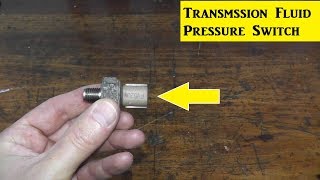

The information in this article is provided for general reference and educational purposes only. Vehicle specifications, procedures, and part compatibility can vary by production date, trim level, and region. Always consult your vehicle's factory service manual and verify part numbers before purchasing or performing repairs. Safety-critical components such as airbags, seat belts, and braking systems should be installed by a qualified professional.
- 🎬 Helpful Videos
- What Does P0847 Mean?
- Can I Drive With P0847?
- Common Causes
- Symptoms
- Diagnostic Flowchart
- Common Fixes & Costs
- Used vs. New Parts: Buying Guide
- What Happens If You Wait — Timeline
- Cost of Not Fixing It
- Diagnosis Steps
- When This Code Triggers (Freeze-Frame Conditions)
- Related Codes
- Climate & Environmental Factors
- How to Talk to a Mechanic About This Code
- Where to Take It: Dealer vs Independent vs Chain
- When to Walk Away From the Repair
- What Scan Tool You Need for This Code
- How to Clear the Code After You Fix It
- Will This Fail Emissions / State Inspection?
- Most Commonly Affected Vehicles
- Manufacturer-Specific Notes
- Real Owner Stories
- 2010 Honda CR-V with flashing 'D' light
- 2012 Dodge Grand Caravan, 170k miles
- How to Prevent This Code From Triggering
- Frequently Asked Questions
- What is the most common misdiagnosis for P0847?
- Why is my 'D' (Drive) light flashing along with the Check Engine Light?
- Will changing the transmission fluid fix a P0847 code?
- What does 'transmission pressure sensor B' actually do?
- Can a bad battery or alternator cause code P0847?
- Can I replace the transmission pressure sensor myself?
- How can I tell if the sensor is bad or if it's the wiring?
- Key Takeaways
- 🎟️ Get 5% Off