

P0172 on 2015-2019 Ford Transit: Causes and Fixes for Rich Fuel Condition
On a 2015-2019 Ford Transit, P0172 is most often caused by a water-soaked engine air filter due to a known cowl leak. Before buying any parts, check the air filter for moisture. The permanent fix requires sealing the cowl leak and installing an updated water deflector (Part No. CK4Z-6102408-AA) as detailed in Ford TSB 19-2091, a repair costing under $150 in materials.
- For a 2015-2019 Ford Transit, P0172 is most likely caused by a wet air filter due to a cowl leak. Check this first.
- The fix involves replacing the air filter AND sealing the leak to prevent the problem from returning.
- If the air filter is dry, the next most likely causes are a dirty MAF sensor or a leaking fuel injector.
- Driving for a long time with this code can lead to poor fuel mileage and may damage your catalytic converter.
- Bank 1 is on the passenger side of the engine.
What's Unique About the 2015-2019 Ford Transit
Unlike many vehicles where a P0172 code points to sensors or fuel system components, the 2015-2019 Ford Transit has a well-documented design flaw that is the most common culprit. A leak in the cowl area above the engine can allow rainwater to drip directly onto the air filter housing, saturating the air filter. This wet filter restricts airflow, creating a rich condition and triggering the code. This issue is so prevalent that Ford has issued multiple Technical Service Bulletins (TSBs), culminating in TSB 19-2091, which outlines a specific repair involving sealing a body joint and installing a water deflector. This should be the absolute first thing to check.
Symptoms You May Notice
- Poor fuel economy
- Rough or rolling idle
- Hesitation on acceleration
- Black smoke from the exhaust
- Strong smell of raw gasoline from the exhaust
- Check Engine Light is on
- Engine misfiring or stumbling
- Replacing the oxygen sensor before checking the air filter for water. The O2 sensor is often correctly reporting the rich condition caused by the restricted airflow, making it a symptom, not the root cause.
Most Likely Causes
- Water-Soaked Engine Air Filter 🔴 High Probability A known design flaw allows water to leak from the cowl area directly onto the air filter box, saturating the filter. This is addressed in Ford TSBs 19-2091, 18-2321, and 17-0014. The leak typically occurs at a body seam between the inner fender and dash panel.
How to confirm: Open the air filter housing and physically inspect the paper air filter element for any signs of moisture, water staining, or dampness. You may also see water stains or rust on top of the engine components.
Typical fix: Replace the engine air filter (Motorcraft CK4Z-9601-A) and perform the TSB repair. This involves cleaning the body joint, applying a mastic patch (Part #4L3Z-18203A16-AA) and Motorcraft TA-30 silicone sealant, and installing an updated water deflector (Part #CK4Z-6102408-AA).
Est. part cost: $20-$40 for a new air filter. The TSB repair kit (deflector, sealant, patch) can cost an additional $100-$175. - Dirty or Faulty Mass Airflow (MAF) Sensor 🟡 Medium Probability The MAF sensor can become contaminated by dirt or moisture that gets past the air filter, especially if the water intrusion issue is present. An incorrect reading causes the PCM to miscalculate the fuel needed.
How to confirm: Unplug and remove the MAF sensor from the intake tube. Inspect the small sensor wires for dirt, oil, or debris. With a scan tool, a healthy 3.5L/3.7L engine should read approximately 3.0-4.0 g/s at warm idle; significantly lower values suggest a fault.
Typical fix: First, attempt to clean the sensor with a dedicated MAF sensor cleaner spray. If cleaning does not resolve the issue, replace the sensor. Using an OEM Motorcraft part (CV2Z-9F479-A) is strongly recommended as some aftermarket sensors cause incorrect readings.
Est. part cost: $10 for cleaner, $150-$250 for a new OEM sensor. - Leaking Fuel Injector(s) 🟡 Medium Probability This is a known potential issue on many modern engines. An injector can get stuck partially open or leak, dripping excess fuel into a cylinder. This is more common on the 3.5L EcoBoost due to its high-pressure direct injection system.
How to confirm: This is more difficult to confirm. A professional may perform a fuel pressure leak-down test or an injector balance test. Pulling the spark plugs on Bank 1 (passenger side) may reveal one that is black and sooty, indicating the rich cylinder. This can also cause a misfire code (e.g., P0301, P0302, P0303) for the affected cylinder.
Typical fix: Replace the faulty fuel injector(s) on Bank 1. It is often recommended to replace all injectors on that bank at the same time, especially on higher mileage vehicles.
Est. part cost: $70-$200 per injector. - Faulty Upstream Oxygen Sensor (Bank 1, Sensor 1) ⚪ Low Probability
How to confirm: Use a scan tool to monitor the live voltage of the Bank 1 Sensor 1 O2 sensor. A healthy sensor's voltage should fluctuate rapidly between approximately 0.1V and 0.9V. If it is stuck at a high voltage (e.g., >0.8V), it may be faulty, falsely reporting a rich condition.
Typical fix: Replace the Bank 1, Sensor 1 oxygen sensor. This sensor is located on the passenger-side exhaust manifold, before the catalytic converter. An example OEM part number is Motorcraft 8F9Z-9F472-J.
Est. part cost: $50-$120 - Stuck-Open EVAP Purge Valve ⚪ Low Probability
How to confirm: The purge valve should be closed at idle. You can test it by removing it and trying to blow through it; if air passes, it's stuck open. A scan tool can also command it to open and close to check for response. A stuck valve allows unmetered fuel vapors from the charcoal canister into the intake, creating a rich mixture.
Typical fix: Replace the EVAP purge valve. An example Motorcraft part number is CX2695.
Est. part cost: $30-$60
Rare But Worth Checking
- High Fuel Pressure: A failing fuel pressure regulator on the 3.7L Ti-VCT can get stuck, causing excessive pressure in the fuel rail. On the 3.5L EcoBoost, a problem with the high-pressure fuel system can cause this code. Fuel pressure for the 3.7L should be around 58.7 to 64 PSI.
- Cracked PCV Hose/System Fault: While often causing a lean code (vacuum leak), a crack in a PCV hose after the MAF sensor can sometimes disrupt airflow readings and lead to a rich condition, as documented by some owners.
- Fuel-Contaminated Engine Oil: If the engine runs rich for an extended period, gasoline can seep past the piston rings and dilute the engine oil. These fuel vapors are then recirculated into the intake via the PCV system, creating an ongoing rich condition even after the original fault is fixed. If the oil on the dipstick smells strongly of gasoline, an oil change is necessary.
Diagnosis Steps
- Inspect the Engine Air Filter: This is the most important first step for this specific vehicle. Open the air filter housing and check for any signs of moisture or water saturation. If wet, replace it and find/seal the cowl leak per TSB 19-2091.
- Scan for Codes: Use an OBD-II scanner to confirm P0172 and check for any other related codes (like P0175, P2196, or misfire codes) that can help narrow down the diagnosis.
- Analyze Fuel Trims: Observe the Short-Term (STFT) and Long-Term (LTFT) fuel trim values for Bank 1. For a P0172 code, you will see significant negative numbers (e.g., -10% to -25%) as the PCM tries to remove fuel.
- Inspect and Clean MAF Sensor: If the air filter is dry, visually inspect the MAF sensor for contamination. Clean it with dedicated MAF sensor cleaner and re-evaluate fuel trims and the g/s reading at idle.
- Test the Upstream O2 Sensor: Monitor the Bank 1, Sensor 1 voltage with a scan tool to ensure it is fluctuating correctly and not stuck high (>0.8V).
- Check EVAP Purge Valve: Test the purge valve to ensure it is not stuck open and allowing unmetered fuel vapor into the intake at idle.
- Test Fuel System: If other tests are inconclusive, proceed to more advanced diagnostics. For the 3.7L, check fuel pressure at the rail; it should be 58.7-64 PSI. For both engines, consider a fuel injector leak-down test. This may require professional assistance.
Parts You'll Likely Need
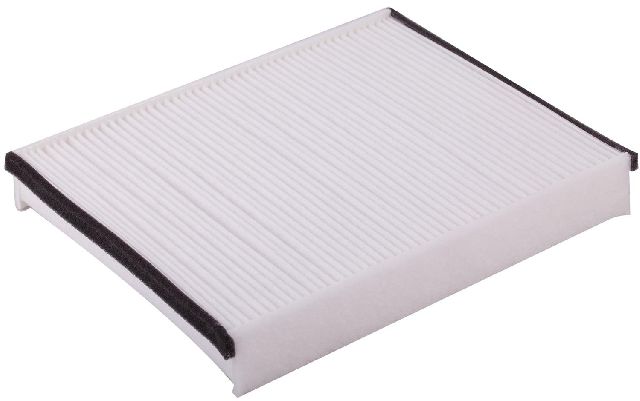
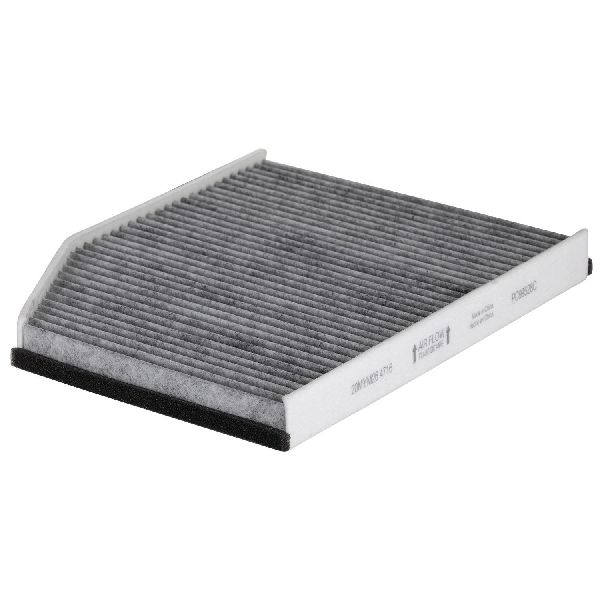
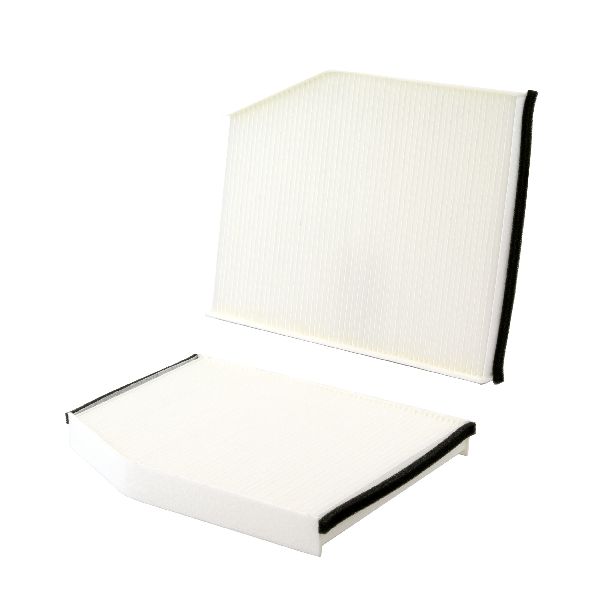
- Engine Air Filter
(OEM #CK4Z-9601-A)— This is the most common failure point due to the water intrusion issue specific to the Ford Transit. A saturated filter restricts airflow, causing the P0172 code.
Trusted brands: Motorcraft
OEM price range: $20-$35
Aftermarket price range: $15-$25 - Cowl Water Deflector Kit
Related Codes That Often Appear With This One
- P0175 — This is the 'System Too Rich' code for Bank 2 (driver's side). If both P0172 and P0175 are present, it strongly points to a problem affecting the entire engine, such as the wet air filter, a faulty MAF sensor, or a stuck EVAP purge valve.
- P2196 — This code means 'O2 Sensor Signal Stuck Rich (Bank 1 Sensor 1)'. It directly confirms the condition that P0172 is reporting, often appearing together when the rich condition is severe and persistent.
- P0301, P0302, P0303 — These are misfire codes for cylinders 1, 2, and 3 (all on Bank 1). A severely leaking fuel injector can foul the spark plug in its cylinder, causing a misfire and helping to pinpoint the faulty component.
Technical Service Bulletins (TSBs) & Recalls
- TSB 19-2091: This TSB supersedes 18-2321. It addresses water entry into the engine compartment on 2015-2018 Transits built before 24-Jul-2018, causing a wet air filter and numerous DTCs, including P0172. The fix involves sealing a body joint and installing an updated water deflector and potentially a new air cleaner cover.
- TSB 18-2321: Superseded by 19-2091, this TSB provided the initial comprehensive parts list and procedure for the cowl leak repair, including part numbers for the deflector, mastic patch, sealant, and new air filter.
- TSB 17-0014: An earlier version of the TSB for the water intrusion issue, which was later updated and replaced by TSB 18-2321 and subsequently 19-2091.
Platform-Specific Known Issues
- Cracked PCV Hose Elbow: In one documented case on a Ford Transit forum concerning a 3.5L EcoBoost with P0172 and P0175, the owner replaced MAF and MAP sensors with no success. The actual cause was found to be a small, hard-to-see crack in the plastic PCV hose elbow where it connects to the intake manifold. Replacing the PCV tube assembly resolved both rich codes.
Mechanic-Grade Diagnostic Values
- Fuel Pressure (Low-Side, 3.7L Ti-VCT) — expected: 58.7 - 64 PSI at idle. Failure: Pressure consistently above 64 PSI suggests a faulty fuel pump or regulator issue.
- Fuel Pressure (High-Side, Cranking, 3.5L EcoBoost) — expected: ~500 PSI. Failure: Significantly lower or higher pressure can indicate an issue with the high-pressure fuel pump (HPFP) or its driver.
- Fuel Pressure (High-Side, Under Load, 3.5L EcoBoost) — expected: Up to 2,000+ PSI. Failure: Pressure that is erratic, fails to build with engine load, or is excessively high points to a failing HPFP or rail pressure sensor.
- Upstream O2 Sensor Heater Resistance — expected: Typically 3 to 15 Ohms when cold.. Failure: An open circuit (infinite resistance) or a short (very low resistance) indicates a failed heater element within the sensor.
- Mass Airflow (MAF) Sensor Reading at Idle — expected: 3.0 - 7.0 g/s at warm idle, depending on engine.. Failure: Readings that are stuck, erratic, or significantly outside the expected range for the specific engine indicate a faulty sensor.
Scan Tool Commands That Help
- Ford IDS (Integrated Diagnostic System): Power Balance Test — Used to identify which specific cylinder is contributing less power, which can help pinpoint a leaking fuel injector when a P0172 is accompanied by a misfire or rough idle.
- Ford IDS (Integrated Diagnostic System): EVAPCP PID Control — Allows a technician to command the EVAP purge valve to 0% (closed) at idle to verify if it is sticking open. If closing the valve via the scan tool causes the negative fuel trims to improve, the valve is faulty.
- Ford IDS (Integrated Diagnostic System): Relative Injector Flow Test — This automated test measures the pressure drop during each injector's firing event to identify injectors that are flowing more or less fuel than the others, which is a direct way to find a leaking injector causing a P0172.
Wiring & Ground Locations
- PCM Connector Pin 60 — At the main 104-pin Powertrain Control Module connector.. This is the signal wire for the Bank 1, Sensor 1 (upstream) Oxygen Sensor (GRY/LT BLU wire). It can be back-probed here to test for voltage signal integrity directly at the PCM, ruling out harness issues.
- PCM Connector Pin 36 — At the main 104-pin Powertrain Control Module connector.. This is the MAF sensor signal return (ground) wire (TAN/LT BLU wire). Checking for good ground continuity at this pin is crucial if MAF readings are suspect.
- G104 / G105 — Typically located on the inner fender aprons in the engine compartment.. These are primary engine bay ground points. Corrosion or a loose connection at these grounds can affect various sensors, including the MAF and O2 sensors, leading to erratic readings and codes like P0172.
Real Owner Repair Stories
- Ford Transit USA Forum user (2016 Ford Transit 3.5L EcoBoost) — Check Engine Light with P0172 and P0175 (both banks rich).
❌ Tried (didn't work) Replacing MAF sensor, Replacing MAP sensors, Smoke testing for vacuum leaks (none found)
✅ What actually fixed it The user discovered a small, hard-to-see crack in the plastic PCV hose elbow where it connects to the intake manifold. Replacing the hose assembly resolved the codes.
OEM Part Supersession History
TSB 17-0014, TSB 18-2321→TSB 19-2091— Ford updated the service procedure and parts list over time to more effectively address the water intrusion issue.
Heads up: While the core issue is the same, using the latest TSB (19-2091) ensures you have the most current repair instructions and part numbers for the water deflector, seals, and potential air cleaner cover updates.
Model Year Variations Within This Range
- 2015 - July 24, 2018: Vehicles built on or before July 24, 2018, are susceptible to the cowl water leak detailed in TSB 19-2091. Vehicles built after this date have revised factory sealing and are much less likely to experience this specific cause for P0172.
Diagnostic Flowchart
Real Owner Stories
Aggregated from forums and TSBs cited above. Mileages and costs reflect what owners reported in those sources.
2016 Ford Transit
Symptoms: Dripping wet air filter after heavy rain.
What fixed it: Addressed the known water intrusion issue (cowl leak) that saturates the air filter.
Source hint: Ford Truck Enthusiasts Forum - Wet Air Filter
Ford Transit 3.5L EcoBoost
Symptoms: P0172 and P0175 codes present. Replaced MAF and MAP sensors with no success.
What fixed it: Replaced the PCV tube assembly due to a small, hard-to-see crack in the plastic PCV hose elbow connecting to the intake manifold.
Source hint: Ford Transit forum (cited in Vehicle-specific issues)
Ford Transit Connect
Symptoms: Lengthy battle with P0172 code.
What fixed it: Resolved by using OEM sensors and checking fuel pressure regulators after ruling out more common causes.
Source hint: Reddit r/Cartalk - Stumped with a P0172
Ford Transit
Symptoms: P0172 and other codes, with visible water damage to the air filter.
What fixed it: Performed the TSB cowl leak repair to stop water from saturating the air filter.
Source hint: fordtransitusaforum.com - Wet Air Filter Discussion
Related OBD-II Codes
Frequently Asked Questions
Does TSB 19-2091 apply to my Ford Transit for code P0172?
Why is my Transit's air filter soaking wet after it rains?
What parts do I need to fix the cowl leak causing my P0172 code?
I replaced the MAF and MAP sensors on my 3.5L EcoBoost but still have P0172 and P0175. What else could it be?
Should I use an aftermarket MAF sensor to fix P0172 on my 3.7L Transit?
What should the fuel pressure be on my 3.7L Transit when diagnosing P0172?
Used OEM Parts in Stock

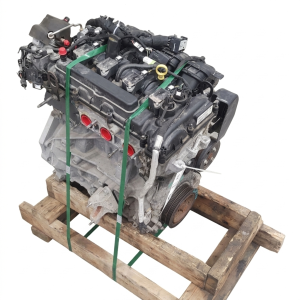

New Aftermarket Parts Available



The information in this article is provided for general reference and educational purposes only. Vehicle specifications, procedures, and part compatibility can vary by production date, trim level, and region. Always consult your vehicle's factory service manual and verify part numbers before purchasing or performing repairs. Safety-critical components such as airbags, seat belts, and braking systems should be installed by a qualified professional.
- Ford Transit:
- 🛍️ Shop This Part
- What's Unique About the 2015-2019 Ford Transit
- Symptoms You May Notice
- Most Likely Causes
- Rare But Worth Checking
- Diagnosis Steps
- Parts You'll Likely Need
- Related Codes That Often Appear With This One
- Technical Service Bulletins (TSBs) & Recalls
- Platform-Specific Known Issues
- Mechanic-Grade Diagnostic Values
- Scan Tool Commands That Help
- Wiring & Ground Locations
- Real Owner Repair Stories
- OEM Part Supersession History
- Model Year Variations Within This Range
- Diagnostic Flowchart
- Real Owner Stories
- 2016 Ford Transit
- Ford Transit 3.5L EcoBoost
- Ford Transit Connect
- Ford Transit
- Related OBD-II Codes
- Frequently Asked Questions
- 🎟️ Get 5% Off