

OBD-II Code P0303: Cylinder 3 Misfire Detected
The Ultimate Guide to Diagnosing and Fixing a Cylinder 3 Misfire
- Code P0303 isolates the misfire to cylinder 3, allowing you to focus diagnostics strictly on that specific spark plug, ignition coil, and fuel injector.
- Stop driving immediately if the check engine light flashes; this indicates raw fuel is entering the exhaust and will destroy a $2,500 catalytic converter in under 5 miles.
- Perform a free 15-minute 'swap test' by moving cylinder 3's ignition coil to cylinder 2; if the code changes to P0302, the coil is definitively bad.
- Fix 80% of P0303 codes by replacing a worn spark plug or a failed ignition coil, which typically costs between $50 and $150 to DIY.
What Does P0303 Mean?

Code P0303 means the Powertrain Control Module (PCM) detected cylinder 3 is not firing correctly. An engine cylinder needs precise fuel, timely spark, and adequate compression. A misfire occurs when one element fails, causing rough running, power loss, and increased emissions.
Technical definition: The SAE/ISO definition for P0303 is "Cylinder 3 Misfire Detected." The PCM detects variations in crankshaft rotational speed exceeding a calibrated threshold. It identifies this by monitoring for a minute deceleration in the crankshaft immediately following cylinder 3's scheduled power stroke.
Can I Drive With P0303?

Yes, But With Caution. If the check engine light is solid, drive only short distances to a repair shop. Avoid high speeds or heavy loads. If the light FLASHES, pull over immediately. A flashing light means a severe misfire is dumping unburnt fuel into the exhaust, destroying the catalytic converter in minutes. Continuing to drive turns a $100 fix into a $2,500+ repair.
Common Causes

- Bad Spark Plug (Very Common) — The cylinder 3 spark plug is worn out, oil-fouled, cracked, or improperly gapped. This is the most frequent cause, especially on vehicles overdue for maintenance.
- Faulty Ignition Coil or Wire (Very Common) — The ignition coil providing high voltage to the spark plug failed, preventing a strong spark. Valve cover oil leaks frequently contaminate the coil boot, causing premature failure.
- Defective Fuel Injector (Common) — The cylinder 3 fuel injector is clogged, dirty, or electrically failed. This starves the cylinder of fuel, causing a lean misfire.
- Vacuum Leak (Less Common) — A leaking intake manifold gasket, cracked vacuum hose near cylinder 3, or faulty PCV valve allows unmetered air into the intake, disrupting the air-fuel ratio.
- Carbon Buildup on Intake Valves (Less Common) — On Gasoline Direct Injection (GDI) engines, fuel does not wash the intake valves. Carbon deposits build up over time, restricting airflow and causing cold-start misfires.
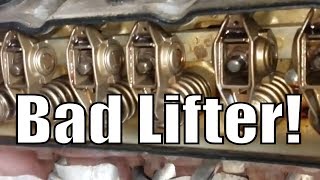
- Mechanical Engine Problem (Rare) — Low compression prevents proper combustion. Causes include worn piston rings, a burnt valve, a blown head gasket, or a collapsed lifter on cylinder 3.
- Electrical or Sensor Failure (Rare) — A failing camshaft/crankshaft sensor, damaged coil wiring harness, or corroded engine ground disrupts ignition timing or voltage.
Symptoms
- Check Engine Light is On or Flashing — A solid light indicates a stored misfire. A flashing light signals a severe misfire actively dumping unburnt fuel into the exhaust, destroying the catalytic converter.
- Rough Idle and Engine Shaking — The engine vibrates or sounds uneven, especially when stopped in park or at a red light, because cylinder 3 is not contributing power.
- Hesitation or Stumbling During Acceleration — The car feels jerky, sluggish, or lacks power when pressing the gas pedal due to the loss of engine power.
- Reduced Fuel Economy — The engine runs inefficiently, forcing it to use more gas. A misfiring cylinder lowers fuel efficiency by up to 30%.
- Smell of Unburnt Fuel from Exhaust — A strong gasoline smell from the tailpipe indicates raw fuel injected into cylinder 3 never ignited.
- Engine is Hard to Start — Severe misfires or related compression issues cause the engine to crank longer before starting.
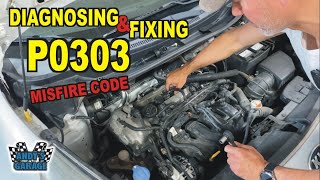
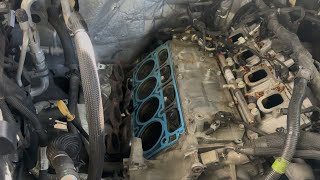
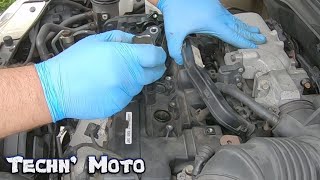
Diagnostic Flowchart 🎬 Watch: A complete step-by-step P0303 diagnostic and repair guide.

Tap your situation to follow the diagnostic path that matches what you're seeing on this code.
Common Fixes & Costs
- Replace Spark Plugs
— Parts: $10-$30, Labor: $100-$300, ~1.5 hr book time
(DIY)
Ford F-150 (2017, 2.7L EcoBoost): OEM Motorcraft SP-578 (Alt: {"brand": "NGK", "part_number": "95609"}, {"brand": "Denso", "part_number": "3472"})
Honda Odyssey (2013, 3.5L V6): OEM Honda 12290-R71-L01 (Alt: {"brand": "NGK", "part_number": "90982"}, {"brand": "Denso", "part_number": "3421"})
Chevy Silverado (2011, 5.3L V8): OEM ACDelco 41-110 (Alt: {"brand": "NGK", "part_number": "7306"}, {"brand": "Bosch", "part_number": "9602"}) - Replace Ignition Coil
— Parts: $40-$100, Labor: $50-$150, ~0.8 hr book time
(DIY)
Ford F-150 (2017, 2.7L EcoBoost): OEM Motorcraft DG-558 (Alt: {"brand": "Denso", "part_number": "673-4032"}, {"brand": "NGK", "part_number": "48953"}) - Replace Fuel Injector
— Parts: $70-$450, Labor: $150-$500, ~2.5 hr book time
(Intermediate)
Chevy Silverado (2011, 5.3L V8): OEM ACDelco 217-3428 (Alt: {"brand": "Bosch", "part_number": "62402"}) - Replace Intake Manifold Gasket — Parts: $40-$150, Labor: $250-$700, ~4.5 hr book time (Professional)
- Intake Valve Carbon Cleaning — Parts: $0, Labor: $500-$1000, ~5 hr book time (Professional)
- Repair Engine Ground Strap — Parts: $15-$50, Labor: $50-$150, ~0.8 hr book time (DIY)
DIY vs Professional
- Replace Spark Plugs — Beginner:
Tools: Spark plug socket, ratchet with extensions, torque wrench, gap gauge. - Replace Ignition Coil — Beginner:
Tools: Basic socket set or screwdriver. - Replace Fuel Injector — Beginner:
Tools: Socket set, pliers, fuel line disconnect tools, new O-rings. - Intake Valve Carbon Cleaning — Beginner:
Tools: Media blasting equipment (walnut blaster), shop air compressor, specialized port adapters.
Used vs. New Parts: Buying Guide
When a used part is worth it: For common P0303 fixes—spark plugs and ignition coils—buying used parts never makes sense. These are wear-and-tear items with finite lifespans; cost savings are minimal compared to the risk of premature failure.
Donor-vehicle mileage cap: roughly under 10000 miles for the part to have meaningful remaining life.
Donor quality checklist:
- For ignition coils, only consider used if it comes from a very low-mileage wreck and you verify the exact part number.
- Never install used spark plugs. They are cheap maintenance items.
- If buying a used intake manifold, ensure it comes from a vehicle with a known history and no signs of oil sludge.
Decision logic:
- If The part is a spark plug or ignition coil → Always buy new from an OEM or reputable aftermarket brand. The risk of a used part failing outweighs the small savings.
- If The part is an expensive electronic component like a fuel injector → A professionally remanufactured part with a warranty is the best compromise between cost and reliability.
- If The part is a major mechanical assembly (e.g., cylinder head) → A low-mileage used part is viable, but a machine shop must inspect it for flatness and cracks before installation.
Warranty tradeoff: Salvage yard parts typically carry a 30-90 day warranty. New aftermarket parts offer 1-year to lifetime warranties. New OEM parts carry a 1-2 year warranty.
Worst-case if a used part fails: $200-$500 if a used ignition coil or fuel injector fails, requiring repeat labor and a replacement part.
What Happens If You Wait — Timeline
- 0-1 month: Solid check engine light. Minor rough idle or hesitation. Misfire is intermittent. (MPG impact: 3-8%% · Added cost: $0-$50 in wasted fuel.)
- 1-3 months: Engine runs consistently rough. Light flashes during heavy acceleration. Catalytic converter begins overheating. (MPG impact: 10-20%% · Added cost: $50-$150 in wasted fuel.)
- 3-6 months: Catalytic converter substrate melts from unburnt fuel exposure. P0420 code appears. Exhaust rattles. (MPG impact: 20-30%% · Added cost: $1,200-$3,000 for new catalytic converter.)
- 6+ months: Catalytic converter completely clogs. Engine suffers severe power loss, stalls, and sustains exhaust valve or piston ring damage from extreme backpressure. (MPG impact: >30%% · Added cost: $2,500-$5,000+)
Cost of Not Fixing It
- 0-1 month: Noticeable drop in fuel economy (5-15%), rough idle, and poor acceleration. Failed emissions test is guaranteed. (Added cost: $0-$50 in wasted fuel.)
- 1-6 months: Raw fuel from the misfiring cylinder overheats and destroys the catalytic converter, a critical emissions component. This also damages downstream oxygen sensors. (Added cost: $1,200-$2,800)
- 6+ months: Continuous misfires wash cylinder walls with fuel, diluting engine oil and accelerating wear on piston rings. This causes a total loss of compression requiring an engine rebuild. (Added cost: $3,000-$8,000+)
Diagnosis Steps

- Check for TSBs and Other Codes
Scan for Technical Service Bulletins (TSBs) and other codes. Codes like P0300 (Random Misfire) or P0171 (Lean) indicate systemic issues, while a lone P0303 isolates the problem to cylinder 3.
Tools: OBD-II Scanner (Beginner) - Swap the Ignition Coil
Label and swap the cylinder 3 ignition coil with cylinder 2. Clear codes and start the engine. If the code changes to P0302, the coil is bad. If it stays P0303, the coil is good.
Tools: Socket wrench (Beginner) - Swap the Spark Plug
If the coil is good, move the cylinder 3 spark plug to cylinder 2. If the code follows the plug to P0302, replace the spark plugs. Inspect the removed plug for oil fouling or cracked porcelain.
Tools: Spark plug socket, ratchet, extension (Intermediate) - Visual Inspection
Inspect cylinder 3's coil and injector wiring. Look for broken connector tabs, frayed wires, or valve cover oil leaks pooling around the spark plug.
Tools: Flashlight (Beginner) - Test the Fuel Injector
Disconnect the injector. Use a noid light while cranking to confirm the PCM is sending a pulse signal. Then, use a multimeter to test injector resistance (typically 11-17 ohms). An 'OL' reading means the injector is dead.
Tools: Multimeter, Noid light kit (Advanced) - Check for Vacuum Leaks
With the engine running, spray short bursts of brake cleaner around the intake manifold near cylinder 3. An RPM change pinpoints a leak. A vacuum gauge should read a steady 18-22 inHg at idle.
Tools: Unlit propane torch or brake cleaner, Vacuum gauge (Intermediate) - Perform a Compression Test
Remove the cylinder 3 spark plug, install the tester, and crank the engine. Compare the PSI to adjacent cylinders. A reading 15-20% lower indicates internal mechanical failure like a burnt valve or bad piston rings.
Tools: Compression tester kit, basic hand tools (Advanced) - Analyze Live Scan Tool Data
Monitor the live 'Misfire Counter' for cylinder 3. Observe Short Term Fuel Trim (STFT). Trims above +10% indicate a lean condition (vacuum leak or clogged injector).
Tools: Professional OBD-II Scan Tool (Advanced)
When This Code Triggers (Freeze-Frame Conditions)
- Engine Coolant Temp: 180-200°F (82-93°C) (Misfires are most detectable once the engine is fully warmed up and operating in closed-loop fuel control.)
- RPM: 1500-3000 (Misfires frequently log under light to moderate load, such as steady-state cruising or gentle acceleration.)
- Engine Load: 30-60% (Corresponds to typical city or highway driving, where the engine is neither idling nor under heavy strain.)
- Vehicle Speed: 40-65 mph (Steady highway driving is the most common scenario for the PCM to run the comprehensive misfire monitor.)
Related Codes
- P0300 — Random/Multiple Cylinder Misfire. Indicates a systemic issue (vacuum leak, low fuel pressure) affecting the whole engine, rather than isolated cylinder 3 components.
- P0301, P0302, P0304, etc. — Misfires in other cylinders. Multiple codes on one engine bank point to a bad O2 sensor or clogged catalytic converter on that side.
- P0171 / P0174 — System Too Lean. Strong indicator the misfire is caused by a vacuum leak, dirty MAF sensor, or failing fuel pump, not an ignition coil.
- P0420 / P0430 — Catalyst Efficiency Below Threshold. A consequence of driving with P0303 too long. Unburnt fuel permanently damaged the catalytic converter. Fix the misfire before replacing the converter.
Climate & Environmental Factors
- Cold Weather: Cold temperatures weaken battery voltage, reduce fuel atomization, and exacerbate carbon buildup, making cold-start misfires highly common.
- High Humidity / Rain: Moisture penetrates cracked ignition coil housings or spark plug wires, causing the high-voltage spark to arc to the engine block instead of firing the plug.
- High Altitude: Lower air density requires higher voltage to create a spark, exposing underlying weaknesses in marginal ignition coils or worn spark plugs.
How to Talk to a Mechanic About This Code
Say this: "I have a P0303 code for a cylinder 3 misfire. Please start by checking the spark plug and swapping the ignition coil with another cylinder to confirm the failure before replacing parts."
Signals you understand diagnostic logic, preventing the shop from replacing unverified parts and ensuring a cost-effective repair.
Avoid saying:
- 'Just fix whatever's wrong.' (Gives a blank check).
- 'I think I need new spark plugs.' (Suggests a repair instead of describing symptoms).
Questions to ask before authorizing the repair:
- What diagnostic steps confirmed the P0303 cause?
- If the coil and plug are good, what was the cylinder 3 compression reading?
- Can you provide the old parts?
Where to Take It: Dealer vs Independent vs Chain
- Dealer:
Best for: Vehicles still under a powertrain or emissions warranty., Complex, manufacturer-specific issues like GM's AFM lifter failure or Honda's VCM problems., Newer German vehicles (BMW, Audi, VW) where specialized tools and software are required.
Downsides: Highest labor rates, often 1.5-2x more than independent shops., Aggressive upselling for full sets of parts when only one failed. (Typical cost: +50% vs. baseline) - Independent Shop:
Best fit for most situations. P0303 is a standard job for competent mechanics, avoiding high dealership overhead.
Best for: Most out-of-warranty vehicles., Common P0303 causes like spark plugs, ignition coils, and fuel injectors.
Downsides: Quality and expertise vary widely; check for ASE certifications and online reviews. (Typical cost: +0% vs. baseline) - Chain Shop:
Use with caution. Acceptable for a simple spark plug swap if you already confirmed the diagnosis. Avoid for initial troubleshooting.
Best for: Simple, clear-cut parts replacement when you already have a firm diagnosis.
Downsides: Technician skill and experience are inconsistent., High pressure for unnecessary flushes and services. (Typical cost: -10% vs. baseline)
When to Walk Away From the Repair
If the estimated repair cost exceeds 50% of the car's private-party value, seriously consider selling or trading in the vehicle.
- Car worth $4000, fix is $2500: Walk away. The repair cost is over 60% of the car's value. It is not a sound financial decision.
- Car worth $12000, fix is $800: Fix it. The repair cost is well under the 50% threshold and is a reasonable expense to keep a valuable car running well.
- Car worth $2500, fix is $1500: Walk away. At 60% of the vehicle's value, this repair is too expensive. You risk another major failure occurring shortly after this one.
What Scan Tool You Need for This Code
Minimum: Must read/clear codes, show freeze-frame data, and display live Mode $06 misfire counters for each cylinder.
A $20 reader only shows 'P0303'. It cannot display real-time misfire frequency or intermittent faults on other cylinders required for accurate diagnosis.
Budget: BlueDriver Pro (~$100) — Pairs with smartphones to view live Mode 06 misfire counts and provides repair reports based on real-world data.
Mid-range: Foxwell NT510 Elite (~$200) — Handheld unit offering manufacturer-specific diagnostics and bi-directional controls to test fuel injectors without removal.
Professional: Autel MaxiCOM MK808S (~$500) — Professional tablet with full bi-directional control, extensive live data streams, and dealership-level diagnostic capabilities.
Rent vs buy: Borrow a quality scanner for free via AutoZone's 'Loan-A-Tool' program for a one-time diagnosis. Buy only if you regularly repair cars.
How to Clear the Code After You Fix It
- Use an OBD-II scan tool to clear the P0303 code.
- Perform a complete OBD-II drive cycle to allow the vehicle's readiness monitors to run.
- Re-scan the vehicle to confirm no codes have returned.
Drive cycle (~30 minutes): A generic drive cycle includes a cold start (engine off for 6+ hours), a 2-3 minute idle, 10-15 minutes of mixed city/highway driving (including steady speeds around 55 mph), and several coast-down periods without using the brake.
Readiness monitors affected: Misfire Monitor, Catalyst Monitor, O2 Sensor Monitor, EVAP System Monitor
Before emissions retest: drive at least 100 miles to fully set monitors.
Watch out for:
- Disconnecting the battery clears the code but resets all readiness monitors to 'Not Ready', causing an automatic emissions test failure.
- The code returns immediately if the root cause of the misfire remains unfixed.
- Failing to drive the car under the right conditions after a repair leaves monitors 'Not Ready', preventing emissions testing.
Will This Fail Emissions / State Inspection?
Yes — this code typically fails an OBD-II emissions inspection.
- California: An active P0303 is an automatic failure. After repair, drive 50-100 miles over several trips to set all readiness monitors to 'Ready' before re-testing.
- New York: The NYS DMV inspection includes an OBD-II scan. P0303 causes immediate failure. The check engine light must be off with required monitors set to 'Ready'.
- Texas: In emissions-testing counties, P0303 is an automatic fail. After clearing the code, you can have at most one monitor 'Not Ready' to pass.
Most Commonly Affected Vehicles
- Ford F-150 (with EcoBoost engines) (2011-2018) — EcoBoost engines are hard on spark plugs and ignition coils. For 2011-2013 models, TSB 14-0180 addresses misfires by replacing spark plug boots. For 2018 2.7L models, TSB 18-2310 points to faulty fuel injectors.
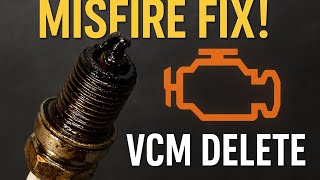
- Honda Odyssey, Pilot, Accord (with 3.5L V6 VCM) (2008-2017) — The Variable Cylinder Management (VCM) system causes oil to foul the spark plugs in deactivating cylinders (1-4), making P0303 extremely common. The long-term solution is installing an aftermarket 'VCM Muzzler'.
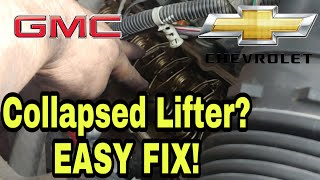
- Chevrolet/GMC Silverado, Sierra, Tahoe (with AFM) (2007-2014) — Vehicles with Active Fuel Management (AFM) are prone to lifter failure. A collapsed lifter on cylinder 3 causes a persistent P0303 code accompanied by a distinct ticking noise, requiring major mechanical repair.
- BMW Various models with N52/N54/N55 engines (2006-2016) — These models are highly susceptible to failures of both ignition coils and high-pressure fuel injectors. Using OEM or high-quality replacement parts is critical.
- Nissan Altima, Maxima, Murano (with VQ35DE engine) (2002-2009) — Ignition coil failures are very common. Cylinder 3 is on the rear bank, requiring removal of the upper intake manifold to access the coil and spark plug, increasing labor costs.
- Volkswagen/Audi Jetta, GTI, Tiguan, A4 (with 2.0T TSI/TFSI engines) (2009-2022) — These direct-injection engines suffer high rates of ignition coil failure and significant carbon buildup on intake valves. If new coils do not resolve the misfire, walnut blasting is required.
- Kia/Hyundai Forte, Soul, Elantra (with 1.6L/2.0L engines) (2017-2019) — Kia issued TSB SA321 for 2017-2018 Forte models to replace faulty ignition coils. TSB ENG208 involves an ECU software update to fix improper misfire detection logic.
- Subaru Impreza, Forester, Outback (with EJ/FB engines) (2005-2015) — These boxer engines develop P0303 from worn spark plugs or early signs of head gasket failure. A leaking head gasket causes coolant to foul the spark plug in cylinder 3.
Manufacturer-Specific Notes
- Honda: On V6 engines with Variable Cylinder Management (VCM), oil fouling of spark plugs in cylinders 1-4 is the primary cause of misfires. An aftermarket 'VCM muzzler' is a popular solution to prevent recurrence.
- General Motors (GM): On trucks and SUVs with Active Fuel Management (AFM), a P0303 code with a ticking noise points to a collapsed lifter on cylinder 3. This is a significant mechanical engine problem, not an ignition issue.
- Ford: On EcoBoost engines, misfires under load are common and often related to spark plug gap or worn plugs. TSB 14-0180 and TSB 18-2310 address specific misfire causes on these engines.
- Volkswagen/Audi: On 2.0T TSI/TFSI engines, ignition coils frequently fail. However, a common misdiagnosis is repeatedly replacing ignition parts when the true cause is carbon buildup on the intake valves, requiring walnut blasting.
Real Owner Stories
2013 Honda Odyssey with 115K miles
Check engine light came on with P0303. Engine felt slightly rough at idle.
What they tried:
- Swapped ignition coil from cylinder 3 to cylinder 1; code P0303 returned.
- Pulled the spark plug from cylinder 3 and found it was black and fouled with oil.
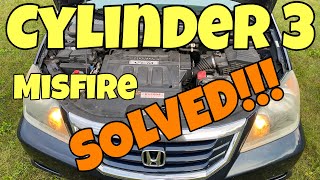
Outcome: Replaced the single fouled spark plug in cylinder 3. The code cleared. Owner installed a 'VCM Muzzler' device to prevent the VCM system from causing future plug fouling.
Lesson: On Honda V6 engines, P0301-P0304 are frequently caused by oil-fouled spark plugs due to the VCM system. Replacing the plug is a cheap fix, but the problem returns without disabling the VCM.
2015 VW GTI with 65K miles
P0303 code appeared, causing a rough idle and flashing check engine light under acceleration.
What they tried:
- Replaced all four spark plugs - no change.
- Swapped ignition coil from cylinder 3 to cylinder 4. The code changed to P0304.
Outcome: Replaced the single faulty ignition coil with a new OEM part. The misfire was resolved for $50 in parts.
Lesson: Always perform the 'swap test' with the ignition coil before buying parts. It is a free diagnostic that definitively confirms a bad coil.
2008 Chevy Silverado with 140K miles
Persistent P0303 code and a noticeable 'ticking' sound from the engine.
What they tried:
- Owner replaced the spark plug, spark plug wire, and ignition coil for cylinder 3 with no improvement.
- A compression test showed significantly lower pressure on cylinder 3.
Outcome: A mechanic diagnosed a collapsed lifter, a known issue with the Active Fuel Management (AFM) system. The repair required removing the cylinder head, costing over $2,000.
Lesson: If a P0303 code on a GM vehicle with AFM is accompanied by a distinct ticking noise, suspect a failed lifter. A mechanical compression test is necessary to confirm.
How to Prevent This Code From Triggering
- Replace spark plugs at the manufacturer's recommended interval. (Every 30,000 to 100,000 miles.) — Worn electrodes increase the gap, requiring higher voltage and stressing the ignition coil.
- Use 'Top Tier' certified gasoline. (Every fill-up.) — High detergent concentrations prevent clogged fuel injectors, avoiding lean misfires.
- Perform periodic fuel system cleaning (for GDI engines). (Every 30,000 miles.) — Removes baked-on carbon deposits from intake valves that restrict airflow and cause cold-start misfires.
- Change engine oil using the correct specification oil. (Every 5,000-7,500 miles.) — Reduces oil vapor blow-by recirculated through the PCV system, minimizing intake valve carbon buildup.
- Inspect and replace the PCV valve. (Every 50,000 miles.) — A stuck-open PCV valve creates a constant vacuum leak, leaning out the air-fuel mixture.
Frequently Asked Questions
What does the '3' in P0303 mean?
The last digit identifies the specific misfiring cylinder. P0303 means cylinder 3 is misfiring. A P0300 indicates a random or multiple cylinder misfire.
How do I find cylinder 3?
On inline 4 or 6-cylinder engines, it is the third cylinder from the front belt drive. V6 and V8 layouts vary by manufacturer. Search online for a 'cylinder firing order diagram' for your specific year, make, and model.
What are the most common misdiagnosis mistakes for a P0303?
The biggest mistake is replacing parts without performing a 'swap test' to confirm the failure. Another is repeatedly replacing ignition parts on direct-injection engines when the actual cause is carbon buildup on the intake valves.
Can a bad O2 sensor cause a P0303 code?
Highly unlikely. A faulty oxygen sensor affects an entire bank of cylinders, causing rich or lean conditions. This triggers a random misfire (P0300) or fuel trim code (P0171), not an isolated single-cylinder misfire.
Is it safe to drive with a P0303 code?
Drive short distances to a shop only if the check engine light is solid. If the light flashes, pull over immediately. A flashing light indicates raw fuel is destroying your catalytic converter.
Will a P0303 code clear itself?
No. The PCM stores the code because it detected a persistent fault. You must repair the underlying mechanical or electrical issue and manually clear the code with a scanner.
Can low oil cause a P0303 code?
Not directly, but it contributes to the problem. On engines with cylinder deactivation (like Honda VCM), oil consumption fouls the spark plugs, directly causing a P0303.
Key Takeaways
- Code P0303 isolates the misfire to cylinder 3, allowing you to focus diagnostics strictly on that specific spark plug, ignition coil, and fuel injector.
- Stop driving immediately if the check engine light flashes; this indicates raw fuel is entering the exhaust and will destroy a $2,500 catalytic converter in under 5 miles.
- Perform a free 15-minute 'swap test' by moving cylinder 3's ignition coil to cylinder 2; if the code changes to P0302, the coil is definitively bad.
- Fix 80% of P0303 codes by replacing a worn spark plug or a failed ignition coil, which typically costs between $50 and $150 to DIY.
Helpful Videos

The information in this article is provided for general reference and educational purposes only. Vehicle specifications, procedures, and part compatibility can vary by production date, trim level, and region. Always consult your vehicle's factory service manual and verify part numbers before purchasing or performing repairs. Safety-critical components such as airbags, seat belts, and braking systems should be installed by a qualified professional.
- 🎬 Helpful Videos
- What Does P0303 Mean?
- Can I Drive With P0303?
- Common Causes
- Symptoms
- Diagnostic Flowchart
- Common Fixes & Costs
- DIY vs Professional
- Used vs. New Parts: Buying Guide
- What Happens If You Wait — Timeline
- Cost of Not Fixing It
- Diagnosis Steps
- When This Code Triggers (Freeze-Frame Conditions)
- Related Codes
- Climate & Environmental Factors
- How to Talk to a Mechanic About This Code
- Where to Take It: Dealer vs Independent vs Chain
- When to Walk Away From the Repair
- What Scan Tool You Need for This Code
- How to Clear the Code After You Fix It
- Will This Fail Emissions / State Inspection?
- Most Commonly Affected Vehicles
- Manufacturer-Specific Notes
- Real Owner Stories
- 2013 Honda Odyssey with 115K miles
- 2015 VW GTI with 65K miles
- 2008 Chevy Silverado with 140K miles
- How to Prevent This Code From Triggering
- Frequently Asked Questions
- What does the '3' in P0303 mean?
- How do I find cylinder 3?
- What are the most common misdiagnosis mistakes for a P0303?
- Can a bad O2 sensor cause a P0303 code?
- Is it safe to drive with a P0303 code?
- Will a P0303 code clear itself?
- Can low oil cause a P0303 code?
- Key Takeaways
- 🎟️ Get 5% Off