

OBD-II Code P0302: Cylinder 2 Misfire Detected
The Ultimate Guide to Diagnosing and Fixing a P0302 Misfire
- P0302 indicates a misfire in cylinder #2, resulting in immediate engine vibration, power loss, and a 5-15% drop in fuel efficiency.
- Faulty ignition coils and worn spark plugs cause over 80% of P0302 codes and require less than $200 and basic hand tools to fix.
- A flashing Check Engine Light is an emergency requiring immediate engine shutdown to prevent $900+ in catalytic converter damage.
- Swap the cylinder 2 ignition coil with cylinder 1; if the code changes to P0301, replace the faulty coil to resolve the issue.
- If ignition swaps fail, test the fuel injector with a $20 noid light before paying for a $150+ professional compression test.
What Does P0302 Mean?

P0302 means the Powertrain Control Module (PCM) detected a misfire in cylinder number 2. A 'misfire' occurs when the combustion of air and fuel in that cylinder is incomplete or absent. This failure results in a noticeable loss of power, rough engine operation, and increased emissions.
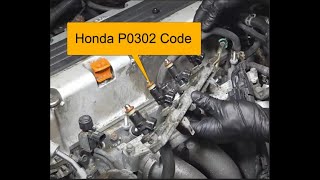
Technical definition: The SAE/ISO standard J2012 defines P0302 as 'Cylinder 2 Misfire Detected'. 🎬 Watch: A simple explanation and fix for the P0302 code. The PCM monitors crankshaft rotational speed via the crankshaft position sensor. When cylinder 2 misfires, it fails to contribute to the power stroke, causing a momentary slowdown in crankshaft speed. If this speed variation exceeds a calibrated threshold, the PCM logs P0302 and often disables the cylinder 2 fuel injector to protect the catalytic converter.
Can I Drive With P0302?

No — Do Not Drive. Driving with a P0302 code is strongly discouraged. If the Check Engine Light is steady, you can drive a very short distance to a repair shop, but you risk expensive damage. A flashing light signifies a severe misfire dumping unburned fuel into the exhaust. You must pull over and shut off the engine immediately. Continuing to drive with a flashing light destroys the catalytic converter, costing $800 to $2,500 to replace.
Common Causes

- Bad Ignition Coil or Coil Pack (Very Common) — The ignition coil transforms low battery voltage into high voltage for the spark plug. Extreme engine heat degrades coils electrically, resulting in a weak or absent spark for cylinder 2.
- Worn or Faulty Spark Plug (Very Common) — Spark plugs wear out over time, become fouled with oil or carbon, or suffer cracked ceramic insulators, preventing a strong, consistent spark.
- Faulty or Clogged Fuel Injector (Common) — The cylinder 2 fuel injector clogs with carbon debris or fails electrically. This starves the cylinder of fuel, disrupting the precise air-fuel ratio required for combustion.
- Vacuum Leak (Less Common) — A degraded intake manifold gasket, cracked vacuum hose, or faulty PCV valve introduces unmetered air near cylinder 2. This creates a lean mixture (too much air), triggering a misfire.
- Carbon Buildup on Intake Valves (Less Common) — In Gasoline Direct Injection (GDI) engines, fuel does not wash over the intake valves. Carbon deposits accumulate on the valves, restricting airflow into cylinder 2 and causing cold-start misfires.
- Low Cylinder Compression (Rare) — Internal engine damage—such as a worn piston ring, burned exhaust valve, or blown head gasket—prevents cylinder 2 from holding the pressure necessary for combustion.
- Damaged Wiring or Connectors (Rare) — The wiring harness for the cylinder 2 ignition coil or fuel injector frays, melts, or corrodes. This severs the electrical signal, causing a misfire even with functional components.
- Clogged or Faulty EGR System (Very Rare) — A stuck-open Exhaust Gas Recirculation (EGR) valve floods the cylinders with exhaust gases at idle, suffocating the combustion process.
- Faulty Powertrain Control Module (PCM) (Very Rare) — A failed driver circuit inside the engine computer stops sending signals to the cylinder 2 coil or injector. Rule out all other components before replacing the PCM.
Symptoms

- Check Engine Light is On or Flashing — A steady light confirms an active fault. A flashing light warns of a severe misfire actively destroying the catalytic converter, requiring immediate engine shutdown.
- Rough Idle and Engine Vibration — The engine shakes violently at idle or low speeds because it is unbalanced and running on one fewer cylinder.
- Loss of Power and Sluggish Acceleration — The vehicle hesitates and struggles to accelerate, especially when driving uphill or carrying heavy loads.
- Reduced Fuel Economy — The engine wastes unburned fuel, dropping efficiency by 5% to 15% and requiring more frequent gas station visits.
- Smell of Raw Fuel from Exhaust — A strong gasoline odor from the exhaust indicates unburned fuel from cylinder 2 is passing directly through the tailpipe.
- Difficulty Starting the Engine — The engine cranks longer than usual or stalls immediately after starting due to combustion instability.
Diagnostic Flowchart
Tap your situation to follow the diagnostic path that matches what you're seeing on this code.
Common Fixes & Costs
- Replace Ignition Coil — Parts: $50-$150, Labor: $100-$200, ~0.8 hr book time (DIY)
- Replace Spark Plugs — Parts: $10-$40 per plug, Labor: $100-$300, ~1.5 hr book time (DIY)
- Replace Fuel Injector — Parts: $100-$400, Labor: $200-$500, ~2.5 hr book time (Intermediate)
- Repair Vacuum Leak — Parts: $10-$60, Labor: $150-$400, ~2 hr book time (Intermediate)
- Intake Valve Carbon Cleaning — Parts: $50-$150, Labor: $500-$1000, ~4.5 hr book time (Advanced)
- Replace Head Gasket — Parts: $200-$500, Labor: $1500-$3000, ~12 hr book time (Professional Only)
DIY vs Professional
- Replace Spark Plugs — Beginner:
Tools: Spark plug socket, ratchet with extension, torque wrench, gapper tool. - Replace Ignition Coil — Beginner:
Tools: Basic socket/wrench set to remove one or two hold-down bolts. - Replace Fuel Injector — Beginner:
Tools: Socket set, wrenches, fuel line disconnect tool, torque wrench, safety glasses, gloves. - Repair Vacuum Leak — Beginner:
Tools: Screwdrivers, pliers, socket set. A smoke machine is needed for proper diagnosis. - Intake Valve Carbon Cleaning — Beginner:
Tools: Walnut shell media blaster, air compressor, shop vacuum, various intake port adapters, picks and brushes. - Replace Head Gasket — Beginner:
Tools: Extensive professional tool set, engine hoist, torque-to-yield bolt tools, precision measuring tools.
Used vs. New Parts: Buying Guide
When a used part is worth it: For a P0302, the most common fixes are spark plugs and ignition coils. Never buy used spark plugs. A used ignition coil is a budget-friendly choice for an older, high-mileage vehicle, especially if sourced from a reputable auto recycler with a warranty. It makes sense when the cost of a new OEM coil is high and the vehicle's value is low.
Donor-vehicle mileage cap: roughly under 80000 miles for the part to have meaningful remaining life.
Donor quality checklist:
- Verify the part comes with at least a 30-day warranty.
- Inspect the part for cracks, melting, or corrosion before purchase.
- Match the part number exactly; subtle differences cause compatibility issues.
Decision logic:
- If The part is a spark plug → Always buy new; they are inexpensive wear items.
- If The part is an ignition coil and the vehicle is less than 10 years old → Buy a new OEM or high-quality aftermarket part for reliability.
- If The vehicle is over 150,000 miles and the budget is very tight → A used ignition coil is a reasonable risk, but expect a shorter lifespan.
Warranty tradeoff: Used parts typically offer a 30-90 day warranty on the part only, not labor. New aftermarket parts often have a 1-year to limited lifetime warranty. New OEM parts carry a 1-2 year warranty.
Worst-case if a used part fails: $150 - $300 if a used ignition coil fails shortly after installation, requiring repeat labor costs plus the price of another part.
What Happens If You Wait — Timeline
- 0-2 weeks: Steady Check Engine Light appears. Misfire is intermittent and only felt as a slight stumble at idle or under light load. No other major symptoms. (MPG impact: 0-5%% · Added cost: $0-$25 in wasted fuel)
- 2 weeks - 3 months: Misfire becomes consistent. Rough idle and engine vibration are noticeable. Sluggish acceleration is apparent. Fuel economy loss is measurable. Unburned fuel begins to intermittently overheat the catalytic converter. (MPG impact: 5-15%% · Added cost: $50-$200 in wasted fuel and early catalyst stress)
- 3-6 months: Engine runs rough continuously. Check Engine Light flashes during acceleration. The catalytic converter's internal substrate starts to crack and degrade from sustained high temperatures, reducing its efficiency. (MPG impact: 15-25%% · Added cost: $800 - $2,500 (catalytic converter replacement is now likely required))
- 6+ months: Severe and constant misfire. Flashing Check Engine Light is common. The catalytic converter substrate melts down completely, creating an exhaust blockage that causes severe backpressure, damaging exhaust valves and O2 sensors. Raw fuel washes oil off cylinder walls, leading to scoring and loss of compression. (MPG impact: 25-40%% · Added cost: $1,500 - $5,000+ (includes catalytic converter, O2 sensors, and potential for major engine repair))
Cost of Not Fixing It
- Immediate (flashing CEL): Overheating and melting of the catalytic converter's internal substrate due to raw fuel being dumped into the exhaust. (Added cost: $900 - $3,400)
- 1-3 months: Reduced fuel economy (5-15% drop), failed emissions test, and potential damage to oxygen sensors from fuel contamination. (Added cost: $150 - $500)
- 6+ months: Severe catalytic converter damage is highly likely. Potential for internal engine damage, such as 'washing' oil from the cylinder wall with unburnt fuel, leading to scoring and loss of compression. (Added cost: $1,500 - $5,000+)
Diagnosis Steps

- Scan for Codes and Review Freeze Frame Data
Connect an OBD-II scanner to retrieve P0302 and check for pending codes (e.g., P0300, P0171, P0202). Analyze freeze frame data to see the exact RPM and engine load when the misfire occurred.
Tools: OBD-II Scanner (Beginner) - Visually Inspect the Ignition System
Inspect the cylinder 2 coil, wiring connector, and spark plug boot for melting, corrosion, or oil pooling from a leaking valve cover gasket.
Tools: Flashlight (Beginner) - Swap the Ignition Coil
Swap the ignition coil from cylinder 2 with cylinder 1. Clear codes and test drive. If the scanner now shows P0301, the ignition coil is definitively faulty.
Tools: Basic socket/wrench set (Beginner) - Swap the Spark Plug
If the misfire stays on cylinder 2, swap the spark plug to another cylinder. If the code follows the plug, replace it. Inspect the removed plug for oil fouling or cracked ceramic.
Tools: Spark plug socket, ratchet, extension (Intermediate) - Test Injector Pulse (Noid Light)
Disconnect the cylinder 2 injector connector and plug in a noid light. Start the engine. A steady flash confirms the PCM is sending the fuel pulse. No flash indicates a wiring or PCM failure.
Tools: Noid light set (Intermediate) - Measure Injector Resistance
If the noid light flashes, test the injector's internal coil. Touch multimeter probes to the injector terminals. High-impedance injectors read 11-16 Ohms. A reading of 0 (short) or OL (open) means the injector is dead.
Tools: Multimeter (Intermediate) - Perform a Cylinder Compression Test
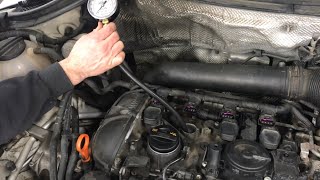
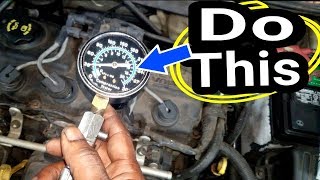
Remove the spark plug, disable fuel/ignition, and crank the engine with a compression gauge installed. A reading in cylinder 2 that is 15-20% lower than other cylinders confirms internal mechanical damage.
Tools: Compression tester gauge (Advanced) - Smoke Test for Vacuum Leaks
If lean codes (P0171/P0174) are present, force low-pressure smoke into the intake system. Smoke escaping near cylinder 2 pinpoints a leaking intake manifold gasket or cracked hose.
Tools: Automotive smoke machine (Advanced) - Analyze Live Fuel Trims
Observe Short-Term (STFT) and Long-Term Fuel Trim (LTFT) values on a live data scanner. Consistently high positive values (> +15%) confirm a lean condition, pointing to a vacuum leak or fuel delivery issue.
Tools: OBD-II Scanner with Live Data (Advanced) - Check Technical Service Bulletins (TSBs)
Search manufacturer TSBs for your specific year, make, and model. Manufacturers frequently release bulletins for known P0302 issues (like GM lifter failures) that dictate specific repair procedures.
Tools: Smartphone or Computer (Beginner)
When This Code Triggers (Freeze-Frame Conditions)
- Engine Coolant Temp: 170-200°F (Fully warmed up, indicating the misfire is not solely a cold-start issue.)
- RPM: 1500-3000 (Occurs under light to moderate load, such as steady cruising or gentle acceleration.)
- Engine Load: 30-60% (The engine is working, but not at full throttle. This is a common window for ignition or fuel weaknesses to appear.)
- Vehicle Speed: 40-65 mph (Typical highway or steady-speed driving when the misfire was definitively identified by the PCM.)
Related Codes
- P0300 — This code for 'Random/Multiple Cylinder Misfire' indicates the problem is not isolated to cylinder 2. If you see P0300 alongside P0302, investigate systemic issues like a large vacuum leak, low fuel pressure, a faulty mass airflow sensor, or a bad crankshaft position sensor, as these affect the entire engine.
- P0301, P0303, P0304, etc. — These codes point to misfires in other specific cylinders. Seeing multiple specific cylinder codes suggests a pattern. For example, P0302, P0304, and P0306 on a V6 engine indicates a problem common to one cylinder bank, like a clogged catalytic converter or a bad O2 sensor for that bank.
- P0171 / P0174 — These 'System Too Lean' codes confirm the engine is getting too much air or not enough fuel. When seen with P0302, the misfire is almost certainly caused by the lean condition. The primary suspect is a vacuum leak, especially from the intake manifold gasket near cylinder 2. A faulty MAF sensor or low fuel pressure are other possibilities.
- P0202 — This 'Injector Circuit/Open - Cylinder 2' code pinpoints the problem. It means there's an electrical fault in the cylinder 2 fuel injector circuit. Diagnosis should focus immediately on the injector's wiring, connector, and the injector itself. A noid light test is the perfect next step to verify if the PCM is sending a signal.
- P0401 — This code for 'EGR Flow Insufficient' sometimes relates to misfires. If EGR ports become clogged with carbon, it causes uneven exhaust gas distribution. If the port for cylinder 2 is particularly blocked, it alters the cylinder's operating temperature and mixture, leading to a misfire under certain conditions.
Climate & Environmental Factors
- Cold Weather: Cold temperatures expose underlying issues. A weak battery fails to provide enough voltage for a strong spark. Oil thickens, increasing strain. Ignition coils with internal resistance problems and leaky fuel injectors are more problematic when cold. Moisture condenses on ignition components, causing a weak or misdirected spark.
- High Humidity / Rain: Moisture is the enemy of the ignition system. High humidity or rain allows moisture to penetrate cracks in ignition coil housings or spark plug wires, causing the high voltage to short to the engine block instead of reaching the spark plug. Applying dielectric grease to coil boots prevents moisture intrusion.
- High Altitude: At higher altitudes, the air is less dense. This creates a naturally richer air-fuel mixture because the engine's computer injects fuel for an expected amount of air that isn't there. While modern ECUs adjust, this condition exacerbates existing problems with spark plugs or injectors, triggering a misfire code.
How to Talk to a Mechanic About This Code
Say this: "I have an active P0302 code for a cylinder 2 misfire. I've already swapped the ignition coil and spark plug with another cylinder, and the misfire stayed on cylinder 2, so we can rule those out. I'd like to schedule a diagnostic appointment to test the fuel injector and check compression."
This immediately tells the shop you've done basic, logical troubleshooting. It shows you're an informed customer, prevents them from starting with the most obvious (and already-tested) solution, and focuses their diagnostic time on the next likely causes like the fuel injector or a compression test.
Avoid saying:
- My check engine light is on, can you just fix it?
- The car is shaking, I think it needs a tune-up.
- Just do whatever you think is necessary.
Questions to ask before authorizing the repair:
- What specific diagnostic tests did you perform to confirm that [part] is the cause?
- If you're recommending a fuel injector, did you confirm it's receiving a pulse and test its resistance?
- If you're recommending a more expensive repair like a head gasket, can you show me the compression and leak-down test results?
- Is the quoted price for an OEM part or aftermarket? What is the warranty on the part and the labor?
Where to Take It: Dealer vs Independent vs Chain
- Dealer:
Best for: Vehicles still under powertrain warranty., Known manufacturer-specific issues (like GM AFM lifter failure or Chrysler head problems) covered by TSBs or warranty extensions., Complex electrical or mechanical issues that an independent shop has failed to diagnose.
Downsides: Significantly higher labor rates, often 1.5x to 2x that of an independent shop., Quick to recommend more expensive, wholesale repairs rather than targeted component fixes. (Typical cost: +50% vs. baseline) - Independent Shop:
Best fit for most cases. A P0302 is a bread-and-butter diagnostic job for any competent independent mechanic. They effectively diagnose and repair the most common causes without the high overhead of a dealership.
Best for: Most P0302 scenarios on out-of-warranty vehicles., Standard diagnostics and repairs like spark plugs, coils, fuel injectors, and vacuum leaks., Building a long-term relationship with a trusted mechanic.
Downsides: Quality and expertise vary greatly; it's crucial to find a shop with good reviews and ASE-certified technicians., Lacks access to the very latest manufacturer-specific diagnostic software for brand new models. (Typical cost: +0% vs. baseline) - Chain Shop:
Use with caution. Acceptable for a simple spark plug or ignition coil replacement if you are certain that's the problem. AVOID for initial diagnosis, as they are quick to replace parts without proper troubleshooting, costing you more in the long run.
Best for: Simple, straightforward parts replacement AFTER a confident DIY diagnosis (e.g., you've confirmed a bad coil and just want it installed)., Tire changes and oil services.
Downsides: Technician skill and experience is inconsistent., Business model encourages upselling of services you do not need (e.g., full fluid flushes when you only need a coil)., Lacks the advanced diagnostic equipment or experience for deeper mechanical issues like low compression. (Typical cost: -10% vs. baseline)
When to Walk Away From the Repair
If the estimated repair cost exceeds 50% of the car's private-party value, you should seriously consider selling or trading it in rather than repairing it.
- Car worth $4000, fix is $2200: Walk away. The repair cost is over 50% of the car's value. This is a poor investment.
- Car worth $12000, fix is $1800: Fix it. The repair cost is well below the 50% threshold and represents a good value to keep a reliable car on the road.
- Car worth $3000, fix is $1800: Walk away. A major repair on a low-value car is rarely economical. The money is better put towards a replacement vehicle.
What Scan Tool You Need for This Code
Minimum: A scanner that reads and clears codes, and critically, displays live engine data, including RPM and engine load. This is essential for observing the misfire as it happens.
A basic $20 code reader only shows you the P0302 code. It won't let you see live data, which is crucial for confirming if the misfire happens under specific conditions (like at idle vs. under load). For a slightly more advanced diagnosis, you need to see what the engine is doing in real-time.
Budget: BlueDriver Pro (~$100) — Connects to your smartphone via Bluetooth. It reads the P0302 code, provides freeze-frame data, and most importantly, graphs live data streams. It also provides access to a database of verified fixes, which is very helpful.
Mid-range: Innova 5610 (~$350) — This handheld unit offers more advanced features, including the ability to view OEM-specific live data, which includes misfire counts per cylinder. This allows you to see exactly how many times cylinder 2 is misfiring compared to others, providing definitive proof of the problem's location.
Professional: Autel MaxiCOM MK808 / MK906BT (~$500-1200) — Provides full bidirectional control. For a P0302, this is a game-changer. It allows you to perform a 'cylinder power balance test' by commanding the scanner to turn off the fuel injector to each cylinder one by one. When you turn off a good cylinder, the engine's RPM drops. When you turn off the misfiring cylinder (cylinder 2), there is little to no change in how the engine runs, confirming the fault location instantly.
Rent vs buy: For a one-time P0302 code, many auto parts stores like AutoZone read your codes for free. If you plan to do the diagnosis yourself, buying a budget pick like the BlueDriver is a worthwhile investment for future issues. Renting is not a common option for scanners.
How to Clear the Code After You Fix It
- Use an OBD-II scan tool to clear the code
- Perform a complete OBD-II drive cycle to allow readiness monitors to run
- Rescan to confirm the code has not returned
Drive cycle (~20 minutes): A general drive cycle includes: a cold start, idle for 2-3 minutes, 15 minutes of mixed city/highway driving including several minutes at a steady 55 mph, and at least one coast-down (no brake) from a higher speed.
Readiness monitors affected: Misfire Monitor, Catalyst Monitor, O2 Sensor Monitor, EVAP System Monitor
Before emissions retest: drive at least 50 miles to fully set monitors.
Watch out for:
- Simply disconnecting the battery clears the code, but it also resets all readiness monitors, guaranteeing an emissions test failure.
- The code returns within a few drive cycles if the root cause of the misfire was not correctly repaired.
- Failing to meet the specific conditions of a drive cycle (e.g., fuel level, ambient temperature) prevents certain monitors from running.
Will This Fail Emissions / State Inspection?
Yes — this code typically fails an OBD-II emissions inspection.
- California: A P0302 code is an automatic failure. All OBD readiness monitors must be set to 'Ready' for the test to proceed after a repair, which requires extensive driving.
- New York: The NYS DMV emissions inspection includes an OBD-II scan. A P0302 code results in an automatic test failure.
- Texas: In the 17 counties requiring emissions testing, a P0302 code causes the vehicle to fail the OBD portion of the inspection.
Most Commonly Affected Vehicles
- Ford F-150 (EcoBoost & 5.0L V8 Engines) (2011-2022) — On EcoBoost engines, misfires are very common due to ignition coil failure and carbon buildup on intake valves. Incorrect spark plug gapping is also a frequent issue. For 2018-2020 3.5L models, TSB 19-2384 addresses misfires under load.
- Chevrolet / GMC Silverado / Sierra 1500 (V8 Engines) (2007-2019) — Models with Active Fuel Management (AFM) or Dynamic Fuel Management (DFM) are prone to lifter failure. A collapsed lifter on cylinder 2 is a common cause of a P0302 accompanied by a distinct ticking noise, requiring significant mechanical repair. GM has issued multiple TSBs for this issue, such as PIP5150.
- Honda Civic, Accord, Odyssey, Pilot (2001-2016) — For most Honda models, the cause is overwhelmingly a failed ignition coil or a worn-out spark plug. On V6 models, 'VCM muzzler' devices are a popular aftermarket solution to prevent oil fouling of spark plugs caused by the Variable Cylinder Management (VCM) system. TSB 09-007 addresses some VCM-related misfire issues.
- Hyundai / Kia Elantra, Sonata, Optima, Sorento (GDI Engines) (2011-2021) — Ignition coil failure is a very common cause. Additionally, GDI engines in these models are susceptible to heavy carbon buildup on intake valves, which causes a persistent P0302 that is not resolved by new plugs and coils. Some engines were covered under warranty extensions for engine failures (e.g., Campaign TXXC).
- Subaru Impreza, Forester, Outback (EJ & FB series engines) (2005-2018) — Besides typical coil and plug failures, head gasket leaks are a well-documented issue on older EJ-series engines that lead to misfires. On all boxer engines, accessing cylinder 2 (front passenger side) is more labor-intensive than on inline or V-type engines.
- Volkswagen / Audi GTI, A4, Jetta (2.0T Engine) (2009-2021) — The EA888 2.0T engine is notorious for ignition coil failures, which were subject to recalls (e.g., Campaign 28F5/28F6) on earlier models. Carbon buildup on intake valves is another primary cause of P0302. Using OEM or high-quality ignition coils is highly recommended.
- Jeep / Dodge / Chrysler Wrangler, Grand Cherokee, Charger (3.6L V6) (2011-2021) — While coils and plugs are common causes, the 3.6L Pentastar V6 has a known issue with cylinder head failure, particularly on the left bank (cylinders 2, 4, 6), which causes a P0302. TSB 09-002-14 and warranty extension X56 (later updated to X69) covered this issue for some 2011-2013 models.
- Toyota Camry, RAV4 (2AZ-FE Engine) (2002-2011) — On the 2.4L 2AZ-FE engine, a P0302 is most often caused by a simple ignition coil failure. However, this engine was also known for excessive oil consumption due to piston ring design (covered under Warranty Enhancement Program ZE7), which fouls the spark plug in cylinder 2, leading to a recurring misfire.
Manufacturer-Specific Notes
- General Motors (Chevy/GMC): On V8 engines with Active Fuel Management (AFM), a P0302 code, especially when paired with a ticking or chirping noise from the engine, is a strong indicator of a collapsed AFM lifter on cylinder 2. This is a mechanical failure requiring cylinder head removal. See TSB PIP5150.
- Ford: On EcoBoost engines, do not overlook the spark plug gap. These turbocharged engines are very sensitive to an incorrect gap, which causes a misfire under boost. Always gap new plugs to the manufacturer's specification before installation. See TSB 19-2384 for some models.
- Nissan: Nissan vehicles are highly sensitive to aftermarket ignition components. To avoid a recurring P0302, technicians strongly recommend using OEM or high-quality NGK-branded ignition coils and spark plugs.
- Dodge / Chrysler / Jeep: On the 3.6L Pentastar V6, a persistent P0302 that doesn't resolve with a new plug and coil is a red flag for the known cylinder head issue. A compression test or cylinder leak-down test is necessary to confirm the health of the cylinder head. Check for coverage under warranty extension X69.
- Volkswagen / Audi: Ignition coils on the 2.0T engine have a high failure rate. Many owners proactively replace all four coils at once when one fails to prevent future breakdowns. Check for oil in the spark plug wells, as a leaking spark plug tube seal causes the coil boot to swell and fail. Check for recall campaigns like 28F5/28F6.
Real Owner Stories
2012 Honda Accord 4-Cyl with P0302
While driving, the engine light started flashing and RPMs dropped to 2500. After pulling over and restarting, the issue seemed to resolve but the check engine light remained on.
What they tried:
- Replaced all 4 spark plugs.
- Replaced the ignition coil on cylinder 2.
- Swapped ignition coils between cylinder 2 and 3 to re-verify; the code did not move to P0303.
Outcome: The code remained P0302, indicating the problem was not the spark plug or coil. The next recommended steps were to check the fuel system (clogged injector) or perform a compression and leak-down test to check for mechanical engine problems.
Lesson: If replacing the most common parts (plugs and coils) doesn't fix the isolated misfire, the next step is to investigate the fuel injector for that cylinder or check for mechanical issues like low compression.
2005 Lexus ES 330 with 105k miles
Check engine light for P0302 cycled on and off unpredictably. The owner did not perceive any rough running or major performance issues, only slightly higher fuel consumption.
What they tried:
- A mechanic performed compression and smoke leak tests, which found no issues.
- The fuel injector for cylinder 2 was replaced. The light returned.
- The shop suspected a faulty new injector and replaced it again under warranty. The light returned.
- The throttle control system was cleared. The light returned.
Outcome: After multiple failed attempts at a fix, the owner was left with an unresolved, intermittent P0302 code, with the only remaining option being a more expensive diagnostic session at a dealership.
Lesson: Intermittent misfires without clear symptoms are very difficult to diagnose. Throwing parts at the problem, even logical ones like a fuel injector, is costly and ineffective if the root cause is more obscure (e.g., a wiring issue, or a subtle mechanical problem).
2005 Nissan Altima 4-Cyl with 140k miles
Car started with a rough idle and shaking, which progressed to a flashing check engine light and a chemical burning smell during stop-and-go traffic. Code was P0302.
What they tried:
- Replaced all 4 spark plugs, which were noted to be very worn.
- Swapped the ignition coil from cylinder 1 to cylinder 2. The P0302 code remained.
- Tried a brand new ignition coil in cylinder 2. The P0302 code still remained.
Outcome: Since the ignition components were ruled out, a forum member suggested a compression test. The symptoms (flashing light, burning smell) pointed towards a more serious issue, possibly a damaged exhaust valve on cylinder 2 caused by a failing catalytic converter.
Lesson: A flashing check engine light accompanied by a burning smell is a critical warning. When basic ignition part swaps don't solve the misfire, a mechanical compression test is essential to check for internal engine damage before proceeding further.
2004 350Z with P0302
Bought the car with a known misfire issue. The engine had an aftermarket high-flow catback exhaust.
What they tried:
- Swapped the ignition coil and spark plug between cylinders 2 and 4. The code stayed on cylinder 2 (P0302).
- Performed a compression test on the cold engine. Results were: 165, 160, 160, 165, 160, 175 psi.
Outcome: The compression on cylinder 2 (160 psi) was slightly lower than others but not dramatically so. The owner noted carbon build-up on the new plugs, pointing towards a potential fuel or oil control issue. The next step would be a leak-down test to pinpoint the source of the slight compression loss.
Lesson: Even if a compression test doesn't show a catastrophic failure, small variances are significant. When plugs and coils are confirmed good, a leak-down test is the superior diagnostic tool to determine if the issue is piston rings, intake valves, or exhaust valves.
How to Prevent This Code From Triggering
- Use Top Tier certified gasoline (e.g., Shell V-Power, Chevron with Techron, Exxon Synergy). (Every fill-up) — These fuels contain a higher concentration of detergent additives that actively clean fuel injectors and prevent carbon deposit formation, ensuring a proper fuel spray pattern.
- Add a bottle of fuel system cleaner with Polyetheramine (PEA). (Every 3,000-5,000 miles) — PEA is a potent chemical that dissolves existing carbon deposits on fuel injectors, intake valves, and in the combustion chamber, which is especially important for GDI engines.
- Change spark plugs at the manufacturer's recommended interval. (Typically every 60,000 to 100,000 miles) — Worn spark plug electrodes create a wider gap, requiring higher voltage from the ignition coil. This strains the coil, leading to premature failure and a weak spark that causes misfires.
- Perform regular oil changes with the manufacturer-specified oil type. (Every 5,000 to 7,500 miles) — High-quality oil contains detergents that keep engine internals clean and provides proper lubrication for components like VVT systems and lifters, whose failure leads to misfires.
- Occasionally clean ignition coil electrical connectors. (During spark plug changes) — Corrosion builds up on the low-voltage connectors to the ignition coils, creating high resistance and weakening the coil's output. Cleaning them with a contact cleaner ensures a solid connection.
- Avoid long periods of engine idling. (Daily habit) — Extended idling, especially in GDI engines, prevents the engine from reaching optimal temperature, leading to incomplete combustion and accelerating carbon buildup on injector tips and intake valves.
Frequently Asked Questions
What does the '2' in P0302 mean?
The '2' identifies cylinder number 2 as the misfire location based on physical position, not firing order. You must consult a vehicle-specific diagram to locate cylinder #2, as its position varies by engine type.
Is it safe to drive with a P0302 code?
No, driving is strongly discouraged. A flashing check engine light means you must stop immediately to prevent destroying your catalytic converter. Even with a steady light, continued driving causes engine damage and unsafe stalling.
Can a P0302 code clear itself?
It is highly unlikely to clear permanently. The code clears temporarily if the misfire was an isolated event, but usually indicates a hard component failure. The light returns until the underlying mechanical or electrical problem is fixed.
I changed the spark plug and coil, but P0302 came back. What's next?
If the plug and coil are good, investigate the fuel system and engine mechanics. The most likely culprits are a clogged fuel injector, a vacuum leak near cylinder 2, or low cylinder compression.
What is the most common misdiagnosis for a P0302?
The most common mistake is replacing parts without confirming the diagnosis, like buying a spark plug when the coil failed. The 'coil swap' test is a crucial step to avoid buying unnecessary parts. Always verify the fuel injector receives a pulse before replacing it.
How much does it cost to diagnose a P0302 code?
Most auto repair shops charge a diagnostic fee between $120 and $200. This covers the technician's time to perform systematic tests and pinpoint the exact cause. This investment prevents the higher cost of replacing incorrect parts.
Can a bad O2 sensor cause a P0302 code?
A faulty oxygen sensor commands an improper air-fuel mixture across an entire engine bank, not just one cylinder. This typically sets a P0300 random misfire code or lean/rich codes, rather than an isolated P0302. It is rarely the direct cause of a single-cylinder misfire.
How do I find cylinder 2 on my engine?
The location of cylinder 2 varies by engine configuration. On most inline 4-cylinder engines, it is the second cylinder from the front drive belt. On V-type engines, numbering differs by manufacturer, requiring a vehicle-specific diagram to locate it accurately.
Key Takeaways
- P0302 indicates a misfire in cylinder #2, resulting in immediate engine vibration, power loss, and a 5-15% drop in fuel efficiency.
- Faulty ignition coils and worn spark plugs cause over 80% of P0302 codes and require less than $200 and basic hand tools to fix.
- A flashing Check Engine Light is an emergency requiring immediate engine shutdown to prevent $900+ in catalytic converter damage.
- Swap the cylinder 2 ignition coil with cylinder 1; if the code changes to P0301, replace the faulty coil to resolve the issue.
- If ignition swaps fail, test the fuel injector with a $20 noid light before paying for a $150+ professional compression test.
Helpful Videos


The information in this article is provided for general reference and educational purposes only. Vehicle specifications, procedures, and part compatibility can vary by production date, trim level, and region. Always consult your vehicle's factory service manual and verify part numbers before purchasing or performing repairs. Safety-critical components such as airbags, seat belts, and braking systems should be installed by a qualified professional.
- 🎬 Helpful Videos
- What Does P0302 Mean?
- Can I Drive With P0302?
- Common Causes
- Symptoms
- Diagnostic Flowchart
- Common Fixes & Costs
- DIY vs Professional
- Used vs. New Parts: Buying Guide
- What Happens If You Wait — Timeline
- Cost of Not Fixing It
- Diagnosis Steps
- When This Code Triggers (Freeze-Frame Conditions)
- Related Codes
- Climate & Environmental Factors
- How to Talk to a Mechanic About This Code
- Where to Take It: Dealer vs Independent vs Chain
- When to Walk Away From the Repair
- What Scan Tool You Need for This Code
- How to Clear the Code After You Fix It
- Will This Fail Emissions / State Inspection?
- Most Commonly Affected Vehicles
- Manufacturer-Specific Notes
- Real Owner Stories
- 2012 Honda Accord 4-Cyl with P0302
- 2005 Lexus ES 330 with 105k miles
- 2005 Nissan Altima 4-Cyl with 140k miles
- 2004 350Z with P0302
- How to Prevent This Code From Triggering
- Frequently Asked Questions
- What does the '2' in P0302 mean?
- Is it safe to drive with a P0302 code?
- Can a P0302 code clear itself?
- I changed the spark plug and coil, but P0302 came back. What's next?
- What is the most common misdiagnosis for a P0302?
- How much does it cost to diagnose a P0302 code?
- Can a bad O2 sensor cause a P0302 code?
- How do I find cylinder 2 on my engine?
- Key Takeaways
- 🎟️ Get 5% Off