

OBD-II Code P0301: Cylinder 1 Misfire Detected
The Ultimate 2026 Guide to Causes, Symptoms, and Fixes for P0301
- A flashing Check Engine Light with a P0301 code means raw fuel is actively destroying your catalytic converter; pull over immediately to prevent a $2,500 repair.
- Swap the cylinder 1 ignition coil with cylinder 2 before buying parts; if the code changes to P0302, you have definitively diagnosed a bad $50 coil.
- Replace spark plugs every 60,000 to 100,000 miles, as worn electrodes are the leading cause of single-cylinder misfires.
- If new spark plugs and coils do not resolve the P0301, test engine compression; readings below 120 PSI dictate major mechanical repairs rather than simple part swaps.
What Does P0301 Mean?

Code P0301 means the Powertrain Control Module (PCM) detects cylinder 1 failing to combust its fuel-air mixture. This failed explosion causes a rough-running engine, power loss, increased emissions, and a 5-15% drop in fuel economy.
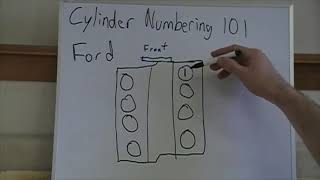
Technical definition: The SAE/OBD-II definition is 🎬 See how to identify which cylinder is number one. "Cylinder 1 Misfire Detected." The PCM monitors crankshaft rotational speed. When cylinder 1 misfires, it fails to contribute power, causing a momentary crankshaft slowdown. If this fluctuation exceeds a calibrated threshold, the PCM logs P0301.
Can I Drive With P0301?

no_unless_emergency. Do not drive with a P0301 code. If the check engine light is solid, drive less than 10 miles directly to a repair shop. If the light is flashing, pull over and shut off the engine immediately. A flashing light means raw fuel is dumping into the exhaust, destroying the catalytic converter in minutes and turning a $100 fix into a $2,500 repair.
Common Causes

- Worn or Faulty Spark Plug (Very Common) — Spark plugs wear out, foul with carbon, or lose their gap, preventing the strong spark needed 🎬 Watch: How to fix P0301 by replacing plugs and wires. for combustion in cylinder 1.
- Bad Ignition Coil or Coil Pack (Very Common) — The ignition coil transforms low battery voltage into high spark plug voltage. A failing coil delivers a weak or dead spark to cylinder 1.
- Leaking Valve Cover Gasket or Tube Seal (Common) — Degraded gaskets allow engine oil to leak into the spark plug well. This oil saturates the ignition coil boot and shorts out the spark plug.
- Faulty or Clogged Fuel Injector (Common) — A dirty injector fails to deliver the precise fuel volume required, leaning out the air-fuel ratio and causing a misfire.
- Vacuum Leak (Less Common) — A cracked vacuum hose or leaking intake manifold gasket near cylinder 1 allows unmetered air into the engine, causing a lean misfire.
- Carbon Buildup on Intake Valves (Less Common) — Prevalent on direct-injection (GDI) engines. Carbon deposits restrict airflow to cylinder 1, causing a misfire that ignition parts cannot fix.
- Low Engine Compression (Rare) — Indicates severe mechanical failure, such as a worn piston ring, burnt valve, or blown head gasket, preventing cylinder 1 from building combustion pressure.
- Clogged Catalytic Converter (Rare) — Excessive exhaust backpressure prevents cylinder 1 from expelling gases efficiently. This is usually the result of a previously ignored misfire.
Symptoms
- Check Engine Light On or Flashing — A solid light is a standard warning. A FLASHING light indicates a severe misfire actively destroying the catalytic converter. Stop driving immediately.
- Rough Idle and Engine Vibration — The engine runs unevenly, causing a noticeable shake most prominent at stops or low speeds.
- Loss of Power and Hesitation — The vehicle feels sluggish and jerks during acceleration because cylinder 1 is dead.
- Smell of Unburned Fuel — Raw gasoline smell from the exhaust pipe, as unburned fuel passes directly through the system.
Diagnostic Flowchart
Tap your situation to follow the diagnostic path that matches what you're seeing on this code.
Common Fixes & Costs
- Replace Ignition Coil — Parts: $40-$120, Labor: $80-$150, ~0.5 hr book time (DIY)
- Replace Spark Plugs — Parts: $20-$80, Labor: $100-$250, ~1.2 hr book time (DIY)
- Replace Valve Cover Gasket & Seals — Parts: $30-$100, Labor: $200-$500, ~2.2 hr book time (Intermediate)
- Replace Fuel Injector — Parts: $100-$250, Labor: $200-$500, ~2.5 hr book time (Intermediate)
- Intake Valve Carbon Cleaning (GDI Engines) — Parts: $20-$50, Labor: $500-$1,200, ~4.5 hr book time (Advanced)
DIY vs Professional
- Replace Spark Plugs / Ignition Coil — Beginner: Yes
Tools: Socket set, spark plug socket, torque wrench, dielectric grease. - Replace Fuel Injector — Beginner: No
Tools: Socket set, fuel line disconnect tools, new O-rings. - Replace Valve Cover Gasket — Beginner: No
Tools: Socket set, torque wrench, gasket scraper, RTV sealant.
Used vs. New Parts: Buying Guide
When a used part is worth it: Never buy used spark plugs. A used OEM ignition coil from a reputable salvage yard is a budget-friendly option for older vehicles, but carries a high failure risk.
Donor-vehicle mileage cap: roughly under 60000 miles for the part to have meaningful remaining life.
Donor quality checklist:
- Verify the donor vehicle was not scrapped for engine-related failure.
- Match the part number exactly; visual similarities do not guarantee compatibility.
- Avoid parts with heat damage, melting, or corrosion.
Decision logic:
- If The part is a spark plug → Always buy new. Cost savings are negligible and risk is absolute.
- If The part is an ignition coil and the vehicle is over 100K miles → Buy new aftermarket or OEM for reliability.
- If The part is an ignition coil and budget is the top priority → A used OEM coil is preferable to a cheap, non-reputable aftermarket coil.
Warranty tradeoff: Used parts carry a 30-90 day warranty. New aftermarket parts offer 1-year to lifetime warranties. New OEM parts offer 12-24 month warranties.
Worst-case if a used part fails: $150-$300 for repeat labor and replacement if a used coil fails.
What Happens If You Wait — Timeline
- 0-1 week: Solid Check Engine Light. Slight roughness at idle. No major drivability issues. (MPG impact: 0-5%% · Added cost: $0)
- 1 week - 2 months: Engine vibration increases. Noticeable hesitation during acceleration. Fuel economy drops. (MPG impact: 5-10%% · Added cost: $25-75 in wasted fuel)
- 2-4 months: Check Engine Light flashes under load. Unburned fuel overheats the catalytic converter. Sulfur smell present. (MPG impact: 10-20%% · Added cost: $1,200 - $2,800 (Catalytic converter requires replacement))
- 4+ months: Catalytic converter melts internally, clogging the exhaust. Severe power loss, stalling, and burnt exhaust valves. (MPG impact: 20-50%+% · Added cost: $2,500 - $8,000+)
Cost of Not Fixing It
- Immediate (0-1 month): Reduced fuel economy (5-15% drop), rough engine performance, and failed emissions tests. (Added cost: $25 - $75 in wasted fuel)
- Short Term (1-6 months): Overheating and destruction of the catalytic converter due to unburned fuel igniting in the exhaust. (Added cost: $1,200 - $2,800)
- Long Term (6+ months): Internal engine damage, including washed-out cylinder walls, fouled oxygen sensors, and burnt exhaust valves. (Added cost: $2,500 - $8,000+)
Diagnosis Steps

- Read Codes and Freeze Frame Data
Use an OBD-II scanner to confirm P0301 and check for systemic codes (P0300, P0171). Analyze freeze frame data to see engine RPM and load when the misfire occurred.
Tools: OBD-II Scanner (Beginner) - Test the Ignition System (The 'Swap Trick')
Swap the ignition coil from cylinder 1 with cylinder 2. Clear codes and drive. If the code changes to P0302, the coil is bad. If it remains P0301, the coil is good. This is the most critical diagnostic step.
Tools: Socket wrench (Beginner) - Inspect the Spark Plug and Well
Remove the cylinder 1 spark plug. Inspect for a worn electrode, carbon fouling, or a cracked insulator. Check the spark plug well for pooled oil, which indicates a leaking valve cover gasket.
Tools: Socket wrench, spark plug socket, flashlight (Beginner) - Test the Fuel Injector
Listen to the cylinder 1 injector with a mechanic's stethoscope; you should hear a rhythmic clicking. To test the electrical circuit, unplug the injector and insert a noid light while cranking. A flashing light confirms the PCM is sending the signal.
Tools: Mechanic's stethoscope, Noid light set (Intermediate) - Check for Vacuum Leaks
Spray short bursts of carburetor cleaner around the intake manifold gasket near cylinder 1 while the engine idles. If the idle speed surges or stumbles, you found the vacuum leak.
Tools: Carburetor cleaner (Intermediate) - PRO TIP: Analyze Live Fuel Trim Data
View Short-Term (STFT) and Long-Term Fuel Trim (LTFT) on a scanner. Total trim >+10% suggests the engine is adding fuel to compensate for a vacuum leak. If trims normalize at 2500 RPM, a vacuum leak is confirmed.
Tools: Advanced OBD-II Scanner with Live Data (Advanced) - Perform an Engine Compression Test
If ignition and fuel pass, measure cylinder 1 pressure. Healthy engines read 125-160 PSI. Cylinder 1 must be within 15% of the others. Readings below 120 PSI dictate major mechanical repairs. Take the vehicle to a shop if you lack a compression gauge.
Tools: Compression gauge (Advanced)
When This Code Triggers (Freeze-Frame Conditions)
- Engine Coolant Temp: 180-200°F (82-93°C) (Misfires are most frequently detected once the engine is fully warmed up and operating in closed loop.)
- RPM: 1500-3000 (The code triggers under light to moderate load, such as steady cruising or gentle acceleration.)
- Engine Load: 30-70% (Indicates the engine is working but not at full throttle, the optimal window for misfire detection.)
- Vehicle Speed: 40-70 mph (Registered at steady highway speeds when the system is stable enough to detect minor crankshaft speed fluctuations.)
Related Codes
- P0300 — Random/Multiple Cylinder Misfire. Indicates a systemic issue (fuel pressure, vacuum leak) rather than an isolated cylinder 1 failure.
- P0420 — Catalyst Efficiency Below Threshold. This is the expensive result of ignoring P0301. Unburned fuel has melted the catalytic converter.
- P0171 — System Too Lean. Indicates a vacuum leak or clogged injector on Bank 1, directly causing the P0301 misfire.
Climate & Environmental Factors
- Cold Weather: Thickens engine oil and reduces battery voltage, causing temporary misfires on cold starts if spark plugs or coils are marginal.
- High Humidity: Condensation on aging ignition coils provides a path for the spark to arc to the engine block instead of firing the plug.
- Intercooler Condensation (Ford EcoBoost): Humid climates cause water to pool in the intercooler. Hard acceleration ingests this water, causing a violent misfire and triggering P0301.
How to Talk to a Mechanic About This Code
Say this: "I have a P0301 code. Please start by inspecting the spark plug and swapping the ignition coil from cylinder 1 to another cylinder to see if the fault follows. I want to confirm the specific cause before authorizing parts replacement."
Directs the shop to perform a specific, efficient test rather than starting with expensive diagnostics, preventing them from replacing parts based on a guess.
Avoid saying:
- 'Just fix whatever's wrong'
- 'My check engine light is on, can you look at it?'
- 'Whatever you recommend'
Questions to ask before authorizing the repair:
- Did the misfire code move when you swapped the coil?
- If it wasn't the coil or plug, what were the compression test results for cylinder 1?
- Can you show me the old part that you are replacing?
Where to Take It: Dealer vs Independent vs Chain
- Dealer:
Best for: Vehicles under powertrain warranty, Known manufacturer quirks (GM AFM lifters, VW carbon buildup), Complex electrical issues requiring PCM reflashes
Downsides: Labor rates are 50-100% higher than independent shops., Tendency to replace whole assemblies instead of components. (Typical cost: +50% vs. baseline) - Independent Shop:
Best fit. P0301 is a standard job for independent shops. They diagnose and fix common causes effectively at a reasonable cost.
Best for: Out-of-warranty vehicles., Common codes like P0301.
Downsides: Quality varies; vetting via reviews and ASE certifications is required. (Typical cost: +0% vs. baseline) - Chain Shop:
Avoid for initial diagnosis. Acceptable only for a straightforward spark plug replacement if you are 100% certain of the diagnosis.
Best for: Tires, batteries, and oil changes.
Downsides: Technician skill is inconsistent., High pressure to upsell unnecessary services. (Typical cost: -10% vs. baseline)
When to Walk Away From the Repair
If the estimated repair cost exceeds 50% of the car's private-party value, do not fix it. For cars over 150,000 miles, lower this threshold to 40%.
- Car worth $5000, fix is $250: Fix it. A coil or spark plug replacement is routine and well below the threshold.
- Car worth $5000, fix is $1200: Borderline. If this is for a GDI carbon cleaning service that restores performance, it is worth it. Get a second opinion.
- Car worth $3000, fix is $2500: Walk away. A major mechanical repair costing 83% of the car's value is not economically sensible.
What Scan Tool You Need for This Code

Minimum: A scanner that reads codes, shows Freeze Frame data, and displays live data streams (engine RPM and misfire counters).
A $20 reader only shows 'P0301'. It cannot show real-time misfires or confirm if the misfire moved after swapping a coil. You need Mode $06 misfire counts to avoid replacing good parts.
Budget: BlueDriver Pro (~$90) — Connects via Bluetooth. Reads codes, displays Freeze Frame data, graphs live data, and accesses Mode $06 specific misfire counts per cylinder.
Mid-range: Innova 5610 (~$350) — Handheld unit offering live data, Mode 6, and bidirectional controls for advanced diagnostics.
Professional: Autel MaxiCOM MK808 (~$450-600) — Entry-level professional tool. Offers full bidirectional control to command fuel injectors for testing. Overkill for just P0301, but invaluable for serious DIYers.
Rent vs buy: AutoZone offers a Loan-A-Tool program. Pay a deposit equal to the tool's cost, fully refunded upon return. This is a free way to read codes if you do not want to buy a scanner.
How to Clear the Code After You Fix It
- Use an OBD-II scan tool to clear the code.
- Perform a complete OBD-II drive cycle to run readiness monitors.
- Re-scan the vehicle to confirm the code remains clear and monitors are set.
Drive cycle (~20 minutes): Start cold, idle for 3 minutes, drive in stop-and-go city traffic for 5 minutes, maintain a steady 55 mph on the highway for 10 minutes, and coast to a stop.
Readiness monitors affected: Misfire Monitor, Catalyst Monitor, Oxygen (O2) Sensor Monitor, EVAP System Monitor
Before emissions retest: drive at least 50 miles to fully set monitors.
Watch out for:
- Clearing the code resets all readiness monitors to 'Not Ready', causing an automatic emissions test failure.
- The code returns immediately if the underlying mechanical or electrical fault is not repaired.
Will This Fail Emissions / State Inspection?
Yes — this code typically fails an OBD-II emissions inspection.
- California: An illuminated Check Engine Light is an automatic failure. All OBD readiness monitors must be 'Ready' before re-testing.
- New York: A P0301 code causes an automatic failure of the OBD-II emissions inspection.
- Texas: In emissions-testing counties, an active P0301 code results in an automatic inspection failure.
Manufacturer-Specific Notes
- General Motors (Chevy/GMC): On 2007-2021 V8 engines with Active Fuel Management (AFM), a P0301 code with a ticking noise indicates a collapsed AFM lifter, requiring major engine repair.
- Ford: On 2011-2021 EcoBoost engines, P0301 manifests as a shudder during light acceleration. Cracked spark plug insulators are the primary culprit.
- Kia / Hyundai: On 2011-2019 models, P0301 is overwhelmingly a bad ignition coil. TSBs recommend replacing the coil and updating the ECU software.
- Volkswagen (TSI Engines): On 2008-2015 TSI engines, if new plugs and coils fail to fix P0301, carbon buildup on the intake valves is the guaranteed cause, requiring walnut blasting.
- Honda: On 2003-2017 four-cylinder engines, a persistent P0301 is often caused by tight exhaust valves requiring a manual valve lash adjustment.
Real Owner Stories
2015 Honda Odyssey with flashing P0301
Check engine light flashed, engine ran rough. Spark plugs were 6 months old.
What they tried:
- Swapped ignition coil from cylinder 1 to 2; misfire remained on cylinder 1.
- Removed cylinder 1 spark plug and found it severely fouled with oil.
Outcome: Replacing the oil-fouled plug temporarily fixed the misfire. The root cause was worn piston rings (Honda TSB 13-081), meaning the plug will foul again.
Lesson: A fouled plug is a symptom, not the root cause. If a new plug fixes the issue but fouls quickly, you have a mechanical engine problem.
2009 Toyota Corolla, intermittent P0301
Intermittent P0301. Mechanic replaced spark plugs, but the code returned.
What they tried:
- Replaced spark plugs without diagnosing.
- Declined further $150 diagnostic fee.
Outcome: Issue unresolved. Owner wasted money on unneeded spark plugs.
Lesson: Never replace parts blindly. The free 'swap trick' for coils and injectors prevents wasting money on incorrect parts.
Jeep Liberty with persistent P0301 after tune-up
Owner replaced spark plugs, wires, and coils, but P0301 remained.
What they tried:
- Replaced all ignition components.
- Discovered a broken EVAP canister purge solenoid stuck open.
Outcome: Replacing the EVAP solenoid fixed the vacuum leak, resolving the misfire.
Lesson: If ignition swaps fail, look for air leaks. A vacuum leak mimics a bad ignition part by leaning out a single cylinder.
How to Prevent This Code From Triggering
- Replace spark plugs at manufacturer intervals (Every 60,000 to 100,000 miles) — Worn electrodes widen the spark gap, straining the ignition coil and causing weak sparks that lead to misfires.
- Use Top Tier certified gasoline (Every fill-up) — High detergent levels prevent carbon deposits on fuel injectors, ensuring the fine spray pattern necessary for combustion.
- Address valve cover oil leaks promptly (As needed) — Prevents oil from pooling in spark plug tubes, which saturates coil boots and guarantees ignition failure.
Frequently Asked Questions
What is the most common mistake when diagnosing a P0301?
The biggest mistake is replacing parts without confirming the failure. Always swap the ignition coil from cylinder 1 to cylinder 2; if the code changes to P0302, the coil is bad. This simple, free step saves time and money.
I changed the spark plug and coil, but the P0301 code is still there. What's next?
If you ruled out the spark plug and coil, check fuel and air delivery. Verify the cylinder 1 fuel injector is clicking, then check for vacuum leaks around the intake manifold. If those pass, perform a compression test to check for internal engine damage.
What does a flashing Check Engine Light mean for a P0301 code?
A flashing light signifies a severe, active misfire dumping raw fuel into the exhaust. Pull over and shut off the engine immediately. Continuing to drive destroys the catalytic converter, causing a repair bill exceeding $2,500.
How do I find cylinder 1?
Cylinder 1 is typically the front-most cylinder on inline engines, closest to the accessory belts. For V-shaped engines, it is the front-most cylinder on one of the banks (e.g., passenger side for Ford V8s, driver's side for Chevy V8s). Always consult your vehicle's service manual to confirm.
Can a clogged catalytic converter cause a P0301 code?
Yes, a severely clogged catalytic converter creates high exhaust backpressure. This prevents the engine from expelling exhaust gases properly, disrupting combustion. The resulting backpressure causes misfires in one or more cylinders, triggering a P0301.
Can a bad O2 sensor cause a P0301 code?
An isolated P0301 is rarely caused by an O2 sensor. A faulty oxygen sensor provides incorrect data to the PCM, altering the air-fuel mixture for an entire bank of cylinders. This systemic issue triggers multiple misfire codes (P0300) or lean/rich codes (P0171/P0172) rather than a single-cylinder misfire.
I replaced everything (plugs, coils, injectors) and still have a P0301. What now?
If ignition, fuel, and vacuum tests pass, the problem is mechanical or electrical. Perform a compression test to check for internal engine damage like burnt valves or worn piston rings. If compression exceeds 120 PSI, inspect the wiring harness or PCM for electrical faults.
Key Takeaways
- A flashing Check Engine Light with a P0301 code means raw fuel is actively destroying your catalytic converter; pull over immediately to prevent a $2,500 repair.
- Swap the cylinder 1 ignition coil with cylinder 2 before buying parts; if the code changes to P0302, you have definitively diagnosed a bad $50 coil.
- Replace spark plugs every 60,000 to 100,000 miles, as worn electrodes are the leading cause of single-cylinder misfires.
- If new spark plugs and coils do not resolve the P0301, test engine compression; readings below 120 PSI dictate major mechanical repairs rather than simple part swaps.
Helpful Videos


The information in this article is provided for general reference and educational purposes only. Vehicle specifications, procedures, and part compatibility can vary by production date, trim level, and region. Always consult your vehicle's factory service manual and verify part numbers before purchasing or performing repairs. Safety-critical components such as airbags, seat belts, and braking systems should be installed by a qualified professional.
- 🎬 Helpful Videos
- What Does P0301 Mean?
- Can I Drive With P0301?
- Common Causes
- Symptoms
- Diagnostic Flowchart
- Common Fixes & Costs
- DIY vs Professional
- Used vs. New Parts: Buying Guide
- What Happens If You Wait — Timeline
- Cost of Not Fixing It
- Diagnosis Steps
- When This Code Triggers (Freeze-Frame Conditions)
- Related Codes
- Climate & Environmental Factors
- How to Talk to a Mechanic About This Code
- Where to Take It: Dealer vs Independent vs Chain
- When to Walk Away From the Repair
- What Scan Tool You Need for This Code
- How to Clear the Code After You Fix It
- Will This Fail Emissions / State Inspection?
- Manufacturer-Specific Notes
- Real Owner Stories
- 2015 Honda Odyssey with flashing P0301
- 2009 Toyota Corolla, intermittent P0301
- Jeep Liberty with persistent P0301 after tune-up
- How to Prevent This Code From Triggering
- Frequently Asked Questions
- What is the most common mistake when diagnosing a P0301?
- I changed the spark plug and coil, but the P0301 code is still there. What's next?
- What does a flashing Check Engine Light mean for a P0301 code?
- How do I find cylinder 1?
- Can a clogged catalytic converter cause a P0301 code?
- Can a bad O2 sensor cause a P0301 code?
- I replaced everything (plugs, coils, injectors) and still have a P0301. What now?
- Key Takeaways
- 🎟️ Get 5% Off