

P0128 on 2021-2024 Ford Bronco: Causes and Fixes for Low Coolant Temperature
Code P0128 on a 2021-2024 Ford Bronco almost always means the engine thermostat is stuck open and needs to be replaced. This prevents the engine from reaching its proper operating temperature. Expect to pay $100-$200 for an OEM thermostat assembly and another 1-2 hours for labor. For the 2.7L EcoBoost, be aware of a related TSB on other Ford models (TSB 21-2168) that points to a potential wiring issue with the ECT sensor, though a stuck thermostat is still the most likely cause.
- P0128 on your Bronco means the engine isn't getting hot enough, fast enough.
- The number one cause is a thermostat that has failed in the 'stuck open' position.
- Before buying parts, confirm if you have the 2.3L or 2.7L engine, as they use different thermostats.
- Always check the coolant level first, as it's a simple fix if that's the issue.
- Replacing the thermostat assembly is a moderately difficult DIY job that requires draining and refilling the coolant.
What's Unique About the 2021-2024 Ford Bronco
On the 6th generation Ford Bronco, the P0128 code is a straightforward cooling system issue, almost always pointing to the thermostat. Unlike some vehicles where this code can be triggered by software glitches requiring a PCM reflash, on the Bronco it's typically a mechanical failure. The 2.3L and 2.7L EcoBoost engines use different thermostat housings and parts, so it is critical to verify your engine size before purchasing replacements. While the repair is conventional, accessing the thermostat, especially on the 2.7L V6, can be tight 🎬 See this walkthrough for replacing a Ford 2.7L thermostat. due to engine bay packaging. Notably, on other Ford models with the 2.7L EcoBoost like the F-150, a similar set of codes including P0128 has been linked to a faulty ECT sensor wiring harness, addressed by TSB 21-2168. While this TSB doesn't officially cover the Bronco, it's a relevant data point for 2.7L owners if a new thermostat doesn't solve the issue.
Symptoms You May Notice
- Check Engine Light is on
- Engine temperature gauge reads lower than normal or takes a very long time to move
- Heater blows lukewarm or cool air, especially in cold weather
- Reduced fuel economy
- Temperature gauge may fluctuate, dropping at highway speeds and rising in traffic
- Replacing the Engine Coolant Temperature (ECT) sensor when the thermostat is the actual problem. Because a faulty thermostat is the most common cause by a wide margin, it should be the primary suspect.
Most Likely Causes
- Thermostat Stuck Open 🔴 High Probability This is the most common failure mode for thermostats across all vehicles, including the Bronco. The internal wax element or spring mechanism wears out, preventing the valve from closing fully. 🎬 Watch: How a stuck thermostat triggers the P0128 code. This allows coolant to circulate to the radiator constantly, over-cooling the engine, especially at speed.
How to confirm: Use an OBD-II scanner to monitor live coolant temperature. After a cold start, the temperature should rise steadily and then stabilize. If it rises very slowly, plateaus at a low temperature (e.g., 150-170°F), or drops at highway speeds, the thermostat is likely stuck open. You can also feel the upper radiator hose; it should remain cool for the first several minutes of operation and then get hot quickly once the thermostat opens. If it warms up gradually from the start, the thermostat is stuck open.
Typical fix: Replace the engine coolant thermostat and housing assembly. It's also recommended to replace the coolant at the same time.
Est. part cost: $80-$200 - Low Engine Coolant Level 🟡 Medium Probability Coolant can be lost through small, undetected leaks. If the level drops enough, air pockets can form in the system, particularly around the ECT sensor, causing inaccurate readings and triggering the code. A manufacturer service bulletin, TSB 20-2234, notes that vehicles may exhibit low coolant levels in conjunction with P0128 and other cooling system codes.
How to confirm: Visually inspect the coolant reservoir. When the engine is cold, the level should be between the 'MIN' and 'MAX' lines. If low, inspect for leaks at hoses, the radiator, water pump, and thermostat housing.
Typical fix: Top off the coolant with the correct type (Ford Motorcraft Yellow) and bleed any air from the system. Find and repair the source of any leaks.
Est. part cost: $25-$40 for coolant - Faulty Engine Coolant Temperature (ECT) Sensor ⚪ Low Probability While less common than a thermostat failure, sensors can fail or degrade over time, sending incorrect temperature readings to the PCM. On other Ford models with the 2.7L engine, TSB 21-2168 points to a known issue with the sensor's wiring harness causing intermittent voltage drops. This is a possibility on the Bronco 2.7L after a thermostat replacement fails to resolve the code.
How to confirm: With a cold engine, use a scan tool to compare the ECT sensor reading to the Intake Air Temperature (IAT) sensor reading. They should be within a few degrees of each other. If the ECT reads significantly different, it is likely faulty.
Typical fix: Replace the ECT sensor and check the wiring connector for corrosion or damage. For 2.7L models, if the problem persists, investigate the wiring harness for issues 🎬 Watch: How to install the TSB 21-2168 sensor relocation kit. similar to those described in TSB 21-2168 for the F-150.
Est. part cost: $20-$50
Rare But Worth Checking
- Cooling Fan Stuck On: If the electric cooling fan runs constantly, even when the engine is cold, it can over-cool the engine and prevent it from reaching operating temperature, triggering a P0128. This is usually due to a faulty fan control module, a failed A/C pressure switch, or a short in the wiring.
- PCM Calibration Issue: Extremely rare on this platform, but on some other vehicle models, a P0128 can be falsely triggered by a software glitch. For instance, TSB 25-2486 and TSB 25-2348 describe instances where an incorrectly illuminated MIL with code P0128 was due to software in the PCM. This would require a dealer to update the Powertrain Control Module software. This should only be considered after all mechanical causes have been ruled out.
Diagnosis Steps
- Check for other Diagnostic Trouble Codes (DTCs) in the PCM. Codes related to the ECT sensor (P0117, P0118) could point away from the thermostat.
- With the engine cold, check the coolant level in the expansion tank. Ensure it is between the MIN and MAX marks.
- Inspect the coolant for proper color (Ford Yellow) and condition. Look for signs of contamination like oil.
- Connect an OBD-II scanner and view live data. On a cold engine, verify that the Intake Air Temperature (IAT) and Engine Coolant Temperature (ECT) readings are within 5°F of each other.
- Start the engine and monitor the ECT reading. The temperature should climb steadily. If it rises very slowly or stops climbing around 150-170°F, the thermostat is almost certainly stuck open.
- While monitoring the temperature, feel the upper radiator hose. It should stay cool for several minutes and then become hot suddenly. If it warms up gradually from the moment the engine starts, coolant is flowing prematurely, confirming a stuck-open thermostat.
- If the temperature climbs normally on the scanner but the gauge on the dash is low, you may have an instrument cluster issue, but this is unlikely.
- If the temperature reading is erratic or doesn't change, inspect the ECT sensor wiring and connector for damage or corrosion before replacing the sensor itself.
- Confirm the cooling fans are not running constantly when the engine is cold.
Parts You'll Likely Need
- Engine Coolant Thermostat Assembly
(OEM #LB5Z-8575-C)— This is the most frequent cause of code P0128 for the 2.3L EcoBoost. The thermostat fails in the open position, preventing the engine from warming up correctly. It is typically sold as an assembly with the housing. This part number supersedes LB5Z-8575-B.
Trusted brands: Motorcraft
OEM price range: $100-$150
Aftermarket price range: $70-$120 - Engine Coolant Thermostat Assembly
(OEM #BR3Z-8575-F)— This is the most frequent cause of code P0128 for the 2.7L EcoBoost V6. The thermostat fails in the open position, preventing the engine from warming up correctly. It is typically sold as an assembly integrated with the water manifold. This part number supersedes BR3Z-8575-C and BR3Z-8575-E.
Trusted brands: Motorcraft
OEM price range: $150-$220
Aftermarket price range: $100-$160 - Ford Motorcraft Yellow Antifreeze/Coolant
(OEM #VC-13-G (Concentrate) or VC-13-DG (Pre-diluted))— The cooling system will need to be drained to replace the thermostat, so you will need to refill it with the correct OEM-specified coolant to prevent corrosion and ensure compatibility.
Trusted brands: Motorcraft
OEM price range: $25-$35 per gallon
Aftermarket price range: $20-$30 per gallon
Related Codes That Often Appear With This One
- P0125 — P0125 (Insufficient Coolant Temperature for Closed Loop Fuel Control) is a closely related code. It indicates the engine hasn't reached the minimum temperature required for the PCM to enter 'closed-loop' fuel control, a condition directly caused by the engine running too cool.
Technical Service Bulletins (TSBs) & Recalls
- TSB 21-2168 (for Ford F-150): While not directly for the Bronco, this TSB is highly relevant for 2.7L EcoBoost owners. It addresses DTCs including P0128 caused by an intermittent drop in the engine coolant temperature (ECT) voltage.
- TSB 25-2348: Notes that some Ford vehicles may exhibit an incorrectly illuminated MIL with DTC P0128 due to software in the PCM.
- TSB 25-2486: Describes a condition where P0128 is stored in the PCM due to software issues rather than mechanical failure.
- TSB 20-2234: Addresses instances where P0128 is stored alongside other codes like P0217 and P1299, sometimes accompanied by low coolant levels.
Platform-Specific Known Issues
- source — A user with an older Ford truck and code P0128 confirmed the issue was a stuck-open thermostat. They described the repair as a simple, one-hour job and recommended using OEM parts. They noted that after replacing the part, the code needed to be manually cleared with a scanner.
Mechanic-Grade Diagnostic Values
- Engine Coolant Temperature (ECT) Sensor Resistance — expected: 2,000 to 3,000 Ohms at an ambient temperature of 68°F (20°C).. Failure: A reading outside this range, or an open/infinite reading, indicates a faulty sensor.
- Engine Operating Temperature (Live Data) — expected: Should stabilize between 180°F and 220°F (82°C - 105°C) during normal operation.. Failure: Temperature fails to rise above 170°F or drops significantly at highway speeds, indicating a thermostat stuck open.
Scan Tool Commands That Help
- ForScan / Ford IDS: Live Data PID Monitoring (ECT vs. IAT) — Use after an overnight cold soak before starting the engine. The Engine Coolant Temperature (ECT) and Intake Air Temperature (IAT) PID values should be within a few degrees of each other. A significant difference points to a faulty ECT sensor before even starting the engine to test the thermostat.
OEM Part Supersession History
LB5Z-8575-B→LB5Z-8575-C— Standard part revision and improvement by the manufacturer.
Heads up: The parts are interchangeable, with C being the latest recommended version for the 2.3L EcoBoost.BR3Z-8575-E→BR3Z-8575-F— Standard part revision and improvement by the manufacturer.
Heads up: The parts are interchangeable, with F being the latest recommended version for the 2.7L EcoBoost.
Diagnostic Flowchart
Other Known Issues on This Vehicle
Issues unrelated to this code that are worth knowing about as an owner of this generation:
- Molded-in-Color (MIC) Hardtop Defects 🔴 High — Very common on 2021-2022 models, less frequent but still present on later models. Issues include a 'snakeskin' or honeycomb pattern appearing, delamination, warping, and unsealed edges absorbing moisture. (Ref: Multiple TSBs exist for related noises and leaks, such as TSB 22-2288 for uneven front panels and TSB 22-2073 for sagging headliners. Ford initiated a replacement program for early defective tops.)
- 2.7L EcoBoost Engine Valve Failure 🔴 High — A notable number of early-production (2021) 2.7L engines experienced catastrophic failures, typically within the first few thousand miles. The issue was traced to a batch of defective intake valves. (Ref: NHTSA Investigation PE22-005 was opened and closed, but no specific recall was issued. Ford handled failures under warranty.)
- Weak Steering Rack and Tie Rods 🟠 Medium — Primarily affects vehicles used for off-roading, especially with larger-than-stock tires. Stock tie rods can bend or break, and in some cases, the steering rack housing itself can crack under heavy load. (Ref: Ford Performance offers a 'Severe-Duty Steering Rack' (M-3200-WT) as an upgrade. Some owners debate whether upgrading tie rods is wise, as they may be designed to be a failure point to protect the more expensive rack.)
- Various Electronic Glitches and Noises 🟡 Low — Owners report a range of minor issues including infotainment screen freezes, CarPlay connectivity problems, and various rattles or whistles from windows and climate control vents. (Ref: Multiple TSBs address specific noises, such as TSB 21-2352 for a whistle from the climate control housing and TSB 22-2070 for roof rattles.)
Used vs. New Parts: Buying Guide for This Vehicle
When a used part is the smart pick: For this repair, using a used part is not recommended. The thermostat is a critical wear-and-tear component with a finite lifespan. The cost savings of a used part are minimal and not worth the risk of premature failure and repeating the labor.
What to inspect on the donor part:
- Not applicable. Do not source a used thermostat for this repair.
OEM-only on this vehicle (don't cheap out):
- Engine Coolant Thermostat Assembly: It is strongly recommended to use the OEM Motorcraft assembly. Aftermarket thermostats have a documented history of inconsistent quality and premature failure across many Ford applications. Using an OEM part ensures correct fitment, temperature rating, and bypass operation.
Aftermarket brands forum-validated for this vehicle:
- Stant: Generally considered a reputable second choice if OEM is unavailable, though some users still prefer OEM.
- Reische Performance: A well-regarded brand for performance applications, offering lower-temperature thermostats (e.g., 170°F) for tuned engines, but not recommended for a stock vehicle as it can cause the P0128 code by design.
Brands owners have reported issues with on this vehicle:
- Motorad: Multiple forum discussions report early failures, including failing in the dangerous 'stuck closed' position.
- Gates: Some users have reported poor temperature regulation compared to OEM or Stant.
- Generic/No-Name Parts Store Brands: Quality is highly variable and often poor; these should be avoided to prevent repeat repairs.
Real Owner Stories
Aggregated from forums and TSBs cited above. Mileages and costs reflect what owners reported in those sources.
Older Ford Truck (Power Stroke)
Symptoms: The owner experienced a P0128 code and confirmed the thermostat was stuck open.
What fixed it: Replaced the engine coolant thermostat and ECT sensor using OEM parts, then manually cleared the code with a scanner.
Source hint: Ford Truck Enthusiasts Forum (https://www.ford-trucks.com/forums/1716164-p0128-code-replacing-power-stroke-thermostat-ect-sensor-full-solution.html)
Ford EcoSport Owner
Symptoms: An owner reported receiving a $3500 estimate for various repairs including coils, plugs, and a coolant flush after a P0128 code was identified following a catalytic converter replacement.
What fixed it: NHTSA ODI #11640247 describes the owner waiting for recall plans and assistance after technicians added coils and plugs to the repair list.
Related OBD-II Codes
Frequently Asked Questions
Does TSB 21-2168 apply to my 2.7L EcoBoost Bronco if I have a P0128 code?
What specific coolant should I use to top off my Bronco after fixing a P0128 leak?
My Bronco's heater is blowing cool air and the temp gauge is low; is this related to P0128?
Are the thermostat parts the same for the 2.3L and 2.7L Bronco engines?
Could a wiring issue cause P0128 on my 2.7L Bronco instead of a mechanical failure?
Is the P0128 code common on other Fords that share the Bronco's platform?
Helpful Videos
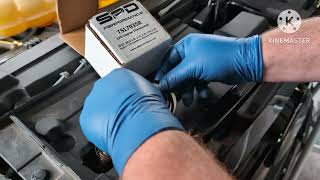
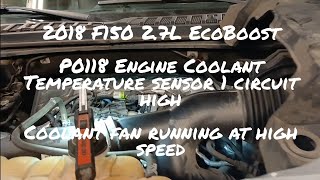
Used OEM Parts in Stock


New Aftermarket Parts Available

The information in this article is provided for general reference and educational purposes only. Vehicle specifications, procedures, and part compatibility can vary by production date, trim level, and region. Always consult your vehicle's factory service manual and verify part numbers before purchasing or performing repairs. Safety-critical components such as airbags, seat belts, and braking systems should be installed by a qualified professional.
- Ford Bronco:
- 🎬 Helpful Videos
- 🛍️ Shop This Part
- What's Unique About the 2021-2024 Ford Bronco
- Symptoms You May Notice
- Most Likely Causes
- Rare But Worth Checking
- Diagnosis Steps
- Parts You'll Likely Need
- Related Codes That Often Appear With This One
- Technical Service Bulletins (TSBs) & Recalls
- Platform-Specific Known Issues
- Mechanic-Grade Diagnostic Values
- Scan Tool Commands That Help
- OEM Part Supersession History
- Diagnostic Flowchart
- Other Known Issues on This Vehicle
- Used vs. New Parts: Buying Guide for This Vehicle
- Real Owner Stories
- Older Ford Truck (Power Stroke)
- Ford EcoSport Owner
- Related OBD-II Codes
- Frequently Asked Questions
- 🎟️ Get 5% Off