

P0122 on 2016-2021 Hyundai Tucson 2.0L: Throttle Position Sensor Causes and Fixes
P0122 on your Tucson most likely means the electronic throttle body assembly has failed. The throttle position sensor (TPS) is built-in and not sold separately. Before replacing the assembly (around $150-$350 aftermarket, $700+ OEM), check its wiring connector for damage and try cleaning the throttle body first, as carbon buildup is common on this GDI engine. A relearn procedure is required after cleaning or replacement.
- P0122 on a 2016-2021 Tucson almost always points to a problem with the electronic throttle body.
- The Throttle Position Sensor (TPS) is built into the throttle body; you cannot buy it separately.
- Before spending money, inspect the wiring connector for damage and clean any carbon buildup from inside the throttle body.
- A scan tool that can read live data is the best way to confirm a faulty sensor by watching its voltage signal.
- If you replace the throttle body, an aftermarket unit is significantly cheaper than the OEM part.
What's Unique About the 2016-2021 Hyundai Tucson
The 2.0L Nu engine in this generation of Tucson is a Gasoline Direct Injection (GDI) engine. Unlike traditional port injection engines, fuel is sprayed directly into the cylinders, so it never washes over the intake path and throttle body. This design makes the throttle body more susceptible to carbon and oil buildup from the PCV system, which can sometimes cause the throttle plate to stick and potentially lead to sensor-related codes.
Symptoms You May Notice
- Check Engine Light is on
- Reduced engine power or "limp mode"
- Sudden and dangerous loss of acceleration
- Hesitation or stumbling during acceleration
- Rough or unstable idle
- Engine stalling, especially when coming to a stop
- Poor or erratic throttle response
- Replacing the accelerator pedal assembly. The P0122 code specifically refers to the sensor on the throttle body ('A' circuit), not the accelerator pedal position sensor (which would typically set codes like P2122 or P2127).
Most Likely Causes
- Faulty Electronic Throttle Body Assembly 🔴 High Probability The Throttle Position Sensor (TPS) is integrated into the assembly and is a common point of electronic failure. It is not a separately serviceable part. This failure is common across many Hyundai and Kia models using this engine.
How to confirm: Using a scan tool with live data, monitor TPS voltage (TPS1 and TPS2). With the key on and engine off, TPS1 should be low (~0.5V) and TPS2 should be high (~4.5V). As you press the pedal, TPS1 voltage should sweep smoothly up and TPS2 should sweep smoothly down, without glitches. A reading stuck near zero or a failure to sweep indicates a failed sensor. 🎬 Watch: How to test and replace the throttle position sensor
Typical fix: Replace the entire electronic throttle body assembly. A throttle relearn procedure must be performed afterward.
Est. part cost: $150-$400 - Wiring Harness or Connector Issue 🟡 Medium Probability The wiring harness connector at the throttle body is exposed to engine heat and vibration, which can lead to loose pins, corrosion, or broken wires over time.
How to confirm: Visually inspect the throttle body connector for damage, corrosion, or backed-out pins. With the connector unplugged, check for 5V reference and a good ground at the appropriate pins using a multimeter. Wiggle the harness while monitoring live data to see if the voltage reading flickers.
Typical fix: Repair the damaged section of the wiring harness or replace the connector pigtail.
Est. part cost: $15-$50 - Dirty Throttle Body ⚪ Low Probability As a GDI engine, carbon buildup can form around the throttle plate, causing it to stick. While this more commonly causes high idle codes (P0507), a severe restriction could potentially cause the plate to not return to its proper rest position, affecting the sensor reading at closed throttle.
How to confirm: Remove the air intake duct from the throttle body and visually inspect for a thick ring of black carbon buildup around the throttle plate and bore.
Typical fix: Clean the throttle body bore and plate thoroughly with a dedicated throttle body cleaner and a soft cloth or brush. Do not manually force the butterfly valve open. 🎬 See this guide on cleaning an electronic throttle body safely Perform a throttle relearn procedure afterward.
Est. part cost: $10-$20
Rare But Worth Checking
- Faulty Powertrain Control Module (PCM): This is very uncommon. The PCM should only be considered after all other possibilities, including the throttle body and its entire circuit, have been exhaustively tested and ruled out.
Diagnosis Steps
- Read all fault codes with an OBD-II scanner. Note any other codes that are present, especially P0123, P0222, or P2135.
- Use the scanner's live data function to monitor 'Throttle Position Sensor 1' and 'Throttle Position Sensor 2' voltages. With the key on, engine off, they should show opposing values (e.g., TPS1 at ~0.5V, TPS2 at ~4.5V).
- Slowly press the accelerator pedal to the floor. The TPS1 voltage should increase smoothly and linearly to about 4.5V, while TPS2 decreases smoothly to ~0.5V, without any dropouts or glitches.
- If the P0122 code is present and the TPS1 voltage is stuck near zero or does not respond, proceed with physical checks. If it operates normally, the problem may be intermittent or in the wiring.
- Disconnect the battery. Unplug the electrical connector at the throttle body. Inspect for any signs of corrosion, moisture, or bent/damaged pins. Clean and apply dielectric grease if needed.
- Inspect the wiring leading to the connector for any signs of chafing, melting, or breaks. Wiggle the harness while a helper watches the live data (with battery reconnected) to check for intermittent connections.
- Remove the air intake hose from the throttle body. Inspect the throttle bore and plate for heavy carbon buildup. If dirty, clean it thoroughly using throttle body cleaner and a soft rag.
- If cleaning and wiring inspection do not resolve the issue, and the live data test failed, the throttle body assembly is faulty and needs to be replaced.
- After cleaning or replacement, perform a throttle body relearn procedure. This can often be done by turning the ignition on (engine off) for 30 seconds, off for 30 seconds, and then starting the engine to let it idle and relearn.
Parts You'll Likely Need
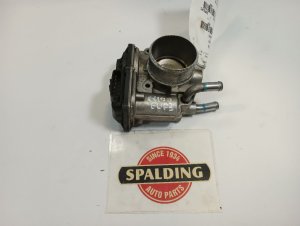
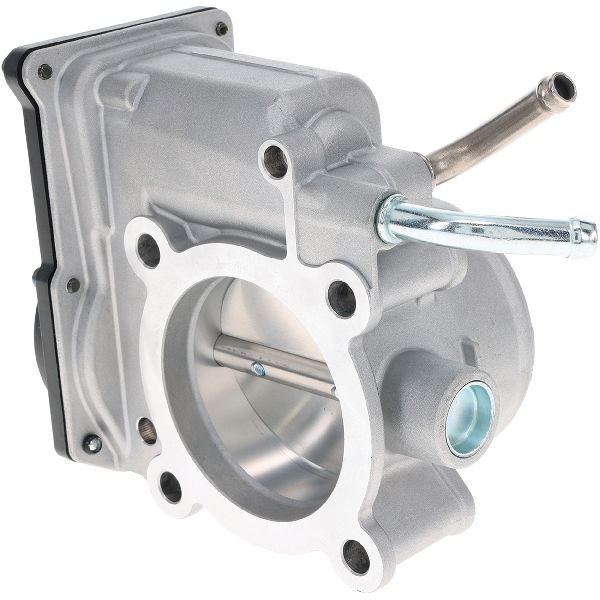
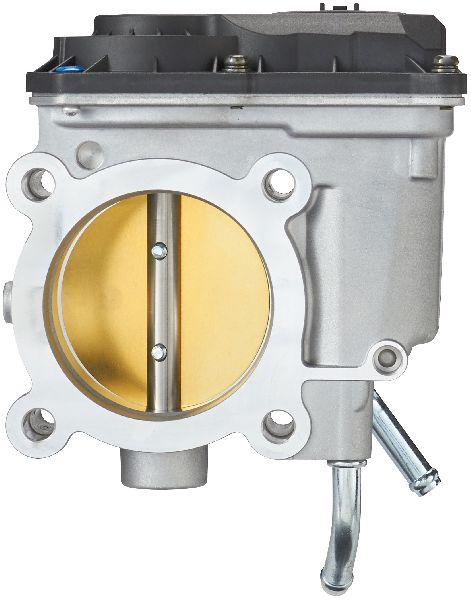
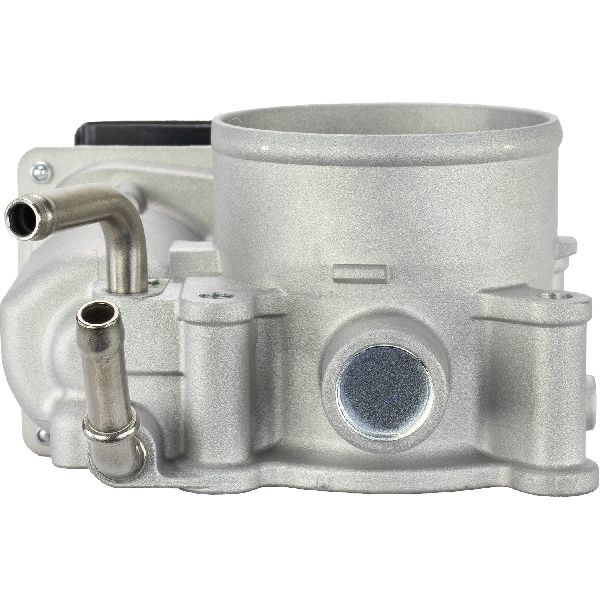
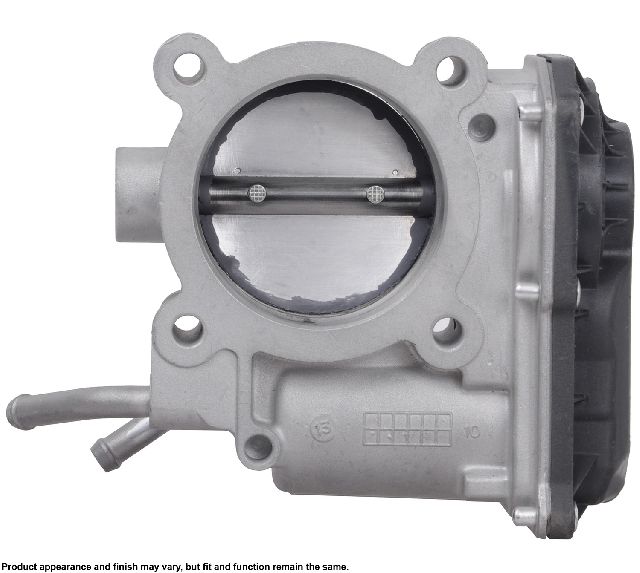
- Electronic Throttle Body Assembly
(OEM #35100-2E000)— This is the most common fix, as the internal Throttle Position Sensor (TPS) fails and is not sold as a separate component for this vehicle.
Trusted brands: Hyundai (OEM), Standard Motor Products, Dorman, Cardone
OEM price range: $700-$900
Aftermarket price range: $150-$350
Related Codes That Often Appear With This One
- P0121 — Indicates a performance/range problem with the same TPS circuit, often appearing with low or high input codes.
- P0123 — The opposite of P0122, indicating a high voltage input fault in the same circuit. Seeing both may suggest an intermittent wiring short.
- P2135 — Indicates a voltage correlation error between the primary (A) and secondary (B) throttle position sensors. This strongly points to a failing throttle body assembly as the sensors are not agreeing.
- P0222 — Indicates a low input on the secondary throttle position sensor ('B' circuit), further pointing to an internal throttle body fault.
Technical Service Bulletins (TSBs) & Recalls
- TSB 13-FL-002 (General Hyundai): While not for this specific code, it advises technicians to clean the throttle body thoroughly before replacing it for issues like rough idle, which is a good first step.
- TSB 19-AT-015H: Applies to 2016+ Tucson 2.0L models and addresses multiple automatic transaxle solenoid DTCs (P0741, P0743, etc.), indicating potential for other electronic powertrain issues.
Mechanic-Grade Diagnostic Values
- TPS1 Signal Voltage (Key On, Engine Off, Throttle Closed) — expected: 0.25V - 0.85V. Failure: Voltage is less than 0.25V for more than 0.1 seconds.
- TPS1 Signal Voltage (Key On, Engine Off, Wide Open Throttle) — expected: ~4.0V - 4.8V. Failure: Voltage does not sweep smoothly or fails to reach the upper range.
- TPS Connector Pin 5 (Reference Voltage) — expected: 5.0V. Failure: Voltage is significantly lower than 5.0V, indicating a PCM or wiring issue.
- TPS Connector Pin 3 (Ground) — expected: 0V (Good connection to ground). Failure: Voltage is present, indicating a poor ground connection.
Scan Tool Commands That Help
- Hyundai GDS (Global Diagnostic System): Throttle Position Learning Value Reset — This function should be used after replacing or cleaning the electronic throttle body. It forces the ECM to erase the old learned values for the throttle plate's closed and open positions and learn the new values, preventing high/low idle or poor response issues.
Wiring & Ground Locations
- Engine Ground Strap (e.g., 91860-D3510) — Typically bolted from the engine block or transmission housing directly to the vehicle's chassis/frame rail in the engine bay.. A corroded or loose main engine ground can cause a voltage drop across the entire engine sensor network, including the 5V reference circuit shared by the TPS, leading to erratic readings and low voltage codes like P0122.
- PCM/ECM Ground Points (e.g., GC301, GF03) — These are specific chassis ground points in the engine bay where the PCM and other modules ground themselves. Their exact location requires a factory service manual diagram but are often on the inner fender aprons or near the battery tray.. A poor ground at the PCM's own grounding point can cause it to misinterpret sensor data, even if the sensor and its wiring are perfect.
- Throttle Body Connector (6-pin) — Directly on the electronic throttle body assembly, where the engine wiring harness connects.. This is the primary point of failure for wiring issues. Pins for TPS1 signal, TPS2 signal, 5V reference, ground, and the motor control are located here. Corrosion or backed-out pins will directly cause P0122.
OEM Part Supersession History
35100-2E000→35100-2E000 (current)— No supersession found. The part number appears to be consistent for the specified vehicle range.
Heads up: This part is used across several Hyundai/Kia models including the Elantra and Forte, but always verify fitment with the vehicle's VIN before purchasing.
Model Year Variations Within This Range
- 2019-2021 (Post-Facelift): The 2019 model year introduced a facelift with revised styling and interior tech. However, the 2.0L Nu GDI petrol engine and its core components, including the electronic throttle body (35100-2E000), remained unchanged for the SE and Value trims. Higher trims received a 2.4L engine, making it important to confirm the engine type before diagnosing.
Diagnostic Flowchart
Other Known Issues on This Vehicle
Issues unrelated to this code that are worth knowing about as an owner of this generation:
- Premature Engine Failure / Connecting Rod Bearing Wear 🔴 High — Widespread issue across this engine family, can occur under 100,000 miles. Subject to class-action lawsuits and warranty extensions. (Ref: Warranty Extension contingent on Knock Sensor Detection System (KSDS) update (e.g., Service Campaign 966).)
- Excessive Oil Consumption 🔴 High — Commonly reported by owners, sometimes starting around 60,000 miles. Can be caused by faulty piston oil rings or carbon deposits. (Ref: Recall 203 / NHTSA 21V301000 (for some 2.0L Nu engines, not all Tucsons) and TSB 21-EM-003H for inspection guidelines.)
- Carbon Buildup on Intake Valves 🟠 Medium — Inherent to GDI engines. Typically requires manual (walnut blasting) cleaning every 40,000-60,000 miles to prevent misfires and power loss.
Used vs. New Parts: Buying Guide for This Vehicle
When a used part is the smart pick: A used OEM throttle body from a low-mileage donor vehicle can be a cost-effective option if the budget is tight, but it carries risk. Given the electronic nature and potential for wear, it's generally recommended for temporary fixes or non-critical vehicles.
Donor-vehicle mileage cap: roughly under 50000 miles for the part to have meaningful remaining life.
What to inspect on the donor part:
- Check for a clean throttle plate and bore with minimal carbon buildup.
- Ensure the electrical connector pins are straight, clean, and free of corrosion.
- Verify the donor vehicle's VIN to ensure it had the same 2.0L Nu engine.
- Ask for the mileage of the donor vehicle if possible; lower is always better.
OEM-only on this vehicle (don't cheap out):
- While not strictly OEM-only, many technicians prefer OEM for electronic components like the throttle body to avoid compatibility and premature failure issues sometimes seen with cheaper aftermarket brands.
Aftermarket brands forum-validated for this vehicle:
- Dorman (Often includes design improvements like non-contact Hall Effect sensors or better seals).
- Standard Motor Products (SMP)
- Cardone (Typically remanufactured OEM units)
Brands owners have reported issues with on this vehicle:
- Unbranded, ultra-low-cost units from online marketplaces can have high failure rates and poor quality control. Forum discussions often advise against the cheapest available options.
Real Owner Stories
Aggregated from forums and TSBs cited above. Mileages and costs reflect what owners reported in those sources.
2017 Hyundai Tucson 2.0L — 80000 miles
Symptoms: Owner reported severe engine problems and the engine eventually 'blew' at 80k miles; highlights broader reliability concerns with the 2.0L platform.
What fixed it: Hyundai acknowledged engine issues on this platform, often requiring warranty-related engine work or replacement, though throttle codes specifically often require assembly replacement.
Source hint: Reddit r/Hyundai: A thread titled 'Help! Engine blew at 80k miles' from a 2017 Tucson owner
Hyundai Owner Report — Grounding and Multiple DTCs
Symptoms: An owner of a related Hyundai model reported that after addressing painted ground points, the vehicle still developed a cluster of codes including P0122, P0123, P0222, and P2106, which eventually required a "limp mode" trip to a shop (NHTSA ODI #11292479).
What fixed it: While the owner was investigating grounding issues, the presence of multiple TPS-related codes (P0122, P0222, P0123) typically indicates a failure within the throttle body assembly or its shared 5V reference circuit.
Related OBD-II Codes
Frequently Asked Questions
Can I just replace the Throttle Position Sensor (TPS) on my 2016-2021 Hyundai Tucson 2.0L?
Is there a TSB for cleaning the throttle body on my Tucson before I buy a new one?
Does my 2016+ Tucson 2.0L have any other electronic issues I should be aware of when diagnosing P0122?
What is the 'throttle relearn' procedure mentioned for the 2.0L Nu engine?
Could my P0122 code be related to the widespread engine failure issues on the 2017 Tucson?
Is the P0122 code common on other Hyundai models with the same engine?
Helpful Videos
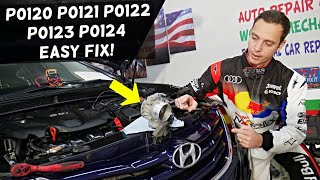
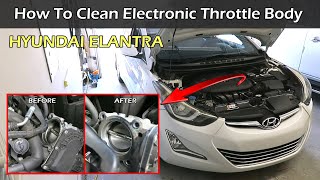
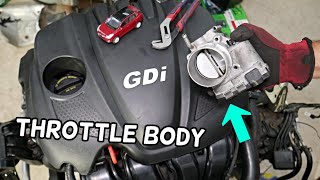

Used OEM Parts in Stock
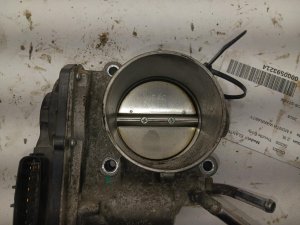

New Aftermarket Parts Available

The information in this article is provided for general reference and educational purposes only. Vehicle specifications, procedures, and part compatibility can vary by production date, trim level, and region. Always consult your vehicle's factory service manual and verify part numbers before purchasing or performing repairs. Safety-critical components such as airbags, seat belts, and braking systems should be installed by a qualified professional.
- Hyundai Tucson:
- 🎬 Helpful Videos
- 🛍️ Shop This Part
- What's Unique About the 2016-2021 Hyundai Tucson
- Symptoms You May Notice
- Most Likely Causes
- Rare But Worth Checking
- Diagnosis Steps
- Parts You'll Likely Need
- Related Codes That Often Appear With This One
- Technical Service Bulletins (TSBs) & Recalls
- Mechanic-Grade Diagnostic Values
- Scan Tool Commands That Help
- Wiring & Ground Locations
- OEM Part Supersession History
- Model Year Variations Within This Range
- Diagnostic Flowchart
- Other Known Issues on This Vehicle
- Used vs. New Parts: Buying Guide for This Vehicle
- Real Owner Stories
- 2017 Hyundai Tucson 2.0L — 80000 miles
- Hyundai Owner Report — Grounding and Multiple DTCs
- Related OBD-II Codes
- Frequently Asked Questions
- 🎟️ Get 5% Off