

OBD-II Code P0507: Idle Control System RPM Higher Than Expected
The Ultimate Guide to Diagnosing and Fixing P0507
- Over 80% of P0507 codes stem from unmetered air entering the engine via a vacuum leak or a carbon-caked throttle body.
- Perform a $100-$150 smoke test to rule out vacuum leaks before spending $400+ replacing the throttle body or IAC valve.
- Limit driving to under 50 miles; the elevated 1,000-1,500 RPM idle causes dangerous low-speed lurching and accelerates transmission wear.
- Mandatory 'idle relearn' procedures are required after repairs on Nissan, Infiniti, and GM vehicles to reset the ECU and permanently clear the code.
What Does P0507 Mean?

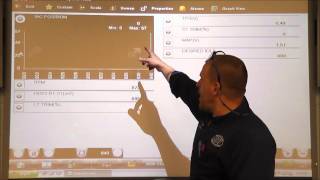
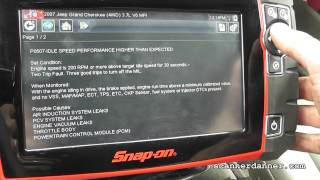
The Powertrain Control Module (PCM) detected the engine's idle speed is consistently 100-200 RPM higher than the target 600-900 RPM range. This triggers the check engine light and stores the P0507 code, indicating the PCM cannot reduce the idle speed 🎬 Watch: A complete overview of P0507 causes and fixes, almost always because unmetered air is bypassing the throttle.
Technical definition: The P0507 code is a generic OBD-II diagnostic trouble code (DTC) indicating the Idle Control System's rotational speed (RPM) is higher than the commanded level. This applies to older cable-driven throttles using an Idle Air Control (IAC) valve and newer vehicles with Drive-by-Wire Electronic Throttle Control (ETC) systems.
Can I Drive With P0507?
Yes, But With Caution. You can drive short distances, but we strongly advise against it. The elevated idle (often 1,000-1,500 RPM) makes the vehicle difficult to control at low speeds, causing it to dangerously 'lurch' forward when you release the brake. Ignoring the issue cuts fuel economy by up to 15% and accelerates transmission wear due to harsh shifting.
Common Causes

- Vacuum Leaks (Very Common) — Unmetered air entering the engine after the mass airflow sensor is the primary culprit. Sources include cracked vacuum hoses, leaking intake manifold gaskets 🎬 See how to diagnose a vacuum leak on GM vehicles, or a faulty brake booster.
- Dirty or Sticking Throttle Body (Very Common) — Carbon and grime buildup prevents the throttle plate from closing completely. This microscopic gap allows extra air to sneak in, raising the idle speed.
- Faulty PCV Valve or System (Common) — A Positive Crankcase Ventilation (PCV) valve stuck open creates a massive vacuum leak, drawing unmetered air from the crankcase directly into the intake manifold.
- Dirty or Faulty Idle Air Control (IAC) Valve (Common) — On older vehicles, carbon deposits cause the IAC valve's pintle to stick open, permitting too much bypass air into the engine and forcing a high idle.
- EVAP System Malfunctions (Less Common) — A stuck-open evaporative emission (EVAP) purge valve creates a vacuum leak by allowing fuel vapors into the engine at idle when they should be sealed off.
- Leaking EGR Valve (Less Common) — A stuck-open Exhaust Gas Recirculation (EGR) valve creates a vacuum leak, allowing exhaust gases into the intake manifold at idle.
- Electrical or Sensor Issues (Rare) — Incorrect signals from a faulty Throttle Position Sensor (TPS) or Mass Airflow (MAF) sensor mislead the PCM into miscalculating the required idle speed.
- Failing Alternator (Rare) — A failing alternator produces inconsistent voltage. The PCM compensates for low voltage by commanding a higher idle speed to prevent the engine from stalling.
- Faulty Power Steering Pressure Switch (Rare) — This switch signals the PCM during high-load steering to increase idle speed. If it fails and sends a constant 'high load' signal, the idle remains elevated.
- Misadjusted Throttle Cable (Rare) — On older vehicles, improper adjustment, binding linkage, or a floor mat obstructing the pedal prevents the throttle from fully closing.
Symptoms

- Check Engine Light is On — The PCM illuminates the MIL as soon as the idle remains elevated past the programmed time threshold.
- High Engine Idle — The engine's RPM sits noticeably higher than normal (often over 1,000 RPM) when the vehicle is in Park or Neutral and fully warmed up.
- Vehicle 'Creeping' or 'Lurching' at Stops — The high idle provides excessive forward momentum, requiring heavy brake pressure to keep the vehicle stationary.
- Harsh Gear Engagement — In automatic transmissions, the high RPM causes the transmission to 'clunk' or engage gears violently when shifting from Park into Drive or Reverse.
- Rough or Fluctuating Idle — The engine feels shaky, or the RPM surges up and down as the PCM struggles to regain control of the idle speed.
- Increased Fuel Consumption — An engine idling at 1,500 RPM burns significantly more fuel, leading to a noticeable drop in MPG.
- Engine Stalling — The underlying vacuum leak causing the high idle leans out the air-fuel mixture, which causes the engine to stall when coming to a sudden stop.
Diagnostic Flowchart
Tap your situation to follow the diagnostic path that matches what you're seeing on this code.
Common Fixes & Costs
- Repairing Vacuum Leaks (Hose Replacement) — Parts: $10-$60, Labor: $120-$350, ~1.5 hr book time (DIY)
- Cleaning the Throttle Body — Parts: $10-$20, Labor: $100-$250, ~0.8 hr book time (DIY)
- Replacing the PCV Valve
— Parts: $15-$75, Labor: $60-$180, ~0.7 hr book time
(DIY)
: OEM 17130-RCA-A02, 17130-5A2-A01 (Alt: {"brand": "Standard Ignition (V567)", "price_comparison": "Slightly less expensive than OEM"}) - Replacing the Idle Air Control (IAC) Valve
— Parts: $80-$300, Labor: $70-$200, ~1 hr book time
(Intermediate)
: OEM 237815M010 (Alt: {"brand": "Hitachi (ABV0042)", "price_comparison": "Often the OEM supplier, price varies"}) - Replacing Intake Manifold Gaskets
— Parts: $50-$200, Labor: $300-$800, ~4.5 hr book time
(Advanced)
: OEM 4S7Z-6584-C (Alt: {"brand": "Fel-Pro (MS 97331)", "price_comparison": "Less expensive than OEM"}) - Replacing the Throttle Body Assembly
— Parts: $250-$800, Labor: $150-$400, ~1.2 hr book time
(Advanced)
: OEM 16119-JA10A (Alt: {"brand": "Hitachi", "price_comparison": "Often the OEM supplier, slightly less expensive"})
DIY vs Professional
- Cleaning the Throttle Body — Beginner: Yes
Tools: Socket set, screwdrivers, throttle body cleaner, soft brush. - Repairing Vacuum Leaks (Hose Replacement) — Beginner: Yes
Tools: Pliers, screwdrivers, flashlight, smoke machine. - Replacing the PCV Valve — Beginner: Yes
Tools: Pliers, socket set or wrenches. - Replacing the Idle Air Control (IAC) Valve — Beginner: No
Tools: Socket set, screwdrivers, gasket scraper, new gasket. - Replacing Intake Manifold Gaskets — Beginner: No
Tools: Extensive tool set, torque wrench, gasket scraper.
Used vs. New Parts: Buying Guide
When a used part is worth it: Buy used only for expensive electronic throttle bodies on vehicles over 15 years old where the part cost exceeds $400.
Donor-vehicle mileage cap: roughly under 100000 miles for the part to have meaningful remaining life.
Donor quality checklist:
- Verify the OEM part number matches exactly.
- Inspect the throttle plate for excessive carbon or physical damage.
- Ensure the donor vehicle was salvaged for collision, not engine fire or flood.
Decision logic:
- If The part is a vacuum hose, PCV valve, or intake gasket → Always buy new. Rubber degrades with age.
- If The part is an electronic throttle body on a vehicle less than 10 years old → Buy new OEM or high-quality aftermarket to ensure electronic reliability.
- If The vehicle is over 15 years old and the throttle body is over $400 new → A used part is a reasonable financial choice.
Warranty tradeoff: Used parts carry a 30-day warranty. New aftermarket parts offer 1-year warranties. New OEM parts carry 12-month manufacturer warranties.
Worst-case if a used part fails: $200-$500 if a used electronic throttle body fails, requiring repeat labor and a second replacement part.
What Happens If You Wait — Timeline
- 0-2 weeks: Check Engine Light illuminates. Idle sits 100-200 RPM higher than normal. Minor decrease in fuel economy. (MPG impact: 0-5%% · Added cost: $0)
- 2 weeks - 3 months: Idle climbs to 1,500 RPM. Vehicle dangerously lurches at stops. Automatic transmissions shift harshly into Drive. (MPG impact: 8-15%% · Added cost: $30-$90 in wasted fuel)
- 3-8 months: Violent gear engagement and constant high-RPM vibration crack the engine and transmission mounts. (MPG impact: 10-18%% · Added cost: $250-$600 for mount replacement)
- 8+ months: Prolonged lean conditions from vacuum leaks melt the catalytic converter internals. (MPG impact: 15-25%% · Added cost: $800-$2500 for catalytic converter replacement)
Cost of Not Fixing It
- 0-1 month: Decreased fuel economy by up to 15%, harsh gear engagement, and dangerous low-speed lurching. (Added cost: $20-$60 in wasted fuel.)
- 1-6 months: Constant strain from high idle and violent shifting cracks engine and transmission mounts. (Added cost: $250-$600 for mount replacement.)
- 6+ months: Running lean from a vacuum leak increases combustion temperatures, melting the catalytic converter. (Added cost: $800-$2500 for catalytic converter replacement.)
Diagnosis Steps

- Scan for Codes and Review Freeze Frame Data
Use an OBD-II scanner to confirm P0507. Check for companion codes (like P0171/P0174 for lean conditions) that instantly point to a vacuum leak. Analyze freeze frame data to verify the exact RPM and coolant temperature when the code triggered.
Tools: OBD-II Scanner (Beginner) - Perform a Visual and Auditory Inspection
Listen for a distinct hissing sound around the engine bay—a dead giveaway for a vacuum leak. Visually inspect all vacuum hoses, the air intake tube, and PCV hoses for cracks, splits, or disconnections.
Tools: Flashlight (Beginner) - Execute a Smoke Test for Vacuum Leaks
A smoke test is the only definitive way to find hidden vacuum leaks. Force low-pressure, visible smoke into the intake system. Smoke will pour out of any cracked hoses or leaking intake manifold gaskets.
Tools: Smoke Machine (Intermediate) - Inspect and Clean the Throttle Body
Remove the air intake duct and inspect the throttle plate for black carbon buildup. Clean it meticulously using throttle body cleaner and a soft brush. On electronic throttle bodies, move the plate gently by hand.
Tools: Screwdriver/Ratchet, Throttle Body Cleaner, Rag/Brush (Beginner) - Test the PCV and EVAP Purge Valves
Remove the PCV valve and shake it; it must rattle freely. If silent, it is stuck open and causing a vacuum leak. For the EVAP purge solenoid, apply 12V power to verify it clicks open and closed securely.
Tools: Basic Hand Tools, Multimeter/Power Probe (Intermediate) - Inspect and Clean the Idle Air Control (IAC) Valve
On older vehicles, remove the IAC valve and inspect the pintle for carbon buildup. Clean thoroughly with throttle body cleaner. Never use brake cleaner, as it destroys the valve's internal rubber seals.
Tools: Screwdriver/Ratchet, Throttle Body Cleaner (Intermediate) - Analyze Live Fuel Trim Data
Monitor Short-Term (STFT) and Long-Term Fuel Trims (LTFT) at idle. Positive values above +10% indicate the PCM is adding fuel to compensate for excess air, confirming a vacuum leak is the root cause.
Tools: Advanced OBD-II Scanner (Advanced) - Functionally Test the IAC Valve / Throttle Actuator
Use a bidirectional scan tool to command the IAC valve closed. The RPM must drop significantly. If the RPM does not change, the valve is mechanically stuck or there is a massive vacuum leak overriding it.
Tools: Bidirectional Scan Tool (Advanced) - Test Throttle Position Sensor (TPS) Voltage
Check the TPS voltage at closed throttle. It must read between 0.5 and 1.0 volts. Higher voltage tricks the PCM into thinking the throttle is open, forcing a high idle.
Tools: Multimeter or Advanced OBD-II Scanner (Advanced) - Check the Charging System
Measure battery voltage with the engine running (must be 13.7-14.7V). An underperforming alternator forces the PCM to artificially raise the idle to prevent stalling.
Tools: Multimeter (Intermediate)
When This Code Triggers (Freeze-Frame Conditions)
- Engine Coolant Temp: 175-215°F (80-102°C) (Engine is fully warmed up and operating in closed loop.)
- Engine RPM: 800-1,500 RPM (At idle (foot completely off the accelerator pedal).)
- Engine Load: Low (< 25%) (Vehicle is in Park or Neutral, or stopped in Drive.)
- Vehicle Speed: 0 mph (Vehicle is completely stationary.)
Related Codes
- P0171 / P0174 — These codes indicate a 'System Too Lean' condition. If paired with P0507, the cause is definitively a vacuum leak. Unmetered air leans out the mixture and simultaneously forces the high idle.
- P0506 — The direct opposite of P0507, meaning 'Idle Control System RPM Lower Than Expected'. This indicates an IAC valve or throttle body sticking closed rather than open.
- P0505 — Points to a general electrical circuit malfunction within the IAC system. P0505 suggests a wiring or motor problem, whereas P0507 indicates a mechanical issue (vacuum leak or carbon).
- P0508 / P0509 — These indicate low (P0508) or high (P0509) IAC circuit voltage. They point directly to a hard electrical fault, not a mechanical vacuum leak.
Climate & Environmental Factors
- Cold Weather: Freezing temperatures make rubber vacuum hoses brittle and prone to cracking, directly causing the vacuum leaks that trigger P0507.
- High Altitude: Less dense air at high altitudes exacerbates borderline vacuum leaks, pushing the PCM past its compensation limits and triggering the code.
- High Humidity: Excess moisture accelerates corrosion in electrical connectors, occasionally causing erratic signals from the TPS or MAF sensors.
How to Talk to a Mechanic About This Code
Say this: "I have a P0507 code and a high idle. I've already cleaned the throttle body. Please perform a smoke test to locate any vacuum leaks, and check the live fuel trim data at idle."
This proves you understand the basics. It forces the mechanic to skip the $150 throttle body cleaning you already did and jump straight to the definitive smoke test.
Avoid saying:
- 'My car is idling funny.'
- 'My check engine light is on, can you look at it?'
- 'Just replace the throttle body.'
Questions to ask before authorizing the repair:
- Did the smoke test reveal a vacuum leak? If so, exactly which hose or gasket?
- If no leak was found, what are the Short-Term and Long-Term Fuel Trims at idle?
- Does this repair require an idle relearn procedure, and is that included in the labor quote?
Where to Take It: Dealer vs Independent vs Chain
- Dealer:
Best for: Vehicles under powertrain or emissions warranty., Nissan/Infiniti vehicles requiring proprietary software for the Idle Air Volume Learning procedure.
Downsides: Labor rates are 50% higher than independent shops., Dealers default to replacing the entire $800 throttle body assembly rather than cleaning it. (Typical cost: +50% vs. baseline) - Independent Shop:
Best fit. P0507 is a mechanical code, and competent independent shops easily diagnose vacuum leaks and dirty throttle bodies.
Best for: Out-of-warranty vehicles., Performing smoke tests for vacuum leaks and cleaning throttle bodies.
Downsides: May lack the specific bidirectional scanner needed for GM or Nissan idle relearns. (Typical cost: +0% vs. baseline) - Chain Shop:
Avoid for diagnosis. They will likely throw an expensive IAC valve at the problem without performing a proper smoke test.
Best for: Simple, pre-diagnosed part swaps (e.g., 'replace this specific PCV valve').
Downsides: High pressure to upsell unnecessary fuel system cleanings., Technicians often lack the skills to properly diagnose complex vacuum leaks. (Typical cost: -10% vs. baseline)
When to Walk Away From the Repair
If the estimated repair cost exceeds 50% of your car's private-party value, sell the vehicle.
- Car worth $4000, fix is $2200: Walk away. Spending $2,200 on a $4,000 car for a throttle body and intake manifold gasket is a poor financial decision.
- Car worth $12000, fix is $800: Fix it. $800 is a reasonable maintenance cost to keep a $12,000 vehicle running safely.
What Scan Tool You Need for This Code
Minimum: A scanner that reads live engine data, specifically 'Commanded Idle RPM', 'Actual Idle RPM', and Fuel Trims.
A $20 code reader only shows P0507. It cannot display the live fuel trim data required to prove a vacuum leak exists.
Budget: BlueDriver Pro (~$100) — Streams live data for RPM and fuel trims to your smartphone via Bluetooth, allowing you to confirm vacuum leaks.
Mid-range: Innova 5610 / XTOOL D7 (~$300-350) — Provides bidirectional control to command the IAC valve closed. Crucially, it performs the mandatory 'Idle Relearn' procedures required by Nissan and GM.
Professional: Autel MaxiCOM MK808 (~$500-950) — Offers full OEM-level diagnostic functions, advanced ECU coding, and resets for virtually any make or model.
Rent vs buy: Buy a mid-range scanner if you own a Nissan, Infiniti, or GM. You absolutely need the bidirectional 'Idle Relearn' function to clear this code permanently.
How to Clear the Code After You Fix It
- Fix the underlying vacuum leak or clean the throttle body.
- Use an OBD-II scan tool to clear the P0507 code from the PCM.
- Execute the mandatory Idle Relearn Procedure specific to your vehicle's make and model.
Drive cycle (~20 minutes): Start the engine cold and idle for 3 minutes. Drive in stop-and-go traffic for 10 minutes. Drive at a steady highway speed (55-65 mph) for 5 minutes. Idle for 2 minutes before shutting off.
Readiness monitors affected: Catalyst Monitor, EVAP System Monitor, O2 Sensor Monitor
Before emissions retest: drive at least 50 miles to fully set monitors.
Watch out for:
- Clearing the code without fixing the vacuum leak guarantees the light returns within 50 miles.
- Skipping the Idle Relearn Procedure on Nissan/GM vehicles causes the repair to fail instantly.
- Disconnecting the battery resets all readiness monitors, causing an automatic emissions test failure.
Will This Fail Emissions / State Inspection?
Yes — this code typically fails an OBD-II emissions inspection.
- California: An active P0507 code results in an automatic smog check failure. You must complete a full drive cycle after repairs to reset readiness monitors.
- New York: The NYVIP2 inspection fails any vehicle with an active P0507 code.
- Texas: In the 17 emissions-testing counties, an illuminated Check Engine Light for P0507 fails the OBD inspection.
Most Commonly Affected Vehicles
- Nissan Altima, Maxima, Murano, Kicks, Sentra (2002-2021) — Extremely common. Usually caused by a dirty electronic throttle body. After cleaning or replacement, an 'Idle Air Volume Learning' procedure is mandatory. Failure to perform this relearn guarantees the high idle will continue.
- Honda Accord, Civic, CR-V, Odyssey (2001-2012) — Often caused by a failing or carbon-fouled Idle Air Control (IAC) valve. Cleaning the valve and throttle body is the most frequent fix.
- Ford F-150, Focus, Explorer, Escape (2004-2015) — Frequently triggered by vacuum leaks from cracked PCV hoses located under the intake manifold or failing intake manifold gaskets.
- General Motors (Chevrolet, GMC) Silverado, Tahoe, Cobalt, Equinox (2003-2014) — GM vehicles are highly sensitive and set P0507 if the idle is just 100 RPM above target. Common causes include dirty throttle bodies and aged intake manifold gaskets.
- Subaru Forester, Outback, Impreza (2005-2014) — Often caused by vacuum leaks from deteriorated PCV hoses or intake manifold gaskets. A dirty throttle body is the secondary suspect.
- Toyota Camry, Corolla, RAV4 (2002-2011) — Typically related to a dirty throttle body or a vacuum leak from a cracked PCV hose. These engines are reliable, making maintenance items the first place to look.
- Volkswagen/Audi Jetta, Golf, A4 (2005-2015) — Frequently appears with a P0171 (System Too Lean) code. The definitive cause is almost always a failed PCV valve (oil separator) integrated into the valve cover.
- Hyundai/Kia Elantra, Sonata, Optima (2006-2016) — Commonly caused by a dirty throttle body or cracks in the rubber air intake hose between the air filter box and the throttle body.
Manufacturer-Specific Notes
- Nissan/Infiniti: These vehicles require a mandatory 'Idle Air Volume Learning' procedure after cleaning the throttle body or disconnecting the battery. Without this ECU reset via a capable scan tool, the high idle persists permanently.
- Honda/Acura: The ECU requires an idle relearn over a few drive cycles. Disconnect the battery for 10 minutes, reconnect, and let the engine idle for 10 minutes from a cold start with all accessories off.
- General Motors (Chevrolet, GMC, etc.): GM ECUs are hyper-sensitive, setting P0507 for deviations as small as 100 RPM. After cleaning the throttle body, let the engine idle in Park for 3 minutes, then in Drive for 3 minutes to recalibrate.
- Volkswagen/Audi: The PCV valve (oil separator) is the primary failure point and is integrated into the valve cover assembly. A failed PCV is the guaranteed cause if accompanied by a P0171 lean code.
Real Owner Stories
2007 Jeep Liberty with 230K miles
P0507 appeared after replacing spark plugs. The idle seemed normal to the owner at 650 RPM.
What they tried:
- Visually inspected vacuum hoses and cleaned the throttle body.
- Replaced the throttle body based on forum advice, which failed to fix the code.
Outcome: A professional smoke test revealed a micro-leak in a PCV hose elbow cracked during the spark plug repair. Replacing the $15 hose fixed the code.
Lesson: The ECU detects RPM deviations as small as 50 RPM. Tiny, hard-to-see vacuum leaks caused during routine maintenance are the most common culprit.
2000 Buick Regal GS
Persistent high idle at 1,200 RPM with a P0507 code.
What they tried:
- Replaced the IAC valve, PCV valve, and all vacuum hoses.
- Cleaned the throttle body.
Outcome: The problem was a misadjusted mechanical idle screw on the throttle body. A 30-second adjustment brought the idle to normal.
Lesson: On older vehicles with mechanical linkages, check for binding cables or misadjusted screws before replacing electronic sensors.
2006 Audi A4 Quattro
Car threw both P0507 (high idle) and P0171 (system too lean). The engine repeatedly revved to 1,500 RPM at stops.
What they tried:
- Checked for strong suction at the oil cap, confirming a PCV failure.
Outcome: Replacing the integrated PCV valve/oil separator assembly resolved both codes instantly.
Lesson: When P0507 pairs with a P0171 lean code, you definitively have a vacuum leak. On European cars, the PCV system is the primary suspect.
How to Prevent This Code From Triggering
- Clean the throttle body (Every 40,000 miles) — Prevents carbon buildup from wedging the throttle plate open, eliminating the #2 cause of P0507.
- Inspect vacuum and PCV hoses (Every oil change) — Catches brittle or cracking hoses before they split open and cause massive vacuum leaks.
- Clean the Idle Air Control (IAC) valve (Every 50,000 miles) — Removes carbon from the pintle, preventing it from sticking open and forcing a high idle.
- Replace the engine air filter (Every 20,000 miles) — Prevents dirt from bypassing the filter and caking onto the throttle body and MAF sensor.
Frequently Asked Questions
What is the most common mistake when diagnosing a P0507 code?
The biggest mistake is replacing the expensive throttle body or IAC valve before ruling out a vacuum leak. A $150 smoke test or a $10 can of throttle body cleaner resolves the issue 80% of the time.
Will cleaning the throttle body always fix a P0507 code?
Not always, but it is the most cost-effective first step. If carbon buildup prevents the throttle plate from closing, cleaning it solves the problem. If the code returns, you have a vacuum leak.
Can a bad battery cause a P0507 code?
Yes. A failing battery forces the alternator to work at maximum capacity, increasing engine load. The PCM raises the idle speed to compensate for this heavy electrical load and prevent stalling.
Will a P0507 code clear itself?
No. The check engine light might turn off temporarily, but the code remains stored in the PCM until the underlying mechanical vacuum leak or carbon buildup is repaired.
What is an 'idle relearn' procedure and is it always necessary?
An idle relearn forces the vehicle's computer to recalibrate the target idle position after a repair. It is absolutely mandatory on Nissan, Infiniti, and GM vehicles. Skipping this step guarantees the high idle will return.
How much does it cost to fix a P0507 code?
A DIY throttle body cleaning costs $20. Professional vacuum leak repairs range from $150-$350. Replacing a full electronic throttle body assembly costs between $400 and $1,200 depending on the vehicle.
Can a bad gas cap cause a P0507 code?
No. A loose gas cap triggers EVAP codes (like P0455). While a stuck-open EVAP purge valve under the hood causes P0507, the gas cap itself does not affect engine idle speed.
Key Takeaways
- Over 80% of P0507 codes stem from unmetered air entering the engine via a vacuum leak or a carbon-caked throttle body.
- Perform a $100-$150 smoke test to rule out vacuum leaks before spending $400+ replacing the throttle body or IAC valve.
- Limit driving to under 50 miles; the elevated 1,000-1,500 RPM idle causes dangerous low-speed lurching and accelerates transmission wear.
- Mandatory 'idle relearn' procedures are required after repairs on Nissan, Infiniti, and GM vehicles to reset the ECU and permanently clear the code.
Helpful Videos


The information in this article is provided for general reference and educational purposes only. Vehicle specifications, procedures, and part compatibility can vary by production date, trim level, and region. Always consult your vehicle's factory service manual and verify part numbers before purchasing or performing repairs. Safety-critical components such as airbags, seat belts, and braking systems should be installed by a qualified professional.
- 🎬 Helpful Videos
- What Does P0507 Mean?
- Can I Drive With P0507?
- Common Causes
- Symptoms
- Diagnostic Flowchart
- Common Fixes & Costs
- DIY vs Professional
- Used vs. New Parts: Buying Guide
- What Happens If You Wait — Timeline
- Cost of Not Fixing It
- Diagnosis Steps
- When This Code Triggers (Freeze-Frame Conditions)
- Related Codes
- Climate & Environmental Factors
- How to Talk to a Mechanic About This Code
- Where to Take It: Dealer vs Independent vs Chain
- When to Walk Away From the Repair
- What Scan Tool You Need for This Code
- How to Clear the Code After You Fix It
- Will This Fail Emissions / State Inspection?
- Most Commonly Affected Vehicles
- Manufacturer-Specific Notes
- Real Owner Stories
- 2007 Jeep Liberty with 230K miles
- 2000 Buick Regal GS
- 2006 Audi A4 Quattro
- How to Prevent This Code From Triggering
- Frequently Asked Questions
- What is the most common mistake when diagnosing a P0507 code?
- Will cleaning the throttle body always fix a P0507 code?
- Can a bad battery cause a P0507 code?
- Will a P0507 code clear itself?
- What is an 'idle relearn' procedure and is it always necessary?
- How much does it cost to fix a P0507 code?
- Can a bad gas cap cause a P0507 code?
- Key Takeaways
- 🎟️ Get 5% Off