

OBD-II Code P0222: Throttle/Pedal Position Sensor 'B' Circuit Low
The Ultimate 2026 Guide: What P0222 means, why it triggers, and how to fix it permanently.
- P0222 triggers when the Powertrain Control Module detects a throttle or pedal sensor signal below 0.5 volts, instantly forcing the vehicle into a 20-40 mph 'limp mode'.
- Replacing the Accelerator Pedal Position (APP) sensor resolves approximately 40% of P0222 cases, making it the most statistically likely fix.
- Driving with an active P0222 code is highly dangerous; the vehicle will unpredictably stall or lose acceleration, requiring an immediate tow to a safe repair location.
- Before spending $300+ on a new throttle body, use a multimeter to verify the sensor receives a steady 5-volt reference signal and a solid ground.
- Installing a new electronic throttle body or pedal sensor requires a mandatory OBD-II 'relearn' procedure to calibrate the idle, or the vehicle will stall.
What Does P0222 Mean?

P0222 indicates the Powertrain Control Module (PCM) detects a voltage signal from the throttle or pedal position sensor 'B' circuit that falls below the 0.5-volt minimum threshold. In drive-by-wire systems, the PCM restricts engine power to prevent unintended acceleration when it receives this untrustworthy signal.
Technical definition: SAE/OBD-II Definition: Throttle/Pedal Position Sensor/Switch 'B' Circuit Low Input. The PCM flags this when the 'B' sensor circuit voltage drops below the specified minimum (typically 0.5V) for a set duration. The 'B' circuit acts as a redundant safety monitor for the primary 'A' circuit.
Can I Drive With P0222?

No — Do Not Drive. Do not drive the vehicle. The engine will enter a reduced power 'limp mode,' causing unpredictable acceleration or sudden stalling. Merging into traffic or pulling out of intersections under these conditions is highly dangerous.
Common Causes

- Faulty Accelerator Pedal Position (APP) Sensor (Very Common) — Internal wear on the gas pedal's integrated sensor tracks stops it from sending the correct voltage. Replacing this sensor resolves roughly 40% of P0222 cases.
- Faulty Throttle Position Sensor (TPS) / Electronic Throttle Body (Very Common) — The TPS integrated into the electronic throttle body fails, requiring replacement of the entire unit. This accounts for about 35% of P0222 issues.
- Wiring or Connector Shorts (Common) — A short to ground or broken wire between the sensor and the PCM directly causes the low voltage reading. Chafed harnesses or corroded connectors are frequent culprits.
- Dirty or Sticking Throttle Body (Less Common) — Heavy carbon buildup binds the throttle plate, causing a mismatch between commanded and actual positions that triggers the code.
- Low System Voltage or Blown Fuse (Less Common) — A blown throttle control system fuse or a failing alternator drops system voltage, cutting the required 5-volt reference to the sensor.
- External Fluid Contamination (Rare) — Oil or coolant leaks from nearby components (like a PCV valve) seep into the throttle body connector, shorting the electrical pins.
- Faulty Powertrain Control Module (PCM) (Rare) — An internal short or failed driver circuit in the PCM misinterprets the signal or fails to output the 5-volt reference. Suspect this only after eliminating all other causes.
Symptoms
- Check Engine Light is On — The Check Engine Light and Electronic Throttle Control (lightning bolt) warning lights illuminate.
- Reduced Engine Power ('Limp Mode') (also visible on scanner) — The PCM restricts vehicle speed to 20-40 mph as a deliberate safety measure.
- Hesitation or Jerky Acceleration (also visible on scanner) — The vehicle stumbles, jerks, or experiences a 'dead pedal' followed by sudden power surges.
- Engine Stalls or is Hard to Start (also visible on scanner) — The engine stalls at stops or struggles to start because the PCM cannot determine the throttle position.
- Unresponsive Accelerator Pedal (also visible on scanner) — Pressing the gas pedal yields zero change in engine RPM.
Diagnostic Flowchart

Tap your situation to follow the diagnostic path that matches what you're seeing on this code.
Common Fixes & Costs
- Replace Accelerator Pedal Position (APP) Sensor — Parts: $100-$250, Labor: $75-$150, ~1 hr book time (DIY)
- Replace Throttle Body Assembly — Parts: $200-$500, Labor: $125-$250, ~1.5 hr book time (Intermediate)
- Repair Wiring or Connector — Parts: $10-$60, Labor: $100-$300, ~2 hr book time (Intermediate)
- Clean Throttle Body — Parts: $10-$20, Labor: $75-$150, ~0.8 hr book time (DIY)
- Replace Powertrain Control Module (PCM) — Parts: $600-$1200, Labor: $150-$300, ~1.2 hr book time (Professional)
Used vs. New Parts: Buying Guide
When a used part is worth it: For a high-mileage vehicle (>150k miles) on a strict budget, a used APP Sensor from a low-mileage donor vehicle is a cost-effective option.
Donor-vehicle mileage cap: roughly under 80000 miles for the part to have meaningful remaining life.
Donor quality checklist:
- Verify the part number matches exactly.
- Source from a reputable salvage yard providing a 30-90 day warranty.
- Inspect connectors for corrosion before purchasing.
- Avoid parts from flood-damaged vehicles.
Decision logic:
- If The vehicle has under 100K miles. → Buy a new OEM or high-quality aftermarket part. Reliability is worth the extra cost.
- If The vehicle is over 150K miles and you plan to sell it soon. → A tested, used part is acceptable, but carries a higher risk of premature failure.
- If The part is an Electronic Throttle Body. → Buy new. Internal electronic and mechanical wear makes used throttle bodies a significant gamble.
Warranty tradeoff: Used parts offer a 30-90 day warranty. New aftermarket parts offer 1-year to lifetime warranties. New OEM parts carry a 1-2 year warranty.
Worst-case if a used part fails: $300-$600. If a used part fails, you pay for the part again plus repeat labor.
What Happens If You Wait — Timeline
- 0-1 week: Intermittent Check Engine Light and occasional hesitation. The car enters limp mode but resets after restarting. Annoying but drivable. (MPG impact: 0-2%% · Added cost: $0)
- 1-4 weeks: Constant Check Engine Light. Limp mode triggers frequently and ignores engine restarts. Stalling in traffic becomes a high risk. (MPG impact: 2-5%% · Added cost: $50-$200 (Cost of a tow if stranded).)
- 1-3 months: Permanent limp mode. The vehicle is dangerously slow. Jerky operation stresses engine and transmission mounts. (MPG impact: 5-10%% · Added cost: $250-$700 (Towing plus replacement of stressed mounts).)
- 3+ months: Total throttle control failure. The engine stalls immediately or refuses to start. Shorted wires risk back-feeding voltage and destroying the PCM. (MPG impact: N/A (Vehicle is undrivable)% · Added cost: $1000-$2000+ (Risk of PCM damage).)
Cost of Not Fixing It
- Immediate: Unsafe driving conditions. The vehicle stalls or loses all acceleration, creating a high risk of an accident. (Added cost: Potential accident costs.)
- 0-3 months: Increased stress on engine and transmission mounts from jerky operation and stalling. (Added cost: $200-$600 (towing and mount replacement).)
- 3-12+ months: An incorrect throttle signal causes a persistent rich or lean fuel mixture, destroying the catalytic converter. (Added cost: $1200-$2800 (catalytic converter replacement).)
Diagnosis Steps
- Scan for Codes and Review Live Data
Connect an OBD-II scanner. Monitor 'Live Data' for Throttle/Pedal Position Sensor 'A' and 'B' voltages. Slowly press the accelerator (key on, engine off). A 'B' sensor reading stuck below 0.3V confirms the fault circuit.
Tools: OBD-II Scanner with Live Data (Beginner) - Visually Inspect Wiring and Connectors
Inspect the wiring harness to the pedal sensor and throttle body for chafing, melting, or exposed wires. Check connectors for corrosion, moisture, or pushed-out pins.
Tools: Flashlight, Inspection Mirror (Beginner) - Test Sensor Power Supply (5V Reference) and Ground
Unplug the suspect sensor. Turn the key on. Use a multimeter to verify a steady 5-volt reference from the PCM on one wire and a solid ground (near 0V) on another. Missing voltage indicates a wiring or PCM fault.
Tools: Digital Multimeter, Vehicle-specific wiring diagram (Intermediate) - Test Sensor Signal Voltage at the Connector
Reconnect the sensor and back-probe the signal wire. Slowly press the pedal. Voltage must sweep smoothly from ~0.5V to ~4.5V. If stuck low despite good power and ground, the sensor is dead.
Tools: Digital Multimeter, Back-probe kit (Intermediate) - Check for a Short to Ground
Disconnect the sensor and PCM. Measure resistance (Ohms) between the 'B' signal wire and chassis ground. Continuity (<1 Ω) confirms a short to ground in the harness.
Tools: Digital Multimeter (Advanced) - Inspect the Throttle Body
Remove the air intake. Have a helper press the gas pedal (key on, engine off). Ensure the throttle plate moves smoothly without binding. Do not force it open manually.
Tools: Screwdriver or socket set (Intermediate) - Perform a 'Wiggle Test'
While monitoring live sensor voltage, wiggle the wiring harness near the firewall and PCM. Voltage drops pinpoint intermittent breaks or shorts.
Tools: OBD-II Scanner or Digital Multimeter (Intermediate) - Advanced: Sensor Resistance Test
With the sensor unplugged, measure resistance across its terminals while moving the pedal/throttle. Infinite resistance (OL) confirms an internal open circuit.
Tools: Digital Multimeter, Vehicle-specific service manual (Advanced) - Advanced: Live Data PID Analysis
Monitor 'Relative Throttle Position' and 'Commanded Throttle Actuator'. Mismatches between commanded and actual positions flag mechanical binding or sensor failure.
Tools: OBD-II Scanner with Live Data PID support (Advanced) - Use an Oscilloscope for Advanced Analysis (Pro Tip)
Connect a scope to the signal wire. Look for sharp dropouts or noise in the voltage ramp as the pedal is pressed, proving internal sensor failure under load.
Tools: Automotive Oscilloscope (Scope) (Professional)
When This Code Triggers (Freeze-Frame Conditions)
- Engine Coolant Temp: 180-205°F (The fault often appears when the engine is fully warmed up and internal sensor components expand.)
- RPM: 1200-2500 (Triggers frequently during steady-state cruising where a worn spot on the sensor's internal track is held in a constant position.)
- Engine Load: 25-50% (Occurs under normal driving load rather than heavy acceleration.)
- Vehicle Speed: 30-60 mph (Commonly sets during city or highway cruise conditions corresponding to steady RPM.)
Related Codes
- P0122 — Throttle/Pedal Position Sensor 'A' Circuit Low. If both P0122 and P0222 set simultaneously, a common problem affects both circuits, such as a missing 5V reference or bad ground.
- P0223 — Throttle/Pedal Position Sensor 'B' Circuit High. The opposite of P0222. Indicates a short to a power source causing a high voltage reading (>4.5V).
- P2135 — Throttle/Pedal Position Sensor 'A'/'B' Voltage Correlation. Sets when the 'A' and 'B' signals don't match. A P0222 fault directly causes this correlation error.
- P0221 — Throttle/Pedal Position Sensor 'B' Circuit Range/Performance. The signal is present but erratic or doesn't match expected values, often pointing to a dirty throttle body.
Climate & Environmental Factors
- High Humidity / Road Salt: Moisture penetrates unsealed wiring connectors, corroding electrical pins. This creates high resistance or a short to ground, triggering P0222.
- Extreme Cold: Wiring insulation becomes brittle and cracks. Moisture inside connectors freezes, causing intermittent connection drops.
How to Talk to a Mechanic About This Code
Say this: "I have a P0222 code and the car is in limp mode. I need a diagnostic to test the throttle control system. Please check the live data for the APP and TPS sensor voltages and inspect the wiring harness between them and the PCM."
Shows you know the code is serious and points them directly to the system. Prevents a generic 'check engine light' diagnosis fee and discourages parts-swapping without testing.
Avoid saying:
- 'My check engine light is on, can you look at it?'
- 'The car is acting weird, I think it's the gas pedal.'
- 'Just fix whatever's wrong.'
Questions to ask before authorizing the repair:
- Did you confirm which sensor circuit is failing using live data—the pedal (APP) or the throttle body (TPS)?
- Did you verify the sensor has a good 5-volt reference and ground before condemning it?
- Have you checked for Technical Service Bulletins (TSBs) related to this part or wiring harness?
- What is your warranty on this specific repair, including parts and labor?
Where to Take It: Dealer vs Independent vs Chain
- Dealer:
Recommended if your car is under warranty or has known manufacturer-specific quirks requiring dealer software updates.
Best for: Vehicles under warranty., Vehicles requiring a PCM reprogram (e.g., Nissan)., Complex European makes (BMW, VW, Audi).
Downsides: Highest labor rates., May default to replacing an entire assembly when a simpler wiring fix is possible. (Typical cost: +50% vs. baseline) - Independent Shop:
Best fit for most people. A good independent shop has the tools to diagnose P0222 correctly without the dealer price tag.
Best for: Most out-of-warranty vehicles., Shops with a strong reputation for electrical diagnostics.
Downsides: Quality varies. Shops lacking electrical diagnostic experience will struggle. (Typical cost: +0% vs. baseline) - Chain Shop:
AVOID for initial diagnosis. P0222 requires careful testing to avoid replacing the wrong part.
Best for: Simple part replacements if you have already diagnosed the exact failure yourself.
Downsides: High risk of misdiagnosis., Likely to replace parts based on the code alone without proper circuit testing. (Typical cost: -10% vs. baseline)
When to Walk Away From the Repair
If the estimated repair cost exceeds 40-50% of the car's private-party value, consider selling the car as-is.
- Car worth $3500, fix is $1800: Walk away. The repair cost is over 50% of the vehicle's value.
- Car worth $12000, fix is $750: Fix it. The repair cost is well below the threshold and restores a critical safety function.
- Car worth $5000, fix is $2200: Borderline. Get a second opinion on the repair cost, but be prepared to sell.
What Scan Tool You Need for This Code
Minimum: OBD-II scanner with Live Data streaming and graphing.
A basic $20 code reader only shows the P0222 code. It cannot show real-time voltage from the accelerator and throttle sensors, which is essential to pinpoint the failing component.
Budget: BlueDriver Pro or Ancel BD310 (~$90) — Connects to your smartphone to view and graph live voltage data from the 'A' and 'B' circuits of the APP and TPS.
Mid-range: Foxwell NT510 Elite or Innova 5610 (~$180) — Offers live data graphing and initiates the 'throttle relearn' procedure required after replacing a throttle body.
Professional: Autel MaxiCOM MK808S (~$450) — Offers full bidirectional control to command the throttle motor directly and performs all required relearn procedures.
Rent vs buy: Auto parts stores like AutoZone loan capable OBD-II scanners for free (with a refundable deposit). For a one-time P0222 diagnosis, this is the most cost-effective option.
How to Clear the Code After You Fix It
- Reconnect the battery if disconnected.
- Use an OBD-II scan tool to clear the P0222 code.
- Perform the vehicle-specific 'Throttle Body Relearn' procedure.
- Perform a complete drive cycle to run emissions readiness monitors.
Drive cycle (~30 minutes): Start with a cold engine. Idle for 2-3 minutes with A/C on. Drive for 15-20 minutes with mixed stop-and-go city driving. Drive for 5-10 minutes at a steady 55 mph. Allow the vehicle to cool down.
Readiness monitors affected: Catalyst (CAT) monitor, Oxygen (O2) Sensor monitor, Oxygen Sensor Heater monitor, Evaporative (EVAP) System monitor
Before emissions retest: drive at least 100 miles to fully set monitors.
Watch out for:
- Disconnecting the battery clears the code but resets all readiness monitors to 'incomplete', guaranteeing an emissions test failure.
- Forgetting the mandatory throttle relearn procedure causes high idle and stalling.
- The code returns immediately if the underlying electrical fault was not repaired.
Will This Fail Emissions / State Inspection?
Yes — this code typically fails an OBD-II emissions inspection.
- California: An illuminated Check Engine Light from P0222 is an automatic smog check failure. A full drive cycle must be completed after repair.
- New York: P0222 causes an immediate OBD-II inspection failure. The vehicle cannot be registered until repaired.
- Texas: In emissions-testing counties, an active P0222 code fails the OBD inspection. The Check Engine Light must be off.
Most Commonly Affected Vehicles
- Ford F-150, Explorer, Mustang (2004-2024) — Frequently experiences P0222 due to electronic throttle body failures. Ford issued customer satisfaction program 16B32 for certain 2015-2016 models.
- Chevrolet / GMC Silverado, Sierra, Cruze, Equinox (2007-2024) — Wiring harness chafing against the firewall or engine brackets is a very common cause.
- Dodge / Chrysler / Jeep Charger, Ram 1500, Grand Cherokee (2007-2020) — Prone to failed Throttle Position Sensors (TPS) integrated into the throttle body.
- Volkswagen / Audi Golf, Jetta, Passat, A4 (2005-2016) — TSB 2018652 addresses a known wiring failure at the throttle body connector on 2.0T engines.
- Nissan Altima, Maxima, Sentra, Rogue (2013-2021) — Can show P0222 due to ECM software glitches requiring a dealer firmware update.
- Honda Accord, Civic, Pilot, CR-V (2005-2015) — P0222 is frequently caused by a faulty Accelerator Pedal Position (APP) sensor rather than the throttle body.
- Hyundai / Kia Santa Fe, Sonata, Optima (2010-2018) — Experiences P0222 due to internal electrical failures of the electronic throttle body assembly.
- BMW 3-Series (E90), 5-Series (E60), X5 (2004-2014) — Often related to the accelerator pedal module or wiring faults in the engine bay.
Manufacturer-Specific Notes
- General Motors (Chevrolet, GMC): The wiring harness routes tightly and rubs against engine brackets or the firewall, causing a short. Always inspect the harness near the back of the engine.
- Ford: Electronic throttle bodies are a common failure item on 2004-2010 models. Ford issued recalls (e.g., 16B32) for sudden deceleration from ETB failure.
- Nissan: An ECM software glitch incorrectly sets P0222. Check for a Technical Service Bulletin (TSB) requiring a software update before replacing parts.
- Volkswagen / Audi: TSB 2018652 points to a known issue on 2.0L TFSI engines where wiring at the throttle body connector fails. A specific harness repair kit is required.
Real Owner Stories
2007 Corvette LS2 at 140,000 km
Intermittent P0222 code causing 'Reduced Engine Power' mode. Replaced the accelerator pedal assembly, but the code returned.
What they tried:
- Replaced the accelerator pedal assembly with a new OEM part (GM 19417903).
Outcome: The issue was the Throttle Position Sensor (TPS) integrated into the throttle body. The owner learned to check the TPS signal voltage with a scan tool before replacing parts.
Lesson: Do not assume the first part you replace is the fix. Test signals before buying expensive parts.
2004 Buick Rainier 4.2L I6
After cleaning the throttle body, the truck went into 'Reduced Engine Power' mode and threw code P0222.
What they tried:
- Swapped the throttle body with a known-good one; the problem remained.
- Checked all related fuses.
Outcome: The owner tested the voltage at the throttle body connector and found the 5V reference wire was not making proper contact inside the pin. Re-seating the wire resolved the issue.
Lesson: If a fault appears immediately after maintenance, the cause is almost always related to the work just performed. Re-check all connectors.
2013 Skoda Yeti (Turbocharged Engine)
Car presented with P0222 and intermittent throttle response.
What they tried:
- Cleaned the throttle body, which only fixed the issue temporarily.
Outcome: Technicians discovered a small oil leak from the PCV valve grommet contaminating the throttle system wiring. Replacing the PCV valve and grommet permanently resolved the code.
Lesson: Fluid leaks can seep into nearby electrical connectors and disrupt signals. Look for signs of fluid contamination on sensor harnesses.
How to Prevent This Code From Triggering
- Clean the throttle body (Every 50,000 miles) — Removes carbon and oil residue that causes the throttle plate to stick, ensuring smooth movement and accurate sensor readings.
- Apply dielectric grease to sensor connectors (Anytime a connector is disconnected) — Protects electrical pins from moisture and road salt, preventing corrosion that causes high resistance and low voltage codes.
- Secure wiring harnesses (During routine oil changes) — Prevents vibration and heat from chafing wiring harnesses against engine brackets, avoiding shorts to ground.
- Fix engine oil and coolant leaks (Immediately upon detection) — Prevents fluids from dripping onto throttle body or pedal sensor connectors and shorting the pins.
Frequently Asked Questions
What is the most common misdiagnosis for P0222?
The most common misdiagnosis is replacing the expensive throttle body when the actual problem is the accelerator pedal position (APP) sensor, or vice-versa. Technicians also frequently replace sensors when the root cause is a simple chafed wire or corroded connector pin. Always test the circuit's 5V reference and ground before replacing components.
Can I just clean the throttle body to fix P0222?
Sometimes, but it is rare. If heavy carbon buildup physically prevents the throttle plate from moving, cleaning it restores proper sensor readings. However, P0222 is almost always an electrical failure in a sensor or wire, not a mechanical blockage.
What's the difference between a Throttle Position Sensor (TPS) and an Accelerator Pedal Position (APP) sensor?
The APP sensor sits on the gas pedal assembly and tells the PCM how far you want to accelerate. The TPS mounts on the throttle body and reports the actual opening angle of the throttle plate. A fault in either sensor's 'B' circuit triggers the P0222 code.
Will the P0222 code clear itself?
No, P0222 indicates a hard fault in a critical safety system and will not clear itself. You must repair the underlying electrical or mechanical problem first. Afterward, use an OBD-II scan tool to clear the code and perform a throttle relearn procedure.
Is it expensive to fix code P0222?
Costs vary based on the root cause. A DIY wiring repair costs under $50, while professional APP sensor replacement runs $175-$400. Replacing an electronic throttle body at a shop typically costs $325-$750.
Do I need to perform a 'relearn' procedure after fixing P0222?
Yes, almost all modern vehicles require a 'throttle body relearn' or 'idle relearn' after replacing the throttle body or APP sensor. This calibrates the new sensor's closed and wide-open positions for the PCM. Failing to perform this causes high idle, stalling, or immediate return of the code.
Can a low battery cause a P0222 code?
Yes, a weak battery or failing alternator drops the system voltage. The throttle sensors rely on a stable 5-volt reference signal from the PCM to function. If system voltage fluctuates, the PCM receives erratic sensor data and triggers P0222.
What's the difference between P0222 and P0221?
P0222 is a 'Circuit Low' fault, meaning the voltage is consistently stuck below the 0.5V minimum threshold. P0221 is a 'Range/Performance' fault, meaning the signal is present but erratic or doesn't match the expected position.
Key Takeaways
- P0222 triggers when the Powertrain Control Module detects a throttle or pedal sensor signal below 0.5 volts, instantly forcing the vehicle into a 20-40 mph 'limp mode'.
- Replacing the Accelerator Pedal Position (APP) sensor resolves approximately 40% of P0222 cases, making it the most statistically likely fix.
- Driving with an active P0222 code is highly dangerous; the vehicle will unpredictably stall or lose acceleration, requiring an immediate tow to a safe repair location.
- Before spending $300+ on a new throttle body, use a multimeter to verify the sensor receives a steady 5-volt reference signal and a solid ground.
- Installing a new electronic throttle body or pedal sensor requires a mandatory OBD-II 'relearn' procedure to calibrate the idle, or the vehicle will stall.
Helpful Videos
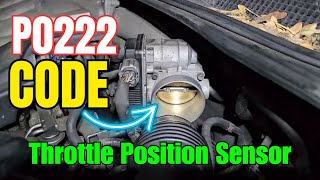
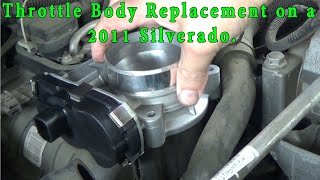
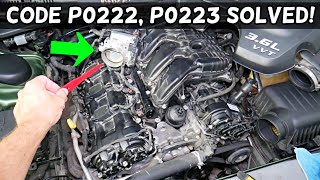

The information in this article is provided for general reference and educational purposes only. Vehicle specifications, procedures, and part compatibility can vary by production date, trim level, and region. Always consult your vehicle's factory service manual and verify part numbers before purchasing or performing repairs. Safety-critical components such as airbags, seat belts, and braking systems should be installed by a qualified professional.
- 🎬 Helpful Videos
- What Does P0222 Mean?
- Can I Drive With P0222?
- Common Causes
- Symptoms
- Diagnostic Flowchart
- Common Fixes & Costs
- Used vs. New Parts: Buying Guide
- What Happens If You Wait — Timeline
- Cost of Not Fixing It
- Diagnosis Steps
- When This Code Triggers (Freeze-Frame Conditions)
- Related Codes
- Climate & Environmental Factors
- How to Talk to a Mechanic About This Code
- Where to Take It: Dealer vs Independent vs Chain
- When to Walk Away From the Repair
- What Scan Tool You Need for This Code
- How to Clear the Code After You Fix It
- Will This Fail Emissions / State Inspection?
- Most Commonly Affected Vehicles
- Manufacturer-Specific Notes
- Real Owner Stories
- 2007 Corvette LS2 at 140,000 km
- 2004 Buick Rainier 4.2L I6
- 2013 Skoda Yeti (Turbocharged Engine)
- How to Prevent This Code From Triggering
- Frequently Asked Questions
- What is the most common misdiagnosis for P0222?
- Can I just clean the throttle body to fix P0222?
- What's the difference between a Throttle Position Sensor (TPS) and an Accelerator Pedal Position (APP) sensor?
- Will the P0222 code clear itself?
- Is it expensive to fix code P0222?
- Do I need to perform a 'relearn' procedure after fixing P0222?
- Can a low battery cause a P0222 code?
- What's the difference between P0222 and P0221?
- Key Takeaways
- 🎟️ Get 5% Off