

P0022 on 2015-2024 Ford F-150 2.7L EcoBoost: Causes and Fixes for Over-Retarded Cam Timing
On a 2.7L EcoBoost F-150, P0022 is almost always caused by low/dirty engine oil or a faulty Variable Camshaft Timing (VCT) solenoid on the driver's side. Start with an oil and filter change. If that doesn't work, a new VCT solenoid costs about $40-$80 and is a straightforward DIY replacement.
- P0022 on the 2.7L EcoBoost points to a timing issue on the driver's side intake camshaft.
- Before buying any parts, check your oil level and quality. An oil and filter change is the cheapest and most important first step.
- The most common failed part is the VCT solenoid (Part #FT4Z-6M280-B), which is relatively inexpensive and easy to replace.
- Do not immediately assume a catastrophic timing chain or phaser failure, as these are less common and much more expensive to fix.
- Ignoring this code can lead to poor performance, stalling, and potential long-term engine damage.
What's Unique About the 2015-2024 Ford F-150
The 2.7L EcoBoost's Variable Camshaft Timing (VCT) system is hydraulically operated and highly sensitive to oil condition. Ford has issued multiple Technical Service Bulletins (TSBs) acknowledging that small debris in the oil can cause the VCT solenoids to stick, triggering codes like P0022. This makes regular, high-quality oil changes with the correct 5W-30 synthetic oil especially critical on this engine. The engine was updated in 2018 (Gen 2), receiving a more robust dual-chain timing system, but the VCT solenoids, which are conveniently located on top of the valve covers for easy access, remain a primary failure point across all years.
Generation note: This range covers the 13th generation (2015-2020) and 14th generation (2021-2024) F-150. The 2.7L EcoBoost was updated in 2018, moving from a single timing chain to a dual-chain setup. However, the primary causes of P0022 (oil issues, VCT solenoids) are common to both Gen 1 (2015-2017) and Gen 2 (2018-2024) versions of this engine.
Symptoms You May Notice
- Check Engine Light is on
- Rough or unstable idle, sometimes dropping RPMs at a stop
- Engine hesitates or is sluggish on acceleration
- Stalling when coming to a stop 🎬 Watch: Troubleshooting rough idle and stalling on your F-150
- Reduced fuel economy
- Rattling or ticking noises from the engine, especially on startup lasting 2-5 seconds.
- Replacing the camshaft position sensor. The sensor is correctly reporting the over-retarded timing; it is not the cause of it. The code indicates a mechanical timing issue or oil flow problem, not a sensor failure.
Most Likely Causes
- Low, Dirty, or Incorrect Viscosity Engine Oil 🔴 High Probability The VCT system uses oil pressure to adjust cam timing. The small passages in the VCT solenoids are easily clogged by sludge or debris from old oil, preventing proper function. This is the number one cause of VCT-related codes.
How to confirm: Check the oil level on the dipstick and inspect its color and consistency. If it's low, black, or thick, it needs to be changed. A Reddit user with recurring P0012/P0022 codes found their 'fresh' oil was already very dirty, suggesting underlying sludge from a previous owner.
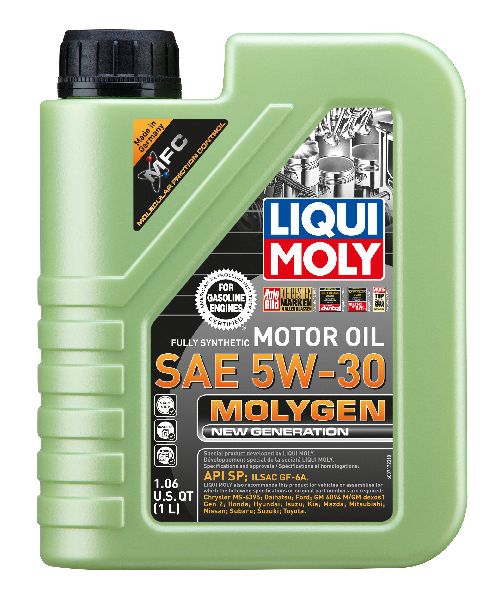
Typical fix: Perform an oil and filter change using the correct full synthetic SAE 5W-30 oil (meeting Ford spec WSS-M2C961-A1) and a quality filter like Motorcraft.
Est. part cost: $50-$80 - Faulty Bank 2 Intake VCT Solenoid 🔴 High Probability Ford TSBs SSM 50067 and 47170 specifically state that these solenoids can stick due to small debris in the oil, causing timing codes. It's a very common failure point, with many owners on forums resolving P0022 by replacing them.
How to confirm: After an oil change, if the code returns, swap the Bank 2 (driver's side) intake solenoid with the Bank 2 exhaust solenoid. Clear the codes and drive. If the code changes to P0024 (Exhaust Cam Over-Retarded), the solenoid is confirmed bad. This is a widely accepted diagnostic technique 🎬 See this video for a simple P0022 diagnosis walkthrough in owner forums.
Typical fix: Replace the Bank 2 (driver's side) intake VCT solenoid. The solenoids are located on top of the valve covers and are easily accessible, held by a single 8mm bolt. Some owners choose to replace all four solenoids preventatively.
Est. part cost: $40-$80 - Worn Bank 2 Intake Cam Phaser ⚪ Low Probability While less common than a solenoid failure, the mechanical phasers can wear out or fail, especially at higher mileage or with a history of poor oil maintenance. A manufacturer service bulletin, TSB Bulletin #SSM 49583, notes that vehicles may exhibit noise near the front of the valve covers from the intake variable camshaft timing system alongside code P0022.
How to confirm: This is a diagnosis of exclusion. If the oil is clean and a new VCT solenoid does not fix the code, the phaser is the next likely culprit. A loud rattling or knocking from the front of the engine on cold starts is a strong indicator of phaser failure. 🎬 Watch: How to identify and fix the startup rattle
Typical fix: Replace the cam phaser, which is a major repair requiring removal of the valve cover and timing cover. This is often a job for a professional.
Est. part cost: $90-$150
Rare But Worth Checking
- Stretched Timing Chain or Failed Tensioner: This is a significant mechanical failure. It usually presents with persistent rattling noises from the front of the engine, not just on startup. If the chain has jumped time, multiple timing codes are likely.
- Low System Oil Pressure: A failing oil pump or worn internal engine bearings can cause system-wide low oil pressure, starving the VCT system. This is a severe issue and would likely be accompanied by other pressure-related symptoms or codes and requires professional diagnosis.
- Damaged VCT Solenoid Wiring: A split or corroded wire casing on the VCT solenoid connector can cause an intermittent signal, leading to the P0022 code. One owner found an exposed wire was the true cause after other attempted fixes failed.
- Internal Camshaft Damage: In extreme cases, mechanical failure can occur within the engine itself. NHTSA ODI #11702602 describes an instance where a check engine light for P0022 resulted in the discovery that the camshaft had a hole in it.
Diagnosis Steps
- Check Engine Oil: Verify the oil level is full and the oil is clean. If low, top it off and see if the code clears. If dirty or past its service interval, proceed to the next step.
- Change Oil and Filter: Replace the engine oil and filter with a full synthetic SAE 5W-30 oil and a high-quality filter. Clear the code and drive the vehicle to see if it returns. This simple step resolves the issue in many cases.
- Inspect VCT Solenoid Wiring: Check the electrical connector and wiring for the Bank 2 (driver's side) intake VCT solenoid for any damage, corrosion, or loose connections. A split wire casing has been found to be the culprit in some cases.
- Test the VCT Solenoid: The most effective DIY test is to swap the intake and exhaust VCT solenoids on Bank 2. They are identical parts. Clear the codes. If code P0022 returns, the problem is not the solenoid. If a new code, P0024, appears, the solenoid you moved is faulty and needs replacement.
- Command Solenoid with Scan Tool: As per Ford TSB SSM 50067, a capable scan tool (like Ford IDS or FORScan) can be used to command the solenoid on and off (cycle it 10 times) to see if it is stuck. This can sometimes free up minor debris and is a required diagnostic step before component replacement under warranty. TSB Bulletin #SSM 54366 further directs technicians to pinpoint test HK in the Powertrain Control and Emissions Diagnosis (PC/ED) manual for these codes.
- Check for Mechanical Timing Issues: If all of the above steps fail to resolve the code, the issue is likely mechanical within the timing system (cam phaser, timing chain, tensioner). This often presents with a cold-start rattle and requires professional diagnosis, including checking oil pressure manually.
Parts You'll Likely Need
- Engine Variable Camshaft Timing (VCT) Solenoid
(OEM #FT4Z-6M280-C (supersedes FT4Z-6M280-B, FT4Z-6M280-A))— This is the most common part to fail for code P0022. It gets stuck or clogged by debris in the engine oil, preventing it from correctly adjusting camshaft timing. The part number has been updated by Ford multiple times.
Trusted brands: Motorcraft, Dorman, SKP, Walker
OEM price range: $50-$85
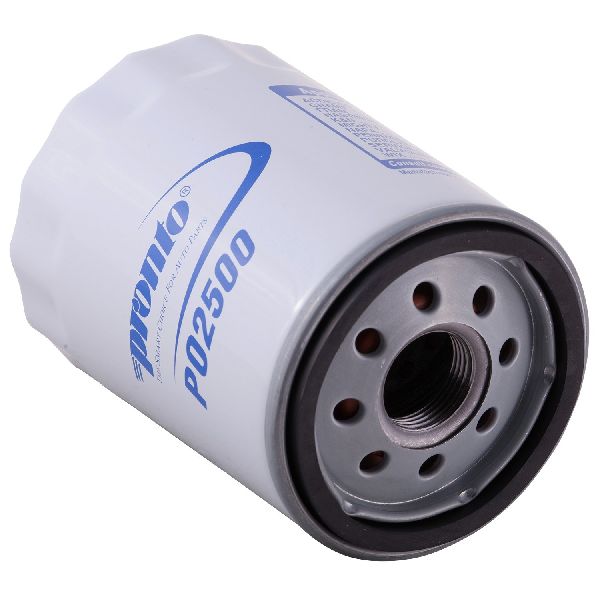
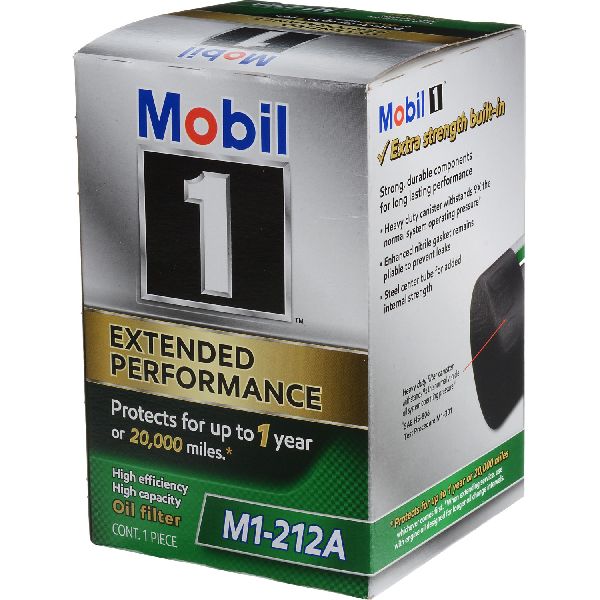
Aftermarket price range: $25-$60 - Engine Oil and Filter — The VCT system is dependent on clean oil at the correct pressure. An oil change is the first diagnostic step and can sometimes resolve the issue on its own.
Trusted brands: Motorcraft (Synthetic Blend or Full Synthetic), Mobil 1, Castrol
OEM price range: $60-$90
Aftermarket price range: $50-$80
Related Codes That Often Appear With This One
- P0021 — 'A' Camshaft Position - Timing Over-Advanced (Bank 2). This can occur if the VCT solenoid is sticking intermittently, causing both over-advanced and over-retarded conditions at different times.
- P0011 / P0012 — These are the equivalent over-advanced and over-retarded codes for Bank 1 (passenger side). Seeing codes for both banks (e.g., P0012 and P0022) strongly points to a systemic issue like severe oil contamination, incorrect oil viscosity, or low oil pressure.
- P052D — 'Cold Start Intake (A) Camshaft Position Timing Over-Retarded (Bank 2)'. This indicates the problem is most pronounced during cold starts, further pointing to issues with oil viscosity or pressure when the engine is cold.
Technical Service Bulletins (TSBs) & Recalls
- SSM 50067: A broad bulletin for 2015-2021 Ford/Lincoln vehicles that lists P0022 as a possible VCT-related DTC. It advises using a scan tool to cycle the affected VCT solenoid 10 times to clear debris before replacing it.
- TSB 24-2098 (supersedes 23-2330, 19-2205): Pertains to oil pan leaks on 2015-2017 F-150s with the 2.7L EcoBoost. This is a critical related issue, as the resulting low oil level can trigger VCT faults like P0022. The TSB outlines replacing the pan with an improved gasketed design.
- TSB Bulletin #SSM 54366: Notes that vehicles may exhibit an illuminated MIL with DTC P0022 and directs technicians to specific pinpoint tests in the Workshop Manual.
- TSB Bulletin #SSM 49583: Specifically addresses 5.0L engines that may exhibit P0022 along with noise near the front of the valve covers from the intake variable camshaft timing system.
Platform-Specific Known Issues
- Oil Pan Leaks (2015-2017): TSB 24-2098 addresses a very common oil pan leak on the 2015-2017 2.7L EcoBoost due to failure of the original RTV sealant. The official fix is to replace the original pan with an updated version that uses a press-in gasket (Part No. ML3Z-6675-J, which supersedes the one in the TSB). A significant leak can lead to a low oil level, which is a primary cause of P0022.
Mechanic-Grade Diagnostic Values
- VCT Solenoid Internal Resistance — expected: 6.9 to 7.9 Ohms at 68°F (20°C).. Failure: A reading of 0 Ohms (short), OL/infinite (open), or a value significantly outside the specified range indicates a faulty solenoid coil.
- Voltage at VCT Solenoid Connector (Power Pin) — expected: Battery Voltage (approx. 12V) with Key On, Engine Off.. Failure: Voltage below 10.5V indicates a problem in the power supply circuit from the PCM power relay.
- Scan Tool Live Data: VCT_ADV_ERR PID — expected: Should hover around 0° for each bank at idle with the engine warm and in closed-loop operation.. Failure: A consistent, significant deviation from 0° on Bank 2 indicates the cam is not where the PCM commands it to be.
- Engine Oil Pressure (Minimum) — expected: 15 PSI at hot idle; 30 PSI at 1500 RPM when warm.. Failure: Pressure below these minimums, especially if fluctuating when hot, can indicate excessive internal bleed-off (e.g., worn bearings) or a failing oil pump, starving the VCT system.
Scan Tool Commands That Help
- Ford IDS, FORScan, or equivalent high-end scanner: VCT Solenoid On/Off Test (Cycle Command) — As per TSB SSM 50067, this function rapidly cycles the suspect solenoid (typically 10 times) to dislodge small debris causing it to stick. If the code clears and drivability improves after this test, it strongly suggests oil contamination was the issue and may avert an unnecessary solenoid replacement.
- Ford IDS, FORScan, or equivalent high-end scanner: Monitor VCT Solenoid Duty Cycle PID (%) — When diagnosing a persistent P0022, compare the duty cycle for the Bank 2 intake solenoid to the other three. If the PCM is commanding a significantly higher duty cycle for the problematic solenoid, it indicates the PCM is trying to compensate for a component that is mechanically sticking or has restricted oil flow.
Wiring & Ground Locations
- VCT Solenoid Connector — On top of the valve covers, one for each camshaft (four total). The Bank 2 intake solenoid is on the driver's side, typically the front-most solenoid.. This 2-pin connector is the primary point for electrical testing (voltage and resistance). Damage from heat and vibration can cause poor connections, mimicking a failed solenoid.
- PCM Grounds — On the firewall. Depending on the model year, there may be one or two ground points specifically for the PCM.. A poor PCM ground can cause erratic behavior across multiple sensor readings and actuator commands, including the VCT system, leading to false or intermittent codes.
- Main Battery Ground (G100) — On the body sheet metal, just in front of the washer fluid reservoir in the engine bay.. While less specific to this code, a compromised main ground can cause a host of electrical issues, including low system voltage that could affect actuator performance.
Real Owner Repair Stories
- CarKiller Forum Post (2017 Ford F-150 2.7L EcoBoost, 125k miles) — Intermittent misfire under load, Check Engine Light with codes P0305 (Misfire Cyl 5), P0022, and P052D.
❌ Tried (didn't work) Replacing the ignition coil on cylinder 5 with a Duralast part.
✅ What actually fixed it The root cause was a cracked spark plug in cylinder #5, which was discovered after the issue persisted. The severe misfire was likely causing the crankshaft and camshaft position signals to correlate poorly, triggering the timing-related codes as a secondary effect. - YouTube video by '2 Fords Garage' (2015 Ford F-150 2.7L EcoBoost) — Randomly stalling at stop lights, idle dropping from ~650 RPM to ~400-500 RPM, pending P0022 code.
❌ Tried (didn't work) The owner noted the issue persisted despite regular oil changes.
✅ What actually fixed it Replaced all four VCT solenoids. After replacement, the idle was stable at ~650 RPM in drive. The owner suspected varnish/sludge from a previous owner's poor maintenance was the cause, which may have been dislodged by a recent oil additive, causing the solenoid to finally fail completely. - NHTSA ODI #11725630 — An owner reported that after a repair, the P0022 failure recurred approximately four months later. The owner eventually purchased four cam phaser solenoids to repair the vehicle.
- NHTSA ODI #11612025 — One owner researching a VVT solenoid for code P0022 discovered cracked valve covers and noted that if the covers keep cracking, the timing code will continue to appear.
When the Usual Fixes Don't Work
- While P0022 almost always points to an oil quality or VCT solenoid issue, it is not the exclusive cause. In one documented case on a 2017 2.7L, a persistent P0022 code was ultimately traced back to a cracked spark plug in cylinder #5. The resulting severe misfire (P0305) was enough to throw off the camshaft-to-crankshaft correlation reading, causing the PCM to incorrectly flag a timing fault. This serves as a critical reminder that if a timing code appears immediately after other engine service (like a tune-up), the new work should be inspected first, even if it seems unrelated to engine timing.
OEM Part Supersession History
FT4Z-6M280-A→FT4Z-6M280-B, then FT4Z-6M280-C, and potentially FT4Z-6M280-D. Always verify with a dealer using VIN.— Internal improvements to resist sticking and failure from oil contamination.FL3Z-6675-A / B / C (and others)→ML3Z-6675-J— For the 2015-2017 oil pan leak issue (TSB 24-2098). The original pan used an RTV seal prone to leaking. The new part (ML3Z-6675-J) is a redesigned pan that uses a more reliable press-in-place gasket.
Heads up: Using RTV to re-seal an old-style pan is not the recommended permanent fix.
Model Year Variations Within This Range
- 2015-2017: These 'Gen 1' 2.7L engines are prone to oil pan leaks from a failed RTV seal, addressed by TSB 24-2098. The resulting low oil level is a direct cause of P0022. The fix is an updated pan with a gasket.
- 2018-2024: These 'Gen 2' 2.7L engines feature a more robust dual-chain timing system compared to the Gen 1's single chain. While this may improve long-term chain/guide durability, the VCT solenoids and phasers remain common failure points for code P0022 across all years.
Diagnostic Flowchart
Other Known Issues on This Vehicle
Issues unrelated to this code that are worth knowing about as an owner of this generation:
- Leaking Oil Pan (RTV Seal Failure) 🔴 High — Very common on 2015-2017 models. The original RTV sealant fails, causing persistent oil leaks. Left unchecked, this can lead to low oil levels, which directly causes codes like P0022. (Ref: TSB 24-2098 (supersedes multiple previous versions))
- Harsh/Erratic Shifting (10-Speed Transmission) 🟠 Medium — Widespread on 2017-2019 models with the 10R80 transmission. Less frequent but still present on 2020+ models. Symptoms include hard shifts, jerking, and delayed engagement. (Ref: TSB 21-2145 (software update))
- Intake Valve Failure 🔴 High — Affects 2021-2022 models. The intake valves were made from a brittle material that could fracture, leading to catastrophic engine failure. (Ref: Recall 22V-482 (NHTSA 22V482000))
- Intercooler Condensation ("EcoBoost Shudder") 🟡 Low — More common in humid climates. Water vapor can pool in the intercooler and get ingested by the engine during hard acceleration, causing a violent shudder and limp mode. Less of an issue on later models but still possible.
- Carbon Buildup on Intake Valves 🟠 Medium — A long-term issue inherent to all direct-injection engines, including the 2.7L EcoBoost. Over 80,000-100,000 miles, buildup can restrict airflow, causing misfires and reduced performance.
Used vs. New Parts: Buying Guide for This Vehicle
When a used part is the smart pick: For this specific repair, sourcing used parts is highly discouraged for the core components. However, simple, non-wear items like the VCT solenoid's electrical pigtail connector or mounting bolts are perfectly acceptable to source from a salvage yard if needed.
Donor-vehicle mileage cap: roughly under 30000 miles for the part to have meaningful remaining life.
What to inspect on the donor part:
- For a VCT solenoid, inspect the mesh screens meticulously. Any tears, sludge, or embedded metallic particles means it should be rejected.
- Check the plastic connector housing for cracks or brittleness.
- Ask about the donor vehicle's history if possible; evidence of regular oil changes is a plus, but is rarely available and hard to verify.
OEM-only on this vehicle (don't cheap out):
- VCT Solenoids
- Cam Phasers
- Timing Chains, Guides, and Tensioners
Aftermarket brands forum-validated for this vehicle:
- Motorcraft is the gold standard for all timing components on this engine.
- For engine oil, brands meeting Ford's WSS-M2C961-A1 spec like Mobil 1, Castrol, and Valvoline are well-regarded.
Brands owners have reported issues with on this vehicle:
- While brands like Dorman offer VCT solenoids, owner feedback is mixed. For a critical component that requires significant labor to replace if it fails prematurely (on engines where it's under the valve cover), sticking with the OEM Motorcraft part is the lowest-risk option. Avoid unbranded, no-name parts from online marketplaces.
Real Owner Stories
Aggregated from forums and TSBs cited above. Mileages and costs reflect what owners reported in those sources.
2018 Ford F-150 2.7L EcoBoost — 39000 miles
Symptoms: Idle drops and there is no power until the truck is restarted.
What fixed it: The owner noted that codes affecting both banks (P0012 and P0022) pointed to a systemic oil issue.
Source hint: f150forum.com - Thread '2018 2.7 XL idle drops no power...'
2015-2024 Ford F-150 2.7L EcoBoost
Symptoms: Recurring P0012/P0022 codes; owner noticed 'fresh' oil was already very dirty.
What fixed it: Identified underlying sludge from a previous owner as the cause of the VCT system failure.
Source hint: reddit.com - r/f150
2015-2024 Ford F-150 2.7L EcoBoost
Symptoms: P0022 code persisted after other attempted fixes failed.
What fixed it: Found a split wire casing on the VCT solenoid connector.
Source hint: carparts.com - Article 'P0022 Code...'
2015-2020 Ford F-150 5.0L (Similar VCT System) — 48000 miles
Symptoms: P0022 code and mechanical timing symptoms.
What fixed it: The cam phaser was replaced under warranty.
Source hint: f150forum.com - Thread 'Bad Cam phasers'
Related OBD-II Codes
Frequently Asked Questions
Does TSB 24-2098 apply to my 2016 F-150 2.7L EcoBoost, and can it cause P0022?
What specific oil should I use in my 2.7L EcoBoost to prevent VCT solenoid clogging?
Is there a way to clear debris from the VCT solenoid without replacing it immediately?
My 2.7L F-150 has a rattling noise for 2-5 seconds on startup; is this related to P0022?
Can I test the Bank 2 intake VCT solenoid myself before buying a new one?
Where is the Bank 2 intake VCT solenoid located on the 2.7L engine?
Helpful Videos
Used OEM Parts in Stock
New Aftermarket Parts Available


The information in this article is provided for general reference and educational purposes only. Vehicle specifications, procedures, and part compatibility can vary by production date, trim level, and region. Always consult your vehicle's factory service manual and verify part numbers before purchasing or performing repairs. Safety-critical components such as airbags, seat belts, and braking systems should be installed by a qualified professional.
- Ford F-150:
- 🎬 Helpful Videos
- 🛍️ Shop This Part
- What's Unique About the 2015-2024 Ford F-150
- Symptoms You May Notice
- Most Likely Causes
- Rare But Worth Checking
- Diagnosis Steps
- Parts You'll Likely Need
- Related Codes That Often Appear With This One
- Technical Service Bulletins (TSBs) & Recalls
- Platform-Specific Known Issues
- Mechanic-Grade Diagnostic Values
- Scan Tool Commands That Help
- Wiring & Ground Locations
- Real Owner Repair Stories
- When the Usual Fixes Don't Work
- OEM Part Supersession History
- Model Year Variations Within This Range
- Diagnostic Flowchart
- Other Known Issues on This Vehicle
- Used vs. New Parts: Buying Guide for This Vehicle
- Real Owner Stories
- 2018 Ford F-150 2.7L EcoBoost — 39000 miles
- 2015-2024 Ford F-150 2.7L EcoBoost
- 2015-2024 Ford F-150 2.7L EcoBoost
- 2015-2020 Ford F-150 5.0L (Similar VCT System) — 48000 miles
- Related OBD-II Codes
- Frequently Asked Questions
- 🎟️ Get 5% Off