

P0021 on 2011-2023 Chrysler 300 3.6L: Causes and Fixes for Over-Advanced Cam Timing
On the 3.6L Pentastar V6, code P0021 is most often caused by low, old, or incorrect viscosity engine oil. If an oil change doesn't fix it, the next most likely cause is a faulty Bank 2 (driver's side) VVT solenoid, which costs around $30-$90. This code can also be an early warning for a failing camshaft phaser, a known issue on this engine.
- Always check your engine oil first. Low, dirty, or incorrect oil is the #1 cause of P0021 on the 3.6L Pentastar.
- The most common faulty part is the VVT solenoid on the driver's side (Bank 2). You can confirm this for free by swapping it with the passenger side solenoid to see if the code follows.
- Do NOT replace the camshaft position sensor; it is rarely the cause of this specific code.
- A ticking or rattling noise from the engine accompanying this code is a serious symptom that points towards a more significant mechanical failure, like rocker arms or cam phasers, and should be inspected immediately.
What's Unique About the 2011-2023 Chrysler 300
The 3.6L Pentastar V6 engine's VVT system is extremely sensitive to oil quality, level, and pressure. Unlike some engines where this code might point to a sensor, on the Pentastar, P0021 is very frequently a direct result of oil maintenance issues or oil pressure loss from other common failures. This engine platform is also known for valvetrain issues, such as failing rocker arms ('Pentastar tick') and camshaft phasers, which can be the underlying cause of this code. Debris from a failing rocker arm's needle bearings can travel through the oil and clog the small passages in the VVT solenoids, leading to timing faults.
Symptoms You May Notice
- Check Engine Light is on
- Rough or unstable idle
- Engine hesitation or stalling, especially during acceleration
- Reduced engine power and performance
- Decreased fuel economy
- Rattling or ticking noise from the engine at startup or idle
- Hard starting
- Replacing the camshaft position sensor. The sensor is almost always reporting the problem correctly; it is not the cause. The code indicates a mechanical timing issue or oil flow problem, not a sensor circuit fault.
Most Likely Causes
- Low, Dirty, or Incorrect Viscosity Engine Oil 🔴 High Probability The Pentastar's VVT system uses oil pressure to actuate the cam phasers. Sludge from extended oil change intervals, low levels, or the wrong oil weight directly impacts its ability to function correctly. This is the first and most important item to check.
How to confirm: Check the oil dipstick for level and examine the oil's color and consistency. Verify the oil viscosity used against the manufacturer's recommendation (typically SAE 5W-20 or 5W-30 on the oil cap). An oil change is often the first recommended step.
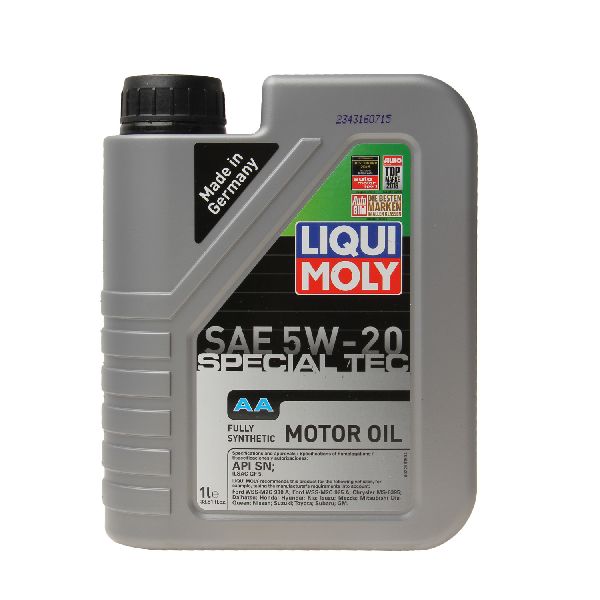
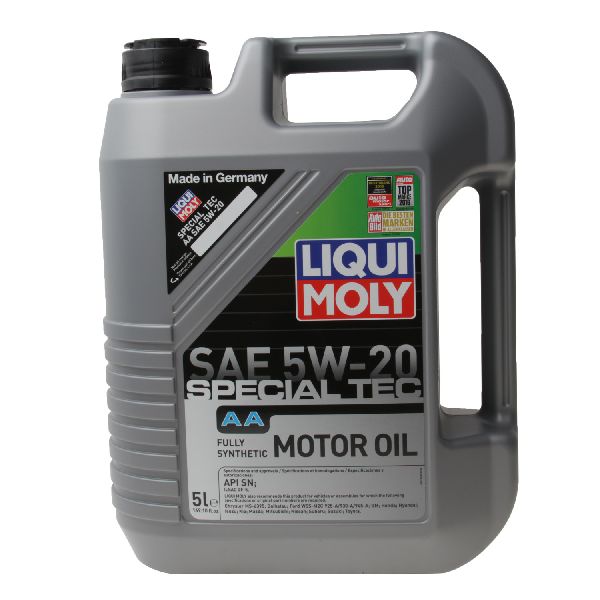
Typical fix: Perform an engine oil and filter change using a quality full synthetic oil meeting Chrysler's MS-6395 specification and a new filter.
Est. part cost: $50-$100 - Faulty VVT Solenoid (Oil Control Valve) 🔴 High Probability The solenoid's fine mesh screens can become clogged with debris from normal wear or other failing components (like rocker arms), or the solenoid can fail electrically. This is a very common point of failure.
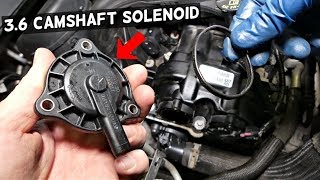
How to confirm: Swap the Bank 2 (driver's side) intake VVT solenoid with the Bank 1 (passenger's side) intake solenoid. They are identical and located on the front of the cylinder heads. Clear the codes and drive. If the fault code changes to P0011 (the Bank 1 equivalent), the solenoid is confirmed bad.
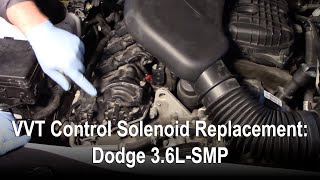
Typical fix: Replace the Bank 2 intake VVT solenoid. It is located on the front of the driver's side cylinder head and held in by one bolt.
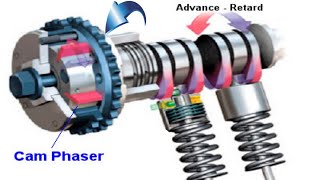
Est. part cost: $30-$90 - Failing Camshaft Phaser 🟡 Medium Probability The internal locking pin or spring mechanism within the phaser can fail, causing it to get stuck in the advanced position or rattle on startup. This is a known weakness, 🎬 Watch: How to identify signs of a failing cam phaser. especially on engines with delayed oil changes.
How to confirm: This is a more advanced diagnosis. It often requires listening for a distinct startup rattle that lasts 2-3 seconds. A mechanic can use a scan tool to command phaser position and observe the response. Physical inspection requires removing the valve cover and timing cover.
Typical fix: Replace the Bank 2 intake camshaft phaser. This is a major job that often includes replacing the timing chain, guides, and tensioners as a best practice.
Est. part cost: $150-$300 for the phaser, more for the full timing kit
Rare But Worth Checking
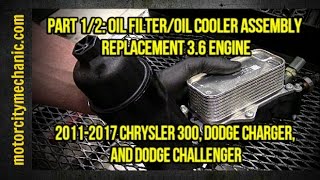
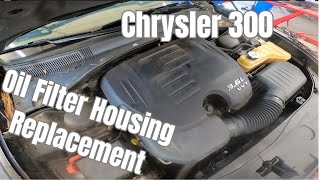
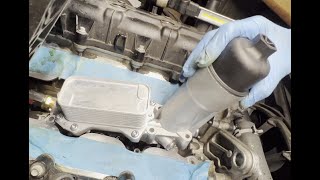
- Cracked Oil Filter Housing Assembly: A notorious issue on the 3.6L Pentastar is the plastic oil filter housing assembly cracking, leading to oil leaks into the engine valley and a loss of oil pressure. This pressure loss can starve the VVT system and trigger timing codes like P0021 and P0011, often accompanied by an oil pressure code like P0520. 🎬 See how to replace a cracked oil filter housing assembly.
- Failing Rocker Arms: A known issue on Pentastar engines is the failure of rocker arm bearings, which creates a 'ticking' sound often called the 'Pentastar Tick'. This failure releases metal debris into the oil, which clogs the VVT solenoids and oil passages, causing timing codes like P0021. This issue was more common on 2011-2016 models.
- Worn Timing Chain or Guides: While less common than a phaser failure, a stretched timing chain can cause timing to be out of sync, triggering this code. This is usually accompanied by rattling noises, especially on startup and deceleration.
Diagnosis Steps
- Check Engine Oil: Verify the oil level is correct and the oil is clean and of the proper viscosity (e.g., full synthetic 5W-20/5W-30). If in doubt, change the oil and filter first as this is a very common fix.
- Scan for Other Codes: Check for other codes that could provide more clues, such as misfire codes (P030X), codes for the opposite bank (P0011), or oil pressure codes (P0520).
- Listen to the Engine: On a cold start, listen for a 2-3 second rattle from the front of the engine (timing chain/phaser issue) or a persistent, rhythmic ticking from the valve covers (possible rocker arm failure).
- Swap VVT Solenoids: Swap the Bank 2 (driver side) intake VVT solenoid with the Bank 1 (passenger side) intake solenoid. They are identical. Clear codes and drive. If the code changes to P0011, the solenoid is faulty and must be replaced.
- Inspect Solenoid and Wiring: When the solenoid is removed, inspect its screens for metallic debris, which indicates a larger internal engine problem (like rocker arms failing). Also, check the electrical connector and wiring for damage or oil contamination.
- Inspect for Oil Leaks: Use a flashlight to inspect the engine 'valley' under the intake manifold for pooled oil, a tell-tale sign of the common cracked oil filter housing assembly.
- Advanced Diagnostics: If the steps above do not resolve the issue, the problem is likely mechanical (cam phaser, timing chain). This level of diagnosis and repair, which may involve checking oil pressure with a mechanical gauge, should be performed by a professional mechanic.
Parts You'll Likely Need
- Variable Valve Timing (VVT) Solenoid
(OEM #05184150AF)— This is the most common part to fail after ruling out oil issues. It gets clogged with debris or fails electrically, preventing proper control of the cam phaser.
Trusted brands: Mopar, Dorman, NTK
OEM price range: $60-$100
Aftermarket price range: $30-$90 - Camshaft Phaser (Intake, Bank 2)
(OEM #5184370AH)— The internal mechanism of the phaser can fail, causing it to stick in an advanced position or create a rattling noise at startup. Part number 5184370AH is listed for the intake phaser and is superseded by 5184370AI.
Trusted brands: Mopar
OEM price range: $150-$300
Aftermarket price range: $100-$200 - Engine Oil and Filter — The VVT system is highly dependent on clean oil with the correct viscosity. This is the first and most important fix to attempt.
Trusted brands: Pennzoil, Mobil 1, Mopar
OEM price range: $60-$100
Aftermarket price range: $50-$80
Related Codes That Often Appear With This One
- P0011 — This is the equivalent code for Bank 1 (passenger side). If you swap VVT solenoids for diagnosis, P0021 will turn into P0011 if the solenoid is bad. If both appear together, it suggests a global issue like low oil pressure, possibly from a cracked oil filter housing.
- P0024 — This is the code for the exhaust camshaft on the same bank (Bank 2). If they appear together, it could point to a more significant timing issue on that bank, like a phaser or chain problem.
- P0349, P0369, P0394 — These are camshaft position sensor circuit codes. While less common, wiring damage or oil contamination on the sensor connector (from a leaking oil filter housing) can sometimes accompany a timing code.
- P0520 / P06DD — These are oil pressure sensor/switch circuit codes. They often appear alongside VVT codes when the root cause is a loss of oil pressure, frequently due to a cracked oil filter housing assembly on the 3.6L Pentastar.
Technical Service Bulletins (TSBs) & Recalls
- TSB 09-002-14 Rev. B: While not directly for P0021, this TSB addresses misfires (P0300, P0302, P0304, P0306) on the left cylinder head (Bank 2) for 2011-2013 models due to excessive cylinder leakage. It led to an extended warranty (X56) for the left cylinder head on affected vehicles. A failing head can be related to the overall health of the valvetrain on that bank.
Platform-Specific Known Issues
- Rocker Arm Failure ('Pentastar Tick'): Early to mid-year Pentastar engines (esp. 2011-2016) are known for the needle bearings in the rocker arms failing. This creates a distinct ticking sound and sends metal debris through the oil system, which clogs VVT solenoids and can lead to code P0021.
Mechanic-Grade Diagnostic Values
- VVT Solenoid (Oil Control Valve) Coil Resistance — expected: 5.0 to 20.0 Ohms. Some sources cite a tighter range of 6-12 Ohms.. Failure: A reading of OL (Open Loop/infinite resistance) indicates a broken internal coil. A reading near 0 Ohms indicates an internal short.
- Camshaft Position vs. Desired Camshaft Position (Scan Tool Live Data) — expected: At idle, the actual and desired values should be within 2-3 degrees of each other.. Failure: A consistent deviation of more than 10 degrees between the commanded and actual position for several seconds will trigger the fault.
- VVT Solenoid Control Circuit Voltage (at connector) — expected: With the ignition on, one pin should have battery voltage (approx. 12V) from the main relay, and the other is the ground-side control wire from the PCM.. Failure: No voltage on the power supply pin indicates a wiring or fuse issue. No control signal from the PCM during an actuation test points to a wiring or PCM driver issue.
Scan Tool Commands That Help
- wiTECH or advanced aftermarket scanner: VVT Intake Solenoid 2/1 Actuation Test — This bidirectional control allows a technician to command the solenoid on and off with the engine running. If the engine hesitates or stalls, the solenoid is likely responding mechanically. Lack of change in engine operation points to a stuck solenoid or a clogged oil passage.
- wiTECH or advanced aftermarket scanner: Reset Cam/Crank Sync / Cam Phaser Cleaning — After replacing a camshaft, phaser, or timing components, this function may be needed to clear learned adaptations and re-establish the baseline relationship. Some tools also have a 'phaser cleaning' cycle that rapidly actuates the solenoids to try and dislodge debris.
Wiring & Ground Locations
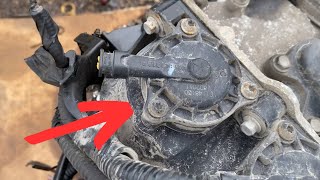
- Bank 2 Intake VVT Solenoid Connector — On the front of the driver's side (Bank 2) cylinder head. It is one of two solenoids located there; the intake solenoid is typically the upper one.. This is the primary connector to test for power, ground control signals, and to inspect for oil contamination or physical damage.
- PCM Connector C2 — The Powertrain Control Module (PCM) is typically located in the engine bay. Connector C2 is one of the main harness connectors where the control circuit for the VVT solenoid terminates.. This is the location for advanced circuit testing, such as checking for continuity on the control wire (Pin K78 in one documented example) back to the solenoid connector.
Real Owner Repair Stories
- YouTube user video (Chrysler 300 3.6L) — Check Engine Light with code P0021.
❌ Tried (didn't work) Initially considering replacing the VVT solenoid, which can cost $150-$200.
✅ What actually fixed it The owner checked the oil level and found it was low, though still registering on the dipstick. Topping off the engine oil provided enough pressure for the VVT system to operate correctly, and the code went away. This confirms that low oil level/pressure is a primary and simple cause to check first. - Reddit user in r/MechanicAdvice (2014 Jeep Wrangler 3.6L at 171k miles) — Limp mode with codes P000A-D ('Camshaft Slow Response') after major service.
❌ Tried (didn't work) Replacing cam position sensors., Replacing crank position sensor., Replacing VVT solenoids., Checking and cleaning grounds.
✅ What actually fixed it The user's problem was unresolved in the post, but the story serves as a critical lesson: after replacing all mechanical parts (timing set, phasers, solenoids), the problem persisted. The resolution required a scan tool capable of reading 'desired vs. actual' cam position to see what the computer was commanding versus what the sensors were reading. This highlights that without proper scan tool data, even a correct mechanical repair can be impossible to verify, and one can waste money on parts that aren't the root cause.
OEM Part Supersession History
5184370AH→5184370AI— Standard part revision by the manufacturer for improvements or production changes.
Heads up: The new part number (5184370AI) replaces the previous versions including ...AF, ...AG, and ...AH. They should be interchangeable for repairs.05184150AF→N/A— This part number appears to be the current and long-standing number for the VVT solenoid (Oil Control Valve).
Model Year Variations Within This Range
- 2011-2015: These earlier engines are more prone to the 'Pentastar Tick' from failing rocker arm needle bearings and left-side cylinder head issues, which can be a root cause of oil contamination leading to P0021.
- 2016-2023: The 3.6L Pentastar was significantly updated. It features a two-stage variable valve lift (VVL) system in addition to VVT, a higher compression ratio (11.3:1 vs 10.2:1), and cooled EGR. While the causes of P0021 are similar, the valvetrain is more complex, and the operating range of the VVT system was increased.
Diagnostic Flowchart
Other Known Issues on This Vehicle
Issues unrelated to this code that are worth knowing about as an owner of this generation:
- Cracked Oil Filter / Cooler Housing 🔴 High — Very common across all model years. The plastic housing becomes brittle from heat cycles and cracks, causing major oil and/or coolant leaks.
- Rocker Arm / Lifter Failure ('Pentastar Tick') 🔴 High — Common, especially on 2011-2016 models. Needle bearings in the rocker arms fail, causing a ticking noise and sending metal debris into the oil system. (Ref: Several class-action lawsuits filed.)
- Left Cylinder Head Failure 🔴 High — Primarily affects 2011-2013 models. Worn valve guides/seats cause misfires on Bank 2. (Ref: TSB 09-002-14; Covered under extended warranty X56 for 10 years/150,000 miles.)
- Cooling System Failures (Radiator/Thermostat) 🟠 Medium — Fairly common. Issues include leaking radiators and failing thermostats/housings, leading to overheating.
- Uconnect Infotainment System Glitches 🟡 Low — Common across many model years. Owners report issues like screen delamination, freezing, unresponsiveness, and Bluetooth connectivity problems. (Ref: Various software update TSBs have been released over the years.)
Used vs. New Parts: Buying Guide for This Vehicle
When a used part is the smart pick: For this specific code, using used parts is generally not recommended. The primary failure parts (solenoids, phasers) are sensitive to wear, oil contamination, and sludge, which are unknown variables in a used part. The only potential exception might be a simple external component like a wiring pigtail if the original is damaged.
Donor-vehicle mileage cap: roughly under 80000 miles for the part to have meaningful remaining life.
What to inspect on the donor part:
- For a VVT solenoid, inspect the mesh screens for any metallic debris or sludge. If any is present, do not buy it, as it indicates the donor engine had internal issues.
- Ask for the donor vehicle's maintenance history if possible; regular oil changes are a good sign.
- Avoid parts from engines that show signs of heavy oil sludge when looking into the oil filler cap.
OEM-only on this vehicle (don't cheap out):
- Camshaft Phaser: This is a critical timing component. Aftermarket phasers have a poor reputation for reliability and longevity. Given the high labor cost to replace them, using a new Mopar OEM phaser (part #5184370AI) is the only recommended path.
- Timing Chain Kit: Similar to phasers, the timing chain and guides are not a place to save money with aftermarket parts due to the labor-intensive nature of the job.
Aftermarket brands forum-validated for this vehicle:
- NTK (for VVT Solenoids): NTK is a reputable OEM supplier and a trusted name for engine management components.
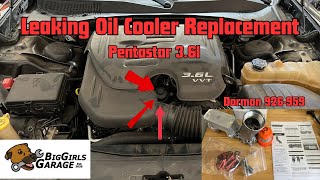
- Dorman (for Oil Filter Housing): Dorman offers an aluminum replacement (e.g., 926-959) for the failure-prone plastic OEM oil filter housing, which is a common source of oil pressure loss that can cause this code.
Brands owners have reported issues with on this vehicle:
- Unnamed/white-box online marketplace brands for critical components like VVT solenoids and especially camshaft phasers. The risk of premature failure and having to repeat the labor far outweighs the initial cost savings.
Real Owner Stories
Aggregated from forums and TSBs cited above. Mileages and costs reflect what owners reported in those sources.
2014 Chrysler 300 3.6L
Symptoms: Owner experienced both P0021 and P0024 codes simultaneously.
What fixed it: After replacing the VVT solenoids did not resolve the issue, the diagnosis pointed towards failing cam phasers.
Source hint: https://www.300cforums.com/threads/p0021-and-p0024.282194/
2014 Chrysler 300 3.6L
Symptoms: Check engine light with code P0021.
What fixed it: The consensus for repair was to start with a fresh oil change and then attempt swapping the VVT solenoids between banks to isolate the failure before replacing expensive phasers.
Source hint: Reddit r/MechanicAdvice thread titled '2014 chrysler 300 3.6l p0021 code'
2011-2013 Chrysler 300 3.6L
Symptoms: Misfires on the left cylinder head (Bank 2).
What fixed it: Replacement of the left cylinder head under the X56 extended warranty program.
Source hint: TSB 09-002-14 Rev. B / Warranty X56
Related OBD-II Codes
Frequently Asked Questions
Does TSB 09-002-14 Rev. B apply to my 2012 Chrysler 300 with code P0021?
Is there an extended warranty for the cylinder head issues on early Pentastar 3.6L engines?
What oil should I use in my Chrysler 300 3.6L to prevent VVT codes like P0021?
Can I test if the VVT solenoid is bad without buying a new part?
What is the 'Pentastar Tick' and can it cause a P0021 code?
I see oil pooling under my intake manifold; could this be related to my VVT issues?
Helpful Videos
Used OEM Parts in Stock


New Aftermarket Parts Available


The information in this article is provided for general reference and educational purposes only. Vehicle specifications, procedures, and part compatibility can vary by production date, trim level, and region. Always consult your vehicle's factory service manual and verify part numbers before purchasing or performing repairs. Safety-critical components such as airbags, seat belts, and braking systems should be installed by a qualified professional.
- Chrysler 300:
- 🎬 Helpful Videos
- 🛍️ Shop This Part
- What's Unique About the 2011-2023 Chrysler 300
- Symptoms You May Notice
- Most Likely Causes
- Rare But Worth Checking
- Diagnosis Steps
- Parts You'll Likely Need
- Related Codes That Often Appear With This One
- Technical Service Bulletins (TSBs) & Recalls
- Platform-Specific Known Issues
- Mechanic-Grade Diagnostic Values
- Scan Tool Commands That Help
- Wiring & Ground Locations
- Real Owner Repair Stories
- OEM Part Supersession History
- Model Year Variations Within This Range
- Diagnostic Flowchart
- Other Known Issues on This Vehicle
- Used vs. New Parts: Buying Guide for This Vehicle
- Real Owner Stories
- 2014 Chrysler 300 3.6L
- 2014 Chrysler 300 3.6L
- 2011-2013 Chrysler 300 3.6L
- Related OBD-II Codes
- Frequently Asked Questions
- 🎟️ Get 5% Off