

P0012 on 2020-2021 Ford Transit V6: Camshaft Timing Over-Retarded Causes and Fixes
For the 2020-2021 Ford Transit, code P0012 is frequently caused by a PCM software issue that requires a dealer update per TSB 21-2224. If the software is up to date, the next most likely causes are low/dirty engine oil or a faulty Variable Camshaft Timing (VCT) solenoid for Bank 1.
- For a 2020-2021 Transit with P0012, first check if TSB 21-2224 applies; a simple software update could be the fix.
- Always check your engine oil level and condition first. Low or dirty oil is a very common and simple-to-fix cause.
- If an oil change and software check don't work, the next most likely part to fail is the Bank 1 intake VCT solenoid, which is relatively inexpensive and accessible to replace.
- Do not immediately replace the camshaft position sensor, as it is rarely the root cause of this specific code.
What's Unique About the 2020-2021 Ford Transit
For the 2020-2021 Ford Transit, a significant number of P0012 code instances are directly linked to a software problem in the Powertrain Control Module (PCM), as identified in Ford's Technical Service Bulletin 21-2224. Unlike many other vehicles where this code points immediately to a mechanical or oil-related fault, for Transits built on or before July 1, 2021, the very first diagnostic step should be to check if this software update has been performed. Many owners have reported this simple dealer reflash permanently solved the issue.
Symptoms You May Notice
- Check Engine Light is on
- Rough or unstable idle
- Engine may stall, especially when stopped
- Sluggish acceleration and loss of power.
- Decreased fuel economy
- Rattling noise from the engine, especially on startup, which can point to a more serious timing chain or phaser issue.
- Replacing the camshaft position sensor. The sensor is usually just reporting the problem, not the cause of it. The code indicates the PCM is receiving a valid signal from the sensor, but the timing value is incorrect. A sensor failure would typically generate a P0340-series code.
Most Likely Causes
- Incorrect Powertrain Control Module (PCM) Software 🔴 High Probability Ford issued TSB 21-2224 specifically for 2020-2021 Transit vehicles (3.5L Duratec engine in 2020, all 2021 models) built on or before July 1, 2021, identifying a software bug that can cause P0012 and other timing codes.
How to confirm: A Ford dealer or a shop with the appropriate scan tool can check the vehicle's PCM software version against the TSB. The vehicle's build date, found on the driver's door jamb sticker, is a key indicator.
Typical fix: Reprogramming the PCM with the updated software at a Ford dealership.
Est. part cost: $0 - Low, Dirty, or Incorrect Viscosity Engine Oil 🔴 High Probability The Variable Camshaft Timing (VCT) system is hydraulic and extremely sensitive to oil pressure and cleanliness. Sludge or debris can clog the small passages in the VCT solenoids or cam phasers, a common issue across many Ford platforms.
How to confirm: Check the oil level on the dipstick and examine the oil's condition. If it is dark, gritty, or below the 'add' line, this could be the cause.
Typical fix: Change the engine oil and filter using the Ford-specified viscosity (e.g., SAE 5W-30 for the 3.5L V6). In some cases, an engine flush or a second, short-interval oil change may be needed to clear out sludge.
Est. part cost: $40-$80 - Faulty Variable Camshaft Timing (VCT) Solenoid 🟡 Medium Probability The VCT solenoid (also called an oil control valve) can get stuck or clogged with debris from the oil, preventing it from accurately controlling oil flow to the cam phaser. Ford has issued multiple service messages like SSM 48423 for various models regarding debris causing VCT solenoids to stick.
How to confirm: After confirming oil level is good, a common diagnostic step is to swap the intake VCT solenoids between Bank 1 and Bank 2. If the code changes to P0022 (the equivalent code for Bank 2), the solenoid is faulty. A scan tool can also be used to command the solenoid and monitor the camshaft's response.
Typical fix: Replace the VCT solenoid for the Bank 1 intake camshaft. The Motorcraft part number is often a variant of AT4Z-6M280-A or a superseding number.
Est. part cost: $30-$90
Rare But Worth Checking
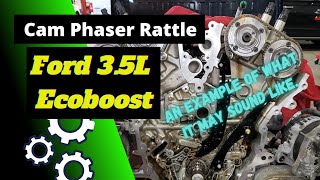
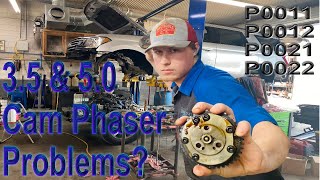
- Failing Camshaft Phaser: This is a more serious mechanical issue. The phaser is the gear on the end of the camshaft that actually adjusts the timing. If the internal locking pins fail or it becomes clogged with sludge, it can get stuck in one position, causing the code. This is often accompanied by a rattling or ticking noise from the engine, especially on cold starts. 🎬 Listen to this example of what a failing phaser sounds like.
- Stretched Timing Chain or Failed Tensioner: While less common on newer vehicles, a stretched timing chain can cause the base camshaft timing to be off, which the VCT system cannot overcome. This is a significant mechanical repair and is almost always accompanied by a rattling noise on startup.
Diagnosis Steps
- Check the vehicle's build date on the door jamb sticker. If it is on or before July 1, 2021, contact a Ford dealer to see if TSB 21-2224 (PCM reflash) applies and has been performed. This is the most critical first step for this specific vehicle.
- Check the engine oil level and condition. If low, dirty, or overdue for a change, perform an oil and filter change with the manufacturer-specified oil type (Motorcraft is recommended). Clear the code and see if it returns.
- Use an OBD-II scanner with live data capability to monitor the desired vs. actual camshaft position for Bank 1 (PIDs: VCT_INT_DSD B1 vs. VCT_INT_ACT B1). This can help confirm the discrepancy and how severe it is.
- If the oil is clean and the TSB doesn't apply or is already done, locate the intake VCT solenoids for Bank 1 (passenger side) and Bank 2 (driver side). Swap them. They are identical parts.
- Clear the codes and drive the vehicle. If the code returns as P0022, the solenoid you moved to Bank 2 is faulty and needs to be replaced.
- If the code P0012 returns, the problem is not the solenoid. Inspect the wiring and connector for the Bank 1 intake VCT solenoid for any damage or oil contamination.
- If all of the above checks out, the issue is likely more severe, such as a failing camshaft phaser or a timing chain issue, which may require professional diagnosis, especially if a rattling noise is present.
Parts You'll Likely Need
- Variable Camshaft Timing (VCT) Solenoid
(OEM #AT4Z-6M280-A (or superseding part number, verify with VIN))— This is the most common mechanical part to fail that causes P0012, usually due to becoming clogged or stuck. It is a primary actuator in the VCT system.
Trusted brands: Motorcraft, Dorman, Gates
OEM price range: $50-$100
Aftermarket price range: $30-$70 - Engine Oil and Filter
(OEM #Motorcraft FL-500S (Filter for 3.5L))— The VCT system is hydraulic, and low, dirty, or incorrect viscosity oil is a leading cause of this code.
Trusted brands: Motorcraft
OEM price range: $60-$100
Aftermarket price range: $40-$80
Related Codes That Often Appear With This One
- P0022 — This is the same 'over-retarded' code but for Bank 2 (driver's side). If both P0012 and P0022 are present, it strongly points to a systemic issue like low/dirty oil or the PCM software problem, as these affect the entire engine.
- P0011 — This is the code for 'over-advanced' timing on Bank 1. Seeing it with P0012 could indicate a very erratic VCT solenoid or a failing cam phaser that is moving uncontrollably.
- P052B — This code for 'Cold Start 'A' Camshaft Position Timing Over-Retarded Bank 1' is very specific and, when seen with P0012, strongly points to a mechanical component like a VCT solenoid or phaser that is sticking when the oil is cold and thick.
Technical Service Bulletins (TSBs) & Recalls
- TSB 21-2224: Some 2020 Transit vehicles equipped with a 3.5L Duratec engine and all 2021 Transit vehicles built on or before 01-Jul-2021 may exhibit an illuminated MIL with DTCs P0011, P0012, P0014, P0015, P0021, and/or P0022 stored in the PCM. This may be due to the PCM software. To correct the condition, reprogram the PCM.
Platform-Specific Known Issues
- TSB 21-2224: Some 2020-2021 Transit models built on or before July 1, 2021, may trigger P0012 and other related timing codes due to a PCM software error. The prescribed fix is a PCM update.
Mechanic-Grade Diagnostic Values
- VCT Solenoid Resistance — expected: 5 - 15 Ohms. Failure: A reading outside this range, especially 0 Ohms (short) or an infinite/open reading (OL), indicates a failed solenoid.
- Ford-specific PID: VCT_INT_DIF1 (Intake Cam Error Bank 1) — expected: Should be close to 0 degrees at idle and during steady-state driving.. Failure: A consistent, non-zero value indicates the camshaft is not at the commanded position. A large negative number would confirm an over-retarded condition.
- Ford-specific PIDs: VCT_INT_ACT1 vs. VCT_INT_DSD1 — expected: The 'Actual' PID (ACT) should closely track the 'Desired' PID (DSD) as the engine is revved.. Failure: A significant lag or complete lack of response from the ACT PID while the DSD PID changes indicates a mechanical or hydraulic problem (solenoid, phaser, oil pressure).
- Engine Oil Pressure at Idle (Hot) — expected: At least 25 PSI.. Failure: Pressure below 25 PSI can cause the VCT system to malfunction and set timing codes, pointing to a potential oil pump or engine wear issue rather than a VCT component failure.
Scan Tool Commands That Help
- Ford IDS, FORScan: VCT Solenoid On/Off Test or Duty Cycle Control — This bidirectional command allows a technician to manually activate the VCT solenoid while the engine is running. A noticeable change in engine idle quality or a response on live data PIDs confirms the solenoid is mechanically capable of moving and that its control wiring is intact.
- Ford IDS: Pinpoint Test HK12: Cycle Solenoid — As suggested by Ford TSBs like SSM 48423, this function cycles the solenoid multiple times (e.g., 10 times) to attempt to dislodge small debris that may be causing it to stick. If the code disappears after this test, it confirms the issue was debris and not a failed solenoid, potentially avoiding an unnecessary part replacement.
Wiring & Ground Locations
- Battery Location — Under the driver's seat, accessible by removing a cover.. The main battery and a pre-fuse box are located here. Poor connections or low voltage can cause various electronic issues, though it's a less common cause for a specific code like P0012. Access is required for any deep electrical diagnosis.
- Engine Bay Jump Start / Ground Point — The negative jump start point, often an engine lifting eye or designated chassis bolt, serves as a primary engine ground reference.. A poor engine ground can cause erratic sensor readings and module behavior. Verifying this connection is tight and corrosion-free is a basic but critical electrical diagnostic step.
- Gearbox to Inner Wing Ground Strap — On many Transit models, a key ground strap runs from the transmission case to the inner wing/chassis area below the under-hood fuse box.. This is a primary ground path for the powertrain. Corrosion or a loose connection here can cause a wide range of seemingly unrelated electrical faults and drivability issues, including problems with PCM-controlled actuators like VCT solenoids.
OEM Part Supersession History
7T4Z-6M280-A, 7T4Z-6M280-B→7T4Z-6M280-C, AT4Z-6M280-A/B/C— Updated designs for improved reliability and resistance to debris/sticking.
Heads up: The 3.5L/3.7L Cyclone engine family uses different solenoids for intake vs. exhaust, and they are often color-coded (e.g., blue connector for exhaust). While AT4Z-6M280-A is common, it's critical to verify the exact part number and position (Intake/Exhaust, Bank 1/2) with the vehicle's VIN, as installing the wrong solenoid can cause the code to persist or worsen.
Model Year Variations Within This Range
- 2020-2021: The standard engine is the 3.5L PFDI V6 (Port Fuel/Direct Injection), with 275 hp. An optional 3.5L EcoBoost (twin-turbo) V6 with 310 hp was also available. While the VCT systems are conceptually similar, part numbers for phasers or other specific components may differ. The TSB 21-2224 applies to the base 3.5L in 2020 and all engines in 2021 (up to the build date).
Diagnostic Flowchart
Real Owner Stories
Aggregated from forums and TSBs cited above. Mileages and costs reflect what owners reported in those sources.
Older Ford F-150
Symptoms: The P0012 code appeared shortly after a P0340 cam sensor code was diagnosed and fixed.
What fixed it: Checking and cleaning a sticky VCT solenoid.
Source hint: Ford Truck Enthusiasts Forums thread titled 'P0012 and what to do'
Ford 5.4L engine
Symptoms: Experienced noticeable power loss and the engine stalling out.
What fixed it: Replaced the VCT solenoid and seal.
Cost: Under $100
Source hint: YouTube video by FixitFelix titled 'How To Fix Ford P0012 Code ( VCT Solenoid replace )'
Related OBD-II Codes
Frequently Asked Questions
Does TSB 21-2224 apply to my 2020-2021 Ford Transit?
What oil should I use to prevent the P0012 code in my 3.5L V6 Transit?
How can I test if the VCT solenoid is causing the P0012 code on my Transit?
What is the part number for the VCT solenoid on this engine?
I hear a rattling noise on startup along with the P0012 code. What does this mean?
Are there any other Ford service messages about the VCT solenoids sticking?
Helpful Videos
Used OEM Parts in Stock

New Aftermarket Parts Available


The information in this article is provided for general reference and educational purposes only. Vehicle specifications, procedures, and part compatibility can vary by production date, trim level, and region. Always consult your vehicle's factory service manual and verify part numbers before purchasing or performing repairs. Safety-critical components such as airbags, seat belts, and braking systems should be installed by a qualified professional.
- Ford Transit:
- 🎬 Helpful Videos
- 🛍️ Shop This Part
- What's Unique About the 2020-2021 Ford Transit
- Symptoms You May Notice
- Most Likely Causes
- Rare But Worth Checking
- Diagnosis Steps
- Parts You'll Likely Need
- Related Codes That Often Appear With This One
- Technical Service Bulletins (TSBs) & Recalls
- Platform-Specific Known Issues
- Mechanic-Grade Diagnostic Values
- Scan Tool Commands That Help
- Wiring & Ground Locations
- OEM Part Supersession History
- Model Year Variations Within This Range
- Diagnostic Flowchart
- Real Owner Stories
- Older Ford F-150
- Ford 5.4L engine
- Related OBD-II Codes
- Frequently Asked Questions
- 🎟️ Get 5% Off