

P0011 on 2020-2021 Ford Transit 3.5L PFDi: Causes for Over-Advanced Camshaft Timing
For a 2020-2021 Ford Transit with a 3.5L PFDi engine built on or before July 1, 2021, code P0011 is overwhelmingly likely to be caused by a powertrain control module (PCM) software issue that requires a dealer update, as documented in Ford TSB 21-2224. If the software is already updated or the vehicle was built after that date, the next most common causes are low, dirty, or incorrect viscosity engine oil, or a faulty VCT solenoid, which is an inexpensive part.
- For a 2020-2021 Transit, your first step should be to check with a Ford dealer if TSB 21-2224 (a software update) applies to your vehicle.
- The second most likely cause is low or dirty engine oil. Always check your oil level and condition before buying parts.
- If software and oil are not the issue, the Bank 1 intake VCT solenoid is the next part to inspect and likely replace.
- Do not replace the camshaft position sensor; it is almost certainly not the cause of the problem.
What's Unique About the 2020-2021 Ford Transit
For this specific vehicle and year range, Ford has identified a software calibration issue in the Powertrain Control Module (PCM) as a primary cause for this code. Technical Service Bulletin (TSB) 21-2224 was issued to address this, stating that on vehicles built on or before July 1, 2021, this code can be set falsely. This makes a simple software update the first and most important diagnostic step, which is not the case for most other vehicles where this code is typically a mechanical or oil-related fault from the start. The TSB also covers a wide range of other VCT codes (P0012, P0014-P0019, P0021, P0022, P0024, P0025), indicating the software fix addresses systemic timing calculation errors.
Symptoms You May Notice
- Check Engine Light is on
- Rough or erratic idle, sometimes stalling at stops
- Reduced engine power and poor acceleration
- Increased fuel consumption
- Difficulty starting the engine
- Engine knocking or pinging in severe cases
- Rattling noise from the engine, particularly on startup
- Replacing the camshaft position sensor. The sensor is usually working correctly; it is accurately reporting that the camshaft's timing is wrong. The fault lies in the mechanical, hydraulic, or software system that controls the timing.
- Replacing timing chain and phasers before checking for the TSB 21-2224 software update or replacing the much cheaper VCT solenoid. This is especially critical on the 2020-2021 PFDi models.
- Mistaking a VCT solenoid-induced rattle for a cam phaser failure. A sticking solenoid can sometimes cause a startup rattle that mimics the sound of bad phasers, leading to an unnecessarily expensive repair.
Most Likely Causes
- Powertrain Control Module (PCM) Software Issue 🔴 High Probability Ford issued TSB 21-2224 specifically for 2020-2021 Transit models with the 3.5L PFDi engine (built on or before July 1, 2021) that can exhibit this code due to a software error. This is the most likely cause for vehicles within this build range.
How to confirm: A Ford dealer or a qualified shop with access to Ford's diagnostic software (IDS/FDRS) can check your vehicle's VIN against the TSB and determine if the latest PCM calibration has been installed. Check the vehicle's build date on the sticker in the driver's door jamb.
Typical fix: Reprogramming the PCM to the latest software version. This is a dealer or qualified shop-level repair.
Est. part cost: $0 - Low, Dirty, or Incorrect Viscosity Engine Oil 🔴 High Probability The Ti-VCT system is entirely operated by engine oil pressure. Small passages in the VCT solenoids and phasers can easily become clogged by sludge, debris, or varnish from old or improper oil, preventing proper function. Ford's own service messages (like SSM 50067) for related codes point to debris in oil as a primary cause of VCT solenoid sticking.
How to confirm: Check the oil level on the dipstick and inspect the oil's color and condition. If it's dark, thick, or below the 'add' line, it needs to be changed. Check service records for the last oil change interval and the oil viscosity used.
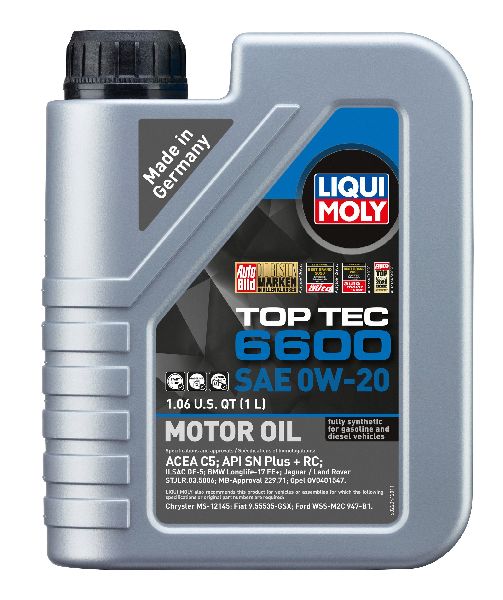
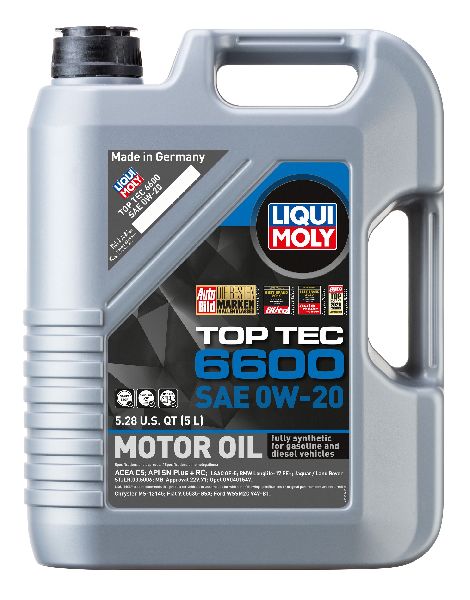
Typical fix: Perform an oil and filter change using the manufacturer-specified grade of oil (Motorcraft Synthetic Blend 5W-30) and a high-quality oil filter (e.g., Motorcraft FL-500S).
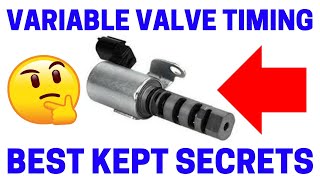
Est. part cost: $40-$80 - Faulty Variable Camshaft Timing (VCT) Solenoid 🟡 Medium Probability The VCT solenoid (also called an oil control valve) can get stuck open or become clogged with debris from the engine oil, causing it to fail to control oil flow to the cam phaser correctly. The internal screens can get blocked or the internal spool valve can bind. 🎬 Watch: How to clean a sticking Ford VCT solenoid to save money. This is a very common failure point on many Ford engines.
How to confirm: After ruling out oil and software, a mechanic can test the solenoid. A common DIY diagnostic is to swap the Bank 1 intake solenoid with the Bank 1 exhaust solenoid. If the code changes from P0011 to P0014 (Exhaust Cam Position System Performance), the solenoid is confirmed bad. A scan tool can also command the solenoid on/off to check for a response, and its internal resistance can be measured (a common value is 6.9-7.9 Ohms).
Typical fix: Replace the Bank 1 intake VCT solenoid. This requires removing the passenger-side valve cover, so the valve cover gasket should be replaced at the same time.
Est. part cost: $30-$100
Rare But Worth Checking
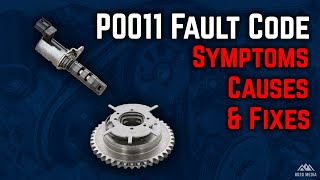
- Failing Camshaft Phaser: The phaser is the mechanical gear that actually adjusts the camshaft's position. It can become stuck in the advanced position due to internal failure of its locking pin or oil contamination. This is a more complex and expensive repair, often accompanied by a distinct rattling noise on startup.
- Stretched Timing Chain: While more commonly associated with correlation codes like P0016, a severely stretched chain can cause erratic timing behavior that may trigger a P0011 code. This is usually accompanied by a rattling noise on startup and is a more significant mechanical failure.
- Clogged Oil Passages: In engines with a history of poor maintenance or sludge, the small oil passages in the cylinder head that feed the VCT solenoids and phasers can become restricted, starving the system of oil pressure even if the oil itself is clean.
Diagnosis Steps
- Check for TSB 21-2224: Check your vehicle's build date (on the driver's door jamb sticker). If built on or before July 1, 2021, contact a Ford dealer with your VIN to see if your vehicle is eligible for the PCM software update. This should be the very first step. 🎬 Watch: Why you shouldn't replace parts before checking for software updates.
- Inspect Engine Oil: Check the oil level and quality. If it is low, dirty, or past its service interval, perform an oil and filter change with the correct viscosity oil (Motorcraft 5W-30) and a quality filter. Clear the code and see if it returns.
- Diagnostic Solenoid Swap: A proven low-cost diagnostic is to swap the Bank 1 intake VCT solenoid with the Bank 1 exhaust solenoid. Clear codes and run the engine. If the code changes to P0014, 🎬 See this guide on how to diagnose and repair camshaft timing. you have confirmed the solenoid is faulty and needs replacement.
- Test the VCT Solenoid: If a swap isn't performed, test the Bank 1 intake VCT solenoid. Check for resistance across its terminals (target: 6.9-7.9 Ohms). Inspect the wiring harness and connector for any damage, corrosion, or oil contamination. Use a scan tool to command the solenoid and listen for a click.
- Advanced Mechanical Diagnosis: If the code persists after a software update, oil change, and confirmed good solenoid, the issue may be a faulty cam phaser or a base timing problem (e.g., stretched timing chain). This requires more in-depth mechanical diagnosis, likely by a professional.
Parts You'll Likely Need
- Engine Variable Valve Timing (VCT) Solenoid
(OEM #HL3Z-6M280-A)— This solenoid controls oil flow to the phaser and is a common failure point due to oil debris, causing it to stick. It is often the root mechanical cause after software and oil quality are ruled out. This part number is used across many Ford 3.5L and 5.0L engines.
Trusted brands: Motorcraft, Dorman, Gates
OEM price range: $50-$90
Aftermarket price range: $30-$60 - Engine Oil and Filter — The entire VCT system is dependent on clean oil at the correct pressure. Old or incorrect oil is a primary cause of this code.
Trusted brands: Motorcraft
OEM price range: $50-$90
Aftermarket price range: $40-$70 - Valve Cover Gasket
(OEM #BL3Z-6584-A (Bank 2/Left), Check VIN for Bank 1/Right)— On the 3.5L V6, the VCT solenoids are located under the valve covers. The cover must be removed for access, and the gasket is a one-time use part that must be replaced to prevent oil leaks.
Trusted brands: Motorcraft, Fel-Pro
OEM price range: $30-$50
Aftermarket price range: $20-$40
Related Codes That Often Appear With This One
- P0021 — This is the same 'over-advanced' code but for Bank 2 (driver's side). If both P0011 and P0021 are present, it strongly points to a systemic issue affecting both banks, such as the PCM software problem (as noted in TSB 21-2224), low/dirty engine oil, or low oil pressure.
- P0016 — This is a correlation code between the crankshaft and the Bank 1 intake camshaft. It can appear if the timing deviation is significant enough to be considered a sync error. TSB 21-2224 also lists P0016 as a code potentially resolved by the software update.
- P0012, P0014, P0015 — These are other timing codes for Bank 1 (over-retarded, exhaust cam issues). Their presence alongside P0011 could indicate a more complex issue like a VCT solenoid that is sticking intermittently in both directions, or a broader system problem. TSB 21-2224 covers all these codes.
Technical Service Bulletins (TSBs) & Recalls
- TSB 21-2224: Some 2020-2021 Transit vehicles may exhibit an illuminated MIL with DTC P0011 (and many other timing codes) due to a software issue in the powertrain control module (PCM). Applies to 3.5L PFDi models built on or before 01-Jul-2021.
- SSM 50067: A general Special Service Message for many 2015-2021 Ford/Lincoln vehicles noting that various VCT codes can be caused by small debris causing the VCT solenoid to stick. It recommends running a diagnostic cycle test (Pinpoint Test HK12) to attempt to clear the debris before replacing the part.
Platform-Specific Known Issues
- TSB 21-2224: Some 2020-2021 Transit vehicles with the 3.5L PFDi engine built on or before July 1, 2021, may falsely set DTCs P0011, P0012, P0014, P0015, P0016, P0017, P0018, P0019, P0021, P0022, P0024 and/or P0025 due to a PCM software error. The prescribed fix is a dealer-installed software update.
Mechanic-Grade Diagnostic Values
- VCT Solenoid Internal Resistance — expected: 6.9 to 7.9 Ohms at 68°F (20°C). A broader acceptable range is often cited as 5-14 Ohms.. Failure: A reading of 0 ohms (short), infinite/OL (open), or significantly outside the expected range indicates a faulty solenoid coil.
- VCT Solenoid Connector Voltage (Key On, Engine Off) — expected: Battery voltage (approximately 12V) at the power supply pin (VPWR circuit).. Failure: Low or no voltage points to a wiring issue, blown fuse, or a problem with the PCM power relay.
- Engine Oil Pressure (Hot Idle) — expected: Minimum of 15 PSI, measured with a mechanical gauge.. Failure: Pressure below 15 PSI at hot idle can starve the VCT system, causing erratic operation and triggering codes.
- Scan Tool PID: VCT_ADV_ERR1 (Bank 1 Intake Cam Timing Error) — expected: Close to 0 degrees at idle and during steady-state driving.. Failure: A consistently high positive value (e.g., more than +/- 5 degrees for an extended time) indicates the camshaft is not at its commanded position and confirms the fault the PCM is seeing.
Scan Tool Commands That Help
- Ford IDS/FDRS: VCT Solenoid On/Off Command — This is a bidirectional control used to directly test the mechanical function of the VCT solenoid. With the engine idling, commanding the solenoid 'on' should cause a noticeable stumble or change in idle quality. If there is no change, the solenoid is likely stuck or the oil passage is blocked.
- Ford IDS/FDRS: VCT System Cycle Test — This function is specifically required by TSB 21-2224 before reprogramming the PCM. The scan tool cycles the VCT system 10 times to help dislodge any minor debris and verify the system is responsive before applying the software update.
Wiring & Ground Locations
- VCT Solenoid Connector — On top of the Bank 1 (passenger side) valve cover, plugging into the intake VCT solenoid. It is a 2-wire connector.. This is the primary point for electrical testing (voltage and resistance). Damage to the connector, pins, or wiring harness from heat or vibration will cause a loss of control over the solenoid.
- G104 / G105 — Main engine bay ground points. On similar Ford platforms, G104 is on the right (passenger) side fender apron behind the battery, and G105 is on the left (driver) side.. The PCM relies on clean, tight ground connections to accurately control the VCT solenoids. A loose or corroded ground at these locations can introduce electrical noise or voltage drops, causing erratic solenoid behavior and false timing codes.
Real Owner Repair Stories
- YouTube channel 'Truck Lab' (2019 Ford F-150 3.5L EcoBoost (similar engine architecture and VCT components)) — Check engine light with codes P0018 and P0021, occasional power loss, and a cold start rattle.
❌ Tried (didn't work) The owner had been running long 10,000-mile oil change intervals, which likely contributed to the failure.
✅ What actually fixed it Replacement of the faulty Bank 2 VCT solenoid resolved all codes, the power loss, and the cold start rattle. This case highlights that a sticking solenoid can cause a rattle often misdiagnosed as a more expensive cam phaser failure.
OEM Part Supersession History
HL3Z-6M280-A→HL3Z-6M280-A— Part number appears stable for this application.
Heads up: No major supersession issues or incompatible revisions are noted in repair databases for the 2020-2021 model years. This is the correct and current part number.
Model Year Variations Within This Range
- 2020-2021 (built on or before July 1, 2021): These vehicles are subject to TSB 21-2224, which identifies a PCM software calibration issue as a primary cause for P0011 and other VCT codes on the 3.5L PFDi engine. Vehicles built after this date have the updated software from the factory.
Diagnostic Flowchart
Real Owner Stories
Aggregated from forums and TSBs cited above. Mileages and costs reflect what owners reported in those sources.
2020-2021 Ford Transit 3.5L PFDi
Symptoms: Illuminated Check Engine Light with a P0011 code.
What fixed it: The dealer performed the TSB 21-2224 PCM software update as the first step to resolve the false DTC.
Source hint: fordtransitusaforum.com
2018 Ford F-150 3.5L PFDi V6
Symptoms: Intermittent hesitation while driving and a P0011 code.
What fixed it: Replaced both VVT solenoids on Bank 1 with OEM part HL3Z-6M280-A.
Source hint: f150forum.com
Related OBD-II Codes
Frequently Asked Questions
Does TSB 21-2224 apply to my 2020-2021 Ford Transit?
What is the most likely cause of P0011 on my 2020 Transit 3.5L PFDi?
Can dirty oil cause the P0011 code on this 3.5L engine?
How can I test if the Bank 1 intake VCT solenoid is bad on my Transit?
What part number do I need if the VCT solenoid fails on my 3.5L PFDi?
What is Ford SSM 50067 and how does it relate to P0011?
Helpful Videos
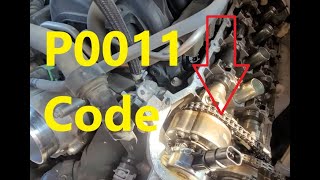
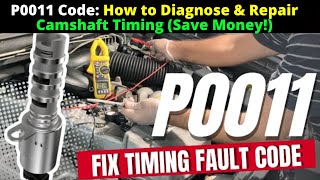
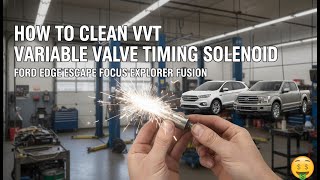
Used OEM Parts in Stock

New Aftermarket Parts Available


The information in this article is provided for general reference and educational purposes only. Vehicle specifications, procedures, and part compatibility can vary by production date, trim level, and region. Always consult your vehicle's factory service manual and verify part numbers before purchasing or performing repairs. Safety-critical components such as airbags, seat belts, and braking systems should be installed by a qualified professional.
- Ford Transit:
- 🎬 Helpful Videos
- 🛍️ Shop This Part
- What's Unique About the 2020-2021 Ford Transit
- Symptoms You May Notice
- Most Likely Causes
- Rare But Worth Checking
- Diagnosis Steps
- Parts You'll Likely Need
- Related Codes That Often Appear With This One
- Technical Service Bulletins (TSBs) & Recalls
- Platform-Specific Known Issues
- Mechanic-Grade Diagnostic Values
- Scan Tool Commands That Help
- Wiring & Ground Locations
- Real Owner Repair Stories
- OEM Part Supersession History
- Model Year Variations Within This Range
- Diagnostic Flowchart
- Real Owner Stories
- 2020-2021 Ford Transit 3.5L PFDi
- 2018 Ford F-150 3.5L PFDi V6
- Related OBD-II Codes
- Frequently Asked Questions
- 🎟️ Get 5% Off