

P2404 on 2011-2016 Hyundai Elantra: EVAP Leak Detection Pump Circuit Fixes
This code points to an electrical issue with the EVAP Leak Detection Pump (LDP) sense circuit. The most common fixes are replacing the LDP assembly itself or repairing damaged wiring leading to it. Expect to pay $70-$150 for a new pump. Before replacing parts, carefully inspect the wiring and connector near the rear of the vehicle for corrosion or damage.
- P2404 indicates an electrical problem with the EVAP Leak Detection Pump's reporting circuit, not an actual EVAP leak.
- The most common fix is to replace the Leak Detection Pump assembly (Hyundai part # 31430-3X000), which is located near the fuel tank.
- Before replacing the pump, always inspect the wiring and connector for damage, as this is a frequent and cheaper-to-fix cause.
- Driving with this code is safe, but it will cause an automatic failure on an emissions test.
- No recalls or TSBs are known for this specific issue on the 2011-2016 Elantra.
What's Unique About the 2011-2016 Hyundai Elantra
For the 2011-2016 Elantra (fifth generation, chassis code MD/UD), the P2404 code is not among the most commonly discussed issues in owner forums, suggesting it is not a widespread pattern failure. Unlike some other manufacturers (notably Subaru) that have issued software updates for this code due to overly sensitive logic, no Technical Service Bulletins (TSBs) exist for the Elantra for this specific problem. Diagnosis, therefore, relies on standard electrical troubleshooting of the pump and its circuit, with no known platform-specific shortcuts or software-related fixes. The issue is typically a hardware failure of the pump or its wiring.
Symptoms You May Notice
- The Check Engine Light is on.
- Inability to pass an emissions test because the EVAP monitor will not be 'Ready'.
- Possible fuel vapor odor near the rear of the vehicle.
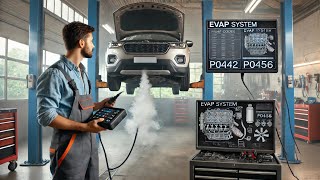
- Replacing the gas cap. 🎬 See why a gas cap might cause different EVAP codes. A faulty gas cap typically causes a leak code (like P0455 or P0456), not a circuit performance code like P2404.
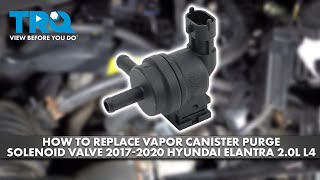
- Replacing the canister purge valve. The purge valve is located in the engine bay and has its own set of diagnostic codes (e.g., P0441, P0443). It is not directly related to the LDP sense circuit.
Most Likely Causes
- Faulty EVAP Leak Detection Pump (LDP) 🔴 High Probability The LDP assembly, also called a Canister Close Valve by Hyundai, contains both the pump motor and the electronic sense circuit. Internal failure of the sensor electronics due to age, moisture intrusion, or vibration is a common failure mode for these components across many vehicles.
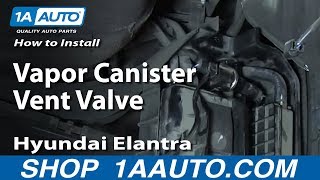
How to confirm: After confirming power and ground at the LDP connector, and that the signal wire has continuity, the pump itself is the culprit. A scan tool with bidirectional controls can command the pump on/off to test its function, but a failure of the internal sense circuit can occur even if the pump motor runs. The pump is located near the charcoal canister at the rear of the vehicle, typically near the spare tire well. 🎬 Watch: How to locate and inspect the EVAP system components.
Typical fix: Replace the Leak Detection Pump assembly. The OEM part number for many Elantras in this generation is 31430-3X000.
Est. part cost: $70-$150 - Damaged Wiring or Connector 🟡 Medium Probability The LDP is located under the vehicle, exposing its wiring harness and connector to road debris, moisture, and corrosion over time. The wires can become chafed, broken, or the connector pins can corrode, leading to a poor signal.
How to confirm: Visually inspect the wiring harness leading to the LDP for any signs of chafing, breaks, or corrosion. Unplug the connector and check for corroded or bent pins. Use a multimeter to test for battery voltage on the power wire and good ground on the ground wire with the key on.
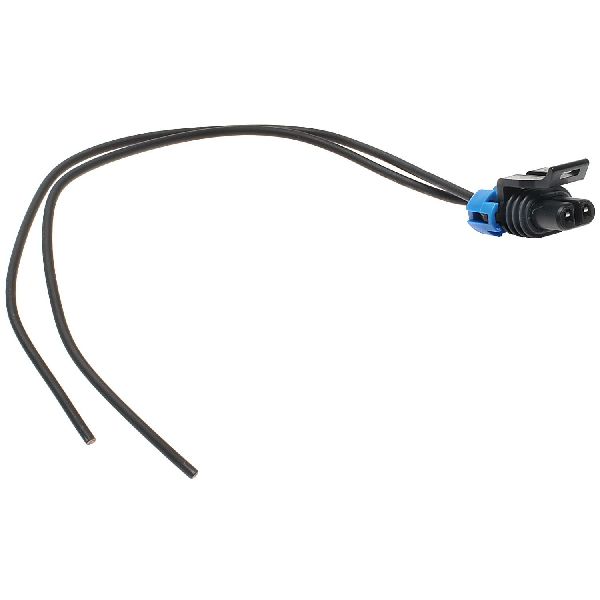
Typical fix: Repair the broken or shorted section of wire. Clean the connector pins with an electrical contact cleaner or replace the connector pigtail if it's severely damaged.
Est. part cost: $5-$30 - Clogged LDP Filter/Intake ⚪ Low Probability The pump draws in fresh air through a small filter, which can become clogged with dirt, mud, or even spider webs, causing the pump to work improperly and potentially send an erratic signal due to the unexpected load.
How to confirm: Visually inspect the air inlet and filter on the Leak Detection Pump. If it is packed with dirt or mud, it is a likely contributor to the problem.
Typical fix: Clean the filter and inlet port. If the filter is integrated and cannot be cleaned effectively, the pump assembly will need to be replaced.
Est. part cost: $0-$150
Rare But Worth Checking
- Faulty Powertrain Control Module (PCM): This is very rare. The PCM should only be considered after all other possibilities, including the pump and its entire circuit, have been exhaustively tested and proven to be good.
Diagnosis Steps
- Scan for Codes: Read the code with an OBD-II scanner and confirm P2404 is the only one present. Note any other codes and view freeze-frame data.
- Visual Inspection: Raise the rear of the vehicle and locate the EVAP charcoal canister, which is near the spare tire well. The Leak Detection Pump (LDP) will be mounted on or near it. Visually inspect the pump, its connector, and the wiring harness for any obvious damage, corrosion, or loose connections.
- Check Power and Ground: With the ignition on, unplug the LDP connector. Using a wiring diagram for your specific model year, identify the power and ground pins. Use a multimeter to verify that one pin has battery voltage (power) and another has a good connection to chassis ground (<1 Ohm).
- Check Signal Wire Continuity: Identify the signal wire from the wiring diagram. Check for continuity between the LDP connector and the PCM connector to ensure the wire is not broken or shorted to ground/power.
- Test the Pump: If power, ground, and the signal wire are all good, the Leak Detection Pump is the most likely cause of the fault. A professional scan tool can command the pump to run while monitoring the sense circuit voltage to confirm an internal failure.
- Replace and Retest: Replace the LDP (OEM Part # 31430-3X000 is common for this model). Clear the code, and perform a complete EVAP drive cycle to allow the monitor to run and confirm the fix.
Parts You'll Likely Need
- EVAP Leak Detection Pump
(OEM #31430-3X000)— This assembly, also called a Canister Close Valve, contains the internal sensor that provides the feedback signal to the PCM. An internal failure of this sensor is the most common cause for P2404 when wiring is confirmed to be intact.
Trusted brands: Hyundai (OEM), Bosch, Standard Motor Products (SMP), Dorman
OEM price range: $100-$135
Aftermarket price range: $70-$120
Mechanic-Grade Diagnostic Values
- LDP Sense Circuit Voltage (Live Data) — expected: Typically 0.5V (pump off) to 5.0V (pump at full speed). When commanded on, voltage should rise to approximately 2.5V.. Failure: A constant reading above 4.0V or a value that does not change when the pump is commanded on/off suggests a fault.
- LDP Motor Winding Resistance — expected: Between 4 and 50 Ohms, depending on the specific pump version.. Failure: A reading of infinite resistance (Open Loop / 'OL') indicates a broken internal motor winding, requiring pump replacement.
- LDP Circuit Ground Connection — expected: Less than 1 Ohm of resistance to a known good chassis ground.. Failure: A high resistance reading indicates a poor ground, which can cause erratic circuit performance.
Scan Tool Commands That Help
- Hyundai GDS (Global Diagnostic System): EVAP System Test — To command the LDP and other EVAP components on and off to verify their function while monitoring live data. This is the definitive way to test the pump's response.
- Hyundai GDS (Global Diagnostic System): Resetting Adaptive Values — After replacing a component like the LDP, it may be necessary to reset the PCM's learned EVAP values to ensure the system runs its self-tests correctly with the new part.
Wiring & Ground Locations
- Leak Detection Pump (LDP) / Canister Close Valve — Located at the rear of the vehicle, mounted near the charcoal canister. On many Sonatas and Elantras of this era, it is accessed by removing the left-rear (driver's side) wheel and the plastic fender liner.. This is the physical location of the primary component and its connector, which must be inspected for damage and tested.
- Chassis Ground — While specific ground points (e.g., G01, G03) are documented in service manuals, a common practice is to verify ground continuity by testing against a clean, unpainted metal point on the vehicle's frame or subframe near the component.. A poor ground connection for the LDP circuit is a potential cause for the range/performance code and must be ruled out.
OEM Part Supersession History
31430-3X000→31430-1Y000— Standard part lifecycle update. The new part is a direct replacement.
Diagnostic Flowchart
Other Known Issues on This Vehicle
Issues unrelated to this code that are worth knowing about as an owner of this generation:
- Engine Ticking / Piston Slap (1.8L Nu) 🔴 High — Widespread issue, particularly noticeable on cold starts. Can lead to excessive oil consumption and eventual engine failure. (Ref: Hyundai extended the powertrain warranty for this issue via campaign TXXK and TSB 22-EM-009H, covering the engine long block for up to 10 years/120,000 miles for original owners in certain states.)
- Steering Coupler Failure 🟠 Medium — Very common failure. A small, flexible rubber coupler in the steering column disintegrates, causing a clicking or thudding noise when turning the wheel and a loose or 'notchy' feeling in the steering. (Ref: Hyundai issued an extended warranty (10 years/100,000 miles) for this part under TSB 17-ST-002. The part itself is inexpensive, but labor can be significant if not covered.)
- Premature Brake Wear 🟡 Low — Some owners report faster-than-expected wear of brake pads and rotors, sometimes needing replacement under 30,000 miles.
- Engine Stalling / Hesitation 🟠 Medium — Intermittent stalling or hesitation can be caused by faulty sensors, such as the crankshaft position sensor, or carbon buildup in the throttle body.
Used vs. New Parts: Buying Guide for This Vehicle
When a used part is the smart pick: A used LDP from a junkyard can be a cost-effective option, but it is a gamble. It makes most sense if the donor vehicle is a low-mileage, late-model-year car that was involved in a collision that did not affect the rear of the vehicle.
Donor-vehicle mileage cap: roughly under 60000 miles for the part to have meaningful remaining life.
What to inspect on the donor part:
- Check for a clean, corrosion-free electrical connector.
- Inspect the plastic housing for cracks or signs of physical damage.
- If possible, look at the air filter port to see if it is packed with dirt or mud, which suggests a hard life.
- Ask for the VIN of the donor car to verify its mileage and check for a history in a rust-belt state.
Aftermarket brands forum-validated for this vehicle:
- Bosch (often the original equipment manufacturer)
- Standard Motor Products (SMP)
- Dorman
Brands owners have reported issues with on this vehicle:
- No-name, unbranded parts from online marketplaces should be avoided as their internal sensor quality can be poor, leading to the code returning.
Real Owner Stories
Aggregated from forums and TSBs cited above. Mileages and costs reflect what owners reported in those sources.
2011-2016 Hyundai Elantra 1.8L — ~95000 miles
Symptoms: Engine had a ticking noise that was particularly noticeable on cold starts and was starting to consume excessive amounts of oil.
What fixed it: The issue was covered under Hyundai's extended powertrain warranty for the engine long block, as described in campaign TXXK and TSB 22-EM-009H.
Source hint: Known issue: Engine Ticking / Piston Slap (TSB 22-EM-009H)
2011-2016 Hyundai Elantra 1.8L — ~85000 miles
Symptoms: There was a distinct clicking or thudding noise when turning the steering wheel, and the steering itself felt loose and 'notchy'.
What fixed it: The small, flexible rubber coupler in the steering column had disintegrated and was replaced. The repair was covered under the extended warranty from TSB 17-ST-002.
Source hint: Known issue: Steering Coupler Failure (TSB 17-ST-002)
Related OBD-II Codes
Frequently Asked Questions
Where is the Leak Detection Pump located on my 2011-2016 Elantra?
What is the OEM part number for the P2404 Leak Detection Pump?
Will a P2404 code cause my Elantra to fail an emissions test?
Besides a bad pump, what else commonly causes the P2404 code?
I have a 2015 Kia Forte with this code. Does it use the same part?
My Elantra's engine is ticking loudly on startup. Is this related to the P2404 code?
My steering wheel clicks when I turn it. Is there a recall for this?
Helpful Videos
Used OEM Parts in Stock

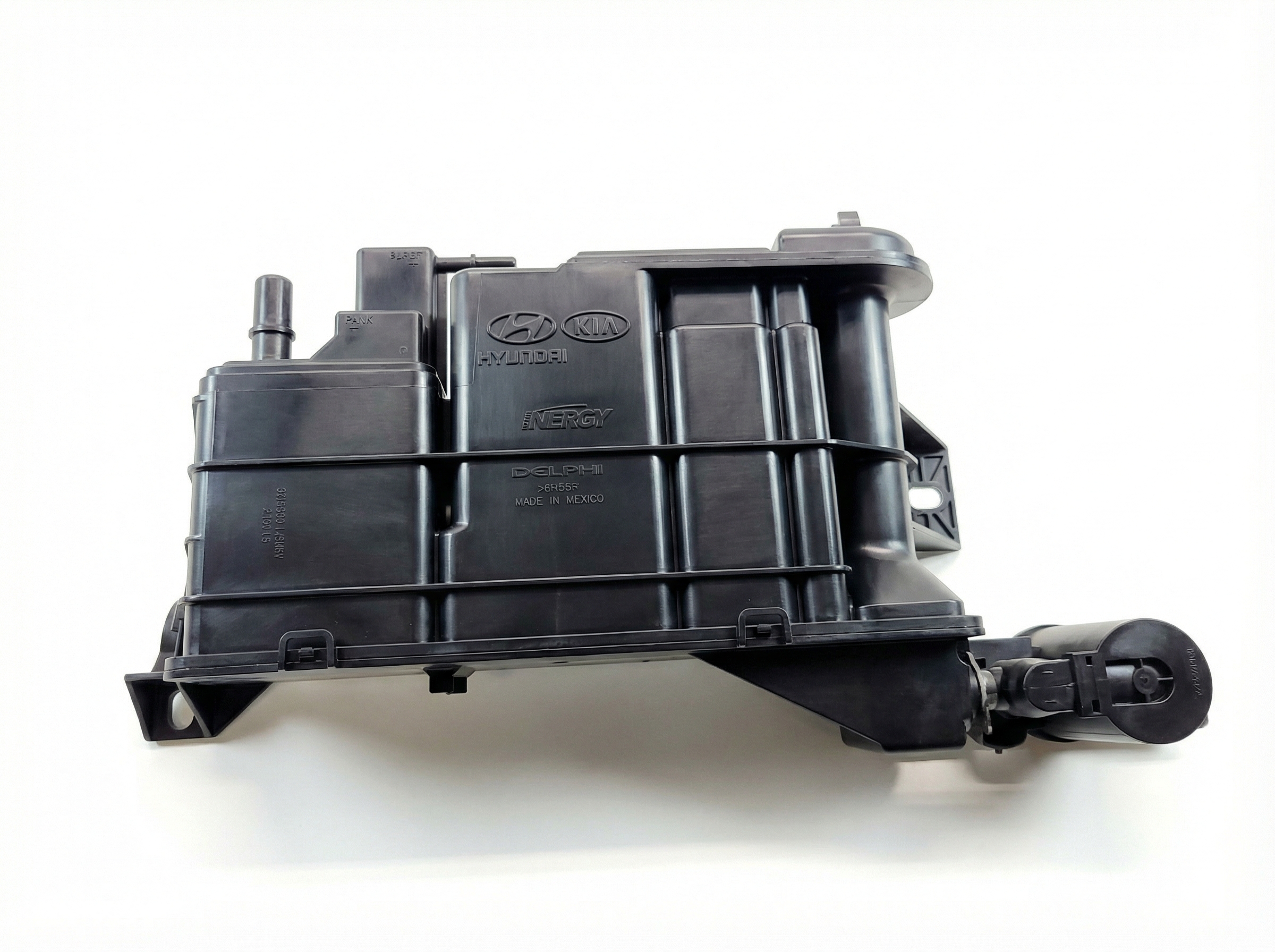
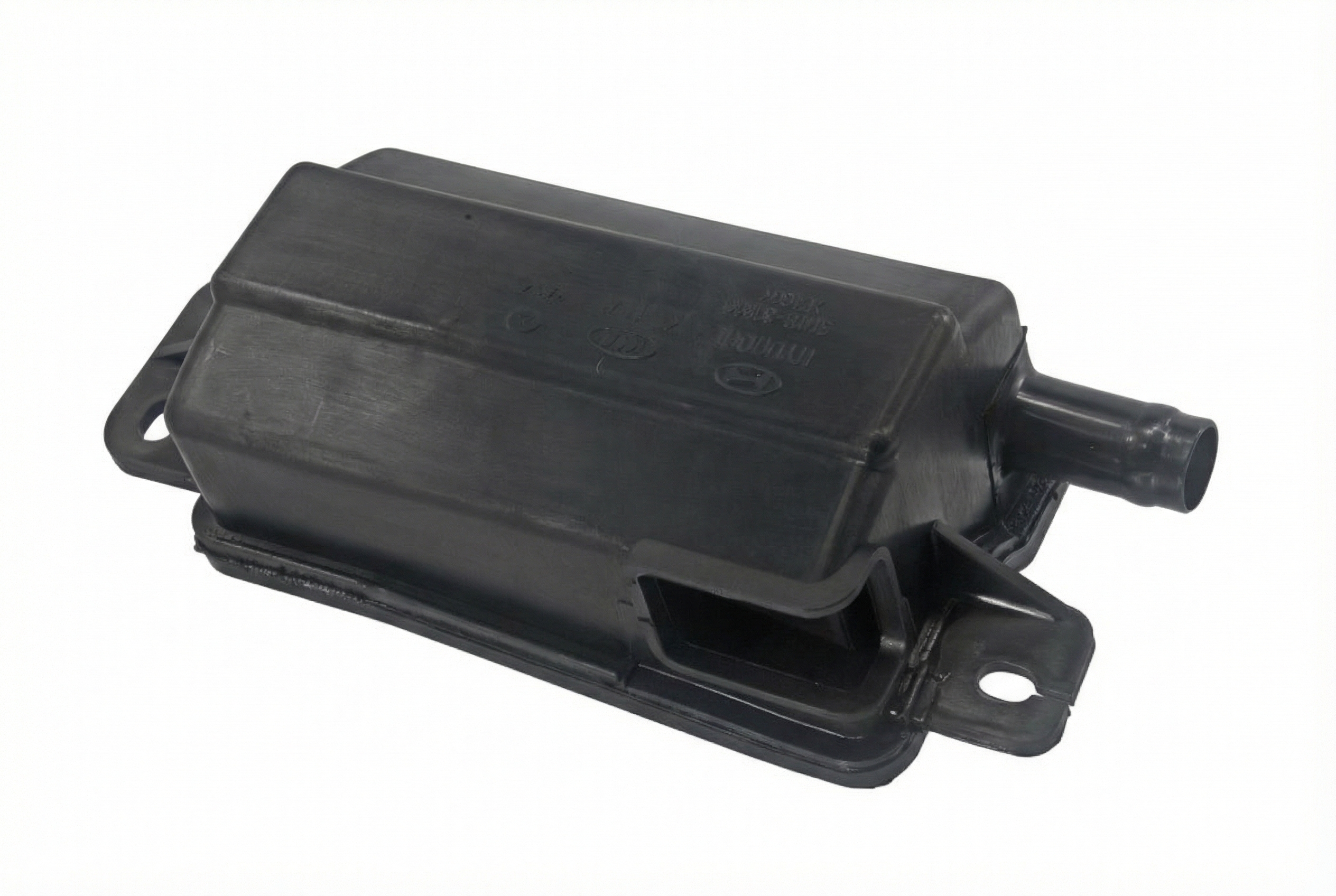
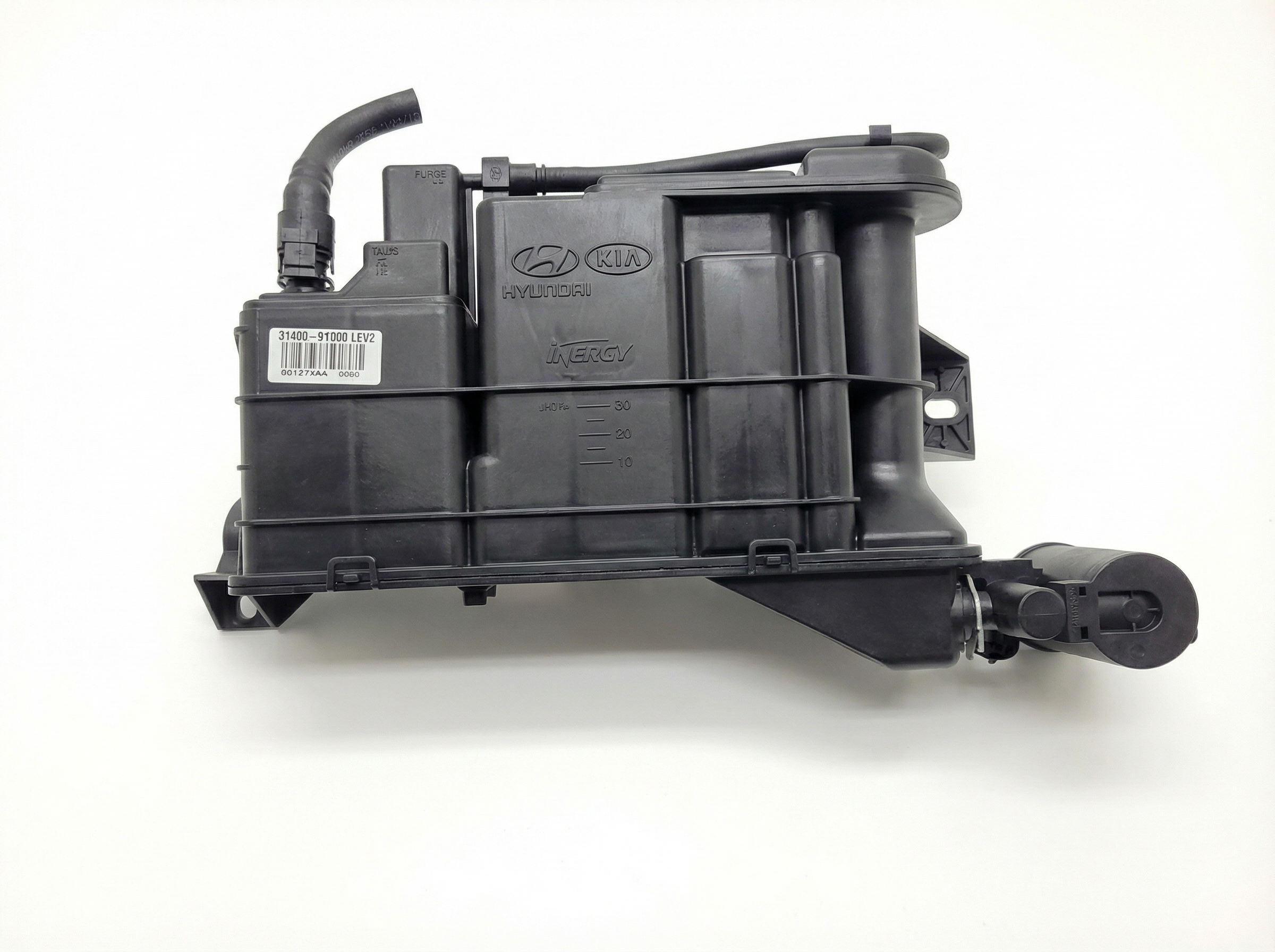
New Aftermarket Parts Available

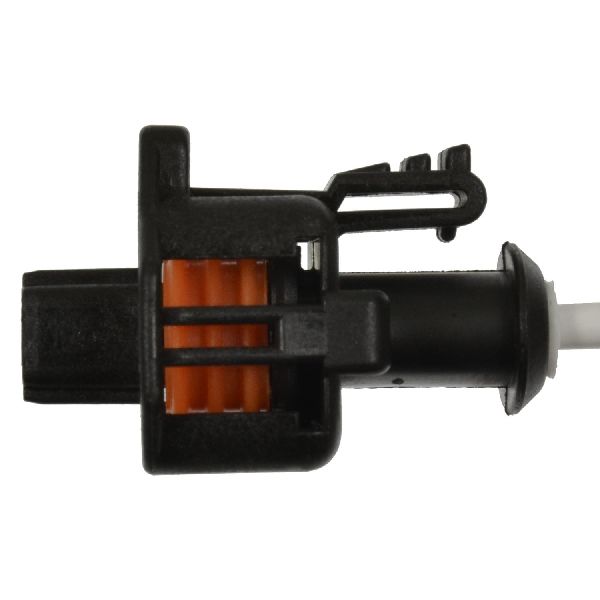

The information in this article is provided for general reference and educational purposes only. Vehicle specifications, procedures, and part compatibility can vary by production date, trim level, and region. Always consult your vehicle's factory service manual and verify part numbers before purchasing or performing repairs. Safety-critical components such as airbags, seat belts, and braking systems should be installed by a qualified professional.
- Hyundai Elantra:
- 🎬 Helpful Videos
- 🛍️ Shop This Part
- What's Unique About the 2011-2016 Hyundai Elantra
- Symptoms You May Notice
- Most Likely Causes
- Rare But Worth Checking
- Diagnosis Steps
- Parts You'll Likely Need
- Mechanic-Grade Diagnostic Values
- Scan Tool Commands That Help
- Wiring & Ground Locations
- OEM Part Supersession History
- Diagnostic Flowchart
- Other Known Issues on This Vehicle
- Used vs. New Parts: Buying Guide for This Vehicle
- Real Owner Stories
- 2011-2016 Hyundai Elantra 1.8L — ~95000 miles
- 2011-2016 Hyundai Elantra 1.8L — ~85000 miles
- Related OBD-II Codes
- Frequently Asked Questions
- 🎟️ Get 5% Off