

OBD-II Code P0441: Evaporative System Incorrect Purge Flow
The Ultimate Guide to What P0441 Means, Why It Triggers, and How to Fix It for Good
- Replace the EVAP purge valve first, as it causes over 70% of P0441 codes and costs under $50 for a DIY repair.
- Stop fueling your vehicle at the first click of the gas pump to prevent liquid gasoline from destroying the $400 charcoal canister.
- Check your gas cap's rubber O-ring for cracks and tighten it until it clicks before spending money on diagnostic tests.
- Ask your dealer about Technical Service Bulletins (TSBs) if you drive a 2012-2016 Kia or 2017-2022 Honda, as a free software update often fixes this code.
What Does P0441 Mean?

The P0441 code indicates the Engine Control Module (ECM) detects a malfunction in the Evaporative Emission Control (EVAP) system. Specifically, the system is moving the wrong amount of fuel vapor from the charcoal canister into the engine. The ECM runs a self-test by commanding the purge valve open; if the resulting change in fuel tank pressure does not match the expected value, it triggers P0441. This means the vapor flow is too high, too low, or occurring when commanded off.
Technical definition: Evaporative Emission Control System Incorrect Purge Flow. The ECM monitors the Fuel Tank Pressure (FTP) sensor's response when the purge valve opens during a drive cycle. The test fails if the pressure change is insufficient (indicating a blockage or stuck-closed valve) or if vacuum is detected when the valve is commanded closed (indicating a stuck-open valve).
Can I Drive With P0441?
Yes. Yes, you can continue driving with a P0441 code. It does not affect core drivability or safety. However, ignoring it guarantees a failed emissions test and causes a slight decrease in fuel economy. A stuck-open purge valve causes minor issues like a rough idle or difficulty starting immediately after refueling. Address the code within a month to prevent long-term stress on the catalytic converter and EVAP system.
Common Causes

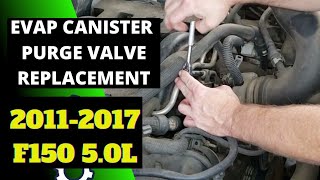
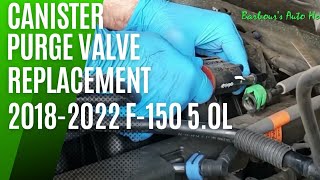
- Faulty EVAP Purge Valve/Solenoid (Very Common) — This is the most frequent cause. 🎬 Watch: How to replace a faulty EVAP purge valve The purge valve gets stuck open, stuck closed, clogged with charcoal debris, or fails electronically, directly causing incorrect vapor flow.
- Loose or Faulty Gas Cap (Common) — A gas cap that fails to seal disrupts the system's ability to hold vacuum during the self-test. The rubber O-ring loses flexibility over time, making this a crucial and free first check.
- Cracked or Disconnected EVAP Hoses (Common) — Rubber and plastic hoses carrying fuel vapors crack from engine heat and age. This creates a vacuum leak that disrupts the pressure changes required for the EVAP self-test.
- Faulty EVAP Vent Valve/Solenoid (Less Common) — The vent valve allows fresh air into the charcoal canister. If stuck closed, it prevents the purge valve from drawing vapors out, creating a no-flow condition.
- Saturated Charcoal Canister (Less Common) — Habitually overfilling the gas tank forces liquid fuel into the vapor-only charcoal canister. This destroys the canister and sends loose charcoal pellets through the lines, clogging the purge valve.
- Faulty Fuel Tank Pressure (FTP) Sensor (Rare) — The sensor monitoring the purge flow fails and sends incorrect data to the computer, tricking the ECM into reporting a flow problem when the physical plumbing is fine.
- Needs ECM Software Update (Rare) — Specific vehicle models have overly sensitive ECM software that sets a P0441 code erroneously. Manufacturers release Technical Service Bulletins (TSBs) with software patches to fix this logic flaw.
Symptoms

- Check Engine Light is On — This is the primary and often the only symptom noticed by the driver.
- Difficulty Starting After Refueling — A stuck-open purge valve allows excess fuel vapors into the engine immediately after filling up, flooding the engine and requiring you to press the gas pedal to start it.
- Rough Idle — A stuck-open purge valve creates a constant vacuum leak, causing the engine to idle poorly, surge, or stall.
- Reduced Fuel Economy — Unburned fuel vapors escaping the system and unmetered air entering the intake cause a measurable drop in gas mileage.
- Failed Emissions Test (scan-tool only — no driver-felt sign) — An active P0441 code causes an automatic failure of state emissions inspections.
Diagnostic Flowchart
Tap your situation to follow the diagnostic path that matches what you're seeing on this code.
Common Fixes & Costs
- Replace EVAP Purge Valve/Solenoid — Parts: $30-$100, Labor: $80-$150, ~0.8 hr book time (DIY)
- Replace Gas Cap — Parts: $15-$40, Labor: $0, ~0.1 hr book time (DIY)
- Replace Cracked EVAP Hose — Parts: $15-$50, Labor: $100-$200, ~1.5 hr book time (Intermediate)
- Replace Charcoal Canister — Parts: $250-$600, Labor: $150-$300, ~1.8 hr book time (Professional)
- Replace Fuel Tank Pressure (FTP) Sensor — Parts: $50-$150, Labor: $150-$300, ~2.0 hr book time (Professional)
- Repair Wiring or Connectors — Parts: $10-$30, Labor: $150-$300, ~2.0 hr book time (Professional)
DIY vs Professional
- Replace Gas Cap — Beginner:
Tools: None - Replace EVAP Purge Valve/Solenoid — Beginner:
Tools: Pliers, basic socket set - Replace Cracked EVAP Hose — Beginner:
Tools: Hose cutters, pliers, smoke machine - Replace Charcoal Canister — Beginner:
Tools: Socket set, vehicle lift or jack stands
Used vs. New Parts: Buying Guide
When a used part is worth it: For older vehicles where the OEM purge valve is discontinued or prohibitively expensive, a tested used OEM part is superior to a cheap aftermarket brand.
Donor-vehicle mileage cap: roughly under 60000 miles for the part to have meaningful remaining life.
Donor quality checklist:
- Verify the donor vehicle was not scrapped for emissions failures.
- Match the OEM part number exactly.
- Inspect plastic housings for hairline cracks.
Decision logic:
- If The part is under $75 new and easily accessible → Buy new. The $20 savings is not worth the risk of premature failure.
- If The vehicle is over 10 years old and the OEM part is discontinued → Buy a tested, used OEM part from a reputable salvage yard.
- If The part requires removing the intake manifold to access → Always buy new OEM to avoid paying $300 in labor twice.
Warranty tradeoff: Used parts offer a 30-day warranty. New aftermarket parts offer 1-year warranties. New OEM parts carry a 1-year/12,000-mile guarantee.
Worst-case if a used part fails: $300 if a used purge valve fails and requires a shop to diagnose and replace it again.
What Happens If You Wait — Timeline
- 0-1 month: The Check Engine Light illuminates. You automatically fail state emissions tests. If caused by a small leak, there are no drivability symptoms. (MPG impact: 0-1%% · Added cost: $0)
- 1-4 months: A stuck-open purge valve creates a constant vacuum leak. You experience a rough idle, difficulty starting after refueling, and a drop in fuel economy. (MPG impact: 1-5%% · Added cost: $50 in wasted fuel)
- 4-12 months: The engine runs consistently rich to compensate for the vacuum leak. This forces the oxygen sensors and catalytic converter to work overtime, accelerating their wear. (MPG impact: 3-8%% · Added cost: $150 in wasted fuel and sensor degradation)
- 12+ months: Prolonged exposure to a rich fuel mixture overheats and melts the catalytic converter's internal honeycomb structure. A saturated charcoal canister ruptures, clogging the entire EVAP system. (MPG impact: 5-15%% · Added cost: $1500 - $3000 for a new catalytic converter and full EVAP overhaul)
Cost of Not Fixing It
- 0-3 months: Automatic failure of emissions tests and a minor decrease in fuel economy (1-3 MPG). (Added cost: $20 in wasted fuel.)
- 3-12 months: A stuck-open purge valve forces a rich fuel mixture, putting severe stress on the catalytic converter. (Added cost: $150 in downstream component stress.)
- 12+ months: Prolonged rich conditions melt the catalytic converter. A saturated charcoal canister ruptures and clogs the EVAP lines. (Added cost: $1500 - $3000 for catalytic converter and EVAP system replacement.)
Diagnosis Steps

- Check the Gas Cap
Tighten the gas cap until it clicks. Remove it and inspect the rubber seal for cracks, stiffness, or tears. Replace the cap if the seal is compromised.
Tools: None (Beginner) - Visually Inspect EVAP Hoses
Trace the hoses from the purge valve (near the engine intake) back toward the charcoal canister. Look for obvious cracks, disconnections, or brittle plastic fittings.
Tools: Flashlight (Beginner) - Test the Purge Valve Mechanically
Remove the purge valve. Blow through it; air should not pass. Next, connect a handheld vacuum pump to the engine-side port. It must hold 15 in. Hg of vacuum. Apply 12V to the terminals; it should click and immediately drop the vacuum to zero. If it fails either test, replace it.
Tools: Handheld vacuum pump, jumper wires (Intermediate) - Test the Purge Valve Electricals
Use a multimeter set to Ohms to measure resistance across the valve's pins (typically 22-30 Ohms). A reading of OL (infinity) or zero means the internal coil is dead. Next, check the vehicle's wiring harness connector for 12V power with the key ON.
Tools: Multimeter (Advanced) - Check for System Blockages
Disconnect the EVAP hose between the purge valve and the charcoal canister. Blow low-pressure compressed air through it. If you find black charcoal pellets, the canister has failed and must be replaced along with clearing the lines.
Tools: Air compressor, safety glasses (Intermediate) - Monitor FTP Sensor Live Data
Using a bi-directional scanner, view the Fuel Tank Pressure data. Command the purge valve open to 50% with the engine running. The pressure must drop into a vacuum (e.g., -7 inH2O). No change indicates a blockage or dead valve.
Tools: Bi-directional OBD-II scanner (Advanced) - Perform a Smoke Test
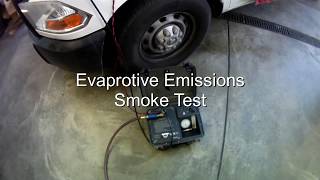
Force low-pressure, UV-dyed smoke into the EVAP service port. Smoke exiting from hoses, the canister, or the filler neck pinpoints hidden leaks that visual inspections miss.
Tools: EVAP smoke machine, UV light (Advanced)
When This Code Triggers (Freeze-Frame Conditions)
- Engine Coolant Temp: 170-210°F (Engine is fully warmed up.)
- Fuel Level: 15-85% (Fuel tank is not completely full or empty.)
- Engine Load: 20-55% (Steady part-throttle cruise, not idling or at full throttle.)
- Vehicle Speed: 40-65 mph (Steady highway or arterial road speed.)
Related Codes
- P0440 — Indicates a general EVAP system malfunction. It appears with P0441 when the computer detects a failure but cannot isolate it to the purge flow rate.
- P0442 — Indicates a small leak. A cracked purge line triggers both P0442 (failure to hold vacuum) and P0441 (incorrect pressure change during the purge cycle).
- P0455 — Indicates a large leak. A completely disconnected purge hose triggers P0455 for massive pressure loss and P0441 because the purge flow is entirely absent.
- P0496 — Indicates EVAP flow during a non-purge condition. This specifically confirms the purge valve is stuck open and leaking vacuum when it should be closed.
Climate & Environmental Factors
- Cold Climates: Extreme cold shrinks and hardens plastic and rubber EVAP lines, creating vacuum leaks that trigger P0441 during winter months.
- Rust Belt Regions: Road salt corrodes the metal fuel filler neck, creating a system leak that disrupts the pressure readings required for the EVAP self-test.
- High Altitude: Lower atmospheric pressure alters the baseline readings of the EVAP system. Older ECUs misinterpret this pressure difference as a flow fault.
How to Talk to a Mechanic About This Code
Say this: "I have a P0441 code and I've already verified the gas cap is tight. I'd like to schedule a diagnostic. Please test the purge valve's mechanical seal with a vacuum pump and check for obvious hose leaks before moving to a full smoke test."
This proves you are an informed customer. It forces the technician to check the $50 part first, preventing them from immediately upselling a $150 smoke test or a $600 canister replacement.
Avoid saying:
- Just fix whatever is making the light come on.
- My car smells like gas, can you look at it?
- The internet said I need a new charcoal canister.
Questions to ask before authorizing the repair:
- Did you test the purge valve with a vacuum pump, or just check its electrical resistance?
- If you are recommending a charcoal canister, can you physically show me the charcoal pellets in the purge line?
- What is the exact cost of the diagnostic fee if I decline the repair today?
- Are you using an OEM purge valve or an aftermarket brand?
Where to Take It: Dealer vs Independent vs Chain
- Dealer:
Mandatory for warranty claims or software updates. Otherwise, they are unnecessarily expensive for a simple purge valve swap.
Best for: Vehicles under the 8-year/80,000-mile federal emissions warranty., Kia, Hyundai, or Honda models requiring specific ECU software updates (TSBs).
Downsides: Charges the highest hourly labor rate., Defaults to replacing entire assemblies rather than individual valves. (Typical cost: +50% vs. baseline) - Independent Shop:
The best overall choice. A reputable independent shop with a smoke machine diagnoses and fixes P0441 efficiently.
Best for: Out-of-warranty vehicles., Cost-effective smoke testing and component replacement.
Downsides: Lacks access to proprietary manufacturer software updates., Diagnostic skill varies heavily by technician. (Typical cost: +0% vs. baseline) - Chain Shop:
Avoid for diagnostics. Acceptable only if you already know the exact part that needs replacing.
Best for: Reading the code for free or buying a replacement gas cap.
Downsides: Technicians often lack advanced EVAP diagnostic training., High likelihood of firing the 'parts cannon' without finding the root cause. (Typical cost: -10% vs. baseline)
When to Walk Away From the Repair
If the estimated repair cost exceeds 40% of the car's private-party value, consider selling it. Because P0441 repairs are usually under $200, this threshold is rarely met unless the charcoal canister fails on a severely depreciated vehicle.
- Car worth $3000, fix is $150: Fix it. This is a cheap repair that clears the dashboard light and makes the car significantly easier to sell.
- Car worth $8000, fix is $800: Fix it, but get a second opinion to confirm the expensive charcoal canister diagnosis before authorizing the repair.
- Car worth $1500, fix is $800: Walk away. The repair cost is over half the car's value. Sell the car as-is.
What Scan Tool You Need for This Code

Minimum: A code reader that displays live data, specifically the Fuel Tank Pressure (FTP) sensor readings.
A $20 reader only shows the P0441 code. To diagnose it, you must watch the fuel tank pressure change when the purge valve operates. Without live data, you are blindly guessing which part to replace.
Budget: BlueDriver Pro (~$100) — Connects to your phone to read codes, provide freeze-frame data, and stream live FTP sensor data for basic diagnosis.
Mid-range: Innova 5610 (~$350) — Provides bi-directional control. You can manually command the purge and vent valves to open from the tool while watching the live pressure data, instantly confirming if a valve is dead.
Professional: Autel MaxiCOM MK808S (~$450) — Offers full bi-directional control, advanced data graphing, and access to manufacturer-specific EVAP self-tests for professional-level diagnostics.
Rent vs buy: Auto parts stores loan basic readers for free, but they lack the live data needed for P0441. If you plan to DIY this repair, buying the $100 BlueDriver is mandatory.
How to Clear the Code After You Fix It
- Use an OBD-II scan tool to clear the diagnostic trouble code.
- Perform the specific EVAP drive cycle for the vehicle.
- Check readiness monitors to confirm the EVAP monitor has run and passed.
Drive cycle (~20 minutes): The EVAP monitor requires a cold start (engine sits for 8+ hours), followed by 5 minutes of idling, then 15 minutes of steady-state driving between 45-65 mph. The fuel level must be between 15% and 85%.
Readiness monitors affected: EVAP System Monitor, Catalyst Monitor, O2 Sensor Monitor
Before emissions retest: drive at least 50 miles to fully set monitors.
Watch out for:
- Clearing the code without completing a drive cycle leaves the EVAP monitor 'Not Ready', causing an automatic emissions failure.
- The code returns immediately if the root mechanical cause is not fixed.
- Testing with a full tank of gas prevents the EVAP monitor from running entirely.
Will This Fail Emissions / State Inspection?
Yes — this code typically fails an OBD-II emissions inspection.
- California: An active P0441 code is an automatic failure. All OBD readiness monitors must be set to 'Ready' to pass the smog check.
- New York: An illuminated Check Engine Light causes immediate failure. NY allows one non-continuous monitor (often the EVAP) to be 'Not Ready' and still pass.
- Texas: In the 17 counties requiring emissions testing, an active P0441 code fails the OBD-II test. The Check Engine Light must be off.
Most Commonly Affected Vehicles
- Toyota Camry (2007-2017) — Prone to purge valve failures and cracked vacuum switching valve (VSV) hoses near the canister.
- Ford F-150 (2009-2014) — Canister purge valve (part 9U5Z-9C915-H) and vent solenoid issues are the primary causes for this code.
- Volkswagen Jetta / Tiguan (2011-2020) — The N80 purge valve fails frequently. On 1.4T engines, the valve is buried under the intake manifold, drastically increasing labor costs.
- Chevrolet Silverado 1500 (2014-2018) — Experiences high rates of purge valve failure. The valve's location beneath the intake manifold requires extra labor time.
- Ram 1500 / Charger (2002-2007) — The Natural Vacuum Leak Detection (NVLD) unit is a notorious failure point that triggers P0441.
- Honda CR-V (2017-2022) — TSB A21-081 documents extremely common purge valve failures. Some 2017 models require a special sub-harness to block radio wave interference.
- Hyundai Santa Fe / Elantra (2007-2017) — Purge valve failure is standard. Owners consistently report the 'hard start after refueling' symptom.
- Kia Soul / Rio (2012-2016) — Service Action SA280 addresses an overly sensitive P0441 trigger. A dealer-installed ECU software patch is often the only required fix.
Manufacturer-Specific Notes
- Toyota: Older models utilize vacuum switching valves (VSV) mounted directly on the charcoal canister. These valves frequently fail and restrict flow, causing P0441.
- Volkswagen/Audi: The N80 purge valve is a notorious failure point. On 1.4T engines, it is located under the intake manifold, turning a cheap part into a massive labor bill. Check warranty extension VWP-21-06 for 2019 Jettas.
- Ram/Dodge: Early 2000s models rely on a Natural Vacuum Leak Detection (NVLD) pump assembly. This unit fails constantly and is the primary culprit for P0441 on these trucks.
- Honda: TSB A21-081 notes that 2017 CR-Vs suffer from radio wave interference disrupting the purge valve circuit. Dealers must install a shielded sub-harness to fix it.
- Kia/Hyundai: Service Action SA280 (TSB-ENG164R1) fixes an overly sensitive ECM threshold on 2012-2016 models. A software update is required before replacing any hard parts.
Real Owner Stories
2018 Kia Soul at 90K miles with P0441 & P0455
Check Engine Light illuminated. The car felt sluggish and had a high-revving cold start. P0441 appeared first, followed by P0455 (large leak).
What they tried:
- Replaced the gas cap, which temporarily turned off the light.
Outcome: A dealership diagnostic identified a failing purge valve. Replacing it ($400 total) immediately restored normal idle and cold start performance.
Lesson: If you experience P0441 alongside a large leak code (P0455) and have rough idle symptoms, the purge valve is the definitive culprit.
2011 Kia Soul at 150K miles with P0441
The car became extremely difficult to start after refueling, requiring the driver to floor the gas pedal.
What they tried:
- Replaced the engine-bay purge solenoid.
- Replaced the gas cap.
Outcome: The problem persisted. The actual failure was the canister close valve (vent valve) located on the charcoal canister at the rear of the vehicle.
Lesson: While a hard start after fueling usually means a bad purge valve, a failed vent valve near the rear canister creates the exact same symptom.
2016 Hyundai Tucson with recurring P0441
The Check Engine Light returned for the 4th time with P0441, even after a shop replaced the purge solenoid.
What they tried:
- Replaced the purge solenoid.
- Cleared the code multiple times.
Outcome: A professional smoke test revealed a hidden leak in the charcoal canister, which had been damaged by a previous owner habitually overfilling the gas tank.
Lesson: Stop firing the parts cannon. If a new purge valve fails to fix P0441, pay for a professional smoke test to find the hidden leak.
How to Prevent This Code From Triggering
- Stop fueling at the first click of the gas pump (Every fill-up) — Overfilling forces liquid gasoline into the vapor-only charcoal canister. This destroys the canister and sends debris through the lines, causing a $500+ repair.
- Tighten the gas cap until it clicks (Every fill-up) — Ensures the EVAP system seals completely, allowing it to hold vacuum for self-tests. A loose cap is the fastest way to trigger EVAP codes.
- Inspect the gas cap's rubber O-ring (Every 6 months) — The rubber seal hardens and cracks over time. Replacing a worn cap with a $20 OEM part prevents phantom EVAP leaks.
- Visually inspect engine bay EVAP hoses (Annually) — Engine heat bakes rubber hoses until they crack. Catching a brittle hose early prevents a vacuum leak and a Check Engine Light.
Frequently Asked Questions
Will a loose gas cap cause a P0441 code?
A loose gas cap usually triggers a large leak code (P0455), but it disrupts system pressure and contributes to P0441. Always check the cap first because it takes ten seconds and costs nothing. Tighten it until it clicks and inspect the rubber seal for cracks.
Can I pass an emissions test with a P0441 code?
No. An active Check Engine Light for an emissions-related code like P0441 results in an automatic failure in all jurisdictions. You must fix the issue and complete a drive cycle to reset the readiness monitors before testing.
Will clearing the code fix the problem?
No. Clearing the code only turns the light off temporarily. The engine computer runs the EVAP self-test during your next drive, and the code returns immediately if the underlying mechanical problem remains.
What is the most common misdiagnosis for P0441?
The most common misdiagnosis is replacing the expensive charcoal canister when the actual problem is a $40 purge valve. Mechanics sometimes see charcoal pellets in the line and assume the canister is dead, but often the purge valve is just clogged. Always test the valve with a vacuum pump before replacing the canister.
I replaced the purge valve, but the code came back. What now?
If a new purge valve fails to solve P0441, check the EVAP lines for blockages and test the vent valve near the charcoal canister. On certain Kia, Hyundai, or Honda models, an engine computer software update is required to fix an overly sensitive sensor threshold. If those fail, pay a shop $100-$200 for a professional smoke test to find hidden leaks.
Is it expensive to fix a P0441 code?
Most P0441 repairs are inexpensive, ranging from a $20 gas cap to a $150 purge valve replacement. However, if the charcoal canister is saturated with liquid fuel, the repair costs between $400 and $900. Labor costs spike on specific vehicles like the VW Jetta 1.4T, where the purge valve is buried under the intake manifold.
Can cold weather cause a P0441 code?
Yes. Extreme cold causes plastic and rubber EVAP hoses to become brittle, shrink, and crack. This creates vacuum leaks that trigger a P0441 code during winter months.
What does a bad purge valve sound like?
A healthy purge valve makes a faint, rhythmic ticking sound that is usually inaudible from the cabin. A failing valve becomes much louder, producing an erratic or rapid clicking noticeable at idle. If you hear no sound at all when the valve is commanded on, it has an electrical fault.
Key Takeaways
- Replace the EVAP purge valve first, as it causes over 70% of P0441 codes and costs under $50 for a DIY repair.
- Stop fueling your vehicle at the first click of the gas pump to prevent liquid gasoline from destroying the $400 charcoal canister.
- Check your gas cap's rubber O-ring for cracks and tighten it until it clicks before spending money on diagnostic tests.
- Ask your dealer about Technical Service Bulletins (TSBs) if you drive a 2012-2016 Kia or 2017-2022 Honda, as a free software update often fixes this code.
Helpful Videos


The information in this article is provided for general reference and educational purposes only. Vehicle specifications, procedures, and part compatibility can vary by production date, trim level, and region. Always consult your vehicle's factory service manual and verify part numbers before purchasing or performing repairs. Safety-critical components such as airbags, seat belts, and braking systems should be installed by a qualified professional.
- 🎬 Helpful Videos
- What Does P0441 Mean?
- Can I Drive With P0441?
- Common Causes
- Symptoms
- Diagnostic Flowchart
- Common Fixes & Costs
- DIY vs Professional
- Used vs. New Parts: Buying Guide
- What Happens If You Wait — Timeline
- Cost of Not Fixing It
- Diagnosis Steps
- When This Code Triggers (Freeze-Frame Conditions)
- Related Codes
- Climate & Environmental Factors
- How to Talk to a Mechanic About This Code
- Where to Take It: Dealer vs Independent vs Chain
- When to Walk Away From the Repair
- What Scan Tool You Need for This Code
- How to Clear the Code After You Fix It
- Will This Fail Emissions / State Inspection?
- Most Commonly Affected Vehicles
- Manufacturer-Specific Notes
- Real Owner Stories
- 2018 Kia Soul at 90K miles with P0441 & P0455
- 2011 Kia Soul at 150K miles with P0441
- 2016 Hyundai Tucson with recurring P0441
- How to Prevent This Code From Triggering
- Frequently Asked Questions
- Will a loose gas cap cause a P0441 code?
- Can I pass an emissions test with a P0441 code?
- Will clearing the code fix the problem?
- What is the most common misdiagnosis for P0441?
- I replaced the purge valve, but the code came back. What now?
- Is it expensive to fix a P0441 code?
- Can cold weather cause a P0441 code?
- What does a bad purge valve sound like?
- Key Takeaways
- 🎟️ Get 5% Off