

OBD-II Code P0455: Evaporative Emission System Leak Detected (Large Leak)
The Ultimate 2026 Guide to Meaning, Causes, Diagnosis, and Repair Costs
- Inspect and tighten your gas cap first, as a loose or damaged cap causes over 50% of P0455 codes and costs $0 to fix.
- You can safely drive with a P0455 code, but the vehicle will automatically fail state emissions tests and lose 1-2% in fuel economy.
- If a new $25 OEM gas cap does not clear the code after 30 miles of driving, test the EVAP purge and vent valves next.
- Stop the 'parts cannon' and pay $75-$175 for a professional EVAP smoke test if basic visual inspections fail to locate the 0.040-inch leak.
- Always buy an OEM gas cap for $15-$60; cheap aftermarket caps frequently fail to meet the precise sealing requirements, causing the code to return.
What Does P0455 Mean?

The P0455 code means the Engine Control Module (ECM) detected a large leak in the Evaporative Emission (EVAP) system. The EVAP system is a sealed network of hoses, valves, and a charcoal canister that traps gasoline vapors and burns them in the engine. When the system fails to hold pressure or vacuum during a self-test, it triggers this code, indicating a leak equivalent to a hole 0.040 inches or larger.
Technical definition: The official SAE/ISO definition for P0455 is "Evaporative Emission Control System Leak Detected (Gross Leak/No Flow)". This indicates the powertrain control module (PCM) detected a large leak in the EVAP system during a self-test, which typically runs when the fuel level is between 15% and 85%.
Can I Drive With P0455?
Yes, But With Caution. Yes, you can drive with a P0455 code. It does not affect engine performance or safety for short-term driving. However, your vehicle automatically fails an emissions test. A strong fuel smell indicates a significant vapor leak, posing a fire hazard and health risk. While the code doesn't damage components like the catalytic converter, the underlying leak worsens over time.
Common Causes

- Loose, Incorrect, or Damaged Gas Cap (Very Common) — The gas cap is a critical seal for the EVAP system. If it is not tightened until it clicks, has a cracked rubber seal, or is a cheap aftermarket replacement, it creates a large leak.
- Failed EVAP Purge Valve/Solenoid (Common) — This valve controls the flow of stored fuel vapors to the engine and is normally closed. If it gets stuck open, it creates a constant vacuum leak within the EVAP system.
- Failed EVAP Vent Valve/Solenoid (Common) — This valve is normally open to let air into the charcoal canister and closes to seal the system for testing. If it gets stuck open or fails to close, the system immediately fails the pressure test.
- Cracked or Disconnected EVAP Hoses/Lines (Common) — The rubber and plastic hoses connecting the fuel tank, canister, and valves become brittle with age and crack. Connections around the canister and filler neck frequently come loose.
- Damaged Fuel Tank Filler Neck (Less Common) — The metal tube you put the gas nozzle into rusts and corrodes over time, especially in areas with road salt. This corrosion creates holes that allow vapors to escape.
- Cracked or Damaged EVAP Charcoal Canister (Less Common) — The charcoal canister holds the fuel vapors. Physical damage from road debris or internal failure causes it to crack, creating a significant leak.
- Debris in Capless Fuel Filler Inlet (Less Common) — On vehicles with a capless system (common on Ford), dirt or debris lodges in the spring-loaded flap, preventing a proper seal and triggering a P0455 code.
- Faulty Fuel Tank Pressure (FTP) Sensor (Uncommon) — The FTP sensor monitors pressure and vacuum inside the EVAP system. If it provides incorrect readings, it falsely triggers a P0455 code, making the computer think a large leak exists.
- Damaged or Corroded EVAP System Wiring (Uncommon) — Wiring to the purge valve, vent valve, or pressure sensor becomes damaged or corroded. An open or short in the wiring prevents a valve from closing.
Symptoms

- Check Engine Light is On — This is the most common and often the only symptom you notice. The light remains steady, not flashing.
- Smell of Gasoline — A noticeable fuel odor is present around the rear of the vehicle or near the gas cap as uncontained vapors escape.
- Failed Emissions Test — A vehicle with an active P0455 code automatically fails the EVAP portion of a state emissions inspection.
- 'Check Fuel Cap' or 'Check Fuel Fill Inlet' Message — Specific dashboard messages illuminate to indicate a loose gas cap or an issue with a capless filler neck.
- Slight Decrease in Fuel Economy — Because fuel vapors escape instead of being burned by the engine, you experience a minor drop in MPG over time.
- Difficulty Starting or Rough Idle (Uncommon) — If the purge valve is stuck wide open, it creates a vacuum leak large enough to affect the engine's air-fuel mixture, leading to rough idling.
Diagnostic Flowchart
Tap your situation to follow the diagnostic path that matches what you're seeing on this code.
Common Fixes & Costs
- Replace Gas Cap — Parts: $15-$60 (OEM recommended), Labor: $0, ~0.1 hr book time (DIY)
- Replace EVAP Purge Valve/Solenoid — Parts: $40-$120, Labor: $50-$150, ~0.8 hr book time (Intermediate)
- Replace EVAP Vent Valve/Solenoid — Parts: $40-$150, Labor: $100-$250, ~1.2 hr book time (Intermediate)
- Repair or Replace EVAP Hose(s) — Parts: $10-$80, Labor: $75-$200, ~0.8 hr book time (Intermediate)
- Replace EVAP Charcoal Canister — Parts: $150-$500+, Labor: $100-$300, ~1.2 hr book time (Professional)
- Replace Fuel Tank Pressure Sensor — Parts: $50-$150, Labor: $130-$250, ~2.0 hr book time (Professional)
DIY vs Professional
- Replace Gas Cap — Beginner:
Tools: None - Replace EVAP Purge Valve — Beginner:
Tools: Basic hand tools (socket set, pliers). - Replace EVAP Vent Valve — Beginner:
Tools: Jack and jack stands, socket set, pliers, potentially a flathead screwdriver for clips. - Replace Charcoal Canister — Beginner:
Tools: Jack and jack stands, extensive socket/wrench set, hose removal tools. - Find and Repair Hoses — Beginner:
Tools: EVAP Smoke Machine, hose cutters, replacement hoses/clamps.
Used vs. New Parts: Buying Guide
When a used part is worth it: For expensive components like a charcoal canister or fuel tank pressure sensor on a vehicle over 10 years old or 150,000 miles, a used part from a low-mileage donor offers significant savings. For inexpensive parts like purge or vent valves, buying new is always the better choice.
Donor-vehicle mileage cap: roughly under 80000 miles for the part to have meaningful remaining life.
Donor quality checklist:
- Verify the donor vehicle was not scrapped for an emissions-related failure.
- For canisters and hoses, avoid parts from 'Rust Belt' donors as plastic and rubber are brittle.
- Match the OEM part number exactly; do not rely on visual similarity.
Decision logic:
- If Part is electronic (valve/solenoid) and costs < $150 new → Buy new for the warranty and reliability. The savings from a used part are not worth the risk of premature failure.
- If Part is a charcoal canister and costs > $300 new on a high-mileage vehicle → A used part from a reputable salvage yard with a warranty is a reasonable, budget-conscious choice.
- If Part is a simple hose or line → Buy new bulk hose and cut to fit. It's cheaper and more reliable than a used rubber part.
Warranty tradeoff: Used parts typically come with a 30-90 day functional warranty. New aftermarket parts often have a 1-year to limited lifetime warranty. New OEM parts carry a 12-month/12,000-mile warranty.
Worst-case if a used part fails: $200-$500 if a used part fails after the warranty period, requiring repeat labor costs for diagnosis and replacement.
What Happens If You Wait — Timeline
- 0-1 Month: Code sets and Check Engine Light is on. Vehicle fails an emissions test. No other symptoms are likely. (MPG impact: 0-1%% · Added cost: $0)
- 1-3 Months: A faint fuel odor becomes noticeable, especially when parked in a garage. A very minor, often imperceptible, drop in fuel economy occurs as vapors escape. (MPG impact: 1-2%% · Added cost: $10-$25 in wasted fuel)
- 3-12 Months: The Check Engine Light masks other potential codes. A small crack in a hose expands. A stuck-open purge valve begins to affect idle stability, especially after refueling. (MPG impact: 2-4%% · Added cost: $50-$100 in wasted fuel and potential for missed diagnosis of a new, more severe issue.)
- 12+ Months: A long-ignored leak from a faulty valve leads to saturation and failure of the charcoal canister. A rusted filler neck perforates completely. These secondary failures are significantly more expensive to repair than the original leak. (MPG impact: 3-5%% · Added cost: $300-$800+ for consequential damage to the charcoal canister or fuel filler neck.)
Cost of Not Fixing It
- 0-1 Month: Guaranteed failure of an emissions/smog test. Minor, often unnoticeable, decrease in fuel economy due to escaping vapors. (Added cost: Negligible, other than the cost of a failed test.)
- 1-6 Months: Continued release of harmful pollutants. A strong fuel smell develops, posing a health and fire risk. The Check Engine Light remains on, masking new, more serious trouble codes. (Added cost: $0 (unless a new code is missed).)
- 6+ Months: A minor issue like a cracked hose worsens, or a faulty valve leads to fuel saturation and failure of the expensive charcoal canister. A corroding fuel filler neck rusts through completely. (Added cost: $250-$700+ if a canister or filler neck fails as a result of the initial ignored problem.)
Diagnosis Steps

- Inspect and Tighten the Gas Cap
Remove the gas cap and inspect the rubber O-ring for cracks, tearing, or stiffness. Reinstall the cap and turn it until you hear several clicks. If the seal looks bad, replace it with a new OEM cap.
Tools: None (Beginner) - Clear the Code and Drive
Use an OBD-II scanner to clear the P0455 code. Drive the vehicle for a few days to allow the computer to run the EVAP self-test again. If the light does not return, the loose cap was the issue.
Tools: OBD-II Scanner (Beginner) - Visually Inspect EVAP Hoses and Canister
Look under the hood and around the fuel tank area for obvious signs of damage. Check the rubber and plastic EVAP lines for visible cracks, breaks, or loose connections.
Tools: Flashlight (Beginner) - Test the Purge Valve
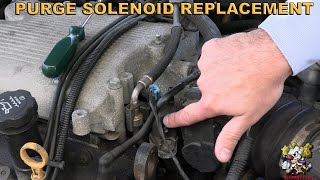
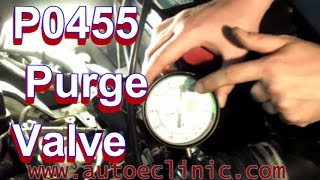
Locate the purge valve in the engine bay. With the engine off, disconnect the hose running to the intake manifold and try to blow through the valve. It should be closed. If air passes through, the valve is stuck open and requires replacement.
Tools: Pliers (for hose clamps) (Intermediate) - Test the Vent Valve
Locate the vent valve near the charcoal canister. Use an OBD-II scanner with bidirectional control to command the valve closed. If it doesn't click shut, or if applying 12 volts directly to its terminals yields no response, it has failed.
Tools: OBD-II Scanner with control functions, Jack and Jack Stands, Multimeter or Power Probe (Advanced) - Perform a Smoke Test
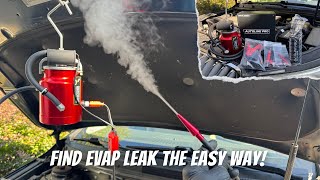
A smoke machine forces low-pressure, visible smoke (0.5 PSI) into the EVAP system via a service port. The smoke escapes from any crack or leak, pinpointing the exact location. Take the vehicle to a shop for this test if replacing the gas cap and purge valve does not clear the code.
Tools: EVAP Smoke Machine, OBD-II Scanner (to close vent valve) (Professional) - Pro Tip: Test Solenoid Resistance
Disconnect the electrical connector from the purge or vent solenoid. Using a multimeter set to Ohms, measure the resistance across the two pins. A reading of infinity (OL) indicates an open circuit, while a reading near zero indicates a short.
Tools: Multimeter (Advanced) - Pro Tip: Check Valve Control Circuits
Using a multimeter, check for power and ground at the vent and purge valve connectors. A scan tool commanding the valve's duty cycle causes a test light connected to the control wire to flicker, confirming the computer is sending the signal.
Tools: Multimeter or 12V Test Light, OBD-II Scanner with control functions (Advanced) - Pro Tip: Test Fuel Tank Pressure (FTP) Sensor Voltage
Connect a scan tool to view live data for the FTP sensor. With the gas cap off, the voltage reads a baseline atmospheric pressure. As you seal the system and apply a vacuum, the voltage changes. If the voltage is stuck, the sensor is faulty.
Tools: OBD-II Scanner with live data, Multimeter, Back-probe kit (Advanced)
When This Code Triggers (Freeze-Frame Conditions)
- Fuel Level: 15-85% (The EVAP monitor will not run if the tank is too full or too empty.)
- Engine Coolant Temp: 40-95°F (at startup) (The test runs after a cold soak, where the engine and ambient temperatures are similar.)
- Vehicle Speed: 45-65 mph (A period of steady-state cruising is required for the monitor to run.)
- Engine Load: 20-55% (The test requires part-throttle, steady driving, avoiding heavy acceleration or deceleration.)
- RPM: 1200-3000 RPM (The engine operates at a stable speed associated with highway cruising.)
Related Codes
- P0442 — Indicates a small EVAP leak (approx. 0.020"). P0455 indicates a large leak (approx. 0.040"). A loose gas cap causes P0442, while a completely missing cap causes P0455. Seeing both indicates an intermittent or borderline leak.
- P0456 — Indicates a very small EVAP leak (less than 0.020"). It is less common to see with P0455, but its presence suggests multiple, different-sized leaks in the system.
- P0457 — Specifically indicates a leak caused by a loose or missing fuel cap. While P0455 is often a loose cap, P0457 is the computer's specific diagnosis for a refueling event.
- P0441 — Indicates incorrect purge flow. If seen with P0455, this strongly suggests the purge valve is stuck open or there is a major blockage in the purge line.
- P0449 — Indicates a malfunction in the vent valve control circuit. P0455 is a physical leak. If these codes appear together, the vent valve is the prime suspect, as its electrical failure prevents it from closing.
Climate & Environmental Factors
- Cold Weather: Cold temperatures cause rubber and plastic EVAP hoses to become brittle and contract, opening up small cracks and turning them into large leaks that trigger P0455.
- Rust Belt Regions: In areas with heavy road salt use, metal components of the EVAP system are highly susceptible to corrosion. The fuel filler neck and steel EVAP lines running along the vehicle's frame are common failure points due to rust perforation.
- High Altitude: High altitude affects the baseline pressure readings of the Fuel Tank Pressure (FTP) sensor, occasionally causing the system's self-test parameters to be met under unusual conditions or leading to a false trigger.
How to Talk to a Mechanic About This Code
Say this: "I have a P0455 code and I've already inspected the gas cap. I'd like to authorize one hour of diagnostic time, specifically for a smoke test to pinpoint the leak in the EVAP system."
This signals you've done the basic homework and prevents a shop from simply replacing common parts without a definitive diagnosis. It directs them to the most efficient professional test, saving time and money.
Avoid saying:
- 'My check engine light is on, can you look at it?'
- 'Just fix whatever's wrong.'
- 'I think it's the purge valve, can you replace it?'
Questions to ask before authorizing the repair:
- Did the smoke test reveal the exact location of the leak?
- Can you show me a picture or the old part that was leaking?
- Is the recommended repair to replace only the failed component, or a larger assembly?
- What is the warranty on the parts and labor for this repair?
Where to Take It: Dealer vs Independent vs Chain
- Dealer:
Best for: Vehicles still under the emissions warranty., Complex, manufacturer-specific issues (e.g., known software bugs or faulty Leak Detection Pumps on certain brands).
Downsides: Highest labor rates., May recommend replacing a large, expensive assembly (like a full charcoal canister) when only a small valve or hose has failed. (Typical cost: +50% vs. baseline) - Independent Shop:
Best fit. P0455 is a bread-and-butter code for most competent independent shops. They are well-equipped for smoke tests and offer more cost-effective repairs than a dealer.
Best for: Out-of-warranty vehicles., Standard diagnosis and repair of common codes like P0455.
Downsides: Quality varies, so it's important to choose a shop with good reviews and ASE-certified technicians., Ensure they own and use an EVAP smoke machine. (Typical cost: +0% vs. baseline) - Chain Shop:
Use with caution. Acceptable for a simple gas cap or purge valve replacement, but AVOID for initial diagnosis of an unknown leak.
Best for: Simple, clear-cut parts replacement if you have already diagnosed the problem yourself (e.g., you are certain the purge valve is bad).
Downsides: Technician skill varies greatly., High pressure to upsell services., Less likely to perform a thorough smoke test diagnosis; may resort to guessing and replacing parts. (Typical cost: -10% vs. baseline)
When to Walk Away From the Repair
If the total estimated repair cost exceeds 40-50% of the car's private-party value (check Kelley Blue Book or Edmunds), seriously consider selling or trading in the vehicle instead of repairing it.
- Car worth $4000, fix is $350: Fix it. This repair is well below the threshold and is a common maintenance item.
- Car worth $3000, fix is $1500: Walk away. The repair cost is 50% of the car's value. It's not financially sound to invest this much into an older vehicle.
- Car worth $8000, fix is $800: Fix it. The cost is only 10% of the vehicle's value and restores its function to pass emissions.
What Scan Tool You Need for This Code
Minimum: A basic OBD-II code reader is sufficient only to read and clear the P0455 code, which is useful after a simple gas cap replacement. For any further diagnosis, a scanner with bidirectional control is needed to command the EVAP vent valve closed.
A simple $30 code reader cannot perform active tests. You cannot command the vent valve to close, which is a critical step in both electronic testing and preparing the system for a smoke test. Without this, you are guessing about the problem.
Budget: XTOOL A30M / TOPDON TopScan Lite (~$80) — These are Bluetooth dongles that pair with a smartphone app. They offer basic bidirectional control, allowing a user to command the EVAP vent valve to open and close, which is a huge step up from a basic code reader for a low cost.
Mid-range: Foxwell NT510 Elite / XTOOL D7 (~$180) — Provides robust bidirectional control to test both the purge and vent valves. It also allows for viewing live data from the Fuel Tank Pressure (FTP) sensor to see if it's responding correctly. These tools are ideal for the serious DIYer.
Professional: Autel MaxiCOM MK808S / Launch X431 series (~$450-900) — Offers full OEM-level bidirectional control, access to manufacturer-specific codes and data, and performs system-wide tests. This is professional-grade equipment that diagnoses any EVAP issue electronically.
How to Clear the Code After You Fix It
- Use an OBD-II scan tool to clear the P0455 code
- Ensure fuel tank is between 15% and 85% full
- Perform a complete drive cycle to run the EVAP readiness monitor
Drive cycle (~30 minutes): Start with a cold engine (sit for 8+ hours). Idle for 2-3 minutes. Drive for 15-20 minutes with a mix of city (stop-and-go) and highway speeds (cruise at 45-65 mph for 5-10 minutes). Allow the vehicle to cool down. It takes several trips for the EVAP monitor to complete.
Readiness monitors affected: Evaporative (EVAP) System, Catalyst (CAT), Oxygen (O2) Sensor
Before emissions retest: drive at least 100 miles to fully set monitors.
Watch out for:
- The Check Engine Light does not turn off on its own immediately after fixing the leak; the code must be cleared with a scanner.
- Disconnecting the battery clears the code but resets all readiness monitors, guaranteeing an emissions test failure until a full drive cycle is completed.
- The code returns within a few days if the root cause was not correctly identified and repaired.
Will This Fail Emissions / State Inspection?

Yes — this code typically fails an OBD-II emissions inspection.
- California: An active P0455 code is an automatic failure of the smog check. After repair, the EVAP readiness monitor must be set to 'Ready,' requiring extensive driving to complete the specific drive cycle.
- New York: The NYS DMV vehicle inspection includes an OBD-II scan. An illuminated Check Engine Light with code P0455 results in an automatic failure.
- Texas: In the 17 counties requiring emissions testing, a P0455 code causes the vehicle to fail the inspection.
Most Commonly Affected Vehicles
- Nissan Rogue, Altima, Pathfinder, Frontier (2008-2022) — Frequently caused by a failed EVAP vent control valve on the charcoal canister, which gets stuck open. For 2008-2022 Rogues, the vent valve is a common failure point (Part #14935-JF02C). Using an OEM gas cap is highly recommended as aftermarket caps fail to seal properly.
- Chevrolet / GMC Silverado / Sierra, Tahoe, Cruze, Malibu (2003-2018) — Common issues include a faulty purge valve on the intake manifold (OEM #12666845) or a failed vent valve solenoid near the tank. For Silverado/Sierra trucks, rusted metal EVAP lines along the frame are a known failure point in rust-prone regions.
- Ford F-150, Focus, Fusion, Explorer (2009-2018) — Often related to a faulty purge valve. On models with a capless fuel filler system, debris in the filler neck prevents a proper seal, triggering a 'Check Fuel Fill Inlet' message. Customer Satisfaction Program 24N07 extends the warranty on the canister purge valve for many 2012-2018 Focus vehicles to 15 years.
- Dodge / Ram / Chrysler Ram 1500, Dakota, Grand Caravan (2001-2013) — A common failure is the leak detection pump (LDP) assembly, located on the charcoal canister, which contains the vent valve. Cracked rubber hose boots at the canister are also a frequent source of leaks.
- Toyota Camry, RAV4, Corolla, Scion tC (2005-2015) — Besides the gas cap, cracked charcoal canisters and failing purge valves are common culprits. The hoses connected to the canister become brittle and crack with age. Toyota strongly recommends using a genuine OEM gas cap.
- Hyundai / Kia Elantra, Sonata, Optima, Sportage (2004-2016) — A faulty purge control solenoid valve (PCSV) is a very common cause for P0455 on these vehicles. Wiring issues or a blown fuse for the EVAP circuit are also factors.
- Subaru Forester, Outback, Impreza (2005-2016) — After the gas cap, common causes include cracked EVAP hoses near the canister, a faulty purge valve, or a failed vent valve. Rust on the fuel filler neck is a known issue in regions with heavy road salt use.
- Volkswagen / Audi Jetta, Golf, Beetle, A4 (2001-2012) — Failures of the Leak Detection Pump (LDP) are a known issue. Owners report persistent issues when using aftermarket gas caps, making an OEM cap strongly recommended.
Manufacturer-Specific Notes
- Ford: On vehicles with the capless fuel filler system, a 'Check Fuel Fill Inlet' warning often appears with P0455. The cause is dirt or debris preventing the spring-loaded flap from sealing. Cleaning the inlet with the supplied funnel resolves the code.
- Nissan: The EVAP vent control valve, located on the charcoal canister, is a very common failure point that gets stuck open. On many models like the Rogue, it's an easy, no-tools, twist-off replacement part (OEM #14935-JF02C).
- GM (Chevrolet/GMC): The purge valve solenoid located on the intake manifold is a frequent cause. On trucks, the metal EVAP lines running along the frame near the tank are prone to rusting through.
- Dodge/Chrysler/Ram: These brands use a Leak Detection Pump (LDP) as part of the EVAP system. Failure of the LDP assembly, which includes the vent valve, is a common cause for a P0455 code.
- BMW/MINI: BMW Group issued extended limited warranties (ELW) for the EVAP purge valve on a wide range of models, extending coverage to 15 years/150,000 miles for many F-chassis vehicles.
Real Owner Stories
2002 Mitsubishi Lancer with 115k miles
Check Engine Light came on, scan at AutoZone revealed P0455.
What they tried:
- Replaced the gas cap and disconnected the battery to clear the code.
Outcome: The light returned after about 100 miles with the same P0455 code. The problem was not the gas cap, indicating a deeper issue in the EVAP system requiring further diagnosis.
Lesson: If a new gas cap doesn't solve the problem, don't assume the fix failed. The issue is likely another component like a hose or valve, and a smoke test is the next logical step before replacing more parts.
2017 Honda Accord Sport with 112k miles
Check Engine Light on with codes P0455 and P0456 (large and small leak).
What they tried:
- Took the car to the dealership for diagnosis.
Outcome: The dealer diagnosed a pinhole leak in a pressure valve tube attached to the fuel tank and quoted $4,500 for a full fuel tank replacement, stating the tube was not sold separately.
Lesson: For complex or expensive repairs quoted by a dealer, always seek a second opinion from a trusted independent mechanic. They offer more cost-effective repair solutions, like repairing a specific part rather than replacing an entire assembly.
2000 Mercury Grand Marquis with 150k miles
Car experienced occasional bogging, especially between 30-50 MPH. Eventually, a P0455 code appeared.
What they tried:
- Replaced the purge solenoid and DPFE sensor.
- Replaced the fuel cap, fuel tank pressure sensor, and vent solenoid.
- Performed a smoke test which showed zero leaks.
Outcome: Despite replacing multiple components and finding no leaks with a smoke test, the P0455 code and drivability issues persisted. The owner was left needing to investigate deeper potential causes, possibly related to the PCM or wiring.
Lesson: Throwing parts at a problem without a definitive diagnosis is expensive and ineffective. If multiple components are replaced and a smoke test shows no leaks, the issue is electrical (wiring, sensor signals) or the PCM itself, requiring advanced diagnostics.
2021 Subaru Forester with 88k miles
Check Engine Light on, scanned to find P0455.
What they tried:
- Inspected the gas cap after noticing the code.
Outcome: A plastic push rivet from the fuel door's pigtail had fallen and become lodged in the gas cap's spring mechanism, preventing it from sealing the diaphragm properly. Removing the foreign object resolved the issue.
Lesson: The cause of a P0455 is sometimes surprisingly simple and unusual. Before buying parts, perform a thorough visual inspection of the gas cap and filler neck for any foreign debris or obvious damage.
How to Prevent This Code From Triggering
- Click the gas cap 3-4 times after every fill-up (Every fill-up) — Ensures the cap's ratcheting mechanism has fully engaged and the rubber O-ring has created a complete seal, preventing the most common cause of P0455.
- Avoid overfilling the fuel tank (Every fill-up) — Topping off the tank after the nozzle clicks off forces liquid gasoline into the charcoal canister, saturating the charcoal pellets and damaging the canister, which is an expensive repair.
- Periodically inspect EVAP hoses (Every oil change) — Visually check accessible rubber and plastic hoses in the engine bay for signs of cracking, brittleness, or swelling. Catching a deteriorating hose early prevents it from failing and triggering a code.
- Clean the gas cap seal and filler neck rim (Once or twice a year) — Wipe the rubber seal on the gas cap and the metal rim of the filler neck with a clean cloth to remove dirt and grime that prevents a perfect seal.
Frequently Asked Questions
Can I fix a P0455 code myself?
Yes, many P0455 fixes are DIY-friendly. The most common solution is tightening or replacing the gas cap, requiring no tools. Replacing parts like the purge valve is an intermediate-level job done with basic hand tools.
I replaced the gas cap, but the light is still on. What's next?
The check engine light does not turn off immediately. You must clear the code with an OBD-II scanner first. If the light returns after a few days of driving, the gas cap is not the issue and further diagnosis is required.
Can a P0455 code clear itself?
Yes, the code can clear itself. If triggered by a loose gas cap, the light turns off after several complete drive cycles once tightened. To turn the light off immediately, use an OBD-II scanner to clear the code.
What is a smoke test and do I need one?
A smoke test is a diagnostic procedure where a machine fills the EVAP system with harmless, visible smoke under low pressure. If there is a leak, smoke pours out of the spot, making it easy to find. It is highly recommended if you already checked the gas cap and common valves.
What are the most common misdiagnosis mistakes for P0455?
The biggest mistake is replacing multiple parts without a proper diagnosis, known as the 'parts cannon' approach. A proper diagnosis with a smoke test is cheaper than buying unnecessary parts. Another mistake is using a cheap aftermarket gas cap, which frequently fails to seal correctly.
Can I use a cheaper aftermarket gas cap?
It is highly recommended to use a genuine OEM (Original Equipment Manufacturer) gas cap. P0455 codes often persist until an aftermarket cap is replaced with an OEM one. Aftermarket seals frequently fail to meet the precise sealing requirements of the EVAP system.
How much does it cost to fix a P0455 code?
The cost varies widely based on the root cause. A new OEM gas cap is $15-$60, while a professional diagnostic smoke test costs $75-$175. A purge or vent valve replacement typically costs $150-$350, and a new charcoal canister ranges from $400-$700.
Key Takeaways
- Inspect and tighten your gas cap first, as a loose or damaged cap causes over 50% of P0455 codes and costs $0 to fix.
- You can safely drive with a P0455 code, but the vehicle will automatically fail state emissions tests and lose 1-2% in fuel economy.
- If a new $25 OEM gas cap does not clear the code after 30 miles of driving, test the EVAP purge and vent valves next.
- Stop the 'parts cannon' and pay $75-$175 for a professional EVAP smoke test if basic visual inspections fail to locate the 0.040-inch leak.
- Always buy an OEM gas cap for $15-$60; cheap aftermarket caps frequently fail to meet the precise sealing requirements, causing the code to return.
Helpful Videos


The information in this article is provided for general reference and educational purposes only. Vehicle specifications, procedures, and part compatibility can vary by production date, trim level, and region. Always consult your vehicle's factory service manual and verify part numbers before purchasing or performing repairs. Safety-critical components such as airbags, seat belts, and braking systems should be installed by a qualified professional.
- 🎬 Helpful Videos
- What Does P0455 Mean?
- Can I Drive With P0455?
- Common Causes
- Symptoms
- Diagnostic Flowchart
- Common Fixes & Costs
- DIY vs Professional
- Used vs. New Parts: Buying Guide
- What Happens If You Wait — Timeline
- Cost of Not Fixing It
- Diagnosis Steps
- When This Code Triggers (Freeze-Frame Conditions)
- Related Codes
- Climate & Environmental Factors
- How to Talk to a Mechanic About This Code
- Where to Take It: Dealer vs Independent vs Chain
- When to Walk Away From the Repair
- What Scan Tool You Need for This Code
- How to Clear the Code After You Fix It
- Will This Fail Emissions / State Inspection?
- Most Commonly Affected Vehicles
- Manufacturer-Specific Notes
- Real Owner Stories
- 2002 Mitsubishi Lancer with 115k miles
- 2017 Honda Accord Sport with 112k miles
- 2000 Mercury Grand Marquis with 150k miles
- 2021 Subaru Forester with 88k miles
- How to Prevent This Code From Triggering
- Frequently Asked Questions
- Can I fix a P0455 code myself?
- I replaced the gas cap, but the light is still on. What's next?
- Can a P0455 code clear itself?
- What is a smoke test and do I need one?
- What are the most common misdiagnosis mistakes for P0455?
- Can I use a cheaper aftermarket gas cap?
- How much does it cost to fix a P0455 code?
- Key Takeaways
- 🎟️ Get 5% Off