

OBD-II Code P2401: EVAP Pump Control Circuit Low
The Ultimate 2026 Guide to Diagnosing and Fixing P2401
- P2401 indicates an electrical short or low voltage in the EVAP leak detection pump circuit, meaning a loose gas cap will never cause this specific code.
- Test the pump's internal resistance with a multimeter; a healthy pump reads 10 to 30 ohms, while a reading near zero confirms a dead short requiring replacement.
- Toyota owners face repair bills exceeding $1,000 because water intrusion often destroys the integrated pump and charcoal canister assembly, requiring full replacement.
- Ignoring P2401 for over 12 months risks permanently destroying the Powertrain Control Module (PCM) driver circuit, escalating a $200 repair into a $2,000+ disaster.
- Volkswagen and Audi owners must check the dedicated 10A EVAP fuse (often F24 or SB10) before replacing any parts, as a blown fuse is their #1 cause for P2401.
What Does P2401 Mean?

Your vehicle's Powertrain Control Module (PCM) detected a 'circuit low' condition in the electrical circuit for the EVAP system's leak detection pump (LDP). This pump pressurizes or creates a vacuum in the fuel system to test for vapor leaks. The P2401 code specifically means the PCM commanded the pump to turn on, but detected the voltage in the control circuit was below the expected range (typically below 9V when it should be 12-14V), indicating a short to ground or a faulty pump motor.
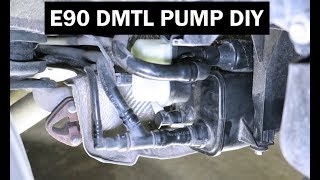
Technical definition: The Society of Automotive Engineers (SAE) defines OBD-II code P2401 as "Evaporative Emission System Leak Detection Pump Control Circuit Low". This indicates the PCM detected a continuous low voltage signal on the control circuit for the EVAP Leak Detection Pump (LDP), also known as a Diagnostic Module for Tank Leakage (DMTL) on European vehicles.
Can I Drive With P2401?

Yes, But With Caution. Driving with P2401 is possible for short distances as it won't cause immediate engine failure. However, ignoring it is risky. The underlying electrical short poses a low but real fire hazard from uncontained fuel vapors. More significantly, a persistent short circuit overloads and destroys the pump's driver circuit within the Powertrain Control Module (PCM). This escalates a sub-$500 repair into a $1,000-$2,500+ PCM replacement. You must fix it to pass any emissions test.
Common Causes

- Defective Leak Detection Pump (LDP) (Very Common) — The internal electric motor windings of the pump short out or degrade over time, causing an excessive current draw that the PCM interprets as a low voltage condition. This is the most common failure, especially in vehicles over 80,000 miles.
- Wiring Harness Short or Corroded Connector (Common) — The control circuit wire leading to the pump is pinched, chafed, or has worn insulation, allowing it to contact the vehicle's metal frame. Alternatively, the electrical connector at the pump is corroded from moisture and road salt, bridging terminals and creating a direct path to ground.
- Water Intrusion into Charcoal Canister Assembly (Common) — On specific models, notably Toyota trucks and cars, 🎬 Watch: How to replace the charcoal canister and pump on Toyotas. the fresh air inlet for the EVAP system allows water to enter the charcoal canister. This water floods the integrated leak detection pump, causing an immediate electrical short and ruining the canister.
- Blown EVAP Circuit Fuse (Less Common) — The circuit powering the LDP is protected by a dedicated fuse. If the pump motor seizes or there is a momentary short, it blows this fuse, cutting all power and triggering P2401. This is a critical first check on Volkswagen and Audi vehicles.
- Leaking EVAP Hoses or Canister (Less Common) — While a physical leak typically sets codes like P0442, a massive leak causes the LDP to work erratically. Some vehicle logic misinterprets this erratic operation as an electrical fault, though it is not the primary trigger for P2401.
- Faulty Fuel Tank Pressure (FTP) Sensor (Rare) — A malfunctioning FTP sensor provides incorrect data to the PCM. If the PCM doesn't see an expected pressure change when the pump is activated, it incorrectly flags a pump circuit fault. This is rare and typically accompanied by FTP sensor codes.
- Defective Powertrain Control Module (PCM) (Very Rare) — The internal driver circuit within the PCM that sends power to the pump fails. This is a last-resort diagnosis and is only considered after the pump, wiring, and fuse are definitively proven to be in perfect working order.
Symptoms
- Check Engine Light (MIL) is On — This is the most certain and often the only symptom. The light illuminates as soon as the EVAP monitor runs and fails the pump circuit test.
- Guaranteed Emissions Test Failure — A P2401 code indicates a fault in a primary emissions control system. This results in an automatic failure of any state-mandated smog or emissions inspection, as the EVAP readiness monitor cannot complete.
- Audible Clicking or Humming from Rear of Vehicle — You hear the leak detection pump attempting to run with insufficient voltage, resulting in a clicking or buzzing sound from near the fuel tank, sometimes continuing after the car is turned off.
- Faint Fuel Odor — You notice a slight smell of raw gasoline near the rear of the vehicle, particularly after refueling or on a warm day, indicating fuel vapors are escaping because the EVAP system isn't sealed.
- Slight Decrease in Fuel Economy — Because valuable fuel vapors escape into the atmosphere instead of being routed to the engine to be burned, a minor drop in overall MPG (1-3%) occurs over time.
Diagnostic Flowchart
Tap your situation to follow the diagnostic path that matches what you're seeing on this code.
Common Fixes & Costs
- Replace the Leak Detection Pump (LDP/DMTL) — Parts: $70-$280, Labor: $100-$250, ~1.2 hr book time (Intermediate)
- Replace a Blown Fuse — Parts: $1-$10, Labor: $0-$50, ~0.1 hr book time (DIY)
- Repair Damaged Wiring or Connector — Parts: $10-$30, Labor: $120-$250, ~1.5 hr book time (Intermediate)
- Replace Integrated Pump/Charcoal Canister Assembly — Parts: $250-$700, Labor: $200-$500, ~2.5 hr book time (Professional)
- Replace Powertrain Control Module (PCM) — Parts: $500-$1500, Labor: $150-$400, ~1 hr book time (Professional)
Used vs. New Parts: Buying Guide
When a used part is worth it: For a simple Leak Detection Pump (LDP), a used part from a low-mileage, accident-damaged vehicle is a cost-effective option. For an integrated charcoal canister assembly, a used part is a massive gamble as the charcoal's lifespan is finite.
Donor-vehicle mileage cap: roughly under 60000 miles for the part to have meaningful remaining life.
Donor quality checklist:
- Verify the donor vehicle was not scrapped for an emissions-related failure.
- Avoid parts from regions with heavy road salt use to minimize corrosion risk.
- Match the part number exactly; visually identical parts have different internal logic.
Decision logic:
- If The part is a simple, separate LDP and a new OEM part is over $200 → A used part from a reputable recycler with a warranty is a reasonable choice.
- If The part is an integrated charcoal canister/pump assembly → Favor a new OEM or high-quality aftermarket part, as the risk of a used canister being contaminated is high.
- If The vehicle is over 150,000 miles and the budget is extremely tight → A used part is acceptable, but understand it has a significantly shorter remaining lifespan.
Warranty tradeoff: Used parts typically come with a 30-90 day warranty, which may not be long enough to cover the time it takes for the EVAP readiness monitor to run. New aftermarket parts offer a 1-year to limited lifetime warranty.
Worst-case if a used part fails: $200-$500 if a used part fails shortly after installation, primarily due to repeated labor costs.
What Happens If You Wait — Timeline
- 0-1 month: Code P2401 is set, and the Check Engine Light is on. The EVAP readiness monitor will not complete, causing an immediate emissions test failure. No driveability symptoms are present. (MPG impact: 0-1%% · Added cost: $0)
- 1-6 months: A slight fuel odor is noticeable near the rear of the car after refueling. A minor decrease in fuel economy (1-3%) occurs as unburned vapors escape. The electrical short begins to put thermal stress on the PCM's internal driver circuit. (MPG impact: 1-3%% · Added cost: $20-$60 in wasted fuel)
- 6-12 months: The PCM's driver circuit is significantly stressed. The component begins to fail intermittently, causing the code to appear and disappear. The risk of the driver failing completely increases substantially. (MPG impact: 1-3%% · Added cost: $50-$100 in wasted fuel)
- 12+ months: The internal driver transistor within the PCM fails permanently due to the prolonged short circuit. The P2401 code becomes permanent. The repair now requires replacing the pump/wiring AND the PCM. (MPG impact: 1-3%% · Added cost: $800-$2,500 for the required PCM replacement and programming, in addition to the original fault's repair cost.)
Cost of Not Fixing It
- 0-3 months: Guaranteed emissions test failure. Minor decrease in fuel economy (1-3%) as fuel vapors escape. Low risk of fire hazard from uncontained vapors. (Added cost: Negligible, other than a failed test fee.)
- 3-12 months: Continued release of pollutants into the atmosphere. The electrical short causing the code begins to stress the driver circuit within the Powertrain Control Module (PCM). (Added cost: 0)
- 12+ months: Catastrophic failure of the PCM's internal driver circuit due to the persistent electrical short. This turns a relatively inexpensive pump or wiring repair into a major component replacement. (Added cost: $800-$2500 for PCM replacement and programming.)
Diagnosis Steps

- Verify Code and Review Freeze Frame Data
Using an OBD-II scanner, confirm P2401 is active. Analyze the freeze frame data to see the vehicle's state when the code set. Note any other EVAP codes (e.g., P2402, P0442), as they dictate your diagnostic path.
Tools: OBD-II Scanner (Beginner) - Inspect the EVAP System Fuse
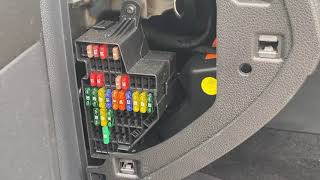
Consult the owner's manual to locate the fuse for the EVAP system or LDP. Visually inspect it. If blown, replace it with a fuse of the identical amperage. If it blows again immediately, you have confirmed a dead short in the circuit.
Tools: Owner's Manual, Fuse Puller (Beginner) - Perform a Detailed Visual Inspection
Safely raise the vehicle and locate the LDP near the fuel tank. Meticulously inspect the wiring harness for chafing, melting, or rodent damage. Check the connector for cracks, corrosion, or pushed-out pins.
Tools: Flashlight, Safety Glasses, Jack and Jack Stands (Beginner) - Test the Pump's Electrical Connector for Power and Ground
Disconnect the pump. With the ignition on, use a multimeter to check for battery voltage (12V+) at the power supply pin on the harness-side connector. Check for a good ground by measuring resistance between the ground pin and the chassis; it must be less than 1 ohm. Voltage below 9V points to a wiring issue.
Tools: Multimeter (Intermediate) - Test the Leak Detection Pump's Internal Resistance
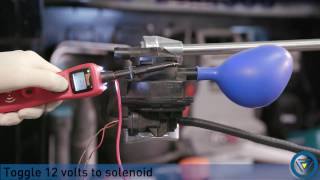
With the pump disconnected, switch your multimeter to Ohms. Measure the resistance between the power and ground terminals on the pump itself. A healthy pump reads between 10 and 30 ohms. Near-zero ohms indicates a short circuit, confirming the pump has failed.
Tools: Multimeter (Intermediate) - Analyze Live Data PIDs
Using an advanced scan tool, monitor 'LDP Control Circuit Voltage' and 'LDP Current Draw'. Command the pump on. Voltage should be 9-14V and current 0.5-2.0A. Voltage below 9V confirms the P2401 condition. Excessively high current indicates a short.
Tools: Bi-Directional Scan Tool (Advanced) - Perform a Voltage Drop Test on the Ground Circuit
Connect the pump, start the engine, and command the pump on. Connect the black multimeter lead to the battery's negative terminal and the red lead to the ground pin on the pump's connector (back-probing). A reading above 0.2 volts (200mV) indicates excessive resistance in the ground circuit.
Tools: Multimeter with Back-Probes, Bi-Directional Scan Tool (Advanced) - Perform a Smoke Test for Secondary Faults
If P2401 is accompanied by leak codes (like P0442), or if water intrusion is suspected, inject pressurized, UV-dyed smoke into the system to visually identify the exact location of physical leaks in hoses, the canister, or seals.
Tools: EVAP Smoke Machine, UV Light (Advanced) - Analyze the Control Circuit with an Oscilloscope
For intermittent faults, connect an oscilloscope to the pump's control wire. When commanded on, you should see a clean square wave pattern rising to 12-14V. A P2401 fault shows a 'clipped' waveform that fails to reach full voltage, confirming a short to ground under load.
Tools: Automotive Oscilloscope (Advanced) - Test Fuel Tank Pressure (FTP) Sensor Correlation
With the key on, engine off (KOEO), the FTP sensor should read around 1.5V at atmospheric pressure. Apply vacuum or pressure; the voltage must change. If stuck low (<0.5V) or high (>4.5V), it is faulty and contributing to the EVAP system's inability to test.
Tools: Multimeter, Scan Tool, Vacuum/Pressure Pump (Advanced)
When This Code Triggers (Freeze-Frame Conditions)
- Fuel Tank Level: 15-85% (The EVAP monitor will not run if the tank is too full or nearly empty.)
- Engine Coolant Temp: 40-95°F (at startup) (The test requires a 'cold soak,' meaning the engine and ambient air temps are similar.)
- Vehicle Speed: 40-65 mph (A period of steady highway or cruising speed is required for the monitor to run.)
- Engine Load: 20-60% (The test runs under part-throttle, steady-state driving, not during heavy acceleration.)
Related Codes
- P2402 — The direct opposite of P2401, indicating 'EVAP Leak Detection Pump Control Circuit High'. P2401 is a short to ground (low voltage), while P2402 indicates an open circuit or a short to power (high voltage).
- P2400 — Means 'EVAP Leak Detection Pump Control Circuit Open'. Functionally similar to P2402. An open circuit prevents current flow, which the PCM reads as a high voltage state on the control side.
- P0442 / P0455 — Indicate a small (P0442) or large (P0455) physical leak. P2401 is an electrical failure preventing the leak test from running. If P0442 appears after fixing P2401, you have a secondary physical leak requiring a smoke test.
- P043E / P043F — Relate to 'EVAP System Leak Detection Reference Orifice' on Toyotas. They appear alongside P2401 when water enters the charcoal canister assembly, damaging both the pump electronics and the reference orifice mechanism.
Climate & Environmental Factors
- Road Salt / High Humidity: Areas with heavy road salt use or high humidity see a higher incidence of P2401. Salt and moisture accelerate corrosion of the LDP's electrical connector pins and compromise wiring harness insulation.
- Heavy Rain / Water Intrusion: On Toyota models, a design flaw allows water to enter the EVAP system's fresh air inlet during heavy rain or car washes. This floods the pump/canister assembly, causing an immediate electrical short.
- Extreme Cold: Extreme cold makes aged plastic hoses and wiring insulation brittle and likely to crack. Moisture that entered a connector or harness freezes and expands, compromising the connection and causing a short circuit.
How to Talk to a Mechanic About This Code
Say this: "I have a P2401 code, which I know is for the EVAP leak detection pump circuit. I'd like to schedule a diagnostic to determine if the fault is the pump itself, the wiring, or a fuse. Please test for power, ground, and signal at the pump connector before recommending a part replacement."
This signals you understand P2401 is an electrical issue, not a simple leak. It directs the technician to perform a proper electrical diagnosis instead of just swapping the most common part, saving you money if the actual fault is a corroded wire or blown fuse.
Avoid saying:
- 'My check engine light is on, can you look at it?'
- 'I think I have an EVAP leak.'
- 'Just replace the leak detection pump.'
Questions to ask before authorizing the repair:
- What were the voltage and resistance readings at the pump's connector and on the pump's terminals?
- If the wiring is the issue, can you show me the location of the damage?
- If the pump needs to be replaced, is the replacement part OEM or aftermarket, and what is the warranty on the part and labor?
Where to Take It: Dealer vs Independent vs Chain
- Dealer:
Recommended for specific manufacturer quirks (Subaru, Toyota) or if you prefer OEM-guaranteed work and are not price-sensitive.
Best for: Vehicles under warranty, Subaru models (to check for required ECM software updates), Toyota models where the pump is part of the canister (they have the most experience with this specific repair)
Downsides: Highest labor rates, Defaults to replacing the entire expensive canister assembly on Toyotas even if a wiring repair is possible (Typical cost: +50% vs. baseline) - Independent Shop:
Best fit for most P2401 repairs. A good independent shop with electrical expertise pinpoints the exact cause (pump, wire, or fuse) cost-effectively.
Best for: Out-of-warranty vehicles (Honda, Hyundai, Ford, GM, etc.), Diagnosing and repairing wiring faults, Straightforward pump replacements
Downsides: Quality varies; ensure the shop has strong electrical diagnostic skills and good reviews. (Typical cost: +0% vs. baseline) - Chain Shop:
AVOID for P2401 diagnosis. The risk of misdiagnosis and unnecessary parts replacement is high for this type of electrical fault.
Best for: Simple fuse replacement if you can't do it yourself.
Downsides: Technicians lack the advanced electrical diagnostic skills needed for intermittent wiring shorts., High pressure to replace parts quickly leads to misdiagnosis (e.g., replacing a good pump when the wire is bad). (Typical cost: -10% vs. baseline)
When to Walk Away From the Repair
If the estimated repair cost for P2401 exceeds 50% of your car's private-party value, pause and reconsider the repair.
- Car worth $4500, fix is $1400: Fix it. The repair is ~31% of the car's value, which is well below the walk-away threshold.
- Car worth $3000, fix is $1600: Walk away. The repair cost is over 50% of the vehicle's value. This is a classic 'mechanic's special' scenario.
What Scan Tool You Need for This Code
Minimum: A scanner that reads live EVAP system data, specifically the leak detection pump's circuit voltage and current.
A basic $30 code reader only shows the P2401 code. It cannot show the live electrical data (voltage/current) needed to determine if the problem is the pump or the wiring, leading to guesswork.
Budget: BlueDriver Pro (~$100) — Connects to your phone and displays live data for the EVAP system, allowing you to see if the voltage to the pump is actually low. It lacks bi-directional control but is a powerful diagnostic aid.
Mid-range: XTOOL D7 / Anyscan A30M (~$120-350) — Offers bi-directional control, which is critical for P2401. You command the leak detection pump to turn on and off, confirming if the pump motor works and isolating the electrical fault.
Professional: Autel MaxiCOM MK808S / Launch X431 CRP919E (~$450-600) — Provides full bi-directional control, OEM-specific data, and graphs voltage and current data over time. This level of detail is essential for diagnosing intermittent shorts or complex wiring issues.
How to Clear the Code After You Fix It
- Use an OBD-II scan tool to clear the code.
- Perform the specific EVAP drive cycle for the vehicle.
- Check readiness monitors to confirm the EVAP monitor has run and passed.
Drive cycle (~30 minutes): A typical EVAP drive cycle involves a cold start (after sitting 8+ hours), a few minutes of idling, 10-15 minutes of steady driving between 40-65 mph, and a cool-down period. Specific procedures vary greatly by manufacturer.
Readiness monitors affected: Evaporative System
Before emissions retest: drive at least 100 miles to fully set monitors.
Watch out for:
- Simply clearing the code or disconnecting the battery will not set the readiness monitor; the specific drive cycle must be completed.
- The code returns immediately if the underlying electrical fault was not properly repaired.
- Failing to meet drive cycle prerequisites (like fuel level or temperature) prevents the monitor from running.
Will This Fail Emissions / State Inspection?
Yes — this code typically fails an OBD-II emissions inspection.
- California: An active P2401 code is an automatic test failure. The EVAP readiness monitor must be set to 'Ready' to pass, requiring a full drive cycle after the repair.
- New York: The NYVIP3 program requires an OBD-II scan. A P2401 code causes an immediate failure. Most vehicles are allowed one incomplete monitor, but an active code is an automatic fail.
- Texas: In the 17 counties requiring emissions testing, an active P2401 code causes a failure. While safety inspections are eliminated for non-commercial vehicles, this OBD-II emissions test remains mandatory.
Most Commonly Affected Vehicles
- Toyota Tacoma, Tundra, Corolla, Prius, 4Runner (2005-2020) — Extremely common. Caused by water intrusion damaging the pump/canister assembly (TSB T-SB-0200-11 for Corolla/Matrix, T-SB-0178-11 for Tundra). The pump is integrated into the expensive charcoal canister assembly.
- BMW 3-Series, 5-Series, X3, X5 (2006-2015) — BMW calls this the DMTL (Diagnostic Module Tank Leakage) pump. P2401 almost always points to a failed DMTL pump. Replacement typically costs $350-$550.
- Subaru Outback, Forester, Impreza, Crosstrek (2015-2022) — Subaru issued multiple Technical Service Bulletins (e.g., 09-122-24R) for overly sensitive EVAP monitor logic. A dealer must check for an ECM software update before replacing parts.
- Volkswagen/Audi Jetta, Passat, Golf, A4 (2010-2018) — Frequently caused by a blown fuse. Technicians always check fuse F24 or SB10 in the engine bay fuse box for the LDP circuit before performing other diagnostics.
- Honda Civic, Accord, CR-V (2008-2018) — Typically a straightforward LDP failure or wiring issue near the rear of the vehicle. The pump is sold separately, making for a more affordable repair.
- Hyundai/Kia Elantra, Forte, Accent, Soul (2004-2018) — Almost always either a failed leak detection pump or a corroded wire/connector in the harness leading to it.
- Ford Escape, Focus, C-Max Hybrid (2009-2017) — Known issue related to wiring damage from road debris or internal failure of the LDP itself.
- Chevrolet Malibu, Cruze (2008-2016) — The wiring harness for the EVAP system is routed in a way that makes it susceptible to damage from road debris or improper jacking, leading to a short.
Manufacturer-Specific Notes
- Toyota: The leak detection pump is integrated into the charcoal canister assembly and not sold separately. Water intrusion is a documented cause of failure, meaning a P2401 code often requires replacing the entire expensive canister unit.
- Subaru: Subaru acknowledges its ECM logic for the EVAP monitor is overly sensitive. TSBs (e.g., 09-122-24R) exist to reprogram the ECM. Always check for a software update before replacing hardware on a Subaru.
- BMW: BMW uses the term DMTL (Diagnostic Module Tank Leakage) pump. All service manuals and diagnostic tools refer to it by this name. A P2401 fault on a BMW is almost always a failed DMTL pump.
- Volkswagen/Audi: These brands use a dedicated fuse for the leak detection pump. A blown LDP fuse is a highly common cause for P2401, making it the first component to check (often fuse SB10 or F24 in the engine bay).
Real Owner Stories
2006 VW GTI with an intermittent P2401
Owner was chasing electrical issues in a newly-purchased GTI and the P2401 code appeared.
What they tried:
- Consulted online fuse diagrams which listed the SB10 fuse slot in the engine bay as 'not used'.
Outcome: After finding a forum post from another owner, they installed a 10A fuse in the 'unused' SB10 slot, which immediately and permanently cleared the P2401 code.
Lesson: Fuse diagrams, especially those found online, are often inaccurate for specific build dates. If a fuse is a known cause for a code, verify the physical fuse box against forum posts and TSBs.
2010 Toyota Corolla with P2401 and P043E codes
Check Engine Light came on. A shop quoted a potential $5,000 wiring repair after initial parts replacement didn't fix it.
What they tried:
- The owner had the charcoal canister, purge valve, and gas cap replaced, but the codes persisted.
Outcome: The owner planned to swap the entire charcoal canister assembly from a parts car as a next step, but was living with the CEL on due to the high repair quote.
Lesson: If a code persists after replacing common components, the issue is in the wiring or a faulty PCM. However, an extremely high quote for wiring repair warrants a second opinion, as the fault is often a single corroded wire.
2005 Toyota Tacoma at 74K miles
Check Engine Light came on during a period of extreme cold (around 0°F).
What they tried:
- Had the code read at a parts store, which showed P2401.
- Cleared the code using the scan tool.
Outcome: The code came back once, was cleared again, and then did not return. The owner suspected the extreme cold was the trigger.
Lesson: Intermittent electrical codes in extreme temperatures do not always indicate a hard failure. Clearing the code and waiting to see if it returns under normal conditions is a valid first step.
2007 Lexus ES350 at 136K miles
Multiple dashboard lights came on. Dealer diagnosed P2401 and quoted $1,419 to replace the vapor canister assembly.
What they tried:
- The owner scheduled the repair but noted the car had been parked on a steep downward slope the night the light came on.
- Before the appointment, after about 135 miles of driving, all the warning lights turned off on their own.
Outcome: The owner canceled the expensive repair and the light stayed off. The temporary condition was caused by the vehicle's angle or temperature fluctuations.
Lesson: An intermittent P2401 code sometimes self-resolves after a few drive cycles. If the light goes out, hold off on immediate, expensive repairs and monitor the situation.
How to Prevent This Code From Triggering
- Apply Dielectric Grease to Connectors (During any repair or every 3-5 years) — Applying a small amount of dielectric grease to the LDP electrical connector seals out moisture and oxygen, preventing the pin corrosion that causes intermittent shorts and high resistance.
- Avoid Overfilling the Fuel Tank (Every fill-up) — Topping off the tank forces liquid gasoline into the charcoal canister, which is designed only for vapor. This saturates the charcoal, ruining it and potentially flooding the LDP, causing an electrical short.
- Perform Visual Inspections of Hoses and Wires (Annually or during oil changes) — Periodically checking the EVAP hoses and wiring near the canister for cracks, chafing, or brittleness allows you to spot potential failure points before they cause a short circuit.
- Use Waterproof Wiring Repair Methods (When repairing any under-vehicle wiring) — If a wire repair is necessary, using adhesive-lined heat shrink tubing or pre-sealed butt connectors creates a waterproof seal. Standard electrical tape allows moisture in, leading to repeat failures.
- Keep Vehicle Undercarriage Clean (Seasonally, especially in the Rust Belt) — Regularly washing the underbody removes road salt and corrosive chemicals that accelerate the degradation of wiring insulation and connector seals.
Frequently Asked Questions
Can a loose gas cap cause code P2401?
No. A loose gas cap creates a physical leak and triggers codes like P0457 or P0442. Code P2401 is strictly an electrical circuit fault (low voltage) and is unrelated to the gas cap.
How much does it cost to fix P2401 in 2026?
Costs range from $10 for a fuse to $1,500+ for a Toyota canister assembly. A standard Leak Detection Pump replacement averages $250-$550 for parts and labor. Wiring repairs typically cost $150-$300 depending on diagnostic time.
Is it safe to drive with code P2401?
It is safe for short-term driving, as it doesn't impact engine operation. However, you release harmful fuel vapors, will fail an emissions test, and risk damaging the expensive PCM if the fault is a persistent electrical short.
Why did P2401 come back after replacing the pump?
This confirms the pump was not the problem. The root cause is an intermittent short in the wiring harness or a corroded connector. A thorough voltage drop test is needed to find the hidden wiring fault.
Can water damage cause a P2401 code?
Absolutely. Technical Service Bulletins describe how water enters the charcoal canister on Toyota trucks and SUVs, shorting out the pump and triggering P2401.
What is the difference between P2401 and P2402?
P2401 (Circuit Low) means voltage is too low, usually from a short to ground. P2402 (Circuit High) means voltage is too high, usually from an open circuit or a short to a power source.
Where is the leak detection pump located?
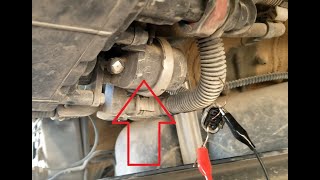
The LDP is located at the rear of the vehicle, mounted on or very near the charcoal canister. The charcoal canister is typically a black plastic box found near the fuel tank.
Will fixing P2401 affect my vehicle's warranty?
If your vehicle is under the federal emissions warranty (typically 8 years/80,000 miles), this repair is covered. However, driving for an extended period with the code active gives the manufacturer grounds to deny a related claim, such as for a failed PCM.
Key Takeaways
- P2401 indicates an electrical short or low voltage in the EVAP leak detection pump circuit, meaning a loose gas cap will never cause this specific code.
- Test the pump's internal resistance with a multimeter; a healthy pump reads 10 to 30 ohms, while a reading near zero confirms a dead short requiring replacement.
- Toyota owners face repair bills exceeding $1,000 because water intrusion often destroys the integrated pump and charcoal canister assembly, requiring full replacement.
- Ignoring P2401 for over 12 months risks permanently destroying the Powertrain Control Module (PCM) driver circuit, escalating a $200 repair into a $2,000+ disaster.
- Volkswagen and Audi owners must check the dedicated 10A EVAP fuse (often F24 or SB10) before replacing any parts, as a blown fuse is their #1 cause for P2401.
Helpful Videos


The information in this article is provided for general reference and educational purposes only. Vehicle specifications, procedures, and part compatibility can vary by production date, trim level, and region. Always consult your vehicle's factory service manual and verify part numbers before purchasing or performing repairs. Safety-critical components such as airbags, seat belts, and braking systems should be installed by a qualified professional.
- 🎬 Helpful Videos
- What Does P2401 Mean?
- Can I Drive With P2401?
- Common Causes
- Symptoms
- Diagnostic Flowchart
- Common Fixes & Costs
- Used vs. New Parts: Buying Guide
- What Happens If You Wait — Timeline
- Cost of Not Fixing It
- Diagnosis Steps
- When This Code Triggers (Freeze-Frame Conditions)
- Related Codes
- Climate & Environmental Factors
- How to Talk to a Mechanic About This Code
- Where to Take It: Dealer vs Independent vs Chain
- When to Walk Away From the Repair
- What Scan Tool You Need for This Code
- How to Clear the Code After You Fix It
- Will This Fail Emissions / State Inspection?
- Most Commonly Affected Vehicles
- Manufacturer-Specific Notes
- Real Owner Stories
- 2006 VW GTI with an intermittent P2401
- 2010 Toyota Corolla with P2401 and P043E codes
- 2005 Toyota Tacoma at 74K miles
- 2007 Lexus ES350 at 136K miles
- How to Prevent This Code From Triggering
- Frequently Asked Questions
- Can a loose gas cap cause code P2401?
- How much does it cost to fix P2401 in 2026?
- Is it safe to drive with code P2401?
- Why did P2401 come back after replacing the pump?
- Can water damage cause a P2401 code?
- What is the difference between P2401 and P2402?
- Where is the leak detection pump located?
- Will fixing P2401 affect my vehicle's warranty?
- Key Takeaways
- 🎟️ Get 5% Off