

P1450 on 2010-2012 Ford Fusion 2.5L: Causes and Fixes for EVAP Vacuum Fault
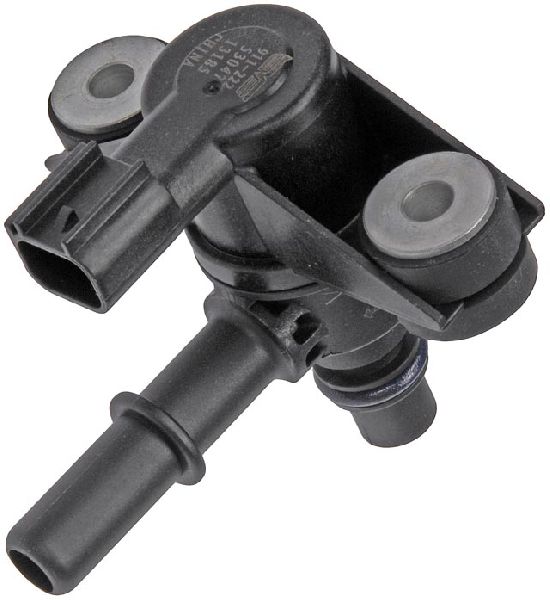
On a 2010-2012 Ford Fusion, code P1450 is almost always caused by a faulty canister purge valve (OEM Part No. AU5Z-9C915-B) that is stuck open. This is a well-documented issue, subject to a safety recall (15S34) that also affects the Mercury Milan. Replacing the valve is a simple, low-cost DIY fix, typically costing $25-$60 for the part.
- P1450 on your Fusion almost certainly means you need a new canister purge valve (Part #AU5Z-9C915-B).
- This is a known safety issue; check if your VIN is covered by recall 15S34 before paying for a repair.
- Symptoms are very specific: stalling after getting gas and a 'whoosh' sound from the fuel filler.
- This is an easy and cheap DIY repair (1/5 difficulty) that can be done in under 15 minutes with an 8mm socket.
- Do not ignore this code, as the constant vacuum can eventually crack the plastic fuel tank, creating a fire hazard.
What's Unique About the 2010-2012 Ford Fusion

This generation of Ford Fusion and its sibling, the Mercury Milan, are highly prone to P1450 due to a common failure of the canister purge valve. The issue was so widespread that Ford issued a safety recall (NHTSA #15S34) for 2010-2011 models because the stuck-open valve could create enough vacuum to deform and crack the plastic fuel tank, leading to a potential fuel leak and fire risk. This makes the diagnosis for P1450 on this specific vehicle more direct than on others, as the purge valve is the primary suspect by a wide margin. The 2012 model, while not part of the recall, uses the same part and suffers from the same failure mode.
Symptoms You May Notice
- Check Engine Light is on.
- Difficulty starting, sputtering, or stalling immediately after refueling.
- A loud 'whoosh' sound of air rushing into the tank when opening the capless fuel filler. Some technicians theorize this noise is the vacuum forcefully popping the internal flapper door of the capless system.
- Rough or unstable engine idle.
- In some cases, an erratic fuel gauge or incorrect distance-to-empty reading.
- An intermittent buzzing or humming noise from the rear of the vehicle near the fuel tank as the vacuum deforms the tank or interacts with the filler neck components.
- The vehicle may enter a "limp mode" where it will not exceed 40 mph and stalls at stops or lights, as described in NHTSA ODI #11722481.
- Replacing the gas cap. This vehicle uses a capless fuel filler system, so there is no traditional cap to fail.
- Replacing the charcoal canister. The canister itself is a passive component that rarely fails in a way that causes P1450; the issue is almost always one of the active control valves (purge or vent) attached to the system.
Most Likely Causes

- Stuck-Open Canister Purge Valve 🔴 High Probability This specific part is known to fail and was the subject of Ford safety recall 15S34 for the 2010-2011 Fusion due to its tendency to stick open. NHTSA ODI #11204343 confirms that even after recall inspections, the canister purge valve can fail and trigger a P1450 code indicating a vacuum issue in the fuel tank.
How to confirm: Locate the purge valve on the side of the intake manifold. With the engine off, disconnect the electrical plug and the EVAP line coming from the fuel tank. Start the engine. If you feel engine vacuum on the valve's open port with your finger, it is stuck open and faulty. An even simpler test is to remove the valve entirely and try to blow through it; if any air passes, it has failed, as it is a normally-closed valve.
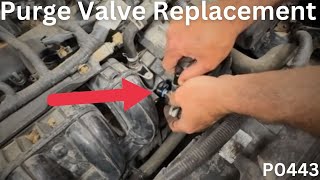
Typical fix: Replace the canister purge valve. It is typically held on by two 8mm bolts and is easily accessible in the engine bay. 🎬 See this step-by-step guide to replacing the purge valve. The OEM part number is AU5Z-9C915-B.
Est. part cost: $25-$60 - Blocked Canister Vent Solenoid or Hose ⚪ Low Probability
How to confirm: Locate the vent solenoid near the charcoal canister at the rear of the vehicle. Check its fresh air inlet and hose for blockages from dirt, debris, or spider webs. The valve is normally open. With the valve disconnected, you can test the resistance across its two pins with a multimeter; a reading between 12-80 Ohms is expected. If it's outside this range, the solenoid is likely bad.
Typical fix: Clean the vent hose or replace the canister vent solenoid if it is stuck closed or electrically failed.
Est. part cost: $30-$70 - Kinked or Blocked EVAP Hose ⚪ Low Probability
How to confirm: Visually inspect all accessible EVAP lines between the engine bay, charcoal canister, and fuel tank for sharp bends, kinks, or collapses that could restrict airflow.
Typical fix: Straighten or replace the damaged hose section.
Est. part cost: $10-$40
Rare But Worth Checking
- Faulty Fuel Tank Pressure (FTP) Sensor: While uncommon, the sensor that measures tank pressure could fail and send incorrect vacuum readings to the PCM. This is usually diagnosed after confirming the purge and vent valves are working correctly. One owner on a forum reported this as the final fix after multiple purge valve replacements failed to solve the issue long-term. NHTSA ODI #11153420 notes this code appearing on the 3.0L V6 model as an inability to "bleed up" fuel tank vacuum.
Diagnosis Steps

- Read the code with an OBD-II scanner to confirm P1450 is present.
- Check for any applicable recalls, especially NHTSA recall 15S34, by entering your VIN on the NHTSA website. If the recall is open, a dealer should perform the repair, which includes a PCM update and potential replacement of the purge valve and/or fuel tank.
- Listen for a 'whoosh' of air when opening the fuel filler door. This indicates a vacuum is present in the tank and strongly suggests a P1450 condition.
- Perform the primary diagnostic test: Locate the canister purge valve on the 2.5L engine's intake manifold.
- With the engine off, disconnect the electrical connector and the EVAP hose from the valve. Try to blow through the valve. If air passes, it is confirmed faulty. 🎬 Watch: A simple walkthrough of this diagnosis and repair.
- Alternatively, reconnect the hose, start the engine, and place your finger over the port on the valve where the hose was connected. If you feel any suction, the valve is stuck open and needs to be replaced.
- If the purge valve is good, the next step is to inspect the canister vent valve and its hoses at the rear of the vehicle for blockages. Test the vent valve's coil resistance with a multimeter (expect 12-80 Ohms).
- If all valves and hoses are clear, the issue could be a faulty Fuel Tank Pressure (FTP) sensor, which may require more advanced diagnostics with a scan tool capable of reading live data.
Parts You'll Likely Need
- Canister Purge Valve / Solenoid
(OEM #AU5Z-9C915-B)— This is the cause of code P1450 in over 90% of cases for this vehicle due to a high failure rate. The OEM part number AU5Z-9C915-B has superseded previous versions like AU5Z-9C915-A.
Trusted brands: Motorcraft (OEM), Dorman (e.g., 911-222), Carquest
OEM price range: $40-$60
Aftermarket price range: $25-$45
Related Codes That Often Appear With This One
- P0456 — A small EVAP leak code can sometimes accompany P1450, as the system may interpret the constant vacuum from a stuck purge valve as a leak-related fault. This combination was specifically noted in NHTSA ODI #11153420.
- P2196 — This code means 'O2 Sensor Signal Stuck Rich'. A stuck-open purge valve can allow excess, un-metered fuel vapors into the intake manifold, causing a rich condition that the upstream O2 sensor detects.
Technical Service Bulletins (TSBs) & Recalls

- TSB 19-2207: While this TSB officially covers the next generation (2013-2017) Fusion/MKZ Hybrid, it confirms the ongoing issue with Ford's canister purge valves causing P1450 and other EVAP codes due to poor sealing. The recommended fix is to replace the valve and update the PCM software, which mirrors the fix for the 2010-2012 models.
Platform-Specific Known Issues
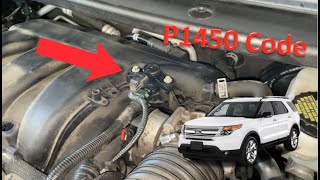
- NHTSA Safety Recall 15S34: Affects 2010-2011 Ford Fusion and Mercury Milan models. A faulty canister purge valve can stick open, creating excessive vacuum that may crack the fuel tank, causing a fuel leak. The official remedy involves a dealer performing a PCM software update, testing the purge valve, and inspecting the fuel tank for damage, with replacement of the valve and/or tank if they fail inspection. Some owners have reported that dealers may initially only perform the software update, only for the P1450 code to return, requiring a second visit to replace the faulty valve. 🎬 Watch: How this common Ford EVAP issue is easily solved.
- Secondary System Faults: NHTSA ODI #11498789 suggests that ignoring a P1450 code for an extended period may be associated with the appearance of other warnings, such as a power steering assist fault.
Mechanic-Grade Diagnostic Values
- Canister Vent Solenoid Coil Resistance — expected: 12 - 80 Ohms. Failure: A reading outside this range indicates a failed solenoid coil.
- Canister Vent Solenoid Supply Voltage — expected: Battery Voltage (approx. 12V) at Pin 2 (Green wire) with Key On, Engine Off.. Failure: No voltage suggests a wiring issue between the solenoid and the Battery Junction Box.
- Fuel Tank Pressure (FTP) Sensor Live Data (KOEO) — expected: Near 0 inches of H2O or 2.6-2.7 Volts (static, vented to atmosphere).. Failure: A significant negative pressure/vacuum reading at idle or with the engine off points to a stuck-open purge valve or a biased sensor.
- Fuel Tank Pressure (FTP) Sensor Live Data during Purge — expected: A slight negative pressure, approximately -2.0 to -4.0 inches of H2O.. Failure: Excessive vacuum (e.g., below -8.0 in. H2O) triggers the P1450 code.
Scan Tool Commands That Help
- Ford IDS / FORScan / iCarsoft: EVAP Purge Valve Control (Bi-Directional Control / Actuation Test) — This is the definitive test for a stuck-open purge valve. With the engine running, command the valve to 0% (closed). If live data for FTP still shows a developing vacuum, or if you can feel vacuum at the valve's port, the valve is mechanically stuck open and has failed.
- Ford IDS / FORScan: EVAP System Test (On-Demand Self-Test) — This automated test runs the PCM's internal EVAP monitor sequence. It will close the vent solenoid and open the purge solenoid to check for leaks and proper pressure changes. A failure during the bleed-up phase will confirm the P1450 fault condition.
Wiring & Ground Locations
- Canister Purge Valve Connector — On the canister purge valve, located on the side of the intake manifold in the engine bay.. This 2-pin connector provides power and PCM control to the valve. Check for corrosion or damaged pins/wires which could cause intermittent valve operation, although a stuck valve is more common than an electrical fault for P1450.
- S180 / S181 — Factory splice in the engine control sensor harness, near the breakout to the PCM and connector C145.. This splice connects multiple sensors. While not a common failure point for P1450 specifically, corrosion here can cause erratic sensor readings throughout the engine management system, including for EVAP components.
- G105 — Engine compartment ground, typically located on the left front of the engine bay.. A poor engine ground can cause a variety of issues with sensor readings and actuator performance. While unlikely to be the primary cause of P1450, it should be checked for corrosion and tightness if multiple, seemingly unrelated electrical faults are present.
Real Owner Repair Stories
- Car Talk Community user 'caitlin_peters' (2012 Ford Fusion) — Check Engine Light with code P0451 (EVAP Pressure Sensor Range/Performance), which is closely related to P1450.
❌ Tried (didn't work) Cleaning the capless gas filler, Replacing the canister purge valve
✅ What actually fixed it The final repair was replacing the Fuel Tank Pressure (FTP) sensor. The owner also noted that Ford later issued a recall for the purge valve they had replaced, and they were able to get a refund for that part. - Reddit r/fordfusion user (2013 Ford Fusion 2.0L (Next generation, but same P1450 code and principle)) — P1450 code, car refuses to start after getting gas unless the accelerator is held down.
❌ Tried (didn't work) Replacing the purge valve with a cheap aftermarket part that failed after one month.
✅ What actually fixed it The user found that cheap aftermarket purge valves would fail repeatedly. Their long-term solution was to buy a more expensive version from AutoZone with a lifetime warranty and exchange it for a free replacement whenever the code returned. This highlights potential quality issues with non-OEM parts. - NHTSA ODI #11569773 — An owner reported the car stalled and was difficult to restart. A mechanic confirmed code P1450 (Unable to Bleed Up Fuel Tank Vacuum) and noted this is a very common issue for this specific vehicle.
OEM Part Supersession History
9U5Z-9C915-H, AU5Z-9C915-A→AU5Z-9C915-B, which was later superseded by AU5Z-9C915-E— Part redesign to improve durability and prevent the valve from sticking open, which was the root cause of the P1450 recall (15S34).
Heads up: All listed part numbers are physically and electrically compatible. However, it is strongly recommended to use the latest available revision (AU5Z-9C915-E or a quality aftermarket equivalent like Dorman 911-222) to get the benefit of the design improvements.
Model Year Variations Within This Range
- 2010-2011 vs. 2012: The official NHTSA safety recall 15S34 for the stuck-open canister purge valve only covers the 2010 and 2011 model years. The 2012 Ford Fusion uses the same 2.5L engine and the same failure-prone purge valve (and exhibits the same P1450 code for the same reason), but it is not included in the recall campaign. Owners of 2012 models must pay for the repair themselves.
Diagnostic Flowchart
Used vs. New Parts: Buying Guide for This Vehicle
When a used part is the smart pick: For this specific repair, using a part from a salvage or junkyard vehicle is NOT recommended. The canister purge valve is a known high-failure-rate item. The risk of getting a used part that has already failed, or is about to fail, is extremely high.
What to inspect on the donor part:
- Not applicable, as a used part is not advised for this repair.
OEM-only on this vehicle (don't cheap out):
- While not strictly 'OEM-only', the canister purge valve is a part where sticking to the OEM Motorcraft brand or a premium aftermarket equivalent is highly recommended. Some owners report repeated failures with low-cost, unbranded aftermarket valves.
Aftermarket brands forum-validated for this vehicle:
- Dorman (Part #911-222) is a widely available and generally trusted aftermarket alternative.
- Standard Motor Products (SMP) (Part #CP597 or CP758) is another well-regarded brand.
Brands owners have reported issues with on this vehicle:
- Unbranded, low-cost valves from online marketplaces have been reported by owners to fail quickly, sometimes within a month of installation.
Real Owner Stories
Aggregated from forums and TSBs cited above. Mileages and costs reflect what owners reported in those sources.
2010 Ford Fusion
Symptoms: Check engine light was on with code P1450 and the car needed to pass a state emissions check.
What fixed it: Replaced the vapor canister solenoid (canister purge valve).
Cost: $15-$25
Source hint: youtube_comment by William Kincaid
2012 Ford Fusion
Symptoms: A recurring P1450 code that came back even after replacing the purge valve.
What fixed it: The final fix required replacing a faulty Fuel Tank Pressure (FTP) sensor and then replacing the purge valve a second time, as it had failed again.
Source hint: Car Talk Community - 'P1450 code!'
2011 Ford Fusion SE
Symptoms: Stalling after refueling and stalling at a red light.
What fixed it: The owner had already replaced the engine-bay purge valve, but the issue persisted. The recommended next step in the diagnostic path was to inspect the canister vent valve at the rear of the car.
Source hint: Reddit r/fordfusion - 'P1450 - 2011 Ford Fusion SE'
NHTSA ODI #11722481
Symptoms: The powertrain light came on with code P1450 and the car entered limp mode, stalling at stops and refusing to go over 40 mph.
What fixed it: The owner replaced the canister purge valve to address the fault.
NHTSA ODI #11204343
Symptoms: The check engine light came on while driving, displaying code P1450 indicating a vacuum issue in the fuel tank.
What fixed it: The owner noted the vehicle had been previously checked during the recall period, but the canister purge valve failed later, requiring replacement.
Related OBD-II Codes
Frequently Asked Questions
Is there a recall for the P1450 code on my 2010-2011 Ford Fusion?
I had the 15S34 recall performed, but my P1450 code came back. Why would that happen?
What is the most common part I need to fix P1450 on my 2.5L Fusion?
How can I test the canister purge valve myself to see if it's bad?
I hear a loud 'whoosh' of air when I open the fuel filler door. Is this related to P1450?
My Fusion stalls or runs rough right after I fill it up with gas. Is this a P1450 symptom?
Does this P1450 purge valve issue affect any other vehicles besides the Fusion?
Helpful Videos

Used OEM Parts in Stock
New Aftermarket Parts Available


The information in this article is provided for general reference and educational purposes only. Vehicle specifications, procedures, and part compatibility can vary by production date, trim level, and region. Always consult your vehicle's factory service manual and verify part numbers before purchasing or performing repairs. Safety-critical components such as airbags, seat belts, and braking systems should be installed by a qualified professional.
- Ford Fusion:
- 🎬 Helpful Videos
- 🛍️ Shop This Part
- What's Unique About the 2010-2012 Ford Fusion
- Symptoms You May Notice
- Most Likely Causes
- Rare But Worth Checking
- Diagnosis Steps
- Parts You'll Likely Need
- Related Codes That Often Appear With This One
- Technical Service Bulletins (TSBs) & Recalls
- Platform-Specific Known Issues
- Mechanic-Grade Diagnostic Values
- Scan Tool Commands That Help
- Wiring & Ground Locations
- Real Owner Repair Stories
- OEM Part Supersession History
- Model Year Variations Within This Range
- Diagnostic Flowchart
- Used vs. New Parts: Buying Guide for This Vehicle
- Real Owner Stories
- 2010 Ford Fusion
- 2012 Ford Fusion
- 2011 Ford Fusion SE
- NHTSA ODI #11722481
- NHTSA ODI #11204343
- Related OBD-II Codes
- Frequently Asked Questions
- 🎟️ Get 5% Off