

OBD-II Code P0496: EVAP System Flow During a Non-Purge Condition
What P0496 means, why it triggers, and how to fix it
- Code P0496 indicates your engine control module detected fuel vapor flowing into the engine during a non-purge condition, meaning the EVAP system is leaking vacuum.
- Replacing a stuck-open EVAP purge valve resolves this code in over 80% of cases and typically costs between $30 and $100 for the part.
- If your engine cranks but struggles to start immediately after filling the gas tank, a flooded intake from a failed purge valve is the guaranteed culprit.
- Fix this code within 30 days to prevent the persistently rich air-fuel mixture from destroying your catalytic converter, which turns a $100 repair into a $2,000+ replacement.
What Does P0496 Mean?

Your car's Engine Control Module (ECM) detected fuel vapors flowing from the evaporative emission (EVAP) system into the engine when they shouldn't be. The EVAP system traps gasoline fumes in a charcoal canister and periodically burns them in the engine. Code P0496 means the purge valve controlling this process is stuck open or leaking, allowing engine vacuum to pull vapors at the wrong time.
Technical definition: The SAE/OBD-II definition is "EVAP Flow During a Non-Purge Condition." The ECM detected vacuum flow from the EVAP system into the intake manifold when the canister purge valve was commanded closed. The ECM runs this diagnostic test during a cold start by sealing the EVAP system and monitoring the Fuel Tank Pressure (FTP) sensor. If it sees a vacuum greater than a specified threshold (e.g., 10 inches of H2O) for 5 seconds, it sets the P0496 code.
Can I Drive With P0496?
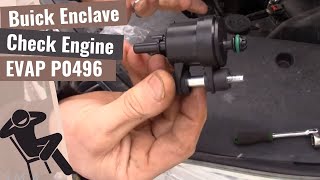
Yes, But With Caution. You can drive with a P0496 code, as it does not cause immediate safety issues. However, ignoring it for weeks leads to a persistently rich fuel mixture that destroys your catalytic converter. This turns a sub-$200 repair into a $1,500-$2,500 expense. 🎬 Watch: Diagnose and fix this GM code in 3 minutes. Address the code within 30 days to prevent costly damage, pass emissions testing, and avoid stalling in traffic.
Common Causes

- Faulty/Stuck-Open EVAP Purge Valve (Very Common) — The purge valve gets stuck open due to internal failure or contamination, constantly drawing fuel vapors into the engine even when commanded closed.
- Faulty Fuel Tank Pressure (FTP) Sensor (Common) — The sensor monitoring fuel tank pressure fails or loses calibration, sending incorrect vacuum readings to the ECM and creating a false flow detection.
- Cracked or Disconnected EVAP Hoses (Less Common) — A leak in the rubber or plastic hoses connecting the EVAP system creates a vacuum leak that mimics a stuck-open purge valve.
- Faulty Purge Valve Wiring or Connector (Less Common) — A shorted wire keeps the valve energized and open, or a corroded connector provides intermittent power.
- Faulty EVAP Vent Valve/Solenoid (Less Common) — The normally-open vent valve gets stuck closed, causing a vacuum to build up in the tank when the purge valve opens.
- Saturated or Clogged Charcoal Canister (Rare) — Topping off the gas tank saturates the charcoal canister with raw fuel. Charcoal bits break loose, travel down the lines, and jam the purge valve open.
- Faulty Purge Flow Sensor (Rare) — On specific vehicles (like Kia and Mazda), a dedicated purge flow sensor malfunctions and reports incorrect flow rates to the ECM.
- Loose or Damaged Gas Cap (Rare) — While a bad gas cap usually causes large leak codes (P0455), it occasionally disrupts the system's ability to seal correctly and triggers P0496.
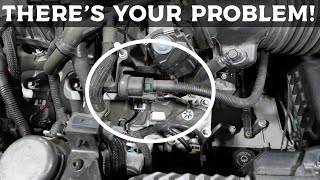
- Faulty Powertrain Control Module (PCM) (Very Rare) — The PCM fails to command the purge valve correctly or misinterprets sensor readings. Consider this only after 🎬 Watch: A complete guide to P0496 causes and fixes. verifying all other components.
Symptoms

- Check Engine Light is On — The dashboard warning light illuminates immediately after the ECM detects the improper flow.
- Difficulty Starting After Refueling — A stuck-open purge valve allows raw fuel vapors to flood the engine during a fill-up, creating a rich condition that makes the engine hard to start.
- Rough Idle or Stalling — Extra, un-metered fuel vapors disrupt the air-fuel mixture, causing the engine to run rough or stall at idle.
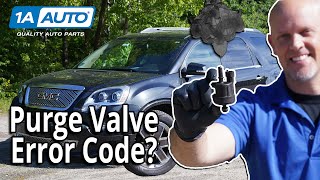
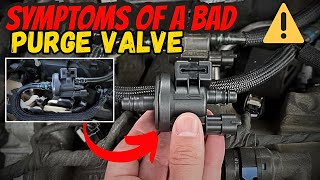
- Decreased Fuel Economy — Burning fuel vapors at the wrong time skews the engine's fuel trims, dropping your fuel efficiency by 5-10%. 🎬 See 7 common symptoms of a bad purge valve.
- Failed Emissions Test — An active P0496 code causes an automatic failure on any state-mandated smog check.
- Fuel Smell — A strong raw fuel odor emanates from the engine bay where the purge valve leaks vapors.
Diagnostic Flowchart
Tap your situation to follow the diagnostic path that matches what you're seeing on this code.
Common Fixes & Costs
- Replace EVAP Canister Purge Valve/Solenoid
— Parts: $30-$100, Labor: $50-$150, ~0.8 hr book time
(DIY)
Chevrolet Cruze/Sonic (1.4L): OEM GM 55573017 (Alt: Dorman 911-409, Standard Motor Products CP781, Bosch 0280142505, ACDelco 214-2149)
GMC Acadia/Terrain (3.6L): OEM GM 12690512, 55593172, 12610560 (Alt: Dorman 911-082, SKP SK911082, AC Delco 214-2137)
Ford Fusion/Escape (2.0L/2.5L): OEM Ford AU5Z-9C915-B, 9U5Z-9C915-H (Alt: Dorman 911-775, 911-222; Standard Motor Products CP903) - Replace Fuel Tank Pressure (FTP) Sensor — Parts: $50-$200, Labor: $100-$250, ~2.5 hr book time (Professional)
- Replace Charcoal Canister — Parts: $200-$500, Labor: $100-$200, ~1.5 hr book time (Intermediate)
- Replace Gas Cap — Parts: $15-$40, Labor: $0, ~0.1 hr book time (DIY)
- Diagnostic Inspection — Parts: $0, Labor: $75-$150, ~1.0 hr book time (Professional)
DIY vs Professional
- Replace EVAP Canister Purge Valve/Solenoid — Beginner:
Tools: Basic hand tools (socket set, pliers). - Replace Fuel Tank Pressure (FTP) Sensor — Beginner:
Tools: Floor jack, jack stands, fuel line disconnect tools, socket set. - Replace Charcoal Canister — Beginner:
Tools: Jack and jack stands, socket set, pliers. - Replace Gas Cap — Beginner:
Tools: None.
Used vs. New Parts: Buying Guide
When a used part is worth it: For the most common fix, the EVAP purge valve, buying used is never recommended. The part is inexpensive new ($30-$100) and is a known high-failure item. The risk of a used part failing shortly after installation outweighs the minimal cost savings.
Donor-vehicle mileage cap: roughly under 40000 miles for the part to have meaningful remaining life.
Donor quality checklist:
- For electronic valves like this, there are no reliable visual cues for quality.
- Only consider a used part if it's from a very low-mileage vehicle that was wrecked and you can verify the part number is an exact match.
- Avoid parts from rust-belt states as connectors and housings corrode.
Decision logic:
- If The part is an EVAP purge valve. → Buy a new OEM or high-quality aftermarket part. The savings from a used part are not worth the risk.
- If The needed part is a more expensive component like a charcoal canister ($200+). → A used part from a low-mileage, non-emissions-related wreck is acceptable on a tight budget, but new is preferred as the canister's lifespan is finite.
Warranty tradeoff: Used parts from a salvage yard typically have a 30-90 day warranty at best. New aftermarket parts carry a 1-year to limited lifetime warranty. A new OEM part provides the best guarantee of compatibility and longevity.
Worst-case if a used part fails: $150-$300. If a used purge valve fails, you pay for the part again plus the repeat labor cost for diagnosis and replacement.
What Happens If You Wait — Timeline
- 0-1 month: Check Engine Light is on. You experience a slightly rough idle or difficulty starting immediately after refueling. The car is safe to drive. (MPG impact: 0-5%% · Added cost: $0-25 in wasted fuel)
- 1-4 months: Symptoms become more consistent. The constant flow of un-metered fuel vapor forces the engine to run rich, which begins to overheat the catalytic converter and reduce its efficiency. (MPG impact: 5-10%% · Added cost: $25-100 in wasted fuel)
- 4-8 months: The catalytic converter suffers damage from the sustained rich condition. Its internal substrate begins to get coated or melt, reducing its ability to clean the exhaust. You are at high risk of needing a new converter. (MPG impact: 10-15%% · Added cost: $800 - $2,500 (catalytic converter replacement))
- 8+ months: Catastrophic failure of the catalytic converter occurs. The substrate melts and breaks apart, creating an exhaust blockage that leads to severe loss of engine power. The initial sub-$200 P0496 fix is now a major repair. (MPG impact: 15-25%+% · Added cost: $1,500 - $3,000+)
Cost of Not Fixing It
- 0-1 month: Rough idle, hard starting after refueling, and a 5-10% drop in fuel economy. Check Engine Light is on. (Added cost: $0-25 in wasted fuel.)
- 1-6 months: The constant rich air-fuel mixture begins to overheat the catalytic converter, reducing its efficiency and lifespan. (Added cost: $25-100 in wasted fuel.)
- 6+ months: Severe damage to the catalytic converter is likely, requiring replacement. The internal substrate melts, causing exhaust blockages and significant loss of engine power. (Added cost: $1,200 - $3,000+)
Diagnosis Steps

- Inspect the EVAP Purge Valve (Manual Test)
Locate the purge valve on the intake manifold. With the engine off, disconnect the hose running to the charcoal canister. Blow through the valve; if air passes through, the normally-closed valve is stuck open and requires replacement.
Tools: Basic hand tools (Beginner) - Test the Purge Valve with a Vacuum Pump
Connect a vacuum pump to the purge valve's canister port. With the electrical connector unplugged, apply vacuum. The valve must hold the vacuum without leaking down. If it drops, replace the valve.
Tools: Handheld vacuum pump (Intermediate) - Pro Tip: Test with a Bi-Directional Scan Tool
Command the purge valve to close (0% duty cycle) and monitor the Fuel Tank Pressure (FTP) sensor. Start the engine. If the FTP data shows a vacuum building (e.g., towards -10 in. H2O), the purge valve is stuck open.
Tools: Bi-directional scan tool (Advanced) - Visually Inspect EVAP Hoses
Trace all vacuum hoses connected to the purge valve, charcoal canister, and intake manifold. Look for cracks, breaks, or loose connections, especially on brittle plastic lines.
Tools: Flashlight (Beginner) - Check the Gas Cap
Ensure your gas cap clicks at least three times when tightened. Inspect the rubber seal for cracks or tears that prevent a proper seal.
Tools: None (Beginner) - Perform a Smoke Test
Force low-pressure smoke into the EVAP system's service port. Escaping smoke pinpoints the exact location of a cracked hose or leaking component.
Tools: EVAP smoke machine (Advanced) - Pro Tip: Check Purge Valve Circuit Integrity
Disconnect the purge valve. With the ignition on, verify one pin has battery voltage (~12V). Measure the solenoid's resistance; it must match the manufacturer's specification (typically 20-40 Ohms).
Tools: Multimeter (Advanced) - Pro Tip: Test Fuel Tank Pressure (FTP) Sensor
Monitor the FTP sensor reading. With the engine off and gas cap removed, it must read atmospheric pressure (~1.5V or 0 in. H2O). If it reads stuck high (5V) or low (0.2V), the sensor is faulty.
Tools: Scan tool, Multimeter (Advanced) - Inspect the Charcoal Canister
If a new purge valve fails quickly, check the EVAP lines for black charcoal pellets. If found, replace the internally broken canister and blow out all lines with compressed air.
Tools: Basic hand tools, compressed air (Intermediate)
When This Code Triggers (Freeze-Frame Conditions)
- Engine Coolant Temp (ECT): 39-86°F (4-30°C) (Cold start. The test requires the ECT and IAT to be close to each other.)
- Intake Air Temp (IAT): 39-86°F (4-30°C) (Cold start. The ambient air temperature must be in this range for the test to initiate.)
- Fuel Level: 15-85% (The fuel tank must not be full or empty for the pressure sensor to get an accurate reading.)
- Engine State: Off / Idle (The 'non-purge' test runs shortly after startup, at idle, or with the engine off, where no purge flow is commanded.)
Related Codes
- P0455 — Indicates a large leak in the EVAP system. A purge valve stuck wide open (P0496) is so significant that the system interprets it as a large leak, causing P0455 to appear simultaneously. If both are present, the stuck purge valve is the primary cause.
- P0442 — Indicates a small leak in the EVAP system. A slightly leaking purge valve sometimes causes P0442 instead of P0496, but P0496 specifically points to flow being detected during a non-purge state.
- P0172 — Indicates the engine is running rich. A stuck-open purge valve (P0496) is a direct cause of this. Un-metered fuel vapors are drawn into the engine, enriching the air-fuel mixture. Fixing the P0496 issue resolves the P0172.
- P0497 — Means "EVAP System Low Purge Flow," the direct opposite of P0496. P0497 is set when the ECM commands the purge valve to open but detects insufficient vapor flow, typically caused by a stuck-closed valve or a blockage.
Climate & Environmental Factors
- Cold Start Conditions: The P0496 diagnostic test runs on a cold engine. The ECM requires the Intake Air Temperature (IAT) and Engine Coolant Temperature (ECT) to be within 39-86°F (4-30°C) at startup. The fault is most likely detected during the first start of the day.
How to Talk to a Mechanic About This Code
Say this: "I have a P0496 code and I'm experiencing hard starts after refueling. I'd like to schedule a diagnostic. Please start by testing the purge valve for leaks. If the valve is good, I authorize up to one hour of diagnostic time for a smoke test to check for hose leaks before we proceed with any further part replacements."
This signals you've done your research and understand the most common causes. It directs the mechanic to perform specific, logical diagnostic steps instead of just replacing parts, and it puts a clear limit on the initial diagnostic cost.
Avoid saying:
- 'My check engine light is on, can you look at it?'
- 'My car is running weird, just fix it.'
- 'I think it's the purge valve, just replace it.' (This prevents proper diagnosis and you pay for the part whether it's the true cause or not).
Questions to ask before authorizing the repair:
- Did the purge valve fail the vacuum test or the manual test?
- If you are recommending a smoke test, does the diagnostic fee I'm paying cover that?
- If the purge valve is not the issue, what is your diagnostic plan to check the FTP sensor and the vent valve?
- What is the warranty on the parts and labor for this repair?
Where to Take It: Dealer vs Independent vs Chain
- Dealer:
Best for: Vehicles still under the powertrain or a federal emissions warranty., Vehicles with known TSBs or special coverage extensions for this part (e.g., certain GM models)., Complex cases where a new purge valve didn't fix the code and advanced, model-specific diagnostics are needed.
Downsides: Typically the highest labor rate., Less willing to perform a simple part swap and more inclined to suggest a broader system repair. (Typical cost: +50% vs. baseline) - Independent Shop:
Best overall fit. P0496 is a very common code and most competent independent shops diagnose and repair it efficiently and cost-effectively.
Best for: Most out-of-warranty vehicles., Straightforward P0496 cases where the purge valve is the likely culprit., Owners looking for the best balance of cost and quality.
Downsides: Quality and diagnostic capabilities vary widely. Vet shops based on reviews and ASE certifications., May lack access to the very latest manufacturer-specific TSBs. (Typical cost: +0% vs. baseline) - Chain Shop:
Use with caution. Acceptable if you are certain the purge valve is the only issue. AVOID for initial diagnosis, as they lack the advanced tools (smoke machine, bi-directional scanner) for a proper EVAP system test.
Best for: Simple, clear-cut purge valve replacements on very common vehicles (e.g., Chevy Cruze) where you have already diagnosed the issue yourself.
Downsides: Technician skill and diagnostic equipment vary dramatically., High pressure to upsell services; a P0496 diagnosis is easily bundled with recommendations for a new gas cap, canister, and fuel system cleaning. (Typical cost: -10% vs. baseline)
When to Walk Away From the Repair
If the total estimated repair cost exceeds 40-50% of your car's private-party value (from a source like Kelley Blue Book), seriously consider selling or trading in the vehicle instead of repairing it.
- Car worth $4000, fix is $350: Fix it. The repair cost is well under the threshold and extends the life of the car.
- Car worth $12000, fix is $800: Fix it. This is a reasonable cost relative to the car's high value.
- Car worth $2500, fix is $1300: Walk away. The repair cost is over 50% of the car's value. It's not a sound investment.
What Scan Tool You Need for This Code

Minimum: A code reader that reads and clears codes is the bare minimum, but for P0496, a scanner that views live data (specifically Fuel Tank Pressure) is highly recommended.
A basic $20 reader only tells you the P0496 code exists. It cannot show you the live Fuel Tank Pressure (FTP) sensor data, which is crucial for seeing if a vacuum is improperly pulled. Without this, you are just guessing the purge valve is bad.
Budget: BlueDriver Pro (~$100) — Connects to your phone via Bluetooth. It reads and clears the code, provides freeze-frame data, and displays live data for the Fuel Tank Pressure sensor, allowing you to confirm if a vacuum is forming when it shouldn't be.
Mid-range: Foxwell NT510 Elite / NT710 (~$180) — Adds bi-directional control. This is a game-changer for P0496, as you use the scanner to command the purge valve to open and close, definitively testing its function without removing it from the car.
Professional: Autel MaxiCOM MK808S / XTOOL D7S (~$400-500) — Full bi-directional control for all vehicle systems. Commands the purge valve, vent valve, and runs the complete, automated EVAP system self-test. This is professional-level diagnosis that tests every component from the driver's seat.
Rent vs buy: For a one-time diagnosis, AutoZone's Loan-A-Tool program allows you to borrow a basic OBD-II scanner for free after a refundable deposit. However, these loaner tools lack the live data or bi-directional features needed for an advanced P0496 diagnosis. If you plan to do your own repairs, buying a scanner in the $100+ range is a worthwhile investment.
How to Clear the Code After You Fix It
- Use an OBD-II scan tool to clear the code.
- Ensure fuel tank is between 1/4 and 3/4 full.
- Perform a complete drive cycle starting from a cold soak (engine off for 8+ hours).
Drive cycle (~30 minutes): Start the engine after an 8+ hour cold soak and let it idle for 2-3 minutes. Drive at a steady speed between 45-65 mph for 10-15 minutes, avoiding sharp turns or large hills. Perform a few gentle coast-downs from highway speed without hard braking. Repeat over 1-2 days if the EVAP monitor does not become 'Ready'.
Readiness monitors affected: EVAP monitor, Catalyst monitor, O2 sensor monitor
Before emissions retest: drive at least 100 miles to fully set monitors.
Watch out for:
- Disconnecting the battery clears the code but resets all readiness monitors, forcing you to start the drive cycle process from scratch.
- The EVAP monitor is notoriously difficult to set and requires several cold-start drive cycles to complete.
- The code returns if the underlying issue (e.g., bad purge valve, cracked hose) is not actually fixed.
Will This Fail Emissions / State Inspection?
Yes — this code typically fails an OBD-II emissions inspection.
- California: An active P0496 code results in an automatic smog check failure. All readiness monitors must be 'Ready'. You must fix the code and complete the drive cycle before re-testing.
- New York: The NYS DMV emissions inspection includes an OBD-II scan. An illuminated Check Engine Light from a P0496 code is an automatic failure.
- Texas: In the 17 counties requiring emissions testing, a P0496 code causes the vehicle to fail the OBD portion of the inspection.
Most Commonly Affected Vehicles
- Chevrolet Cruze, Sonic, Trax, Equinox (2011-2018) — Extremely common issue due to a high failure rate of the purge valve on 1.4L, 1.8L, and 2.4L engines. The valve is inexpensive and easy to access on top of the engine.
- GMC Acadia, Terrain (2009-2017) — The purge valve on the 3.6L V6 engine is a frequent failure point, leading to P0496 and hard starting after refueling. Repair costs are higher on 2013-2016 models.
- Ford Fusion, Escape, Mustang (2013-2019) — The canister purge valve is the overwhelming cause of P0496 on these models. Ford has updated the part number multiple times, so ensure you are purchasing the latest revision.
- Hyundai Elantra, Accent, Sonata (2011-2016) — These models are prone to both purge valve failures and cracked plastic EVAP hoses, which cause the P0496 code.
- Cadillac SRX, XTS, ATS (2010-2019) — Similar to other GM vehicles, the 3.6L V6 engine has a very common issue with the purge valve failing. GM issued a special coverage bulletin extending the warranty on this part.
- Volkswagen Golf, Jetta, Atlas (2010-2021) — Common on 1.8T, 2.0T, and 2.5L engines, where the purge valve (N80 valve) fails. On the Atlas, it causes stalling. VW issued a TSB for some Atlas models concerning the carbon canister.
- Dodge / Chrysler / Ram Charger, 300, Ram 1500 (2008-2018) — P0496 is a common code on vehicles with the 3.6L and 5.7L engines. While the purge valve is a frequent culprit, issues with the EVAP system integrity monitor (ESIM) switch also trigger this code.
- Honda CR-V, Accord (2011-2016) — On Honda models, this code is often defined as "EVAP System High Purge Flow." Common causes include a faulty purge valve or a failing canister vent shut valve.
Manufacturer-Specific Notes
- General Motors (Chevy, GMC, Cadillac): P0496 is almost always caused by a failed purge valve. GM issued Special Coverage N232395300 extending the warranty on the purge valve for certain models to 15 years or 150,000 miles. Diagnosis is straightforward: if there is vacuum at the purge valve port with the engine running and the connector unplugged, the valve is bad.
- Ford: A hard start after refueling is the most prominent symptom. Ford issued TSB SSM 50306 for numerous 2018-2022 models, noting that many returned purge valves were functional and advising technicians to perform a full EVAP system leak test before replacing parts.
- Hyundai / Kia: While purge valves fail, these cars are also known for cracked or leaking plastic EVAP system hoses that trigger a P0496 code. The code definition is often worded as "EVAP System High Purge Flow."
- Volkswagen: The purge valve is referred to as the "N80 valve." On Atlas models, a failing purge valve or canister causes the engine to stall unexpectedly. TSB VWP-23-04 extends the warranty on the carbon canister for certain Atlas vehicles.
Real Owner Stories
2014 Chevy Cruze 1.4L at 90K miles - The Classic Fix
Check Engine Light came on, code reader showed P0496. Car was running rough at idle.
What they tried:
- Owner performed a simple manual test by removing the purge valve and trying to suck air through it. Air flowed through, confirming it was stuck open.
Outcome: Replaced the EVAP purge valve with a new part ($35). The replacement took less than 10 minutes with basic tools. Code was cleared and did not return.
Lesson: On many GM vehicles like the Cruze, P0496 is almost always a failed purge valve. It's a cheap and easy DIY fix that saves a $150+ shop bill. Always test the old part before replacing to be certain.
2017 GMC Acadia at 34K miles - The Misdiagnosis
Car was extremely difficult to start and stalled after refueling. This happened to the previous owner at 16K miles and was happening again.
What they tried:
- Based on common knowledge, the owner immediately replaced the purge valve.
- After refueling, the exact same hard start and stalling symptoms occurred immediately, even with the new purge valve.
Outcome: The problem was not solved by replacing the purge valve. The issue lies elsewhere in the EVAP system, requiring a smoke test to find the true leak.
Lesson: While the purge valve is the most common cause, it's not the only cause. If you have severe symptoms like stalling after every fill-up, and a new purge valve doesn't help, the problem is deeper. A professional diagnosis is necessary.
2021 Ford EcoSport - The Unusual Root Cause
P0496 code kept returning after clearing. Owner was confused by conflicting online information about part locations.
What they tried:
- Replaced the EVAP vent valve located near the fuel tank. The code returned shortly after.
Outcome: The owner discovered that to fully resolve the P0496 code on their vehicle, both the vent valve (by the tank) and the purge valve (in the engine bay) needed replacement. After replacing both components, the code was resolved.
Lesson: Sometimes multiple components in the EVAP system fail or contribute to a code. Terminology is confusing; the 'purge valve' is in the engine bay, while the 'vent valve' is near the canister.
How to Prevent This Code From Triggering
- Do not 'top off' your fuel tank (Every fill-up) — Forcing extra fuel in after the pump clicks off floods the charcoal canister with liquid gasoline. This saturates the charcoal, causing it to break apart, clog EVAP lines, and destroy the purge valve.
- Use an OEM or high-quality gas cap (When replacing a lost or damaged cap) — The gas cap is a critical sealing point for the EVAP system. Cheap aftermarket caps do not seal correctly, causing the system to fail its pressure/vacuum self-tests and trigger various EVAP codes.
- Periodically inspect EVAP hoses (During routine oil changes) — The plastic and rubber hoses in the EVAP system become brittle and crack over time, especially in the engine bay. A quick visual inspection catches a problem before it triggers a code.
- Use Top Tier rated gasoline (Every fill-up) — Using fuels with robust detergent additives helps keep the entire fuel system cleaner. This contributes to overall engine health and prevents related issues that stress emission components.
Frequently Asked Questions
What is the most common cause of a P0496 code?
The single most common cause is a faulty EVAP purge valve stuck in the open position. This allows fuel vapors to flow into the engine continuously.
Why is my car hard to start after I get gas?
When you refuel, the tank fills with fuel vapors. A stuck-open purge valve allows these vapors to get sucked directly into the hot engine. This creates a flooded, overly rich condition that makes starting difficult.
Can a loose gas cap cause a P0496 code?
It is highly unlikely. A loose gas cap typically causes an EVAP leak code like P0455 because the system cannot hold pressure. P0496 indicates improper flow, not a system leak.
How much does it cost to fix a P0496 code?
Replacing the purge valve costs between $100 and $300 at an independent shop, with the part itself usually under $100. Shops also charge a $75-$150 diagnostic fee, which is often credited toward the repair.
Why did my P0496 code come back after replacing the purge valve?
A failing charcoal canister often breaks apart and sends charcoal debris into the EVAP lines, jamming the new purge valve open. Other causes include a cracked EVAP hose, a faulty fuel tank pressure sensor, or a wiring short.
What happens if you ignore a P0496 code?
Short-term, you experience a rough idle, poor fuel economy, and hard starts after refueling. Long-term, the constant rich fuel mixture overheats and destroys the catalytic converter, resulting in a $2,000+ repair.
Can P0496 cause my catalyst monitor to not be ready for a smog check?
Yes. The EVAP system monitor must run and pass before the catalyst monitor initiates its own diagnostic test. An active P0496 fault prevents the EVAP monitor from completing. You must fix the code and complete a drive cycle to pass emissions.
What are common misdiagnosis mistakes for P0496?
A frequent mistake is replacing the purge valve without testing it, missing a less-expensive cracked hose or wiring problem. Another pitfall is overlooking a failing charcoal canister that repeatedly destroys new purge valves. Always perform a full system smoke test to verify leaks.
Key Takeaways
- Code P0496 indicates your engine control module detected fuel vapor flowing into the engine during a non-purge condition, meaning the EVAP system is leaking vacuum.
- Replacing a stuck-open EVAP purge valve resolves this code in over 80% of cases and typically costs between $30 and $100 for the part.
- If your engine cranks but struggles to start immediately after filling the gas tank, a flooded intake from a failed purge valve is the guaranteed culprit.
- Fix this code within 30 days to prevent the persistently rich air-fuel mixture from destroying your catalytic converter, which turns a $100 repair into a $2,000+ replacement.
Helpful Videos



The information in this article is provided for general reference and educational purposes only. Vehicle specifications, procedures, and part compatibility can vary by production date, trim level, and region. Always consult your vehicle's factory service manual and verify part numbers before purchasing or performing repairs. Safety-critical components such as airbags, seat belts, and braking systems should be installed by a qualified professional.
- 🎬 Helpful Videos
- What Does P0496 Mean?
- Can I Drive With P0496?
- Common Causes
- Symptoms
- Diagnostic Flowchart
- Common Fixes & Costs
- DIY vs Professional
- Used vs. New Parts: Buying Guide
- What Happens If You Wait — Timeline
- Cost of Not Fixing It
- Diagnosis Steps
- When This Code Triggers (Freeze-Frame Conditions)
- Related Codes
- Climate & Environmental Factors
- How to Talk to a Mechanic About This Code
- Where to Take It: Dealer vs Independent vs Chain
- When to Walk Away From the Repair
- What Scan Tool You Need for This Code
- How to Clear the Code After You Fix It
- Will This Fail Emissions / State Inspection?
- Most Commonly Affected Vehicles
- Manufacturer-Specific Notes
- Real Owner Stories
- 2014 Chevy Cruze 1.4L at 90K miles - The Classic Fix
- 2017 GMC Acadia at 34K miles - The Misdiagnosis
- 2021 Ford EcoSport - The Unusual Root Cause
- How to Prevent This Code From Triggering
- Frequently Asked Questions
- What is the most common cause of a P0496 code?
- Why is my car hard to start after I get gas?
- Can a loose gas cap cause a P0496 code?
- How much does it cost to fix a P0496 code?
- Why did my P0496 code come back after replacing the purge valve?
- What happens if you ignore a P0496 code?
- Can P0496 cause my catalyst monitor to not be ready for a smog check?
- What are common misdiagnosis mistakes for P0496?
- Key Takeaways
- 🎟️ Get 5% Off