

OBD-II Code P0453: Evaporative Emission System Pressure Sensor/Switch High Input
What P0453 means, why it triggers, and how to fix it like a pro
- Code P0453 triggers when the Powertrain Control Module (PCM) receives a constant voltage signal above 4.5V from the fuel tank pressure sensor.
- The three most common culprits are a failed FTP sensor, a short-to-power in the wiring harness, or a physical blockage in the EVAP vent hose.
- You can safely drive with a P0453 code, but your vehicle will automatically fail state emissions testing until the underlying high-pressure condition is resolved.
- Never replace the FTP sensor without first verifying the 5-volt reference circuit with a multimeter and checking the vent hose for physical blockages like spider nests.
What Does P0453 Mean?

Code P0453 means your Powertrain Control Module (PCM) detects a voltage signal from the fuel tank pressure sensor that exceeds normal limits. This sensor monitors the Evaporative Emission (EVAP) system, preventing gasoline vapors from escaping into the atmosphere. A reading over 4.5 volts indicates a failed sensor, a shorted wire, or a physical blockage preventing the system from venting pressure.
Technical definition: The SAE/OBD-II definition for P0453 is "Evaporative Emission System Pressure Sensor/Switch High Input." The PCM registers a voltage from the Fuel Tank Pressure (FTP) sensor exceeding the maximum specified value (typically 4.5 to 4.9 volts) for at least 5 seconds. The EVAP self-test runs after a cold start with the fuel tank between 15% and 85% full.
Can I Drive With P0453?
Yes, But With Caution. You can continue driving your vehicle, as this code does not affect engine performance or safety. However, ignoring it guarantees an automatic emissions test failure. Address the issue promptly to ensure compliance and prevent a saturated charcoal canister from causing more expensive EVAP system damage.
Common Causes

- Faulty Fuel Tank Pressure (FTP) Sensor (Very Common) — The sensor fails internally, sending a constant high voltage signal (near 5 volts) to the computer regardless of actual tank pressure.
- Wiring or Connector Issue (Common) — A signal wire shorted to a power source, a corroded connector, or rodent damage creates a false high-voltage reading. Moisture ingress frequently causes corrosion at the connector pins.
- Blocked EVAP Vent Hose (Common) — A physical blockage in the vent hose traps pressure in the fuel tank. The sensor accurately reports this genuine high-pressure condition. Dirt, debris, and spider webs are frequent culprits.
- Stuck-Closed EVAP Vent Valve (Common) — The vent valve opens to allow fresh air in and relieve pressure. If it sticks closed, pressure cannot escape, triggering a P0453 code.
- Flooded Charcoal Canister (Less Common) — Habitually overfilling the fuel tank forces liquid fuel into the charcoal canister. A saturated canister cannot manage vapors, creating pressure blockages.
- Faulty Purge Valve (Less Common) — A purge valve stuck open contributes to pressure imbalances within the system, occasionally triggering P0453 on certain European models.
- Faulty Powertrain Control Module (PCM) (Rare) — The vehicle's main computer suffers a failed internal driver circuit. Exhaustively rule out all other causes first, as a faulty PCM typically triggers multiple unrelated codes.
Symptoms

- Check Engine Light is On — This is the most common and often the only noticeable symptom.
- Failed Emissions Test — An active P0453 code automatically fails any state OBD-II emissions or smog inspection.
- Fuel Nozzle Shuts Off Repeatedly — Excessive tank pressure fights incoming fuel, causing the gas pump nozzle to shut off prematurely and repeatedly.
- Fuel Odor — You smell raw fuel near the rear of the vehicle because the EVAP system cannot properly vent or contain vapors.
- Difficulty Starting After Refueling — Excessive pressure buildup forces fuel vapors into the intake, making the engine hard to start immediately after filling up.
Diagnostic Flowchart
Tap your situation to follow the diagnostic path that matches what you're seeing on this code.
Common Fixes & Costs
- Replace Fuel Tank Pressure (FTP) Sensor — Parts: $50-$150, Labor: $150-$500, ~1.5 hr book time (Intermediate)
- Repair Damaged Wiring or Connector — Parts: $10-$50, Labor: $130-$300, ~1.5 hr book time (Intermediate)
- Clear Blocked EVAP Hose — Parts: $0, Labor: $130-$200, ~1.0 hr book time (DIY)
- Replace EVAP Vent Valve/Solenoid — Parts: $30-$90, Labor: $65-$150, ~0.8 hr book time (DIY)
- Replace EVAP Purge Valve/Solenoid — Parts: $25-$75, Labor: $65-$130, ~0.5 hr book time (DIY)
Used vs. New Parts: Buying Guide
When a used part is worth it: For a simple electronic part like an FTP sensor, buying used is rarely recommended. The savings are minimal compared to the risk of the used part failing quickly. It only makes sense if it's part of a larger, expensive assembly (like a full fuel pump module) and comes from a low-mileage, reputable salvage yard.
Donor-vehicle mileage cap: roughly under 50000 miles for the part to have meaningful remaining life.
Donor quality checklist:
- Verify the donor vehicle was not scrapped for fuel or emissions system failures.
- Match the part number exactly; electronic sensors are highly specific to year and model.
- Avoid parts from vehicles in rust-belt states due to higher risk of connector corrosion.
Decision logic:
- If The FTP sensor is sold as a standalone part → Always buy new. The cost difference is small and a new part comes with a warranty.
- If The sensor is integrated into a fuel pump module costing >$400 → A used module from a low-mileage vehicle is a cost-effective option, but carries risk.
- If The part is electronic (like a sensor) → Favor new aftermarket or OEM to ensure reliability and get a warranty.
Warranty tradeoff: Used parts typically have a 30-90 day warranty at best. New aftermarket parts often carry a 1-year to limited lifetime warranty. OEM parts usually have a 1-year warranty.
Worst-case if a used part fails: $200-600 if a used part fails, requiring repeat labor costs, especially if the fuel tank must be dropped again.
What Happens If You Wait — Timeline
- 0-1 month: Check Engine Light illuminates. Vehicle will automatically fail any OBD-II emissions test. No drivability symptoms are noticeable. (MPG impact: 0%% · Added cost: $0)
- 1-6 months: A faint fuel odor becomes apparent as the system is unable to properly manage vapors. In rare cases, a slight decrease in fuel economy occurs. If a blockage is the cause, refueling becomes difficult. (MPG impact: 0-2%% · Added cost: $20-$50 in wasted fuel)
- 6-12 months: If caused by a blockage, the constant high pressure puts stress on other EVAP components like seals and valves. If caused by overfilling, the charcoal canister becomes fully saturated with liquid fuel, rendering it useless and causing a permanent blockage. (MPG impact: 1-3%% · Added cost: $200 - $600 (cost to replace a saturated charcoal canister))
- 12+ months: A saturated charcoal canister begins to break down, sending charcoal pellets into the EVAP lines, which damages the purge and vent valves, leading to a more complex and expensive system-wide repair. (MPG impact: 2-5%% · Added cost: $400 - $800+ (cost to replace canister and potentially other valves))
Cost of Not Fixing It
- 0-3 months: Guaranteed failure of any state emissions test. Possible faint fuel odor. No significant mechanical risk. (Added cost: Negligible)
- 3-12 months: If caused by a blockage or stuck valve, constant pressure stresses other EVAP components like the charcoal canister. Overfilling the tank saturates the canister, leading to its failure. (Added cost: $150 - $550)
- 12+ months: Prolonged high pressure or a saturated canister eventually damages the purge or vent valves, adding to the final repair bill. In very rare cases, a severely saturated canister affects engine performance. (Added cost: $200 - $800+)
Diagnosis Steps

- Check Codes and Freeze Frame Data
Scan for all active codes. If P0449 (Vent Valve Circuit) is present, fix it first. View 'Freeze Frame' data to see the exact engine conditions (RPM, speed, temp) when P0453 triggered.
Tools: OBD-II Scanner (Beginner) - Listen for Pressure at the Gas Cap
Ensure the gas cap is tight. Listen carefully as you open it. A loud 'whoosh' of escaping pressure proves the system is not venting, pointing directly to a blocked vent line or stuck-closed vent valve.
Tools: None (Beginner) - Analyze Live Sensor Data (KOEO)
Use a scanner to view FTP sensor voltage with the Key On, Engine Off (gas cap removed). Normal atmospheric pressure reads 1.5 to 3.5 volts. A reading stuck above 4.5 volts confirms a sensor or circuit fault. (Note: GM sensors operate inversely; voltage rises with vacuum).
Tools: Advanced OBD-II Scanner (Intermediate) - Visually Inspect the EVAP System
Inspect all accessible EVAP hoses, the charcoal canister, and sensor wiring near the fuel tank. Look for pinched hoses, frayed wires, and check the vent hose outlet for spider nests or mud.
Tools: Flashlight, Inspection Mirror (Beginner) - Test the Sensor Circuit at the Connector
Disconnect the FTP sensor. Use a multimeter to verify the 5-volt reference wire from the PCM and the ground wire (<100mV). If the signal wire shows voltage while disconnected, you have a short-to-power in the harness.
Tools: Multimeter (Intermediate) - Manually Test the FTP Sensor
With the sensor connected, back-probe the signal wire. Apply a small amount of vacuum (under 1 PSI) to the sensor port using a hand pump. If the voltage stays fixed high and does not change smoothly, the sensor is dead.
Tools: Multimeter, Hand-held Vacuum Pump, Back-probe Kit (Advanced) - Perform a Smoke Test
If the sensor and wiring pass, find the physical blockage. Introduce smoke into the EVAP system. Command the vent valve open with a bi-directional scanner; smoke must flow freely from the vent outlet. If not, the hose is clogged or the valve is stuck.
Tools: EVAP Smoke Machine, Bi-directional Scanner (Advanced)
When This Code Triggers (Freeze-Frame Conditions)
- Engine Coolant Temp: 40-95°F (During a cold start to run the EVAP monitor.)
- RPM: 1200-3000 (Cruise / steady throttle during drive cycle.)
- Fuel Level: 15-85% (A required condition for the EVAP monitor to run.)
- Vehicle Speed: 45-65 mph (Steady highway driving to enable system self-tests.)
Related Codes
- P0451 — Indicates the FTP sensor's performance is erratic or its range is incorrect. While P0453 means the voltage is stuck high, P0451 means the voltage isn't changing as expected during the EVAP self-test. Seeing both strongly suggests the sensor itself is failing.
- P0452 — This is the direct opposite of P0453, indicating a 'Low Input' from the sensor. On a scanner, P0453 shows voltage > 4.5V, while P0452 shows voltage < 0.5V. The cause is typically an open circuit or a short to ground.
- P0455 — This code signifies a 'Large Leak' detected. A key distinction is that a stuck-CLOSED vent valve causes P0453 (pressure builds up), whereas a stuck-OPEN vent valve causes P0455 because the system cannot seal to perform a vacuum test.
- P0449 — This code points to an electrical fault in the EVAP vent valve *circuit*. If the vent valve is stuck closed due to this electrical fault, it traps pressure and triggers P0453. If you have both codes, diagnose the P0449 circuit fault first, as fixing it resolves the P0453.
Climate & Environmental Factors
- High Humidity / Water Exposure: Moisture penetrates the FTP sensor's electrical connector, especially if it's located on top of the fuel tank or near the wheel wells. This leads to corrosion on the pins, creating high resistance and causing a P0453 high input reading.
- Cold Weather: Ice forms and blocks the EVAP vent hose outlet, trapping pressure. Additionally, plastic and rubber components become more brittle in the cold, increasing the risk of cracks or damage during any related repairs.
- Insect Activity (Regional): In certain regions, spiders build nests inside the EVAP vent hose outlet. This creates a physical blockage that prevents the system from venting, leading to a genuine high-pressure condition and a P0453 code. This is a very common issue on Subaru models.
How to Talk to a Mechanic About This Code
Say this: "I have a P0453 code and I'd like to schedule a diagnostic. Before replacing any parts, please check the fuel tank pressure sensor's live voltage with the key on, engine off. If the voltage is high, please test the sensor's wiring for a short to power before condemning the sensor itself."
This signals to the shop that you understand the common failure modes for P0453. It directs them to perform a specific, logical diagnostic sequence (test circuit vs. sensor) rather than just replacing the most likely part, which prevents a costly misdiagnosis.
Avoid saying:
- 'My check engine light is on, can you look at it?'
- 'I think it's the gas cap.'
- 'Just fix whatever is wrong.'
Questions to ask before authorizing the repair:
- What was the FTP sensor voltage reading with the key on, engine off?
- Did you test the wiring harness for a short to power, and what was the result?
- If the sensor and wiring are good, what is the next diagnostic step? Will you be performing a smoke test for a blockage?
- What is the warranty on the proposed parts and labor?
Where to Take It: Dealer vs Independent vs Chain
- Dealer:
Recommended if you suspect a brand-specific quirk or if the vehicle is under warranty. Otherwise, a qualified independent shop is more cost-effective.
Best for: Vehicles under warranty, Complex, manufacturer-specific EVAP system issues (e.g., on German luxury brands), When a known Technical Service Bulletin (TSB) or software update exists for the P0453 code
Downsides: Highest labor rates, May replace an entire expensive assembly (like a fuel pump module) when only the sensor is bad (Typical cost: +50% vs. baseline) - Independent Shop:
Best overall fit. An experienced independent technician diagnoses and repairs P0453 efficiently and cost-effectively. Vet the shop's reputation for electrical and emissions diagnostics.
Best for: Most out-of-warranty vehicles, Straightforward diagnosis of sensor, wiring, or common blockages
Downsides: Diagnostic skill varies; ensure they are well-regarded and have ASE-certified technicians, May lack access to the latest manufacturer-specific TSBs (Typical cost: +0% vs. baseline) - Chain Shop:
Use with caution. Acceptable if you have already diagnosed a simple, accessible part failure (like a purge valve). AVOID for initial diagnosis, as they may misdiagnose a wiring or blockage issue as a bad sensor.
Best for: Simple, clear-cut part replacements where diagnosis is already certain
Downsides: High pressure to upsell unnecessary services, Technician experience is inconsistent; may lack the advanced diagnostic skills for tricky circuit or blockage issues, Often default to replacing parts without thorough diagnosis (Typical cost: -10% vs. baseline)
When to Walk Away From the Repair
If the estimated repair cost exceeds 40-50% of the car's private-party value, you should pause and evaluate your options.
- Car worth $3000, fix is $1200: Borderline. Get a second opinion, especially if the repair requires dropping the fuel tank. Consider selling as-is.
- Car worth $15000, fix is $750: Fix it. The repair cost is well below the threshold and restores full emissions compliance.
- Car worth $2000, fix is $1100: Walk away. The repair cost is over 50% of the car's value. It's not a sound investment.
What Scan Tool You Need for This Code

Minimum: OBD-II scanner with Live Data functionality to view Fuel Tank Pressure (FTP) sensor voltage.
A basic $20 code reader only shows you the P0453 code. It cannot display the live sensor voltage, which is essential to determine if the fault is with the sensor, the wiring, or a real pressure blockage. Without live data, you are just guessing.
Budget: BlueDriver Pro / Ancel BD310 (~$100) — Connects to your smartphone and provides live data graphing for the FTP sensor voltage. This is enough to perform the key diagnostic step of checking the sensor's reading with the key on, engine off.
Mid-range: Foxwell NT530 / Autel MaxiCOM MK808S (~$250) — Provides live data plus bi-directional control. This allows you to actively command the EVAP vent and purge solenoids to open or close, which is critical for performing a smoke test or diagnosing a blockage without manually applying voltage.
Professional: Autel MS906Pro / XTOOL D8 (~$500-1200) — Offers full OEM-level diagnostics, including advanced bi-directional controls, guided EVAP system tests, and access to manufacturer-specific PIDs and TSBs directly on the tool.
Rent vs buy: If you only need to read the code, many auto parts stores scan it for free. However, for a P0453 diagnosis which requires live data, buying a budget scanner like a BlueDriver is a worthwhile investment for any DIYer.
How to Clear the Code After You Fix It
- Use an OBD-II scan tool to clear the code
- Ensure fuel tank is between 1/4 and 3/4 full
- Perform a complete EVAP drive cycle
Drive cycle (~30 minutes): Cold start (sit for 8+ hours). Idle for 2-3 minutes. Drive for 15-20 minutes with a mix of steady highway speeds (45-65 mph) and some stop-and-go city driving. Allow the vehicle to cool down completely. Repeat if necessary.
Readiness monitors affected: EVAP System Monitor, Catalyst monitor, O2 sensor monitor
Before emissions retest: drive at least 50 miles to fully set monitors.
Watch out for:
- Disconnecting the battery clears the code but also resets all readiness monitors, causing an immediate test failure.
- The code returns if the root cause (e.g., wiring short, blockage) is not fixed.
- Not meeting drive cycle conditions (fuel level, ambient temperature) prevents the EVAP monitor from setting to 'Ready'.
Will This Fail Emissions / State Inspection?
Yes — this code typically fails an OBD-II emissions inspection.
- California: An active P0453 code is an automatic failure. All readiness monitors must be 'Ready'. In some cases, the EVAP monitor is allowed to be 'Not Ready', but it's best to check with the test station.
- New York: An illuminated Check Engine Light from code P0453 causes an automatic failure of the NYS emissions inspection.
- Texas: In the 17 counties requiring emissions testing, an active P0453 code causes the vehicle to fail the OBD-II test.
Most Commonly Affected Vehicles
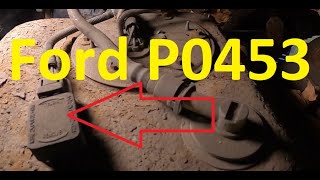
- Ford F-150 / Explorer (1997-2020) — Prone to issues with the FTP sensor and related wiring. On many 2015-2020 F-150s, the sensor is part of the FL3Z-9D683-A tube assembly on top of the tank. An FTP voltage PID reading greater than 4.85 volts with the key on is a clear indicator of a fault on these models.
- Chevrolet / GMC Silverado / Sierra / Tahoe / Suburban (2004-2019) — Common issues with the fuel tank pressure sensor (part number 13502903 is a frequent failure), which is often part of the fuel pump module, requiring the fuel tank to be dropped for access. A bad sensor also disables the factory remote start.
- Honda Fit / Accord / Civic (2008-2020) — On some models, the PCM looks for a voltage of 4.78V or higher for 5 seconds to set the code. Diagnosis often involves checking for an open in the signal line or a faulty sensor located on the EVAP canister.
- Hyundai Elantra / Sonata (2011-2017) — Known for FTP sensor failures. There are reports of misdiagnosis where technicians replace other components before confirming the sensor circuit is faulty.
- Jeep Grand Cherokee / Wrangler (2005-2016) — Failures of the EVAP system leak detection pump (LDP) are common. The LDP assembly often includes an integrated pressure switch/sensor that fails and causes this code.
- Subaru Impreza / Outback / Forester (1998-2018) — Issues often relate to clogged vent hoses or drain valves, famously caused by spiders building nests in the vent line outlet. The canister and vent valve are often located behind the right rear wheel, making them susceptible to debris.
- Toyota Corolla / Camry / Land Cruiser (2009-2019) — Corrosion on the sensor connector pins is a noted point of failure. On some models, overfilling the tank saturates the charcoal canister, leading to this code.
- Volkswagen Golf / Jetta (2008-2015) — On these models, a P0453 code traces back to a faulty purge valve that gets stuck, causing pressure to remain high in the system.
Manufacturer-Specific Notes
- Ford: On many F-150 and Explorer models, the FTP sensor is on top of the fuel tank, requiring the tank to be dropped or the truck bed to be lifted for replacement. Ford has issued TSBs for certain models related to updated FTP sensor designs and wiring issues. The sensor is often part of a larger fuel line assembly. Ford issued a recall for 1997-2004 F-150s (NHTSA ID: 11V385000) for corroded fuel tank straps, which should be inspected if the tank is dropped for FTP sensor service.
- General Motors (Chevy/GMC): The FTP sensor is often integrated with the fuel pump module on top of the fuel tank, making replacement labor-intensive. On 2000-2007 trucks, the wiring harness along the frame rail is a known weak point for corrosion and damage. A P0453 code disables the remote start feature. GM has issued Special Coverage N212338290 for 2018-2019 Silverado/Sierra models extending warranty on the fuel tank assembly to 15 years/150,000 miles, which covers a faulty FTP sensor.
- Toyota: On models like the Land Cruiser, the entire charcoal canister assembly, which includes multiple sensors and valves, is often sold as a single, expensive unit (can be ~$600+ for the part). Corrosion at the electrical connector for the pressure sensor is also a known point of failure.
- Subaru: The charcoal canister and vent valve are often located behind the right rear wheel well, where they are highly susceptible to debris and insect nests (particularly from spiders) clogging the vent hose, a very common cause for P0453 on these vehicles. Mazda had a recall (Campaign 6113E) for certain models to install a filter to prevent spider intrusion into the EVAP canister vent line.
Real Owner Stories
2017 Ford F-150 at 67K miles - The Misdiagnosis
Check Engine Light came on with code P0453. No other symptoms were present.
What they tried:
- Took it to a shop that recommended replacing the canister purge valve for $99 labor.
- Owner replaced the purge valve himself, but the code returned immediately.
Outcome: Further research in owner forums pointed to the actual cause being a faulty Fuel Tank Pressure (FTP) sensor located on top of the fuel tank. This is a much more labor-intensive repair requiring the tank to be dropped, which the owner was trying to avoid.
Lesson: Don't automatically replace the easiest and most accessible part (the purge valve). P0453 is more often caused by the FTP sensor or a blockage. Always diagnose the circuit and sensor before committing to a repair.
2009 Toyota Land Cruiser - The Expensive Assembly
P0453 code appeared. Owner wanted to perform a reliable repair using OEM parts but avoid excessive cost.
What they tried:
- First, replaced the gas cap with a new OEM one for $25 as a cheap initial step. The code remained.
- Researched the issue and found that Toyota often sells the entire charcoal canister assembly as one part for over $600.
Outcome: The owner discovered the pressure sensor module on the canister could be purchased separately from the dealer. He replaced only the sensor module (a $200 part) instead of the entire canister assembly. After the repair and 400 miles of driving, the code was gone and did not return.
Lesson: On some vehicles (like Toyota), the sensor is part of a large, expensive assembly. Before buying the whole unit, check if the specific sensor can be sourced separately from the dealer or a reputable supplier to save significant money.
2007 Chevy Blazer - The Unusual Cause
P0453 code was present for two months. Then, the owner suddenly had extreme difficulty refueling; the gas pump would shut off constantly, and it took 5 minutes to add 2.5 gallons.
What they tried:
- The owner connected the symptoms: the P0453 code (high pressure) and the inability to refuel.
- Forum members suggested a physical blockage in the fuel filler neck or the EVAP vent path, possibly related to a recent fuel pump replacement.
Outcome: The symptoms strongly indicated a stuck check ball in the filler hose or a severely clogged EVAP vent line, preventing air from escaping the tank as fuel entered. This created a real high-pressure condition that the FTP sensor correctly reported. The fix required inspecting and clearing the physical blockage.
Lesson: When P0453 is paired with difficulty refueling, the cause is almost certainly a physical blockage, not a bad sensor. The sensor is doing its job correctly. Focus diagnostic efforts on finding the clog in the vent valve or hoses.
How to Prevent This Code From Triggering
- Do not 'top off' your fuel tank (Every fill-up) — Continuing to pump fuel after the nozzle clicks off forces liquid gasoline into the charcoal canister, which is designed only for vapor. A saturated canister becomes blocked, causing P0453 and requiring an expensive replacement.
- Periodically inspect and clean the EVAP vent hose outlet (Once per year or if parking outdoors in a dusty/wooded area) — The fresh air intake for the EVAP system is a common place for spiders and insects to build nests, and for dirt or mud to create a blockage. Keeping this vent clear prevents pressure buildup in the system.
- Ensure gas cap is tight and the seal is intact (Every fill-up) — While a loose cap typically causes a leak code (P0455/P0457), a properly sealing cap is essential for the entire EVAP system to function correctly and maintain pressure as designed.
- Inspect visible EVAP hoses during other maintenance (During every oil change) — Visually check for cracked, brittle, or disconnected rubber and plastic hoses in the engine bay and near the fuel tank. Catching a deteriorating hose early prevents various EVAP codes and fuel vapor leaks.
Frequently Asked Questions
I replaced the FTP sensor, but the P0453 code came back. What now?
If a new sensor doesn't fix the code, the problem lies elsewhere. Re-verify the wiring harness for a short-to-power, or check for a physical blockage in the EVAP vent lines. A stuck-closed vent valve or clogged hose causes genuine high pressure that triggers the code.
What are common misdiagnosis pitfalls for P0453?
The most common mistake is replacing the FTP sensor without testing its circuit first. A high voltage reading is frequently caused by a shorted wire or a clogged vent hose, not a bad sensor. Never assume replacing the gas cap will fix this specific high-input code.
Can spiders or insects really cause a P0453 code?
Yes. Spiders frequently build nests inside the EVAP system's fresh air vent hoses. This physical blockage prevents the system from venting, causing pressure to build up and triggering a genuine P0453 code.
Will replacing the gas cap fix a P0453 code?
No. Code P0453 indicates high electrical input or high system pressure, not a vacuum leak. While a loose cap causes leak codes (P0455), it does not cause high-pressure codes.
How much does it cost to fix code P0453?
A professional diagnostic check costs $130-$180. Simple fixes like clearing a blocked hose or replacing a vent valve cost under $250. Replacing a fuel tank pressure sensor ranges from $200 to over $650 if the mechanic must drop the fuel tank to access it.
Why did the code appear right after I got gas?
The EVAP system runs its self-test immediately after refueling or during the first part of a drive cycle. The PCM seals the system and monitors pressure during this time. Pre-existing faults with the sensor, circuit, or a blockage are instantly flagged.
What's the difference between P0453 and P0452?
They are direct opposites. P0453 indicates a 'High Input' (voltage stuck above 4.5V), pointing to a short-to-power or a system blockage. P0452 indicates a 'Low Input' (voltage stuck below 0.5V), usually indicating a short-to-ground or an open circuit.
Key Takeaways
- Code P0453 triggers when the Powertrain Control Module (PCM) receives a constant voltage signal above 4.5V from the fuel tank pressure sensor.
- The three most common culprits are a failed FTP sensor, a short-to-power in the wiring harness, or a physical blockage in the EVAP vent hose.
- You can safely drive with a P0453 code, but your vehicle will automatically fail state emissions testing until the underlying high-pressure condition is resolved.
- Never replace the FTP sensor without first verifying the 5-volt reference circuit with a multimeter and checking the vent hose for physical blockages like spider nests.
Helpful Videos

The information in this article is provided for general reference and educational purposes only. Vehicle specifications, procedures, and part compatibility can vary by production date, trim level, and region. Always consult your vehicle's factory service manual and verify part numbers before purchasing or performing repairs. Safety-critical components such as airbags, seat belts, and braking systems should be installed by a qualified professional.
- 🎬 Helpful Videos
- What Does P0453 Mean?
- Can I Drive With P0453?
- Common Causes
- Symptoms
- Diagnostic Flowchart
- Common Fixes & Costs
- Used vs. New Parts: Buying Guide
- What Happens If You Wait — Timeline
- Cost of Not Fixing It
- Diagnosis Steps
- When This Code Triggers (Freeze-Frame Conditions)
- Related Codes
- Climate & Environmental Factors
- How to Talk to a Mechanic About This Code
- Where to Take It: Dealer vs Independent vs Chain
- When to Walk Away From the Repair
- What Scan Tool You Need for This Code
- How to Clear the Code After You Fix It
- Will This Fail Emissions / State Inspection?
- Most Commonly Affected Vehicles
- Manufacturer-Specific Notes
- Real Owner Stories
- 2017 Ford F-150 at 67K miles - The Misdiagnosis
- 2009 Toyota Land Cruiser - The Expensive Assembly
- 2007 Chevy Blazer - The Unusual Cause
- How to Prevent This Code From Triggering
- Frequently Asked Questions
- I replaced the FTP sensor, but the P0453 code came back. What now?
- What are common misdiagnosis pitfalls for P0453?
- Can spiders or insects really cause a P0453 code?
- Will replacing the gas cap fix a P0453 code?
- How much does it cost to fix code P0453?
- Why did the code appear right after I got gas?
- What's the difference between P0453 and P0452?
- Key Takeaways
- 🎟️ Get 5% Off