

OBD-II Code P0446: EVAP System Vent Control Circuit Malfunction
The Ultimate Guide to What P0446 Means, Why It Triggers, and How to Fix It for Good
- P0446 almost always points to a faulty EVAP vent valve or a clogged vent hose located near the rear fuel tank.
- If the gas pump nozzle repeatedly shuts off during refueling, your EVAP vent path is physically blocked and requires immediate clearing.
- Before spending $150+ on a new vent valve, verify the gas cap is tight, check the EVAP fuse, and clear any spider webs or mud from the vent hose outlet.
- For 1999-2025 GM trucks, installing a $50 vent filter relocation kit (like GM P/N 19207762) is the only permanent fix for recurring dust clogs.
What Does P0446 Mean?

The P0446 code means your car's Engine Control Module (ECM) detected a malfunction in the EVAP system's vent control circuit. The EVAP system traps harmful gasoline vapors. This code specifically indicates the vent valve—which allows fresh air into the system—is electrically faulty or mechanically blocked, preventing it from operating during a self-test.
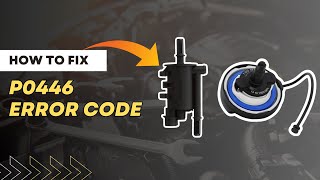
🎬 Watch: This easy DIY guide explains how to fix the P0446 code.Technical definition: The official SAE/ISO definition for P0446 is "Evaporative Emission Control System Vent Control Circuit Malfunction." This means the powertrain control module (PCM) detected a discrepancy between the commanded state of the EVAP vent valve and the actual state of the circuit. This is caused by an electrical fault (an open or short in the wiring), a mechanical fault (a valve stuck open or closed), or a blockage in the vent path that prevents the system from achieving or releasing vacuum correctly.
Can I Drive With P0446?
Yes, But With Caution. Yes, you can drive with a P0446 code without immediate risk of mechanical damage. However, you will automatically fail an emissions test. More critically, the illuminated Check Engine Light masks new, severe warnings like engine misfires. While direct catalytic converter damage is unlikely, long-term emissions system faults reduce its lifespan, risking a $1,500+ repair.
Common Causes

- Faulty or Sticking EVAP Vent Valve/Solenoid (Very Common) — This is the most frequent culprit. Located near the charcoal canister under the vehicle, the vent valve is exposed to moisture, dirt, and road salt, causing it to fail internally or stick open or closed.
- Clogged EVAP Vent Hose or Filter (Common) — Dirt, dust, mud, and insects build nests and create blockages in the vent hose or filter box. This is extremely common on trucks and SUVs used in dusty environments.
- Damaged or Corroded Wiring/Connectors (Common) — Exposed wiring to the vent solenoid breaks, chafes against the frame, or gets chewed by rodents. Electrical connector pins also corrode, causing a poor connection and triggering a circuit code.
- Saturated or Faulty Charcoal Canister (Less Common) — Repeatedly topping off your gas tank forces liquid fuel into the charcoal canister. This saturates the carbon pellets, creating a blockage that mimics a vent valve problem.
- Loose, Damaged, or Incorrect Gas Cap (Rare) — While a bad gas cap typically causes a leak code (P0455 or P0457), it occasionally interferes with the EVAP system's pressure test, resulting in a P0446 code.
- Faulty Fuel Tank Pressure (FTP) Sensor (Rare) — The FTP sensor monitors pressure inside the fuel tank. If it provides an inaccurate reading, the ECM misinterprets this as a blocked vent 🎬 Watch: A mechanic's guide to fixing the P0446 code on Toyotas. and sets a P0446 code.
- Blown Fuse (Very Rare) — The EVAP vent solenoid circuit is protected by a fuse. A blown fuse cuts power to the solenoid and immediately triggers a circuit malfunction code.
- Faulty Powertrain Control Module (PCM) (Very Rare) — In extremely rare cases, the PCM driver circuit controlling the vent solenoid fails. Consider this only after exhaustively ruling out all other possibilities.
Symptoms

- Check Engine Light is On — This is the most common and often the only symptom you will notice.
- Difficulty Refueling — The fuel pump nozzle clicks off repeatedly before the tank is full. This is a classic sign of a stuck-closed vent valve, preventing air from escaping the tank as fuel enters.
- Slight Fuel Odor — You notice a faint smell of gasoline near the rear of the vehicle. This happens if the vent valve is stuck open, allowing fuel vapors to escape.
- Hard Starting After Refueling — If the purge valve is also malfunctioning, the engine cranks for a long time or runs rough immediately after filling up the gas tank.
- Slight Decrease in Fuel Economy (also visible on scanner) — Because fuel vapors escape instead of being used by the engine, a small, often unnoticeable drop in gas mileage occurs over time.
Diagnostic Flowchart
Tap your situation to follow the diagnostic path that matches what you're seeing on this code.
Common Fixes & Costs
- Replace EVAP Vent Valve/Solenoid — Parts: $30-$150, Labor: $100-$250, ~1.2 hr book time (DIY)
- Clean or Replace EVAP Vent Hose/Filter — Parts: $20-$100, Labor: $50-$150, ~0.8 hr book time (DIY)
- Replace Gas Cap — Parts: $15-$40, Labor: $0, ~0.1 hr book time (DIY)
- Repair Damaged Wiring or Connector — Parts: $10-$50, Labor: $100-$400, ~1.5 hr book time (Intermediate)
- Replace Charcoal Canister — Parts: $200-$500+, Labor: $150-$400, ~2 hr book time (Professional)
- EVAP System Smoke Test / Professional Diagnosis — Parts: $0, Labor: $120-$250, ~1 hr book time (Professional)
Used vs. New Parts: Buying Guide
When a used part is worth it: For a simple EVAP vent solenoid, the savings from buying used are minimal and not worth the risk. A used part makes more sense for a large, expensive charcoal canister assembly, especially on older vehicles where a new OEM part is costly.
Donor-vehicle mileage cap: roughly under 80000 miles for the part to have meaningful remaining life.
Donor quality checklist:
- Verify the donor vehicle was not scrapped due to emissions failures or fuel system problems.
- Avoid parts from rust-belt donors, as corrosion is a primary failure mode for vent valves.
- Match the part number exactly. EVAP components are highly specific to the year and model.
- Inspect for physical damage, cracks in plastic housings, and heavy corrosion on electrical terminals.
Decision logic:
- If The part is a simple vent solenoid and a new aftermarket part is under $100 → Buy new. The warranty and assurance of a non-worn part outweigh the small savings.
- If The part is an expensive, integrated canister assembly (e.g., older Toyota) and the budget is tight → A used part from a low-mileage, non-rusty donor is a reasonable option.
- If The failure is due to a known wear item like internal charcoal breakdown → Favor a new part, as a used one may have the same issue.
Warranty tradeoff: Used parts from salvage yards typically offer a 30-90 day warranty, covering only the part itself, not labor. New aftermarket parts usually have a 1-year to limited lifetime warranty. New OEM parts carry a 1-year/12,000-mile warranty.
Worst-case if a used part fails: $200-$500 if a used part fails shortly after installation, requiring repeat labor costs plus the cost of another replacement part.
What Happens If You Wait — Timeline
- 0-1 month: Code P0446 is set, and the Check Engine Light turns on. There are often no other noticeable symptoms. The vehicle automatically fails an OBD-II emissions test. (MPG impact: 0-2%% · Added cost: $0)
- 1-6 months: Secondary symptoms appear. If the vent is stuck closed, refueling becomes difficult as the pump clicks off constantly. If stuck open, a slight fuel odor is present, and fuel economy drops slightly as vapors escape. (MPG impact: 2-5%% · Added cost: $20-$75 in wasted fuel)
- 6-12 months: Consequential damage begins. If the vent valve is stuck open, the deteriorating charcoal canister releases carbon pellets into the EVAP lines. These pellets travel to and clog the purge valve, causing rough idling or hard starting. (MPG impact: 3-8%% · Added cost: $150-$380 to replace the now-damaged purge valve in addition to the original P0446 fix.)
- 12+ months: Major component failure. The charcoal canister becomes completely saturated with fuel (from topping off) or moisture (from a stuck-open valve), rendering it useless. It becomes a source of contamination for the entire system. This requires a costly replacement of the canister itself. (MPG impact: 5-10%% · Added cost: $400-$800+ for a new charcoal canister, plus the cost of any other damaged components like the purge valve.)
Cost of Not Fixing It
- 0-3 months: Guaranteed failure of any emissions/smog inspection. Possible slight decrease in fuel economy and difficulty refueling. (Added cost: Negligible, other than the cost of wasted fuel.)
- 3-12 months: A stuck-open vent valve allows charcoal pellets from a deteriorating canister to be drawn into the purge line, potentially clogging the purge valve and intake manifold ports. This causes rough running and hard starting. (Added cost: $150-$400 to replace a damaged purge valve in addition to the original P0446 fault.)
- 12+ months: Continued stress on the EVAP system leads to the failure of other components, like the charcoal canister itself (from fuel saturation) or the fuel tank pressure sensor. Ignoring a check engine light masks more severe issues. (Added cost: $400-$800+ for a new charcoal canister or other related component failures.)
Diagnosis Steps

- Check the Gas Cap
Ensure your gas cap is tight and clicks at least three times. Inspect the rubber seal for cracks. An incorrect or faulty cap disrupts EVAP system pressure tests.
Tools: None (Beginner) - Visually Inspect the EVAP System
Locate the charcoal canister and attached vent solenoid under the rear of the vehicle. Look for cracked, disconnected, or pinched hoses. Inspect the vent hose outlet for mud or insect nests, and examine wiring for breaks or rodent damage.
Tools: Flashlight, Jack and Jack Stands (Beginner) - Check for a Blown Fuse
Consult your owner's manual to locate the EVAP or emissions system fuse. A blown fuse for the vent solenoid circuit is a quick-to-check cause.
Tools: Owner's Manual, Fuse Puller or Pliers (Beginner) - Test the Vent Valve with a Scan Tool
Using a bidirectional OBD-II scanner, command the vent valve to cycle ON and OFF. You must hear an audible click from the valve each time. If you hear nothing, the valve or its circuit is faulty.
Tools: Bidirectional OBD-II Scanner (Intermediate) - PRO TIP: Check for Power and Ground at the Connector
Disconnect the solenoid's electrical connector. With the ignition ON, use a multimeter to verify 12V power on one pin. Connect a test light between the power and ground pins, then command the valve ON with a scanner. The light must illuminate, proving the ECM provides the ground signal.
Tools: Multimeter, Test Light, Bidirectional OBD-II Scanner (Advanced) - PRO TIP: Check Solenoid Resistance
Set your multimeter to Ohms (Ω) and probe the two pins on the disconnected solenoid. A good solenoid reads between 10 and 50 Ohms. 'OL' (infinite resistance) means an open circuit, while near-zero Ohms means a short. Both require replacement.
Tools: Multimeter (Advanced) - PRO TIP: Bench Test the Vent Solenoid
Remove the vent valve. Since it is normally open, you should be able to blow air through it. Apply 12V and ground directly to the terminals using fused jumper wires. The valve must click loudly and seal shut. If it fails to click or seal, replace it.
Tools: Wrench/Socket Set, Fused Jumper Wires, 12V Battery (Advanced) - Perform a Smoke Test
If the valve and wiring pass, suspect a blockage. Command the vent valve open and introduce smoke into the EVAP system. A steady flow of smoke must exit the vent hose outlet. No smoke indicates a blockage in the hose or canister.
Tools: EVAP Smoke Machine (Advanced) - PRO TIP: Analyze Fuel Tank Pressure (FTP) Sensor Data
Monitor the FTP sensor reading with a scan tool. With the gas cap off and engine off, pressure should be near atmospheric (typically 1.3V-1.7V on GM, 2.5V on Ford/Toyota). A reading stuck high or low indicates a faulty sensor falsely triggering the code.
Tools: Advanced OBD-II Scanner with Live Data (Advanced)
When This Code Triggers (Freeze-Frame Conditions)
- Engine Coolant Temp: 40-95°F (4-35°C) (During a cold start to run the EVAP monitor test. The engine must not be fully warmed up.)
- Fuel Level: 15-85% (The EVAP monitor will not run on a full or nearly empty tank.)
- Vehicle Speed: 40-65 mph (Steady-state cruise, as the test often runs when the vehicle is in motion under stable conditions.)
- Ambient Air Temperature: 40-95°F (4-35°C) (The test is often disabled in very hot or very cold weather.)
Related Codes
- P0449 — This code is nearly identical to P0446 and is used by some manufacturers (especially GM) to indicate an electrical fault in the EVAP Vent Solenoid Control Circuit.
- P0455 — Indicates a large leak in the EVAP system. This code triggers alongside P0446 if the vent valve is stuck wide open, which the PCM interprets as a massive leak.
- P0442 — Indicates a small leak in the EVAP system. A vent valve that isn't sealing completely when commanded closed is interpreted by the PCM as a small leak.
- P0441 — Indicates incorrect purge flow. If the vent is blocked, fresh air cannot enter the canister to replace the vapors being drawn out by the purge valve, triggering a P0441.
- P0456 — Indicates a very small leak. Similar to P0442, this triggers if the vent valve has a minor sealing issue.
Climate & Environmental Factors
- Dusty/Dirty Environments: This is a major contributor, especially for trucks and SUVs. Dust, dirt, and mud clog the vent hose filter, directly causing a restriction and triggering P0446. This is the primary reason for GM's filter relocation TSBs.
- Rust Belt (High Humidity & Road Salt): Moisture and salt accelerate corrosion on the vent solenoid's electrical connector pins and cause the valve's internal metal components to seize. Wiring under the vehicle is also more susceptible to corrosion and breakage.
- Cold Weather: Moisture that entered the vent line or valve freezes, creating a temporary blockage that sets a P0446 code. The code disappears when the temperature rises and the ice melts.
- Insect Nests: Spiders and other insects build nests inside the EVAP vent hose outlet, creating a physical blockage. This is a common and often overlooked cause.
How to Talk to a Mechanic About This Code
Say this: "I have an OBD-II code P0446 for the EVAP vent control circuit. Please start by checking for blockages in the vent hose and testing the vent valve solenoid's electrical circuit before replacing parts. If I have trouble refueling, check for a stuck-closed valve or a clogged canister."
This signals you've done your research and understand the common causes. It directs the mechanic to perform specific, necessary diagnostic steps (checking for blockages and electrical faults) rather than just swapping the most common part, which prevents misdiagnosis and saves you money.
Avoid saying:
- 'My check engine light is on, can you fix it?'
- 'I think I need a new vent valve.'
- 'Just do whatever it takes to clear the code.'
Questions to ask before authorizing the repair:
- Did you test the vent valve with a scan tool? Did it click?
- Did you check for power and ground at the valve's electrical connector?
- Did you inspect the vent hose all the way to its filter for blockages like dirt or spiderwebs?
- If you are recommending a new charcoal canister, can you explain why you've ruled out a simpler blockage or a bad valve?
Where to Take It: Dealer vs Independent vs Chain
- Dealer:
Best for: Vehicles still under an emissions warranty., Known, complex manufacturer-specific issues (e.g., GM TSB for filter relocation, older Toyotas with integrated canisters)., When previous attempts at an independent shop have failed.
Downsides: Highest labor rates, typically 1.5x to 2x more than independent shops., May recommend replacing a larger assembly (like the whole canister) when only a smaller component has failed. (Typical cost: +50% vs. baseline) - Independent Shop:
Best fit for most situations. P0446 is a very common code, and most reputable independent shops have extensive experience diagnosing and repairing it cost-effectively.
Best for: Most out-of-warranty vehicles., Straightforward diagnosis and replacement of common failure parts like the vent valve or a clogged hose.
Downsides: Diagnostic capabilities vary; ensure they have a bidirectional scanner and smoke machine for proper EVAP testing., Quality varies, so it's important to choose a shop with good reviews and ASE-certified technicians. (Typical cost: +0% vs. baseline) - Chain Shop:
Use with caution. Acceptable for a simple vent valve swap, but avoid for a comprehensive diagnosis, which is often what this code requires.
Best for: Simple, clear-cut part replacement like a gas cap or an easily accessible vent valve if you've already diagnosed the problem yourself.
Downsides: Technician skill and diagnostic equipment are inconsistent., May lack the experience to diagnose less common causes like wiring faults or canister issues, leading to misdiagnosis., Prone to upselling unnecessary services. (Typical cost: -10% vs. baseline)
When to Walk Away From the Repair
If the estimated repair cost for the P0446 code and any other needed repairs exceeds 40% of your car's private-party value (check Kelley Blue Book or Edmunds), you should pause and consider alternatives.
- Car worth $4000, fix is $1800: Walk away. The repair cost is 45% of the car's value, making it a poor investment.
- Car worth $12000, fix is $600: Fix it. The repair is only 5% of the car's value and is a worthwhile investment in its reliability and emissions compliance.
- Car worth $2500, fix is $400: Borderline, but likely worth fixing. The cost is low, and it makes the car sellable and able to pass emissions. However, consider the car's overall condition before proceeding.
What Scan Tool You Need for This Code
Minimum: A bidirectional OBD-II scanner that can perform an 'active test' on the EVAP vent valve.
A basic $20 code reader only confirms the P0446 code. It cannot command the vent valve to open or close—the most critical diagnostic step. Without bidirectional control, you are guessing whether the valve, wiring, or a blockage is the culprit.
Budget: Ancel BD310 / BlueDriver Pro (~$60-120) — These Bluetooth scanners connect to a smartphone app and offer basic bidirectional controls for some vehicles, allowing you to command the EVAP vent valve to cycle on and off to confirm if it's working.
Mid-range: Foxwell NT510 Elite / Innova 5610 (~$150-350) — These handheld scanners provide more reliable bidirectional control to command the vent valve and purge valve. They also show live data for the Fuel Tank Pressure (FTP) sensor, which is crucial for a complete diagnosis.
Professional: Autel MaxiCOM MK808 / Foxwell NT809 (~$450-600) — Provides full bidirectional control, allowing you to run complete, automated EVAP system leak tests. These tools offer OE-level diagnostics to pinpoint electrical faults, monitor sensor data with graphing, and quickly confirm a successful repair.
Rent vs buy: For a one-time fix, many auto parts stores like AutoZone will read your codes for free, but their tools typically cannot perform the necessary bidirectional tests. If you plan to do your own diagnostics, buying a midrange scanner with bidirectional capabilities is a worthwhile investment that saves you money on future repairs.
How to Clear the Code After You Fix It
- Use an OBD-II scan tool to clear the diagnostic trouble codes.
- Ensure the fuel tank is between 1/4 and 3/4 full.
- Perform the specific drive cycle required for your vehicle to run the EVAP readiness monitor.
Drive cycle (~20 minutes): A general EVAP drive cycle involves: 1) A cold start (engine off for 8+ hours). 2) Idle for 2-3 minutes. 3) Drive at a steady speed (e.g., 45-65 mph) for 10-15 minutes without aggressive throttle changes. 4) Allow the vehicle to coast down without hard braking. This may need to be repeated over 1-3 days for the monitor to complete.
Readiness monitors affected: EVAP System Monitor, Comprehensive Component Monitor
Before emissions retest: drive at least 50 miles to fully set monitors.
Watch out for:
- Disconnecting the battery clears the code but also resets all readiness monitors, requiring a full drive cycle to be completed before an emissions test.
- The code returns if the root cause (e.g., bad valve, clogged hose) is not actually fixed.
- Not having the correct fuel level (15-85%) prevents the EVAP monitor from running.
Will This Fail Emissions / State Inspection?
Yes — this code typically fails an OBD-II emissions inspection.
- California: An active P0446 code is an automatic failure. All OBD readiness monitors must be set to 'Ready' or 'Complete' to pass. The EVAP monitor is a common one that is difficult to set, often requiring 100+ miles of driving after a repair.
- New York: The NYS DMV inspection includes an OBD-II scan. A P0446 code and the associated Check Engine Light cause an immediate test failure.
- Texas: In the 17 counties requiring emissions testing (including Houston, Dallas, Austin, and El Paso areas), a P0446 code results in a failed inspection. The vehicle will not pass until the issue is repaired and the code is cleared.
Most Commonly Affected Vehicles
- Chevrolet/GMC Silverado, Sierra, Tahoe, Suburban, Avalanche (1999-2025) — Extremely prone to P0446 due to dust clogging the vent filter. GM has multiple TSBs (e.g., 02-06-04-037H, 23-NA-073) recommending a filter relocation kit (P/N 19207762 or 84698783 depending on year) to move the intake to a cleaner location near the transmission or fuel filler neck.
- Toyota Camry, Corolla, RAV4, Tacoma, Sienna (1998-2013) — On many models before ~2007, the vent valve (VSV) is integrated into the charcoal canister assembly. A P0446 code almost always requires replacing the entire canister unit, which is more expensive than a separate valve.
- Ford F-150, Mustang, Escape, Ranger (2004-2016) — Susceptible to both failed vent valves and wiring issues. On F-150s, rodents chewing through the vent solenoid wiring harness near the spare tire is a well-documented cause of this code.
- Nissan Altima, Sentra, Frontier, Maxima (1998-2012) — Similar to Toyota, the vent control valve is a common failure point. Some TSBs have also pointed to faulty EVAP system pressure sensors causing an incorrect P0446 code.
- Subaru Impreza, Legacy, Outback, Forester (1997-2008) — Older models are known for this code, often due to corrosion of the vent valve or its wiring, especially in the rust belt. A hard-to-start condition after refueling is a very common symptom on these vehicles.
- Hyundai/Kia Elantra, Sonata, Optima, Sorento (2001-2015) — These models often refer to the vent valve as the "Canister Close Valve" (CCV). The valve can fail or the canister can become clogged, sometimes from internal charcoal media breaking down.
- Honda Accord, Civic, CR-V, Odyssey (2000-2012) — P0446 on Hondas is caused by a faulty vent shut valve, but diagnosis must also include checking for blockages in the vent tube and ensuring the canister is not saturated.
- Dodge/Chrysler/Jeep Ram 1500, Grand Caravan, Wrangler (2002-2013) — These vehicles experience P0446 due to failing vent solenoids or, on some models, a faulty Leak Detection Pump (LDP) which contains the vent valve mechanism.
Manufacturer-Specific Notes
- General Motors (Chevy/GMC): GM trucks are notorious for sucking dust and debris into the EVAP vent filter, causing a P0446. GM issued multiple service bulletins (e.g., 23-NA-073) advising technicians to install a filter relocation kit. This kit moves the air intake from the dusty frame rail area to a cleaner spot, like the fuel filler neck housing.
- Toyota/Lexus: On many models from the late 1990s to mid-2000s, the vent valve, purge valve, and pressure sensor are integrated into a single, non-serviceable charcoal canister assembly. A failure of the vent valve (often called a VSV) requires replacing the entire expensive unit.
- Ford: On many F-150 trucks, the wiring harness for the vent solenoid is routed near the spare tire and is a common target for rodents. A P0446 code on these trucks is frequently caused by chewed wires creating an open circuit, not a failed valve.
- BMW/Mercedes-Benz: Many German vehicles use a more complex system called a Leak Detection Pump (LDP) which integrates the vent valve function. A P0446 equivalent code on these models often points to a failure of the LDP module itself, which is a more complex and costly repair.
- All Manufacturers (Warranty Note): The Federal Emissions Warranty covers specific major components like the catalytic converter and ECU for 8 years/80,000 miles. However, most of the EVAP system, including the vent valve and canister, typically falls under the shorter 2 year/24,000 mile warranty. Always consult your owner's manual to confirm warranty eligibility.
Real Owner Stories
2009 Chevy Impala, 82K miles - The Misdiagnosis Runaround
Check Engine Light with P0446 appeared shortly after buying the used car, which was driven frequently on gravel roads. Main symptom was extreme difficulty refueling; the gas pump would click off every few seconds.
What they tried:
- Cleaned and then replaced the dusty gas cap - code returned.
- Replaced the EVAP vent valve solenoid - code and refueling problem persisted.
Outcome: The owner suspected the next logical step was replacing the charcoal canister, as the persistent refueling issue pointed to a severe blockage, not just a faulty valve. The heavy dust from gravel roads was the likely culprit for clogging the entire system.
Lesson: If replacing the vent valve doesn't fix a refueling problem, the blockage is likely more severe, involving the vent hoses or the charcoal canister itself. Environmental factors like heavy dust cause more than just a simple valve failure.
1999 Toyota Camry, 4-cyl - The Wrong Part & Aftermarket Woes
P0446 code appeared and would return immediately after being reset. The owner took it to a mechanic for a common fix.
What they tried:
- Mechanic attempted to replace the rear vent valve (VSV) based on experience, but the new part in stock had two hoses while the car's was a three-hose version.
- Installed the correct three-hose valve from an aftermarket brand (NAPA). The P0446 code returned within a few trips.
Outcome: The owner was left to wonder if the aftermarket part was faulty or if the diagnosis was wrong. The ultimate fix on a similar vehicle involved swapping a specific valve component from a junkyard canister onto the original, as a small internal leak was the true cause.
Lesson: On older Toyotas, EVAP components are complex and have multiple variations. Always verify the exact part and number of ports before buying. An aftermarket part failing to fix the issue introduces uncertainty; it could be a faulty new part or a deeper misdiagnosis.
2009 Chevy Malibu - The Spider Invasion
A P0446 code was triggered for 'EVAP Vent Performance'. The system's self-test failed because vacuum was not releasing from the tank at the expected rate when the vent valve was commanded open.
What they tried:
- A technician diagnosed the issue, knowing that a slow vacuum release means there's a restriction preventing fresh air from entering the system.
Outcome: The cause was found to be spiders spinning a web and laying an egg sac directly in the vent valve's fresh air inlet, creating a physical blockage. This is a known issue, particularly on some GM models, addressed by TSBs like #17-NA-383.
Lesson: An EVAP vent performance code (P0446) is often a blockage, not a leak. Before replacing expensive parts, always physically inspect the vent hose outlet and valve inlet for blockages from dirt, mud, or even insect nests, which are a surprisingly common cause.
2011 Chevy HHR, 41K miles - The Electrical Gremlin
Check Engine Light came on, disabling the remote start. AutoZone read code P0449 (vent circuit fault), but the dealer read P0446 (vent performance).
What they tried:
- An independent shop cleared the code, but it returned immediately. The EVAP fuse was checked and found to be good.
Outcome: A dealership technician correctly diagnosed a P0449. Both the purge and vent valves tested good. The actual problem was corrosion inside the wiring harness connector for the rear vent valve, despite the car having low mileage and little salt exposure. Repairing the harness fixed the problem.
Lesson: Don't immediately trust the first code reading or part recommendation. P0446 and P0449 are very similar and can be confused. If a new part doesn't fix a circuit code, the problem is almost always in the wiring or connectors leading to the part.
How to Prevent This Code From Triggering
- Stop fueling at the first click (Every fill-up) — Consistently overfilling the tank by 'topping off' forces liquid gasoline into the charcoal canister, which is designed only for vapor. This saturates the carbon, causing permanent damage and blockage that leads to P0446.
- Periodically inspect the vent hose outlet (Once a year or after driving in muddy/dusty conditions) — The vent hose outlet, often located near the spare tire, is exposed to the elements. A quick visual inspection catches mud, dirt, or insect nests before they become a complete blockage and trigger a code.
- Install a vent filter relocation kit (on applicable GM trucks) (Once, as a proactive upgrade) — For many Chevy/GMC trucks, the factory vent filter location is prone to sucking in dust and water. A relocation kit (like GM P/N 19207762) moves the intake to a cleaner, higher location (like the fuel filler neck), preventing the most common cause of P0446 on these vehicles.
- Use a high-quality, OEM-spec gas cap (When replacing) — While less likely to cause P0446 than a leak code, a poor-fitting gas cap disrupts the system's ability to seal for tests. Cheap aftermarket caps often fail to seal correctly. Always use an OEM or equivalent quality cap and ensure it clicks when tightened.
- Apply dielectric grease to the connector (When replacing the vent valve or if inspecting) — The vent valve connector is in a harsh environment. Applying a small amount of dielectric grease to the connector seal helps keep moisture and road salt out, preventing the corrosion that leads to electrical circuit faults (P0449/P0446).
Frequently Asked Questions
Can overfilling my gas tank cause a P0446 code?
Yes, absolutely. Topping off your tank forces liquid gasoline into the charcoal canister, which is designed only for vapor. This saturates the carbon pellets, creating a blockage that prevents proper venting and triggers a P0446 code.
Will I fail an emissions test with a P0446 code?
Yes, you will fail an emissions (smog) test in any jurisdiction that requires one. A P0446 code indicates a fault in a key emissions control system. The active Check Engine Light results in an automatic failure.
How much does it cost to fix P0446?
The cost varies based on the root cause. A new gas cap is $15-$40, while the most common fix—a new vent valve—typically costs $150-$400 for parts and labor. Complex repairs like a new charcoal canister or a BMW Leak Detection Pump can exceed $800.
What's the difference between the Purge Valve and the Vent Valve?
The Purge Valve is usually located in the engine bay, is normally closed, and opens to draw fuel vapors into the engine. The Vent Valve is located near the fuel tank, is normally open, and closes to seal the system for leak testing. P0446 specifically refers to a malfunction with the Vent Valve.
I replaced the vent valve and the P0446 code came back. What now?
First, check for a physical blockage in the vent hose connected to the valve. Second, use a multimeter to confirm you have 12V power and a proper ground signal from the ECM at the connector. If wiring and blockages are ruled out, suspect an inaccurate Fuel Tank Pressure sensor or a saturated charcoal canister.
I have P0446 but no problem filling the tank. What does that mean?
The difficulty refueling symptom only occurs if the vent valve is stuck closed. If you don't have this issue, the valve is likely stuck open, the fault is purely electrical, or the blockage is intermittent. The EVAP system detects these other failure modes during self-tests even if they don't impact refueling.
Will the P0446 code clear itself?
No, the code will not clear immediately. After fixing the underlying problem, you must clear the code with an OBD-II scanner. Alternatively, the vehicle's computer clears the code itself after completing 3-5 specific drive cycles with no faults detected, which takes several days.
Key Takeaways
- P0446 almost always points to a faulty EVAP vent valve or a clogged vent hose located near the rear fuel tank.
- If the gas pump nozzle repeatedly shuts off during refueling, your EVAP vent path is physically blocked and requires immediate clearing.
- Before spending $150+ on a new vent valve, verify the gas cap is tight, check the EVAP fuse, and clear any spider webs or mud from the vent hose outlet.
- For 1999-2025 GM trucks, installing a $50 vent filter relocation kit (like GM P/N 19207762) is the only permanent fix for recurring dust clogs.
Helpful Videos
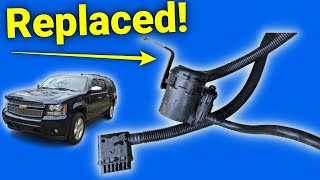
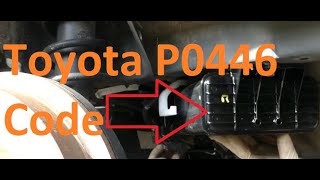
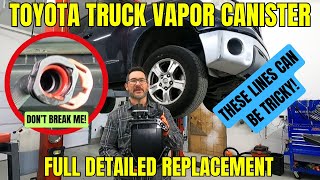

The information in this article is provided for general reference and educational purposes only. Vehicle specifications, procedures, and part compatibility can vary by production date, trim level, and region. Always consult your vehicle's factory service manual and verify part numbers before purchasing or performing repairs. Safety-critical components such as airbags, seat belts, and braking systems should be installed by a qualified professional.
- 🎬 Helpful Videos
- What Does P0446 Mean?
- Can I Drive With P0446?
- Common Causes
- Symptoms
- Diagnostic Flowchart
- Common Fixes & Costs
- Used vs. New Parts: Buying Guide
- What Happens If You Wait — Timeline
- Cost of Not Fixing It
- Diagnosis Steps
- When This Code Triggers (Freeze-Frame Conditions)
- Related Codes
- Climate & Environmental Factors
- How to Talk to a Mechanic About This Code
- Where to Take It: Dealer vs Independent vs Chain
- When to Walk Away From the Repair
- What Scan Tool You Need for This Code
- How to Clear the Code After You Fix It
- Will This Fail Emissions / State Inspection?
- Most Commonly Affected Vehicles
- Manufacturer-Specific Notes
- Real Owner Stories
- 2009 Chevy Impala, 82K miles - The Misdiagnosis Runaround
- 1999 Toyota Camry, 4-cyl - The Wrong Part & Aftermarket Woes
- 2009 Chevy Malibu - The Spider Invasion
- 2011 Chevy HHR, 41K miles - The Electrical Gremlin
- How to Prevent This Code From Triggering
- Frequently Asked Questions
- Can overfilling my gas tank cause a P0446 code?
- Will I fail an emissions test with a P0446 code?
- How much does it cost to fix P0446?
- What's the difference between the Purge Valve and the Vent Valve?
- I replaced the vent valve and the P0446 code came back. What now?
- I have P0446 but no problem filling the tank. What does that mean?
- Will the P0446 code clear itself?
- Key Takeaways
- 🎟️ Get 5% Off