

OBD-II Code P0443: Evaporative Emission Purge Control Valve Circuit Malfunction
An ASE-Certified Master Technician's In-Depth Guide to P0443
- Code P0443 indicates an electrical circuit failure, not a vacuum leak, and requires testing the purge valve solenoid and its wiring harness.
- A stuck-open purge valve causes a rough idle and difficulty starting the engine immediately after filling the gas tank.
- Test the purge valve's internal coil with a multimeter; a healthy valve typically reads between 15 and 35 Ohms of resistance.
- Driving with an active P0443 code is safe for short trips, but ignoring it for over 6 months risks a $1,500 catalytic converter replacement due to sustained rich fuel conditions.
What Does P0443 Mean?

The Powertrain Control Module (PCM) detected an electrical problem with the EVAP system's purge control valve or its circuit. The EVAP system prevents gasoline vapors from escaping into the atmosphere. The purge valve opens at specific times to draw trapped vapors into the engine for combustion. Code P0443 means the PCM commanded the valve but detected an incorrect voltage, indicating an open, shorted, or malfunctioning control circuit.
Technical definition: The official SAE/OBD-II definition is "Evaporative Emission System Purge Control Valve 'A' Circuit Malfunction." The engine computer (ECM/PCM) detected that the commanded state of the purge valve's control circuit does not match the actual state. The PCM monitors the control circuit voltage; if it commands the valve on or off and sees voltage that is too high or too low (indicating an open or short), it sets this DTC.
Can I Drive With P0443?
Yes, But With Caution. Yes, you can drive with a P0443 code, as it does not affect immediate engine safety. However, fix it within a month to avoid poor fuel economy, a rough idle, and failing an emissions test. Driving thousands of miles with a stuck-open valve causes fuel trim issues that damage the catalytic converter, an $800 to $2500 repair.
Common Causes

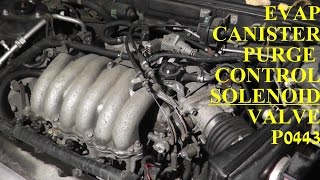
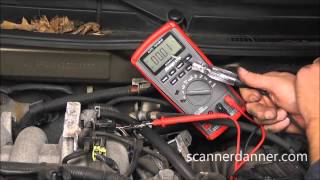
- Faulty EVAP Purge Control Valve (Solenoid) (Very Common) — The valve is an electronic solenoid that fails electrically (internal coil short or open) or mechanically (stuck open or closed). This is the most frequent cause of P0443. 🎬 Watch: How to test and replace the purge control solenoid.
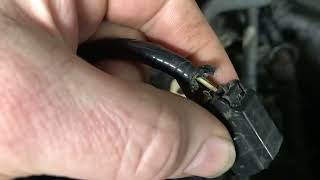
- Damaged Wiring or Electrical Connector (Common) — Wires routing to the purge valve fray, break, short to ground, or corrode from engine heat and moisture. Rodents also frequently chew through this specific wiring harness. The plastic connector pins bend or corrode, causing a poor connection.
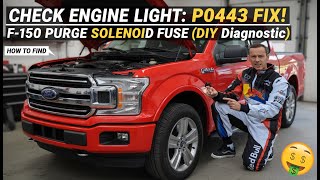
- Blown EVAP System Fuse (Less Common) — The purge valve circuit is protected by a 10A or 15A fuse. If this fuse blows due to a short circuit, the valve loses power and triggers the code. 🎬 See how to find and check the EVAP system fuse.
- Deteriorated Charcoal Canister Debris (Rare) — When the charcoal canister breaks down internally, small pieces of charcoal travel down the purge line. This debris lodges in the purge valve, jamming it open or closed and causing a circuit fault.
- Cracked or Disconnected EVAP Hoses (Rare) — While P0443 is an electrical code, a massive vacuum leak from a cracked or disconnected hose directly at the purge valve is sometimes misinterpreted by the computer as a circuit fault.
- Faulty Blower Motor Relay (Chrysler/Dodge/Jeep) (Rare) — On older Chrysler vehicles, a faulty heater-A/C blower motor relay remains energized after the engine is off. This causes an electrical feedback loop into the PCM, erroneously triggering P0443 (TSB 08-07-00).
- Faulty Powertrain Control Module (PCM) (Very Rare) — The internal driver circuit in the PCM that controls the purge valve fails. This is the absolute last consideration after exhaustively testing all wiring and components.
Symptoms

- Check Engine Light is On — The light illuminates as soon as the PCM's self-test detects the circuit fault. This is often the only symptom.
- Rough Idle or Stalling — A stuck-open purge valve creates a vacuum leak, allowing un-metered fuel vapors into the engine. This disrupts the air-fuel mixture, causing a rough idle, hesitation, or stalling at low speeds.
- Difficulty Starting After Refueling — Excessive fuel vapor floods the intake manifold when filling the gas tank if the purge valve is stuck open. The engine cranks but struggles to start until the excess vapor clears.
- Failed Emissions Test — The EVAP system is a primary emissions control component. An active P0443 code causes an automatic failure on any state-mandated emissions or smog test.
- Fuel Smell — A faint smell of gasoline is noticeable around the engine bay or fuel tank area if the valve is stuck open.
- Reduced Fuel Economy (also visible on scanner) — Improperly burned fuel vapors lead to a 5-10% decrease in miles per gallon (MPG).
Diagnostic Flowchart
Tap your situation to follow the diagnostic path that matches what you're seeing on this code.
Common Fixes & Costs
- Replace EVAP Purge Control Valve — Parts: $30-$100, Labor: $75-$150, ~0.8 hr book time (DIY)
- Repair Damaged Wiring or Connector — Parts: $10-$30, Labor: $150-$300, ~1.5 hr book time (Intermediate)
- Replace Blown EVAP Fuse — Parts: $1-$5, Labor: $0-$50, ~0.1 hr book time (DIY)
- Replace Cracked EVAP Hoses — Parts: $10-$50, Labor: $50-$150, ~0.7 hr book time (DIY)
- Replace Powertrain Control Module (PCM) — Parts: $600-$1000, Labor: $200-$300, ~2.0 hr book time (Professional)
DIY vs Professional
- Replace EVAP Purge Control Valve — Beginner: Yes
Tools: Basic hand tools (socket set, pliers), flashlight. - Repair Damaged Wiring or Connector — Beginner: No
Tools: Digital multimeter, wire strippers, wire cutters, soldering iron, heat shrink tubing. - Replace Blown EVAP Fuse — Beginner: Yes
Tools: Fuse puller or small pliers. - Replace Cracked EVAP Hoses — Beginner: Yes
Tools: Pliers, hose cutters or utility knife.
Used vs. New Parts: Buying Guide
When a used part is worth it: Buying a used EVAP purge valve rarely makes sense. The savings are minimal, and the risk of getting a worn part is high.
Donor-vehicle mileage cap: roughly under 50000 miles for the part to have meaningful remaining life.
Donor quality checklist:
- Match the part number exactly; visual matches are not sufficient.
- Avoid parts from rust-belt states due to connector corrosion.
- Test the part with a 12V source to ensure the solenoid clicks before installation.
Decision logic:
- If The new part costs less than $100 → Always buy new. The labor to replace a failed used part negates any savings.
- If The vehicle is very old and a new part is unavailable → A used part is an acceptable last resort. Assume it has a limited lifespan.
- If The part is a simple electrical solenoid → Favor new from a reputable brand like Bosch, Denso, or Standard Motor Products.
Warranty tradeoff: Used parts offer a 30-day warranty at best. Quality aftermarket new parts provide a 1-year to limited lifetime warranty.
Worst-case if a used part fails: $100-$250 if a used part fails after installation, requiring repeat labor costs.
What Happens If You Wait — Timeline
- 0-1 month: Check Engine Light illuminates. The vehicle automatically fails an emissions test. No other symptoms are noticeable. (MPG impact: 0-5%% · Added cost: $0)
- 1-4 months: If the valve is stuck open, an intermittent rough idle appears. A faint fuel odor is present. (MPG impact: 5-10%% · Added cost: $25-$100 in wasted fuel)
- 4-12 months: A continuously stuck-open valve creates a constant vacuum leak. The engine computer enriches the fuel mixture, leading to carbon buildup and stressing the catalytic converter. (MPG impact: 10-15%% · Added cost: $100-$300 in wasted fuel and early sensor wear)
- 12+ months: Prolonged driving with a rich fuel mixture overheats and destroys the catalytic converter, requiring a major repair. (MPG impact: 10-20%% · Added cost: $1000-$2500 for catalytic converter replacement)
Cost of Not Fixing It
- 0-1 month: Failed emissions test and a 5-10% drop in fuel economy. No immediate risk of damage. (Added cost: Negligible)
- 1-6 months: A stuck-open purge valve creates a constant vacuum leak. The engine computer compensates by running rich, causing carbon buildup on valves. (Added cost: $50-$200)
- 6+ months: Prolonged driving with a stuck-open purge valve destroys the catalytic converter due to sustained rich conditions. (Added cost: $1000-$2500)
Diagnosis Steps

- Read the Code and Check for Others
Use an OBD-II scanner to confirm P0443 is the active code. Check for related EVAP codes like P0444, P0445, P0455, or P0456, which provide clues to the root cause. Clear the code and drive the car; if it returns immediately, the electrical fault is constant.
Tools: OBD-II Scanner (Beginner) - Inspect the EVAP Fuse
Locate the fuse box diagram in your owner's manual and find the 10A or 15A fuse for the EVAP system. Pull the fuse and check if the internal metal strip is broken. Replace it if blown, but note that an immediate re-blow indicates a short circuit.
Tools: Fuse Puller or Pliers (Beginner) - Visually Inspect the Purge Valve, Hoses, and Wiring
Locate the purge valve in the engine bay near the intake manifold. Look for cracked hoses, loose connections, or a damaged electrical connector. Inspect the wiring harness for rodent damage, chafing, or melting.
Tools: Flashlight (Beginner) - Test the Purge Valve's Resistance
Set a digital multimeter to Ohms (Ω). Unplug the valve's electrical connector and touch the probes to the two metal pins on the valve. A healthy purge valve reads between 15 and 35 Ohms. An infinite reading (OL) indicates an open coil, and near-zero Ohms indicates a shorted coil. Replace the valve if it fails this test.
Tools: Digital Multimeter (Intermediate) - Test for Power at the Connector
Turn the ignition key to the 'On' position (engine off). Set your multimeter to DC Volts. Connect the black probe to the negative battery terminal and probe both terminals in the unplugged connector with the red probe. One wire must show battery voltage (12.0-12.6 volts). If there is no voltage, there is a break in the power wire from the fuse box.
Tools: Digital Multimeter (Intermediate) - Check for Debris in the Purge Valve and Lines
Disconnect the hoses from the purge valve. Inspect the ports and the inside of the hoses for black, granular debris. This is charcoal from a failing canister. If found, you must replace both the purge valve and the charcoal canister, and blow out the lines.
Tools: Pliers, Flashlight (Intermediate) - Pro Tip: Perform a 'Wiggle Test'
If initial tests pass, the issue is an intermittent wiring fault. With the key on and multimeter connected to the power and ground wires at the connector, gently wiggle the wiring harness from the valve back to the firewall. A flickering voltage reading pinpoints the exact location of the broken wire.
Tools: Digital Multimeter (Advanced) - Pro Tip: Use a Scan Tool for Active Testing
Connect a bi-directional scan tool and navigate to the EVAP system active tests. Command the purge valve to open and close. You must hear an audible click from the valve. While commanding it on, use a multimeter to verify a ground signal on the control wire. If the ground signal is missing, the wiring to the PCM or the PCM itself is faulty.
Tools: Advanced Bi-Directional Scan Tool, Digital Multimeter (Advanced) - Advanced: Analyze Scan Tool Live Data PIDs
Monitor specific EVAP data PIDs. When commanded closed, the duty cycle should be 0% and voltage near battery voltage. When commanded fully open (100%), current should read approximately 1,000 mA with a voltage drop of at least 3 volts. Failure to meet these specs isolates the circuit failure.
Tools: Advanced Bi-Directional Scan Tool (Advanced)
When This Code Triggers (Freeze-Frame Conditions)
- Engine Coolant Temp: 40-95°F (at startup) (Engine must be started from a 'cold soak' condition, where engine and ambient temps are similar.)
- Fuel Level: 15-85% (The EVAP monitor will not run if the tank is too full or too empty.)
- Vehicle Speed: 40-65 mph (The test runs during steady-state cruising, not during stop-and-go traffic.)
- Ambient Air Temp: 40-95°F (The EVAP self-test is disabled in very cold or very hot weather.)
Related Codes
- P0444 — Indicates the purge valve circuit is 'Open.' P0444 points directly to a broken wire, unplugged connector, or burned-out internal coil. A multimeter shows infinite resistance (OL) across the valve's pins.
- P0445 — Indicates the purge valve circuit is 'Shorted.' The control wire is touching ground or the two wires are touching each other. A multimeter shows near-zero ohms. This short often blows the EVAP fuse.
- P0455 / P0456 — These are leak codes. They appear alongside P0443 if the purge valve is mechanically stuck open. The stuck-open valve creates a massive vacuum leak that the PCM interprets as a system leak.
- P0171 / P0174 — These are lean codes. If the purge valve is stuck open, it allows un-metered air into the intake manifold, leaning out the air-fuel mixture and triggering these codes alongside P0443.
Climate & Environmental Factors
- High Humidity / Road Salt: Moisture and salt promote corrosion on the electrical connector pins and work into wiring, causing high resistance or short circuits that trigger the code.
- Extreme Cold: Cold temperatures make plastic wiring insulation and vacuum hoses brittle, leading to intermittent open circuits or vacuum leaks when disturbed.
- Rodent Activity: Rodents seek shelter in warm engine bays during colder months. They chew on soy-based wiring insulation, causing open or shorted circuits in the purge valve harness.
How to Talk to a Mechanic About This Code
Say this: "I have a P0443 code, which I know is for the EVAP purge valve circuit. I'd like to schedule a diagnostic appointment to test the circuit. Please check for power, ground, and signal at the valve's connector before recommending a part replacement."
This signals you understand P0443 is an electrical code and prevents a shop from just replacing the purge valve without proper diagnosis. It directs them to perform specific electrical tests to find the true cause.
Avoid saying:
- 'My check engine light is on, can you look at it?'
- 'I think I need a new purge valve.'
- 'Just fix whatever is wrong.'
Questions to ask before authorizing the repair:
- Did you test the purge valve solenoid's resistance, and what was the reading?
- Did you confirm there is battery voltage on the power wire and a good ground at the connector?
- If the wiring and valve are good, how did you test the PCM's driver circuit?
- What is the warranty on the parts and labor for this repair?
Where to Take It: Dealer vs Independent vs Chain
- Dealer:
Recommended only if the vehicle is under warranty or has a known, dealer-specific TSB. Otherwise, an independent shop is more cost-effective.
Best for: Vehicles still under an emissions warranty., Known manufacturer-specific issues (like a software update for a Chevy Cruze) or TSBs., Complex electrical issues where an independent shop has already failed to find the fault.
Downsides: Significantly higher labor rates, often 1.5-2x more than independent shops., May recommend replacing related components as a preventative measure, increasing the cost. (Typical cost: +50% vs. baseline) - Independent Shop:
Best fit for most situations. A reputable independent shop diagnoses and repairs a P0443 code efficiently and affordably.
Best for: Most out-of-warranty vehicles., Common electrical codes like P0443 where the diagnostic procedure is straightforward., Building a long-term relationship with a trusted mechanic.
Downsides: Diagnostic tool capabilities and technician experience vary widely. Vet the shop by checking for ASE certifications. (Typical cost: +0% vs. baseline) - Chain Shop:
Not recommended. They are less likely to properly diagnose a wiring or PCM issue, leading to repeat repairs.
Best for: Simple, routine maintenance like oil changes or tire rotations.
Downsides: Technicians are less experienced with electrical diagnostics., High pressure to meet sales quotas leads to upselling unnecessary services., Often not equipped for in-depth electrical troubleshooting beyond basic part replacement. (Typical cost: -10% vs. baseline)
When to Walk Away From the Repair
If the repair cost exceeds 40% of your car's private-party value, consider selling it.
- Car worth $3000, fix is $250: Fix it. The repair cost is well below the threshold and is necessary to pass emissions.
- Car worth $4000, fix is $1200: Walk away. This implies a rare and expensive PCM failure. The repair cost approaches the 40% rule, making it a poor investment.
- Car worth $15000, fix is $250: Fix it. This is a minor and affordable repair relative to the car's value.
What Scan Tool You Need for This Code
Minimum: A scanner that reads and clears codes, shows freeze-frame data, and displays live data PIDs for the EVAP system.
A basic $20 code reader only shows the P0443 code. It cannot help determine if the cause is the valve, the wiring, or the computer. You need to see live data and command the valve to activate.
Budget: BlueDriver Pro Scan Tool (~$100) — Connects to your smartphone via Bluetooth. It reads codes, provides detailed repair reports, and views live data for the EVAP system.
Mid-range: Foxwell NT510 Elite / Autel MaxiCOM MK808S (~$150) — Offers bidirectional control. This allows you to command the purge valve to open and close directly from the tool, letting you hear if it clicks and confirm the circuit is controlled by the PCM.
Professional: Autel MaxiCOM MK808S / XTOOL D7S (~$400-600) — Offers full bidirectional control, advanced EVAP system tests, access to manufacturer-specific codes, and includes wiring diagrams and component testing procedures.
Rent vs buy: For a one-time check, auto parts stores offer Loan-A-Tool programs to borrow an OBD2 scanner. If you do your own maintenance, buying a scanner in the $100-$200 range offers the best value.
How to Clear the Code After You Fix It
- Reconnect battery (if disconnected for repair)
- Use an OBD-II scan tool to clear the P0443 code
- Perform a complete EVAP drive cycle to run the readiness monitor
Drive cycle (~30 minutes): Start with a cold engine and a fuel tank between 1/4 and 3/4 full. Idle for 3 minutes. Drive in mixed traffic for 20 minutes, including steady cruising between 40-65 mph for 10 minutes. Allow the vehicle to cool down.
Readiness monitors affected: EVAP System Monitor, Catalyst Monitor, O2 Sensor Monitor
Before emissions retest: drive at least 100 miles to fully set monitors.
Watch out for:
- Disconnecting the battery clears the code but resets all readiness monitors, requiring a full drive cycle before an emissions test.
- The code returns immediately if the underlying electrical fault was not fixed.
- Not meeting the drive cycle criteria (fuel level, temperature, steady speed) prevents the EVAP monitor from running.
Will This Fail Emissions / State Inspection?

Yes — this code typically fails an OBD-II emissions inspection.
- California: An active P0443 code is an automatic failure. After repair, all OBD readiness monitors must be set to 'Ready.' It takes 100-200 miles of driving to complete the EVAP monitor before a retest.
- New York: A P0443 code results in an immediate test failure. Most vehicles are allowed one incomplete monitor (usually EVAP) and still pass, but an active code is an automatic fail.
- Texas: In the 17 counties requiring emissions testing, a P0443 check engine light causes the vehicle to fail the inspection.
Most Commonly Affected Vehicles
- Ford F-150, Focus, Fusion, Escape (2009-2018) — Extremely common. Caused by a faulty purge valve that sticks open, leading to hard starting after refueling and lean codes (P0171). On 2015-2017 F-150s, check Fuse 95. Rodent damage near the firewall is frequent.
- Chevrolet / GMC Cruze, Sonic, Silverado, Equinox (2010-2020) — Commonly experience failures of the purge valve solenoid. On some Cruze and Sonic models, a persistent P0443 requires a dealer ECM software update. GM issued special coverage (N242441120) for the purge pump on 2019-2020 models.
- Hyundai / Kia Elantra, Sonata, Tucson, Optima, Sorento (2006-2022) — The cause is almost always a failed purge control valve solenoid. On Sonata models, this code appears with P0444 and P0445, strongly pointing to the valve.
- BMW 3-Series (E90), 5-Series (E60), X3 (E83), X5 (2005-2013) — Common on models with N52 and N54 engines. The issue is a bad purge valve (called the 'fuel tank breather valve'). It causes both P0443 and P0444 codes.
- Nissan Rogue, Maxima, Altima (2009-2017) — A faulty purge valve is the primary cause. A malfunctioning EVAP pressure sensor occasionally sends incorrect data to the ECM, wrongly setting P0443.
- Toyota Camry, Corolla, Yaris (2002-2010) — Prone to issues from both a failing purge valve and blown fuses in the EVAP circuit. Checking the fuse first is mandatory.
- Honda Civic, Accord (2006-2012) — Common issues include wiring problems and failure of the Engine Control Module (ECM) driver for the purge circuit.
- Mazda 3, 6, CX-7 (2004-2013) — A bad purge valve is the primary cause. The resistance of a healthy purge valve on Mazda models must be exactly between 22-26 ohms.
Manufacturer-Specific Notes
- Ford: On F-150, Fusion, and Focus models, a classic symptom of a P0443 failure is difficulty starting the engine immediately after filling the gas tank. The engine cranks but will not start until the throttle is held open.
- General Motors (Chevy/GMC): On Chevrolet Cruze and Sonic models, a persistent P0443 code is sometimes caused by an ECM software glitch requiring a dealer update. GM also issued Special Coverage N242441120 extending the warranty for faulty purge pumps on 2019-2020 models.
- Chrysler / Dodge / Jeep: Per TSB 08-07-00, older models set an erroneous P0443 due to electrical feedback from a faulty A/C blower motor relay. Inspect this relay before replacing EVAP components.
- Mazda: When testing the purge valve on Mazda models, the expected resistance across the solenoid's pins is a narrow range of 22-26 ohms. A reading outside this specific range dictates replacement.
Real Owner Stories
2000 Jeep Cherokee 4.0L with P0443
Check Engine Light came on with code P0443. No noticeable change in fuel efficiency or performance.
What they tried:
- Visually inspected hoses and checked fuses.
- A mechanic replaced the EVAP solenoid.
- The code returned two weeks later.
Outcome: The owner faced an expensive diagnostic at a dealership or replacing the PCM themselves. The post highlights the diagnostic challenge when the most common part replacement fails.
Lesson: When a new part does not fix an electrical code like P0443, test the circuit. A simple part swap is not always the solution; the fault is often in the wiring or the computer.
2012 Chevy Cruze 1.8L with P0443
P0443 code appeared immediately after installing an aftermarket cold air intake system.
What they tried:
- Replaced the purge valve.
- Cleaned and replaced the gas cap.
- Inspected for broken wires.
Outcome: The owner tested the electrical connector and found it was receiving 14.7 volts. The issue pointed toward a damaged connector pin during the intake installation.
Lesson: If a code appears immediately after a modification, re-check the work area. It is common to accidentally damage a connector or wire during unrelated repairs.
2004 Ford F-150 4.6L with recurring P0443
The original canister purge valve stuck open. The owner replaced it twice with new aftermarket parts, but both failed within a few hundred miles.
What they tried:
- Replaced the original purge valve.
- Replaced the aftermarket purge valve a second time.
Outcome: Forum members identified the root cause as a deteriorating charcoal canister. Small charcoal particles sucked into the purge line jammed the new valves.
Lesson: If a replacement part fails quickly in the exact same way, look for an external cause. Always inspect EVAP lines for black charcoal debris; if found, replace the canister alongside the valve.
How to Prevent This Code From Triggering
- Avoid overfilling the fuel tank (Every fill-up) — Pumping gas after the nozzle clicks off forces liquid fuel into the vapor-only charcoal canister. This saturates the canister, causing it to break down and send charcoal debris into the purge valve.
- Inspect EVAP hoses and wiring (Every 15,000 miles) — The purge valve and wiring are exposed to extreme engine heat. Visual inspections catch cracked hoses or frayed wires before they cause a circuit fault.
- Address rodent issues promptly (As needed) — Rodents chew on the soy-based wiring insulation used in modern cars, causing open or short circuits in the purge valve harness.
Frequently Asked Questions
Can a loose gas cap cause a P0443 code?
No, a loose gas cap will not cause a P0443 code. P0443 is specific to an electrical circuit malfunction. A loose gas cap breaks the seal of the EVAP system, causing leak-related codes such as P0455 or P0457.
What are the most common mistakes when diagnosing P0443?
The most common mistake is immediately replacing the purge valve without testing it or the circuit. The fault is often in the wiring, connector, or fuse. On certain cars, unrelated components like a faulty relay trigger the code, leading to misdiagnosis.
How much does it cost to fix a P0443 code?
The cost depends entirely on the cause. Replacing the purge valve typically costs between $100 and $300 for parts and labor. Wiring repairs range from $150 to $300, while a rare PCM replacement exceeds $1,000.
Where is the purge valve located?
The purge valve is almost always located in the engine bay near the intake manifold. It is a small plastic component with an electrical connector and two rubber hoses attached. One hose routes to the charcoal canister, and the other connects to the engine.
Can I fix the P0443 code myself?
Yes, many P0443 repairs are DIY-friendly. Replacing a fuse or the purge valve itself is a beginner-level task requiring basic hand tools. Most owners can complete the replacement in under an hour.
Is there a difference between a Purge Valve and a Vent Valve?
Yes, they are two different parts of the EVAP system. The Purge Valve is normally closed, located in the engine bay, and opens to allow fuel vapors into the engine. The Vent Valve is normally open, located near the charcoal canister, and closes to seal the system for leak testing.
What is the difference between P0443 and P0446?
P0443 is an electrical circuit malfunction code for the purge valve in the engine bay. P0446 indicates a fault in the EVAP system's vent control circuit located near the charcoal canister. Both are EVAP codes, but they point to failures in entirely separate components.
Can overfilling my gas tank cause a P0443?
Yes, indirectly. Habitually overfilling the fuel tank forces liquid gasoline into the vapor-only charcoal canister. This saturates the canister, causing charcoal pellets to break free, travel down the purge hose, and permanently jam the purge valve.
Key Takeaways
- Code P0443 indicates an electrical circuit failure, not a vacuum leak, and requires testing the purge valve solenoid and its wiring harness.
- A stuck-open purge valve causes a rough idle and difficulty starting the engine immediately after filling the gas tank.
- Test the purge valve's internal coil with a multimeter; a healthy valve typically reads between 15 and 35 Ohms of resistance.
- Driving with an active P0443 code is safe for short trips, but ignoring it for over 6 months risks a $1,500 catalytic converter replacement due to sustained rich fuel conditions.
Helpful Videos

The information in this article is provided for general reference and educational purposes only. Vehicle specifications, procedures, and part compatibility can vary by production date, trim level, and region. Always consult your vehicle's factory service manual and verify part numbers before purchasing or performing repairs. Safety-critical components such as airbags, seat belts, and braking systems should be installed by a qualified professional.
- 🎬 Helpful Videos
- What Does P0443 Mean?
- Can I Drive With P0443?
- Common Causes
- Symptoms
- Diagnostic Flowchart
- Common Fixes & Costs
- DIY vs Professional
- Used vs. New Parts: Buying Guide
- What Happens If You Wait — Timeline
- Cost of Not Fixing It
- Diagnosis Steps
- When This Code Triggers (Freeze-Frame Conditions)
- Related Codes
- Climate & Environmental Factors
- How to Talk to a Mechanic About This Code
- Where to Take It: Dealer vs Independent vs Chain
- When to Walk Away From the Repair
- What Scan Tool You Need for This Code
- How to Clear the Code After You Fix It
- Will This Fail Emissions / State Inspection?
- Most Commonly Affected Vehicles
- Manufacturer-Specific Notes
- Real Owner Stories
- 2000 Jeep Cherokee 4.0L with P0443
- 2012 Chevy Cruze 1.8L with P0443
- 2004 Ford F-150 4.6L with recurring P0443
- How to Prevent This Code From Triggering
- Frequently Asked Questions
- Can a loose gas cap cause a P0443 code?
- What are the most common mistakes when diagnosing P0443?
- How much does it cost to fix a P0443 code?
- Where is the purge valve located?
- Can I fix the P0443 code myself?
- Is there a difference between a Purge Valve and a Vent Valve?
- What is the difference between P0443 and P0446?
- Can overfilling my gas tank cause a P0443?
- Key Takeaways
- 🎟️ Get 5% Off