

P0841 on 2015-2020 Ford F-150: Transmission Pressure Sensor Causes and Fixes
On a 2015-2020 F-150, code P0841 often points to low/dirty fluid or a failing transmission lead frame (on 6-speed 6R80 models). Check fluid first. If you have a 6-speed, the lead frame is a very common failure requiring replacement, which is a significant repair. For 10-speed 10R80 models, valve body issues or software problems are more common.
- For a 2015-2020 F-150, P0841 indicates a problem with a transmission fluid pressure sensor circuit.
- Always check the transmission fluid level and condition first; this is the simplest and a very common cause.
- If your truck has the 6-speed (6R80) transmission, a faulty internal lead frame is a highly probable cause that requires significant labor to replace.
- If your truck has the 10-speed (10R80) transmission, the issue may be related to the valve body or a software update may be required.
- Due to the complexity of modern transmissions, professional diagnosis is strongly recommended to avoid replacing incorrect parts.
What's Unique About the 2015-2020 Ford F-150
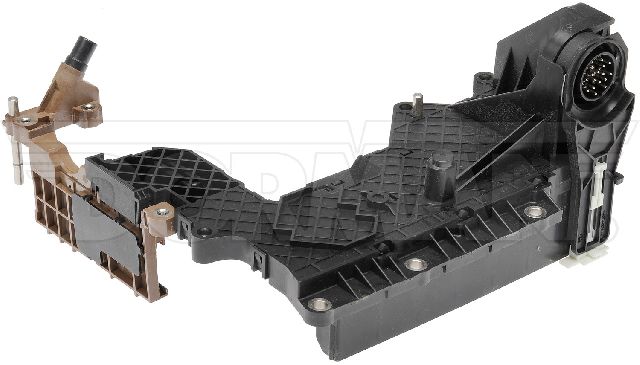
For the 2015-2020 F-150, the cause of P0841 often depends on which transmission the truck has. Models from 2015-2017 equipped with the 6-speed 6R80 automatic are known for failures of the internal molded lead frame, which houses several sensors and their electrical connections. A failure here can disrupt sensor signals, causing this code and erratic shifting, often leading to sudden, harsh downshifts. For F-150s with the newer 10-speed 10R80 transmission (introduced in 2017), the issue is more frequently related to software glitches or the valve body, with Ford issuing several software updates and TSBs (like TSB 21-2315, superseded by 23-2250) to address harsh and delayed shifting problems.
Symptoms You May Notice
- Check Engine Light is on
- Harsh, erratic, or delayed gear shifts.
- Transmission slipping between gears.
- Vehicle enters 'limp mode' (may be stuck in one gear).
- Sudden, uncommanded downshift, sometimes to 1st gear at speed (6R80).
- Decreased fuel economy.
- Inability for the torque converter clutch to engage or disengage properly.
- No gear indicator display on the dashboard.
- Replacing only the transmission fluid pressure sensor when the actual fault is in the lead frame's internal wiring (on 6R80 models). The sensors are integrated into the lead frame.
- Condemning the entire transmission when the issue is a fixable software glitch, a bad lead frame, or a faulty valve body.
- Performing the 19S07 recall (a software update) on a 6R80 without replacing the failing lead frame. The software is intended to mitigate the *effect* of a failure (sudden downshift) but does not fix the root *cause* (the failing hardware).
Most Likely Causes
- Low or Dirty Transmission Fluid 🔴 High Probability Many F-150s are used for towing and hauling, which increases transmission temperature and accelerates fluid breakdown. These transmissions also lack a traditional dipstick, making fluid level checks less straightforward for the average owner. Dirty fluid can clog passages and affect sensor readings.
How to confirm: The fluid level must be checked via the short dipstick/fill plug on the side of the transmission case, with the vehicle running and the transmission fluid at a specific temperature (typically 193-203°F for the 6R80). Observe the fluid's color and smell; it should be bright red and not have a burnt odor.
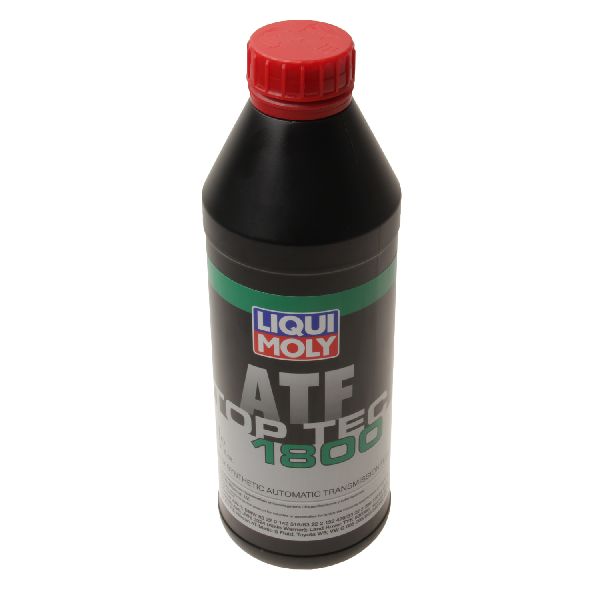
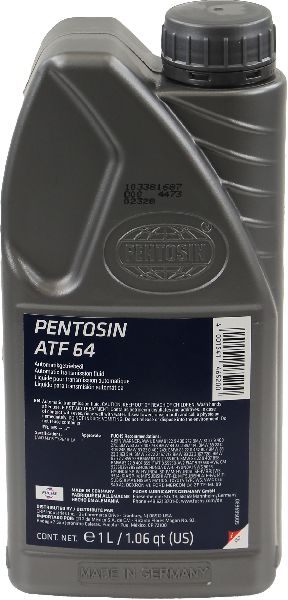
Typical fix: Perform a transmission fluid drain-and-fill or a full fluid exchange and replace the filter. Use only the correct Ford-specified fluid: Motorcraft MERCON LV for the 6R80 and MERCON ULV for the 10R80.
Est. part cost: $75-$200 - Failed Internal Lead Frame (6R80 Transmission) 🔴 High Probability The molded lead frame in the 6R80 (common in 2015-2017 models) is a well-documented failure point. The internal connectors and sensors degrade from heat and vibration, causing intermittent signal loss. This issue prompted recalls and numerous TSBs for related sensor faults due to the risk of sudden downshifts.
How to confirm: Diagnosis typically requires a high-end scan tool to monitor sensor data in real-time. If the pressure sensor readings are erratic or drop out, and other related sensor codes (like P0720 for the Output Speed Sensor) are present, the lead frame is the prime suspect. Visual inspection of the old lead frame may show metallic debris contaminating the sensor contacts.
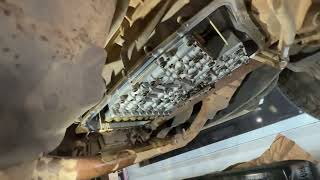
Typical fix: The transmission pan and valve body must be removed to replace the lead frame assembly. This is an involved repair but is a common DIY job for experienced individuals. The updated OEM part includes a foam protector to prevent debris from shorting the solenoid contacts. 🎬 See how a lead frame replacement fixed this F-150
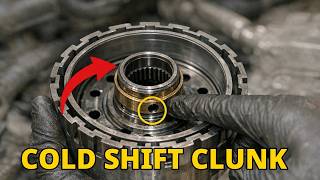
Est. part cost: $250-$450 - Faulty Valve Body or Solenoid (10R80 Transmission) 🟡 Medium Probability Debris from normal wear can cause solenoids or valves within the valve body to stick, leading to incorrect pressure readings and triggering a P0841 code. The 10R80 transmission is particularly noted for shift quality issues that are sometimes addressed by a valve body overhaul or replacement, as outlined in Ford TSBs. 🎬 Watch this video on fixing harsh cold shifts in the 10R80
How to confirm: This is a process of elimination. If the fluid is clean, the level is correct, and the wiring is intact, the problem is likely internal. A transmission specialist may use pressure gauges to confirm a hydraulic fault within the valve body. The presence of other shift-related codes would also point to the valve body.
Typical fix: For the 10R80, the fix may be a PCM reflash, an overhaul of the main control valve body, or a complete valve body replacement, depending on the specific symptoms and diagnostic findings.
Est. part cost: $500-$1200 - Damaged Wiring or Connectors ⚪ Low Probability
How to confirm: Visually inspect the transmission wiring harness and the main connector at the transmission case for any signs of corrosion, damage from road debris, or fluid contamination. Use a multimeter to check for proper voltage, ground, and signal integrity at the sensor connector, tracing it back to the PCM/TCM if necessary.
Typical fix: Repair the damaged section of the harness or replace the affected connector. The main bulkhead connector sleeve on the 6R80 is a common point of failure for leaks and should be replaced when the lead frame is serviced.
Est. part cost: $20-$150
Rare But Worth Checking
- Faulty Powertrain Control Module (PCM): This is very rare. The PCM should only be considered after all other possibilities—fluid, wiring, sensors, and internal transmission components—have been definitively ruled out.
Diagnosis Steps
- Check for other stored DTCs that could provide more context.
- Check the transmission fluid level and condition. This is a critical first step. Ensure the correct procedure for the specific transmission (6R80 vs 10R80) is followed, as it requires the fluid to be at a specific operating temperature.
- If fluid is low, top it off, clear the code, and test drive. If the fluid is dark or burnt, a fluid and filter change is recommended.
- Visually inspect the transmission external wiring harness and connectors for any visible damage, corrosion, or loose connections.
- Use a professional scan tool to monitor the live data stream for Transmission Fluid Pressure Sensor 'A'. Observe the readings at idle, in gear, and during a test drive. Compare them to manufacturer specifications.
- If the sensor readings are erratic, non-responsive, or illogical, and the transmission is a 6R80, suspect a faulty lead frame.
- For 10R80 models, check for applicable TSBs like 23-2250, which may recommend a PCM reflash or valve body overhaul for shift quality issues.
- If the wiring and fluid are good, and the sensor readings are suspect, the next step is to access the component inside the transmission, which involves removing the transmission pan.
- Test the sensor and wiring directly from the valve body. If the sensor itself tests bad, it can be replaced. On 6R80 models, this means replacing the entire lead frame assembly.
Parts You'll Likely Need
- Transmission Molded Lead Frame (6R80)
(OEM #AL3Z-7G276-D)— This is the most common point of failure for electronic issues on the 6R80 transmission used in 2015-2017 F-150s. The OEM part has been updated from previous versions (AL3Z-7G276-A, AL3Z-7G276-B).
Trusted brands: Motorcraft, Dorman
OEM price range: $300-$450
Aftermarket price range: $150-$250 - Transmission Fluid and Filter Kit — Low or degraded fluid is a primary cause of transmission problems, and a filter change is required whenever the pan is dropped for service.
- Valve Body Assembly (10R80) — For the 10-speed transmission, persistent harsh shifting or pressure-related codes often necessitate a valve body replacement, especially on higher-mileage vehicles or when software updates don't resolve the issue.
Trusted brands: Motorcraft
OEM price range: $800-$1200 - Transmission Bulkhead Connector Sleeve (6R80)
(OEM #BL3Z-7Z276-A)— This sleeve, which provides the electrical pass-through into the transmission, is a very common source of fluid leaks. The O-rings degrade, allowing fluid to seep out. It is best practice to replace this inexpensive part anytime the pan is off.
Trusted brands: Motorcraft
OEM price range: $20-$40
Aftermarket price range: $15-$30
Related Codes That Often Appear With This One
- P0720 — Output Speed Sensor (OSS) Circuit. The OSS is also part of the 6R80 lead frame, and a failure of the lead frame often causes both codes to appear together.
- P0722 — Output Speed Sensor (OSS) Circuit No Signal. This is another common companion code when the 6R80 lead frame fails.
- P0868 — Transmission Fluid Pressure Low. This code can accompany P0841 if the root cause is genuinely low fluid or a failing pump, rather than just an electrical sensor fault.
Technical Service Bulletins (TSBs) & Recalls
- TSB 21-2315 / 21-2357: Addresses harsh/delayed shifting on 10R80 transmissions. Recommends valve body overhaul and/or PCM reflash.
- Recall 19S07: For 2011-2013 F-150s, this recall involved a PCM reprogram to prevent a sudden downshift caused by a failing lead frame speed sensor.
- TSB 19-2365: For 2018-2020 F-150s with the 5.0L engine, this TSB addresses excessive oil consumption with a PCM reprogram and a new dipstick.
- TSB 20-2268 / SSM 47270: These bulletins address the warping dashboard issue on XL and XLT trims, recommending replacement of the upper dash panel.
Platform-Specific Known Issues
- A recall (NHTSA 19V075, Ford recall 19S07) was issued for some earlier F-150s (2011-2013) with the 6R80 transmission for an unexpected downshift to first gear caused by the failing lead frame. While the 2015-2017 models were not part of this specific recall, they use a similar transmission and suffer from the exact same failure mode.
- For the 10R80 transmission, TSB 21-2315 (superseded by 21-2357) addresses harsh or delayed shifting, which can be related to P0841. The fix involves overhauling the main control valve body and/or performing a PCM reflash and adaptive learning drive cycle.
Mechanic-Grade Diagnostic Values
- 6R80 Transmission Fluid Temperature (TFT) Sensor Resistance — expected: Approx. 37k Ohms @ 20°C (68°F), 5k Ohms @ 80°C (176°F), 2k Ohms @ 110°C (230°F).. Failure: Resistance is infinite (open circuit) or near zero (short circuit), or does not correspond to the fluid temperature. A P0712 (low temp/high resistance) or P0713 (high temp/low resistance) code may be present.
- 10R80 Solenoid Coil Resistance — expected: 5.0 - 5.4 Ohms at 20°C (68°F) for all solenoids.. Failure: Resistance reading is significantly outside this range, indicating a faulty solenoid coil.
- 10R80 Transmission Line Pressure (at idle, in Drive) — expected: Refer to the vehicle-specific line pressure chart in the service manual. A special M10 x 1.00 thread fitting is required for the pressure tap.. Failure: Pressure that is consistently low across all gears can indicate a pump issue, low fluid, or major leak. Pressure that doesn't respond correctly to gear changes points toward a valve body or solenoid problem.
Scan Tool Commands That Help
- Ford IDS (Integrated Diagnostic System): Transmission Adaptive Tables Reset / Adaptive Learning Drive Cycle — This procedure is mandatory after replacing the lead frame (6R80) or valve body (10R80). The TCM must relearn the clutch fill times and shift pressures for the new components. Failure to perform this can result in continued harsh shifting or damage to the new parts.
- Ford IDS (Integrated Diagnostic System): Solenoid/Body ID Reprogramming — When replacing a 6R80 lead frame/mechatronics unit, the new part comes with a tag containing a unique solenoid body strategy and ID. This information must be programmed into the PCM/TCM using IDS to ensure correct transmission operation.
Wiring & Ground Locations
- C175T (6R80) / C177 (10R80) — The main external electrical connector on the passenger side of the transmission case. It's a round, twist-lock connector.. This is the primary connection point for all transmission electronics. A common failure is the internal pass-through sleeve (bulkhead connector) on the 6R80, which can leak fluid and contaminate the pins, causing intermittent shorts, opens, and communication codes like U0101 in addition to sensor performance codes.
- 6R80 TFT Sensor Pins (at C175T) — Pin 6 (Signal) and Pin 5 (Signal Return/Ground) on the main transmission connector C175T.. While not directly P0841, a faulty TFT sensor (part of the lead frame) can cause incorrect shift strategies and pressure calculations, potentially contributing to conditions that set other codes. Testing resistance across these pins can help validate the health of the lead frame's internal circuitry.
- 10R80 TFT Sensor Pins (at C177) — Pin 2 (Brown/Yellow - Signal) and Pin 1 (Brown/Blue - Ground) on the transmission internal connector.. Similar to the 6R80, checking the integrity of the TFT circuit on the 10R80 can help diagnose internal harness or sensor issues within the valve body assembly.
- General Harness Routing — The main engine/transmission harness runs along the frame rail on the driver's side and across the transmission bellhousing.. Chafing can occur where the harness is secured to the frame or comes close to exhaust components. A short or open in the wiring to the transmission pressure sensor can directly cause a P0841 code. A visual and physical inspection for brittle, mushy, or damaged sections of the harness is a key diagnostic step.
Real Owner Repair Stories
- YouTube channel 'Repairs and Rides' (2017 Ford F-150 5.0L V8 with 6R80 Transmission) — Vehicle stuck in 5th, 6th, and reverse gears only. Multiple transmission-related DTCs including P0706 (Trans Range Sensor), P0707, and P0753 (Shift Solenoid A).
❌ Tried (didn't work) External wiring checks showed no issues.
✅ What actually fixed it Replacement of the molded lead frame. The technician noted that the pan contained significant metallic debris, which would normally warrant a full transmission replacement. However, at the customer's request, only the lead frame was replaced. The old lead frame's range sensor and solenoid contacts were visibly contaminated with ferrous filings. The lead frame replacement successfully resolved all codes and restored normal shifting. - Ford F150 Forum user (2012 F-150 FX4 5.0L with 6R80 Transmission) — Check engine light with Output Speed Shaft sensor codes.
❌ Tried (didn't work) The user first replaced the lead frame with an aftermarket part from Amazon, which turned out to be defective ('dead on arrival') and could not be programmed by the dealer.
✅ What actually fixed it A second repair, performed by the dealer using an OEM Motorcraft lead frame, fixed the issue. The total cost for the dealer repair was approximately $800. This highlights the risk of using non-OEM electronic components for this specific repair.
OEM Part Supersession History
AL3Z-7G276-A, AL3Z-7G276-B→AL3Z-7G276-D— The part was revised to improve durability and address common failure modes of the integrated sensors and internal traces. Later versions may include a foam pad to protect solenoid contacts from metallic debris.
Heads up: The 'D' revision replaces the 'A' and 'B' versions and is the correct service part to use. While an older revision might be found, installing the latest version is critical for a lasting repair.
Model Year Variations Within This Range
- 2017-2018: 2017 was a crossover year. F-150s could be equipped with either the 6-speed 6R80 or the new 10-speed 10R80, depending on the engine and build date. 2018 models predominantly use the 10R80. It is critical to visually identify the transmission (the 10R80 has a different pan shape and is physically larger) before ordering parts, as the cause of P0841 is completely different between the two (lead frame vs. valve body/software).
- 2015-2017 (6R80): The molded lead frame is the primary failure point for code P0841 in these years. The part itself has undergone revisions, and the repair involves replacing this internal component.
- 2017-2020 (10R80): Code P0841 is less common and more likely related to internal valve body issues or software glitches causing harsh shifting. Ford has issued multiple TSBs (e.g., TSB 23-2250) recommending software updates or valve body service for these symptoms.
Diagnostic Flowchart
Other Known Issues on This Vehicle
Issues unrelated to this code that are worth knowing about as an owner of this generation:
- Frozen or Inoperative Door Latches 🔴 High — Very common, especially in cold weather. Can result in doors not latching closed or not opening. (Ref: Recall 17S33 / NHTSA 17V652.)
- Warping Dashboard 🟡 Low — Extremely common on XL and XLT trims. The dash material lifts and deforms around the defrost vents. (Ref: TSB 20-2268, TSB 19-2041, SSM 47270.)
- Excessive Oil Consumption (5.0L V8) 🟠 Medium — Common on 2018-2020 models with the 5.0L Coyote engine. Often requires a PCM reflash to correct. (Ref: TSB 19-2365.)
- Cam Phaser Rattle (3.5L EcoBoost) 🔴 High — A notorious issue causing a loud rattle on cold starts. It is an expensive repair. (Ref: Ford has issued various customer satisfaction programs and extended warranties for this issue.)
- Integrated Wheel End (IWE) Grinding 🟠 Medium — Common issue where a loss of vacuum to the front hubs causes a grinding noise in 2WD as the 4WD system tries to partially engage.
- Panoramic Sunroof Failures 🟠 Medium — The tracks and guides for the panoramic sunroof are prone to breaking, causing the sunroof to become inoperable. It is a costly repair.
Used vs. New Parts: Buying Guide for This Vehicle
When a used part is the smart pick: For this specific repair, using used parts is generally not recommended. However, if a complete low-mileage transmission assembly from a donor vehicle is available for a price comparable to a major repair, it could be considered. A used valve body from a very low-mileage 10R80 might be a viable option if a new one is on backorder, but it carries risk.
Donor-vehicle mileage cap: roughly under 50000 miles for the part to have meaningful remaining life.
What to inspect on the donor part:
- Verify the donor vehicle's VIN to confirm the exact transmission model (6R80 vs. 10R80) and year.
- Check the color and smell of the transmission fluid from the donor unit. Dark, burnt-smelling fluid is a major red flag.
- If possible, get a history report on the donor vehicle to check for accidents or flood damage.
- Inspect the external wiring harness connector for any bent pins, corrosion, or damage.
OEM-only on this vehicle (don't cheap out):
- Transmission Molded Lead Frame (6R80)
- Valve Body Assembly (10R80)
Aftermarket brands forum-validated for this vehicle:
- For this specific repair, sticking with OEM Motorcraft parts is strongly advised by professional technicians and forum users due to high failure rates of aftermarket electronic components.
Brands owners have reported issues with on this vehicle:
- Unbranded or generic lead frames sold on platforms like Amazon or eBay have a high reported failure rate, sometimes being dead-on-arrival.
Real Owner Stories
Aggregated from forums and TSBs cited above. Mileages and costs reflect what owners reported in those sources.
2016 Ford F-150
Symptoms: Owner experienced erratic shifting and followed DIY guidance to replace the internal components due to known sensor issues.
What fixed it: Replacement of the transmission lead frame assembly.
Source hint: YouTube video by user 'r7744h3i4-E' showing lead frame replacement on a 2016 F-150
2018-2020 Ford F-150 10R80
Symptoms: Harsh engagement, harsh shifts, and delayed shifts without necessarily having other DTCs.
What fixed it: PCM reflash and adaptive learning drive cycle as per TSB 21-2315.
Source hint: f150forum.com thread 'Harsh engagement / harsh shift / delayed shift without DTCs - TSB 21-2315'
Related OBD-II Codes
Frequently Asked Questions
My 2016 F-150 with the 6R80 transmission is downshifting suddenly to 1st gear. Is there a recall for this?
I have a 2019 F-150 with the 10-speed transmission and harsh shifts. Does Ford have a technical service bulletin for this?
Which transmission fluid should I use for my 2018 F-150 to avoid pressure sensor codes?
Can a faulty lead frame cause my gear indicator to disappear on the dashboard?
Is there a specific temperature I need to reach to check the transmission fluid level?
Does the replacement lead frame for the 6R80 have any improvements to prevent future P0841 codes?
Helpful Videos
Used OEM Parts in Stock


New Aftermarket Parts Available


The information in this article is provided for general reference and educational purposes only. Vehicle specifications, procedures, and part compatibility can vary by production date, trim level, and region. Always consult your vehicle's factory service manual and verify part numbers before purchasing or performing repairs. Safety-critical components such as airbags, seat belts, and braking systems should be installed by a qualified professional.
- Ford F-150:
- 🎬 Helpful Videos
- 🛍️ Shop This Part
- What's Unique About the 2015-2020 Ford F-150
- Symptoms You May Notice
- Most Likely Causes
- Rare But Worth Checking
- Diagnosis Steps
- Parts You'll Likely Need
- Related Codes That Often Appear With This One
- Technical Service Bulletins (TSBs) & Recalls
- Platform-Specific Known Issues
- Mechanic-Grade Diagnostic Values
- Scan Tool Commands That Help
- Wiring & Ground Locations
- Real Owner Repair Stories
- OEM Part Supersession History
- Model Year Variations Within This Range
- Diagnostic Flowchart
- Other Known Issues on This Vehicle
- Used vs. New Parts: Buying Guide for This Vehicle
- Real Owner Stories
- 2016 Ford F-150
- 2018-2020 Ford F-150 10R80
- Related OBD-II Codes
- Frequently Asked Questions
- 🎟️ Get 5% Off