

OBD-II Code P0722: Output Speed Sensor Circuit No Signal
The Ultimate 2026 Guide to Causes, Diagnosis, and Repair Costs
- DTC P0722 indicates a complete signal loss from the Output Speed Sensor, forcing the transmission into a 2nd or 3rd gear 'limp mode' to prevent internal damage.
- Stop driving immediately; continuing at highway speeds with this code risks a sudden downshift to 1st gear, locking the rear wheels and causing a total loss of control.
- Test the sensor's 5V or 8V power supply and ground circuit with a multimeter before spending $50-$150 on a replacement part, as broken wiring is a frequent culprit.
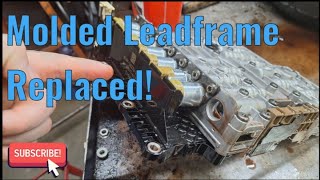
- For 2011-2013 Ford F-150s and 2004-2015 Mercedes models, this code usually requires a $600-$1,500 internal lead frame or conductor plate replacement rather than a simple external sensor swap.
What Does P0722 Mean?

The Powertrain Control Module (PCM) or Transmission Control Module (TCM) receives zero signal from the Output Speed Sensor (OSS). The OSS reports output shaft RPM, which dictates vehicle speed calculations and gear shifts. Without this data, the computer cannot manage the transmission, triggering immediate failsafe protocols.
Technical definition: The SAE/OBD-II definition is "Output Speed Sensor Circuit No Signal". The PCM/TCM sets this DTC when it detects a complete 0 RPM signal from the OSS for a specified duration, despite other sensors (wheel speed or input speed) proving the vehicle is in motion.
Can I Drive With P0722?
No — Do Not Drive. Do not drive. The transmission will shift erratically, slam into gear, lock in 'limp mode', or stall the engine unexpectedly. In vehicles like the Ford F-150, this triggers a catastrophic downshift to first gear at highway speeds, locking the rear wheels and causing total loss of vehicle control. Continuing to drive destroys the transmission.
Common Causes

- Faulty Output Speed Sensor (OSS) (Very Common) — The sensor's internal electronics, magnetic pickup, or coil fail from extreme heat and thermal cycling, typically between 80,000 and 120,000 miles.
- Damaged Wiring Harness or Corroded Connector (Common) — Exposed undercarriage wiring frays, breaks, or melts against hot exhaust components. Moisture corrodes the connector pins, or a broken ground strap severs the sensor's 5V/8V power supply.
- Metal Debris on Sensor Tip (Common) — Fine metallic shavings from normal internal clutch wear accumulate on the magnetic OSS tip. This thick metallic paste blocks the magnetic field, flatlining the signal.
- Damaged Reluctor Ring / Tone Wheel (Less Common) — The toothed wheel on the output shaft that the sensor reads sustains physical damage. Broken teeth prevent the sensor from generating a pulse, even if the sensor itself works perfectly.
- Faulty Transmission Control Module (TCM) (Rare) — An internal circuit driver burns out, or corrupted software causes the module to ignore a valid sensor signal. This requires a software re-flash or complete module replacement.
Symptoms

- Transmission Stuck in 'Limp Mode' — The vehicle locks into a single gear (usually 2nd or 3rd) to prevent internal damage, causing sluggish acceleration and screaming engine RPMs at highway speeds.
- Harsh, Erratic, or No Shifting — Without speed data, the transmission slams violently into gear, shifts at the wrong RPM, or refuses to upshift entirely.
- Speedometer Reads 0 MPH — If the vehicle uses the OSS for the instrument cluster, the speedometer drops to zero and stays there while driving.
- Engine Stalling When Stopping — The engine stalls when braking because the computer fails to disengage the torque converter clutch, dragging engine RPM down to zero.
- Disabled Cruise Control, ABS, and Traction Control — Loss of the primary speed signal instantly disables dependent safety systems, illuminating the ABS and Traction Control warning lights.
- Illuminated Check Engine Light (also visible on scanner) — The Malfunction Indicator Lamp (MIL) triggers immediately upon the first failed drive cycle.
Diagnostic Flowchart

Tap your situation to follow the diagnostic path that matches what you're seeing on this code.
Common Fixes & Costs
- Replace Output Speed Sensor (OSS) — Parts: $50-$150, Labor: $100-$200, ~1 hr book time (DIY)
- Repair Wiring Harness or Connector — Parts: $10-$50, Labor: $150-$400, ~2.5 hr book time (Intermediate)
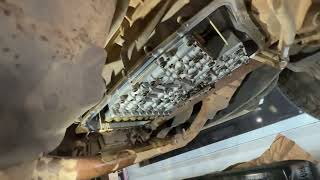
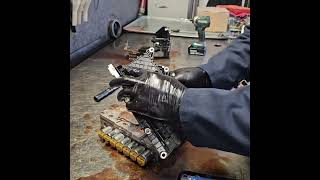
- Replace Transmission Lead Frame / Conductor Plate — Parts: $200-$600, Labor: $400-$900, ~5 hr book time (Professional)
- Replace Transmission Fluid and Filter — Parts: $50-$150, Labor: $100-$200, ~1.2 hr book time (DIY)
- Reprogram or Replace TCM/PCM — Parts: $600-$1500, Labor: $150-$400, ~2.5 hr book time (Professional)
Used vs. New Parts: Buying Guide
When a used part is worth it: Never buy a used external speed sensor; new parts are too cheap to justify the risk. Used parts only make sense for expensive internal conductor plates if the budget is extremely tight and the donor part has verified low mileage.
Donor-vehicle mileage cap: roughly under 60000 miles for the part to have meaningful remaining life.
Donor quality checklist:
- Verify the exact part number matches; internal electronics are VIN-specific.
- Avoid lead frames from vehicles scrapped due to transmission failure.
- Inspect electrical connector pins for green corrosion.
Decision logic:
- If The part is an external sensor (<$150) → Always buy new. The $20 savings is not worth a premature failure.
- If The part is an internal conductor plate/lead frame (>$400) → Buy a new OEM or professionally remanufactured unit. Used internal electronics are a massive gamble.
- If Vehicle is over 150,000 miles and budget is exhausted → A low-mileage used conductor plate is a last resort, but expect zero labor warranty.
Warranty tradeoff: Salvage yards offer 30-day part-only warranties. New aftermarket sensors offer limited lifetime warranties. Remanufactured conductor plates typically include a 1-year warranty.
Worst-case if a used part fails: 800-1500. If a used internal lead frame fails, you pay for the 5-hour labor job twice.
What Happens If You Wait — Timeline
- 0-1 month: Code P0722 sets. Vehicle locks into 2nd or 3rd gear limp mode. Shifting is violent. Stalling occurs at stoplights. (MPG impact: 15-30%% · Added cost: $0-$100 in wasted fuel and towing fees.)
- 1-3 months: Driving at highway speeds in 3rd gear boils the transmission fluid. The fluid turns black and loses its hydraulic friction properties. (MPG impact: 15-30%% · Added cost: $300-$500 for a mandatory full fluid flush and filter replacement.)
- 3-6 months: Overheated clutches slip constantly. Friction material delaminates, clogging the valve body and destroying the torque converter. (MPG impact: 20-40%% · Added cost: $1,500-$3,000. The original sensor fault is now irrelevant; the transmission requires a major internal overhaul.)
- 6+ months: Catastrophic mechanical failure. The transmission refuses to engage any gear. The vehicle is immobilized. (MPG impact: 100% (vehicle is undrivable)% · Added cost: $3,500-$7,000+ for a complete remanufactured transmission replacement.)
Cost of Not Fixing It
- Immediate (0-1 month): Vehicle is unsafe to drive due to limp mode. Fuel economy drops by 20%. High risk of stalling in intersections. (Added cost: 50-100)
- Short Term (1-3 months): Driving in limp mode boils the transmission fluid and burns the clutch packs for the engaged gear. (Added cost: 500-1500)
- Long Term (3+ months): Catastrophic internal failure. Burnt friction material destroys the valve body and torque converter, requiring a full rebuild. (Added cost: 3500-7000)
Diagnosis Steps
- Analyze Live Scan Tool Data
Connect an OBD-II scanner. Monitor the 'Output Speed Sensor' PID. Drive the vehicle safely. If the value stays at 0 RPM while moving, you have confirmed a hard 'No Signal' fault. Compare this to the 'Input Speed Sensor' to ensure the TCM is reading other data correctly.
Tools: OBD-II Scanner with Live Data (Intermediate) - Check Transmission Fluid Condition
Pull the transmission dipstick. If the fluid is black, smells burnt, or contains heavy metal shavings, stop diagnosis. The transmission has severe internal damage causing the sensor fault.
Tools: White Paper Towel (Beginner) - Visually Inspect Sensor and Wiring
Locate the OSS on the transmission housing. Inspect the wiring harness for melted insulation, rodent damage, or tight bends. Unplug the connector and check for green corrosion or transmission fluid leaking into the pins.
Tools: Flashlight, Repair Manual (Beginner) - Test Sensor Power and Ground
Turn ignition ON (engine off). Disconnect the sensor. Use a multimeter to verify reference voltage (typically 5V or 8V) at the harness connector. Check the ground pin for less than 5 Ω resistance to the chassis. Missing voltage means a wiring or TCM fault, not a bad sensor.
Tools: Multimeter, Wiring Diagram (Advanced) - Test Sensor Internal Resistance
For 2-wire VR sensors, measure resistance across the sensor's pins. A healthy sensor typically reads 560-680 Ω. An 'O.L.' (infinite) reading means the internal coil is severed and the sensor must be replaced.
Tools: Multimeter (Intermediate) - Perform a Harness 'Wiggle Test'
Reconnect the sensor. Watch the live OSS data on your scanner. Vigorously wiggle the wiring harness along its path to the TCM. If the RPM reading spikes or flickers, you have located an intermittent break in the wire.
Tools: OBD-II Scanner with Live Data (Intermediate) - Test Signal with an Oscilloscope
Back-probe the signal wire at the TCM. Raise the drive wheels and accelerate. A good Hall-effect sensor produces a crisp 0-5V square wave. A flatline at the TCM (but a good wave at the sensor) proves the signal wire is broken mid-harness.
Tools: Oscilloscope, Back-probe kit, Jack stands (Professional) - Check for TCM Software Updates
If all wiring and sensor tests pass, check manufacturer Technical Service Bulletins (TSBs). A known software logic error may require a dealer to re-flash the TCM to resolve false P0722 codes.
Tools: TSB Database Access (Advanced)
When This Code Triggers (Freeze-Frame Conditions)
- Engine Coolant Temp: 175-210°F (Engine at full operating temperature.)
- Engine RPM: 1200-2500 RPM (During light acceleration or steady cruise.)
- Vehicle Speed (from other sensors): 25-55 mph (Vehicle is moving based on ABS wheel speed or input shaft speed sensors.)
- Output Speed Sensor: 0 RPM (The computer expects a reading proportional to vehicle speed but receives a flatline.)
Related Codes
- P0720 — P0720 means the signal is erratic or irrational. P0722 means the signal is completely dead. Diagnosing P0722 often begins because an intermittent P0720 finally failed completely.
- P0721 — P0721 means the sensor's RPM reading doesn't match the vehicle's actual speed. This points to a sensor covered in metal debris rather than a severed wire.
- P0700 — A generic code stating the TCM has requested the Check Engine Light to turn on. It provides no diagnostic value; focus entirely on the P0722 code.
- P0500 — If P0500 (Vehicle Speed Sensor) appears alongside P0722, the OSS is the primary speed source for the entire vehicle. Fixing P0722 resolves both. If only P0500 appears, check the ABS wheel sensors.
Climate & Environmental Factors
- Road Salt / High Humidity: Salt and moisture aggressively corrode the sensor's external connector pins, creating electrical resistance that kills the 5V signal.
- Extreme Heat: High ambient heat bakes the wiring harness sheathing until it turns brittle and cracks, exposing bare wires to short circuits.
How to Talk to a Mechanic About This Code
Say this: "My car has a P0722 code and is stuck in limp mode. I need a diagnostic appointment. Please test the output speed sensor's power and ground circuits, and check the transmission fluid condition before recommending a part replacement."
This proves you understand the failure points. It forces the technician to test the wiring rather than blindly firing the parts cannon at the sensor.
Avoid saying:
- 'My car is shifting weird, can you fix it?' (Invites expensive guesses)
- 'Just replace the output speed sensor.' (Wastes money if the wiring is broken)
- 'Do whatever you think is best.' (Gives the shop a blank check)
Questions to ask before authorizing the repair:
- Did you test the sensor's circuit for 5V power and ground, or just read the code?
- Is the transmission fluid burnt or full of metal debris?
- If replacing an internal lead frame, what is the warranty on parts and labor?
- Can you provide a written breakdown of parts versus labor costs?
Where to Take It: Dealer vs Independent vs Chain
- Dealer:
Use only if warranty coverage applies or if your European vehicle requires dealer-locked programming.
Best for: 2011-2013 Fords eligible for the 19N01 lead frame warranty program., Mercedes or Audi models requiring proprietary SCN coding for internal conductor plates.
Downsides: Labor rates are 50-100% higher than independent shops., Tendency to replace entire expensive assemblies rather than repairing components. (Typical cost: +50% vs. baseline) - Independent Shop:
The best choice for most P0722 repairs. Seek out an ASE-certified dedicated transmission shop for the most accurate diagnosis.
Best for: Out-of-warranty vehicles requiring external sensor replacement or wiring repair., Dedicated transmission shops are ideal for internal lead frame or valve body work.
Downsides: General mechanics may lack the specific scan tools required for transmission adaptation resets. (Typical cost: +0% vs. baseline) - Chain Shop:
AVOID. P0722 requires multimeter testing and oscilloscope diagnostics, not just part swapping.
Best for: Not recommended.
Downsides: Technicians lack specialized training for complex transmission electrical diagnostics., High risk of misdiagnosis and unnecessary parts replacement. (Typical cost: -10% vs. baseline)
When to Walk Away From the Repair
If the P0722 repair estimate exceeds 50% of the vehicle's private-party value, walk away. For vehicles over 15 years old or 150,000 miles, lower this threshold to 40%.
- Car worth $4000, fix is $2200: Walk away. The repair is 55% of the car's value. Sell it as a 'mechanic special' and put the funds toward a replacement.
- Car worth $15000, fix is $1200: Fix it. The repair is less than 10% of the value and restores critical safety.
- Car worth $2500, fix is $150: Fix it. An external sensor replacement is highly cost-effective and keeps the vehicle on the road.
What Scan Tool You Need for This Code
Minimum: An OBD-II scanner capable of reading TCM codes and displaying live data PIDs for the Output Speed Sensor.
A $20 code reader only shows the generic P0700 code. It cannot access the TCM to reveal P0722, nor can it display the live 0 RPM data required to prove the sensor is dead.
Budget: BlueDriver Pro (~$119) — Reads TCM codes and displays live Output Speed Sensor data to confirm the flatline signal while driving.
Mid-range: Foxwell NT510 Elite / Autel MaxiCOM MK808S (~$150-400) — Graphs live speed sensor data, reads manufacturer-specific codes, and performs transmission adaptation resets required after replacing internal components.
Professional: Autel MaxiSys Series (~$500-1500+) — Provides dealer-level bidirectional control, advanced coding for Mercedes conductor plates, and integrated wiring diagrams.
How to Clear the Code After You Fix It
- Use an OBD-II scan tool to clear the P0722 code from the TCM.
- Perform a complete drive cycle to allow the TCM to verify the new sensor signal.
- Do not simply disconnect the battery, as this erases emissions readiness monitors.
Drive cycle (~20 minutes): Start the engine cold and idle for 3 minutes. Drive for 15 minutes combining stop-and-go city traffic with steady highway speeds above 55 mph. Perform several smooth accelerations to allow the transmission to cycle through all gears.
Readiness monitors affected: Comprehensive Component Monitor
Before emissions retest: drive at least 50 miles to fully set monitors.
Watch out for:
- Clearing the code without fixing the broken wire causes the Check Engine Light to return the moment the vehicle moves.
- Failing to perform a transmission adaptation reset (on applicable vehicles) causes harsh shifting even after a successful repair.
Will This Fail Emissions / State Inspection?
Yes — this code typically fails an OBD-II emissions inspection.
- California: Automatic failure. The illuminated Check Engine Light is an instant fail. All readiness monitors must read 'Ready' post-repair.
- New York: Automatic failure. NYS OBD-II scans detect the active P0722 code and fail the vehicle immediately.
- Texas: Failure in emissions-testing counties. While safety inspections ended in 2025, the 17 populous counties still require OBD-II emissions testing, which P0722 fails.
Most Commonly Affected Vehicles
- Ford F-150, Explorer, Mustang, Expedition (2011-2013) — Notorious for internal molded lead frame failures (AL3Z-7G276-D) causing sudden downshifts to 1st gear. Covered under extended warranty program 19N01.
- Mercedes-Benz Models with 722.9 7G-Tronic transmission (2004-2015) — Sensors are permanently integrated into the conductor plate (A000270260080). Requires complete assembly replacement and dealer SCN coding.
- Hyundai / Kia Sonata, Elantra, Santa Fe, Sorento (2010-2019) — TSB 20-AT-011H dictates replacing both the speed sensor assembly and the internal valve body harness simultaneously to prevent comebacks.
- Dodge / Ram Ram 1500/2500/3500, Durango (2005-2016) — Highly prone to wiring harness chafing. Service manuals mandate testing the 8-volt supply circuit before replacing the sensor.
- Nissan Altima, Maxima, Rogue (CVT) (2007-2015) — External speed sensor failures trigger aggressive limp mode and are often accompanied by CVT whining noises.
- Audi A4, A6, A8 (Multitronic CVT) (2002-2016) — The G195 output speed sensor is integrated into the expensive internal Mechatronic unit, requiring specialized repair.
- Volkswagen Jetta, Golf, Beetle (1999-2010) — Failure of the external G68 Vehicle Speed Sensor (VSS) directly causes P0722 and a dead speedometer.
- Jeep Grand Cherokee, Wrangler (2005-2016) — Frequently caused by melted wiring harnesses near the exhaust or failures in the internal sensor pack.
Manufacturer-Specific Notes
- Ford: On 2011-2013 6R80 transmissions, P0722 is a critical safety hazard causing sudden downshifts to 1st gear at highway speeds. Ford Program 19N01 covers the lead frame replacement up to 150,000 miles.
- Mercedes-Benz / Audi: The sensor cannot be replaced individually. It is permanently embedded in the internal conductor plate/mechatronic unit, driving repair costs over $1,200 and requiring proprietary programming.
- Hyundai/Kia: Factory TSBs require technicians to replace the internal valve body wiring harness alongside the speed sensor, as the harness itself is highly prone to internal resistance failures.
- Dodge / Ram: Diagnostic trees strictly forbid replacing the sensor until the technician verifies the dedicated 8-volt supply circuit is intact, as harness chafing is the primary culprit.
Real Owner Stories
2013 Ford F-150 with 6R80 at 157K miles
Wrench light appeared on the dash, truck slammed into limp mode. After restarting, it drove fine for 10 miles before violently downshifting again.
What they tried:
- Read the code at an auto parts store, confirming P0722.
Outcome: This is the hallmark symptom of a failed molded lead frame. Ford's Customer Satisfaction Program 19N01 extended the warranty to 10 years/150,000 miles. At 157k miles, the owner missed the cutoff and paid $950 for an independent transmission shop to replace the lead frame.
Lesson: For 2011-2013 F-150s, P0722 guarantees a lead frame failure. Check your exact in-service date and mileage immediately to see if you qualify for a free dealer repair before paying out of pocket.
2008 Dodge Ram 5500 with 6.7L Diesel
Truck threw a P0722 code and lost the speedometer while hauling a trailer.
What they tried:
- Followed the factory service manual, which mandates checking the 8-volt supply circuit before touching the sensor.
Outcome: A multimeter test revealed 0 volts at the sensor connector. Tracing the harness back revealed a wire rubbed bare against the transmission housing, shorting the circuit. A $5 wire repair fixed the issue.
Lesson: Never blindly replace the sensor. On heavy-duty trucks, vibration destroys wiring harnesses. Testing the circuit for power and ground prevents wasting money on unneeded parts.
2012 Nissan Altima with CVT
Car entered limp mode with harsh shifting; P0722 code present.
What they tried:
- Checked transmission fluid (clean). Visually inspected the external sensor wiring (intact).
Outcome: Replaced the external output speed sensor for $75. The code cleared, and normal shifting resumed in under an hour.
Lesson: If your vehicle features an easily accessible external sensor, and the fluid/wiring look perfect, swapping the sensor is the most logical and cost-effective first step.
How to Prevent This Code From Triggering
- Change transmission fluid and filter every 30,000-60,000 miles. (Every 30,000-60,000 miles.) — Fresh fluid prevents the buildup of metallic clutch debris that coats the magnetic sensor tip and blocks the RPM signal.
- Secure and loom undercarriage wiring harnesses. (During routine oil changes.) — Prevents the sensor wiring from sagging onto hot exhaust pipes or rubbing against vibrating drivetrain components, which causes electrical shorts.
- Clean transmission connectors with electrical contact spray. (During major mileage services (e.g., 100k miles).) — Eliminates moisture and road salt corrosion on the connector pins, ensuring the low-voltage 5V signal reaches the TCM without resistance.
Frequently Asked Questions
What is the most common mistake when diagnosing P0722?
The most common mistake is replacing the sensor without testing the wiring circuit. Mechanics also frequently replace the wrong sensor because Input and Output sensors look identical. Always verify the exact location using a repair manual.
Where is the output speed sensor located?
Location varies by drivetrain. Front-wheel-drive cars mount it on the transaxle case near the drive axles, while rear-wheel-drive vehicles place it on the tail-shaft housing. Modern Ford and Mercedes transmissions integrate it internally on the valve body lead frame.
My speedometer works, but I still have a P0722 code. Why?
Many modern vehicles use ABS wheel speed sensors for the speedometer, not the transmission output sensor. The speedometer functions perfectly while the transmission enters limp mode because the TCM lacks its dedicated speed signal.
Is it safe to drive with a P0722 code?
No. The transmission shifts unpredictably, gets stuck in gear, or stalls the engine. In certain Ford models, it triggers a sudden downshift to first gear at highway speeds, causing total loss of vehicle control.
Can a bad battery or alternator cause P0722?
Yes. Control modules require stable voltage to function correctly. A weak battery or failing alternator drops system voltage, causing the TCM to behave erratically and log false P0722 codes.
The mechanic says I need a new TCM. Is that right?
Unlikely. TCM failure is the rarest cause of this code. Demand oscilloscope test results proving a clean signal leaves the sensor but fails to register inside the TCM before authorizing a replacement.
What is the difference between an input and output speed sensor?
The Input Speed Sensor (ISS) measures the transmission's input shaft RPM, matching engine speed. The Output Speed Sensor (OSS) measures the output shaft RPM, matching vehicle road speed. The computer compares these two signals to calculate gear ratios and detect clutch slippage.
Key Takeaways
- DTC P0722 indicates a complete signal loss from the Output Speed Sensor, forcing the transmission into a 2nd or 3rd gear 'limp mode' to prevent internal damage.
- Stop driving immediately; continuing at highway speeds with this code risks a sudden downshift to 1st gear, locking the rear wheels and causing a total loss of control.
- Test the sensor's 5V or 8V power supply and ground circuit with a multimeter before spending $50-$150 on a replacement part, as broken wiring is a frequent culprit.
- For 2011-2013 Ford F-150s and 2004-2015 Mercedes models, this code usually requires a $600-$1,500 internal lead frame or conductor plate replacement rather than a simple external sensor swap.
Helpful Videos

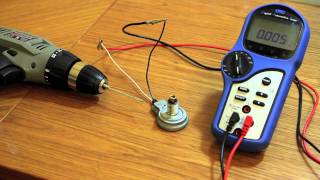
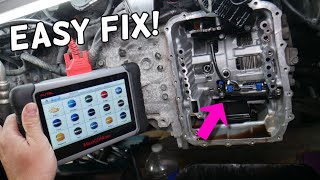

The information in this article is provided for general reference and educational purposes only. Vehicle specifications, procedures, and part compatibility can vary by production date, trim level, and region. Always consult your vehicle's factory service manual and verify part numbers before purchasing or performing repairs. Safety-critical components such as airbags, seat belts, and braking systems should be installed by a qualified professional.
- 🎬 Helpful Videos
- What Does P0722 Mean?
- Can I Drive With P0722?
- Common Causes
- Symptoms
- Diagnostic Flowchart
- Common Fixes & Costs
- Used vs. New Parts: Buying Guide
- What Happens If You Wait — Timeline
- Cost of Not Fixing It
- Diagnosis Steps
- When This Code Triggers (Freeze-Frame Conditions)
- Related Codes
- Climate & Environmental Factors
- How to Talk to a Mechanic About This Code
- Where to Take It: Dealer vs Independent vs Chain
- When to Walk Away From the Repair
- What Scan Tool You Need for This Code
- How to Clear the Code After You Fix It
- Will This Fail Emissions / State Inspection?
- Most Commonly Affected Vehicles
- Manufacturer-Specific Notes
- Real Owner Stories
- 2013 Ford F-150 with 6R80 at 157K miles
- 2008 Dodge Ram 5500 with 6.7L Diesel
- 2012 Nissan Altima with CVT
- How to Prevent This Code From Triggering
- Frequently Asked Questions
- What is the most common mistake when diagnosing P0722?
- Where is the output speed sensor located?
- My speedometer works, but I still have a P0722 code. Why?
- Is it safe to drive with a P0722 code?
- Can a bad battery or alternator cause P0722?
- The mechanic says I need a new TCM. Is that right?
- What is the difference between an input and output speed sensor?
- Key Takeaways
- 🎟️ Get 5% Off