

P0757 on 2011-2017 Honda Odyssey: Shift Solenoid 'B' Stuck On Causes and Fixes
On a 2011-2017 Honda Odyssey, code P0757 most often means Shift Solenoid 'B' is failing or the transmission fluid is low or dirty. Start by checking the fluid and performing a '3x drain and fill' if it's dark or burnt. If that doesn't resolve it, the solenoid itself is the likely culprit, costing between $150-$300 for the part.
- P0757 on a 2011-2017 Odyssey means Shift Solenoid 'B' is stuck on, which will likely cause harsh shifting or lock the transmission in one gear.
- Before buying any parts, check the transmission fluid level and condition. Low or dirty fluid is a very common cause for this code on this vehicle.
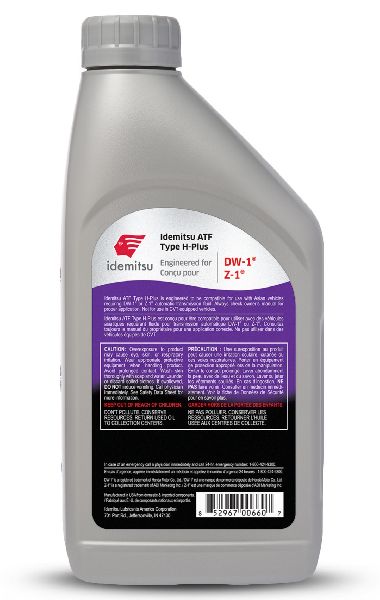
- Only use Honda Genuine ATF-DW1 fluid. Using other fluid types can cause shifting problems.
- If the fluid is good, the Shift Solenoid 'B' (OEM part # 28260-R97-003) is the most likely component to have failed.
- This repair is moderately difficult but can be done by a skilled DIYer, as the solenoid is located on the outside of the transmission.
What's Unique About the 2011-2017 Honda Odyssey

The 6-speed automatic transmission in the fourth-generation (2011-2017) Honda Odyssey is known to be sensitive to fluid condition. Honda issued a Technical Service Bulletin (TSB 17-043) for 2014-2017 models acknowledging that deteriorated transmission fluid can cause shifting problems like juddering between 20 and 60 mph. While this TSB doesn't specifically name P0757, it highlights that fluid breakdown from heat is a known issue, making a fluid drain-and-fill a critical first step before replacing any hardware. The TSB recommends a software update and a triple drain-and-fill procedure to resolve the judder, underscoring the importance of fluid maintenance on this platform.
Symptoms You May Notice
- Harsh, jerky, or delayed shifts
- Transmission gets stuck in one gear (often 2nd or 4th)
- Check Engine Light is on
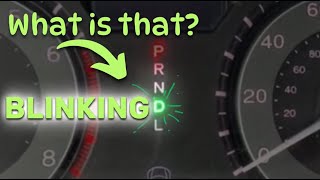
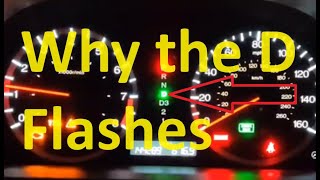
- Flashing 'D' (Drive) indicator light on the dashboard
- Decreased fuel economy
- Engine seems to race without the vehicle accelerating accordingly (transmission slip)
- Replacing the solenoid without first checking the transmission fluid level and condition. Dirty or low fluid is a very common cause and a much cheaper fix.
- Mistaking a torque converter judder (addressed by TSB 17-043) for a solenoid failure. The judder is a vibration felt under light acceleration, while P0757 typically involves harsh shifts or being stuck in gear.
Most Likely Causes

- Low or Dirty Automatic Transmission Fluid (ATF) 🔴 High Probability Honda TSB 17-043 for 2014-17 models notes that fluid can deteriorate faster than expected under high heat loads, causing shifting issues. Owners and mechanics frequently report that dirty fluid is the primary cause of shifting problems.
How to confirm: Check the transmission fluid level and condition using the dipstick. The fluid should be red and clear, not brown, black, or have a burnt smell. Ensure the level is correct per the owner's manual procedure (typically with the engine off and warm).
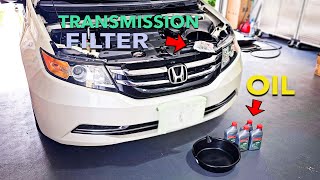
Typical fix: Perform a series of transmission fluid drain-and-fills (commonly called a '3x flush' or 'triple drain and fill' in forums) using only Honda Genuine ATF-DW1 fluid. This process replaces a majority of the old, degraded fluid. A full flush using a machine is not typically recommended by Honda.
Est. part cost: $40-$120 - Faulty Shift Solenoid 'B' 🟡 Medium Probability The solenoid can fail electrically (internal short/open) or mechanically (clogged with debris from old fluid), preventing it from moving as commanded by the TCM.
How to confirm: After confirming fluid is good, a mechanic can test the solenoid's resistance with a multimeter (should be within spec, often 13.8-17.1 ohms for the 6-speed). A more definitive test is to use a professional scan tool (like the Honda HDS) to command the solenoid on and off while listening for an audible 'click'. No click strongly suggests a failed solenoid.
Typical fix: Replace the faulty shift solenoid. On this Odyssey, the linear solenoids are typically located on the exterior of the transmission case, making replacement possible without removing the transmission. It is often found under a small cover held by a few 10mm bolts.
Est. part cost: $150-$300 - Clogged Transmission Filter or Passages ⚪ Low Probability If transmission fluid changes have been neglected, sludge and metallic debris can build up and restrict fluid flow to the solenoids or within the valve body.
How to confirm: This is diagnosed by inspecting the fluid and strainer when drained from the transmission. If significant metal shavings or clutch material are present, it indicates a more serious internal problem requiring a transmission rebuild or replacement.
Typical fix: Replace the external transmission filter and perform multiple drain-and-fills. If passages in the valve body are blocked, it may require professional cleaning or replacement, which is a more intensive job.
Est. part cost: $20-$60
Rare But Worth Checking
- Wiring Harness or Connector Damage: The wiring leading to the transmission can be damaged by road debris, heat, or corrosion, causing an electrical fault that mimics a failed solenoid. Always inspect the connector and nearby wiring for issues before replacing the part.
- Faulty Powertrain/Transmission Control Module (PCM/TCM): In rare cases, the computer that controls the solenoid can fail. This is uncommon and should only be considered after all other possibilities (fluid, solenoid, wiring) have been exhausted.
Diagnosis Steps
- Check the automatic transmission fluid (ATF) level and condition. Ensure the engine is warm and off on a level surface. The fluid should be at the correct level and red/pink, not brown or burnt-smelling.
- If the fluid is low, top it off with Honda ATF-DW1 and check for leaks. If the fluid is dirty or old, perform a '3x drain-and-fill'. Clear the code and test drive to see if the problem returns. Many owner experiences confirm this solves the issue.
- If the fluid is fine, inspect the wiring harness and connector going to the shift solenoids on the transmission case for any visible damage, corrosion, or loose connections. Also inspect the main transmission-to-body ground strap for corrosion or looseness.
- Using a professional scan tool, command Shift Solenoid 'B' on and off. Listen for an audible click from the solenoid. No click suggests a failed solenoid.
- If a scan tool is unavailable, you can test the solenoid's internal resistance. Disconnect the solenoid and use a multimeter to measure the resistance between its two pins. Compare the reading to the manufacturer's specification (13.8–17.1 Ω for the 6-speed transmission). An out-of-spec reading indicates a bad solenoid.
- While the fluid is drained, inspect the transmission strainer for excessive metal debris or clutch material. Significant debris points to a larger internal transmission failure.
- If the solenoid and wiring test good, the issue may be a blockage in the valve body or, in rare cases, a faulty TCM.
Parts You'll Likely Need

- Automatic Transmission Fluid (ATF DW-1)
(OEM #08200-9008)— The most common cause is old, deteriorated, or low fluid. This is the required first step in troubleshooting. Honda transmissions are notoriously sensitive to fluid type and condition.
Trusted brands: Honda Genuine
OEM price range: $10-$15 per quart - Shift Solenoid 'B' (Linear Solenoid B)
(OEM #28260-R97-003)— If the fluid is good, the solenoid itself is the next most likely part to have failed either electrically or mechanically.
Trusted brands: Honda Genuine, Standard Motor Products, WVE/NTK
OEM price range: $250-$350
Aftermarket price range: $100-$200
Related Codes That Often Appear With This One
- P0700 — P0700 is a generic code that simply means the Transmission Control Module (TCM) has stored a fault code. It will almost always appear alongside a more specific transmission code like P0757.
Technical Service Bulletins (TSBs) & Recalls
- 17-043 - 2014–17 Odyssey: Judder from the Torque Converter Lock-Up Clutch. Corroborates that deteriorated transmission fluid is a known issue on this platform, leading to shifting problems. The fix involves a software update and a triple fluid flush.
- 17-052 - 2012-13 Odyssey: Judder from the Torque Converter Lock-Up Clutch. Addresses the same fluid-related judder issue for earlier model years within the generation.
Platform-Specific Known Issues
- Honda Service Bulletin 17-043 was issued for 2014-2017 Odyssey models for a judder from the torque converter, caused by deteriorated ATF. The fix involves a software update and a transmission fluid flush procedure, underscoring the platform's sensitivity to fluid quality.
- A separate TSB, 17-052, addresses the same torque converter judder issue specifically for 2012-2013 Odyssey Touring and Touring Elite models, again pointing to deteriorated ATF as the cause.
Mechanic-Grade Diagnostic Values

- Shift Solenoid 'B' Resistance (6-Speed AT) — expected: 13.8 - 17.1 Ω. Failure: A reading outside of this range indicates an electrical fault in the solenoid's coil.
Scan Tool Commands That Help
- Honda Diagnostic System (HDS): Select 'Shift Solenoid Valve B' in the Miscellaneous Test Menu. — This bidirectional control is used to command the solenoid on and off after fluid and wiring have been checked. The technician listens for an audible 'click' from the solenoid. The absence of a click confirms a mechanical or electrical failure of the solenoid itself, validating its replacement.
Wiring & Ground Locations
- Transmission-to-Body Ground Strap — A braided cable running from a 10mm bolt on the transmission case to a 10mm bolt on the vehicle's frame rail, typically near the front of the engine bay.. This is the main ground path for the transmission. Heavy corrosion on this strap can create high resistance, causing erratic behavior from electronic components like shift solenoids, which may mimic a component failure.
Model Year Variations Within This Range
- 2011-2013: The transmission type depends on the trim level. LX, EX, and EX-L trims used a 5-speed automatic transmission, while only the premium Touring and Touring Elite trims used a 6-speed automatic.
- 2014-2017: All trim levels (LX, EX, EX-L, SE, Touring, Touring Elite) came standard with the 6-speed automatic transmission. This article and its associated TSBs primarily apply to the 6-speed transmission.
Diagnostic Flowchart
Other Known Issues on This Vehicle
Issues unrelated to this code that are worth knowing about as an owner of this generation:
- Variable Cylinder Management (VCM) Issues 🔴 High — Widespread across all V6 models. Can lead to fouled spark plugs, excessive oil consumption, and eventual piston ring damage. (Ref: Honda issued a warranty extension for some earlier models due to piston ring issues, but not all 2011-2017 models are covered. Many owners install a 'VCM muzzler' device to disable the system.)
- Torque Converter Judder/Shudder 🟠 Medium — Very common, especially on 2012-2017 models, typically felt as a vibration between 20-60 mph. (Ref: TSB 17-043 and 17-052 were issued. The fix involves a PCM software update and a triple transmission fluid flush.)
- Power Sliding Door Failure 🟠 Medium — Extremely common. Can be caused by a broken cable, failed motor, or faulty lock actuator/harness. (Ref: Recalls were issued for later generations, but for 2011-2017 models, it's a common out-of-warranty repair. Symptoms include grinding noises, jamming, or the door not latching.)
- Excessive Oil Consumption 🔴 High — Often linked to the VCM issue, where deactivated cylinders can lead to fouled piston rings that allow oil to burn. (Ref: A class-action lawsuit covered earlier models, but the problem persists in this generation. The fix often requires piston ring replacement.)
- Warped Front Brake Rotors 🟡 Low — Common complaint leading to steering wheel vibration when braking from higher speeds. The vehicle's weight can cause rotors to warp prematurely.
Used vs. New Parts: Buying Guide for This Vehicle
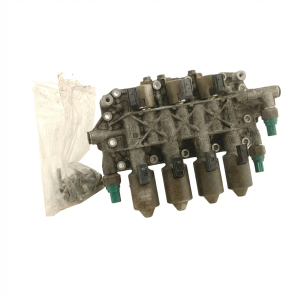
When a used part is the smart pick: A used OEM shift solenoid from a reputable salvage yard can be a good value, as it is an externally mounted part that is relatively easy to replace. This avoids the high cost of a new OEM part.
Donor-vehicle mileage cap: roughly under 80000 miles for the part to have meaningful remaining life.
What to inspect on the donor part:
- Source from a vehicle with a documented low mileage.
- Inspect the electrical connector pins for any signs of corrosion or damage.
- Ensure the part comes from a vehicle that did not have a front-end collision or fire.
- Ask for the donor vehicle's VIN to check for any reported transmission issues.
OEM-only on this vehicle (don't cheap out):
- Automatic Transmission Fluid (ATF-DW1) - Honda transmissions are exceptionally sensitive to fluid type; using non-OEM fluid is a common cause of failure.
- Transmission Control Module (TCM) - Used modules often have VIN-locking issues, and aftermarket units can have compatibility problems.
Aftermarket brands forum-validated for this vehicle:
- Standard Motor Products (SMP)
- Beck/Arnley
Real Owner Stories
Aggregated from forums and TSBs cited above. Mileages and costs reflect what owners reported in those sources.
2014 Honda Odyssey V6 — ~110000 miles
Symptoms: The van was shifting harshly and the 'D' drive indicator light on the dashboard started flashing.
What fixed it: Successfully resolved the issue by performing a '3x drain and fill' of the transmission fluid using genuine Honda ATF-DW1.
Source hint: odyclub.com: Numerous threads discuss transmission issues
2016 Honda Odyssey V6 — ~85000 miles
Symptoms: A noticeable judder or vibration was felt from the transmission, especially between 20-60 mph, along with general poor shift quality.
What fixed it: The dealer performed a PCM software update and a triple transmission fluid flush as outlined in the service bulletin.
Source hint: TSB 17-043 - 2014–17 Odyssey: Judder from the Torque Converter Lock-Up Clutch
Related OBD-II Codes
Frequently Asked Questions
What is the first and most common fix for a P0757 code on my 2011-2017 Odyssey?
My 2015 Odyssey is juddering at low speeds. Is this related to the P0757 code?
Can I use a universal transmission fluid instead of the expensive Honda ATF-DW1?
Is a full transmission flush using a machine a good idea for my Odyssey?
How can I test the Shift Solenoid 'B' myself without a professional scan tool?
My Odyssey is a 2013 model. Does the TSB for juddering apply to my van?
Helpful Videos
Used OEM Parts in Stock
New Aftermarket Parts Available



The information in this article is provided for general reference and educational purposes only. Vehicle specifications, procedures, and part compatibility can vary by production date, trim level, and region. Always consult your vehicle's factory service manual and verify part numbers before purchasing or performing repairs. Safety-critical components such as airbags, seat belts, and braking systems should be installed by a qualified professional.
- Honda Odyssey:
- 🎬 Helpful Videos
- 🛍️ Shop This Part
- What's Unique About the 2011-2017 Honda Odyssey
- Symptoms You May Notice
- Most Likely Causes
- Rare But Worth Checking
- Diagnosis Steps
- Parts You'll Likely Need
- Related Codes That Often Appear With This One
- Technical Service Bulletins (TSBs) & Recalls
- Platform-Specific Known Issues
- Mechanic-Grade Diagnostic Values
- Scan Tool Commands That Help
- Wiring & Ground Locations
- Model Year Variations Within This Range
- Diagnostic Flowchart
- Other Known Issues on This Vehicle
- Used vs. New Parts: Buying Guide for This Vehicle
- Real Owner Stories
- 2014 Honda Odyssey V6 — ~110000 miles
- 2016 Honda Odyssey V6 — ~85000 miles
- Related OBD-II Codes
- Frequently Asked Questions
- 🎟️ Get 5% Off