

OBD-II Code P0762: Shift Solenoid 'C' Stuck On
The Ultimate Guide to Understanding, Diagnosing, and Fixing P0762
- P0762 indicates Shift Solenoid 'C' is stuck in the 'on' position, forcing the transmission into a restricted limp mode that makes driving unsafe.
- Check your transmission fluid first; low or heavily contaminated fluid causes a large percentage of solenoid failures by physically jamming the valve.
- For 2017-2023 Ford F-150s and Mustangs with the 10R80 transmission, P0762 almost always requires a $1,200-$1,800 valve body replacement rather than a simple solenoid swap.
- Never replace the solenoid without testing the wiring harness first; a short-to-power circuit continuously supplies voltage and forces a brand-new solenoid to stay stuck on.
- Driving more than 100 miles with an active P0762 code overheats the transmission fluid, escalating a $300 solenoid repair into a $4,000 complete transmission rebuild.
What Does P0762 Mean?

The Transmission Control Module (TCM) detected that Shift Solenoid 'C' is stuck in the 'on' position. This solenoid is a computer-controlled hydraulic valve that directs transmission fluid to engage or disengage specific gears. When stuck on, it continuously sends hydraulic pressure to a clutch pack even when the TCM commands it to stop, causing incorrect gear engagement, severe shifting problems, and internal transmission damage.
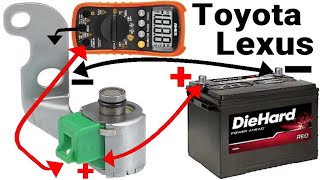
Technical definition: The SAE/OBD-II definition for P0762 is "Shift Solenoid 'C' Stuck On". This indicates the TCM commanded shift solenoid 'C' to de-energize, but internal diagnostic feedback or the resulting incorrect gear ratio confirms the solenoid remains hydraulically or electrically active. The TCM verifies this by comparing the commanded gear state with the actual gear ratio calculated from 🎬 Watch: Troubleshooting P0762 shift solenoid C stuck on the input and output speed sensors.
Can I Drive With P0762?
No — Do Not Drive. Do not drive with code P0762. The transmission defaults to 'limp mode' with limited gears, making normal traffic speeds unsafe. Continuing to drive forces the transmission to operate under severe stress, rapidly leading to overheating, internal clutch pack damage, and scoring of the valve body. This escalates a moderate solenoid or wiring repair into a catastrophic transmission failure requiring a full rebuild. Furthermore, running in a fixed gear overloads the engine and exhaust, potentially destroying the catalytic converter—an $800-$2,500 repair.
Common Causes

- Low, dirty, or incorrect transmission fluid (Very Common) — Insufficient fluid causes low hydraulic pressure and overheating. Old or contaminated fluid contains debris, sludge, or metal shavings that physically jam the solenoid's plunger or clog the fine passages in the valve body.
- Faulty Shift Solenoid 'C' (Common) — An electrical short within the internal coil causes the solenoid to remain permanently energized. Alternatively, the mechanical plunger physically sticks in the open 🎬 See this walkthrough for locating and replacing shift solenoid C (on) position due to debris or wear.
- Damaged wiring or connectors (Common) — A short-to-power in the wiring harness continuously supplies voltage to the solenoid, forcing it to stay on. Fluid leaking past the main electrical connector's seal also 'wicks' up the harness, causing short circuits.
- Faulty Transmission Valve Body (Less Common) — The valve body develops cracks, warped surfaces, or blocked channels. A spool valve associated with the 'C' solenoid circuit sticks in its bore, trapping hydraulic pressure and keeping the circuit active even if the solenoid functions perfectly.
- Internal Transmission Mechanical Failure (Uncommon) — A failing clutch pack or defective transmission pump releases excessive metallic debris into the fluid. This debris circulates and contaminates the valve body and solenoids, causing them to stick. This is indicated by dark, metallic-looking fluid.
- Failing Transmission Control Module (TCM) (Rare) — A faulty driver circuit within the TCM gets stuck, continuously sending a ground signal or voltage to the solenoid. Suspect this only after exhaustively ruling out all circuit, solenoid, and mechanical possibilities.
Symptoms

- Transmission stuck in one gear (Limp Mode) — The vehicle enters a 'fail-safe' mode, locking the transmission into a single gear (often 2nd or 3rd) to prevent further damage.
- Harsh, erratic, or delayed shifting — Shifts slam into gear or are noticeably delayed. Engine RPMs surge between shifts (a 'flare') because the next gear cannot engage correctly.
- Transmission slipping — The engine revs higher than usual, but vehicle speed does not increase accordingly, feeling as if the gear lost its grip.
- Engine stalls when coming to a stop — The transmission fails to downshift or disengage the torque converter clutch correctly, placing an excessive load on the engine at low speeds and causing a stall.
- Check Engine Light or Transmission Warning Light is on — The TCM illuminates a dashboard warning light immediately upon detecting the fault.
- Decreased fuel economy (also visible on scanner) — Operating in the wrong gear forces the engine to work harder, causing a noticeable drop in fuel mileage.
Diagnostic Flowchart
Tap your situation to follow the diagnostic path that matches what you're seeing on this code.
Common Fixes & Costs
- Transmission Fluid and Filter Change — Parts: $75-$200, Labor: $125-$250, ~1.5 hr book time (Intermediate)
- Replace Shift Solenoid 'C'
— Parts: $30-$150, Labor: $200-$450, ~2.5 hr book time
(Intermediate)
: OEM
: OEM - Replace Transmission Valve Body
— Parts: $500-$1300, Labor: $300-$700, ~4 hr book time
(Professional)
: OEM - Repair or Replace Wiring Harness — Parts: $50-$300, Labor: $150-$500, ~3 hr book time (Professional)
- Replace or Reprogram TCM/PCM
— Parts: $400-$1200, Labor: $150-$300, ~2 hr book time
(Professional)
: OEM
DIY vs Professional
- Transmission Fluid and Filter Change — Beginner:
Tools: Socket set, drain pan, funnel, torque wrench, new fluid/filter/gasket. - Replace External Shift Solenoid (e.g., Honda) — Beginner:
Tools: Socket set, torque wrench, new solenoid and gaskets. - Replace Internal Shift Solenoid / Valve Body — Beginner:
Tools: Extensive socket/tool set, large drain pan, torque wrench, service manual, transmission jack. - Electrical Diagnostics (Wiring/TCM) — Beginner:
Tools: Professional multimeter, bi-directional scan tool, vehicle-specific wiring diagrams.
Used vs. New Parts: Buying Guide
When a used part is worth it: For older, high-mileage vehicles (over 150k miles) where a new OEM part exceeds a large fraction of the car's value. A used part from a low-mileage donor vehicle is a cost-effective solution.
Donor-vehicle mileage cap: roughly under 80000 miles for the part to have meaningful remaining life.
Donor quality checklist:
- Verify the donor vehicle was not scrapped due to transmission or engine failure.
- Match the part number exactly, including revisions.
- Ask the seller for the donor vehicle's VIN to check its history.
- Inspect connectors for corrosion and the part for signs of excessive heat.
Decision logic:
- If The part is a single, externally accessible solenoid on a common vehicle (e.g., Honda) → Buy new aftermarket. The cost is low and reliability is high.
- If The part is a complete valve body with an integrated TCM (e.g., modern Ford, Mazda) → Buy a professionally remanufactured unit. They have common failure points corrected and come with a better warranty.
- If The vehicle is less than 8 years old and under 100k miles → Use a new OEM or high-quality remanufactured part to ensure longevity and avoid repeat labor costs.
Warranty tradeoff: Used parts typically come with a 30-90 day part-only warranty, leaving you responsible for labor costs if it fails. Remanufactured and new aftermarket parts offer 1-year to limited lifetime warranties.
Worst-case if a used part fails: $500 - $1,500. This represents repeat labor for installation plus the cost of another replacement part.
What Happens If You Wait — Timeline
- 0-100 miles: Check Engine Light on, code P0762 is set. Vehicle enters 'limp mode,' locking into a single gear. Shifting is harsh or delayed, but the vehicle is driveable for short, low-speed distances. (MPG impact: 5-15%% · Added cost: $0)
- 100-500 miles: Continued operation in limp mode causes transmission fluid to overheat and break down. Slipping between gears becomes frequent, and a faint burning smell is noticeable. (MPG impact: 10-25%% · Added cost: $50-$150 in wasted fuel and accelerated fluid degradation.)
- 500-1,000 miles: Overheated fluid glazes clutch surfaces and scores the valve body. The initial $400 solenoid fix now requires a more expensive valve body replacement. Metal shavings contaminate the system. (MPG impact: 20-35%% · Added cost: $800 - $2,500 (Valve body replacement is now required).)
- 1,000+ miles: Catastrophic failure. Clutch packs are destroyed, sending debris throughout the transmission. The pump fails, and gears are damaged. The transmission requires a complete rebuild. (MPG impact: N/A (Vehicle is likely undriveable)% · Added cost: $3,000 - $7,000+ (Full transmission rebuild or replacement).)
Cost of Not Fixing It
- Immediate (0-100 miles): Vehicle stuck in 'limp mode' with limited gears, posing a safety risk. Fuel economy drops by 10-20%. (Added cost: $0)
- Short-Term (100-1,000 miles): Continued driving overheats transmission fluid, accelerating wear on clutches and bands. This scores the valve body, turning a solenoid fix into a valve body replacement. (Added cost: $800 - $2,500)
- Long-Term (1,000+ miles): Catastrophic internal transmission failure. Friction material from burnt clutches contaminates the entire system, requiring a complete transmission rebuild or replacement. (Added cost: $2,500 - $6,000+)
Diagnosis Steps

- Check Transmission Fluid Level and Condition
Check the fluid level and condition according to the manufacturer's procedure. Fluid must be bright red (or its specified color) and clear. Dark brown/black fluid, a burnt smell, or visible metal particles indicate a serious internal problem beyond a single solenoid.
Tools: Rag, Dipstick (if equipped), Vehicle-specific instructions, Infrared thermometer (Beginner) - Scan for All Trouble Codes
Use an OBD-II scanner to read TCM codes. Confirm P0762 is present. Multiple solenoid codes (e.g., P0752, P0757) or gear ratio codes (e.g., P0733) strongly suggest a systemic problem like a bad TCM, valve body, or main power/ground issue, not multiple individual solenoid failures.
Tools: OBD-II Scanner (with TCM access) (Beginner) - Analyze Live Scan Tool Data
Monitor live data PIDs for 'Shift Solenoid C Command' and 'Shift Solenoid C Status'. Command the solenoid on and off. If the status is always 'On' regardless of the command, the problem is a short-to-power or a stuck solenoid/valve. Monitor Transmission Fluid Temperature (TFT); consistently high temperatures indicate severe internal friction.
Tools: Bi-directional scan tool (Advanced) - Inspect External Wiring and Connectors
Visually inspect the transmission wiring harness for chafing or melting. Disconnect the main transmission connector and inspect for corrosion, bent pins, or fluid intrusion (wicking). Clean corrosion with electrical contact cleaner and apply dielectric grease.
Tools: Flashlight, Mirror, Electrical contact cleaner, Dielectric grease (Intermediate) - Test Solenoid Circuit for Short-to-Power
Disconnect the TCM and transmission harness connector. Using a multimeter set to Volts DC, probe the 'Solenoid C' control wire at the TCM connector with the negative lead grounded. A reading above 0 volts confirms a short-to-power in the harness keeping the solenoid energized.
Tools: Multimeter, Vehicle-specific wiring diagram (Advanced) - Check Solenoid Resistance
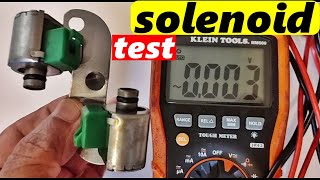
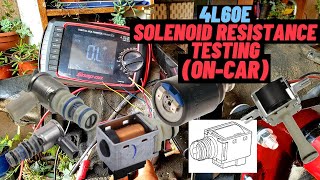
With the transmission connector disconnected, measure the resistance of the Shift Solenoid 'C' coil. A typical reading is 5-60 Ohms (consult service manual). A reading of 0 Ohms indicates an internal short circuit. An infinite (O.L.) reading indicates an open circuit.
Tools: Multimeter, Vehicle-specific wiring diagram (Advanced) - Perform a Hydraulic Pressure Test
Connect a transmission pressure gauge to the appropriate test ports. Run the vehicle and monitor pressures. If pressure in the circuit controlled by Solenoid 'C' remains high when commanded 'off' by the scan tool, it confirms a mechanical issue like a stuck valve in the valve body.
Tools: Transmission pressure gauge set (0-400 PSI), Service manual (Professional) - Inspect the Valve Body and Internal Harness
If electrical tests pass, remove the transmission oil pan. Heavy sludge or metal debris indicates a larger mechanical failure. Inspect the internal wiring harness for brittleness. Remove the solenoid for a bench test or replacement.
Tools: Socket set, Drain pan, New gasket/filter, Torque wrench (Professional)
When This Code Triggers (Freeze-Frame Conditions)
- Engine Coolant Temp: 185-210°F (85-99°C) (The engine has reached full operating temperature.)
- Engine RPM: 1500-3000 RPM (During light to moderate acceleration or when attempting to shift at cruising speed.)
- Vehicle Speed: 25-55 mph (40-88 km/h) (The fault is detected when the TCM commands a shift (e.g., 2nd to 3rd) that fails to occur correctly.)
- Transmission Fluid Temperature: 175-225°F (80-107°C) (The transmission is at normal operating temperature; the code rarely sets when fluid is cold and thick.)
Related Codes
- P0700 — A generic 'Transmission Control System Malfunction' code. It acts as a master light indicating the TCM stored a fault. It always appears alongside a specific code like P0762.
- P0761, P0763, P0764 — Specific to Shift Solenoid 'C'. P0761 means 'Stuck Off', P0763 indicates an 'Electrical' fault, and P0764 indicates an 'Intermittent' fault. P0762 ('Stuck On') points to a solenoid that won't de-energize due to a short-to-power or mechanical jam.
- P0752, P0757, P0767 — 'Stuck On' codes for Shift Solenoids 'A', 'B', and 'D'. Multiple 'Stuck On' codes appearing together strongly point to a single root cause like a faulty TCM, a major power/ground issue, or a severely clogged valve body.
- P0729 - P0736 (Incorrect Gear Ratio Codes) — Indicates a mismatch between the commanded gear and actual gear ratio. P0733 (Gear 3 Incorrect Ratio) is a direct symptom of P0762 if Solenoid 'C' controls 3rd gear.
Climate & Environmental Factors
- Extreme Cold: Transmission fluid thickens, causing delayed shifts and initial slipping on cold starts. Moisture accumulates inside the transmission, contaminating the fluid.
- Extreme Heat: High ambient temperatures accelerate the breakdown of transmission fluid. The fluid becomes thinner, losing its ability to lubricate and cool effectively, increasing wear.
- High Humidity / Coastal Regions: Moisture accelerates corrosion on external electrical connectors, pins, and wiring harnesses. It also degrades transmission seals, increasing fluid leaks.
How to Talk to a Mechanic About This Code
Say this: "My car is showing a P0762 code and is experiencing [describe symptoms, e.g., harsh shifting, getting stuck in gear]. I'd like to schedule a diagnostic. Please start by checking the transmission fluid condition and level, and inspect the external wiring for any obvious issues before moving to more invasive tests."
This signals you've done your research and establishes a logical diagnostic path. It prevents a shop from immediately jumping to an expensive conclusion without checking the most common and simple causes first.
Avoid saying:
- 'My transmission is acting weird, can you fix it?'
- 'My check engine light is on, I think it's a solenoid.' (Don't diagnose for them)
- 'Just do whatever it takes to fix it.'
Questions to ask before authorizing the repair:
- What was the condition and level of the transmission fluid?
- Did you test the solenoid's circuit for a short-to-power and check its resistance before condemning the solenoid?
- If you're recommending a valve body or TCM replacement, what specific tests led you to that conclusion instead of a wiring or solenoid fault?
- Is this repair estimate based on a new, used, or remanufactured part?
- What is the warranty on this repair, and does it cover both parts and labor?
Where to Take It: Dealer vs Independent vs Chain
- Dealer:
Recommended if your vehicle is under warranty or is a specific model (like a newer F-150) where the dealer is best equipped to handle a known TSB-related issue. Otherwise, it is the most expensive option.
Best for: Vehicles under powertrain warranty., Vehicles with known, complex issues covered by Technical Service Bulletins (TSBs), like modern Ford 10R80 transmissions.
Downsides: Highest labor rates, often 1.5-2x an independent shop., Defaults to replacing large, expensive assemblies rather than repairing components., Outsources complex transmission rebuilds to a specialty shop and adds a markup. (Typical cost: +50% vs. baseline) - Independent Shop:
Best overall fit for most out-of-warranty vehicles, especially if you find a well-regarded transmission specialty shop. They perform component-level diagnosis rather than full replacements.
Best for: Out-of-warranty vehicles where cost is a major factor., Finding a true transmission specialist with deep diagnostic experience., Common vehicles where the P0762 fix is well-understood (e.g., older Hondas, Toyotas).
Downsides: Quality and expertise vary widely; finding a trustworthy shop is crucial., Lacks the latest manufacturer-specific diagnostic software for very new or complex models. (Typical cost: +0% vs. baseline) - Chain Shop:
AVOID for diagnosing a P0762 code. They lack the specialized expertise required for the in-depth electrical and hydraulic diagnostics this code demands.
Best for: Basic fluid and filter changes.
Downsides: Technician skill and experience with complex internal transmission work is inconsistent., Reputation for upselling and misdiagnosing complex issues due to pressure to replace rather than repair., Policy of only replacing parts, not performing detailed electrical diagnostics. (Typical cost: -10% vs. baseline)
When to Walk Away From the Repair
If the total estimated repair cost exceeds 50% of the car's private-party value, strongly consider selling or trading in the vehicle instead of repairing it.
- Car worth $5000, fix is $2800: Walk away. The repair cost is over 50% of the car's value. It's a money pit.
- Car worth $15000, fix is $2200: Fix it. The repair cost is well under the threshold and makes economic sense if the rest of the car is in good condition.
- Car worth $3000, fix is $1600: Borderline. The cost is just over the 50% threshold. Get a second opinion. If you love the car and it has no other major issues, fixing it is justifiable, but be prepared for other age-related repairs soon.
What Scan Tool You Need for This Code

Minimum: A scanner that reads manufacturer-specific transmission codes and views live transmission data PIDs (Parameter IDs), such as solenoid command/status and fluid temperature.
A cheap, generic code reader only shows the P0762 code itself. It cannot show the live data needed to determine if the problem is electrical (wiring, TCM) or mechanical (stuck solenoid, valve body). Without this data, you are guessing.
Budget: BlueDriver Pro (~$100) — Reads and clears transmission-specific codes and displays live data for many vehicles, including transmission fluid temperature. It lacks bi-directional control.
Mid-range: Autel MaxiCOM MK808S / Foxwell NT510 Elite (~$350) — Offers full bi-directional control (active tests). This allows you to command Shift Solenoid 'C' on and off directly from the tool to see if it responds, definitively isolating a faulty solenoid or wiring issue.
Professional: Autel MK906BT / Topdon Phoenix Plus (~$600-1200) — Provides full OEM-level diagnostics, bi-directional control, and ECU coding/programming functions. Ideal for serious DIYers or small shops.
Rent vs buy: For a complex code like P0762 that requires live data and active tests, renting a basic reader from an auto parts store is not viable. Buying a mid-range scanner is a wise investment for serious DIY work.
How to Clear the Code After You Fix It
- Use a compatible OBD-II scan tool to clear all fault codes from the TCM and PCM.
- Do not rely on disconnecting the battery, as it fails to clear transmission-specific codes or adaptive learning values.
- Perform a transmission adaptive learning relearn procedure using a bi-directional scan tool if specified by the manufacturer.
Drive cycle (~20 minutes): Start with a cold engine and idle for 2-3 minutes. Drive the vehicle, moderately accelerating and decelerating to allow shifts through all gears up to highway speed (55 mph). Hold a steady speed for 5-10 minutes. Come to a complete stop and repeat the process.
Readiness monitors affected: Transmission Component Monitor, Comprehensive Component Monitor
Before emissions retest: drive at least 50 miles to fully set monitors.
Watch out for:
- Clearing the code without fixing the underlying mechanical or electrical issue causes the code to return immediately.
- Skipping the transmission relearn procedure results in continued harsh or erratic shifting after the repair.
- Ignoring related codes (like gear ratio errors) leads to an incomplete diagnosis.
Will This Fail Emissions / State Inspection?
Yes — this code typically fails an OBD-II emissions inspection.
- California: An active P0762 code fails the smog check. All readiness monitors must be complete before a test passes.
- New York: An illuminated Check Engine Light due to P0762 results in an automatic NYS DMV inspection failure.
- Texas: In the 17 Texas counties requiring emissions testing, an active P0762 code fails the OBD portion of the annual safety inspection.
Most Commonly Affected Vehicles
- Ford F-150, Mustang, Ranger, Expedition (2017-2023) — Vehicles with the 10R80 10-speed transmission. P0762 is a notorious code caused by a faulty main control valve body or a failure of the internal CDF clutch drum. The fix is almost never just the solenoid.
- Chevrolet / GMC Silverado, Sierra (2012-2018) — Common in models with 6-speed (6L80/6L90) and Allison transmissions. The cause is often the solenoid, internal wiring harness, or TCM.
- Honda Accord, Odyssey, Pilot (2011-2017) — Shift solenoids are located externally on the transmission case, making them significantly easier and cheaper to replace. Diagnosis starts with checking for metal debris on the solenoid screens.
- Toyota Sienna, Camry, RAV4 (2004-2012) — Often caused by a failing solenoid or contaminated fluid. On some models, the solenoid is part of a solenoid pack replaced as a single unit.
- Mazda 3, 6 (2005-2013) — P0762 is frequently associated with a failing TCM integrated into the valve body. Code U0101 ('Lost Communication with TCM') alongside P0762 confirms TCM failure.
- Hyundai / Kia Genesis, Sonata, Optima (2009-2015) — The TCM sets this code when the calculated gear ratio doesn't match the expected ratio, typically due to a stuck-on solenoid or internal hydraulic blockage.
- Nissan / Infiniti Altima, Maxima, QX60 (2010-2018) — In Continuously Variable Transmissions (CVTs), this code points to issues within the valve body or debris contaminating the fluid.
- Chrysler / Dodge / Jeep Grand Cherokee, Ram 1500, Charger (2008-2016) — Common in vehicles with 545RFE, 68RFE, and ZF 8-speed transmissions. The cause is often a faulty solenoid pack or contaminated valve body.
Manufacturer-Specific Notes
- Ford: On 10R80 10-speed transmissions, P0762 is a well-documented symptom of a faulty main control valve body or internal CDF clutch drum failure. Ford TSBs (e.g., 24-2176) guide technicians to replace the valve body, not just the solenoid.
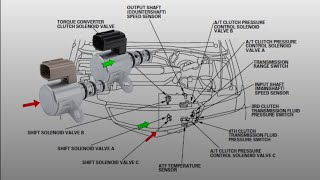
- Honda/Acura: Linear and shift solenoids are mounted on the exterior of the transmission case, making them significantly easier and less expensive to replace. Diagnosis involves removing the external solenoid and inspecting its filter screens for metallic debris.
- General Motors (GM): On trucks with Allison transmissions, GM bulletin PIP5060 advises testing the Transmission Fluid Pressure (TFP) switches with the eraser end of a pencil while monitoring a scan tool. Failure to change state points to an internal harness issue, not the solenoid.
- Mazda: In early 2000s models, the TCM is mounted directly to the valve body and fails from heat and vibration. If you see code U0101 alongside P0762, the TCM requires replacement.
Real Owner Stories
2018 Ford F-150 with 10R80 at 75K miles
Check Engine Light came on, with harsh 3-4 and 4-5 shifts. Sometimes felt like it was slipping between gears. Code scanner showed P0762.
What they tried:
- Owner considered replacing just Solenoid 'C' after watching a generic video.
- A local shop quoted $550 for a solenoid replacement.
- After reading forums about the 10R80 transmission, the owner took it to a dealer for a second opinion.
Outcome: Dealer diagnosed a faulty main control (valve body) assembly, a known issue. The repair involved replacing the entire valve body for a total cost of $1,850. The issue was resolved, and shifting returned to normal.
Lesson: On specific models like the Ford 10R80, P0762 is a known symptom of a larger valve body problem. Replacing just the solenoid is a misdiagnosis that wastes money and won't fix the root cause.
2005 Mazda 3 at 185K miles
AT (Automatic Transmission) light came on, code P0762 was present, and the transmission was slipping.
What they tried:
- Took it to two different shops; neither could provide a definitive fix.
- Owner had an ATF flush performed and replaced Shift Solenoid 'C' themselves.
- The problem persisted, with harsh clunking in reverse and failure to shift into 3rd gear.
Outcome: The issue was ultimately traced to a failing Transmission Control Module (TCM), a common failure point on this generation of Mazda3 caused by heat and vibration. The owner faced a choice between a costly TCM replacement or retiring the high-mileage vehicle.
Lesson: When a direct parts replacement doesn't fix the issue, the problem is likely upstream (wiring, TCM) or a deeper mechanical fault. On early 2000s Mazdas, solenoid codes are symptoms of a bad TCM.
2013 Honda Odyssey at 110K miles
Check Engine Light on with code P0762. Shifting felt slightly delayed but was otherwise normal.
What they tried:
- Owner checked transmission fluid, which was at the correct level but slightly dark.
- Located Shift Solenoid 'C' on the exterior of the transmission case.
Outcome: Owner purchased a new OEM solenoid and gasket for $180. The replacement was straightforward, requiring only basic hand tools. After replacement and clearing the code, the CEL did not return and shifting felt crisper.
Lesson: For vehicles like many Hondas, shift solenoids are externally accessible, making the repair a much easier and cheaper DIY job. Always check your specific vehicle's design before assuming a complex internal repair is needed.
How to Prevent This Code From Triggering
- Change transmission fluid and filter regularly (Every 30,000 to 60,000 miles) — Old fluid loses lubricating properties and accumulates debris. Clean fluid prevents sludge buildup, reduces heat, and ensures proper hydraulic pressure, preventing solenoid failure.
- Install an auxiliary transmission cooler (One-time install, especially if you tow or live in a hot climate) — Heat is the biggest enemy of an automatic transmission. An external cooler provides extra cooling capacity, preventing fluid breakdown and protecting solenoids and clutches from heat damage.
- Maintain the engine's cooling system (Per manufacturer's schedule (e.g., coolant flush every 5 years/100K miles)) — Factory transmission coolers are integrated into the engine's radiator. A failing engine cooling system fails to cool the transmission fluid, leading to overheating and accelerated wear.
- Practice smooth driving habits (Daily habit) — Aggressive driving with rapid acceleration puts immense strain on the transmission, generating excess heat and shortening the life of solenoids and clutch packs.
- Come to a complete stop before shifting from Drive to Reverse (Every time you shift direction) — Shifting while the vehicle is moving forces the transmission to act as a brake, putting extreme stress on the geartrain and causing severe mechanical damage over time.
Frequently Asked Questions
What is the absolute first thing I should do for a P0762 code?
Before touching any tools or ordering parts, check the transmission fluid level and condition. Low, burnt, or contaminated fluid is the primary cause of solenoid issues and must be corrected first.
What are the most common misdiagnoses for P0762?
The most common mistake is replacing Shift Solenoid 'C' without testing the circuit, as the fault often lies in the wiring or TCM. On modern Fords with the 10R80 transmission, replacing just the solenoid is a misdiagnosis when the underlying cause is the entire valve body assembly.
Can I fix a P0762 code myself?
Checking fluid is DIY-friendly, and replacing an externally mounted solenoid is an intermediate task. However, most repairs involve dropping the transmission pan. Advanced electrical diagnosis requires specialized tools, making it a job for a professional.
Will a transmission flush fix a P0762 code?
If the problem stems from dirty fluid or a small dislodgeable piece of debris, a fluid flush sometimes fixes it. However, if the solenoid failed electrically, is severely jammed, or the valve body is warped, a flush will not solve the problem and often worsens the issue by dislodging more debris.
What if the code P0762 appeared right after a transmission service?
This strongly suggests an issue with the service performed. The most likely culprits are an incorrect fluid level, use of the wrong type of transmission fluid, or an electrical connector that wasn't fully seated during reassembly.
How much does it really cost to fix P0762?
A shop diagnostic fee is typically $125-$185, while a fluid change runs $200-$450. A simple solenoid replacement costs $250-$600. If the cause is a valve body or TCM, the cost jumps to $800-$2,500+, especially on affected Ford and GM models.
What's the difference between 'Stuck On' (P0762) and 'Stuck Off' (P0761)?
'Stuck On' means the solenoid is energized when it should be off, often caused by a short-to-power or a mechanically stuck valve. 'Stuck Off' means the solenoid fails to energize when commanded, typically due to a failed coil or a wiring break. The diagnostic approach differs significantly for each.
Key Takeaways
- P0762 indicates Shift Solenoid 'C' is stuck in the 'on' position, forcing the transmission into a restricted limp mode that makes driving unsafe.
- Check your transmission fluid first; low or heavily contaminated fluid causes a large percentage of solenoid failures by physically jamming the valve.
- For 2017-2023 Ford F-150s and Mustangs with the 10R80 transmission, P0762 almost always requires a $1,200-$1,800 valve body replacement rather than a simple solenoid swap.
- Never replace the solenoid without testing the wiring harness first; a short-to-power circuit continuously supplies voltage and forces a brand-new solenoid to stay stuck on.
- Driving more than 100 miles with an active P0762 code overheats the transmission fluid, escalating a $300 solenoid repair into a $4,000 complete transmission rebuild.
Helpful Videos

The information in this article is provided for general reference and educational purposes only. Vehicle specifications, procedures, and part compatibility can vary by production date, trim level, and region. Always consult your vehicle's factory service manual and verify part numbers before purchasing or performing repairs. Safety-critical components such as airbags, seat belts, and braking systems should be installed by a qualified professional.
- 🎬 Helpful Videos
- What Does P0762 Mean?
- Can I Drive With P0762?
- Common Causes
- Symptoms
- Diagnostic Flowchart
- Common Fixes & Costs
- DIY vs Professional
- Used vs. New Parts: Buying Guide
- What Happens If You Wait — Timeline
- Cost of Not Fixing It
- Diagnosis Steps
- When This Code Triggers (Freeze-Frame Conditions)
- Related Codes
- Climate & Environmental Factors
- How to Talk to a Mechanic About This Code
- Where to Take It: Dealer vs Independent vs Chain
- When to Walk Away From the Repair
- What Scan Tool You Need for This Code
- How to Clear the Code After You Fix It
- Will This Fail Emissions / State Inspection?
- Most Commonly Affected Vehicles
- Manufacturer-Specific Notes
- Real Owner Stories
- 2018 Ford F-150 with 10R80 at 75K miles
- 2005 Mazda 3 at 185K miles
- 2013 Honda Odyssey at 110K miles
- How to Prevent This Code From Triggering
- Frequently Asked Questions
- What is the absolute first thing I should do for a P0762 code?
- What are the most common misdiagnoses for P0762?
- Can I fix a P0762 code myself?
- Will a transmission flush fix a P0762 code?
- What if the code P0762 appeared right after a transmission service?
- How much does it really cost to fix P0762?
- What's the difference between 'Stuck On' (P0762) and 'Stuck Off' (P0761)?
- Key Takeaways
- 🎟️ Get 5% Off