

P0747 on 2003-2008 Honda Pilot: Pressure Control Solenoid 'A' Stuck On Causes and Fixes
This code means the A/T Clutch Pressure Control Solenoid 'A' is stuck on, causing harsh shifting. The most common fix is replacing the dual linear solenoid assembly located under the battery tray. Expect to pay $100-$250 for the part. Using genuine Honda ATF DW-1 fluid is critical.
- P0747 on a 2003-2008 Pilot points to the Clutch Pressure Control Solenoid 'A' being stuck on, causing harsh shifting and a flashing 'D' light.
- The most likely fix is replacing the dual linear solenoid pack (which includes solenoids A and B) located under the battery tray.
- Always use Honda Genuine ATF-DW1 fluid. Using incorrect fluid is a common cause of solenoid problems in these transmissions.
- Always replace the solenoid gasket/filter screen when replacing the solenoid to ensure clean fluid flow.
- Driving with this code can cause serious, expensive damage to your transmission; address it promptly.
What's Unique About the 2003-2008 Honda Pilot

The first-generation Honda Pilot (2003-2008) uses a 5-speed automatic transmission (coded as BAYA or MAYA) that is known for its sensitivity to fluid quality and condition. For this specific vehicle, the 'A' and 'B' clutch pressure control solenoids are integrated into a single, replaceable dual-linear solenoid assembly. This makes diagnosis slightly different, as a failure reported for solenoid 'A' requires replacing the entire A/B solenoid pack. Owners almost universally experience a flashing 'D' (Drive) light on the dashboard as the primary indicator of this fault, often accompanied by harsh engagement into Drive from Park.
Symptoms You May Notice
- Harsh, jerky, or slamming gear shifts, especially from Park into Drive and during the 1-2 and 2-3 upshifts.
- Flashing 'D' (Drive) indicator light on the instrument cluster.
- Delayed engagement when shifting into gear.
- Vehicle may enter a 'limp mode,' potentially being stuck in second or third gear to prevent further damage.
- Noticeable decrease in fuel economy due to inefficient shifting.
- Transmission may feel like it's slipping or shuddering during acceleration.
- Engine may stall when coming to a stop.
- Replacing the entire transmission when only a fluid change or solenoid replacement was necessary.
- Replacing the wrong solenoid. It's critical to identify the correct Pressure Control Solenoid 'A' location, which is part of the dual-solenoid pack under the battery tray on this vehicle.
- Ignoring the clogged filter screens on the gasket, which can cause the new solenoid to malfunction.
Most Likely Causes

- Faulty A/T Clutch Pressure Control Solenoid 'A' (Dual Linear Solenoid Assembly) 🔴 High Probability The solenoid can fail electrically (coil burnout) or mechanically (plunger gets stuck from debris or worn internal seals) due to age and heat cycles. It is the most direct cause of the code.
How to confirm: Test the resistance of each solenoid coil at the connector with a multimeter; it should be within the 12-25 Ohm range. You can also use a capable scan tool to perform an active test, listening for a 'click' as it's commanded on and off, though a resistance test is more definitive.
Typical fix: Replace the dual linear solenoid assembly (which includes solenoids A and B) and the corresponding gasket/filter screen.
Est. part cost: $100-$250 - Low, Burnt, or Contaminated Automatic Transmission Fluid (ATF) 🟡 Medium Probability Honda transmissions from this era are highly sensitive to fluid type and condition. The original ATF-Z1 fluid has been superseded by the full-synthetic ATF-DW1. Degraded fluid loses its hydraulic properties and can cause valves and solenoids to stick.
How to confirm: Check the transmission fluid dipstick when the engine is warm and off. The fluid should be at the correct level, red in color, and not have a burnt smell. Dark, gritty fluid indicates internal wear.
Typical fix: Perform a transmission fluid '3x drain and fill'. This involves draining the 3-4 quarts from the drain plug, refilling, driving a short distance to circulate, and repeating the process two more times. This replaces a majority of the old fluid, as a single drain only removes about a third of the total volume. Always use Honda Genuine ATF-DW1.
Est. part cost: $100-$180 (for 9-12 quarts of ATF-DW1) - Clogged Solenoid Filter Screens or Passages 🟡 Medium Probability Fine metallic particles from normal clutch wear can accumulate and clog the three small, cylindrical filter screens on the solenoid gasket. This restricts fluid flow to and from the solenoid, causing pressure regulation issues that can lead to the P0747 code.
How to confirm: Visually inspect the filter screens on the solenoid gasket when the solenoid is removed. If they are clogged with dark, metallic sludge, this is a likely contributor. The screens should be clear.
Typical fix: Always replace the solenoid gasket (which includes new screens) when replacing the solenoid. In some cases, cleaning the old screens with brake cleaner can be a temporary fix, but replacement is highly recommended.
Est. part cost: $15-$40 - Damaged Wiring or Electrical Connectors ⚪ Low Probability
How to confirm: Visually inspect the two wiring harness connectors leading to the dual linear solenoid for any signs of corrosion, frayed wires, or loose pins. Check for continuity from the PCM to the solenoid connector.
Typical fix: Repair the damaged section of the harness or replace the connector pigtail. Clean any corrosion from the connector pins.
Est. part cost: $10-$50
Rare But Worth Checking
- Failing Powertrain Control Module (PCM): This is very uncommon. The PCM should only be suspected after all other possibilities, including solenoids, fluid, and wiring, have been thoroughly tested and ruled out. A failing PCM driver can keep the solenoid energized.
- Internal Transmission Mechanical Failure: If the transmission fluid is full of metal shavings or has a severely burnt smell, it points to a more severe internal problem like a failing clutch pack or torque converter, which may have caused the solenoid to fail as a secondary symptom. In this case, a simple solenoid replacement will not be a permanent fix and a transmission rebuild or replacement may be necessary.
Diagnosis Steps

- Check the transmission fluid level and condition. If low, top it off. If it's dark, burnt, or has debris, a '3x drain and fill' with Honda ATF-DW1 is the recommended first step.
- Use an OBD-II scanner to confirm P0747 and check for any other transmission-related codes like P0700, P0746, or P0777.
- Locate the A/T Clutch Pressure Control Solenoid assembly. On the 2003-2008 Pilot, it is a dual-solenoid pack located on the front of the transmission, directly underneath the battery and battery tray.
- Disconnect the battery. Remove the battery and the plastic battery tray (typically held by three 12mm bolts) to gain access to the solenoid.
- Inspect the two wiring connectors going to the solenoid for any visible damage, corrosion, or loose connections.
- With the connectors unplugged, use a multimeter to test the resistance of both solenoid coils. Probe the two pins inside each connector. The reading should be between 12 and 25 Ohms. A reading of infinity (OL) indicates an open coil, while 0 indicates a short.
- If the fluid and wiring are good but a solenoid tests out of spec, replace the dual linear solenoid assembly and its gasket/filter assembly.
- After the repair, reinstall the battery tray and battery, clear the codes with a scanner, and perform a test drive. The transmission may need to go through a re-learning period.
Parts You'll Likely Need

- A/T Clutch Pressure Control Solenoid (Dual Linear Solenoid A/B)
(OEM #28250-P7W-003)— This is the component that the P0747 code directly identifies as being faulty. It is the most common part needed to fix the issue.
Trusted brands: Honda (OEM), Rostra, Standard Motor Products (SMP), Original Equipment
OEM price range: $200-$300
Aftermarket price range: $80-$180 - Solenoid Gasket / Filter Assembly
(OEM #28252-PAX-000)— This gasket includes three critical filter screens that often become clogged with debris, which can cause the pressure fault. It should always be replaced when the solenoid is replaced to ensure proper fluid flow and prevent a repeat failure.
Trusted brands: Honda (OEM), Fel-Pro
OEM price range: $15-$25
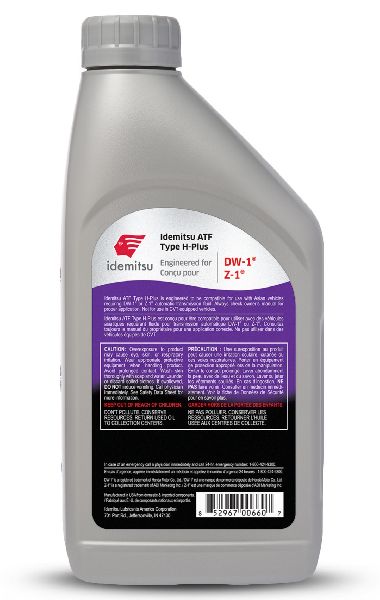
Aftermarket price range: $5-$15 - Honda Genuine Automatic Transmission Fluid DW-1 — Honda transmissions are very sensitive to fluid type. Using the correct OEM fluid is critical for proper solenoid operation and transmission longevity. You will need 3-4 quarts for a single drain and fill, or up to 12 quarts for a full '3x' flush.
Related Codes That Often Appear With This One
- P0700 — This is a generic Transmission Control System Malfunction code. It simply indicates that the Transmission Control Module (TCM) has stored a fault, such as P0747, and is the reason the main Check Engine Light is on.
- P0746 — This code is for 'Pressure Control Solenoid 'A' Performance or Stuck Off'. It relates to the same solenoid but indicates the opposite failure mode. Seeing them together could point to an intermittent electrical issue or a mechanically sticking plunger in the solenoid.
- P0777 — This code is for 'Pressure Control Solenoid 'B' Stuck On'. Since Solenoids A and B are in the same dual-linear assembly, seeing this code alongside P0747 strongly points to a failure of the entire solenoid pack or a related issue like contaminated fluid affecting both.
Technical Service Bulletins (TSBs) & Recalls
- Honda Service Bulletin 20-029: While for later model Pilots (2016-2020) with a 9-speed transmission, this TSB addresses 'intermittent harsh or jerky upshifts' via a TCM software update. It highlights Honda's acknowledgement of harsh shifting issues and the use of software to correct hydraulic control, a concept relevant to older models even if no direct TSB exists for P0747 on the 2003-2008 Pilot.
Platform-Specific Known Issues
- The 5-speed automatic transmission in the first-generation Pilot is known to be a weak point, making fluid maintenance especially critical. Many owners on forums like Piloteers.org recommend proactive transmission fluid changes every 15,000-30,000 miles to prevent solenoid and torque converter issues.
- Failure of this solenoid pack is a very common issue, often occurring between 100,000 and 150,000 miles. The flashing 'D' light is the tell-tale sign that owners immediately recognize as a solenoid-related problem.
Mechanic-Grade Diagnostic Values
- A/T Clutch Pressure Control Solenoid Resistance (Dual Linear Assembly) — expected: 12-25 Ohms. Failure: A reading of infinity (OL) indicates an open coil, while near 0 Ohms indicates a short.
- A/T Clutch Pressure Control Solenoid Resistance (Alternative Spec) — expected: 3-10 Ohms. Failure: Reading outside this range indicates a faulty solenoid coil.
- A/T Clutch Pressure Control Solenoid Resistance (Later Model 6-Speed Spec) — expected: 4.7 - 5.9 Ohms. Failure: Resistance outside this range on newer models points to a solenoid failure.
- Bench Test - Solenoid Activation — expected: A distinct 'click' should be heard and the internal valve should be seen moving when 12V and ground are applied to the solenoid's pins.. Failure: No click or sluggish valve movement indicates a mechanical failure (stuck plunger) even if resistance is normal.
Scan Tool Commands That Help
- Honda Diagnostic System (HDS): Clutch Pressure Control (Linear) Solenoid Valve A Test — Use this function from the 'Miscellaneous Test Menu' to command the solenoid on and off. The HDS will report if the valve tests OK or not. This is the primary dealer-level electronic test to confirm solenoid operation without removing it.
- Professional Scan Tool (e.g., Autel, Snap-on): Reset Transmission Adaptations / Clear Learned Values — This function should be performed after replacing the solenoid assembly. It clears the TCM's learned compensation values, forcing it to relearn shift pressures with the new part, which is critical for smooth shifting post-repair.
Wiring & Ground Locations
- Transmission Ground Cable (G3) — A ground strap typically located on top of the transmission housing, connecting to the chassis.. A poor ground connection at the transmission can cause erratic voltage and unpredictable behavior from electronic components like the pressure control solenoids, potentially triggering false codes.
- Battery Ground Cable (G1) — Main ground strap from the battery's negative terminal to the vehicle chassis, often near the left side of the engine compartment.. The primary ground for the entire electrical system. Corrosion or looseness here can cause a host of electrical issues, including PCM and TCM malfunctions.
- Engine Ground Cable (G2) — A ground strap connecting the engine block to the chassis, often on the right side of the engine compartment.. Ensures the engine block and its attached sensors/actuators have a solid ground reference. A poor connection here can affect sensor readings and PCM operation.
- Ground under Battery Tray — There is a ground point on the chassis located underneath the battery tray.. Since the solenoid is located directly under the battery tray, this ground is in close proximity and is a common point for corrosion due to battery fumes or leaks. A bad ground here could directly affect the solenoid circuit.
Real Owner Repair Stories
- Reddit user 'otheretho' (2005 Honda Pilot, over 260k miles) — Transmission judder.
❌ Tried (didn't work) The user did not specify other attempted fixes before the final solution.
✅ What actually fixed it The user had to replace the torque converter about two years prior to their post, which resolved the judder issue. This highlights that sometimes transmission symptoms mimicking a solenoid issue can originate from the torque converter. - NHTSA ODI #11681218 — An owner of a vehicle with a similar powertrain reported that the car "violently jerks the whole car very badly" when attempting to switch gears, with codes P0741 and P0747 stored. Despite the symptoms, the owner was able to activate all solenoids using a professional scanner.
- NHTSA ODI #10441025 — One owner described a situation where the transmission shifted erratically in and out of gear before finally becoming stuck in first gear with no upshifts. After P0747 was stored, the owner performed a replacement of 9 quarts of ATF-DW-1 and a filter to address the issue.
OEM Part Supersession History
28250-P7W-003→28250-RDK-014 (for some later models)— Part update/revision for later model year applications.
Heads up: While 28250-P7W-003 is correct for the 2003-2005 Pilot, some 2006-2008 models may use 28250-RDK-014. It is critical to verify the correct part number by VIN. The solenoids may look identical but have different pressure calibrations.28250-RDK-014→28250-R97-004 (for later 6-speed models)— Part for a different transmission generation (6-speed vs 5-speed).
Heads up: The 28250-R97-004 part is for later generation Pilots and is not compatible with the 2003-2008 models. It is often confused in parts catalogs.
Model Year Variations Within This Range
- 2003-2004: These early models had the most transmission problems. The transmission code was often BVGA.
- 2005: The transmission was improved for the 2005 model year (often coded PVGA) and is considered much more reliable than the 03-04 units, though not as robust as the 06-08 models.
- 2006-2008: The transmission was further refined in 2006 and remained largely unchanged through 2008 (codes include BVLA, P34A). These are considered the most reliable transmissions of the first generation, assuming regular fluid changes have been performed.
Diagnostic Flowchart
Used vs. New Parts: Buying Guide for This Vehicle
When a used part is the smart pick: For this specific repair, a used solenoid assembly is NOT recommended. The part is a known high-failure item due to internal wear and heat cycles. The cost savings are minimal compared to the risk of installing a part that is already near the end of its service life.
Donor-vehicle mileage cap: roughly under 60000 miles for the part to have meaningful remaining life.
What to inspect on the donor part:
- If forced to buy used, source from a vehicle with the lowest possible mileage.
- Avoid parts from vehicles that show signs of a major collision near the transmission.
- Inspect the electrical connectors for any corrosion or damage.
- Ask for the VIN of the donor vehicle to verify compatibility and check its service history if possible.
OEM-only on this vehicle (don't cheap out):
- Automatic Transmission Fluid (ATF). Only Honda Genuine ATF-DW1 should be used. Aftermarket fluids can cause shifting problems and long-term damage in these specific transmissions.
Aftermarket brands forum-validated for this vehicle:
- Rostra: A well-regarded US-based manufacturer of transmission components. Their dual linear solenoids are a common and trusted alternative to OEM.
- Standard Motor Products (SMP): A large, reputable aftermarket manufacturer that offers a version of this solenoid.
- Original Equipment (OE): This brand often supplies parts that are identical to the dealer part without the Honda branding, providing OEM quality at a lower price.
Brands owners have reported issues with on this vehicle:
- Unbranded, no-name parts from online marketplaces like eBay or Amazon. These are frequently low-quality counterfeits that may fail quickly or not work at all out of the box.
Real Owner Stories
Aggregated from forums and TSBs cited above. Mileages and costs reflect what owners reported in those sources.
2006 Honda Pilot 3.5L V6 — ~135000 miles
Symptoms: The 'D' light started flashing and the scanner pulled a P0747 code.
What fixed it: Replacing the dual linear solenoid (part number 28250-P7W-003) and its gasket, followed by a 3x drain and fill with DW-1 fluid, was the definitive fix.
Source hint: Piloteers.org (Honda Pilot Owners Club)
2004 Acura MDX 3.5L V6
Symptoms: The vehicle threw a P0747 code, indicating the clutch pressure control solenoid was stuck on.
What fixed it: Forum members suggested that either transmission fluid changes or a complete solenoid replacement would be the correct fix.
Source hint: AcuraZine - 'P0747 - Check Transmission' (Feb 8, 2007)
2003 Honda Accord V6 J series engine
Symptoms: Vehicle came in with transmission codes, specifically P0747 for pressure control solenoid A stuck on.
What fixed it: The problem was identified as the linear solenoid assembly.
Source hint: youtube_comment, BundysGarage
Related OBD-II Codes
Frequently Asked Questions
My 2006 Pilot's 'D' (Drive) light is flashing. What does this usually mean?
What specific transmission fluid should I use for a 2003-2008 Honda Pilot?
A mechanic recommended a '3x drain and fill' for my Pilot's transmission. Why is this necessary?
Where is the A/T Clutch Pressure Control Solenoid located on my 2007 Pilot?
At what mileage does the P0747 solenoid failure typically occur on these Pilots?
I have a 2005 Acura MDX with harsh shifting and a P0747 code. Does this information apply?
How can I test the solenoid myself before buying a new one?
We Have This Part in Stock

The information in this article is provided for general reference and educational purposes only. Vehicle specifications, procedures, and part compatibility can vary by production date, trim level, and region. Always consult your vehicle's factory service manual and verify part numbers before purchasing or performing repairs. Safety-critical components such as airbags, seat belts, and braking systems should be installed by a qualified professional.
- Honda Pilot:
- 🛍️ Shop This Part
- What's Unique About the 2003-2008 Honda Pilot
- Symptoms You May Notice
- Most Likely Causes
- Rare But Worth Checking
- Diagnosis Steps
- Parts You'll Likely Need
- Related Codes That Often Appear With This One
- Technical Service Bulletins (TSBs) & Recalls
- Platform-Specific Known Issues
- Mechanic-Grade Diagnostic Values
- Scan Tool Commands That Help
- Wiring & Ground Locations
- Real Owner Repair Stories
- OEM Part Supersession History
- Model Year Variations Within This Range
- Diagnostic Flowchart
- Used vs. New Parts: Buying Guide for This Vehicle
- Real Owner Stories
- 2006 Honda Pilot 3.5L V6 — ~135000 miles
- 2004 Acura MDX 3.5L V6
- 2003 Honda Accord V6 J series engine
- Related OBD-II Codes
- Frequently Asked Questions
- 🎟️ Get 5% Off