

OBD-II Code P0776: Pressure Control Solenoid 'B' Performance/Stuck Off
The Ultimate Expert Guide to P0776: What It Means, Why It Triggers, and How to Fix It for Good
- P0776 is a high-severity code indicating a stuck pressure control solenoid; driving more than 100 miles with this code risks escalating a $400 repair into a $4,000+ transmission replacement.
- Always start diagnosis by checking the transmission fluid; replacing dark, burnt fluid and the filter resolves the issue in roughly 20% of cases without replacing hard parts.
- If you drive a 2013-2021 Nissan CVT or a 2008-2020 GM 6-speed, P0776 often points to catastrophic internal failures (scored belts or broken wave plates) requiring a $3,500+ rebuild.
- Never replace the transmission or valve body without first testing the solenoid's electrical resistance, which should typically read between 5.0 and 30.0 ohms depending on the manufacturer.
What Does P0776 Mean?

The Powertrain Control Module (PCM) detected a critical performance issue with the 'B' pressure control solenoid inside the automatic transmission. This solenoid is an electronic valve that manages hydraulic fluid pressure for smooth gear shifts. Code P0776 triggers when the computer commands the solenoid to activate, but hydraulic pressure does not change, meaning the valve is mechanically stuck off or hydraulically blocked.
Technical definition: Pressure Control Solenoid 'B' Performance or Stuck Off. The Transmission Control Module (TCM) detects a discrepancy between the commanded state of solenoid 'B' and the actual hydraulic pressure. The computer commands a pressure adjustment but sees no corresponding change in shift timing, RPM drop, or pressure sensor data, confirming the command failed mechanically or hydraulically.
Can I Drive With P0776?
no_not_recommended. Driving is strongly discouraged. Continued operation with harsh shifting or slipping generates extreme heat and metal debris. This rapidly escalates an $800 solenoid repair into a catastrophic $4,000-$7,000+ transmission failure in as little as 100 miles. If the transmission enters 'limp mode,' tow the vehicle immediately to prevent destroying the catalytic converter.
Common Causes

- Low or Contaminated Transmission Fluid (Very Common) — Insufficient fluid starves the pump, preventing proper pressure generation. Old, burnt fluid contains microscopic clutch debris that clogs the solenoid's internal passages and filter screen, forcing it to stick.
- Faulty Pressure Control Solenoid 'B' (Very Common) — The solenoid fails electrically due to a burnt internal coil or mechanically by jamming from internal wear and debris.
- Clogged Transmission Valve Body (Common) — The valve body is the hydraulic control center. Sludge and metal shavings block the intricate passages channeling fluid to the solenoid, preventing pressure control even if the solenoid functions perfectly.
- Broken Internal Components (e.g., GM Wave Plate) (Common In Specific Models) — In GM 6-speed transmissions (6T40/6T70/6T75), a fractured 3-5-R clutch wave plate floods the transmission with metal debris, directly clogging the valve body and triggering P0776.
- Damaged Wiring or Connectors (Less Common) — The transmission wiring harness suffers damage from exhaust heat, abrasion, or road debris. Corroded connectors cause an intermittent or total loss of signal to the solenoid.
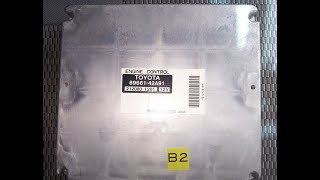
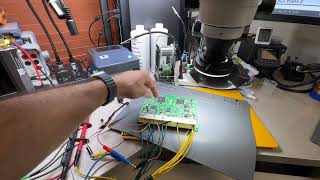
- Faulty Transmission Control Module (TCM) or ECU (Rare But Critical) — A faulty driver circuit within the TCM/ECU fails to send the correct signal. This is a notorious pattern failure on 2004-2005 Toyota RAV4 models, requiring ECU repair rather than transmission replacement. 🎬 Watch: How this ECU repair saves thousands on Toyota RAV4s.
Symptoms

- Harsh, Banging, or Jerky Shifting — The transmission slams into gear with a violent jolt instead of shifting smoothly, especially during the 1-2 or 2-3 upshift.
- Vehicle Enters 'Limp Mode' / Fails to Upshift — The transmission locks into a single gear (usually 2nd or 3rd) to prevent further damage, severely limiting speed and making highway driving impossible.
- Delayed Gear Engagement — A 2-3 second delay occurs when shifting from Park to Drive or Reverse before the transmission engages and the vehicle moves.
- Check Engine Light On — The PCM illuminates the MIL and stores the P0776 code in memory.
- Transmission Slipping or Flaring (also visible on scanner) — Engine RPMs suddenly spike during acceleration without a corresponding increase in vehicle speed, as if the transmission briefly popped into neutral.
- Transmission Overheating (also visible on scanner) — Constant slipping generates excessive friction heat, triggering a transmission temperature warning light and producing a distinct burnt fluid smell.
Diagnostic Flowchart
Tap your situation to follow the diagnostic path that matches what you're seeing on this code.
Common Fixes & Costs
- Transmission Fluid and Filter Change — Parts: $75-$200, Labor: $150-$350, ~1.5 hr book time (Intermediate)
- Replace Pressure Control Solenoid 'B'
— Parts: $100-$300, Labor: $250-$600, ~3 hr book time
(Advanced)
: OEM 24225825, 29541896 (Alt: Rostra 52-0534)
: OEM 35220-33020 (Solenoid SL2) (Alt: Denso, Rostra) - Replace Transmission Valve Body
— Parts: $600-$1,500, Labor: $400-$800, ~4.5 hr book time
(Professional)
: OEM 31705-28X2B (Jatco JF016E) (Alt: Remanufactured units (programming required))
: OEM 24264346 (6T40 TEHCM) (Alt: Sonnax GM6T70-1E) - Repair or Replace Faulty ECU/TCM
— Parts: $800-$1,500, Labor: $150-$300, ~2 hr book time
(Professional)
: OEM 89661-42822 (2004-2005 RAV4) (Alt: Flagship One (FS1) Remanufactured) - Full Transmission Rebuild or Replacement — Parts: $2,000-$4,000, Labor: $1,500-$3,000, ~12 hr book time (Professional)
DIY vs Professional
- Transmission Fluid and Filter Change — Beginner:
Tools: Socket set, drain pan, funnel, torque wrench, new fluid, new filter. - Replace Pressure Control Solenoid 'B' — Beginner:
Tools: Socket set, torque wrench (in-lbs), snap ring pliers, vehicle-specific repair manual. - Replace Transmission Valve Body — Beginner:
Tools: Advanced hand tools, professional scan tool for post-installation programming. - Repair or Replace Faulty ECU/TCM — Beginner:
Tools: Basic hand tools, professional scan tool with J2534 pass-thru capabilities.
Used vs. New Parts: Buying Guide
When a used part is worth it: A used valve body or TCM from a low-mileage donor vehicle is cost-effective for older cars. Never buy a single used solenoid, as the labor cost to replace it outweighs any parts savings.
Donor-vehicle mileage cap: roughly under 60000 miles for the part to have meaningful remaining life.
Donor quality checklist:
- Verify the donor VIN to confirm compatibility and check for related TSBs.
- Obtain a history report to ensure the donor wasn't scrapped for transmission failure.
- Ensure all electrical connectors on the valve body are intact and corrosion-free.
Decision logic:
- If The part is a single solenoid → Always buy new. The part cost is low, and the risk of a used solenoid failing is too high.
- If The part is a complete valve body for a vehicle over 100k miles on a tight budget → A warrantied used part from a reputable salvage yard is a reasonable choice.
- If The vehicle is a known problem model (Nissan CVT, GM wave plate) → Buy a new or professionally remanufactured part updated to correct the original design flaw.
Warranty tradeoff: Used parts carry a 30-90 day parts-only warranty. New aftermarket parts offer 1-year warranties. New OEM parts carry a 1-year/12,000-mile warranty.
Worst-case if a used part fails: $600-$1200 if a used valve body fails, primarily due to repeat labor and fluid costs.
What Happens If You Wait — Timeline
- 0-1 month (0-500 miles): Code P0776 sets. Driver notices occasional harsh 2-3 shifts or a slight delay engaging Drive. Slipping is minimal. (MPG impact: 0-5%% · Added cost: $0-$50)
- 1-3 months (500-2,000 miles): Shifting becomes consistently harsh. Transmission slips noticeably during acceleration. Fluid darkens and smells burnt due to heat from slipping clutches. (MPG impact: 5-10%% · Added cost: $200-$500)
- 3-6 months (2,000-5,000 miles): Sustained slipping generates significant metal debris. Valve body passages clog, and the vehicle enters 'limp mode' frequently. Clutch packs suffer permanent damage. (MPG impact: 10-15%% · Added cost: $1,500-$2,500)
- 6+ months (5,000+ miles): Catastrophic failure. The transmission no longer shifts, slips severely, or grinds. A full rebuild or replacement is the only option. (MPG impact: 15-25%+% · Added cost: $4,000-$7,000+)
Cost of Not Fixing It
- 0-1 Month (0-500 miles): Decreased fuel economy and increasingly harsh shifts. Drivability is compromised, but internal damage remains minimal. (Added cost: $0)
- 1-3 Months (500-2,000 miles): Sustained slipping generates extreme heat, burning the fluid and glazing internal clutch packs. The repair escalates from a solenoid swap to a minor rebuild. (Added cost: $1,500-$2,500)
- 3+ Months (2,000+ miles): Catastrophic internal failure. Slipping clutches shed metal debris, destroying the valve body, oil pump, and planetary gears. A full replacement is required. (Added cost: $4,000-$7,000+)
Diagnosis Steps

- Check Transmission Fluid Level and Condition
Park on a level surface with the engine at operating temperature. Fluid must be at the 'FULL' mark, bright red, and smell sweet. Dark, brown, or glittery fluid confirms severe contamination and internal wear.
Tools: Rag, gloves, flashlight (Beginner) - Scan Codes and Review Live Data
Use a professional scanner to confirm P0776 and check for electrical codes (P0965). Monitor live transmission data PIDs: compare 'PCS B Commanded Pressure' against 'PCS B Actual Pressure' to verify the hydraulic failure.
Tools: OBD-II scanner with live data capability (Beginner) - Test Solenoid Electrical Resistance
Disconnect the transmission harness. Use a multimeter set to Ohms (Ω) to measure the solenoid coil resistance at the connector pins. Expect 10-30 ohms for GM or 5.0-5.6 ohms for Toyota. Infinite resistance confirms a dead solenoid.
Tools: Multimeter, vehicle-specific wiring diagram (Intermediate) - Inspect Wiring and Connectors
Visually inspect the harness from the TCM to the transmission case. Look for melted insulation near the exhaust. Disconnect the main plug and clean any corroded or pushed-out pins.
Tools: Flashlight, electrical contact cleaner (Intermediate) - Drop the Transmission Pan for Visual Inspection
Drain the fluid and remove the pan. Inspect the magnet. Light grey sludge is normal; large metal chunks or thick clutch material confirms a catastrophic internal failure requiring a full rebuild.
Tools: Socket set, drain pan, gasket scraper (Advanced) - Inspect the Valve Body and Solenoid
With the pan off, inspect the valve body for sludge buildup or clogged screens. Remove the 'B' solenoid and bench-test it by applying 12V power to listen for a crisp 'click'.
Tools: Socket set, 12V power source, jumper wires (Advanced) - [PRO TIP] Perform a Commanded Pressure Test
Connect transmission pressure gauges to the test ports. Use a bi-directional scanner to command solenoid 'B' on and off. If pressure does not rise to specification, it confirms a hydraulic fault in the valve body.
Tools: Bi-directional scan tool, transmission pressure gauge set (Professional) - [PRO TIP] Back-Probe the Solenoid Circuit
Back-probe the signal wire at the TCM connector. Verify the TCM sends the correct Pulse Width Modulation (PWM) signal (cycling 0V to 12V) during an active test. A missing signal confirms a faulty TCM.
Tools: Oscilloscope or graphing multimeter, back-probe kit (Professional)
When This Code Triggers (Freeze-Frame Conditions)
- Engine Coolant Temp: 180-200°F (82-93°C) (The engine has reached full operating temperature.)
- RPM: 1500-2500 RPM (During light to moderate acceleration or steady-state cruising when a gear shift is expected.)
- Engine Load: 30-60% (The engine is under a moderate load, such as climbing a slight incline or accelerating onto a highway.)
- Vehicle Speed: 35-55 mph (56-88 km/h) (Occurs during highway driving when the transmission attempts a 2-3 or 3-4 upshift or torque converter lockup.)
Related Codes
- P0700 — A generic request code from the TCM telling the PCM to turn on the Check Engine Light. It confirms a specific transmission code like P0776 is stored.
- P0777 — The opposite of P0776, indicating Solenoid 'B' is 'Stuck On'. P0776 causes slipping, while P0777 causes excessively harsh, bone-jarring shifts.
- P0965 — Points specifically to an electrical circuit problem for Solenoid 'B'. If paired with P0776, the root cause is electrical (wiring or coil). If P0776 appears alone, the cause is mechanical or hydraulic.
- P2714 — Pressure Control Solenoid 'D' Performance. Seeing P0776 alongside P2714 indicates massive internal debris (like a broken wave plate) has clogged multiple solenoid circuits simultaneously.
Climate & Environmental Factors
- Cold Weather: Thick, cold transmission fluid exacerbates a mechanically sticking solenoid. If P0776 sets consistently in the cold, it points to a mechanical valve body issue or a calibration error requiring a TCM software update.
- High Temperature: High ambient heat breaks down transmission fluid faster, creating sludge that clogs solenoids. Heat also severely worsens slipping symptoms.
How to Talk to a Mechanic About This Code
Say this: "I have a P0776 code on my vehicle. I've already checked the fluid level and condition. I'd like you to focus on testing the 'B' solenoid's electrical resistance and commanded pressure, and check for any related TSBs before recommending a major repair."
This directs the technician toward a logical diagnostic path rather than jumping to a transmission replacement. It also prevents them from charging you for the simple fluid check you've already done.
Avoid saying:
- 'My car is shifting weird.'
- 'Just fix the P0776 code.'
- 'My transmission is probably toast, right?'
Questions to ask before authorizing the repair:
- What was the result of the solenoid resistance test and the commanded pressure test?
- Did you find any metal debris in the transmission pan?
- For Nissan CVTs: Did you inspect the belt and pulleys with a borescope for scoring?
- For GM 6-speeds: Have you ruled out a broken wave plate?
- What is the warranty on the parts and labor for this repair?
Where to Take It: Dealer vs Independent vs Chain
- Dealer:
Recommended for warranty work or specific TSB-related issues where dealer-only software is required.
Best for: Vehicles under powertrain warranty or covered by a special coverage program., Diagnosing manufacturer-specific quirks like Toyota RAV4 ECU failures or Mazda TCM updates., Repairs on late-model Nissan CVTs where specific tools are mandatory.
Downsides: Highest labor rates., Defaults to recommending a full transmission replacement as it is faster and more profitable. (Typical cost: +50% vs. baseline) - Chain Shop:
AVOID for P0776. The risk of misdiagnosis or being sold an unnecessary transmission is extremely high.
Best for: Selling you a transmission fluid flush, which is often the wrong first step.
Downsides: Technician skill is highly variable., High pressure to meet sales quotas leads to misdiagnosis and upselling. (Typical cost: -10% vs. baseline)
When to Walk Away From the Repair
If the estimated repair cost exceeds 50% of the car's current private-party value, seriously consider selling or trading in the vehicle.
- Car worth $8000, fix is $4500: Walk away. The repair cost is over 50% of the car's value. This is a classic money pit scenario.
- Car worth $15000, fix is $2200: Fix it. The repair is well below the 50% threshold and provides several more years of reliable service.
- Car worth $4000, fix is $3500: Walk away immediately. The repair costs almost as much as the car is worth.
What Scan Tool You Need for This Code
Minimum: A scanner that reads manufacturer-specific transmission codes and views OEM-level live data PIDs for the transmission.
A basic code reader only shows the P0776 code. It cannot show critical live data like commanded vs. actual solenoid pressure, making it impossible to determine if the cause is electrical or mechanical.
Budget: Ancel BD310 / Motopower MP69033 (~$60) — These basic readers confirm the code exists but lack the ability to access specific OEM transmission PIDs needed to properly diagnose P0776.
Mid-range: Innova 5610 / Foxwell NT604 Elite (~$250) — Reads OEM-specific transmission codes and displays critical live data PIDs like solenoid command states and fluid temperature.
Professional: Autel MaxiCOM MK808S / XTOOL D7 (~$450-600) — Provides full bi-directional control. This allows you to command the 'B' solenoid on and off to see if it responds, and performs the post-repair transmission relearn procedure.
Rent vs buy: A rental scanner from an auto parts store lacks bi-directional control. If diagnosing this yourself, buy a mid-range or professional-level scanner.
How to Clear the Code After You Fix It
- Reconnect battery.
- Use an OBD-II scan tool to erase the P0776 code from the TCM memory.
- Perform a transmission adaptive pressure relearn procedure using a bi-directional scanner.
Drive cycle (~30 minutes): Start with a cold engine. Idle for 3 minutes. Drive in stop-and-go traffic for 15 minutes, ensuring shifts through all gears. Drive on the highway at 55 mph for 10 minutes to allow torque converter lock-up. Cool completely and repeat.
Readiness monitors affected: Catalyst Monitor, Evaporative System Monitor, Oxygen (O2) Sensor Monitor
Before emissions retest: drive at least 100 miles to fully set monitors.
Watch out for:
- Clearing the code without fixing the mechanical issue guarantees it returns immediately.
- Skipping the transmission relearn procedure causes continued harsh shifting even with a brand new solenoid.
- Disconnecting the battery erases readiness monitors, causing an instant emissions test failure.
Will This Fail Emissions / State Inspection?
Yes — this code typically fails an OBD-II emissions inspection.
- California: P0776 causes an automatic smog check failure. The Check Engine Light must be off and readiness monitors set to 'Ready' to pass.
- New York: An active P0776 code is an automatic failure during the OBD-II scan portion of the NYS inspection.
- Texas: In emissions-testing counties, a vehicle with an active P0776 code fails the OBD inspection immediately.
Most Commonly Affected Vehicles

- Nissan Rogue, Altima, Sentra, Kicks, Juke (2013-2021) — P0776 is a severe code indicating imminent CVT failure. Nissan TSBs require a borescope inspection of the CVT belt. If scored, a full transmission replacement is mandatory.
- Chevrolet / GM Equinox, Silverado, Malibu, Traverse, Acadia (2008-2020) — Widespread in 6T40, 6T45, 6T70, and 6T75 transmissions. The root cause is a broken 3-5-R wave plate sending debris into the solenoids. Covered under GM Special Coverage 14404B.
- Toyota RAV4 (2004-2005) — P0776 is a known pattern failure of the Engine Control Unit (ECU), not the transmission. The ECU must be repaired or replaced.
- Ford Focus, Fusion, F-150, Explorer (2009-2020) — Common in 6F35 or 6R80 transmissions. On F-150s, check the molded lead frame connector for fluid intrusion before replacing solenoids.
- Honda Accord, Civic, Odyssey, CR-V (2006-2017) — Often resolved by replacing the external solenoid pack and performing a 3x drain-and-fill with Honda DW-1 fluid.
- Mazda Mazda3, CX-5 (2012-2016) — On early SkyActiv-Drive transmissions, P0776 is erroneously triggered by a software logic flaw. A TCM software update resolves the code without hardware replacement.
Manufacturer-Specific Notes
- Nissan: On CVT models, P0776 is a code red. Per Nissan TSBs, technicians must remove the valve body and inspect the CVT belt with a borescope. Any scoring mandates a multi-thousand dollar transmission replacement.
- General Motors (GM): In 6-speed automatics, P0776 is a classic symptom of a broken 3-5-Reverse wave plate fragmenting and clogging the valve body. GM issued Special Coverage 14404B extending the warranty for this specific failure.
- Toyota: For 2004-2005 RAV4s, a manufacturing defect in the ECU's solenoid driver circuit triggers P0776. The fix is repairing the ECU, not touching the transmission.
- Mazda: On 2012-2014 SkyActiv transmissions, P0776 is triggered by a software logic flaw. A dealership must apply a TCM software update to resolve the code.
Real Owner Stories
2017 Nissan Rogue at 107K miles - The 'Easy Fix' Attempt
While stopped at a red light, the transmission failed to engage. The owner restarted the car to move, and a scan revealed code P0776.
Outcome: The fluid change successfully resolved the slipping and limp mode. The P0776 code did not return, proving the solenoid was merely sticking due to dirty fluid.
Lesson: Always start with the simplest fix. If the fluid is old, a drain-and-fill sometimes unsticks a solenoid and restores function without requiring expensive hard parts.
2016 Nissan Rogue at 75K miles - A Misdiagnosis Story
The engine RPMs fluctuated wildly during acceleration. A scan revealed P0776 alongside P17F0 (CVT Judder).
Outcome: Dropping the pan revealed heavy metallic debris. A borescope inspection of the CVT pulleys showed deep scoring marks. The CVT belt was destroyed, and a $4,500 transmission replacement was required.
Lesson: On Nissan CVTs, P0776 is a symptom of a larger failure. Never replace a valve body without inspecting the internal belt for scoring, or you will waste money on a doomed transmission.
2008 Saturn VUE at 92K miles - The Unusual Root Cause
The vehicle experienced severe slipping and triggered P0776. The owner discovered GM Special Coverage 14404 for a faulty 3-5-R wave plate.
Outcome: The root cause was a fractured wave plate sending metal through the valve body. The repair was fully covered under the 10-year/120,000-mile special warranty.
Lesson: For 2007-2009 GM 6-speed models, P0776 guarantees a broken wave plate. Always check your VIN for active warranty extensions before paying out of pocket.
How to Prevent This Code From Triggering
- Regular Transmission Fluid and Filter Changes (Every 30,000 to 60,000 miles.) — Clean fluid prevents the formation of sludge and varnish that causes solenoids to stick and valve bodies to clog. Use a drain-and-fill rather than a high-pressure flush on older vehicles.
- Use the Correct Manufacturer-Specified Fluid (Every fluid change.) — Different transmissions require specific fluid formulations. Using the wrong fluid degrades seals, causes clutch slip, and damages solenoids.
- Install an Auxiliary Transmission Cooler (Once, especially if towing.) — Heat destroys automatic transmissions. An auxiliary cooler lowers operating temperatures by 20-25°F, doubling fluid life and protecting solenoids.
- Address Minor Leaks Immediately (As they occur.) — Driving on low fluid starves the pump and solenoids of necessary pressure, causing slipping and overheating that leads to permanent damage.
Frequently Asked Questions
How much does it cost to fix code P0776?
Costs vary by root cause. A fluid service runs $200-$450, while replacing the solenoid costs $400-$900. Major repairs like a valve body or full rebuild range from $1,000 to over $7,000.
Can I fix P0776 myself?
A DIYer can safely check and change the transmission fluid. However, replacing solenoids or the valve body requires strict cleanliness, pan removal, and software reprogramming. Stop DIY and tow to a transmission specialist if the fluid change doesn't clear the code.
What are the most common mistakes when diagnosing P0776?
The biggest mistake is blindly replacing the solenoid without checking fluid condition or manufacturer TSBs. On Nissans, replacing the valve body without inspecting the CVT belt for scoring guarantees a repeat failure. Always perform a full diagnostic scan with live data first.
Can a bad computer (TCM/ECU) cause a P0776 code?
Yes, a faulty Transmission Control Module (TCM) or Engine Control Unit (ECU) can burn out the internal solenoid driver circuit. This is a documented pattern failure on 2004-2005 Toyota RAV4s. In these cases, repairing or replacing the ECU fixes the code without touching the transmission.
Will changing the transmission fluid fix a P0776 code?
A fluid change only fixes P0776 if the issue is caused by mild contamination just starting to stick the solenoid. If the solenoid has mechanically failed or the valve body is severely clogged, new fluid will not help. Never perform a high-pressure flush on a slipping transmission; stick to a drain-and-fill.
What specific gear shifts does solenoid 'B' control?
Solenoid 'B' typically controls hydraulic pressure for mid-range gear shifts, such as the 2-3 or 3-4 transition. It also manages the torque converter clutch application in some models. A failure manifests as a harsh jolt or slipping during these specific gear changes.
What's the difference between a transmission flush and a fluid change for P0776?
A drain-and-fill replaces about 50% of the fluid, while a machine flush replaces over 95%. For high-mileage transmissions with P0776, a high-pressure flush often dislodges sludge that creates new blockages. Stick to a standard drain-and-fill to safely introduce clean fluid.
Key Takeaways
- P0776 is a high-severity code indicating a stuck pressure control solenoid; driving more than 100 miles with this code risks escalating a $400 repair into a $4,000+ transmission replacement.
- Always start diagnosis by checking the transmission fluid; replacing dark, burnt fluid and the filter resolves the issue in roughly 20% of cases without replacing hard parts.
- If you drive a 2013-2021 Nissan CVT or a 2008-2020 GM 6-speed, P0776 often points to catastrophic internal failures (scored belts or broken wave plates) requiring a $3,500+ rebuild.
- Never replace the transmission or valve body without first testing the solenoid's electrical resistance, which should typically read between 5.0 and 30.0 ohms depending on the manufacturer.
Helpful Videos

The information in this article is provided for general reference and educational purposes only. Vehicle specifications, procedures, and part compatibility can vary by production date, trim level, and region. Always consult your vehicle's factory service manual and verify part numbers before purchasing or performing repairs. Safety-critical components such as airbags, seat belts, and braking systems should be installed by a qualified professional.
- 🎬 Helpful Videos
- What Does P0776 Mean?
- Can I Drive With P0776?
- Common Causes
- Symptoms
- Diagnostic Flowchart
- Common Fixes & Costs
- DIY vs Professional
- Used vs. New Parts: Buying Guide
- What Happens If You Wait — Timeline
- Cost of Not Fixing It
- Diagnosis Steps
- When This Code Triggers (Freeze-Frame Conditions)
- Related Codes
- Climate & Environmental Factors
- How to Talk to a Mechanic About This Code
- Where to Take It: Dealer vs Independent vs Chain
- When to Walk Away From the Repair
- What Scan Tool You Need for This Code
- How to Clear the Code After You Fix It
- Will This Fail Emissions / State Inspection?
- Most Commonly Affected Vehicles
- Manufacturer-Specific Notes
- Real Owner Stories
- 2017 Nissan Rogue at 107K miles - The 'Easy Fix' Attempt
- 2016 Nissan Rogue at 75K miles - A Misdiagnosis Story
- 2008 Saturn VUE at 92K miles - The Unusual Root Cause
- How to Prevent This Code From Triggering
- Frequently Asked Questions
- How much does it cost to fix code P0776?
- Can I fix P0776 myself?
- What are the most common mistakes when diagnosing P0776?
- Can a bad computer (TCM/ECU) cause a P0776 code?
- Will changing the transmission fluid fix a P0776 code?
- What specific gear shifts does solenoid 'B' control?
- What's the difference between a transmission flush and a fluid change for P0776?
- Key Takeaways
- 🎟️ Get 5% Off