

OBD-II Code P0777: Pressure Control Solenoid 'B' Stuck On
The Ultimate Guide to What P0777 Means, Why It Triggers, and How to Fix It
- Stop driving immediately; continuing with code P0777 forces maximum hydraulic pressure that destroys transmission clutches within 100 to 500 miles.
- Check your transmission fluid first, as dark, burnt, or low fluid causes 40% of P0777 codes by physically jamming the solenoid.
- Expect harsh, banging shifts and 'limp mode' (stuck in 2nd or 3rd gear) until the underlying electrical short or mechanical jam is resolved.
- Test the solenoid's electrical resistance (typically 15-30 ohms) before replacing parts to avoid turning a $200 wiring fix into a $2,000 valve body replacement.
What Does P0777 Mean?

Your car's Powertrain Control Module (PCM) detected a critical failure in the automatic transmission: Pressure Control Solenoid 'B' is stuck in the 'on' position. This solenoid acts as a precise electronic valve, regulating the hydraulic fluid pressure required to shift gears smoothly. When stuck open, it floods the transmission circuit with excessive pressure, causing harsh shifting, binding, and overheating. The PCM triggers P0777 when it commands the solenoid to reduce pressure, but sensor data confirms the pressure remains dangerously high.
Technical definition: The SAE/OBD-II definition is "Pressure Control Solenoid 'B' Stuck On". The Transmission Control Module (TCM) detects that the pressure control solenoid 'B' failed to close when commanded, resulting in sustained, unregulated hydraulic pressure within a specific transmission circuit.
Can I Drive With P0777?
No — Do Not Drive. Do not drive with code P0777. The 'stuck on' condition forces continuous maximum hydraulic pressure, causing rapid transmission overheating and destroying internal clutches and seals. Continuing to drive turns a $300 solenoid replacement into a catastrophic failure requiring a $3,500+ transmission rebuild within 100 to 500 miles. Stop driving immediately and tow the vehicle to prevent irreversible damage.
Common Causes

- Low, dirty, or contaminated transmission fluid (Very Common) — The most frequent cause. Abrasive sludge and metal shavings in old fluid physically jam the solenoid's internal plunger, preventing it from closing and trapping pressure in the circuit.
- Faulty Pressure Control Solenoid 'B' (Very Common) — The solenoid fails electrically (internal short circuit) or mechanically (weakened return spring).
- Damaged wiring or connectors (Common) — A wire in the transmission harness shorts to a 12V power source, keeping the solenoid energized constantly. Corrosion or melted insulation on the exhaust are typical culprits.
- Clogged transmission filter (Common) — A blocked filter restricts fluid flow, causing erratic pressure spikes and allowing bypassed debris to circulate and jam the solenoid.
- Faulty transmission valve body (Less Common) — A blockage, crack, or stuck mechanical valve within the valve body's hydraulic maze traps pressure in the solenoid's circuit, mimicking a stuck-on solenoid.
- Incorrect transmission fluid type (Less Common) — Using non-OEM fluid alters viscosity and frictional properties, causing incorrect hydraulic pressure readings that trigger the code.
- Faulty Transmission Pump (Rare) — A failing pump produces erratic pressure spikes that the TCM misinterprets as a stuck solenoid.
- Defective Transmission Control Module (TCM) (Rare) — A faulty output driver in the TCM sends constant voltage to the solenoid, forcing it to stay on.
Symptoms

- Harsh, banging, or delayed shifts — The vehicle slams into gear with a violent jerk or hesitates significantly before shifting due to unregulated maximum line pressure.
- Transmission stuck in one gear (Limp Mode) — The TCM forces the transmission into a single safe gear (usually 2nd or 3rd) to prevent catastrophic internal damage, severely limiting speed.
- Transmission slipping or engine flare — The engine revs up between shifts without increasing vehicle speed, caused by high pressure engaging and disengaging clutches erratically.
- Transmission overheating — Constant high pressure generates extreme friction. You will notice a burning smell or a transmission temperature warning light on the dash.
- Check Engine Light is on — The Malfunction Indicator Lamp (MIL) illuminates immediately when the code is set.
- Decreased fuel economy — Inefficient power transfer and limp mode operation cause a noticeable 10-15% drop in fuel mileage.
Diagnostic Flowchart

Tap your situation to follow the diagnostic path that matches what you're seeing on this code.
Common Fixes & Costs
- Replace Transmission Fluid and Filter — Parts: $50-$120, Labor: $100-$250, ~1.5 hr book time (Intermediate)
- Replace Pressure Control Solenoid 'B' — Parts: $100-$350, Labor: $150-$450, ~3 hr book time (Advanced)
- Repair Damaged Wiring or Connectors — Parts: $10-$60, Labor: $100-$300, ~2 hr book time (Intermediate)
- Replace Transmission Valve Body — Parts: $300-$1200, Labor: $300-$1000, ~4.5 hr book time (Professional)
- Replace or Reprogram TCM/PCM — Parts: $200-$1200, Labor: $100-$250, ~1.5 hr book time (Professional)
DIY vs Professional
- Replace Transmission Fluid and Filter — Beginner:
Tools: Socket set, drain pan, funnel, OEM fluid, new filter/gasket, torque wrench. - Repair Damaged Wiring or Connectors — Beginner:
Tools: Multimeter, wire strippers, crimpers, heat shrink tubing, vehicle-specific wiring diagram. - Replace Pressure Control Solenoid 'B' — Beginner:
Tools: Socket set, drain pan, torque wrench (in-lb), snap-ring pliers. - Replace Transmission Valve Body — Beginner:
Tools: Advanced toolset, bidirectional scan tool for post-installation TCM relearn. - Replace or Reprogram TCM/PCM — Beginner:
Tools: Manufacturer-specific diagnostic and programming equipment.
Used vs. New Parts: Buying Guide
When a used part is worth it: A used valve body is only viable if the vehicle is worth less than $4,000 and you need it to run for 1-2 more years.
Donor-vehicle mileage cap: roughly under 70000 miles for the part to have meaningful remaining life.
Donor quality checklist:
- Verify the donor vehicle was rear-ended, not scrapped for transmission failure.
- Match the part number exactly.
- Ensure a minimum 30-day warranty.
Decision logic:
- If Vehicle is newer or you plan to keep it for 3+ years → Buy a new OEM or remanufactured valve body. The reliability justifies the cost.
- If Vehicle is over 150K miles and has low resale value → A tested used part minimizes repair cost, but expect a shorter lifespan.
- If The part is a known high-failure item (e.g., Nissan CVT) → Never buy used. Purchase an updated OEM part to avoid repeating the exact same failure.
Warranty tradeoff: Used parts offer 30-90 day warranties covering only the part. Remanufactured units offer 1-3 year warranties.
Worst-case if a used part fails: $500-$1500 in repeated labor costs if the used part fails.
What Happens If You Wait — Timeline
- 0-100 miles: Code P0777 triggers, and the Check Engine Light illuminates. The vehicle experiences immediate harsh shifting or enters 'limp mode', locking into 2nd or 3rd gear. (MPG impact: 5-10%% · Added cost: $0)
- 100-500 miles: Constant high hydraulic pressure generates extreme heat. Transmission fluid burns and loses lubricity. Internal rubber seals harden and clutch plates begin to glaze. (MPG impact: 10-15%% · Added cost: $50-$150 in wasted fuel and degraded fluid.)
- 500-1,000 miles: Burnt fluid destroys the clutch friction material. Hardened seals cause internal pressure leaks. The damage is now mechanical and irreversible, requiring major component replacement. (MPG impact: 15-25%% · Added cost: $1,500-$3,500 (Requires valve body replacement or transmission rebuild).)
- 1,000+ miles: Catastrophic failure. Clutch packs are destroyed, the valve body is warped, and the pump is damaged. The vehicle loses all forward and reverse gears. (MPG impact: N/A (Vehicle undrivable)% · Added cost: $3,500-$5,000+ (Requires complete transmission replacement).)
Cost of Not Fixing It
- Immediate (0-100 miles): Violent shifting and limp mode engagement. Fuel economy drops by 10-15%. High risk of being stranded. (Added cost: $0, but high risk of breakdown.)
- Short Term (100-500 miles): Constant high pressure overheats and burns the fluid. Clutches glaze and rubber seals harden, accelerating internal wear. (Added cost: $1,800-$3,500 (Damage escalates from a solenoid fix to a full transmission rebuild).)
- Long Term (500+ miles): Catastrophic transmission failure. Burnt clutches and a warped valve body render the vehicle undrivable. (Added cost: $3,500-$5,000+ (Requires complete transmission replacement).)
Diagnosis Steps
- Check Transmission Fluid Level & Condition
Check the fluid level on the dipstick with the engine running in Park. Healthy fluid is bright red. Dark brown/black fluid that smells burnt confirms severe internal wear. Low fluid causes aeration and false pressure readings.
Tools: Rag, Dipstick (if equipped) (Beginner) - Scan for Codes & Review Freeze Frame Data
Use an OBD-II scanner to confirm P0777. Check for P0778 (Electrical), which must be diagnosed first. Review freeze frame data to identify the vehicle speed and temperature when the fault occurred.
Tools: OBD-II Scanner (Beginner) - Inspect External Wiring and Connectors
Visually inspect the wiring harness leading to the transmission. Look for melted insulation near the exhaust, chafing against the chassis, or green corrosion inside the connector pins.
Tools: Flashlight, Mirror (Intermediate) - Test Solenoid Coil Resistance
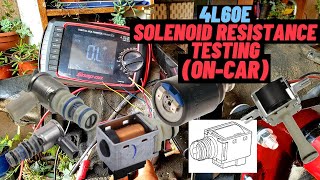
Disconnect the transmission harness. Measure the resistance across the pins for Solenoid 'B'. Compare to OEM specs (typically 15-30 ohms). A reading of 0 ohms (short) or OL (open) confirms a dead solenoid.
Tools: Digital Multimeter, Vehicle-specific repair manual (Advanced) - Test the Solenoid Circuit for Short to Power
With the key on and engine off, probe the solenoid control wire on the harness side. It should read 0V. A reading of 12V confirms a short to power in the harness, which is forcing the solenoid to stay on.
Tools: Digital Multimeter, Vehicle-specific wiring diagram (Advanced) - Perform a Bidirectional Scan Tool Test
Use an advanced scan tool to command Solenoid 'B' on and off while monitoring 'Transmission Fluid Pressure'. If pressure remains high despite the command, the issue is mechanical (stuck solenoid or valve body).
Tools: Advanced (bidirectional) Scan Tool (Advanced) - Inspect the Valve Body and Internal Components
If electrical tests pass, drop the transmission pan. Inspect for excessive metal shavings on the magnet. Remove the valve body to check for stuck valves or blocked hydraulic passages.
Tools: Socket set, Drain pan, Gasket scraper, Torque wrench (Professional) - Analyze the Solenoid Waveform with an Oscilloscope
Connect an oscilloscope to the control wire. A healthy TCM sends a clean Pulse-Width Modulated (PWM) square wave. A flat line at battery voltage confirms a failed TCM driver.
Tools: Oscilloscope, Wiring diagram (Professional)
When This Code Triggers (Freeze-Frame Conditions)
- Engine Coolant Temp: 180-210°F (Vehicle is fully warmed up, thinning the fluid and exposing internal pressure leaks.)
- RPM: 1500-3000 RPM (Occurs during light to moderate acceleration when the TCM commands a gear shift.)
- Engine Load: 25-70% (The engine is under moderate load, requiring precise line pressure adjustments.)
- Vehicle Speed: 30-55 mph (Cruising speeds where a gear change is commanded but pressure fails to release.)
Related Codes
- P0700 — A generic informational code indicating the TCM detected a fault (P0777) and requested the Check Engine Light. Always diagnose the specific P0777 code.
- P0776 — Pressure Control Solenoid 'B' Stuck Off. The exact opposite of P0777. P0776 causes insufficient pressure (slipping), while P0777 causes excessive pressure (harsh shifts).
- P0775 — A generic fault code for Solenoid 'B'. P0777 is more specific, confirming the solenoid is physically or electrically stuck open.
- P0778 — Indicates an electrical circuit fault (short or open) in Solenoid 'B'. A short to power (P0778) directly causes the solenoid to stay stuck on (P0777). Diagnose P0778 first.
Climate & Environmental Factors
- High Ambient Temperature: Hot weather accelerates transmission fluid breakdown. Degraded fluid loses lubricity and forms sludge, which physically jams the solenoid plunger and triggers the code.
- Cold Weather: Extreme cold thickens transmission fluid, causing sluggish shifts until operating temperature is reached, but it rarely causes a permanent 'stuck on' code.
How to Talk to a Mechanic About This Code
Say this: "I have a P0777 code, 'Pressure Control Solenoid B Stuck On,' with harsh shifting. Please start by checking the fluid condition and inspecting the external wiring harness for shorts. I also want you to use a bidirectional scan tool to command the solenoid on and off to test its function before quoting parts."
Directs the technician to perform a logical diagnostic sequence (fluid, wiring, component test) rather than immediately quoting a $2,000 valve body replacement. Establishes you as an informed customer.
Avoid saying:
- 'My car is shifting funny, can you fix it?'
- 'The check engine light is on, just tell me what it costs.'
- 'I think I need a new transmission.'
Questions to ask before authorizing the repair:
- What were the results of the fluid and wiring inspection?
- Did you test the solenoid's resistance, and what was the exact Ohm reading?
- Did the solenoid respond correctly when commanded via the scan tool?
- Are you confident the issue is the solenoid itself, or the valve body?
- What is the warranty on parts and labor?
Where to Take It: Dealer vs Independent vs Chain
- Dealer:
Recommended only if your vehicle has a CVT/DSG or is covered by a warranty extension. Their proprietary software is required for post-repair relearns.
Best for: Vehicles under powertrain warranty., Nissan or Subaru CVTs with known warranty extensions., VW/Audi DSG transmissions requiring Mechatronic replacement.
Downsides: Highest labor rates ($150-$250/hr)., Will default to replacing the entire valve body rather than a single solenoid. (Typical cost: +50% vs. baseline) - Independent Shop:
The best value, provided you choose a shop that specializes in transmissions and possesses bidirectional diagnostic equipment.
Best for: Out-of-warranty vehicles with conventional automatics., Electrical diagnostics (wiring shorts).
Downsides: May lack the dealer-level scan tool required for TCM relearns on modern vehicles. (Typical cost: +0% vs. baseline) - Chain Shop:
AVOID for diagnosis and repair. P0777 requires specialized electrical and hydraulic knowledge.
Best for: Free initial code scans., Basic fluid and filter changes.
Downsides: Lack advanced transmission diagnostic equipment., High pressure to upsell unnecessary flushes. (Typical cost: -10% vs. baseline)
When to Walk Away From the Repair
If the estimated repair cost for P0777 exceeds 50% of your car's private-party market value, sell or scrap the vehicle.
- Car worth $5000, fix is $2800: Walk away. The repair is over 50% of the car's value.
- Car worth $15000, fix is $2200: Fix it. The repair is well under the threshold and restores the vehicle.
- Car worth $3500, fix is $1500: Borderline. Get a second opinion. Only proceed if the rest of the vehicle is in excellent condition.
What Scan Tool You Need for This Code
Minimum: A scanner that reads manufacturer-specific transmission codes and displays live data (fluid temperature, solenoid commanded state).
A $20 code reader cannot view live TCM data or command the solenoid on/off, making it impossible to distinguish between a wiring short and a mechanical jam.
Budget: BlueDriver Pro (~$100) — Reads transmission codes and displays basic live data like fluid temperature. Good for initial confirmation.
Mid-range: Foxwell NT510 Elite (~$180) — Provides bidirectional control. Allows you to command Solenoid 'B' on and off directly to test physical functionality, saving hours of diagnostic time.
Professional: Autel MaxiCOM MK808S (~$450) — Offers full bidirectional control and performs the critical transmission adaptation relearns required after replacing a valve body.
Rent vs buy: Buy the Foxwell NT510 Elite. P0777 diagnosis requires bidirectional control to test the solenoid, a feature not available on free auto parts store scanners.
How to Clear the Code After You Fix It
- Use an OBD-II scan tool to clear all diagnostic trouble codes.
- Perform a complete OBD-II drive cycle to allow readiness monitors to run.
- Check for any pending codes after the transmission reaches operating temperature.
Drive cycle (~30 minutes): Cold start (sit for 8+ hours), idle for 3 minutes, drive 15 minutes in stop-and-go city traffic, drive 10 minutes at a steady 55-60 mph on the highway, then let the vehicle cool.
Readiness monitors affected: Comprehensive Component Monitor, Transmission
Before emissions retest: drive at least 50 miles to fully set monitors.
Watch out for:
- Disconnecting the battery clears the code but resets readiness monitors, causing an automatic emissions failure.
- The code returns immediately if the mechanical jam or electrical short was not repaired.
Will This Fail Emissions / State Inspection?
Yes — this code typically fails an OBD-II emissions inspection.
- California: An active P0777 code and illuminated Check Engine Light is an automatic smog check failure.
- New York: The NYS safety/emissions OBD-II scan will automatically fail any vehicle with an active P0777.
- Texas: In emissions-testing counties, P0777 results in an automatic inspection failure.
Most Commonly Affected Vehicles
- Honda Fit, HR-V, Odyssey, Accord (2012-2022) — On CVT models, P0777 refers to the 'driven pulley pressure control solenoid valve'. Low ATF level is the primary cause on 2012-2017 Accords.
- Nissan Altima, Maxima, Rogue, Murano (2005-2024) — Nissan CVTs require full valve body replacement ($1,200-$2,000) because individual solenoids are not sold separately.
- Subaru Outback, Forester, Impreza, Crosstrek (2012-2020) — Caused by internal CVT valve body failure. Subaru issued TSB 16-119-19 for updated valve bodies to prevent fluid aeration.
- Ford Focus, Fiesta, Fusion (2011-2019) — On DPS6 'PowerShift' models, this code points to a seized mechanical clutch fork or failing actuator motor, not a hydraulic solenoid.
- Toyota Camry, Corolla, RAV4 (2002-2015) — Solenoid failure is typically due to age or contaminated fluid. Diagnosis is straightforward on these conventional automatics.
- Chevrolet / GM Silverado, Equinox, Malibu (2007-2024) — GM TSB 23-NA-115 lists P0777 as a code requiring valve body inspection or replacement on newer models.
- Volkswagen / Audi Jetta, Golf, Passat, A3 (2008-2017) — On DSG transmissions, P0777 indicates a failure of the Mechatronic unit, requiring a highly expensive full assembly replacement.
Manufacturer-Specific Notes
- Honda: Honda has issued TSBs involving TCM software updates to correct shifting logic and prevent false P0777 codes after a repair. Check with a dealer for VIN-specific updates.
- Nissan: Nissan has issued multiple warranty extensions for CVT transmissions. Before paying for a $2,000 valve body replacement, contact a dealer with your VIN to check for extended coverage.
- Subaru: Subaru extended the CVT powertrain warranty to 10 years/100,000 miles for many 2010-2018 models. A P0777 diagnosis and valve body replacement is often fully covered.
- Ford: For 2011-2016 Fiesta and 2012-2016 Focus models, P0777 symptoms are tied to the DPS6 PowerShift class-action settlement. Owners may be eligible for free repairs or cash compensation.
- Volkswagen/Audi: Solenoids are integrated into the DSG Mechatronic unit. P0777 guarantees an internal failure of this unit, requiring a complete, expensive assembly replacement.
Real Owner Stories
2012 Jeep Patriot (CVT) at 188K miles
P0777 code appeared with harsh shifting. Owner replaced the 'B' solenoid and transmission fluid.
What they tried:
- Replaced the pressure control solenoid 'B'.
- Performed a transmission fluid and filter change.
Outcome: The car drove normally for one week, then lost Drive and Reverse entirely. The transmission required a complete replacement.
Lesson: On high-mileage CVTs, replacing a single solenoid rarely fixes the root cause. The initial fluid change temporarily restored pressure, but underlying mechanical wear in the valve body caused total failure shortly after.
2017 Nissan Rogue (CVT)
Delayed shifting when hot, accompanied by P0777 and P0776.
What they tried:
- Sought professional diagnosis from a Nissan Master Technician.
Outcome: The technician borescoped the CVT chain for wear. Finding no chain damage, they replaced the entire valve body assembly (Nissan does not sell the solenoids separately) and reprogrammed the TCM.
Lesson: For modern Nissan CVTs, individual solenoids are non-serviceable. The standard repair is a full valve body replacement and TCM relearn, requiring dealer-level software.
2005 Acura TL
Car was undrivable, stuck in limp mode with code P0777.
What they tried:
- Replaced pressure control solenoid 'B' based solely on the code definition.
Outcome: The repair failed. The Check Engine Light returned immediately with a blinking 'D' light. The actual issue was a shorted wiring harness sending constant voltage to the solenoid.
Lesson: Never replace parts based on the code name alone. A shorted wire keeps a perfectly good solenoid 'stuck on'. Always test the electrical circuit first.
How to Prevent This Code From Triggering
- Change automatic transmission fluid and filter (Every 30,000-60,000 miles) — Removes abrasive metal shavings and clutch material that physically jam the solenoid's plunger and clog valve body passages. Use the 30,000-mile interval for CVTs or vehicles used for towing.
- Use strictly OEM-specified transmission fluid (Every fluid change) — Modern transmissions require precise fluid friction modifiers. Universal fluids cause incorrect hydraulic pressure, overheating, and premature solenoid failure.
- Install an auxiliary transmission cooler (Once (for trucks, SUVs, or hot climates)) — Maintains optimal fluid temperature (around 175°F). Excess heat breaks down fluid viscosity, leading to the sludge buildup that causes stuck solenoids.
Frequently Asked Questions
What does 'stuck on' actually mean for a solenoid?
A solenoid is an electromagnetic valve. 'Stuck on' means it is continuously allowing maximum hydraulic pressure to flow. This happens because an electrical short is constantly powering it, or debris is physically jamming its internal plunger open.
Can I just clear the code and keep driving?
No. Clearing the code only turns off the dash light temporarily. The mechanical or electrical fault remains, and driving with unregulated maximum line pressure will destroy your transmission clutches within a few hundred miles.
What are the most common misdiagnosis mistakes for P0777?
The biggest mistake is replacing the solenoid without testing the electrical circuit. A shorted wire in the harness will keep a brand-new solenoid stuck on. Always test fluid condition and wiring before buying parts.
I replaced the solenoid and fluid, but the P0777 code came back. What now?
If the code returns, verify you used the exact OEM fluid. Next, inspect the wiring harness for an intermittent short to power. If both pass, the problem is an internal valve body blockage or a failed TCM driver.
Is a P0777 an electrical or a mechanical problem?
It can be either. It is frequently a mechanical jam caused by dirty fluid, but is just as easily caused by an electrical short in the wiring harness or the TCM itself.
Can a bad battery cause a P0777 code?
No. While low voltage causes bizarre electrical glitches, P0777 is triggered by the TCM detecting a specific, sustained high-pressure fault. A bad battery will not cause a solenoid to stick open.
What does pressure control solenoid 'B' actually do?
It regulates the hydraulic pressure applied to specific clutch packs to achieve different gear ratios. When stuck on, the clutch it controls applies too harshly or fails to release, causing violent shifts and binding.
How can dirty transmission fluid cause a part to get 'stuck'?
Degraded fluid fills with microscopic metal shavings and clutch material. This abrasive sludge clogs the precise passages in the valve body and physically wedges the solenoid's moving plunger open.
Key Takeaways
- Stop driving immediately; continuing with code P0777 forces maximum hydraulic pressure that destroys transmission clutches within 100 to 500 miles.
- Check your transmission fluid first, as dark, burnt, or low fluid causes 40% of P0777 codes by physically jamming the solenoid.
- Expect harsh, banging shifts and 'limp mode' (stuck in 2nd or 3rd gear) until the underlying electrical short or mechanical jam is resolved.
- Test the solenoid's electrical resistance (typically 15-30 ohms) before replacing parts to avoid turning a $200 wiring fix into a $2,000 valve body replacement.
Helpful Videos

The information in this article is provided for general reference and educational purposes only. Vehicle specifications, procedures, and part compatibility can vary by production date, trim level, and region. Always consult your vehicle's factory service manual and verify part numbers before purchasing or performing repairs. Safety-critical components such as airbags, seat belts, and braking systems should be installed by a qualified professional.
- 🎬 Helpful Videos
- What Does P0777 Mean?
- Can I Drive With P0777?
- Common Causes
- Symptoms
- Diagnostic Flowchart
- Common Fixes & Costs
- DIY vs Professional
- Used vs. New Parts: Buying Guide
- What Happens If You Wait — Timeline
- Cost of Not Fixing It
- Diagnosis Steps
- When This Code Triggers (Freeze-Frame Conditions)
- Related Codes
- Climate & Environmental Factors
- How to Talk to a Mechanic About This Code
- Where to Take It: Dealer vs Independent vs Chain
- When to Walk Away From the Repair
- What Scan Tool You Need for This Code
- How to Clear the Code After You Fix It
- Will This Fail Emissions / State Inspection?
- Most Commonly Affected Vehicles
- Manufacturer-Specific Notes
- Real Owner Stories
- 2012 Jeep Patriot (CVT) at 188K miles
- 2017 Nissan Rogue (CVT)
- 2005 Acura TL
- How to Prevent This Code From Triggering
- Frequently Asked Questions
- What does 'stuck on' actually mean for a solenoid?
- Can I just clear the code and keep driving?
- What are the most common misdiagnosis mistakes for P0777?
- I replaced the solenoid and fluid, but the P0777 code came back. What now?
- Is a P0777 an electrical or a mechanical problem?
- Can a bad battery cause a P0777 code?
- What does pressure control solenoid 'B' actually do?
- How can dirty transmission fluid cause a part to get 'stuck'?
- Key Takeaways
- 🎟️ Get 5% Off