

OBD-II Code P0748: Pressure Control Solenoid 'A' Electrical Malfunction
The Ultimate 2026 Guide to What P0748 Means, Why It Triggers, and Exactly How to Fix It
- P0748 indicates a hard electrical failure in Pressure Control Solenoid 'A', locking your transmission into a single gear to prevent catastrophic damage.
- Replacing the faulty solenoid resolves this code in 70% of cases, typically costing between $400 and $750 for parts and labor.
- Driving more than 100 miles in limp mode overheats the transmission fluid, turning a $500 electrical fix into a $3,000+ complete transmission rebuild.
- Never authorize a full transmission replacement without first verifying the solenoid's resistance (typically 5.0-5.6 ohms) and checking the internal wiring harness for shorts.
What Does P0748 Mean?

P0748 signifies the Powertrain Control Module (PCM) or Transmission Control Module (TCM) detected a critical electrical fault in the 'A' pressure control solenoid circuit. This solenoid acts as a precise hydraulic valve, regulating transmission fluid pressure for smooth gear changes. When an open circuit, short circuit, or abnormal voltage occurs, the computer loses line pressure control. This causes harsh shifting, forces the vehicle into limp mode, and risks severe internal transmission damage.
Technical definition: The SAE/OBD-II definition is "Pressure Control Solenoid 'A' Electrical". The PCM or TCM detected a voltage or resistance reading in the solenoid's electrical circuit outside the manufacturer's specified range. This is a continuous electrical fault, distinct from mechanical performance codes.
Can I Drive With P0748?
no_recommended. Driving is not recommended. Your vehicle is likely in 'limp mode,' stuck in 2nd or 3rd gear to prevent catastrophic failure. While you can drive a short distance to a repair shop, continued operation rapidly overheats the fluid and destroys clutch packs. This turns a $500 electrical repair into a $3,000+ complete transmission rebuild.
Common Causes

- Faulty Pressure Control Solenoid 'A' (Very Common) — The solenoid's internal coil windings develop an open or short circuit from age, heat cycles, and vibration, causing complete electrical failure.
- Damaged External Wiring or Connectors (Common) — The external transmission wiring harness is exposed to heat and road debris. Wires fray, melt, or short to ground, while oil contamination in the main connector disrupts the signal.
- Faulty Internal Transmission Harness (Common) — Modern transmissions use a separate wiring harness inside the fluid pan. Constant exposure to hot transmission fluid makes this harness brittle, causing open or short circuits directly at the solenoid.
- Low or Contaminated Transmission Fluid (Common) — Low fluid starves the system of hydraulic pressure. Old fluid containing clutch material clogs the solenoid's internal screens and the main filter, causing the solenoid to stick and eventually burn out electrically.
- Poor Electrical Grounds (Less Common) — A corroded or loose ground strap for the TCM or transmission housing causes erratic voltage, triggering false solenoid codes.
- Faulty Transmission Control Module (TCM) (Rare) — The internal driver circuit responsible for sending voltage to the solenoid burns out. This is frequently misdiagnosed and requires confirmation via an oscilloscope before replacement.
- Internal Mechanical Transmission Failure (Rare) — A failed high-pressure pump or blocked hydraulic passage within the valve body prevents the solenoid from functioning, even if electrically sound.
Symptoms

- Harsh, Banging, or Erratic Shifting — The vehicle slams into gear. Shifts are delayed, unpredictable, or slip entirely.
- Transmission in Limp Mode (Fail-Safe) — The transmission locks into a single gear (typically 2nd or 3rd) to prevent damage, severely limiting acceleration and top speed.
- Check Engine and Transmission Warning Lights On — The malfunction indicator lamp (MIL) illuminates, often accompanied by a transmission-specific warning light or gear icon.
- Decreased Fuel Economy — Stuck in a lower gear without torque converter lock-up, the engine runs at high RPMs, drastically reducing MPG.
- Engine Stalling When Stopping — The torque converter fails to disengage correctly, stalling the engine when coming to a halt.
- Transmission Overheating (also visible on scanner) — Incorrect fluid pressure causes slipping clutches and excess friction. A burning smell from the fluid is highly noticeable.
Diagnostic Flowchart
Tap your situation to follow the diagnostic path that matches what you're seeing on this code.
Common Fixes & Costs
- Replace Pressure Control Solenoid 'A'
— Parts: $50-$250, Labor: $150-$500, ~3.5 hr book time
(Professional)
: OEM 46313-3B030 (Alt: Rostra 52-0543)
: OEM 31939AA191 (Alt: Duralast TCS00500) - Repair or Replace Wiring Harness
— Parts: $50-$300, Labor: $100-$400, ~2.5 hr book time
(Intermediate)
: OEM AL3Z-7G276-B (Alt: Dorman 609-040) - Transmission Fluid and Filter Change — Parts: $50-$120, Labor: $100-$250, ~1.5 hr book time (Intermediate)
- Replace Transmission Control Module (TCM) — Parts: $600-$900, Labor: $200-$300, ~2 hr book time (Professional)
- Transmission Rebuild or Replacement — Parts: $2000-$4000, Labor: $800-$1500, ~10 hr book time (Professional)
Used vs. New Parts: Buying Guide
When a used part is worth it: Buying a used valve body or solenoid pack makes sense only on older vehicles (>150k miles) where a new part exceeds the car's value and the budget is extremely tight.
Donor-vehicle mileage cap: roughly under 80000 miles for the part to have meaningful remaining life.
Donor quality checklist:
- Verify the donor vehicle's VIN for exact part compatibility.
- Obtain proof of the donor vehicle's mileage.
- Ensure the part comes with a 30-90 day warranty.
Decision logic:
- If Vehicle is less than 8 years old or has under 100k miles → Buy a new OEM or high-quality aftermarket solenoid. The risk of premature failure outweighs the savings.
- If Vehicle is over 10 years old and the repair budget is under $500 → A used solenoid from a low-mileage donor is a reasonable gamble.
- If The specific part is known for a high failure rate (e.g., Ford molded lead frame) → Always buy a new, updated version of the part.
Warranty tradeoff: Used parts offer a 30-90 day part-only warranty and do not cover repeat labor costs. New OEM parts carry a 12-month/12,000-mile warranty.
Worst-case if a used part fails: $400-$800 if a used solenoid fails, representing the repeat labor cost to drop the pan again.
What Happens If You Wait — Timeline
- Immediate (First Drive): Check Engine Light illuminates. The TCM detects the electrical fault, defaults line pressure to maximum, and logs P0748. The vehicle enters limp mode, locking the transmission in 2nd or 3rd gear. (MPG impact: 15-30%% · Added cost: $0 (but risk of a $100-$300 tow bill))
- 0-100 miles: Driving in limp mode at incorrect RPMs causes rapid fluid temperature increase. High, uncontrolled line pressure puts extreme stress on clutch drums and planetary gear sets. (MPG impact: 20-40%% · Added cost: $50 in wasted fuel, plus initial signs of fluid breakdown.)
- 100-500 miles: Sustained high temperatures burn the transmission fluid, stripping its lubricating properties. Internal clutch packs slip and burn, releasing friction material into the fluid and damaging the torque converter. (MPG impact: 20-40%% · Added cost: $600-$1500 for a torque converter replacement.)
- 500+ miles: Catastrophic failure. Burnt clutch material circulates through the transmission, clogging the valve body and filter. The transmission overheats severely, destroying seals and warping metal parts. (MPG impact: N/A (Vehicle is likely undrivable)% · Added cost: $2,500-$5,000+ for a complete rebuild.)
Cost of Not Fixing It
- Immediate (0-100 miles): Vehicle is stuck in limp mode with harsh shifting, causing extreme stress on drivetrain components. Fuel economy drops significantly. (Added cost: Negligible, but risk of tow bill ($100-$300).)
- Short-Term (100-500 miles): Transmission fluid overheats rapidly, leading to burnt fluid and accelerated wear on internal clutches and seals. (Added cost: $600-$1500 for a potential torque converter replacement.)
- Long-Term (500+ miles): Catastrophic internal transmission failure. Clutch packs are destroyed, and metal debris contaminates the entire hydraulic system. (Added cost: $2,500-$5,000+ for a complete transmission rebuild.)
Diagnosis Steps

- Scan for Codes and Review Live Data
Use an advanced OBD-II scanner to confirm P0748 and check for other codes. Review live transmission data, comparing 'Commanded PCS Pressure' vs. 'Actual PCS Pressure'. If the TCM commands a change but actual pressure doesn't respond, it confirms an electrical or solenoid failure. Look for abnormal 'Line Pressure Solenoid Current' readings (e.g., 0%).
Tools: Advanced OBD-II Scanner (Beginner) - Check Transmission Fluid Level and Condition
With the engine warm and running in Park, check the dipstick. Fluid should be at the 'FULL' mark, bright red, and translucent. Low, dark brown, or burnt-smelling fluid indicates degradation or internal damage. Note: Many modern vehicles require a specialized temperature-based fluid check procedure.
Tools: Rag or paper towel, Vehicle-Specific Repair Manual (Beginner) - Inspect External Wiring, Connectors, and Grounds
Inspect the wiring harness running to the transmission for melted plastic, frayed wires, or rodent damage. Disconnect the main transmission connector and check for corrosion, bent pins, or oil intrusion. Verify main ground straps from the battery to the chassis are tight and clean.
Tools: Flashlight, Electrical Contact Cleaner, Socket Set (Intermediate) - Test the Solenoid's Resistance at the Connector
Using a multimeter and a wiring diagram, measure the resistance of the solenoid's circuit at the transmission's main connector. A reading of 0 ohms indicates a short circuit, while an infinite (OL) reading indicates an open circuit.
Tools: Digital Multimeter, Vehicle-Specific Repair Manual (Advanced) - [PRO TIP] Compare Resistance Against Specs
Compare your measured resistance to the manufacturer's specification. For many Toyota and Kia/Hyundai models, expected resistance is 5.0 to 5.6 ohms at 68°F. A reading outside this precise range confirms solenoid failure, even if it isn't a complete open or short.
Tools: Digital Multimeter, Vehicle-Specific Repair Manual (Advanced) - Check for Power and Ground at the Connector
Identify the power supply and ground pins for solenoid 'A' at the transmission connector. With the key on, one pin must show battery voltage (approx. 12V). The other pin is the ground-side control from the TCM. This confirms the external wiring is intact.
Tools: Digital Multimeter, Vehicle-Specific Repair Manual (Advanced) - [PRO TIP] Active Solenoid Command Test
With the transmission connector unplugged, connect a test light to the power and control pins for solenoid 'A'. Have an assistant start the engine and shift from Park to Drive. The test light should illuminate as the TCM commands the solenoid. No signal points to a faulty TCM or external wiring issue.
Tools: Test Light or Multimeter, Wiring Diagram, Assistant (Advanced) - [PRO TIP] Scope Test the TCM Driver
Back-probe the solenoid 'A' control wire at the TCM connector with an oscilloscope. When the transmission shifts, you should see a square wave pattern (Pulse Width Modulation). A flat line indicates a failed driver circuit inside the TCM.
Tools: Oscilloscope, Wiring Diagram (Professional) - Inspect the Transmission Pan and Valve Body
If all external tests pass, the fault is internal. Remove the transmission pan to inspect for excessive metal debris. This provides direct access to test resistance directly at the pressure control solenoid, isolating it from the internal wiring harness.
Tools: Socket set, Drain pan, New Gasket, New Fluid, Torque Wrench (Professional)
When This Code Triggers (Freeze-Frame Conditions)
- Engine Coolant Temp: 180-210°F (The engine must be at full operating temperature for the TCM to run this diagnostic test.)
- RPM: 1200-2800 RPM (The code sets during steady-state cruising or light acceleration, rarely at idle.)
- Engine Load: 25-65% (Occurs under normal driving load as the TCM attempts to modulate line pressure for a shift.)
- Vehicle Speed: 30-60 mph (Triggers at cruising speeds when the transmission is commanded to shift or lock the torque converter.)
Related Codes
- P0745 — A general performance code for the same solenoid. If you have P0745, the circuit is electrically fine, but the solenoid is mechanically stuck or there is a hydraulic blockage.
- P0746, P0747, P0749 — P0746 indicates the solenoid is stuck off, P0747 indicates it's stuck on, and P0749 points to an intermittent electrical fault. P0748 indicates a constant, hard electrical fault.
- P0778 — The identical electrical fault code for Pressure Control Solenoid 'B'. Seeing P0748 and P0778 together strongly suggests a shared power wire, faulty ground, or failed TCM.
- P0740 — Refers to a malfunction in the Torque Converter Clutch (TCC) solenoid circuit. They often share an internal wiring harness that fails from heat exposure.
Climate & Environmental Factors
- High Heat: Extreme ambient heat or heavy towing increases transmission fluid temperature. Heat increases electrical resistance in the solenoid's coil windings, pushing a marginal solenoid outside its operational range and triggering P0748.
- Cold Weather: Transmission fluid thickens significantly when cold, straining the pump. Moisture inside connectors can freeze, causing intermittent open circuits until the engine bay warms up.
- High Humidity / Moisture: Heavy rainfall accelerates corrosion on electrical connectors and ground points. Moisture intrusion in the main transmission harness connector shorts pins, leading directly to electrical fault codes.
How to Talk to a Mechanic About This Code
Say this: "Hello, my car is showing a P0748 code and is shifting harshly. I'd like to schedule a diagnostic appointment. Please start by checking the wiring harness, connectors, and testing the pressure control solenoid circuit's resistance and voltage before quoting a major internal repair."
This signals to the shop that you understand P0748 is an electrical code. It directs them to perform low-cost electrical checks first, preventing a premature recommendation for a new transmission.
Avoid saying:
- 'My transmission is slipping, I think it needs to be replaced.'
- 'My check engine light is on, can you just fix it?'
- 'The car is banging into gear, just do whatever you think is best.'
Questions to ask before authorizing the repair:
- What was the resistance reading (in ohms) for the pressure control solenoid 'A' circuit?
- Did you find voltage and a good ground at the transmission connector for the solenoid circuit?
- Is there any visible damage, corrosion, or oil contamination on the external wiring harness?
- If you are recommending a solenoid replacement, did the internal wiring harness test good for continuity?
- What is the warranty on the parts and labor for this specific repair?
Where to Take It: Dealer vs Independent vs Chain
- Dealer:
Recommended only if the vehicle is under warranty or has a known, dealer-specific fix.
Best for: Vehicles under powertrain warranty., Known manufacturer-specific issues covered by a TSB or warranty extension (e.g., Ford lead frame)., Complex diagnostics on newer European vehicles requiring proprietary tools.
Downsides: Highest labor rates, often 1.5-2x more than independent shops., May default to replacing larger, more expensive assemblies instead of individual components. (Typical cost: +50% vs. baseline) - Independent Shop:
Best fit. A dedicated transmission specialist is equipped to perform detailed electrical diagnostics and is less likely to upsell a full transmission replacement.
Best for: Out-of-warranty vehicles where cost is a major factor., Shops that specialize in transmission repair, possessing deep expertise in these specific systems., Getting a second opinion after receiving a high quote from a dealer.
Downsides: Quality varies. It is crucial to find a shop with ASE-certified technicians specializing in transmissions. (Typical cost: +0% vs. baseline) - Chain Shop:
AVOID. The risk of misdiagnosis and being sold an unnecessary, expensive transmission rebuild is very high.
Best for: Simple maintenance like oil changes or tire rotations.
Downsides: Technicians often lack specialized training for complex transmission diagnostics., Business model encourages upselling, leading to recommendations for complete transmission replacements. (Typical cost: -10% vs. baseline)
When to Walk Away From the Repair
If the repair estimate exceeds 50% of your vehicle's private-party market value (via Kelley Blue Book), sell or trade in the vehicle.
- Car worth $4000, fix is $750: Fix it. This repair is well below the 50% threshold and restores a critical function.
- Car worth $5000, fix is $2800: Walk away. The repair cost is over 50% of the car's value. The initial electrical fault has led to major mechanical damage.
- Car worth $2500, fix is $1500: Walk away. The repair is 60% of the car's value. Sell the car as a 'mechanic special'.
What Scan Tool You Need for This Code
Minimum: A scanner that reads manufacturer-specific transmission codes and displays live data for the Transmission Control Module (TCM).
A basic $20 code reader only shows the P0748 code. It cannot display essential live data PIDs like 'commanded solenoid current' or 'actual line pressure' needed to determine if the fault is the solenoid, wiring, or TCM.
Budget: Launch CR529 (~$40) — Reads and clears generic transmission codes and shows basic live data streams. It lacks the specific PIDs needed for a full diagnosis.
Mid-range: Foxwell NT510 Elite (~$200) — Offers full system diagnostics, including manufacturer-specific transmission codes and live data graphing. It features bidirectional control to actively command the pressure control solenoid.
Professional: Autel MaxiCOM MK808 / MK900BT (~$500-900) — Provides OE-level diagnostics with extensive bidirectional control. It performs advanced functions like ECU coding, necessary if the TCM requires replacement.
Rent vs buy: Auto parts stores offer free loaner tools, but they are often basic readers. Investing in a mid-range scanner with bidirectional capabilities is highly recommended for P0748.
How to Clear the Code After You Fix It
- Reconnect the battery if it was disconnected.
- Use an OBD-II scan tool to formally erase P0748 and related codes.
- Perform a complete transmission drive cycle to verify the repair.
Drive cycle (~20 minutes): Start the engine cold and idle for 3 minutes. Accelerate to 50 mph and hold for 10 minutes. Perform stop-and-go city driving for 10 minutes, ensuring the transmission shifts through all gears. Allow the vehicle to cool down completely.
Readiness monitors affected: Comprehensive Component Monitor
Before emissions retest: drive at least 50 miles to fully set monitors.
Watch out for:
- Disconnecting the battery resets all readiness monitors, causing an immediate emissions test failure.
- The code returns instantly if the underlying electrical fault is not repaired.
Will This Fail Emissions / State Inspection?
Yes — this code typically fails an OBD-II emissions inspection.
- California: A P0748 code causes an automatic smog check failure. A complete OBD-II drive cycle must be performed after repair to set readiness monitors.
- New York: An illuminated Check Engine Light is an automatic failure. Clearing the code just before the test results in a failure due to monitors being 'not ready'.
- Texas: In the 17 counties requiring emissions testing, an active P0748 code fails the OBD-II portion of the inspection.
Most Commonly Affected Vehicles
- Kia/Hyundai Optima, Forte, Rio, Elantra, Sonata, Sorento (2010-2016) — Extremely common in models with the A6MF1/A6GF1 6-speed automatic. Kia issued TSB #TSBTRA051R1 advising technicians to replace the specific solenoid (Part No. 46313-3B030).
- Ford F-150, Mustang, Expedition (2011-2017) — On vehicles with the 6R80 transmission, the internal molded lead frame and its wiring are common failure points due to heat exposure. Covered under Customer Satisfaction Program 19N01.
- Subaru Legacy, Forester, Outback (1999-2009) — Presents with a flashing 'AT OIL TEMP' light. The wiring harness runs in one piece from the valve body up to a connector under the hood, making it susceptible to damage.
- Chevrolet/GMC Silverado, Sierra, Express (2007-2019) — Common on trucks with 6L80/6L90 transmissions that undergo heavy use, where wiring harness damage from heat and vibration is a frequent cause.
- Nissan Altima, Frontier, Pathfinder (2005-2018) — Reported across many Nissan models with RE5R05A transmissions and CVTs, often pointing to a failed solenoid or valve body issue.
- Volkswagen/Audi Golf, Passat, Jetta, A4 (2006-2019) — The issue is frequently linked to the complex mechatronics unit (combined TCM and valve body), requiring expensive replacement.
Manufacturer-Specific Notes
- Hyundai / Kia: For the popular 6-speed automatics (A6MF1), Kia's TSB #TSBTRA051R1 explicitly states to replace the individual solenoid to fix P0748, warning against unnecessary transmission replacement.
- Subaru: A P0748 code is almost always accompanied by a flashing 'AT OIL TEMP' light at startup. The unique wiring harness design, running uninterrupted from the valve body to under the hood, is a known vulnerability.
- Ford: On 6R80 transmissions, the molded plastic lead frame containing the internal wiring becomes brittle and cracks. Ford issued Customer Satisfaction Program 19N01, extending the warranty for this part to 10 years or 150,000 miles.
- Toyota: Defined as an issue with 'Shift Solenoid Valve SL1'. Diagnosis involves precise resistance checks between specific terminals on the ECM connector. The specified resistance is a very tight 5.0 to 5.6 Ω at 68°F.
Real Owner Stories
2012 Kia Optima at 115K miles with P0748
Check Engine Light came on with harsh, banging shifts from 2nd to 3rd gear. The car intermittently went into limp mode.
What they tried:
- A local shop suggested a full transmission rebuild for $3,000+.
- Owner researched Kia TSBs and found #TSBTRA051R1 addressing P0748.
- Took the car to a transmission specialist for a second opinion.
Outcome: The specialist followed the TSB, replaced only the faulty pressure control solenoid (Part #46313-3B030) and the internal wiring harness. Total cost was $650. The harsh shifting was resolved.
Lesson: Always check for manufacturer Technical Service Bulletins (TSBs). For this Kia/Hyundai issue, replacing the solenoid is the known fix, not the entire transmission.
2011 Ford F-150 5.0L at 130K miles
Truck started shifting very hard, triggering the wrench light and code P0748. Symptoms worsened when hot.
What they tried:
- Checked transmission fluid, which was full and clean.
- Tested the external wiring harness and found no visible damage.
- Researched F-150 forums regarding the molded lead frame.
Outcome: The issue was the internal molded lead frame (Ford Part #AL3Z-7G276-B). The plastic frame became brittle from heat, causing an open circuit. Replacing the lead frame resolved the issue for $800 at a dealer.
Lesson: On Ford 6R80 transmissions, P0748 is frequently caused by a failed internal lead frame. Check if your vehicle is covered under Ford's warranty extension (19N01) before paying.
2003 Cadillac CTS 3.2L with 5L40E Transmission
Vehicle experienced extremely hard downshifts. P0748 returned instantly after clearing. Live data showed the EPC solenoid receiving 0 amps.
What they tried:
- Replaced the pressure control solenoid, filter, and fluid, but the problem persisted.
- Tested internal and external wiring harnesses for shorts or opens. Resistance from the TCM connector to the solenoid was correct (4.7 ohms).
- Used a Tech2 scan tool to command the solenoid; it still showed 0 amps.
Outcome: The driver circuit within the Transmission Control Module (TCM) failed. Replacing and reprogramming the TCM fixed the issue.
Lesson: If the solenoid and wiring test perfectly, but a scan tool confirms the module is not sending a command, the TCM is the culprit. This is the final diagnostic step.
How to Prevent This Code From Triggering
- Perform regular transmission fluid and filter changes (Every 30,000 to 60,000 miles) — Clean fluid maintains correct hydraulic properties and prevents abrasive particles from clogging the delicate internal passages of the pressure control solenoids.
- Use only OEM-specified transmission fluid (Every fluid change) — Incorrect fluid types cause chemical breakdown of seals and gaskets within the solenoids and valve body, leading to leaks and pressure loss.
- Install an auxiliary transmission cooler (Once, especially for vehicles used for towing) — Heat is the primary enemy of transmission electronics. An auxiliary cooler keeps fluid temperatures stable, preventing the solenoid's internal coil windings from overheating.
- Protect wiring harnesses from heat and debris (During any under-hood maintenance) — Securing the transmission wiring harness away from hot exhaust components prevents wires from melting or chafing, eliminating common electrical faults.
Frequently Asked Questions
What is the most common mistake when diagnosing P0748?
The most common mistake is replacing the expensive valve body or entire transmission without performing basic electrical tests. An open wire or faulty solenoid is far more common and cheaper to fix.
Can I just clear the P0748 code and keep driving?
No. Because P0748 indicates a hard electrical fault, the code will return almost immediately. Ignoring it leads to severe mechanical transmission damage.
How much does it cost to fix P0748?
Costs range from $150 for a simple wiring repair to $750 for a solenoid replacement. If the Transmission Control Module (TCM) fails, expect to pay over $1,000. A full transmission rebuild, required if you ignore the code, costs $2,000 to $4,000+.
Can low battery voltage cause a P0748 code?
Yes. A weak battery or failing alternator supplies unstable voltage to the vehicle. Sensitive modules like the TCM misinterpret this instability as a circuit fault, triggering a false P0748 code. Always verify your charging system is healthy first.
What's the difference between a shift solenoid and a pressure control solenoid?
A shift solenoid is an on/off switch that directs fluid to engage a specific gear. A pressure control solenoid acts like a dimmer switch, precisely modulating overall hydraulic pressure to ensure smooth shifts.
Can I replace a pressure control solenoid myself?
This is an advanced DIY repair requiring you to drain the fluid, drop the transmission pan, and correctly identify the solenoid on the valve body. You must use a torque wrench and follow a strict temperature-based fluid refill procedure. Due to the high risk of internal contamination, this job is best left to a professional.
What does 'Limp Mode' actually do?
Limp mode is a self-preservation feature controlled by the TCM. When a critical fault like P0748 is detected, the TCM locks the transmission into a single, safe gear (usually 2nd or 3rd). This prevents further shifting damage and allows you to limp to a repair shop.
Key Takeaways
- P0748 indicates a hard electrical failure in Pressure Control Solenoid 'A', locking your transmission into a single gear to prevent catastrophic damage.
- Replacing the faulty solenoid resolves this code in 70% of cases, typically costing between $400 and $750 for parts and labor.
- Driving more than 100 miles in limp mode overheats the transmission fluid, turning a $500 electrical fix into a $3,000+ complete transmission rebuild.
- Never authorize a full transmission replacement without first verifying the solenoid's resistance (typically 5.0-5.6 ohms) and checking the internal wiring harness for shorts.
Helpful Videos
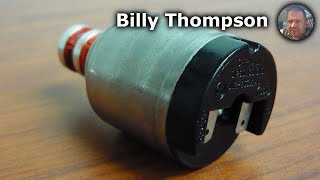

The information in this article is provided for general reference and educational purposes only. Vehicle specifications, procedures, and part compatibility can vary by production date, trim level, and region. Always consult your vehicle's factory service manual and verify part numbers before purchasing or performing repairs. Safety-critical components such as airbags, seat belts, and braking systems should be installed by a qualified professional.
- 🎬 Helpful Videos
- What Does P0748 Mean?
- Can I Drive With P0748?
- Common Causes
- Symptoms
- Diagnostic Flowchart
- Common Fixes & Costs
- Used vs. New Parts: Buying Guide
- What Happens If You Wait — Timeline
- Cost of Not Fixing It
- Diagnosis Steps
- When This Code Triggers (Freeze-Frame Conditions)
- Related Codes
- Climate & Environmental Factors
- How to Talk to a Mechanic About This Code
- Where to Take It: Dealer vs Independent vs Chain
- When to Walk Away From the Repair
- What Scan Tool You Need for This Code
- How to Clear the Code After You Fix It
- Will This Fail Emissions / State Inspection?
- Most Commonly Affected Vehicles
- Manufacturer-Specific Notes
- Real Owner Stories
- 2012 Kia Optima at 115K miles with P0748
- 2011 Ford F-150 5.0L at 130K miles
- 2003 Cadillac CTS 3.2L with 5L40E Transmission
- How to Prevent This Code From Triggering
- Frequently Asked Questions
- What is the most common mistake when diagnosing P0748?
- Can I just clear the P0748 code and keep driving?
- How much does it cost to fix P0748?
- Can low battery voltage cause a P0748 code?
- What's the difference between a shift solenoid and a pressure control solenoid?
- Can I replace a pressure control solenoid myself?
- What does 'Limp Mode' actually do?
- Key Takeaways
- 🎟️ Get 5% Off