

P0722 on 2007-2016 Audi A5: Output Speed Sensor Failure Causes and Fixes
On a 2007-2016 Audi A5, code P0722 almost always points to a failure of the Transmission Output Speed Sensor (G195) or the Mechatronic unit's internal circuitry. This sensor is integrated into the circuit board of the S-Tronic (DL501/0B5) and Multitronic (0AW) transmissions. The repair requires removing the Mechatronic unit to replace the internal circuit board/sensor module, a complex job for a specialist.
- P0722 on a 2007-2016 Audi A5 indicates a total loss of signal from the transmission's output speed sensor (G195).
- The most frequent cause is not an external sensor but an internal failure within the Mechatronic unit (TCU).
- Symptoms are severe and include limp mode, harsh shifting, and flashing PRNDS lights. Driving the vehicle is not recommended.
- Repair is complex and expensive, typically requiring a specialist to remove and rebuild the Mechatronic unit. This is not a beginner-friendly DIY job.
- Do not immediately opt for a full transmission replacement, as a Mechatronic repair is often sufficient and more cost-effective.
What's Unique About the 2007-2016 Audi A5
The 2007-2016 Audi A5 (first generation, Typ 8T/8F) was equipped with several automatic transmission types, most notably the Multitronic CVT (0AW) and the 7-speed S-Tronic (DL501/0B5) dual-clutch. The output speed sensor (G195) is physically integrated into the Mechatronic's internal printed circuit board (PCB), meaning a simple external sensor swap is not possible. On these specific transmissions, the P0722 code is very commonly associated with a failure inside the Transmission Control Unit (TCU), also known as the Mechatronic unit. The failure is often due to poor internal contacts or delamination on the circuit board itself, a known weak point. The repair frequently involves removing and rebuilding the entire Mechatronic unit.
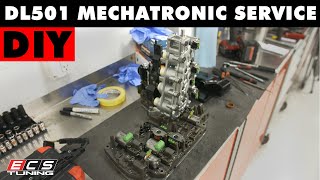
🎬 Watch this overview of the Mechatronic unit removal process.Symptoms You May Notice
- Flashing "PRNDS" indicator on the dashboard
- Vehicle enters "limp mode," often stuck in a single gear
- Harsh, erratic, or delayed gear shifts
- "Transmission Malfunction: you can continue to drive" message on the MMI screen
- Complete loss of drive or inability to select gears, including reverse.
- Check Engine Light is illuminated
- EPC (Electronic Power Control) light may be illuminated.
- Replacing the entire transmission. Often, the issue is confined to the Mechatronic unit, and a full gearbox replacement is unnecessary and extremely expensive. A specialist can often repair the unit for a fraction of the cost.
Most Likely Causes
- Faulty Mechatronic (TCU) Internal Circuitry 🔴 High Probability The Mechatronic units in both Multitronic (0AW) and S-Tronic (DL501) transmissions of this era are known for high failure rates. Heat and vibration cause poor contact areas on the internal circuit boards or delamination of the plastic circuit plates, leading to sensor signal loss.
How to confirm: A professional diagnosis with Audi-specific software (like VCDS or ODIS) is needed to confirm communication faults with the internal G195 sensor. The fault often points directly to the TCU and may be accompanied by other sensor or solenoid codes. Monitoring live data for the output speed sensor will show 0 RPM even when the vehicle is moving.
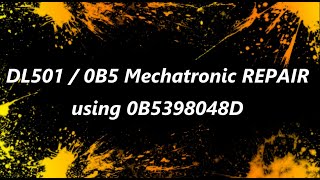
Typical fix: The Mechatronic unit must be removed from the transmission. It is then fitted with a repair kit, which consists of new circuit boards/sensor modules. 🎬 See how to use a repair kit on the circuit board. After reinstallation, the unit must be recalibrated and adapted using diagnostic software.
Est. part cost: $400-$800 for a rebuild kit/service; $1500-$2500 for a new or fully remanufactured unit. - Failed Output Speed Sensor (G195) 🟡 Medium Probability The sensor itself fails, but because it is integrated into the Mechatronic circuit board on the A5's common automatic transmissions, this is not a separate repair. The cause is effectively the same as a Mechatronic circuitry failure.
How to confirm: Diagnosis involves checking for a signal from the sensor using an oscilloscope or advanced scan tool. A reading of 0 RPM while moving confirms the fault is internal to the Mechatronic unit.
Typical fix: The Mechatronic unit must be repaired with a new circuit board/sensor module or replaced entirely.
Est. part cost: Cost is part of the Mechatronic repair kit, typically $400-$800. - Damaged Wiring or Connectors ⚪ Low Probability
How to confirm: Visually inspect the main round transmission wiring harness and connector for corrosion, moisture intrusion, or physical damage. A multimeter can be used to check for continuity between the TCM connector and the transmission.
Typical fix: Repair the damaged section of the wiring harness or replace the corroded connector.
Est. part cost: $50-$150 - Contaminated or Low Transmission Fluid ⚪ Low Probability
How to confirm: Check the level and condition of the transmission fluid (ATF for S-Tronic, CVT for Multitronic). Fluid that is dark, burnt-smelling, or contains excessive metal shavings indicates a problem. Some sources suggest certain oil additives can cause the plastic circuit plates to delaminate, leading to contact loss.
Typical fix: Perform a transmission fluid and filter change. However, if significant debris is present, it often signals a deeper mechanical failure that has already damaged the sensor or Mechatronic unit.
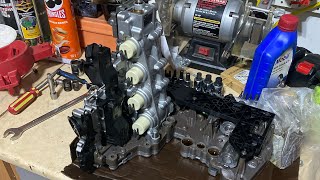
Est. part cost: $200-$400 for fluid and filter service. 🎬 Watch a step-by-step guide to servicing your Audi's Mechatronic unit.
Rare But Worth Checking
- Failed Powertrain Control Module (PCM): This is very uncommon. The Transmission Control Module (TCU/Mechatronic) is far more likely to be the source of the problem than the main engine computer (PCM).
Diagnosis Steps
- Scan for Codes: Use an advanced OBD-II scanner (like VCDS for Audi) to confirm P0722 and any other related transmission codes, like 17106.
- Check Transmission Fluid: Verify the transmission fluid level and condition. Low or contaminated fluid can cause numerous issues and may point to internal wear.
- Inspect External Wiring: Carefully examine the main wiring harness going to the transmission, especially the large round connector. Look for any signs of damage, corrosion, or loose connections.
- Live Data Analysis: Use your scan tool to monitor live data for the output speed sensor (VCDS Measuring Value Block). If it reads 0 RPM while the vehicle is moving, it confirms a lack of signal.
- Professional Diagnosis: Due to the high likelihood of an internal Mechatronic fault, the next step is to take the vehicle to a qualified Audi or transmission specialist. They will perform advanced diagnostics to confirm if the fault is within the Mechatronic unit before recommending its removal and repair.
Parts You'll Likely Need
- Mechatronic Repair Kit
(OEM #0B5398009F)— This is the most common failure. The kit contains the necessary circuit boards/PCBs to replace the failed internal electronics and integrated sensors causing the P0722 code.
Trusted brands: Genuine Audi, Specialist rebuilders like ECU Testing, ACTRONICS
OEM price range: $700-$1200 (for repair kit)
Aftermarket price range: $400-$800 (for rebuild service) - Complete Mechatronic Unit
(OEM #0B5927156K)— Required if the valve body or other non-serviceable parts of the unit are damaged. Much more expensive than a repair kit.
Trusted brands: Genuine Audi
OEM price range: $2000-$3000+
Aftermarket price range: $1500+ - Transmission Output Speed Sensor
(OEM #09G927321B)— Only needed for the very rare cases where the transmission is NOT a Multitronic or S-Tronic and uses an accessible, external sensor. This is not the typical scenario for an A5.
Trusted brands: Bosch, Genuine VW/Audi
OEM price range: $60-$100
Aftermarket price range: $30-$70
Related Codes That Often Appear With This One
- 17106 — This is the VAG-specific equivalent fault code for P0722, meaning "Output Speed Sensor (G195): No Signal". They almost always appear together.
- P0721 — This code indicates "Output Speed Sensor Circuit Range/Performance". It can appear alongside P0722 if the sensor signal is intermittent or implausible before failing completely.
- P179E00 / P179F00 — These codes relate to the transmission range sensor and often appear with other Mechatronic faults, indicating a broader internal electrical failure.
- P0726 — This code for "RPM Signal from ECU, Implausible Signal" can also be logged, indicating a communication breakdown within the powertrain control systems, often stemming from the Mechatronic unit's failure.
Technical Service Bulletins (TSBs) & Recalls
- TSB 2025484/5: Addresses gearbox malfunction messages on S-Tronic DL501 transmissions, often caused by internal Mechatronic circuit board failures.
Platform-Specific Known Issues
- The Multitronic (CVT, code 0AW) and 7-speed S-Tronic (DL501, code 0B5) transmissions used in the 2007-2016 A5 are widely known for Mechatronic unit failures, with P0722 being a classic symptom.
- Audi issued a Technical Service Bulletin (TSB 2025484/5) for the DL501 S-Tronic transmission which addresses a 'Gearbox Malfunction' message and potential Mechatronic unit replacement due to internal circuit board faults.
Mechanic-Grade Diagnostic Values
- DL501 (0B5) Clutch Solenoids (N436, N440) Resistance — expected: 4.8 Ω (± 0.1 Ω) at 25°C. Failure: A reading significantly outside this range indicates a failing solenoid coil.
- DL501 (0B5) Main Pressure Solenoid (N472) Resistance — expected: 4.2 Ω (± 0.1 Ω) at 25°C. Failure: A reading significantly outside this range points to an issue with the main pressure regulating solenoid.
- DL501 (0B5) Transmission Temperature Sensor (G509) Resistance — expected: ~1.13 kΩ at 30°C. Failure: An open or shorted reading indicates a failed temperature sensor, which can cause shifting problems.
- VCDS Live Data - Transmission Output Speed (G195) — expected: Should match vehicle speed.. Failure: Reading remains at 0 RPM while the vehicle is moving.
Scan Tool Commands That Help
- VCDS (VAG-COM): Basic Settings - Group 060: Erase counter for start and stop process — This must be performed with the key on, engine off, before starting the main adaptation sequence after a Mechatronic repair or replacement. It clears old adaptation values.
- VCDS (VAG-COM): Basic Settings - Group 061: Clutch Engagement Point Adaptation — This is a critical step performed with the engine running after a repair. The TCM will physically feel for the clutch kiss points to ensure smooth takeoffs. The process is complete when VCDS reports 'finished correctly'.
- VCDS (VAG-COM): Basic Settings - Distance Sensor Calibration — Performed with the engine running after the clutch adaptation. The transmission will make audible clicking noises as it calibrates the gear position sensors.
- VCDS (VAG-COM): Advanced Measuring Values - ATF Temperature — Used to monitor the transmission fluid temperature before starting adaptations. The procedure must be performed within a specific temperature window, typically 40°C to 60°C, for the adaptations to run successfully.
Wiring & Ground Locations
- Main Transmission Connector — The large, round, multi-pin connector on the side of the transmission housing. It is a twist-lock connector.. This is the primary external electrical connection for the Mechatronic unit. Damage, corrosion, or moisture here can interrupt the output speed sensor signal before it ever reaches the car's wiring harness, mimicking an internal fault.
- G671 — A primary ground point located on the left front cross member of the vehicle.. The Direct Shift Gearbox (DSG) Mechatronic unit shares this ground point. A loose or corroded ground here can cause a variety of electrical issues for the transmission, including implausible signals or communication loss.
- Mechatronic Internal Harness Connectors — Inside the transmission, connecting the two PCB modules to the Mechatronic valve body.. These small connectors and their locking tabs are extremely fragile. Per Audi repair instructions, they are designed to be connected only once. If they are damaged during disassembly, the entire Mechatronic unit may need to be replaced.
Real Owner Repair Stories
- mechanicanswers.co.uk (B8 Audi A5 S-Tronic (DL501/0B5)) — Gearbox malfunction warning, limp mode, harsh shifting.
❌ Tried (didn't work) Initial diagnosis pointed towards an internal transmission fault.
✅ What actually fixed it The owner performed a DIY repair by removing the Mechatronic unit and replacing the two internal printed circuit boards (PCBs) with a repair kit. The detailed guide shows the entire process, confirming the fix addresses the root cause of the electronic failure. - NHTSA ODI #10508693 — An owner of a related Audi model reported that after the check engine light came on, the P0722 code was found, which directed them to a dealer-only repair where they were told the TCM was bad and needed replacing.
OEM Part Supersession History
0B5927156D, 0B5927156E, 0B5927156F, 0B5927156J→0B5927156K— Revisions to the Mechatronic control unit to improve reliability and address common failure points.
Heads up: While later revisions are generally better, all are subject to Component Protection. A new or used unit must be programmed to the vehicle's VIN.Metal ATF pipes inside transmission→Plastic ATF pipes (Part No. 0B5 315 105 TC)— Updated design for serviceability.
Heads up: When performing a Mechatronic repair, Audi dictates that the old metal pipes must be replaced with the new plastic style. The old retaining clip is discarded, but the bolt must be reinstalled.
Model Year Variations Within This Range
- 2007-2012 (Pre-facelift): Early versions of the DL501 S-Tronic transmission are considered more prone to Mechatronic failure. Audi released several TSBs and software updates for these early models to address drivability issues and harsh shifts.
- 2013-2016 (Post-facelift): These models are equipped with revised versions of the DL501 transmission (sometimes referred to as Gen 1.5 or Gen 2). While not immune to failure, reliability is generally improved over the earlier units. The fundamental repair process for a P0722 code remains the same.
Diagnostic Flowchart
Other Known Issues on This Vehicle
Issues unrelated to this code that are worth knowing about as an owner of this generation:
- Excessive Oil Consumption (2.0T TFSI) 🔴 High — Very common on pre-facelift models (approx. 2008-2012). Caused by defective piston rings. Often requires piston/ring replacement. (Ref: Multiple class-action lawsuits were filed regarding this issue.)
- Carbon Buildup on Intake Valves (All FSI/TFSI Engines) 🟠 Medium — Inevitable on all direct-injection engines. Typically requires cleaning every 40,000-60,000 miles to prevent misfires and performance loss.
- Water Pump Failure 🔴 High — Common across all engine types, particularly the 2.0T. The plastic housing can crack, leading to coolant leaks and potential overheating. (Ref: TSB 2071515 / 19 23 44 exists for later models regarding coolant leaks from the pump.)
- Timing Chain Tensioner Failure (1.8T/2.0T TFSI) 🔴 High — A known issue on earlier engines that can lead to catastrophic engine damage if the tensioner fails. An updated tensioner was later released.
- Front Control Arm Bushing Wear 🟠 Medium — The multi-link front suspension has numerous bushings that wear out over time, leading to clunking noises, poor alignment, and uneven tire wear.
Used vs. New Parts: Buying Guide for This Vehicle
When a used part is the smart pick: A used Mechatronic unit is almost never a smart choice for a DIY or independent shop repair. The unit is subject to 'Component Protection,' which links it to the original vehicle's immobilizer. A used unit will not function until this protection is removed and the unit is adapted to the new vehicle, a process that typically requires an authorized Audi dealer with online access to their servers.
Donor-vehicle mileage cap: roughly under 60000 miles for the part to have meaningful remaining life.
What to inspect on the donor part:
- Verify the exact part number of the donor unit matches the required revision.
- Obtain the VIN of the donor car to check its service history, if possible.
- Inspect the main electrical connector for any bent pins, corrosion, or damage to the locking collar.
- Because the failure is electronic and wear-related, a low-mileage donor is critical, but the risk of failure remains high.
OEM-only on this vehicle (don't cheap out):
- Mechatronic Control Unit (TCU)
- Mechatronic Repair Kit (PCB/Circuit Boards)
Aftermarket brands forum-validated for this vehicle:
- ACTRONICS (Remanufacturing service)
- ECU Testing (Remanufacturing service)
Brands owners have reported issues with on this vehicle:
- Unknown/unbranded repair kits from online marketplaces. The quality of the circuit boards and soldering is critical, and failure of a cheap kit can lead to repeating a very labor-intensive job.
Real Owner Stories
Aggregated from forums and TSBs cited above. Mileages and costs reflect what owners reported in those sources.
Audi A5 with Multitronic (CVT) Transmission
Symptoms: Check Engine Light illuminated with code P0722.
What fixed it: The owner's research confirmed the output speed sensor is not separately replaceable, indicating an internal TCM (Mechatronic) failure that requires repair or replacement of the unit.
Source hint: AudiWorld Forums - 'CEL code P0722 - Output Speed Sensor'
Audi A5 with S-Tronic (DL501) Transmission
Symptoms: A 'Gearbox Malfunction' message appeared on the dashboard.
What fixed it: The issue was caused by internal Mechatronic circuit board faults, which required a potential Mechatronic unit replacement to resolve.
Source hint: TSB 2025484/5
Audi TCM Replacement
Symptoms: The check engine light came on with code P0722.
What fixed it: According to NHTSA ODI #10508693, an owner reported that this code directed them to a dealership-only repair where it was determined that the TCM was bad and needed replacing.
Source hint: NHTSA ODI #10508693
Related OBD-II Codes
Frequently Asked Questions
My 2012 Audi A5 is showing a 'Transmission Malfunction' message. Is this related to the P0722 code?
Can I just replace the failed Output Speed Sensor (G195) on my A5 to fix P0722?
Is P0722 a common problem on the Audi A5 with the S-Tronic transmission?
My mechanic used VCDS and said the output speed sensor reads 0 RPM while driving. What does this mean?
What is the typical repair cost for a P0722 fault on a 2007-2016 Audi A5?
Why does the Mechatronic unit fail and cause P0722 on these cars?
Helpful Videos
We Have This Part in Stock



The information in this article is provided for general reference and educational purposes only. Vehicle specifications, procedures, and part compatibility can vary by production date, trim level, and region. Always consult your vehicle's factory service manual and verify part numbers before purchasing or performing repairs. Safety-critical components such as airbags, seat belts, and braking systems should be installed by a qualified professional.
- Audi A5:
- 🎬 Helpful Videos
- 🛍️ Shop This Part
- What's Unique About the 2007-2016 Audi A5
- Symptoms You May Notice
- Most Likely Causes
- Rare But Worth Checking
- Diagnosis Steps
- Parts You'll Likely Need
- Related Codes That Often Appear With This One
- Technical Service Bulletins (TSBs) & Recalls
- Platform-Specific Known Issues
- Mechanic-Grade Diagnostic Values
- Scan Tool Commands That Help
- Wiring & Ground Locations
- Real Owner Repair Stories
- OEM Part Supersession History
- Model Year Variations Within This Range
- Diagnostic Flowchart
- Other Known Issues on This Vehicle
- Used vs. New Parts: Buying Guide for This Vehicle
- Real Owner Stories
- Audi A5 with Multitronic (CVT) Transmission
- Audi A5 with S-Tronic (DL501) Transmission
- Audi TCM Replacement
- Related OBD-II Codes
- Frequently Asked Questions
- 🎟️ Get 5% Off