

P0700 on 2003-2008 Honda Pilot: Transmission Fault Guide
P0700 on a first-generation Honda Pilot is a general alert from the transmission. It's almost always accompanied by a flashing 'D' light and other, more specific transmission codes. The most common causes are failing transmission pressure switches or shift solenoids, which are relatively inexpensive parts to replace. Ignoring this can lead to serious transmission damage.
- P0700 means 'check the transmission computer for more codes.' You cannot diagnose the problem without a scanner that can read TCM codes.
- On the 2003-2008 Pilot, the most likely culprits are failing transmission pressure switches or solenoids, which are affordable parts.
- Always check the transmission fluid level and condition first, and only use Honda-specific ATF.
- Do not immediately assume you need a new transmission. A proper diagnosis of the specific TCM codes can save you thousands of dollars.
- Address this code and the flashing 'D' light immediately to prevent a minor sensor issue from causing major internal damage.
What's Unique About the 2003-2008 Honda Pilot

The 2003-2008 Honda Pilot uses a 5-speed automatic transmission (model designations BYBA, BAYA) that is known for being sensitive. Early models (2003-2004) were particularly prone to issues, leading to a recall (NHTSA ID #10010752) to install an oil jet kit to improve lubrication to the second gear and prevent catastrophic failure. These transmissions are highly susceptible to problems from old or incorrect fluid, and failures of external pressure switches and internal solenoids are very common as they age. Because of these known weaknesses, a P0700 code should be investigated immediately to prevent minor issues from escalating into a complete transmission failure.
Symptoms You May Notice

- Check Engine Light is on
- Flashing 'D' (Drive) indicator light
- Harsh, erratic, or delayed shifting
- Vehicle gets stuck in one gear (usually 2nd or 3rd), known as 'limp mode'
- Shuddering or vibration during acceleration, especially between 35-50 mph (often related to the torque converter)
- Vehicle feels like it has no power or hesitates on acceleration
- Sudden downshifts at highway speed
- Replacing the entire transmission without proper diagnosis. Many P0700 issues on the Pilot are caused by inexpensive external sensors or solenoids. A proper scan of the TCM is essential to avoid unnecessary, costly repairs.
- Assuming a torque converter shudder requires immediate replacement. Sometimes, a series of drain-and-fills with fresh Honda DW-1 ATF can resolve the issue if it's caught early.
Most Likely Causes

- Failed Transmission Fluid Pressure Switch 🔴 High Probability The pressure switches on this transmission are a known weak point and are exposed to heat and vibration, leading to failure over time. There are multiple switches (e.g., for the 2nd, 3rd, and 4th clutch packs) and they are a very frequent cause of transmission codes and the flashing 'D' light.
How to confirm: Scan the TCM for specific pressure switch codes (e.g., P0847 for 3rd clutch, P0872 for 4th clutch). The faulty switch can be tested with a multimeter for proper continuity or by checking for voltage at the connector. Given their low cost and high failure rate, many owners and shops replace them as a first step.
Typical fix: Replace the identified faulty pressure switch. The 3rd and 4th gear switches are located on the exterior front of the transmission case and are relatively easy to access from the driver's side wheel well. Always use a new crush washer with the new switch. It is common practice to replace the 2nd, 3rd, and 4th switches at the same time.
Est. part cost: $30-$90 per switch - Failed Shift Solenoid or Clutch Pressure Control Solenoid 🔴 High Probability Solenoids control the flow of fluid to engage gears. They can fail electrically or get clogged and stuck from contaminated fluid, which is common in these transmissions if not serviced regularly.
How to confirm: Scan the TCM for specific solenoid codes (e.g., P0750, P0753, P0758, etc.). The resistance of the solenoid can be tested with a multimeter to see if it's within the manufacturer's specified range (typically 12-25 Ohms for many Honda solenoids).
Typical fix: Replace the faulty solenoid. Some are external and easy to access (like the linear solenoid pack on top of the transmission), while others are located under a side cover or on the internal valve body.
Est. part cost: $50-$200 per solenoid or solenoid pack - Low, Burnt, or Incorrect Transmission Fluid 🟡 Medium Probability These Honda transmissions are extremely sensitive to fluid level and condition. Using anything other than genuine Honda ATF (DW-1, or the older Z1) can cause shifting problems, shuddering, and solenoid issues.
How to confirm: Check the transmission fluid dipstick for level and condition. The engine should be fully warmed up, then turned OFF. Check the fluid within 60-90 seconds of shutting the engine off. The fluid should be red, not brown or black, and should not smell burnt. If the level is low, there is a leak.
Typical fix: Perform a 'drain and fill' (or multiple) with Honda DW-1 ATF. A single drain and fill only replaces about 3.5 quarts of the total fluid. A series of 3 drain-and-fills is a common procedure to replace most of the old fluid. A full 'flush' is often discouraged on high-mileage transmissions that haven't been regularly serviced.
Est. part cost: $40-$120 for fluid for multiple drain-and-fills - Torque Converter Clutch Failure ⚪ Low Probability Wear and tear, especially exacerbated by poor fluid condition, can lead to torque converter issues, often felt as a shudder. While more common on later generations, it can still occur on first-gen models.
How to confirm: Scan for code P0740 or P0741. A common symptom is a noticeable shudder or vibration at highway speeds (40-60 mph) as the converter attempts to lock up. An advanced scan tool can monitor TCC slip RPM to confirm the failure.
Typical fix: In some cases, a full fluid exchange with genuine Honda ATF can resolve minor shuddering. However, a persistent P0741 code often indicates the need for a new torque converter, which is a major repair requiring transmission removal.
Est. part cost: $200-$500 for the part, plus significant labor
Rare But Worth Checking
- Faulty Transmission Control Module (TCM): While rare, the TCM itself can fail. This is usually suspected only after all other possibilities (sensors, solenoids, wiring) have been ruled out. A key symptom can be the P0700 code appearing with no other accompanying transmission codes.
- Wiring Harness Issue: A short or open in the wiring harness between the PCM, TCM, and transmission components can cause various codes. This can be caused by physical damage, corrosion at connectors, or even rodent damage.
- Internal Transmission Failure: Unfortunately, on high-mileage first-generation Pilots, P0700 can be the first sign of serious internal wear (clutch packs, gears). This was a known issue on early 2003-2004 models before a recall was issued to improve lubrication. Metal shavings in the transmission fluid are a clear sign of this.
- Engine Performance Issues: In some Honda models, manufacturer service bulletin #A25-044 notes that a rich air/fuel mixture fouling spark plugs can cause the PCM to misread sensor resistance, potentially triggering P0700 alongside misfire codes like P0300.
Diagnosis Steps
- Confirm the symptom: Check for a flashing 'D' light on the instrument cluster. This is the primary indicator of a transmission-specific fault.
- Scan for Codes: Use a scan tool capable of reading codes from the Transmission Control Module (TCM). A basic engine code reader will only show P0700 and miss the crucial underlying codes.
- Record All Codes: Record all codes from the TCM. The P0700 is just the messenger; the other codes (e.g., P0741, P0847) point to the actual problem component.
- Check Transmission Fluid: With the engine warm, park on a level surface and turn the engine OFF. Check the fluid level on the dipstick within 60 to 90 seconds. The fluid should be between the marks, red in color, and not smell burnt.
- Inspect Component and Wiring: Based on the specific codes found, locate the corresponding component (pressure switch, solenoid). Inspect the wiring and connectors for any signs of damage, corrosion, or loose connections.
- Test the Component: For a pressure switch code, test the switch with a multimeter. For a solenoid code, test the solenoid's resistance (often 12-25 ohms).
- Inspect Fuses: If multiple, seemingly unrelated electrical codes are present, inspect fuses. A shorted sensor elsewhere (like an O2 sensor) can sometimes blow a shared fuse that powers transmission components.
- Check for Mechanical Failure: If fluid is dark brown/black and contains visible metal shavings, this indicates significant internal mechanical wear, and a transmission rebuild or replacement is likely necessary.
Parts You'll Likely Need

- 3rd Clutch Transmission Fluid Pressure Switch
(OEM #28600-P7Z-003)— A very common failure point on this transmission that triggers code P0847. It has been superseded by part number 28610-RKE-004.
Trusted brands: Honda (OEM), Standard Motor Products, Gearspeed
OEM price range: $60-$90
Aftermarket price range: $30-$50 - 4th Clutch Transmission Fluid Pressure Switch
(OEM #28600-P7W-003)— Another very common failure point that triggers code P0872. Often replaced along with the 3rd gear switch.
Trusted brands: Honda (OEM), Standard Motor Products
OEM price range: $60-$90
Aftermarket price range: $30-$50 - 2nd Clutch Transmission Fluid Pressure Switch
(OEM #28600-RAY-003)— Also a common failure, though slightly less frequent than the 3rd/4th switches. It has been superseded by part number 28600-RKE-004.
Trusted brands: Honda (OEM), Standard Motor Products
OEM price range: $60-$90
Aftermarket price range: $30-$50 - Honda Genuine DW-1 Automatic Transmission Fluid
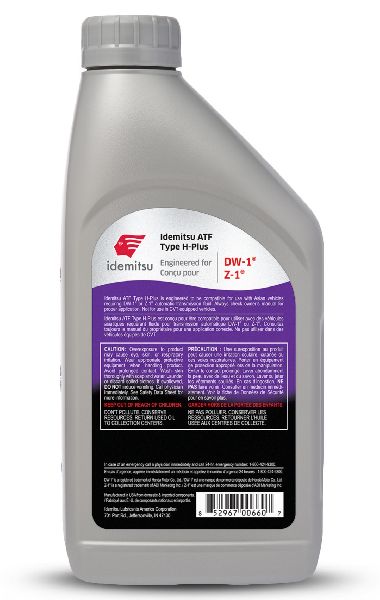
(OEM #08200-9008)— The correct fluid is essential. Using non-OEM fluid is a common cause of shifting issues. Multiple drain-and-fills are often needed.
Trusted brands: Honda (OEM)
OEM price range: $10-$15 per quart
Aftermarket price range: N/A
Related Codes That Often Appear With This One
- Flashing 'D' Light — This is Honda's standard indicator for a detected transmission fault.
- P0730 — Incorrect Gear Ratio. This indicates the transmission is slipping, often a result of a failing pressure switch or solenoid.
- P0741 — Torque Converter Clutch Circuit Performance or Stuck Off. Points directly to a problem with the torque converter lock-up system.
- P0847 / P0848 — 3rd Clutch Transmission Fluid Pressure Switch Circuit Low/High. A very common code pointing directly to the 3rd gear pressure switch.
- P0872 / P0873 — 4th Clutch Transmission Fluid Pressure Switch Circuit Low/High. Another very common code pointing to the 4th gear pressure switch.
- P1740 — Manufacturer-specific code for 4th Clutch Pressure Switch Failure. This is a Honda-specific code that reinforces the diagnosis of a failed pressure switch.
- P0716 — Input/Turbine Speed Sensor Circuit Range/Performance. An owner reported this code alongside P0700 in NHTSA ODI #11451395, noting that even dealerships can sometimes struggle to pinpoint the exact cause.
- P0705 — Transmission Range Sensor Circuit Malfunction. NHTSA ODI #11174984 describes a vehicle where P0700, P0705, and P0740 were all present simultaneously, leading to a confirmed transmission failure.
Technical Service Bulletins (TSBs) & Recalls
- NHTSA ID: #10010752 (supersedes 04-021) — Safety Recall: Automatic Transmission Second Gear Inspection — A recall was issued for 2003-2004 models due to heat buildup that could cause second gear to chip or break, potentially locking the transmission. The fix involved installing an oil jet kit to improve lubrication. This is a critical piece of history for the early models of this generation.
- NHTSA ID: #10013608 — Replenishing ATF on Vehicles with Automatic Transmission Oil Jet Kits — A service news bulletin from October 2004 detailing the proper procedure for fluid service on vehicles that had the recall work (oil jet kit) performed.
- NHTSA ID: #10013844 — Transmission Solenoid Replacement Criteria — A bulletin from September 2004 providing guidance to technicians on when to replace transmission solenoids, indicating this was a known issue early on.
- Bulletin #A25-044 — This bulletin notes that for some Honda models, engine-related issues like fouled spark plugs can cause the PCM to misread sensor data, resulting in P0700 appearing alongside engine codes like P0300 or P0172.
Platform-Specific Known Issues
- A recall was issued for 2003-2004 models to install a revised oil cooler return line to improve lubrication to the second gear set.
- The 5-speed automatic transmission in this generation is widely documented as a weak point, with many owners reporting issues between 100,000 and 150,000 miles.
- Shuddering between 35-50 mph is a very common complaint, often linked to the torque converter or degraded fluid.
- Cross-model data from NHTSA ODI #10479205 involving similar Honda 5-speed transmissions shows that P0700 and P0740 (Torque Converter Clutch Malfunction) often occur together, sometimes accompanied by the TCS light.
Mechanic-Grade Diagnostic Values
- Shift Solenoid / Clutch Pressure Control Solenoid Resistance — expected: 12 - 25 Ohms. Failure: A reading of infinity (OL) indicates an open coil, while a reading near 0 Ohms indicates a shorted coil.
- Transmission Fluid Pressure Switch Voltage Check — expected: 5 or 12 Volts at the single-wire connector with key on, engine off.. Failure: If voltage is present at the connector but the switch is throwing a code, the switch itself is faulty. If no voltage is present, the issue is in the wiring or TCM.
- Pressure Switch Continuity Test (with scan tool) — expected: Scan tool data should show 'ON' when the harness connector pin is manually grounded with a jumper wire.. Failure: If the status does not change from 'OFF' to 'ON' when grounded, there is a fault in the wiring or the TCM/PCM. If it does change, the wiring is good and the switch is bad.
Hidden / Shadow Codes Worth Checking
- P07xx / P17xx series codes: P0700 is a generic request code from the PCM. The actual, specific fault codes are stored in the Transmission Control Module (TCM) and are not visible to basic OBD-II scanners. These are the 'hidden' codes that must be accessed to diagnose the root cause. (see via A scan tool with the ability to communicate with the Honda/Acura TCM is required. This includes the dealer-level Honda Diagnostic System (HDS) or capable aftermarket bidirectional scanners (e.g., Foxwell NT530, Autel MX808S, XTool D7).)
Scan Tool Commands That Help

- Honda Diagnostic System (HDS) or equivalent: Shift Solenoid Test — This bidirectional test allows a technician to individually command each shift and pressure control solenoid on and off. Listening for an audible 'click' from the transmission confirms the solenoid is mechanically actuating.
- Honda Diagnostic System (HDS) or equivalent: Clear DTCs / Reset Adaptive Values — After replacing a component like a solenoid, pressure switch, or performing a fluid service, this function should be used to clear learned shift patterns. This forces the TCM to relearn shift pressures and timing with the new parts, which can prevent lingering shift quality issues.
- Honda Diagnostic System (HDS) or equivalent: Pressure Test Assistance Mode — When diagnosing on a lift, the transmission may not shift through all gears for safety. Activating this mode allows the transmission to shift through its full range of gears while the wheels are off the ground, enabling diagnosis of gear-specific issues.
Wiring & Ground Locations
- 3rd & 4th Gear Pressure Switches — Located on the front of the transmission case, accessible by removing the driver's side front wheel and splash guard. The transmission case is often stamped with a '3' and '4' next to the corresponding switch for easy identification.. These are the most common components to fail and trigger a P0700. Knowing their exact location is critical for the most frequent repair.
- Ground Point G101 — Typically located on or near the thermostat housing on the 3.5L V6 engine.. This is a primary ground point for the engine and transmission control systems. A corroded or loose G101 can cause a wide range of erratic electronic behavior and fault codes, including transmission codes.
- Transmission Control Module (TCM) — For the 2003 model year, the TCM is reportedly located under the center console.. In rare cases of TCM failure or for advanced wiring checks, accessing the module is necessary. Its location inside the cabin protects it but makes it harder to access than engine bay components.
- Shift Solenoid C Connector — On first-generation models, this is a brown electrical connector located on the front of the transmission case, often stacked with other solenoid connectors.. This is the specific connector to test when a code for Shift Solenoid C (e.g., P0761) is present alongside P0700.
Real Owner Repair Stories
- YouTube user Andy's DIY (2005 Honda Pilot) — Flashing 'D' light with noticeable hesitation in shifting.
✅ What actually fixed it The owner performed a 3.5-quart transmission drain-and-fill and replaced both the 3rd and 4th gear pressure switches. This resolved all symptoms. - Go-Parts research article (2003-2008 Honda Pilot 3.5L V6) — P0730 (Incorrect Gear Ratio) code present along with erratic shifting.
✅ What actually fixed it A '3x drain and fill' (three successive drain and fill procedures) with Honda ATF-DW1 fluid and the replacement of the 3rd and 4th gear pressure switches resolved the code and restored normal shifting. - NHTSA ODI #11174984 — An owner reported that after purchasing a used vehicle with 136,000 miles, the check engine light appeared within a week with codes P0700, P0705, and P0740. A transmission shop confirmed these were all related to the automatic transmission.
- NHTSA ODI #11713610 — In a similar Honda model, an owner reported a transmission failure identified through diagnostic tests showing codes P0730, P0700, P07A6, P07A8, and P07A4.
OEM Part Supersession History
28610-RAY-003→28610-RKE-004— Part update/revision by Honda.
Heads up: These are for the 2nd/3rd/4th gear pressure switches. While the new part number is the official replacement, both are functionally similar for this application.28250-P7W-003→28250-RDK-014 (for some later models)— Part revision for later model years, possibly with different pressure calibrations.
Heads up: CRITICAL: This is the dual linear solenoid assembly. 28250-P7W-003 is correct for 2003-2005 Pilots. Some 2006-2008 models may use 28250-RDK-014. The parts may look identical but have different internal calibrations. Using the wrong part can cause persistent shifting problems. Always verify the correct part number by VIN.
Model Year Variations Within This Range
- 2003-2005 vs 2006-2008: The 5-speed automatic transmission underwent internal updates for durability. Early transmissions (2003-2005) are often coded MAYA or BVGA, while later, more robust versions (2006-2008) are often coded BAYA. The BAYA is considered the more desirable version. Additionally, the part number for the dual linear solenoid assembly may differ between these year ranges, requiring VIN verification.
Diagnostic Flowchart
Other Known Issues on This Vehicle
Issues unrelated to this code that are worth knowing about as an owner of this generation:
- Transmission Failure (2003-2004) 🔴 High — Very common on early models, especially those that missed the recall. Can occur from 90,000 miles onward. (Ref: Recall NHTSA ID: 10010752)
- Failing Lower Control Arm Bushings (Compliance Bushings) 🟠 Medium — Extremely common across the generation. Bushings crack and tear, causing clunking noises over bumps and under braking, and imprecise steering.
- Power Steering Pump Whine/Leak 🟡 Low — Common issue where the pump becomes noisy, especially in cold weather. Often caused by a failing O-ring on the inlet hose, which allows air into the system. (Ref: NHTSA ID: 10003135)
- VCM (Variable Cylinder Management) Issues (2006-2008 2WD only) 🟠 Medium — On 2006+ 2WD models, the VCM system can cause spark plug fouling and excessive oil consumption, leading to engine vibrations.
- Melting Low Beam Headlight Connectors 🟠 Medium — Common on 2003-2005 models, the wiring connector for the low beam headlight can overheat and melt, causing the light to fail. (Ref: Recall existed for this issue.)
- Failing Ignition Switch 🟠 Medium — On higher-mileage 2003-2004 models, the ignition switch can fail, preventing the key from turning or the vehicle from starting. (Ref: Recall existed for this issue.)
Used vs. New Parts: Buying Guide for This Vehicle
When a used part is the smart pick: A complete, low-mileage used transmission assembly from a documented 2006-2008 model (ideally a 'BAYA' code transmission) can be a cost-effective alternative to a full rebuild, especially if the original transmission has catastrophic internal damage. Used external components like brackets or covers are also fine.
Donor-vehicle mileage cap: roughly under 80000 miles for the part to have meaningful remaining life.
What to inspect on the donor part:
- Verify the transmission code is 'BAYA' if possible for the updated design.
- Check the donor vehicle's VIN history for accidents or flood damage.
- Inspect the fluid from the donor transmission if possible. It should be red/pink, not black or burnt-smelling.
- Ask for a warranty from the salvage yard (typically 30-90 days).
OEM-only on this vehicle (don't cheap out):
- Transmission Fluid Pressure Switches: Aftermarket switches have a very high failure rate on this platform. It is strongly recommended to use genuine Honda OEM switches (part # 28610-RKE-004 or its predecessor) to avoid repeat failures.
- Transmission Fluid: Only use genuine Honda ATF-DW1 (or the older, compatible ATF-Z1). Using universal or incorrect fluid is a primary cause of solenoid and torque converter issues.
Aftermarket brands forum-validated for this vehicle:
- Solenoids: Standard Motor Products (SMP) and Rostra are cited as reputable aftermarket alternatives for transmission solenoids if OEM is unavailable.
Brands owners have reported issues with on this vehicle:
- Generic, unbranded pressure switches from online marketplaces are frequently reported to fail quickly.
Real Owner Stories
Aggregated from forums and TSBs cited above. Mileages and costs reflect what owners reported in those sources.
2003-2004 Honda Pilot — ~125000 miles
Symptoms: Transmission issues reported between 100,000 and 150,000 miles; potential for second gear to chip or break due to heat buildup.
What fixed it: Installation of a revised oil cooler return line and an oil jet kit to improve lubrication to the second gear set.
Source hint: NHTSA ID: #10010752 (supersedes 04-021) Safety Recall: Automatic Transmission Second Gear Inspection
2003-2008 Honda Pilot
Symptoms: P0700-related codes and flashing 'D' light; issues with the 3rd and 4th gear switches.
What fixed it: Replacement of the 3rd and 4th gear transmission pressure switches, accessed through the driver's side wheel well.
Source hint: YouTube: 2003-2008 Honda Pilot/Odyssey, Acura MDX #3 & 4 transmission pressure switch change
2010 Honda Pilot
Symptoms: Intermittent code P0847 (3rd Clutch Pressure Switch).
What fixed it: Replacement of the 3rd clutch pressure switch.
Source hint: Honda-Tech Forum Discussion on P0847 (3rd Clutch Pressure Switch)
2004 Honda Pilot — 136000 miles
Symptoms: Check engine light with codes P0700, P0705, and P0740 present within a week of purchase.
What fixed it: A transmission shop confirmed the codes were related to the automatic transmission, indicating significant internal issues.
Source hint: NHTSA ODI #11174984
Documented NHTSA Reports
NHTSA ODI #11451395
Symptoms: Permanent transmission codes P0716 and P0700 were identified after an incident.
Findings: Neither a body shop nor a Honda dealership could initially pinpoint the exact issue, though the vehicle was eventually returned to service.
NHTSA ODI #10479205
Symptoms: Check engine, D5, and TCS lights illuminated simultaneously.
Findings: Diagnostic codes were P0700 (Automatic Transmission Fault) and P0740 (Torque Converter Clutch Malfunction).
Related OBD-II Codes
Frequently Asked Questions
My 2003 Honda Pilot is shifting hard and the 'D' light is flashing. Does the second gear recall apply to my vehicle?
I have a P0700 code on my 2005 Pilot. Where are the 3rd and 4th gear pressure switches located?
What kind of transmission fluid should I use for my 2003-2008 Pilot to avoid shuddering?
How do I properly check the transmission fluid level on my 2006 Pilot?
My Pilot is shuddering between 35 and 50 mph. Is my transmission failing?
Can I just use a basic code reader to diagnose the P0700 on my Honda?
Helpful Videos


We Have This Part in Stock

The information in this article is provided for general reference and educational purposes only. Vehicle specifications, procedures, and part compatibility can vary by production date, trim level, and region. Always consult your vehicle's factory service manual and verify part numbers before purchasing or performing repairs. Safety-critical components such as airbags, seat belts, and braking systems should be installed by a qualified professional.
- Honda Pilot:
- 🎬 Helpful Videos
- 🛍️ Shop This Part
- What's Unique About the 2003-2008 Honda Pilot
- Symptoms You May Notice
- Most Likely Causes
- Rare But Worth Checking
- Diagnosis Steps
- Parts You'll Likely Need
- Related Codes That Often Appear With This One
- Technical Service Bulletins (TSBs) & Recalls
- Platform-Specific Known Issues
- Mechanic-Grade Diagnostic Values
- Hidden / Shadow Codes Worth Checking
- Scan Tool Commands That Help
- Wiring & Ground Locations
- Real Owner Repair Stories
- OEM Part Supersession History
- Model Year Variations Within This Range
- Diagnostic Flowchart
- Other Known Issues on This Vehicle
- Used vs. New Parts: Buying Guide for This Vehicle
- Real Owner Stories
- 2003-2004 Honda Pilot — ~125000 miles
- 2003-2008 Honda Pilot
- 2010 Honda Pilot
- 2004 Honda Pilot — 136000 miles
- Documented NHTSA Reports
- NHTSA ODI #11451395
- NHTSA ODI #10479205
- Related OBD-II Codes
- Frequently Asked Questions
- 🎟️ Get 5% Off