

OBD-II Code P0758: Shift Solenoid 'B' Electrical
What P0758 means, why it triggers, and how to fix it
- P0758 indicates a critical electrical fault in the Shift Solenoid 'B' circuit, forcing the transmission into a dangerous 2nd or 3rd gear 'limp mode.'
- Do not drive with this code; operating in limp mode for even 50 miles causes severe overheating, turning a $300 solenoid repair into a $3,000 transmission replacement.
- Always test the solenoid circuit's resistance (typically 10-40 ohms) at the external transmission connector before dropping the pan to replace parts.
- On 2010-2016 Hyundai/Kia models, replace the single faulty solenoid (Part # 46313-3B030); on 2006-2014 Mazda3s, a recurring P0758 almost always requires a $300+ TCM replacement.
What Does P0758 Mean?

P0758 means the Powertrain Control Module (PCM) or Transmission Control Module (TCM) detects an electrical open or short in the 'B' shift solenoid circuit. This solenoid is an electronically controlled valve inside the transmission that routes hydraulic fluid to shift gears. When the circuit fails, the computer loses control of the 2-3 gear shift and triggers a protective limp mode.
Technical definition: Shift Solenoid 'B' Electrical. The PCM/TCM sets this diagnostic trouble code (DTC) when it commands the 'B' shift solenoid to activate but detects incorrect voltage or resistance in the control circuit. The computer verifies this failure by monitoring the vehicle speed and input speed sensors, confirming the expected 2-3 gear ratio change did not occur.
Can I Drive With P0758?
No — Do Not Drive. Driving is not recommended. A P0758 code forces the transmission into "limp mode," locking it into 2nd or 3rd gear to prevent catastrophic damage. This creates a significant safety hazard due to extremely poor acceleration from a stop and high engine RPMs at moderate speeds. Continuing to drive overheats the transmission, burning out clutch packs and damaging the valve body, turning a $300 solenoid repair into a $3,000 transmission replacement. If you must move the vehicle, drive under 30 mph for less than 5 miles to reach a safe location or repair shop.
Common Causes

- Faulty Shift Solenoid 'B' (Very Common) — The internal coil windings burn out or short due to age, heat cycles, and vibration, altering the circuit's resistance and triggering the code.
- Damaged Internal or External Wiring (Common) — The internal harness inside the transmission pan degrades in hot fluid, while the external harness suffers from frayed wires, melted insulation, or corroded connector pins.
- Low or Contaminated Transmission Fluid (Common) — Dirty, burnt, or low fluid forces the solenoid to work harder, causing it to overheat and fail electrically. Metallic debris also shorts the solenoid's internal connections.
- Faulty Transmission Control Module (TCM) (Less Common) — The TCM's internal driver circuit that sends voltage to the solenoid burns out. This is a highly documented failure on 2006-2014 Mazda3 models.
- Blown Fuse or Faulty Relay (Uncommon) — A blown transmission control fuse or a failing relay cuts power to the entire solenoid circuit.
- Poor Electrical Ground (Uncommon) — A corroded ground strap on the transmission case or TCM disrupts the circuit, causing intermittent voltage drops.
Symptoms

- Transmission Stuck in Gear (Limp Mode) — The vehicle locks into 2nd or 3rd gear, causing sluggish acceleration and high RPMs at cruising speeds.
- Check Engine Light is On — The primary dashboard warning, often accompanied by a flashing 'AT' or transmission temperature light.
- Harsh or Delayed Shifting — Shifts between gears feel jerky, clunky, or severely delayed before limp mode engages.
- Transmission Slipping — Engine RPMs spike without a corresponding increase in vehicle speed during the 2-3 shift.
Diagnostic Flowchart

Tap your situation to follow the diagnostic path that matches what you're seeing on this code.
Common Fixes & Costs
- Replace Shift Solenoid 'B' — Parts: $50-$150, Labor: $200-$400, ~2.5 hr book time (Intermediate)
- Repair or Replace Internal Wiring Harness — Parts: $80-$200, Labor: $200-$400, ~3 hr book time (Intermediate)
- Replace Transmission Control Module (TCM) — Parts: $250-$800, Labor: $150-$300, ~2 hr book time (Professional)
- Transmission Fluid and Filter Change — Parts: $40-$120, Labor: $100-$250, ~1.5 hr book time (DIY)
- Replace Blown Fuse or Relay — Parts: $5-$30, Labor: $0-$50, ~0.1 hr book time (Beginner)
DIY vs Professional
- Replace Blown Fuse or Relay — Beginner:
Tools: Owner's manual, fuse puller. - Transmission Fluid and Filter Change — Beginner:
Tools: Socket set, drain pan, funnel, torque wrench, OEM-spec fluid, new filter and gasket. - Replace Shift Solenoid 'B' — Beginner:
Tools: Socket set, drain pan, torque wrench, multimeter, vehicle-specific service manual. - Replace Transmission Control Module (TCM) — Beginner:
Tools: Socket set, trim removal tools, professional-grade scan tool for programming.
Used vs. New Parts: Buying Guide
When a used part is worth it: Buying a used shift solenoid is never recommended. The part cost is low compared to the labor required to install it.
Donor-vehicle mileage cap: roughly under 40000 miles for the part to have meaningful remaining life.
Donor quality checklist:
- If buying a used TCM, ensure it comes from a low-mileage vehicle wrecked due to collision, not transmission failure.
- Verify the exact part number matches; solenoids look identical but have different internal resistance values.
Decision logic:
- If The part is a shift solenoid or internal wiring harness. → Always buy new. The labor cost to re-do the job far outweighs any savings.
- If The required part is a complete TCM. → A professionally remanufactured and programmed unit is a viable alternative to a new OEM part.
Warranty tradeoff: Used solenoids typically have a 30-day warranty that does not cover labor. New aftermarket parts offer a 1-year warranty. New OEM parts offer a 1-2 year warranty.
Worst-case if a used part fails: $300-$600 if a used solenoid fails after installation, primarily due to repeated labor costs.
What Happens If You Wait — Timeline
- 0-1 month (Immediate): Code P0758 is set. Transmission enters 'limp mode,' stuck in 2nd or 3rd gear. Vehicle is unsafe in traffic due to poor acceleration. (MPG impact: 15-30%% · Added cost: $50-$150 in wasted fuel.)
- 1-3 months: Driving in limp mode causes constant high RPMs, leading to excessive heat. Transmission fluid burns, losing its lubricating properties. (MPG impact: 15-30%% · Added cost: $500-$1,500. Overheating damages the friction materials on the clutch packs and warps seals in the valve body.)
- 3-6 months: Catastrophic damage begins. Burnt clutch material circulates in the fluid, clogging other solenoids and the valve body. The transmission slips badly. (MPG impact: 30%+% · Added cost: $1,500-$2,500. The initial solenoid issue cascades, requiring a clutch pack replacement and valve body overhaul.)
- 6+ months: Complete transmission failure. Internal components are destroyed. The vehicle is undrivable. (MPG impact: N/A% · Added cost: $2,500-$4,500+. The only viable option is a complete transmission rebuild or replacement.)
Cost of Not Fixing It
- Immediate (0-1 month): Forced 'limp mode' operation makes the vehicle unsafe in traffic. Fuel economy drops 15-30% as the engine is stuck in a non-optimal gear. (Added cost: $50-$150 per month in extra fuel costs.)
- Short Term (1-3 months): Continued driving in limp mode causes excessive heat buildup, breaking down transmission fluid and warping valve body seals. (Added cost: $500-$1,500 for clutch pack and valve body repairs.)
- Long Term (3+ months): Catastrophic transmission failure. The initial solenoid issue cascades into widespread internal damage. (Added cost: $2,500-$4,500+ for a replacement or rebuilt transmission.)
Diagnosis Steps
- Read Codes and Freeze Frame Data
Use an OBD-II scanner to confirm P0758. Review the freeze-frame data to identify the exact vehicle speed, RPM, and temperature when the fault occurred.
Tools: OBD-II Scanner (Beginner) - Check Transmission Fluid Level and Condition
Pull the transmission dipstick with the engine running in Park. Dark brown, black, or burnt-smelling fluid indicates severe degradation contributing to solenoid failure.
Tools: Rag, Gloves (Beginner) - Inspect Fuses and External Wiring
Test the transmission control fuse. Raise the vehicle and inspect the external transmission wiring harness for melted insulation, frayed wires, or corroded connector pins.
Tools: Owner's Manual, Multimeter, Jack and Jack Stands, Flashlight (Intermediate) - Test Solenoid Circuit Resistance at the Transmission Connector
Disconnect the main transmission harness. Use a multimeter to measure resistance between the Shift Solenoid 'B' power and control pins. Compare to OEM specs (typically 10-40 ohms; 5.1-5.3 ohms for Hyundai/Kia). Infinity means an open circuit; zero means a short.
Tools: Multimeter, Vehicle-Specific Wiring Diagram (Advanced) - Check for Voltage at the Solenoid
Back-probe the Solenoid 'B' power supply wire at the transmission connector. Turn the key to 'ON' (engine off). A reading of 12V confirms the solenoid receives power from the TCM.
Tools: Multimeter, Wiring Diagram, Back-probe Kit (Advanced) - Command the Solenoid with a Bi-Directional Scan Tool
Command the TCM to activate Shift Solenoid 'B'. Listen for a click from the transmission pan. If the TCM sends the ground command but voltage doesn't change, the wiring is faulty. If the TCM fails to send the command, the TCM is dead. Take the vehicle to a transmission specialist if you lack this tool.
Tools: Advanced Bi-Directional Scan Tool (Professional) - Inspect Internal Wiring Harness
If external resistance tests fail, drain the fluid and remove the transmission pan. Inspect the internal wiring harness for brittle insulation or broken wires near the solenoid connector.
Tools: Socket Set, Drain Pan, Gasket Scraper (Advanced)
When This Code Triggers (Freeze-Frame Conditions)
- Engine Coolant Temp: 175-210°F (80-99°C) (Vehicle at full operating temperature.)
- RPM: 1500-2500 RPM (During light to moderate acceleration when a 2-3 shift is commanded.)
- Vehicle Speed: 15-40 mph (The fault triggers as the vehicle accelerates through the gears where the 2-3 shift occurs.)
Related Codes
- P0700 — A generic transmission fault code indicating the TCM has stored a specific code like P0758. It almost always appears alongside P0758.
- P0756 — Shift Solenoid 'B' Performance or Stuck Off. P0758 is purely electrical, while P0756 is mechanical. If electrical resistance tests good but the transmission won't shift, the problem is mechanical (P0756).
- P0757 — Shift Solenoid 'B' Stuck On. Indicates a mechanical problem where the solenoid is stuck open, allowing fluid to flow when it shouldn't.
- P1860 — TCC PWM Solenoid Circuit. On GM trucks, seeing P1860 alongside P0758 strongly indicates a failing ignition switch causing a voltage drop to the transmission fuse, not a failed solenoid.
Climate & Environmental Factors
- High Heat: High ambient temperatures accelerate the breakdown of transmission fluid and the degradation of the solenoid's internal coil windings. Failures are more common in hot climates or after heavy towing.
- High Humidity / Moisture: Moisture penetrates weathered connector seals, leading to corrosion on pins and electrical shorts. This causes intermittent P0758 codes in wet weather.
How to Talk to a Mechanic About This Code
Say this: "I have a P0758 code, and the transmission is in limp mode. I want to schedule a diagnostic to test the Shift Solenoid 'B' circuit. Please check the resistance and voltage at the transmission connector to confirm if the fault is internal or external before quoting a solenoid replacement."
This signals you understand that P0758 is an electrical code. It directs the mechanic to perform specific tests, reducing the chance they will immediately quote a costly internal repair without verification.
Avoid saying:
- 'My transmission is acting weird.'
- 'Just replace the shift solenoid.'
- 'My check engine light is on, can you just fix it?'
Questions to ask before authorizing the repair:
- What was the resistance reading for the solenoid circuit at the main connector?
- Did you verify if there is battery voltage getting to the solenoid circuit?
- If the solenoid needs to be replaced, does the estimate include a new filter, gasket, and OEM-spec fluid?
Where to Take It: Dealer vs Independent vs Chain
- Dealer:
Best for: Vehicles under powertrain warranty., Repairs that require a TCM re-flash or programming.
Downsides: Highest labor rates., May recommend a full transmission replacement over a targeted solenoid repair. (Typical cost: +50% vs. baseline) - Independent Shop:
Best fit for most cases. A local transmission specialist provides dealer-level expertise at a lower cost and is willing to do component-level repairs inside the transmission.
Best for: Out-of-warranty vehicles where cost is a primary concern., Well-known P0758 issues on common vehicles (like Hyundai/Kia).
Downsides: May not have access to the latest manufacturer-specific software for programming. (Typical cost: +0% vs. baseline) - Chain Shop:
AVOID for diagnosis and repair. A chain shop is likely to misdiagnose the issue or recommend a complete transmission replacement from the start.
Best for: Reading the initial code for free.
Downsides: Technicians lack specialized experience for in-depth transmission diagnostics., Often recommend replacing the solenoid without proper circuit testing. (Typical cost: -10% vs. baseline)
When to Walk Away From the Repair
If the estimated repair cost exceeds 50% of the car's private-party value, seriously consider selling or trading it in.
- Car worth $4000, fix is $2200: Walk away. The repair cost is over 50% of the car's value. It's not a sound investment.
- Car worth $12000, fix is $800: Fix it. The repair cost is well below the 50% threshold and significantly cheaper than a new car payment.
What Scan Tool You Need for This Code
Minimum: A scanner that reads transmission-specific codes (P0-series) and views live data for the transmission control module (TCM).
The cheapest $20 scanners only read generic engine codes and cannot communicate with the TCM to retrieve P0758.
Budget: FOXWELL NT604 Elite (~$60) — Reads engine and transmission codes, clears them, and views live data streams to confirm the P0758 code.
Mid-range: Foxwell NT809BT (~$120) — Offers bi-directional control, allowing you to command the solenoid 'on' and 'off' to test its function directly.
Professional: Autel MaxiCOM MK808BT (~$450-900) — Provides full bi-directional control, views advanced data PIDs, and performs TCM relearn procedures after a repair.
How to Clear the Code After You Fix It
- Use a compatible OBD-II scan tool to erase the diagnostic trouble codes.
- Perform a transmission-specific drive cycle to allow the TCM to relearn shift points.
- Check for pending codes after the drive cycle to confirm the fix.
Drive cycle (~20 minutes): Start the engine cold and idle for 3 minutes. Accelerate gently, allowing the transmission to shift through all gears up to 55 mph. Drive for 10 minutes at a steady speed. Come to a complete stop and repeat the acceleration process 3 times.
Readiness monitors affected: Comprehensive Component Monitor (CCM)
Before emissions retest: drive at least 50 miles to fully set monitors.
Watch out for:
- Disconnecting the battery does not clear the code from the TCM's memory and erases all readiness monitors, guaranteeing an emissions failure.
- If the electrical fault is not fixed, P0758 returns immediately during the first drive cycle.
Will This Fail Emissions / State Inspection?
Yes — this code typically fails an OBD-II emissions inspection.
- California: An active P0758 code is an automatic failure for a Smog Check. All OBD-II readiness monitors must be complete before a re-test.
- New York: The NYS DMV inspection includes an OBD-II scan. The presence of a P0758 trouble code results in an immediate failure.
Most Commonly Affected Vehicles
- Hyundai / Kia Elantra, Sonata, Tucson, Optima, Sorento, Forte (2010-2016) — Extremely common issue on 6-speed automatics. TSBs advise replacing the individual solenoid (Part # 46313-3B030) and internal wiring harness (Part # 46307-3B650). Solenoid 'B' resistance should be 5.1-5.3 ohms.
- Toyota Camry, Corolla, RAV4, Highlander (2001-2011) — Prone to internal solenoid coil failure. For the 2001-2003 RAV4, TSB T-SB-0156-10 suggests multiple solenoid codes point to a faulty ECM/PCM requiring replacement.
- Chevrolet / GMC Silverado, Sierra, Malibu, Impala (2003-2016) — Often related to the transmission wiring harness or the solenoid in the 4L60E transmission. On trucks, this code appearing with P1860 traces back to a faulty ignition switch causing a voltage drop.
- Honda Accord, Civic, CR-V, Pilot (1998-2015) — Solenoid packs are a common failure point. On older models, the A/B solenoids are an external, dual-linear assembly. A bad ground connection for the solenoid pack is a known cause.
- Ford Explorer, F-150, Focus, Fusion (2000-2012) — Commonly points to either the solenoid pack or wiring issues. On some F-150s, lead frame connector leaks cause fluid contamination and electrical issues.
- Jeep Grand Cherokee (1999-2010) — Frequently appears due to solenoid or wiring harness issues within the transmission. Transmission hose leaks are also a known issue that leads to low fluid levels.
- Nissan Altima, Maxima, Murano (with CVT) (2007-2014) — On CVTs, this code points to a fault in the valve body solenoid. This requires replacing the entire valve body assembly, making it a more expensive repair.
- Mazda Mazda3 (2006-2014) — A known symptom of TCM failure. The TCM is mounted directly on the transmission, exposing it to heat and vibration that crack internal solder joints, generating false solenoid codes.
Manufacturer-Specific Notes
- Hyundai / Kia: TSBs 14-AT-003 (Hyundai) and TSBTRA051R1 (Kia) address P0758 by replacing the single faulty solenoid (resistance 5.1-5.3 ohms) and the internal wiring harness, avoiding a full transmission rebuild.
- Toyota: TSB T-SB-0156-10 for the 2001-2003 RAV4 suggests that multiple solenoid codes (including P0758) are caused by a faulty ECM (PCM) and require ECM replacement.
- Chevrolet/GMC: On Silverado and Sierra trucks, P0758 traces back to a faulty ignition switch causing voltage drops to the transmission. The 'A' and 'B' shift solenoids are identical and interchangeable.
- Mazda: On 2006-2014 Mazda3 models, a recurring P0758 code after replacing the solenoid is a definitive indicator of a failed Transmission Control Module (TCM) due to heat damage.
Real Owner Stories
2012 Kia Forte at 110K miles - Classic Solenoid Failure
Check Engine Light came on, and the transmission was stuck in 3rd gear ('limp mode'). Acceleration from a stop was extremely poor.
What they tried:
- Owner took the car to a mechanic who scanned the P0758 code.
- Based on Kia TSB TSBTRA051R1, the mechanic knew this was a common issue.
Outcome: Mechanic replaced only the failed Shift Solenoid 'B' and changed the transmission fluid. Total cost was $450. The code cleared and shifting returned to normal.
Lesson: On many 2010-2016 Hyundai/Kia vehicles, P0758 is a well-known issue. A targeted solenoid replacement is the fix, not a full transmission rebuild.
2008 Mazda3 at 180K miles - The Misleading Solenoid Code
AT and Check Engine lights appeared intermittently, with harsh lurching. Eventually, the car got stuck in 3rd gear with a solid P0758 code.
What they tried:
- Owner suspected a bad solenoid based on the code.
- Further research revealed that TCM failure is extremely common on this model and presents with solenoid codes.
Outcome: The owner purchased a remanufactured TCM online and replaced it. This completely solved the shifting problems and the P0758 code.
Lesson: On 2006-2014 Mazda3s, solenoid codes are symptoms of a failing TCM. If you replace a solenoid and the code returns, the TCM is the culprit.
2003 Chevy Silverado - An Unusual Electrical Gremlin
P0758 and P1860 codes appeared. A shop replaced all solenoids and the internal wiring harness, but the codes returned after a few days.
What they tried:
- The shop replaced transmission components twice with no permanent fix.
- The owner researched forums and found a connection between these codes and a faulty ignition switch.
Outcome: The root cause was a failing ignition switch causing a voltage drop to the transmission fuse circuit. Replacing the ignition switch permanently fixed the P0758 code.
Lesson: When multiple electrical codes appear together (like P0758 and P1860), look for a common power source. The problem is often upstream at a fuse block or ignition switch.
How to Prevent This Code From Triggering
- Change transmission fluid and filter at recommended intervals (Every 30,000-60,000 miles) — Clean fluid prevents sludge from clogging solenoid passages and ensures proper hydraulic pressure for shifting.
- Install an auxiliary transmission cooler (One-time installation) — An external cooler keeps fluid temperatures stable, preventing fluid breakdown and protecting the solenoid's delicate internal coil windings from burnout.
- Maintain a healthy battery and charging system (Annual battery test) — A weak battery or failing alternator causes voltage fluctuations, leading the TCM to register false electrical fault codes like P0758.
Frequently Asked Questions
Can I fix P0758 myself?
Replacing a blown fuse is a beginner fix. Replacing the solenoid is an intermediate DIY job requiring fluid drainage, pan removal, and a torque wrench. Diagnosing wiring or TCM issues requires a multimeter and wiring diagrams, best left to advanced DIYers or professionals.
Will changing the transmission fluid fix a P0758 code?
No. P0758 is an electrical code indicating the solenoid or circuit has already failed. While dirty fluid causes the initial overheating, changing it will not repair burnt electrical windings. However, a fluid change is a required step during the actual solenoid replacement.
What's the most common misdiagnosis for P0758?
The most common mistake is replacing the shift solenoid when the actual problem is a faulty internal wiring harness or a failed driver in the TCM. Always test the circuit's resistance from the external transmission connector before ordering parts or dropping the pan.
I replaced the solenoid, but the P0758 code came back. What now?
If a new solenoid fails to clear the code, the circuit has a wiring fault or the TCM is dead. Meticulously inspect the internal and external wiring harnesses for breaks or corrosion. On vehicles like the 2006-2014 Mazda3, a persistent P0758 strongly indicates a failing TCM.
How much does it cost to diagnose a P0758 code?
Most repair shops charge a diagnostic fee ranging from $100 to $165. This covers the initial scan and basic circuit testing. Shops often credit this fee toward the total repair cost if you authorize them to perform the work.
Is it safe to keep driving with my car in limp mode?
No. Limp mode is designed solely to get you to a safe location or a nearby repair shop. Driving for extended periods causes the transmission to overheat, leading to severe and expensive damage to internal clutches.
What does Shift Solenoid 'B' do?
Shift Solenoid 'B' is an electronically controlled valve that manages hydraulic fluid flow within the transmission. This fluid pressure engages or disengages the clutches and bands to shift gears. On most vehicles, Solenoid 'B' specifically controls the 2-3 upshift.
Can a bad battery cause a P0758 code?
Yes. The Transmission Control Module (TCM) requires stable voltage to operate correctly. A weak battery or failing alternator causes voltage fluctuations, tricking the TCM into registering a false electrical fault in the solenoid circuit.
Key Takeaways
- P0758 indicates a critical electrical fault in the Shift Solenoid 'B' circuit, forcing the transmission into a dangerous 2nd or 3rd gear 'limp mode.'
- Do not drive with this code; operating in limp mode for even 50 miles causes severe overheating, turning a $300 solenoid repair into a $3,000 transmission replacement.
- Always test the solenoid circuit's resistance (typically 10-40 ohms) at the external transmission connector before dropping the pan to replace parts.
- On 2010-2016 Hyundai/Kia models, replace the single faulty solenoid (Part # 46313-3B030); on 2006-2014 Mazda3s, a recurring P0758 almost always requires a $300+ TCM replacement.
Helpful Videos
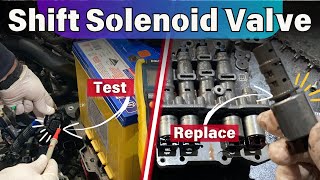
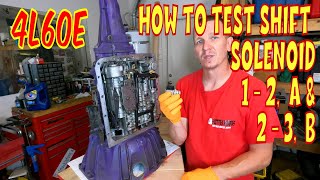



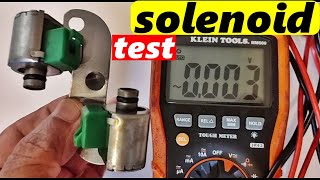

The information in this article is provided for general reference and educational purposes only. Vehicle specifications, procedures, and part compatibility can vary by production date, trim level, and region. Always consult your vehicle's factory service manual and verify part numbers before purchasing or performing repairs. Safety-critical components such as airbags, seat belts, and braking systems should be installed by a qualified professional.
- 🎬 Helpful Videos
- What Does P0758 Mean?
- Can I Drive With P0758?
- Common Causes
- Symptoms
- Diagnostic Flowchart
- Common Fixes & Costs
- DIY vs Professional
- Used vs. New Parts: Buying Guide
- What Happens If You Wait — Timeline
- Cost of Not Fixing It
- Diagnosis Steps
- When This Code Triggers (Freeze-Frame Conditions)
- Related Codes
- Climate & Environmental Factors
- How to Talk to a Mechanic About This Code
- Where to Take It: Dealer vs Independent vs Chain
- When to Walk Away From the Repair
- What Scan Tool You Need for This Code
- How to Clear the Code After You Fix It
- Will This Fail Emissions / State Inspection?
- Most Commonly Affected Vehicles
- Manufacturer-Specific Notes
- Real Owner Stories
- 2012 Kia Forte at 110K miles - Classic Solenoid Failure
- 2008 Mazda3 at 180K miles - The Misleading Solenoid Code
- 2003 Chevy Silverado - An Unusual Electrical Gremlin
- How to Prevent This Code From Triggering
- Frequently Asked Questions
- Can I fix P0758 myself?
- Will changing the transmission fluid fix a P0758 code?
- What's the most common misdiagnosis for P0758?
- I replaced the solenoid, but the P0758 code came back. What now?
- How much does it cost to diagnose a P0758 code?
- Is it safe to keep driving with my car in limp mode?
- What does Shift Solenoid 'B' do?
- Can a bad battery cause a P0758 code?
- Key Takeaways
- 🎟️ Get 5% Off